Factors Affecting
Solubility
Factors Affecting Solubility
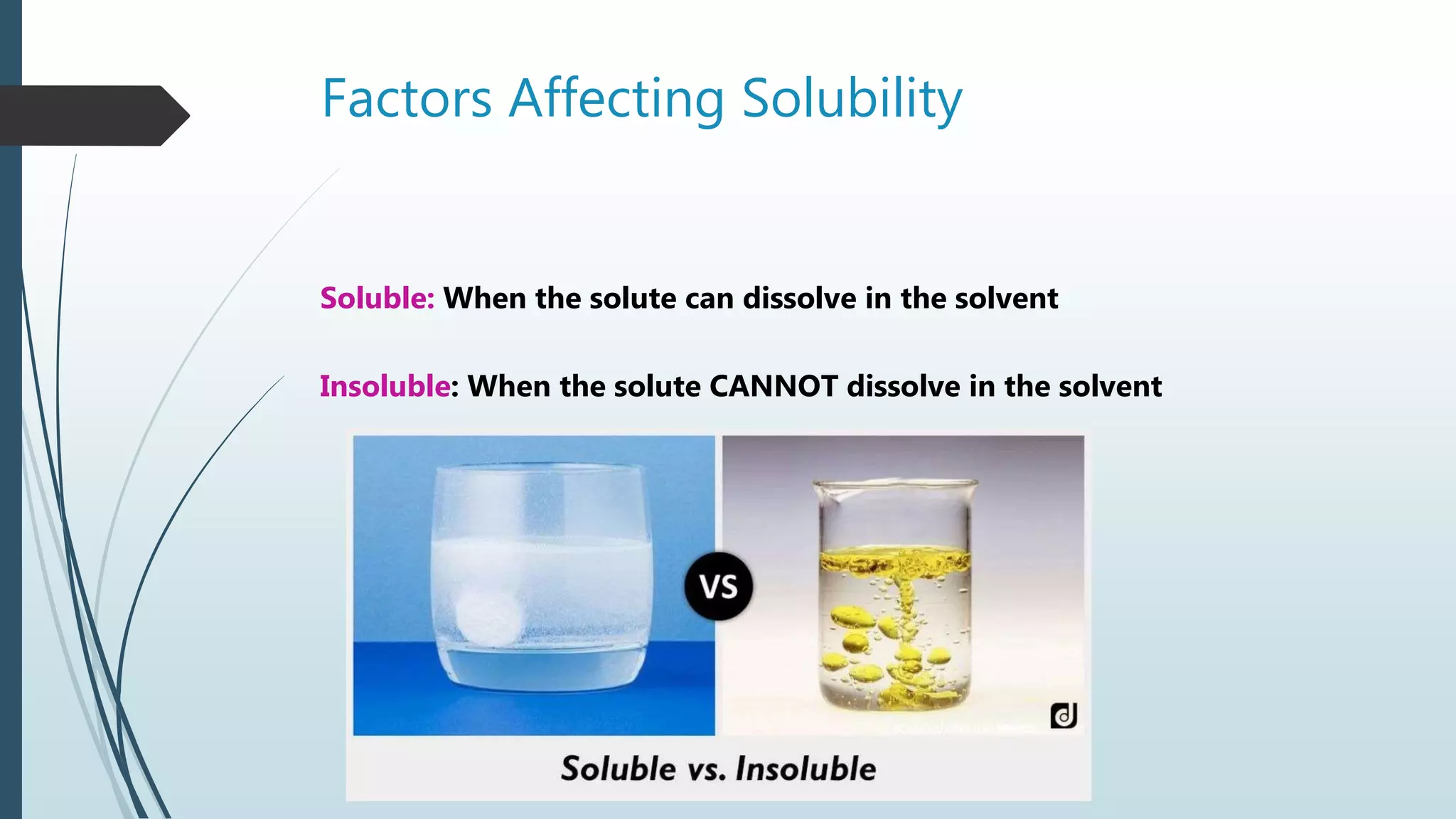
Soluble: When the solute can dissolve in the solvent
Insoluble: When the solute CANNOT dissolve in the solvent
Factors Affecting Solubility
1. The type of solvent
Think about our lab and water vs oil. Certain solvents affect how
well something can dissolve.
Water is the most common solvent and is referred to as the
universal solvent
Factors Affecting Solubility
2. The type of solute
Think about our lab and sugar, salt or petroleum jelly. The substance
being dissolved affects how well it mixes in.
Factors Affecting Solubility
3. Stirring/Agitating the Mixture
Think about our lab stirring vs not stirring water and salt. Stirring
(or other agitations like shaking) will cause the solute to dissolve
into a solvent faster.
Factors Affecting Solubility
4. Size of particles
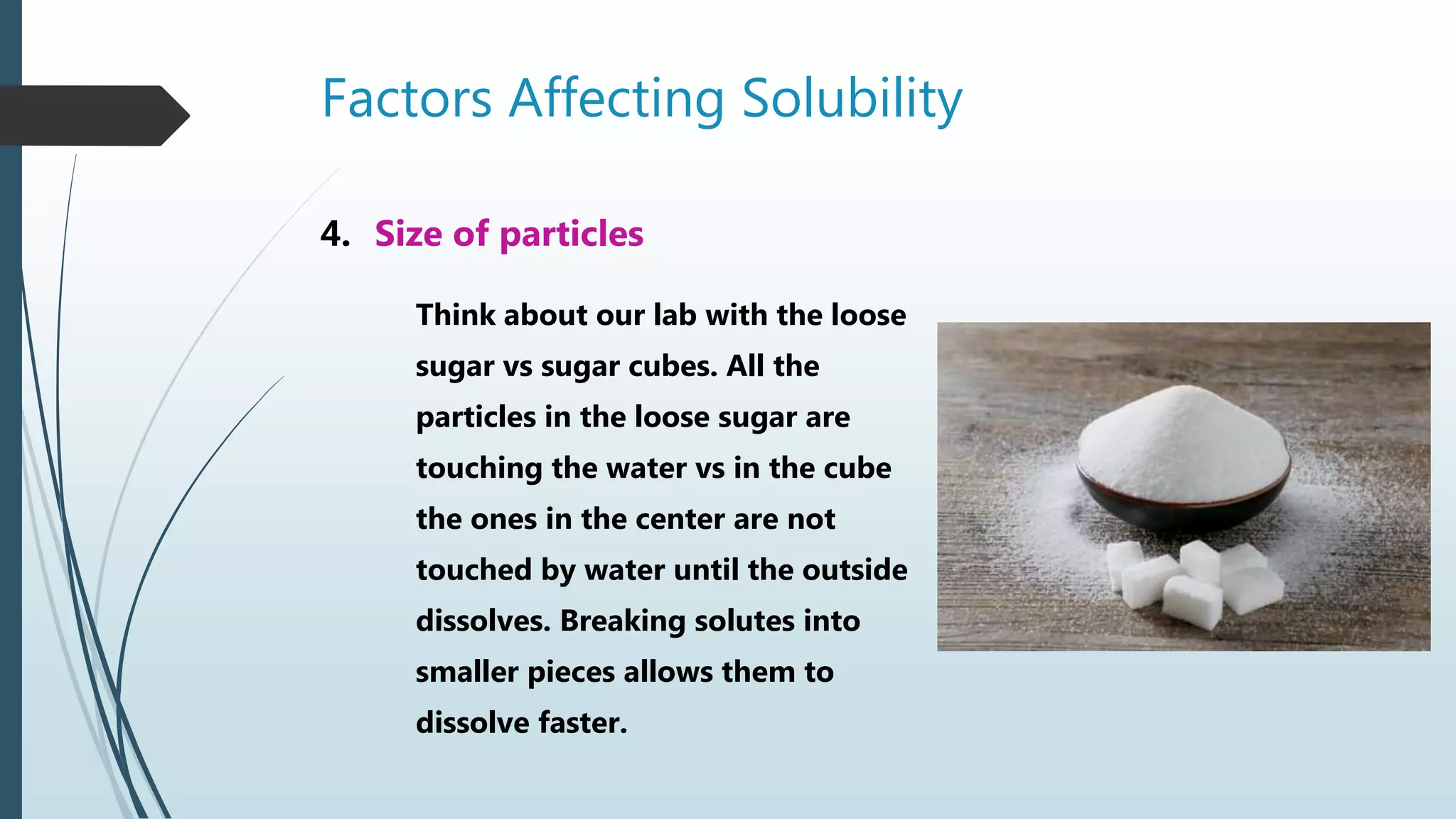
Think about our lab with the loose
sugar vs sugar cubes. All the
particles in the loose sugar are
touching the water vs in the cube
the ones in the center are not
touched by water until the outside
dissolves. Breaking solutes into
smaller pieces allows them to
dissolve faster.
Factors Affecting Solubility
5. Temperature
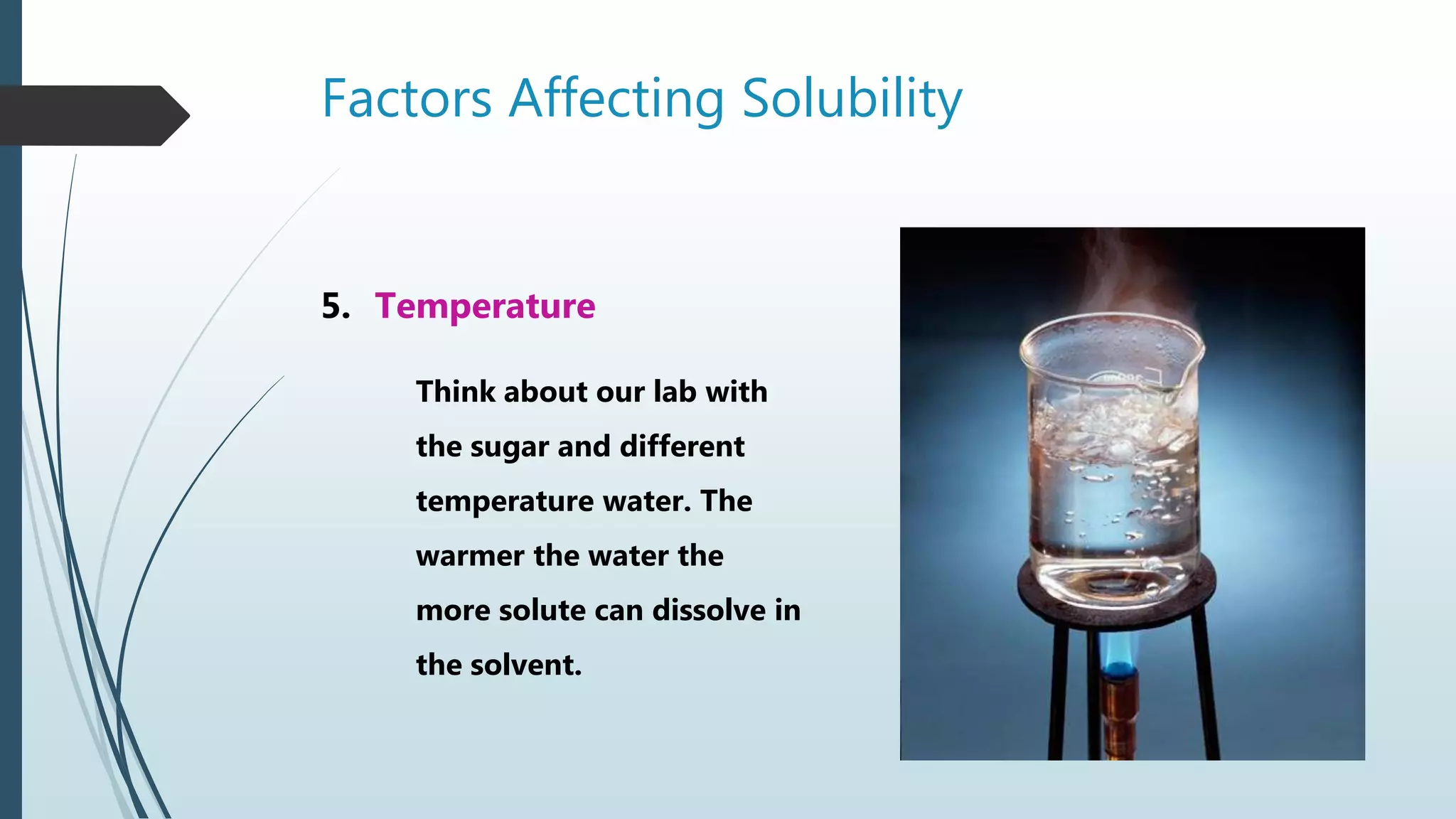
Think about our lab with
the sugar and different
temperature water. The
warmer the water the
more solute can dissolve in
the solvent.

Factors affecting solubility

  • 1.
  • 2.
    Factors Affecting Solubility Soluble:When the solute can dissolve in the solvent Insoluble: When the solute CANNOT dissolve in the solvent
  • 3.
    Factors Affecting Solubility 1.The type of solvent Think about our lab and water vs oil. Certain solvents affect how well something can dissolve. Water is the most common solvent and is referred to as the universal solvent
  • 4.
    Factors Affecting Solubility 2.The type of solute Think about our lab and sugar, salt or petroleum jelly. The substance being dissolved affects how well it mixes in.
  • 5.
    Factors Affecting Solubility 3.Stirring/Agitating the Mixture Think about our lab stirring vs not stirring water and salt. Stirring (or other agitations like shaking) will cause the solute to dissolve into a solvent faster.
  • 6.
    Factors Affecting Solubility 4.Size of particles Think about our lab with the loose sugar vs sugar cubes. All the particles in the loose sugar are touching the water vs in the cube the ones in the center are not touched by water until the outside dissolves. Breaking solutes into smaller pieces allows them to dissolve faster.
  • 7.
    Factors Affecting Solubility 5.Temperature Think about our lab with the sugar and different temperature water. The warmer the water the more solute can dissolve in the solvent.