Chapter 13 Routing  Protocols (RIP, OSPF, BGP)
CONTENTS INTERIOR AND EXTERIOR ROUTING RIP OSPF BGP
INTERIOR AND EXTERIOR ROUTING 13.1
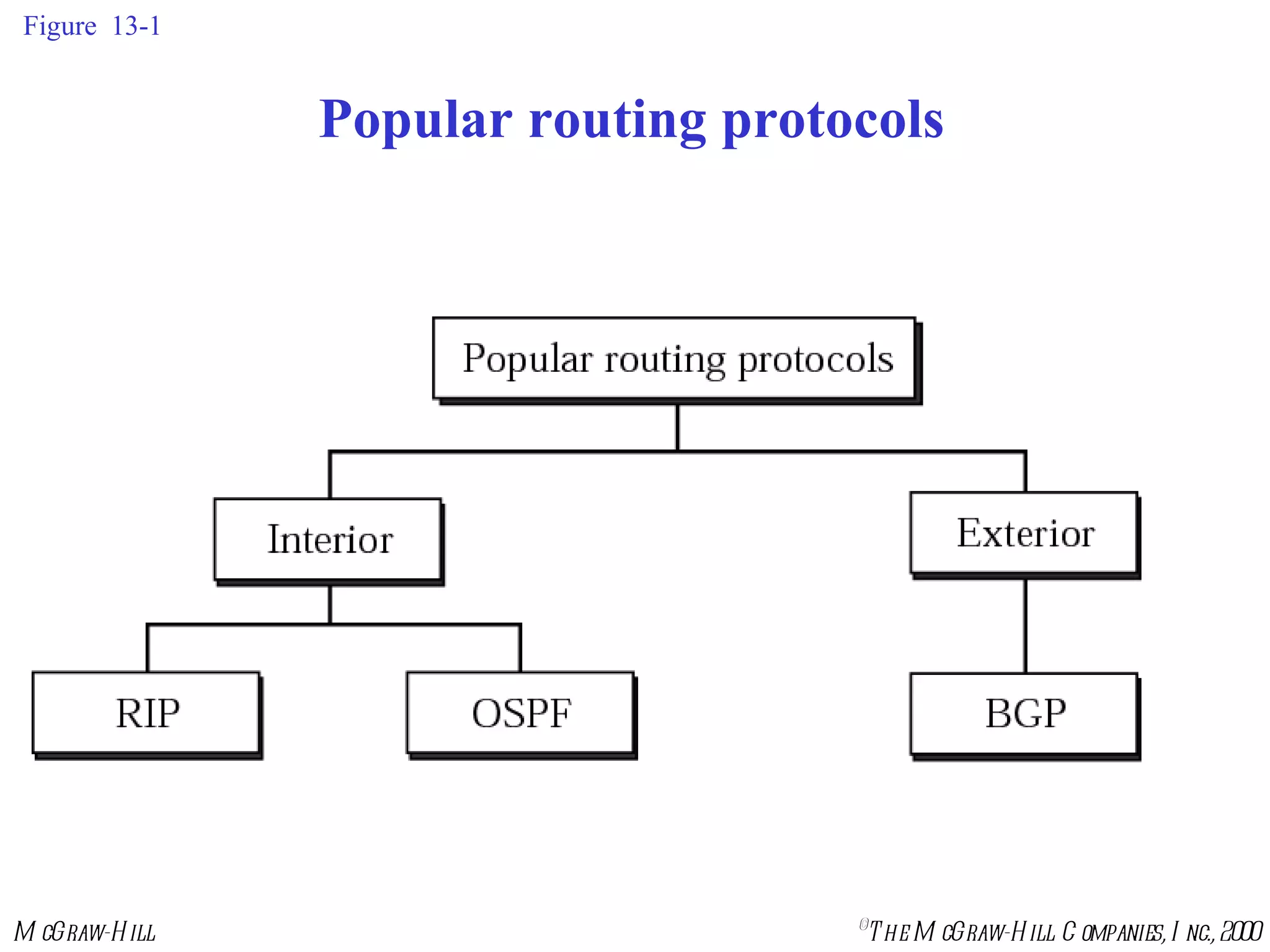
Figure  13-1 Popular routing protocols
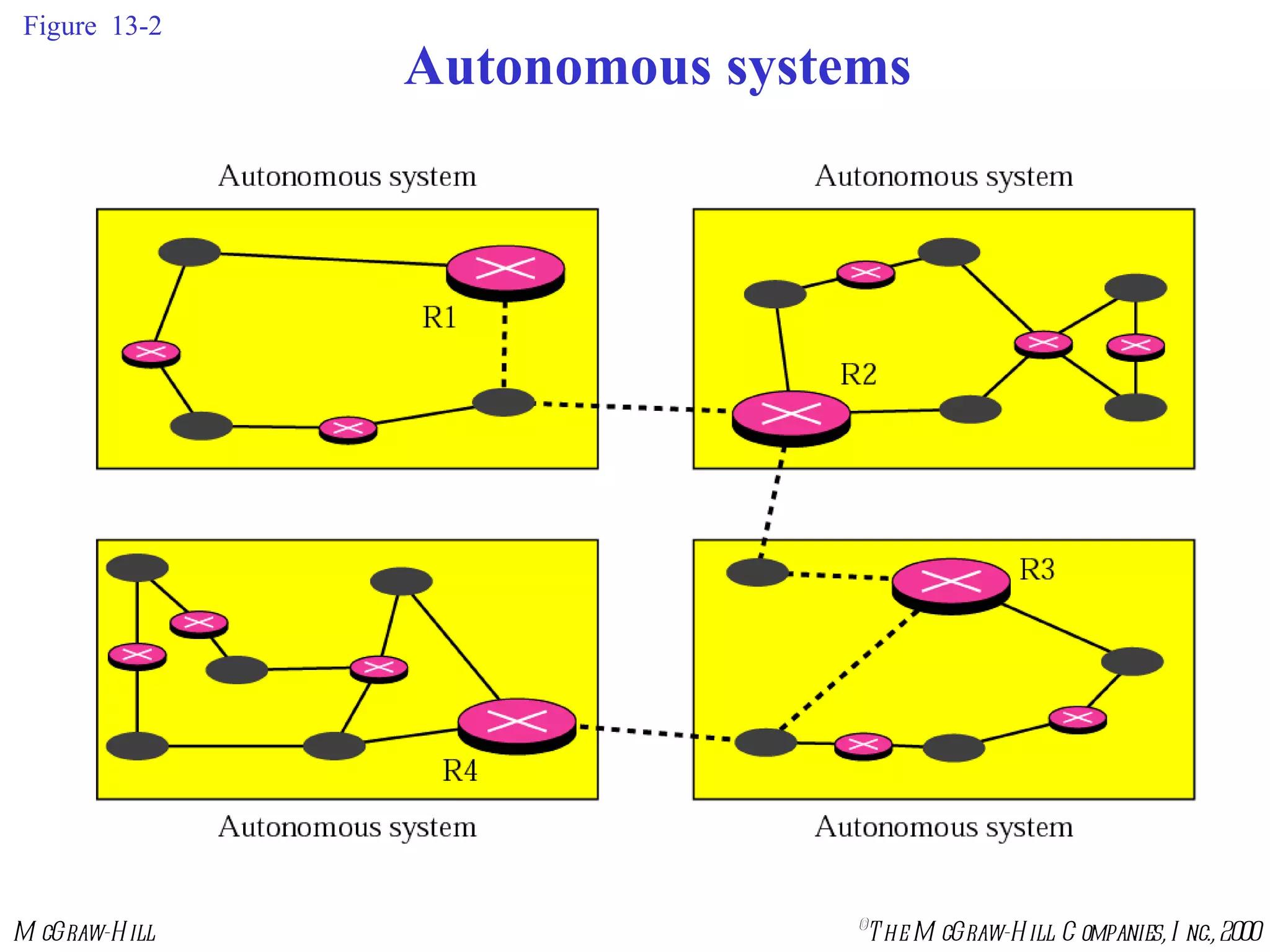
Figure  13-2 Autonomous systems
RIP: Routing Information Protocol 13.2
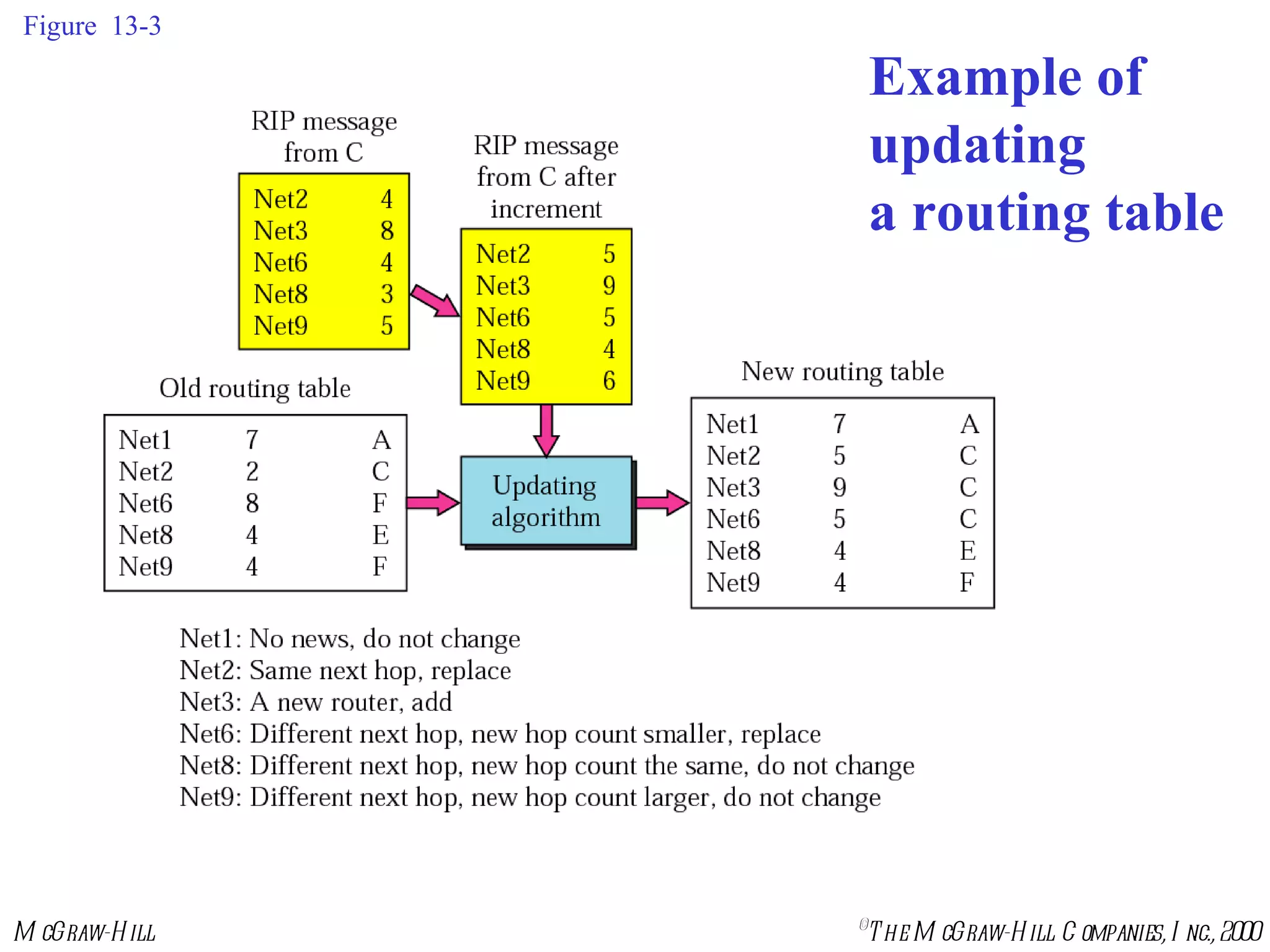
Figure  13-3 Example of  updating a routing table
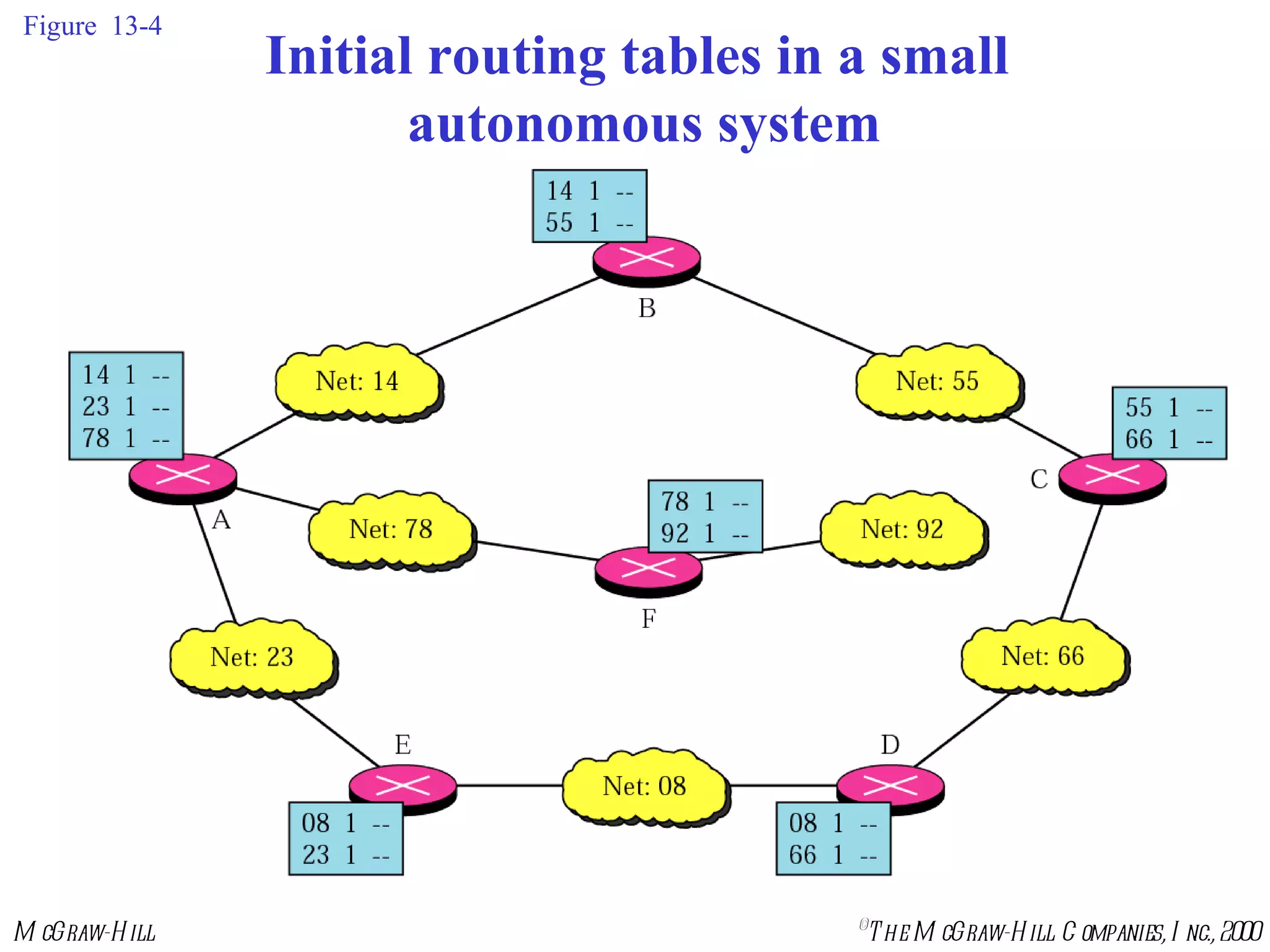
Figure  13-4 Initial routing tables in a small  autonomous system
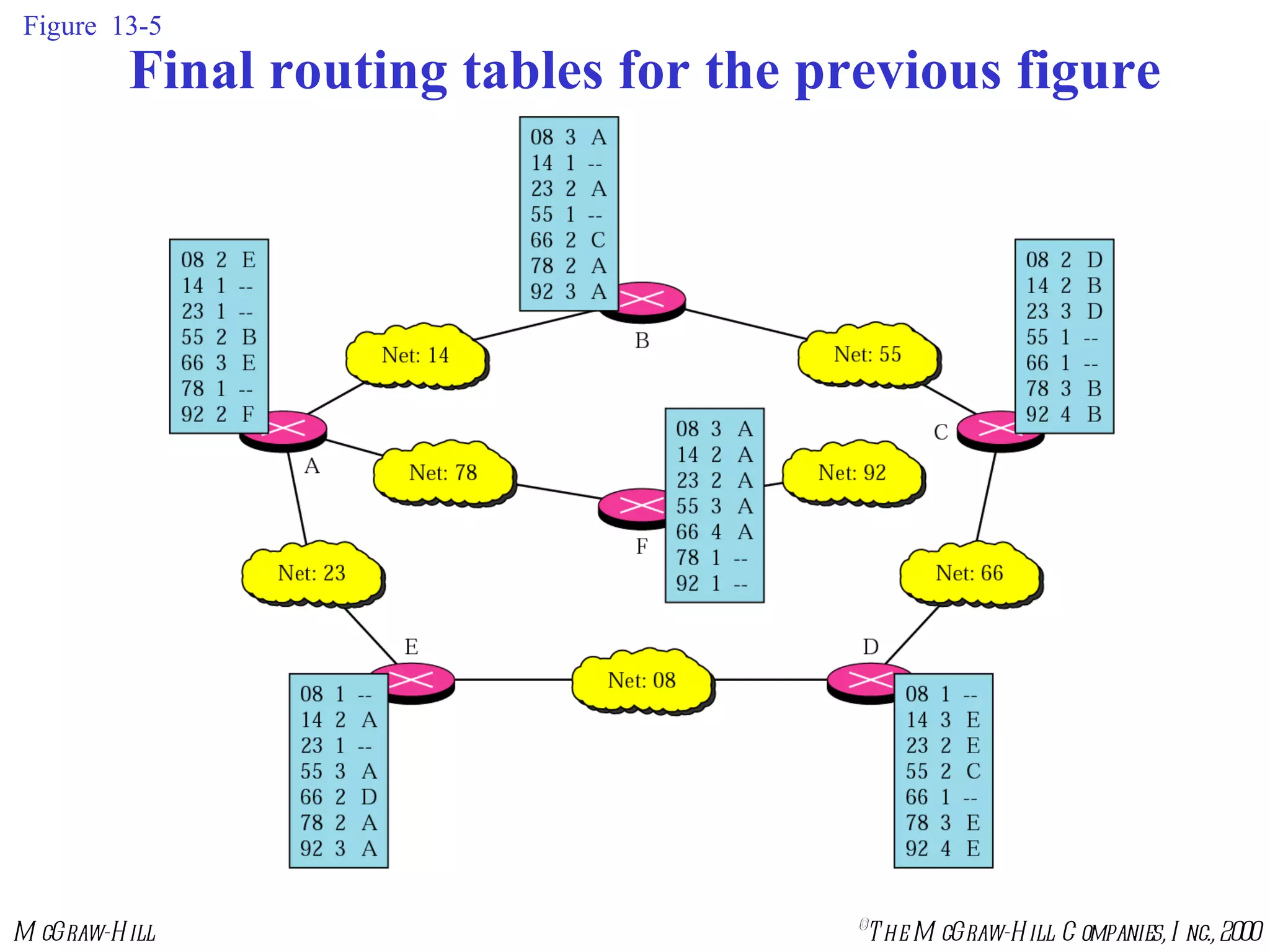
Figure  13-5 Final routing tables for the previous figure
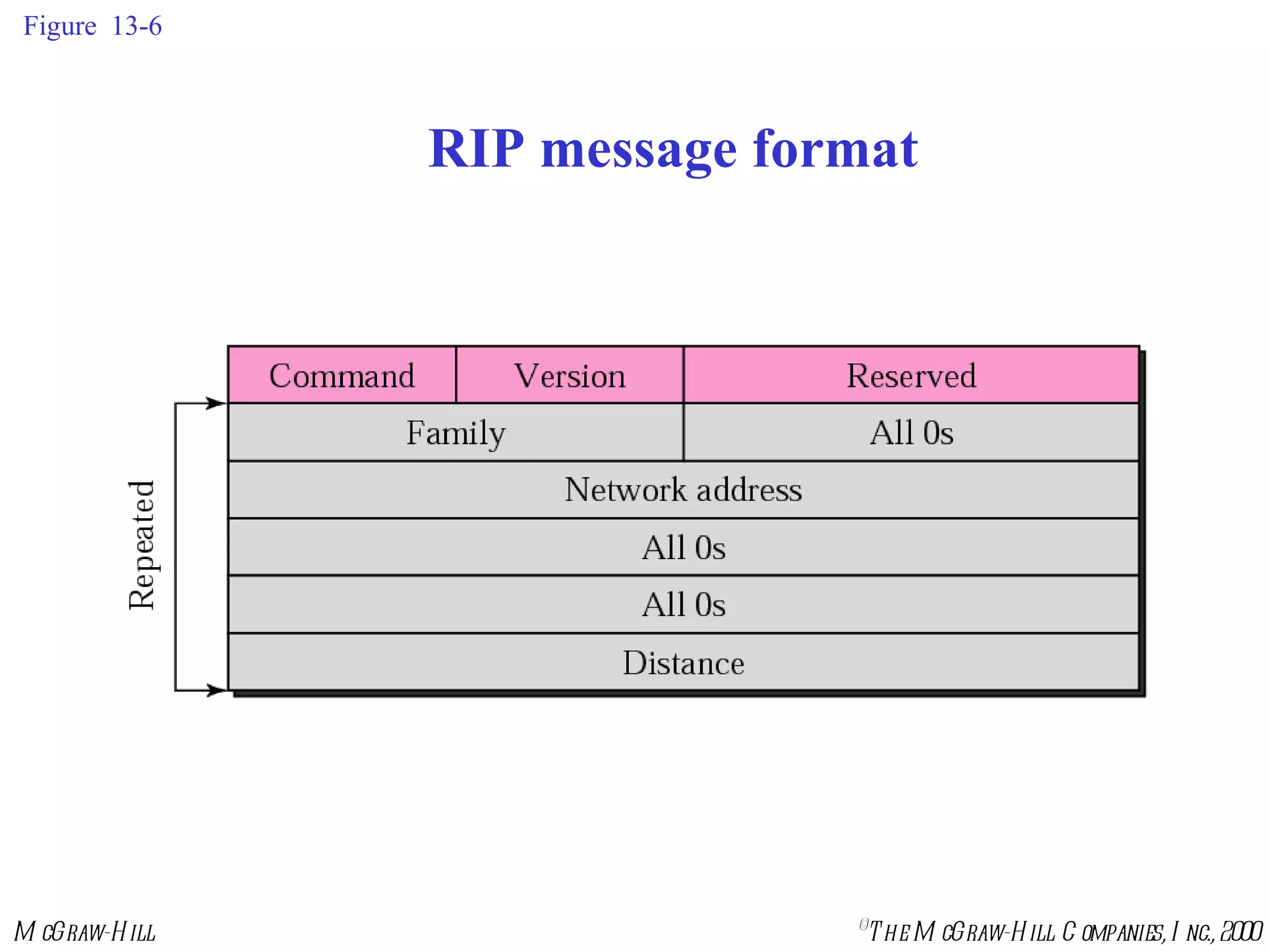
Figure  13-6 RIP message format
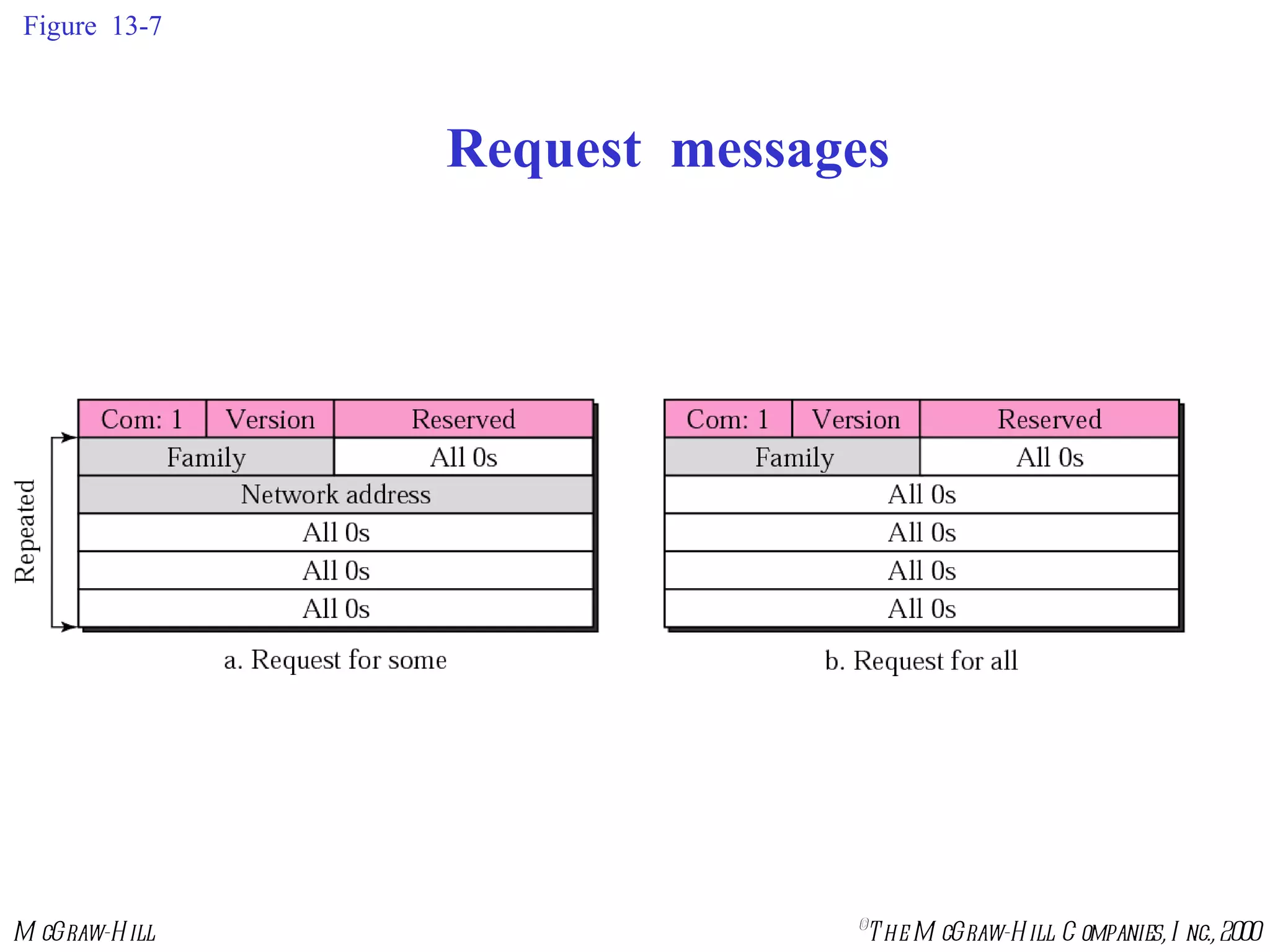
Figure  13-7 Request  messages
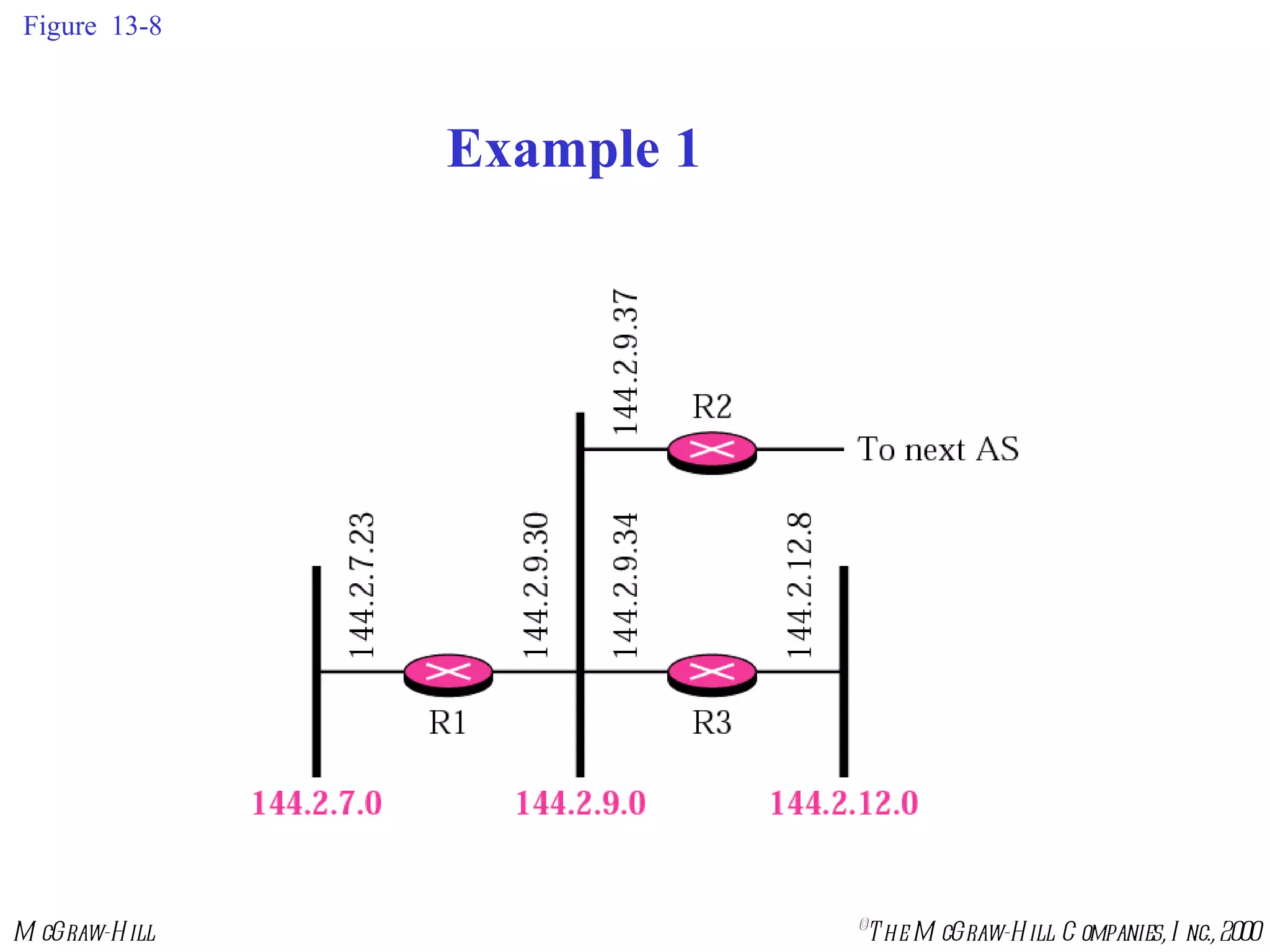
Example 1 What is the periodic response sent by router R1 in Figure 13.8 (next slide)? Assume R1 knows about the whole autonomous system.
Figure  13-8 Example 1
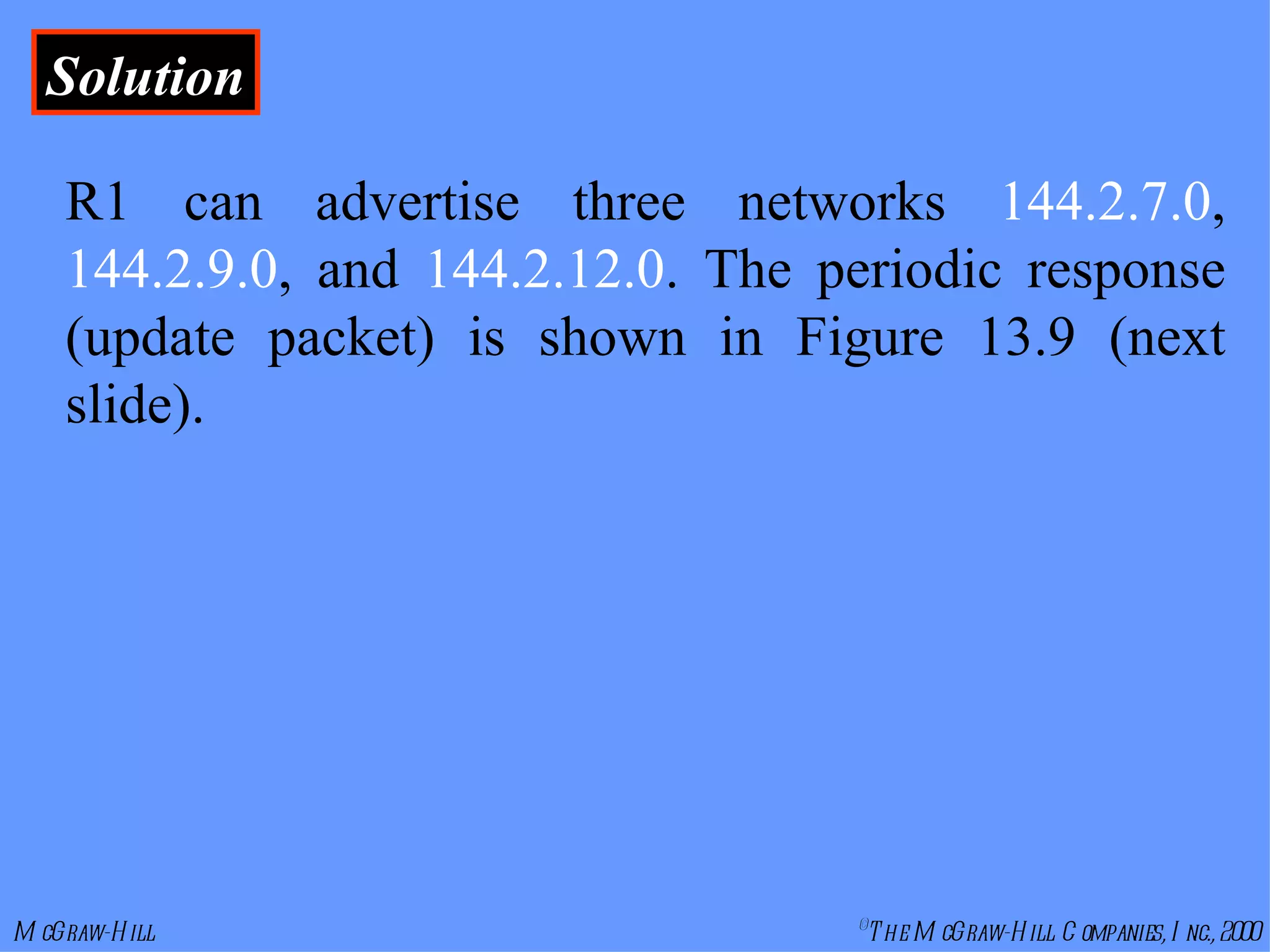
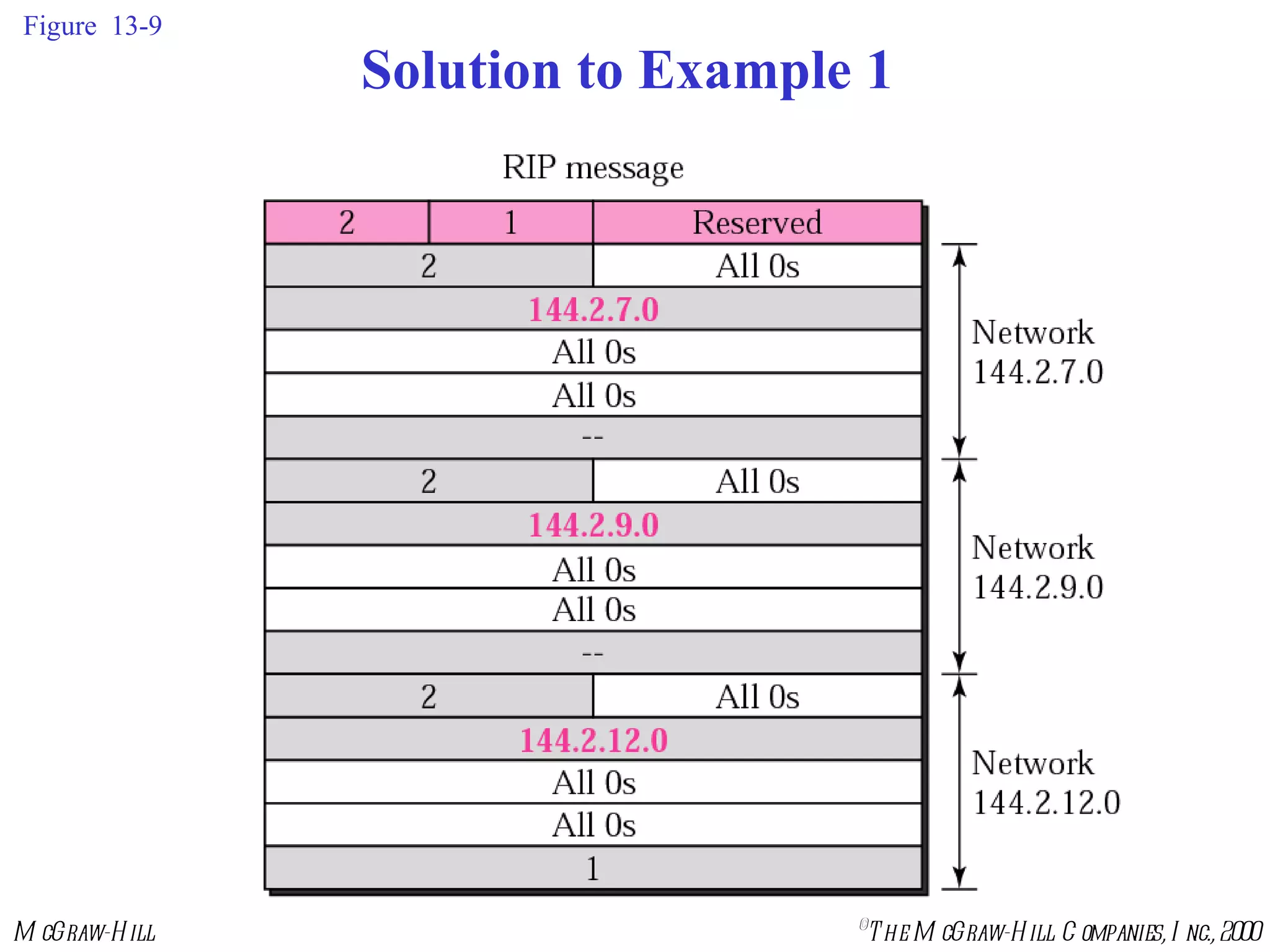
Solution R1 can advertise three networks  144.2.7.0 ,  144.2.9.0 , and  144.2.12.0 . The periodic response (update packet) is shown in Figure 13.9 (next slide).
Figure  13-9 Solution to Example 1
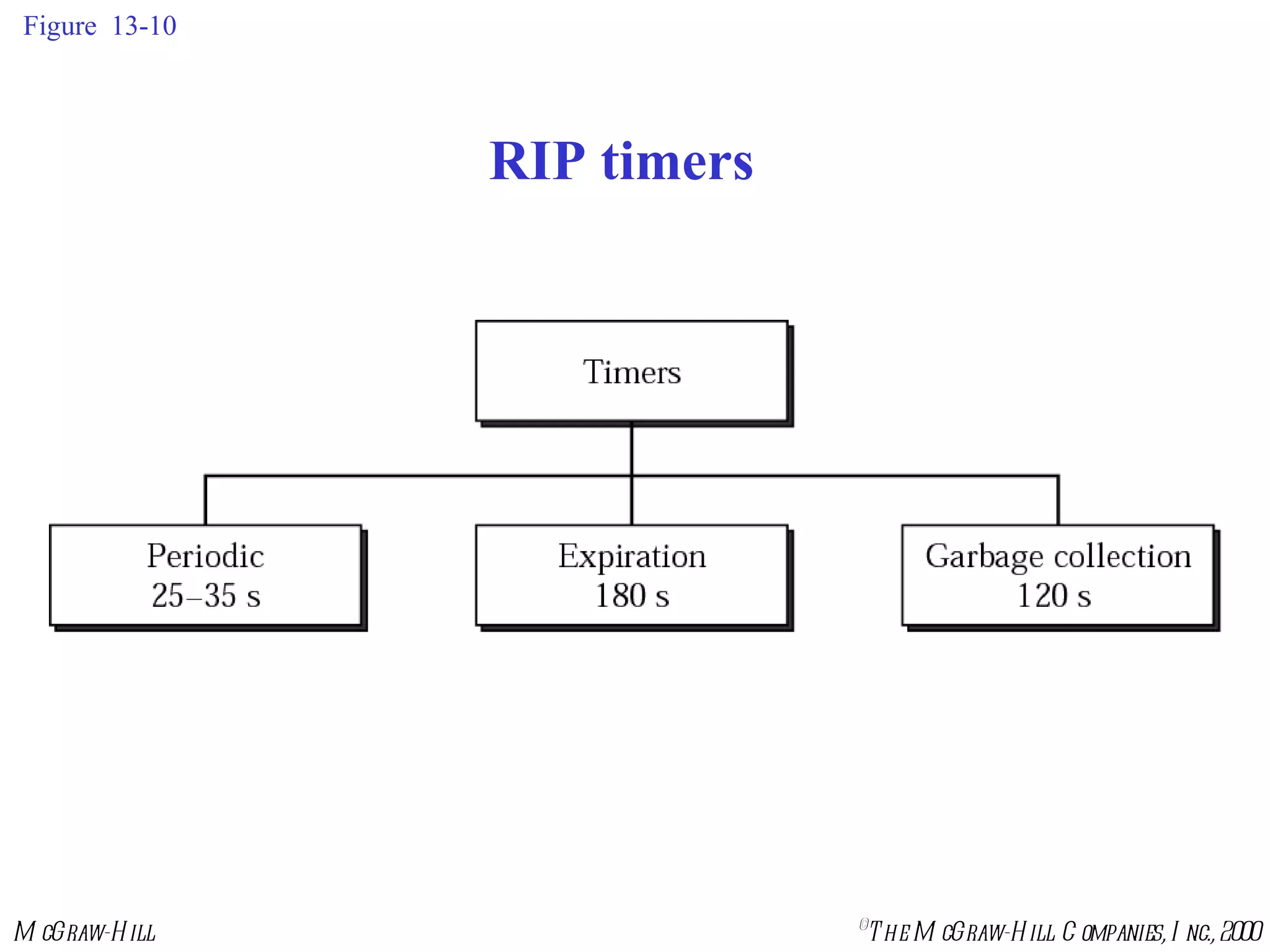
Figure  13-10 RIP timers
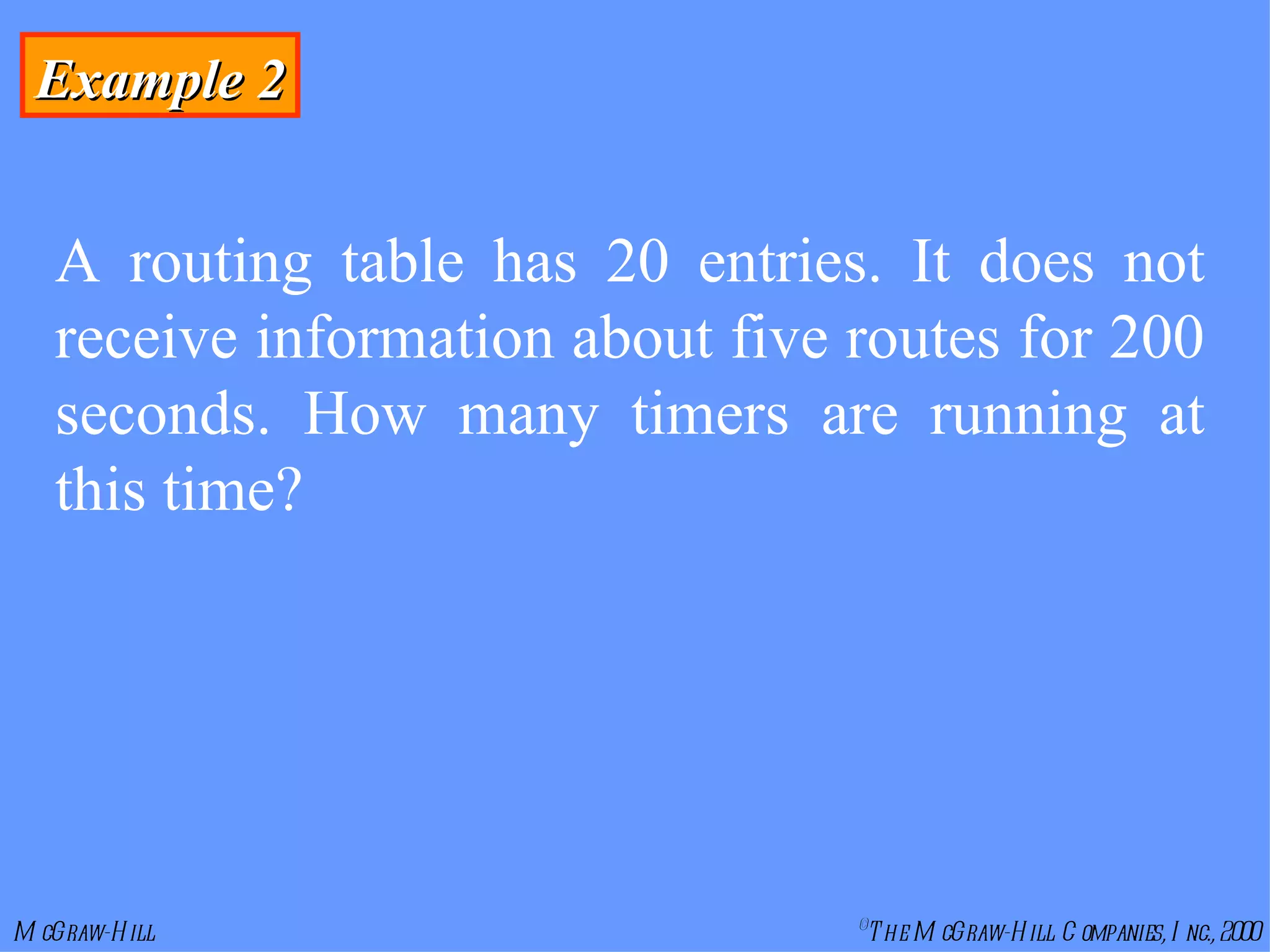
Example 2 A routing table has 20 entries. It does not receive information about five routes for 200 seconds. How many timers are running at this time?
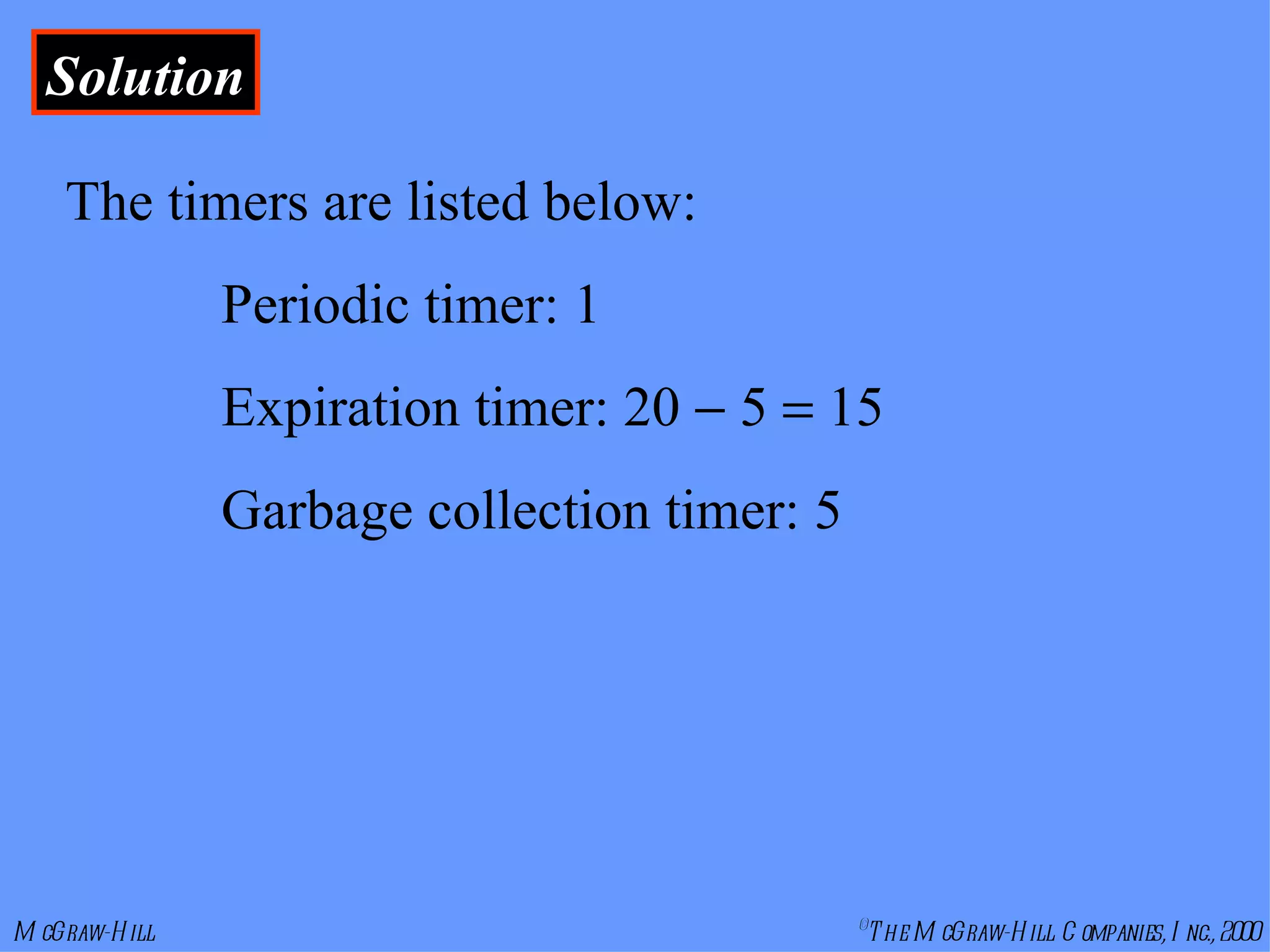
Solution The timers are listed below: Periodic timer: 1 Expiration timer: 20    5    15 Garbage collection timer: 5
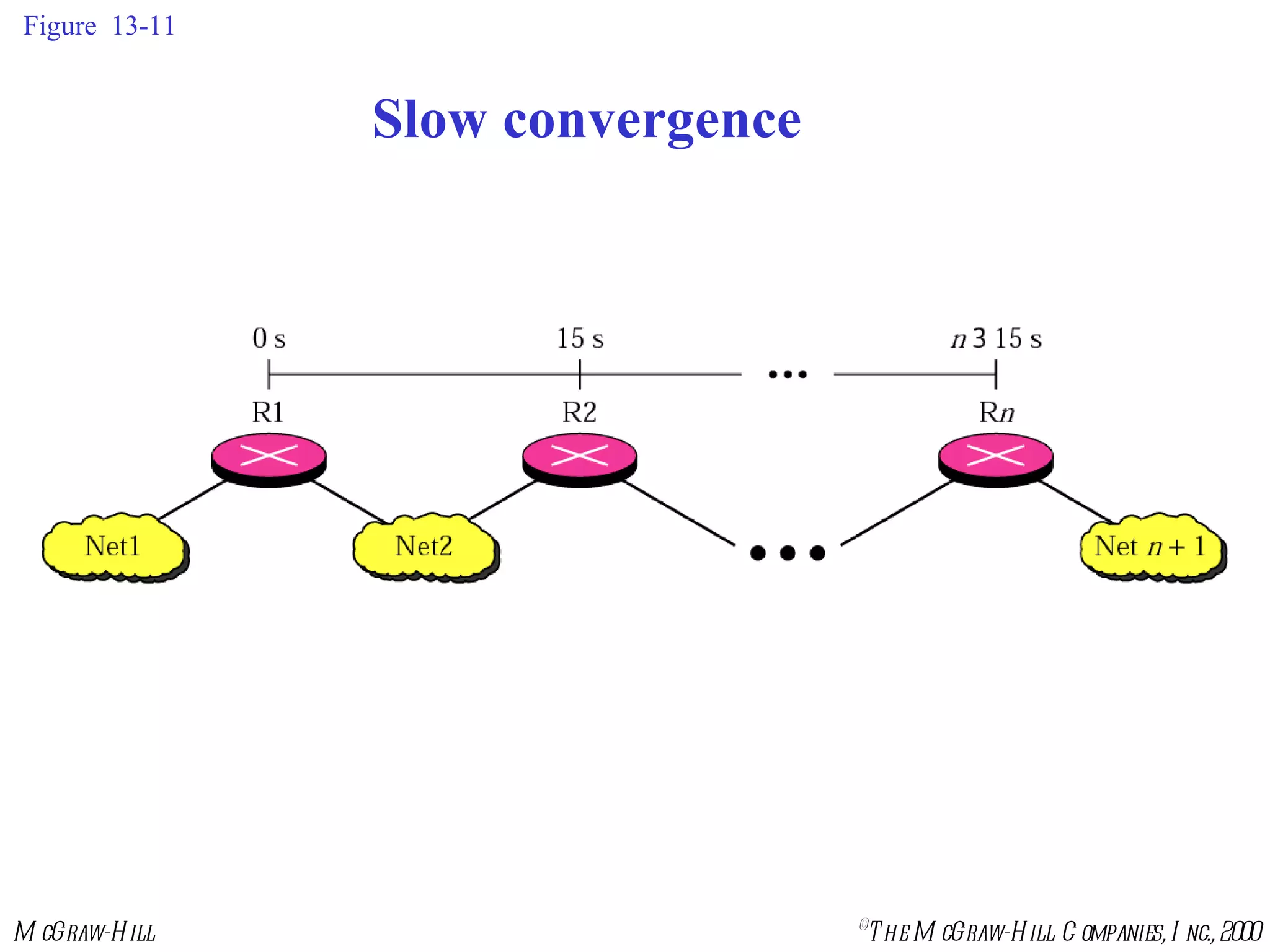
Figure  13-11 Slow convergence
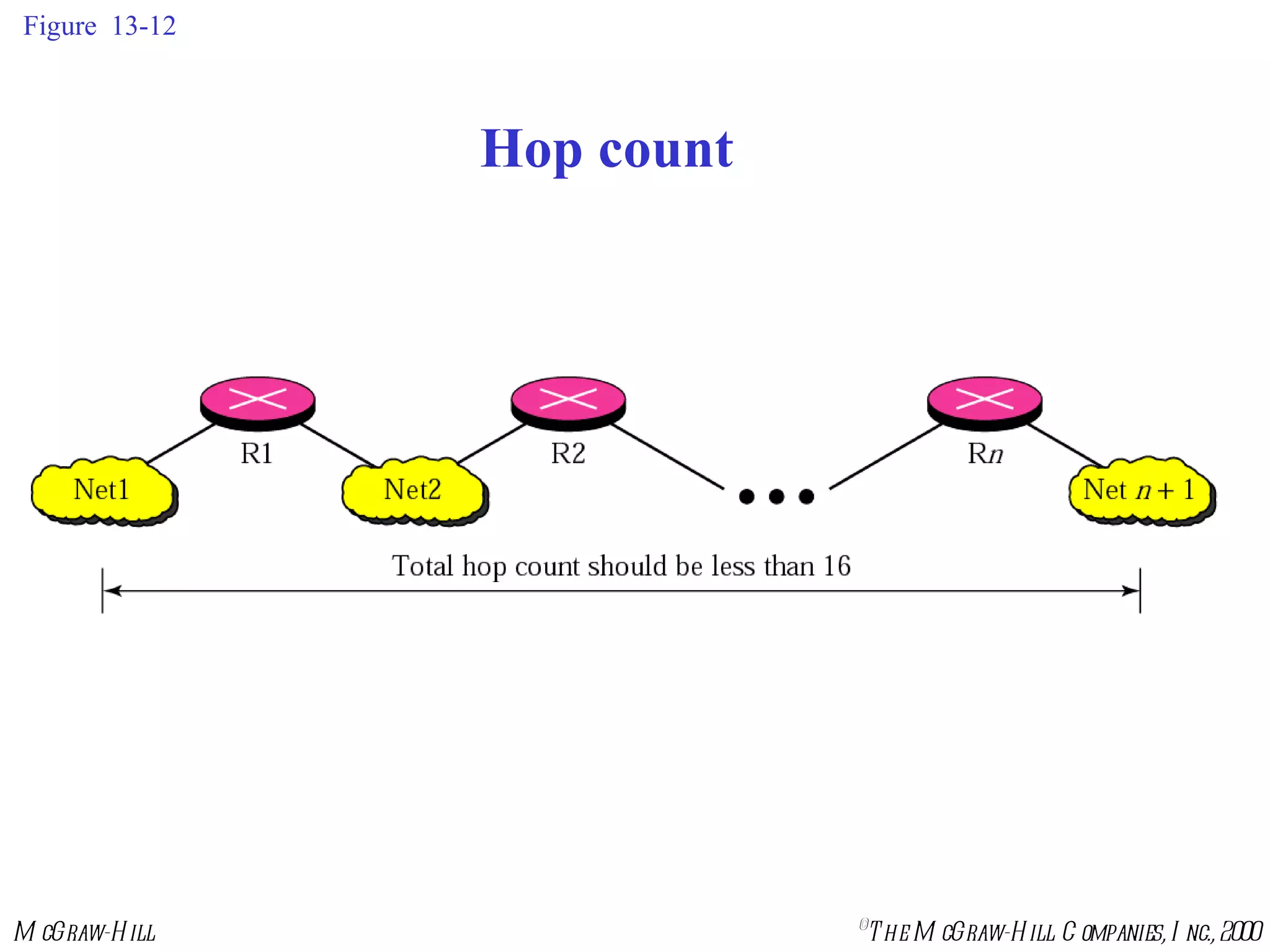
Figure  13-12 Hop count
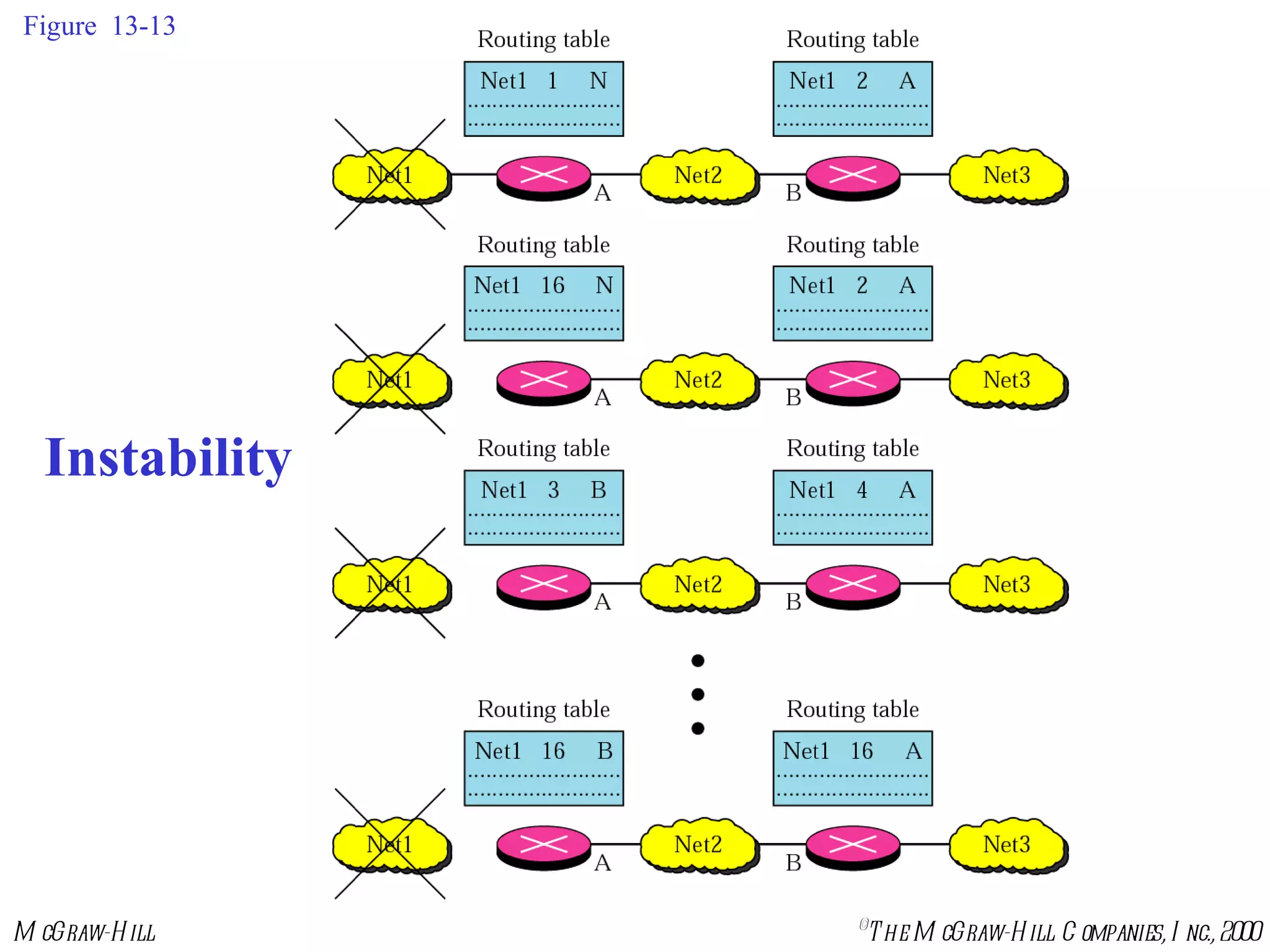
Figure  13-13 Instability
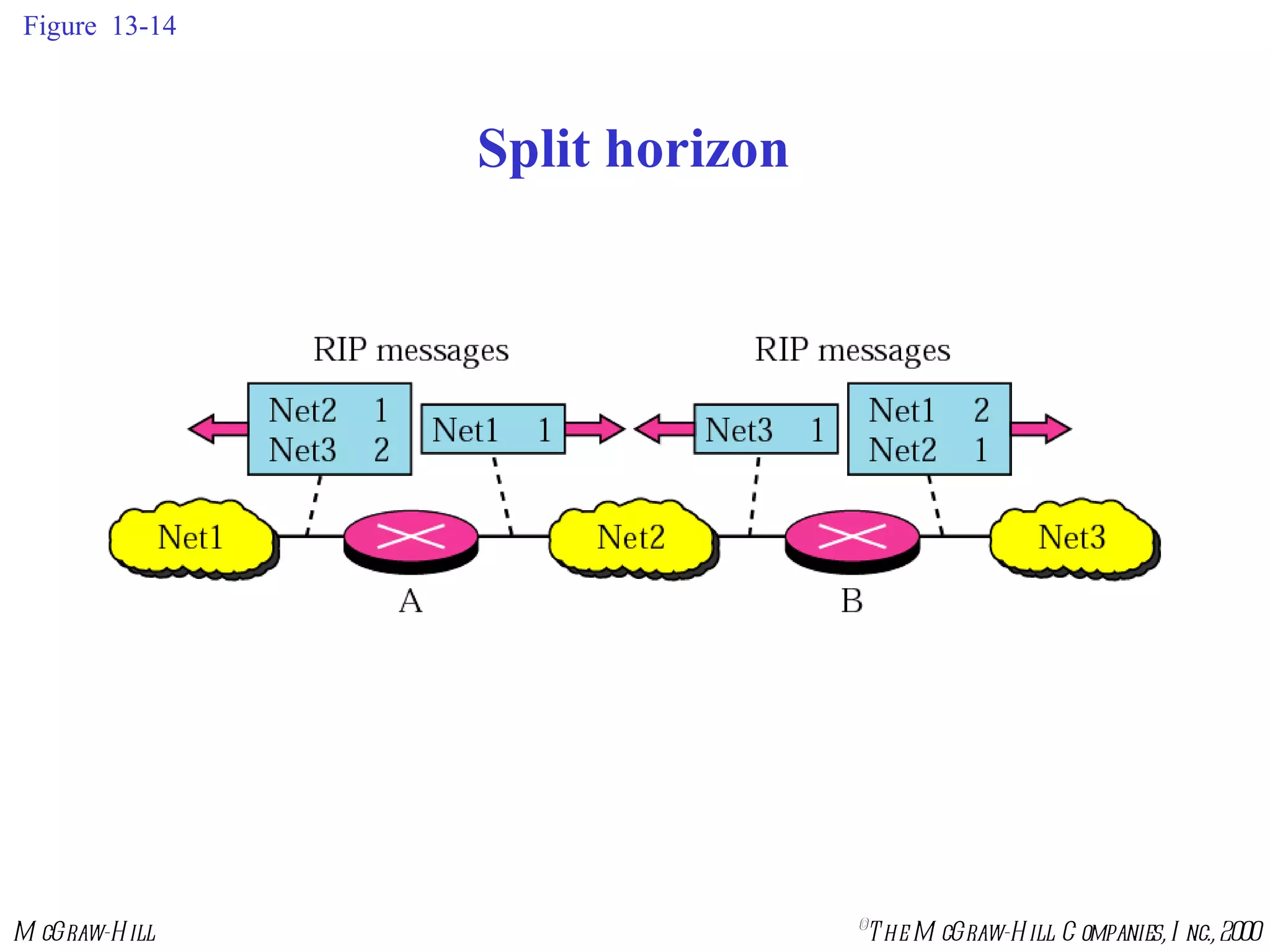
Figure  13-14 Split horizon
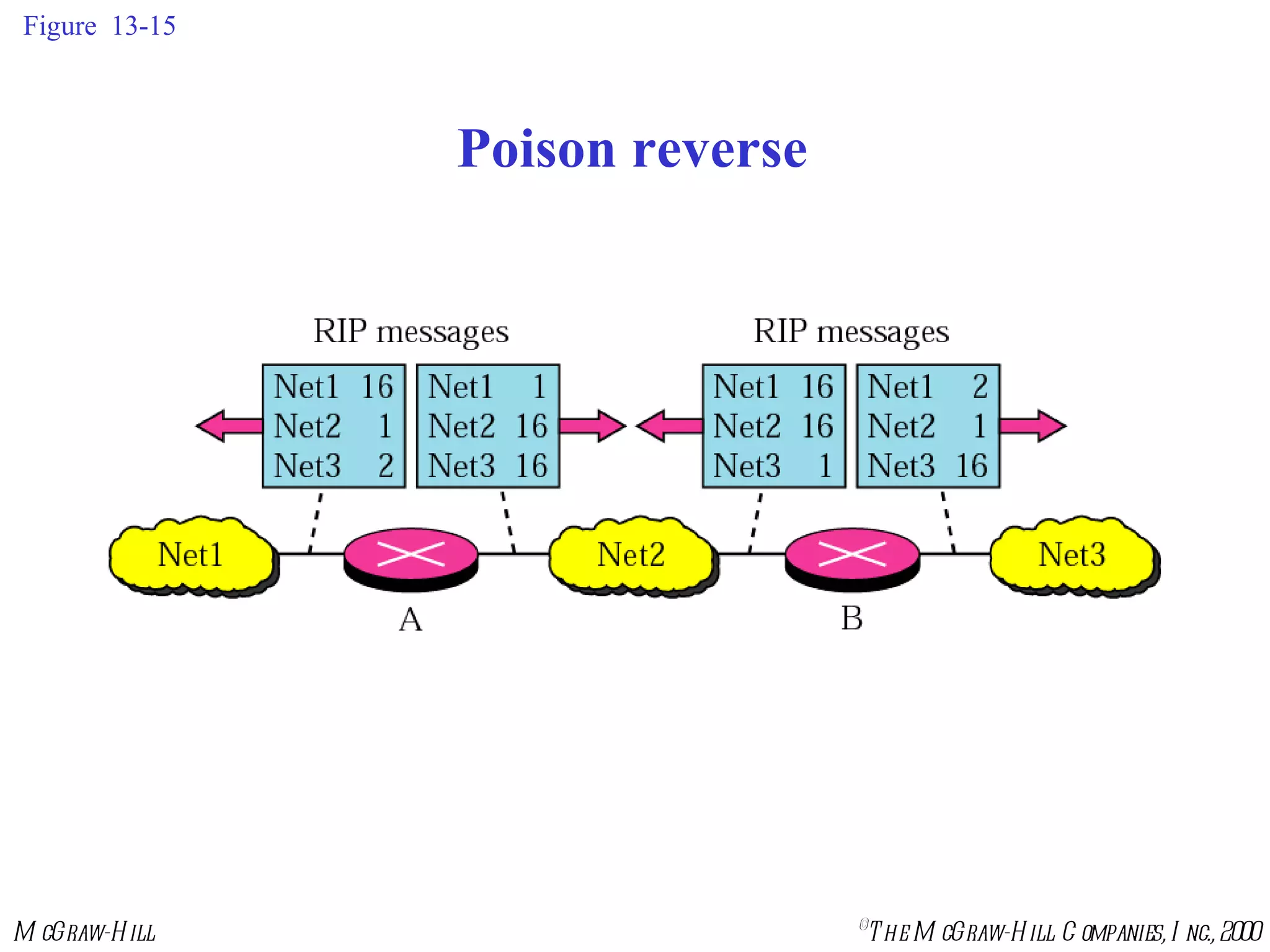
Figure  13-15 Poison reverse
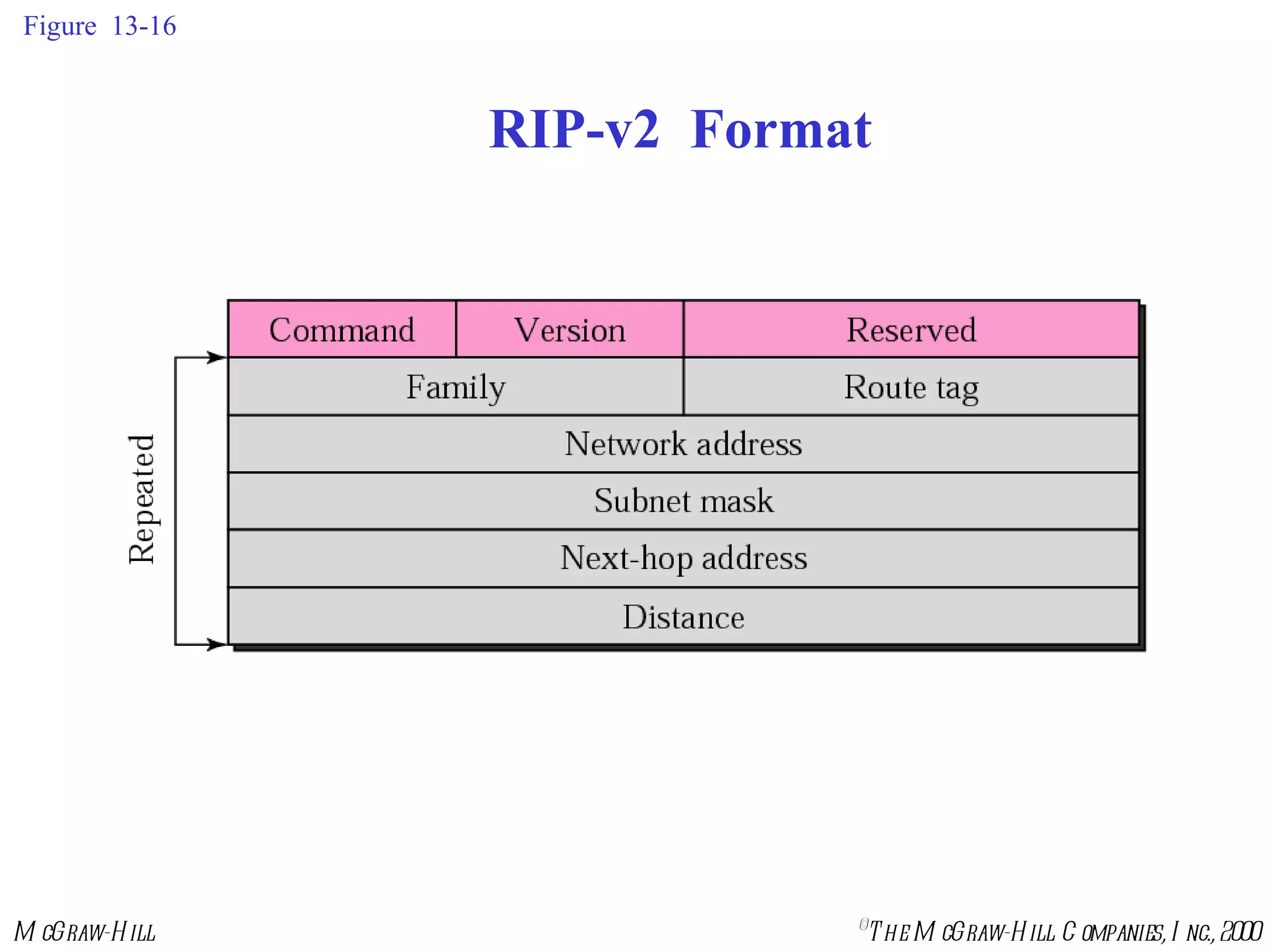
Figure  13-16 RIP-v2  Format
RIP version 2 supports  CIDR.
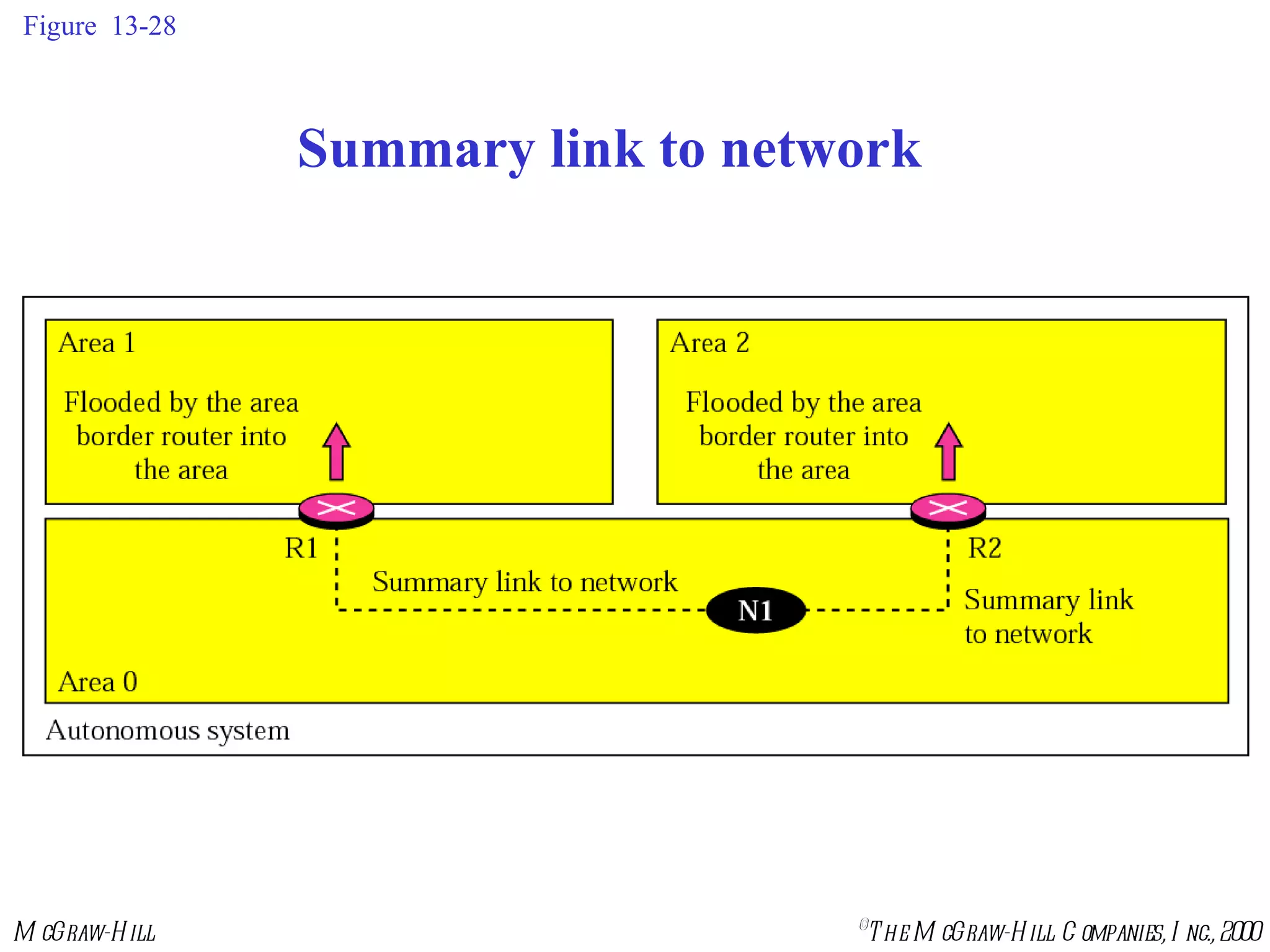
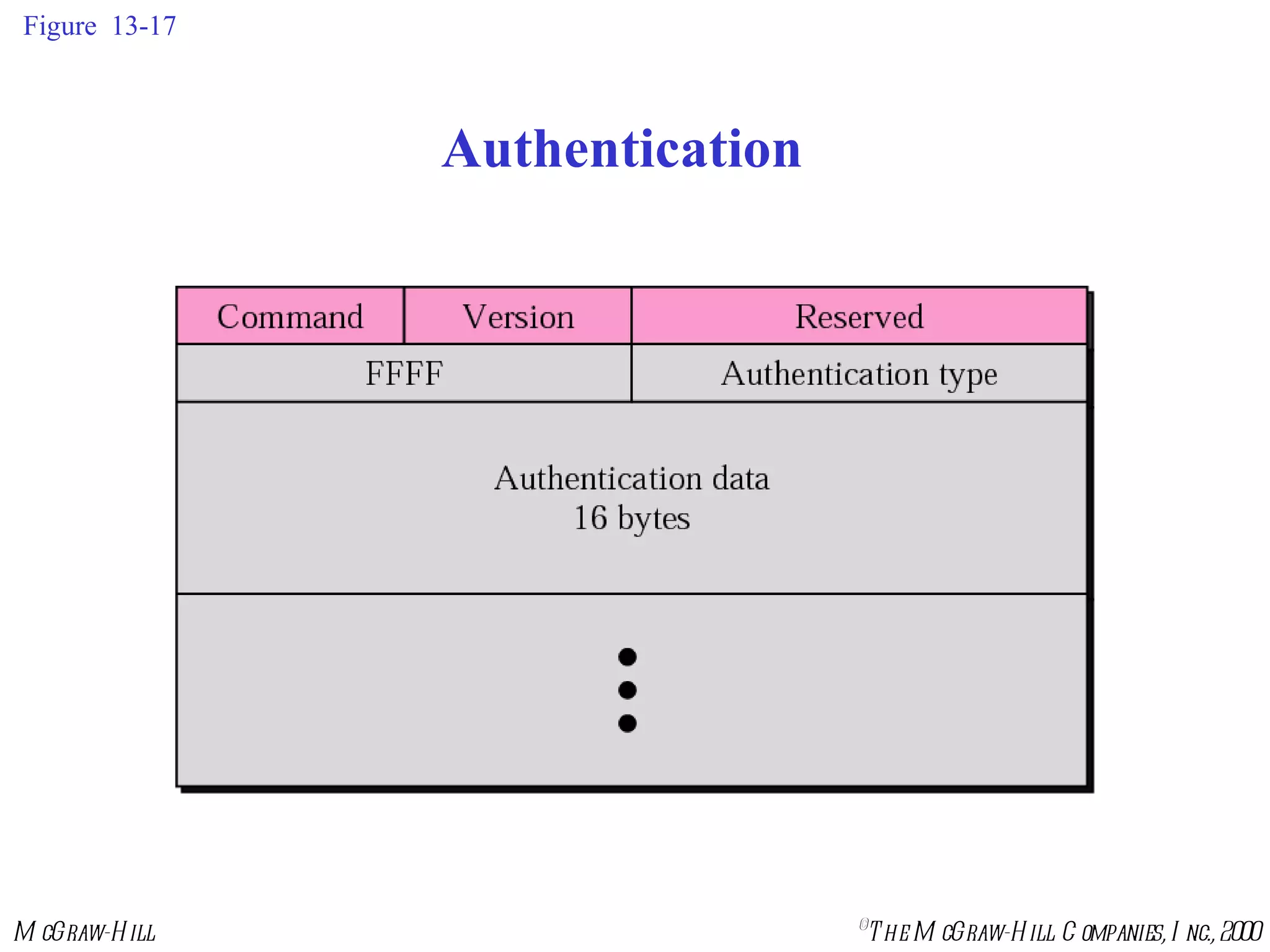
Figure  13-17 Authentication
RIP uses the services of UDP  on well-known port 520.
OSPF: Open Shortest Path First 13.3
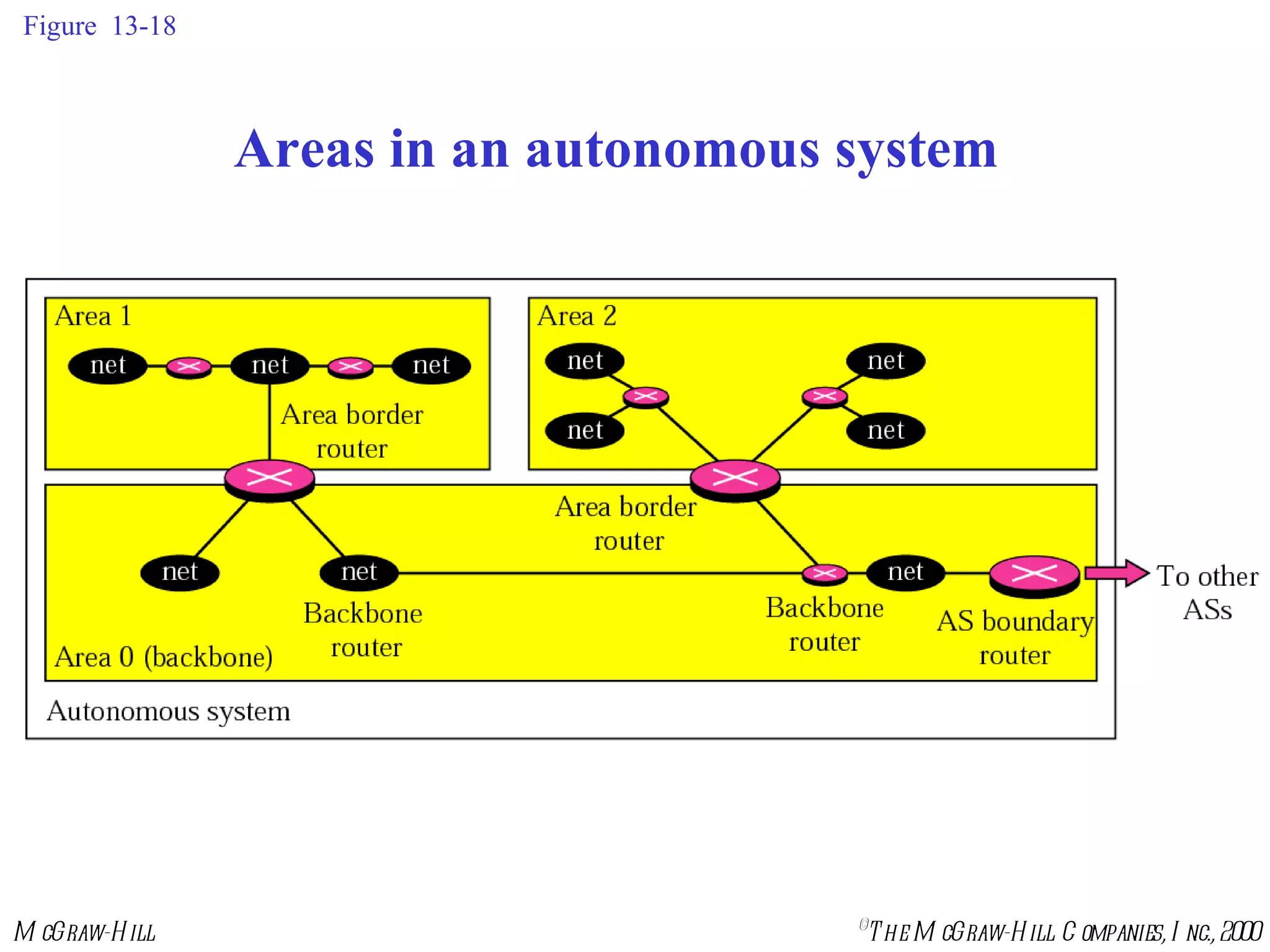
Figure  13-18 Areas in an autonomous system
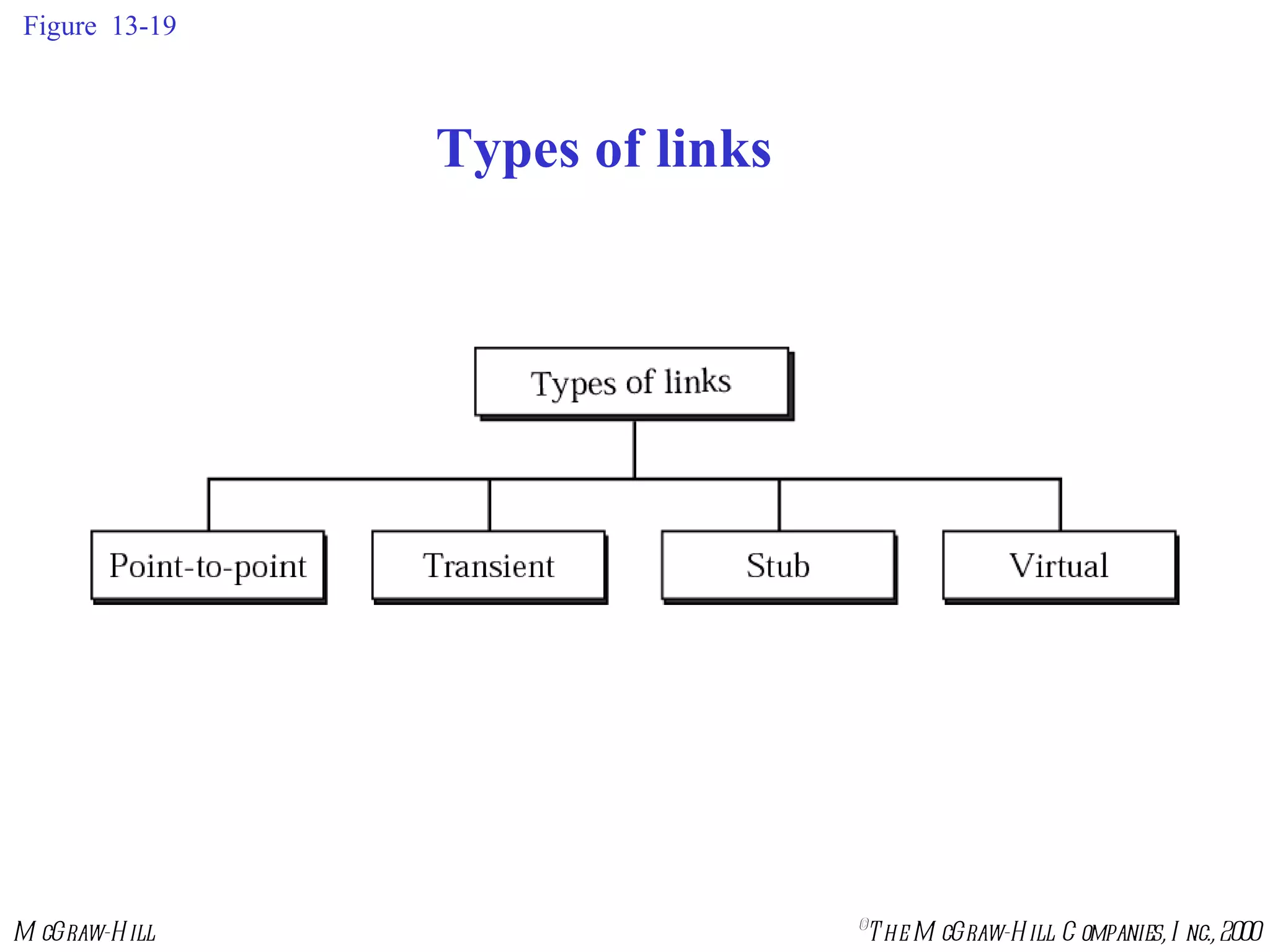
Figure  13-19 Types of links
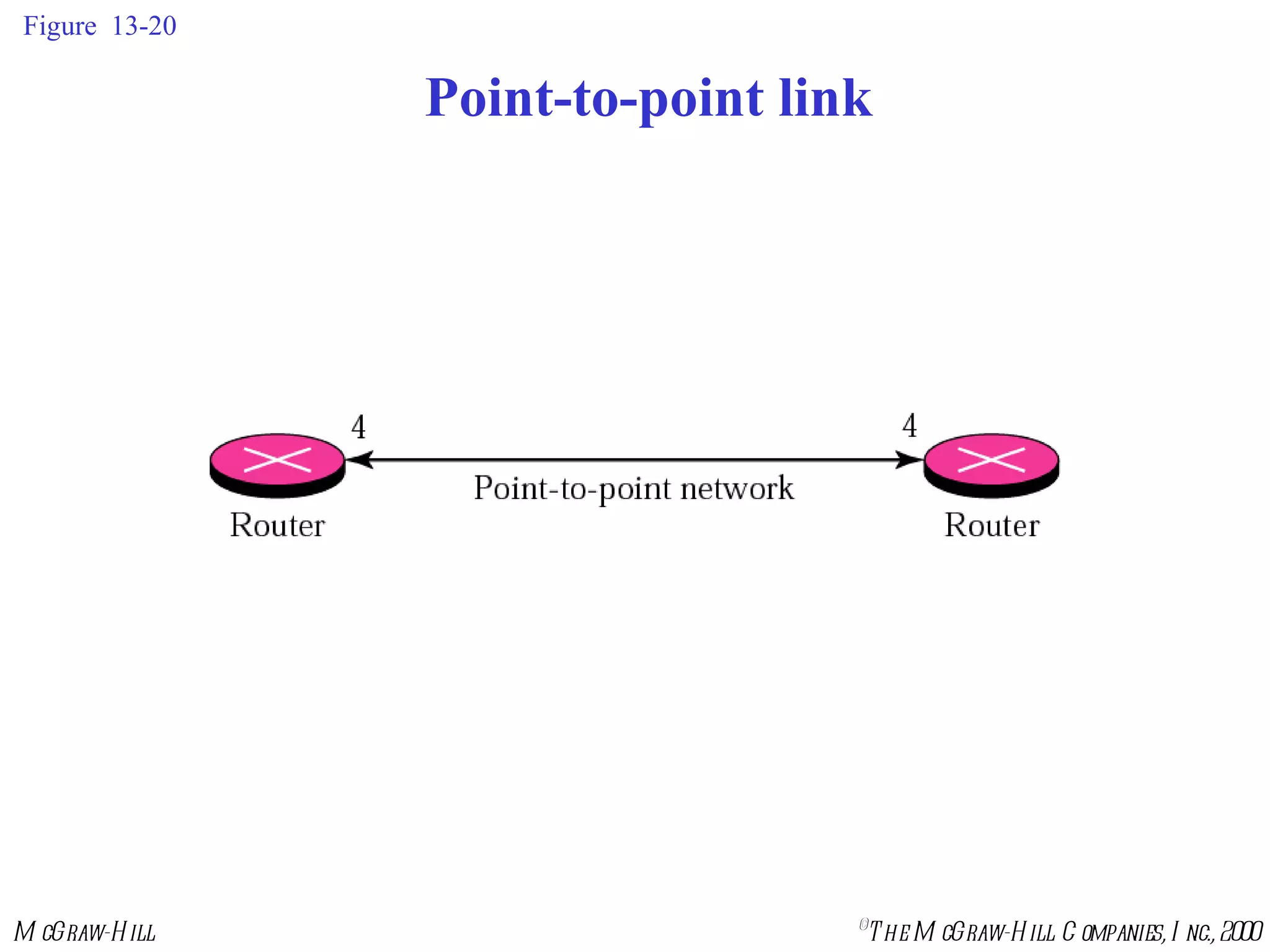
Figure  13-20 Point-to-point link
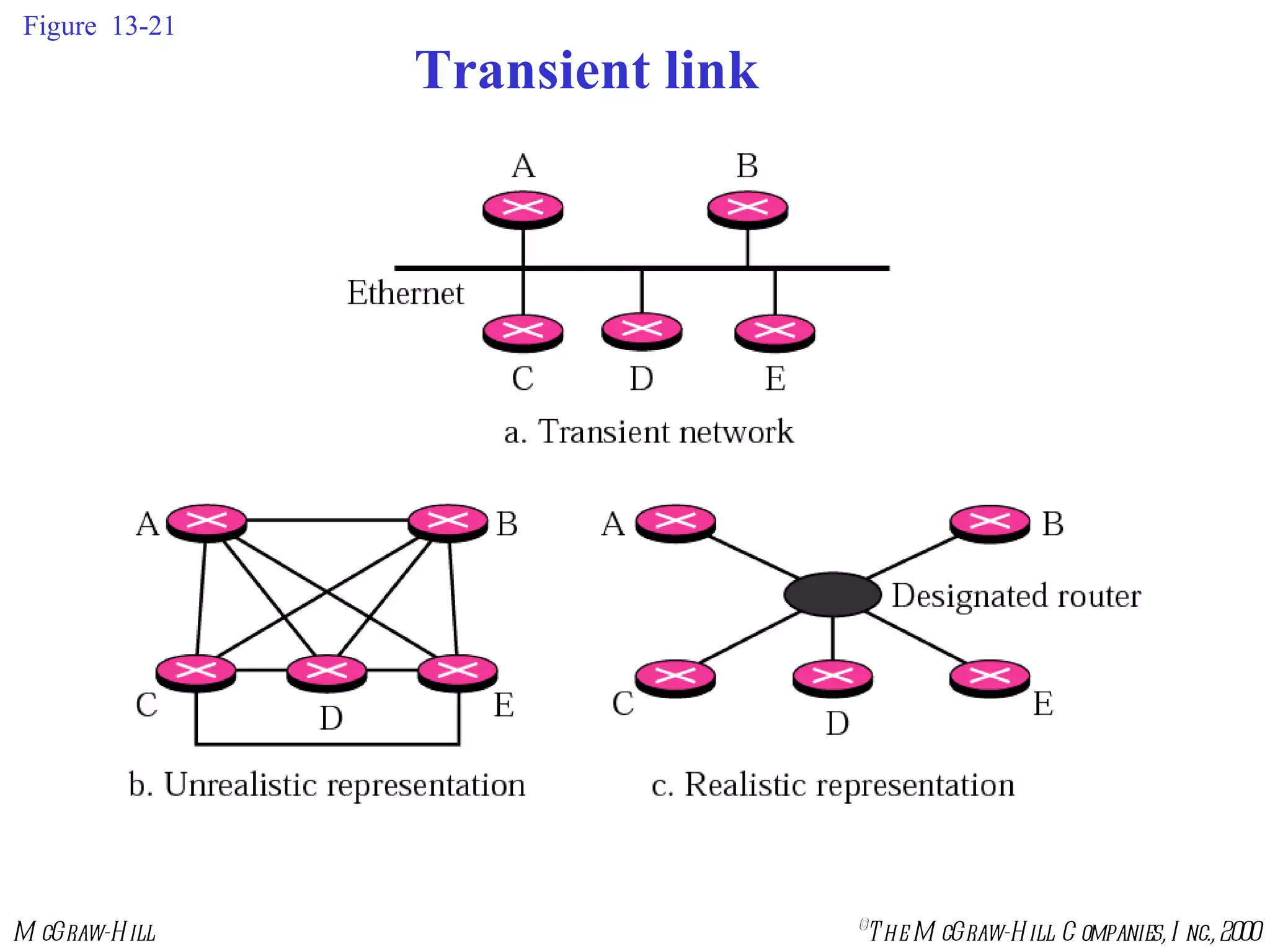
Figure  13-21 Transient link
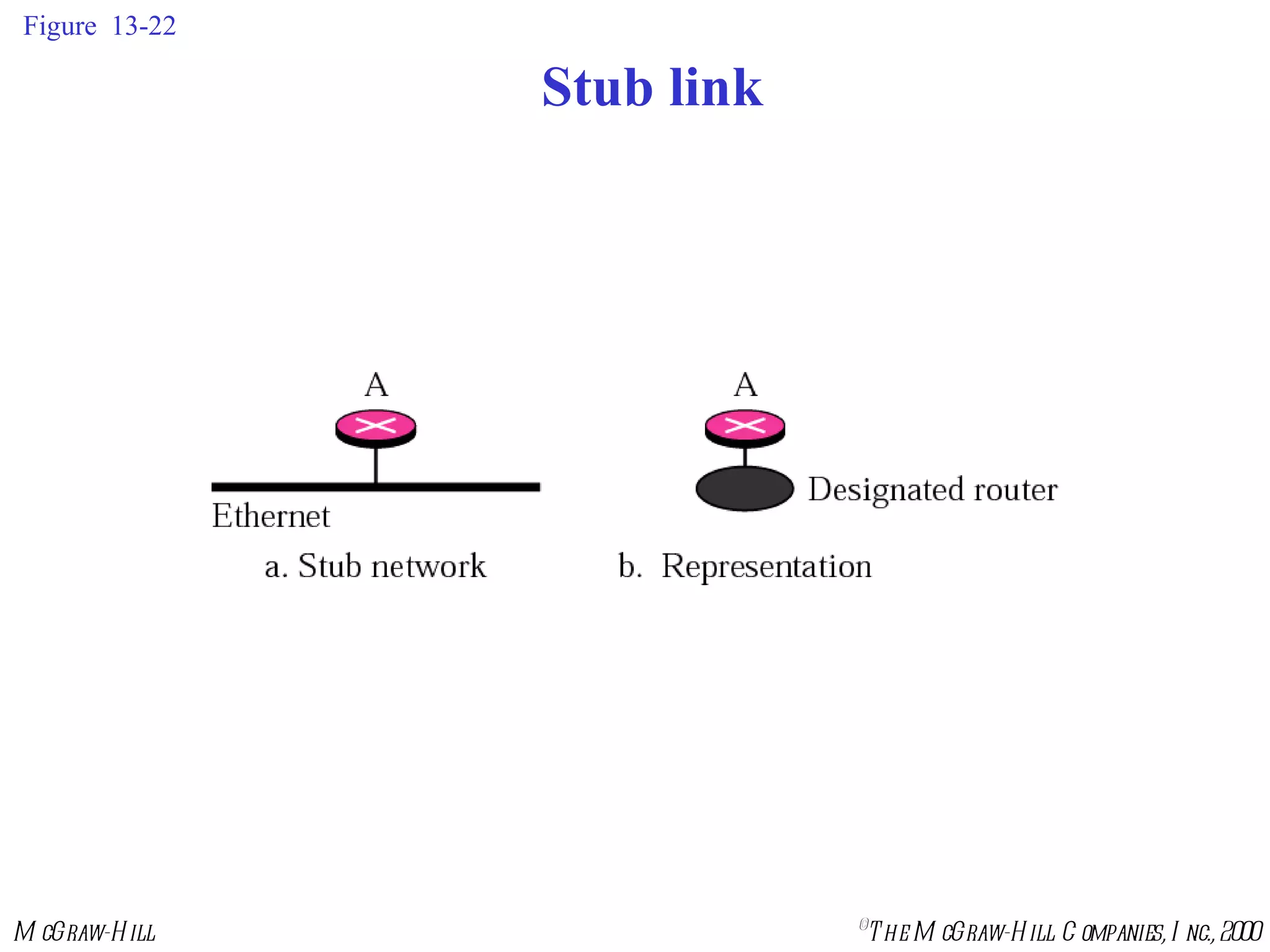
Figure  13-22 Stub link
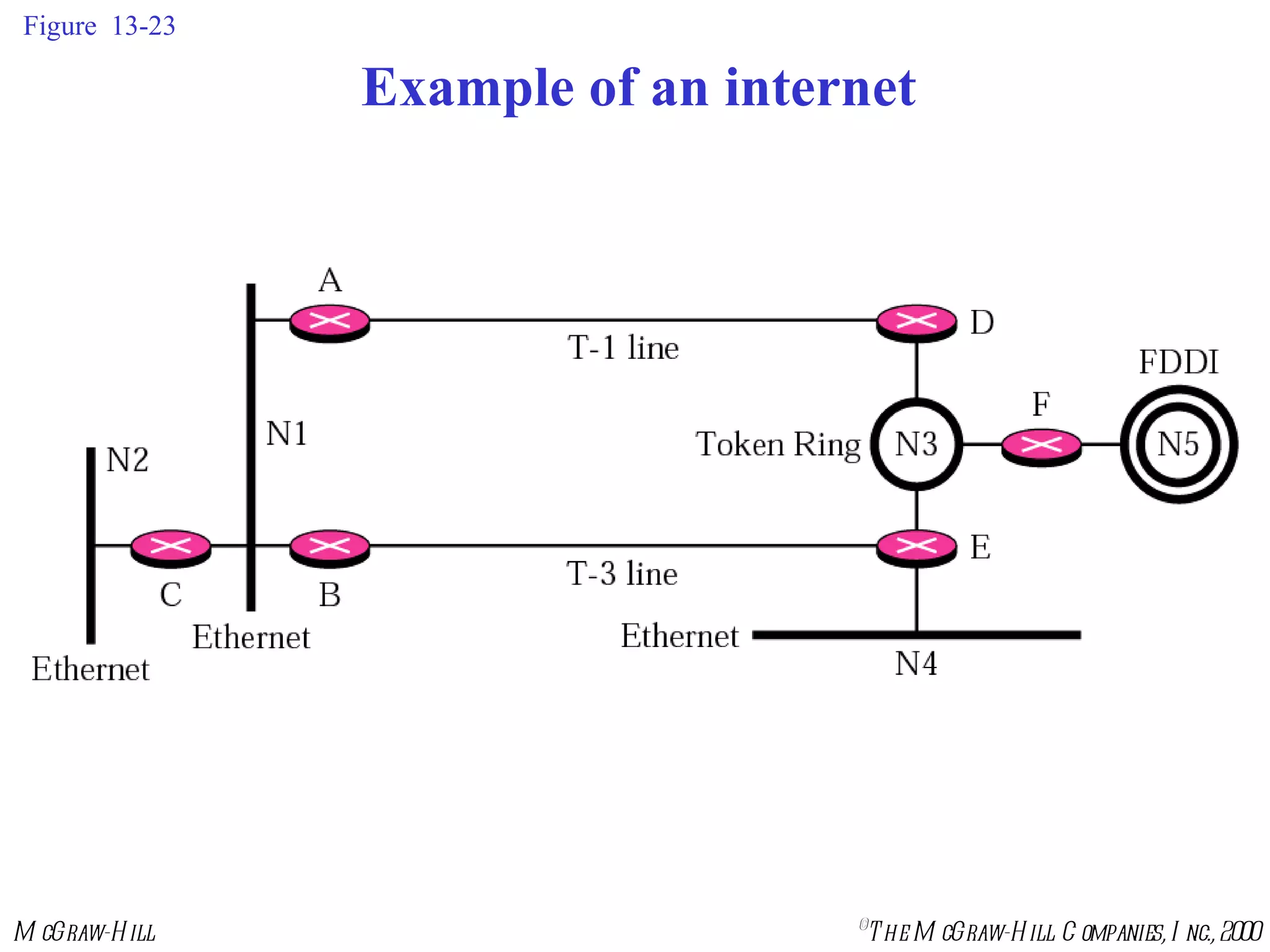
Figure  13-23 Example of an internet
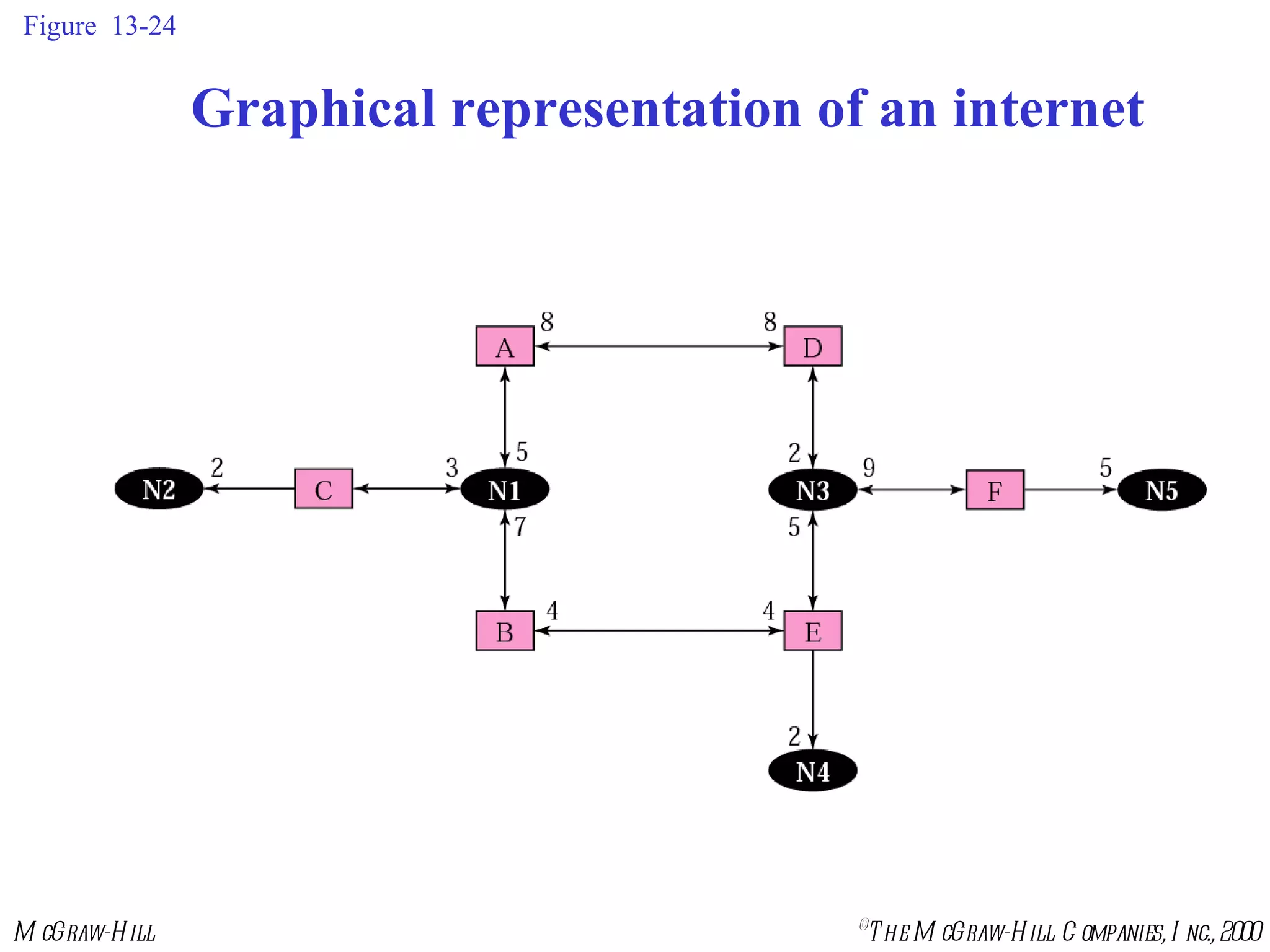
Figure  13-24 Graphical representation of an internet
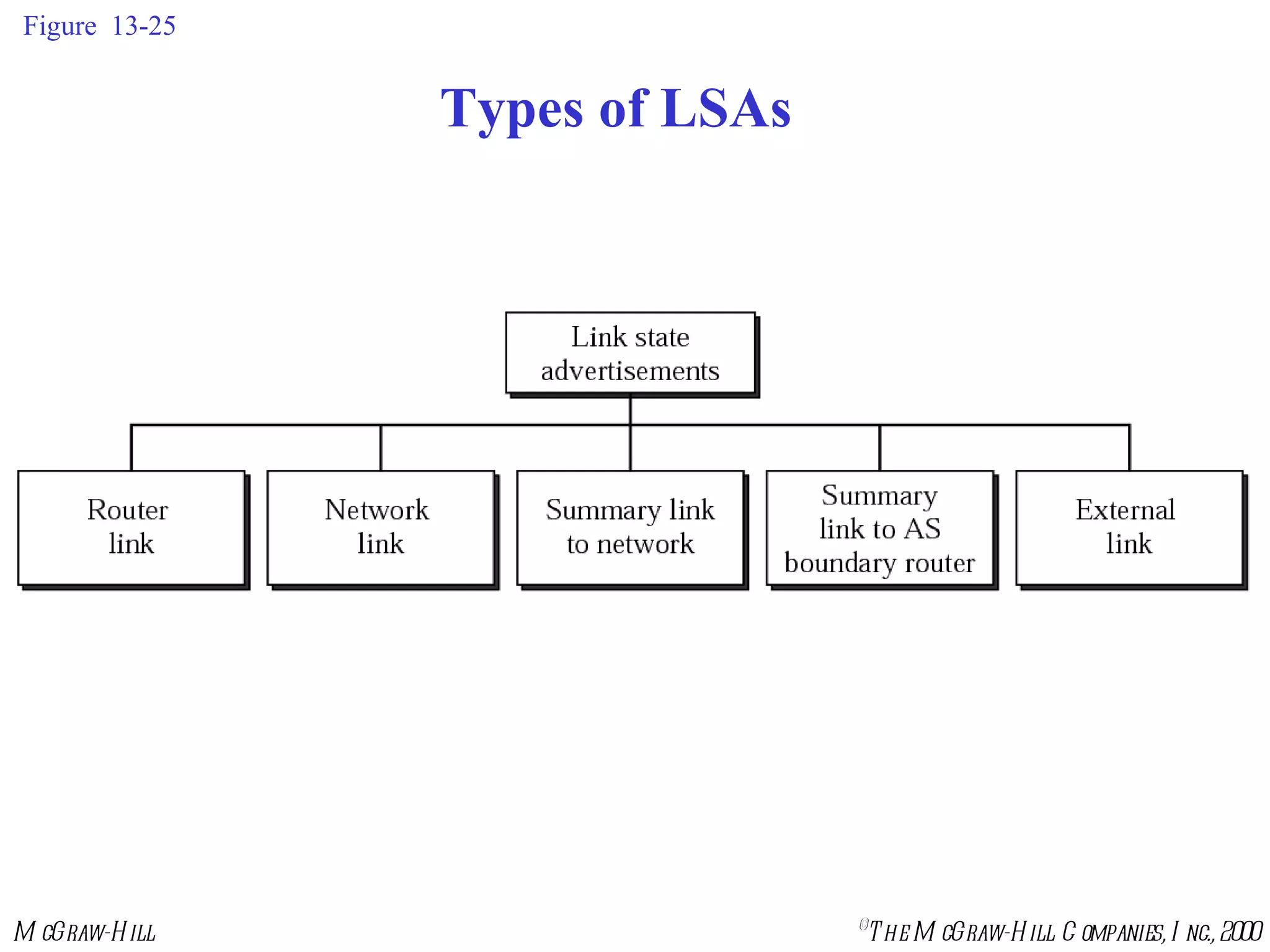
Figure  13-25 Types of LSAs
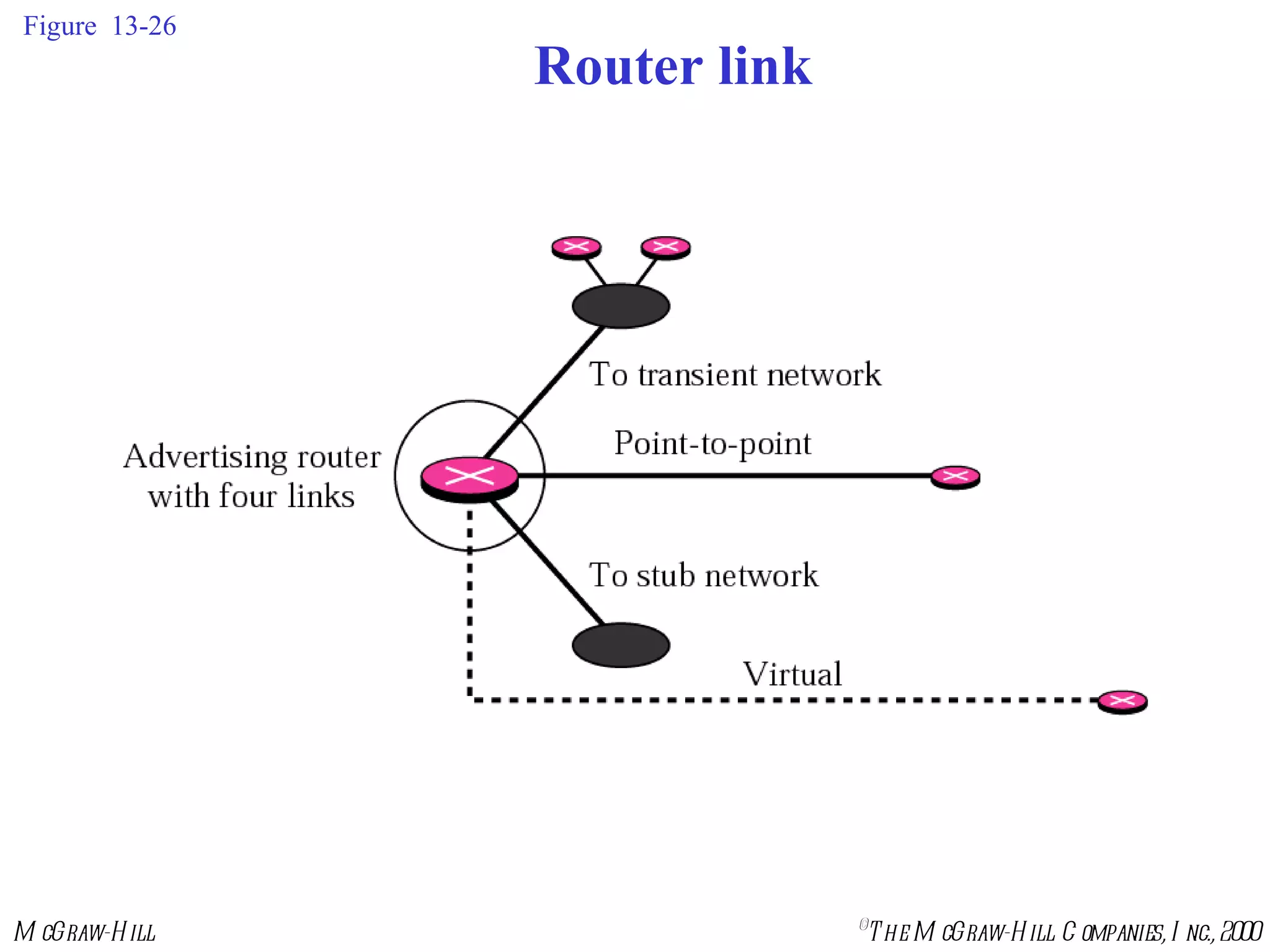
Figure  13-26 Router link
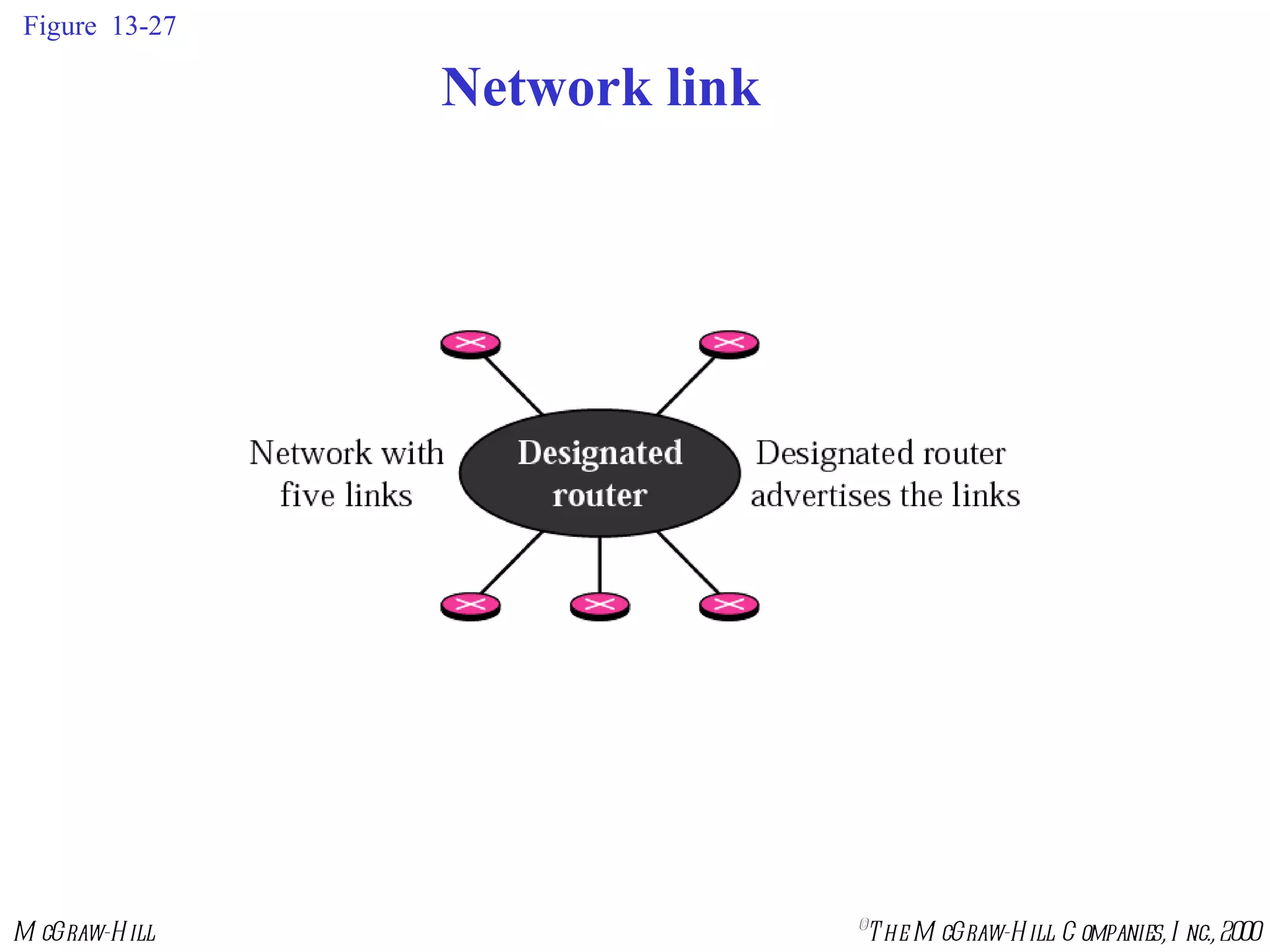
Figure  13-27 Network link
Figure  13-28 Summary link to network
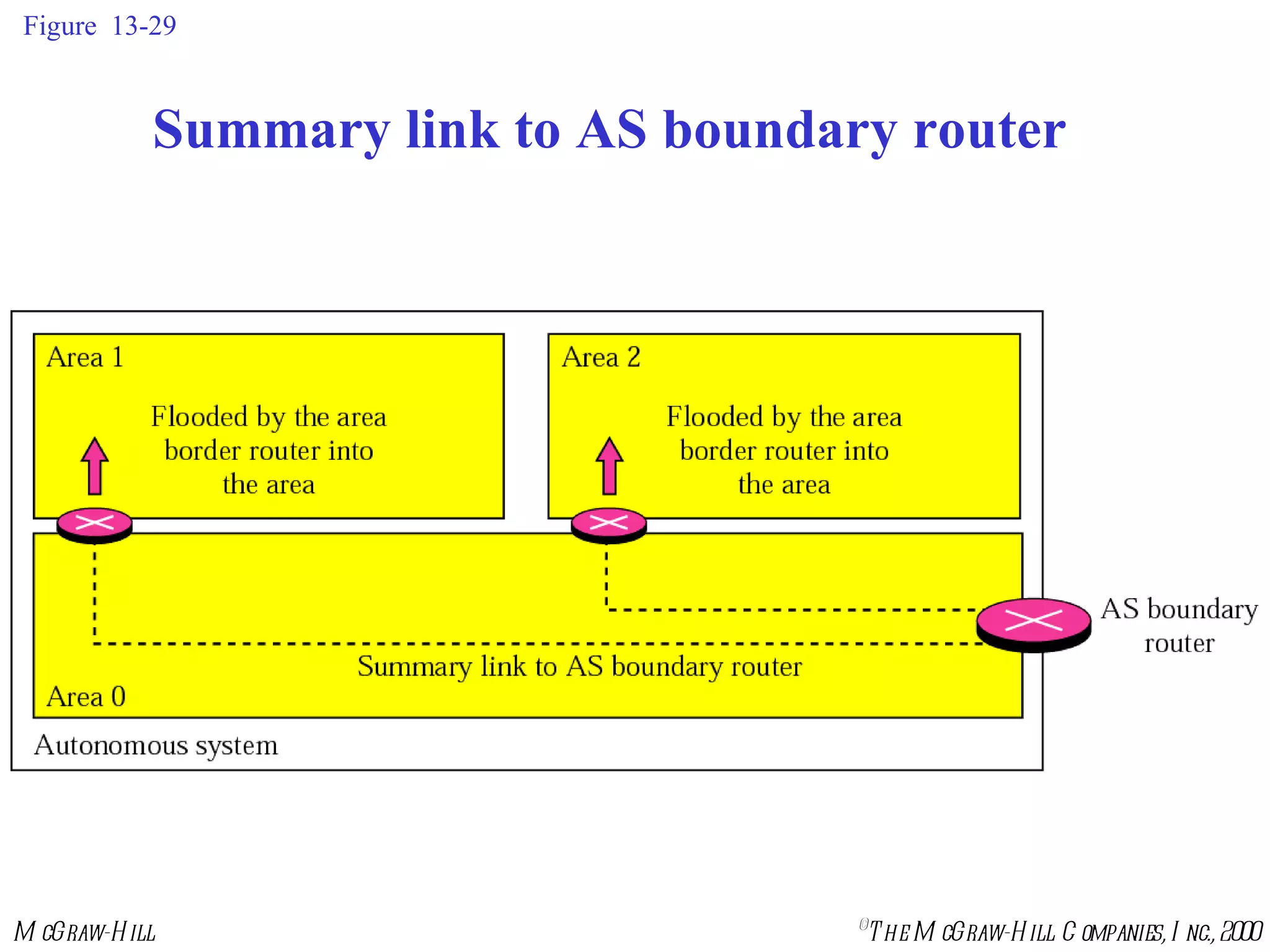
Figure  13-29 Summary link to AS boundary router
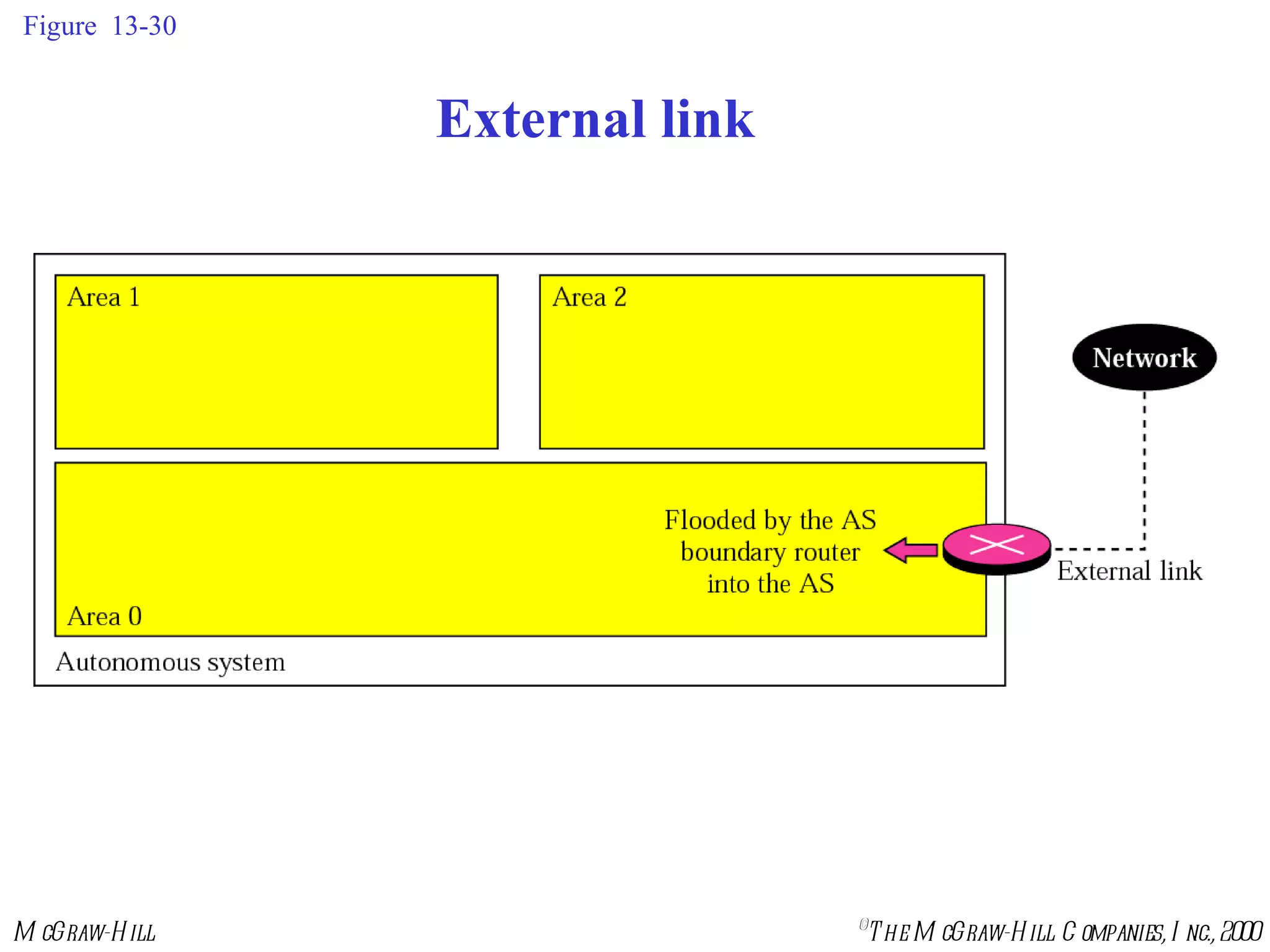
Figure  13-30 External link
Example 3 In Figure 13.31 (next slide), which router(s) sends out router link LSAs?
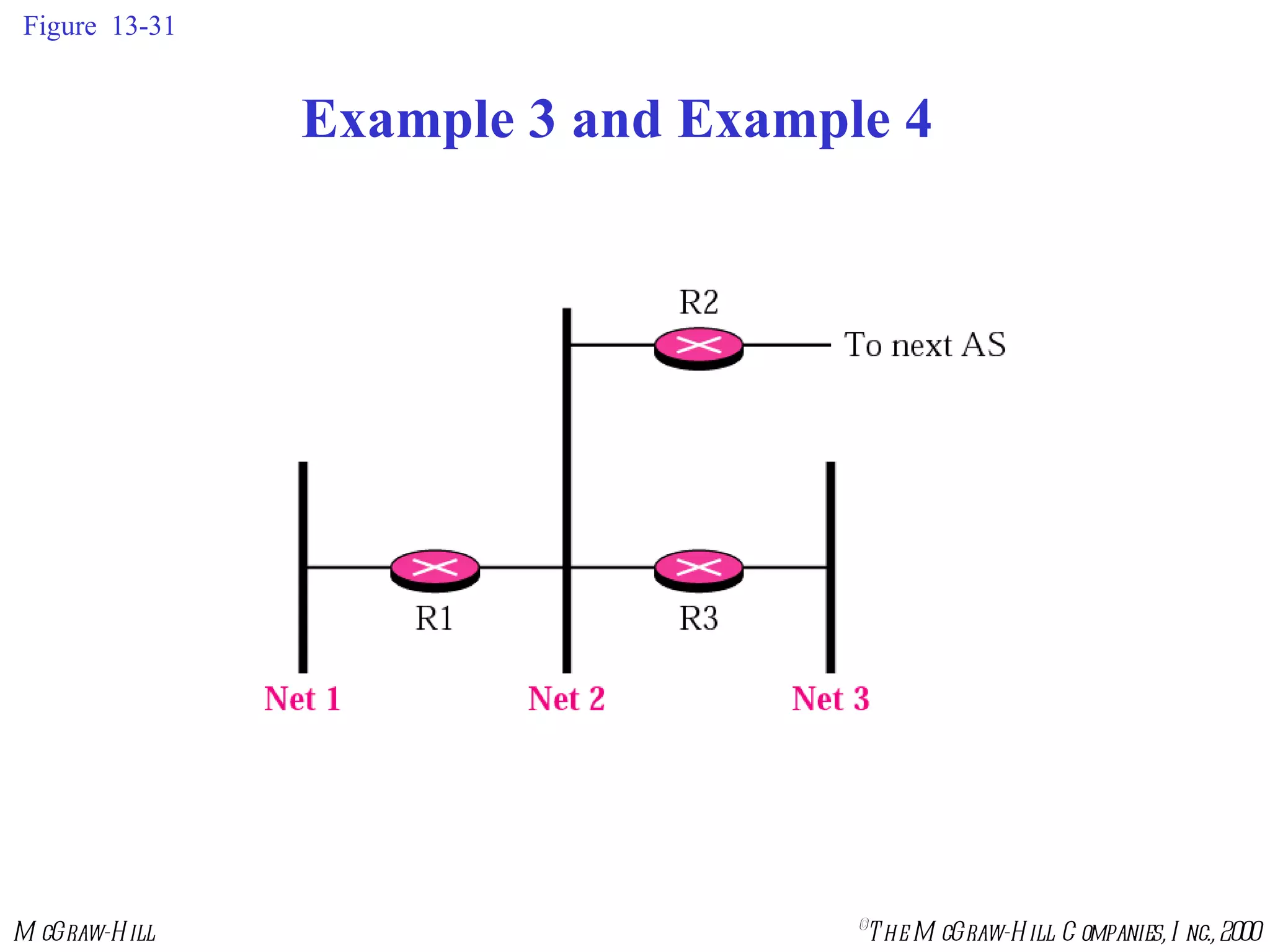
Figure  13-31 Example 3 and Example 4
Solution All routers advertise router link LSAs.   R1 has two links, Net1 and Net2. R2 has one link, Net1 in this AS. R3 has two links, Net2 and Net3.
Example 4 In Figure 13.31, which router(s) sends out the network link LSAs?
Solution All three network must advertise network links: Advertisement for Net1 is done by R1 because it is the only router and therefore the designated router. Advertisement for Net2 can be done by either R1, R2, or R3, depending on which one is chosen as the designated router.  Advertisement for Net3 is done by R3 because it is the only router and therefore the designated router.
In OSPF, all routers have  the same link state database.
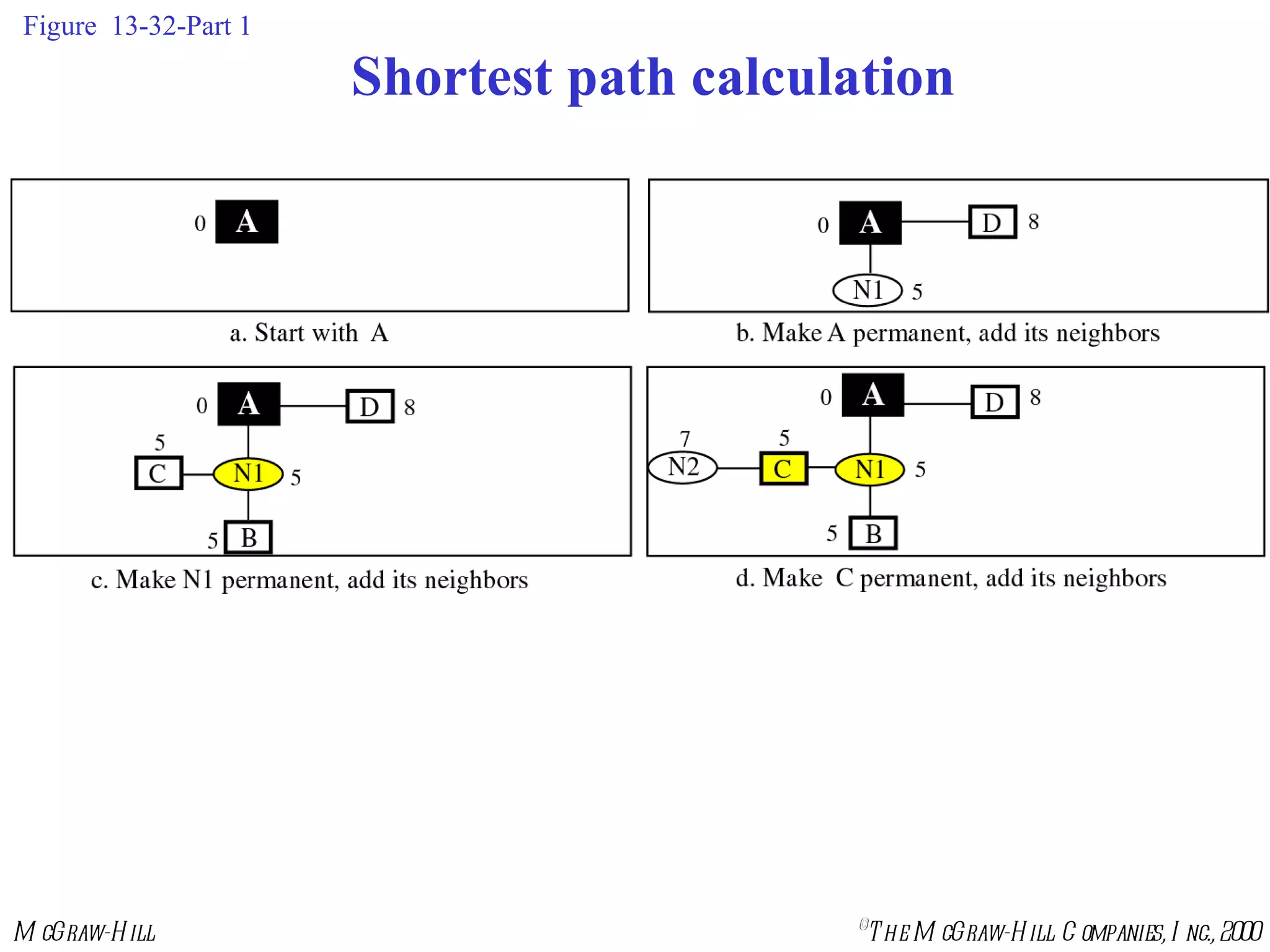
Figure  13-32-Part 1 Shortest path calculation
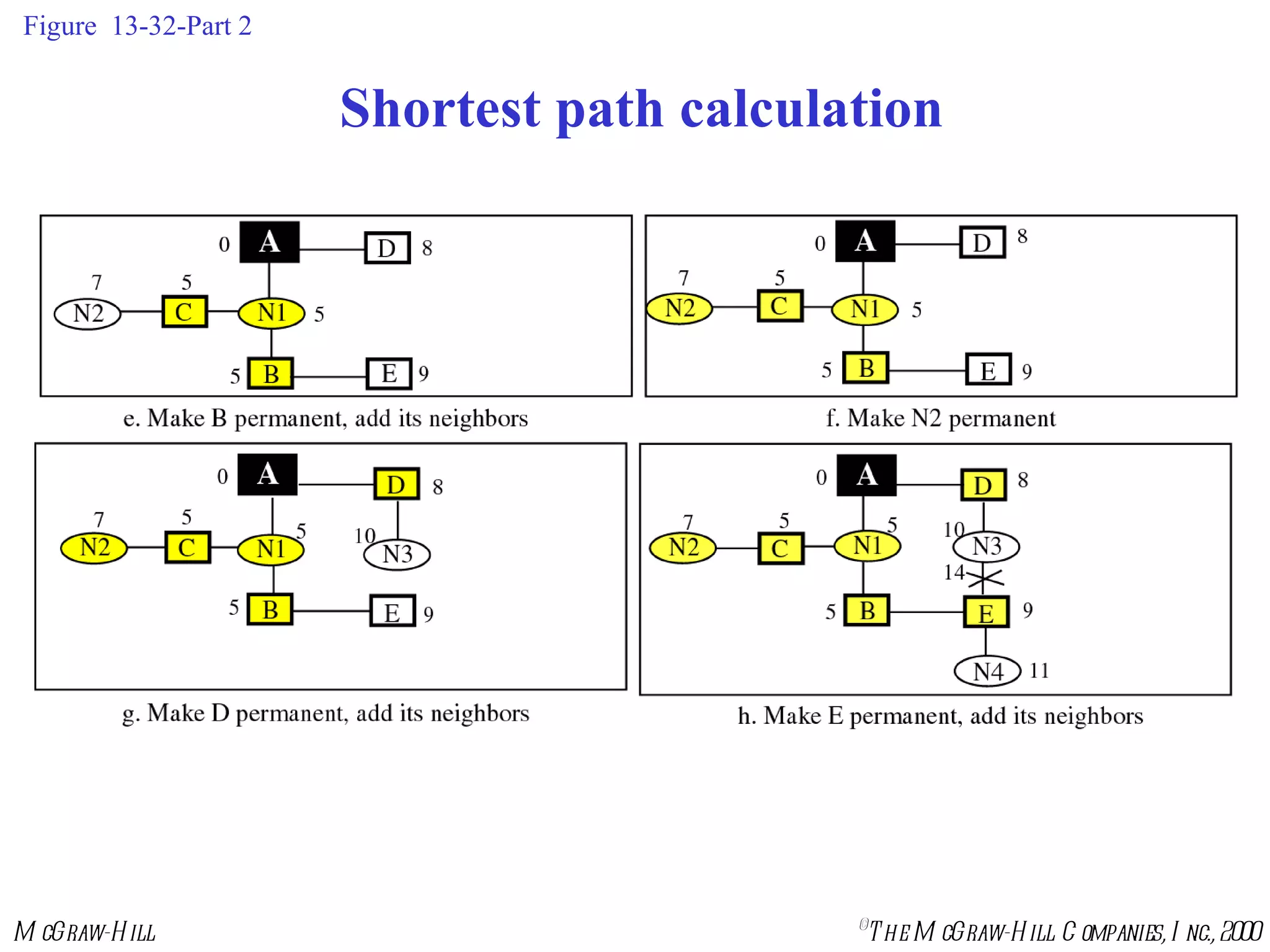
Figure  13-32-Part 2 Shortest path calculation
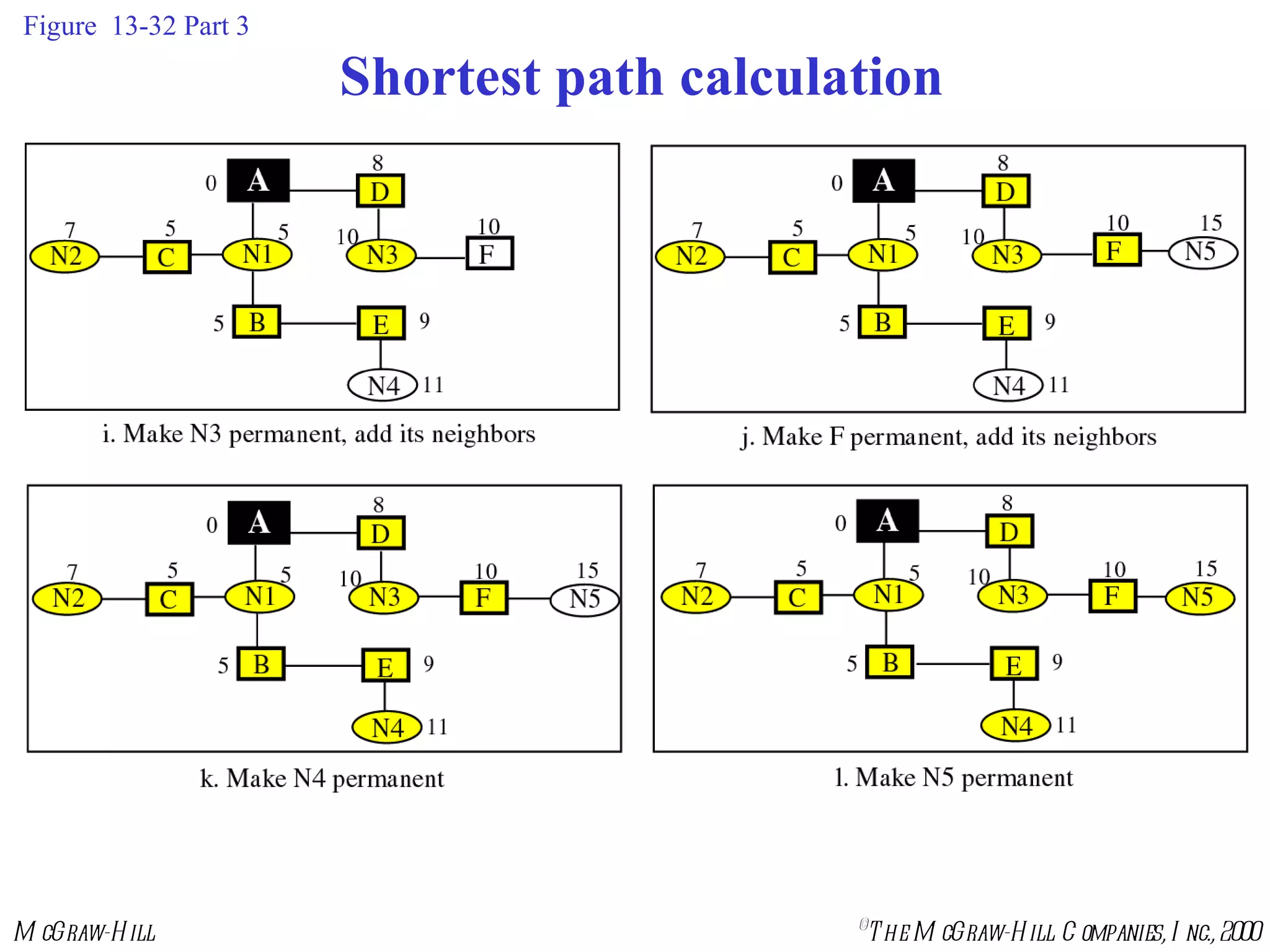
Figure  13-32 Part 3 Shortest path calculation
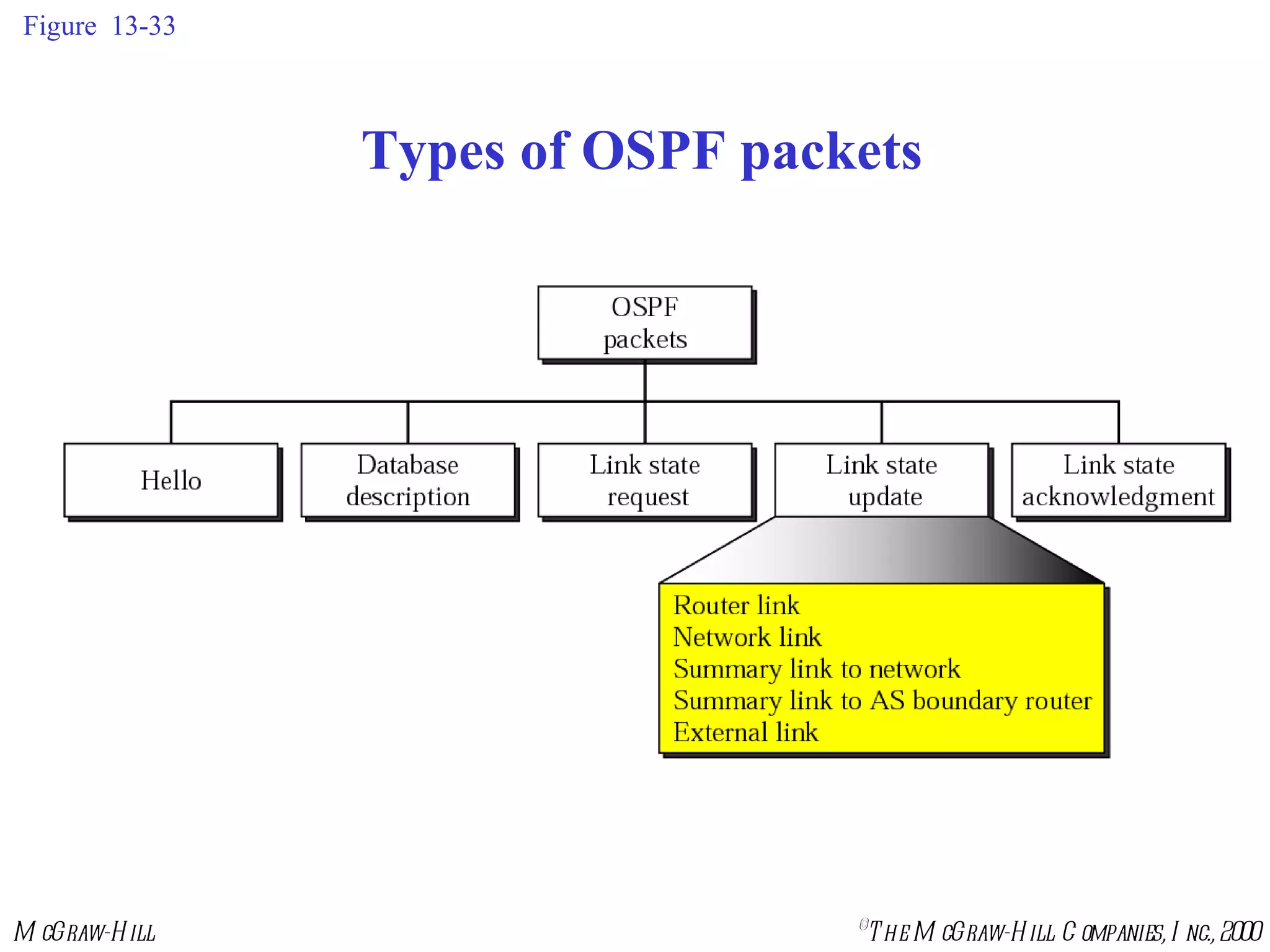
Figure  13-33 Types of OSPF packets
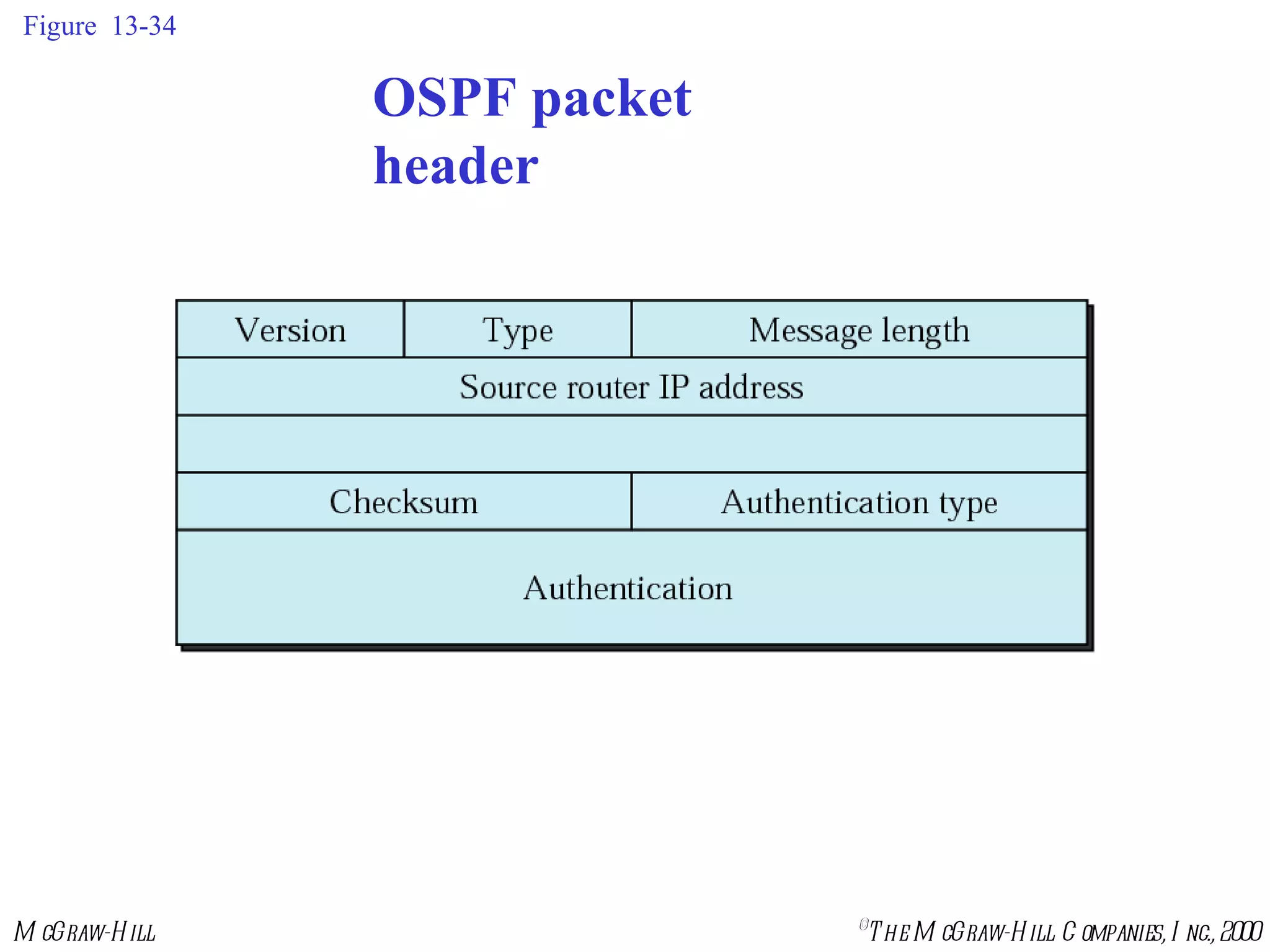
Figure  13-34 OSPF packet header
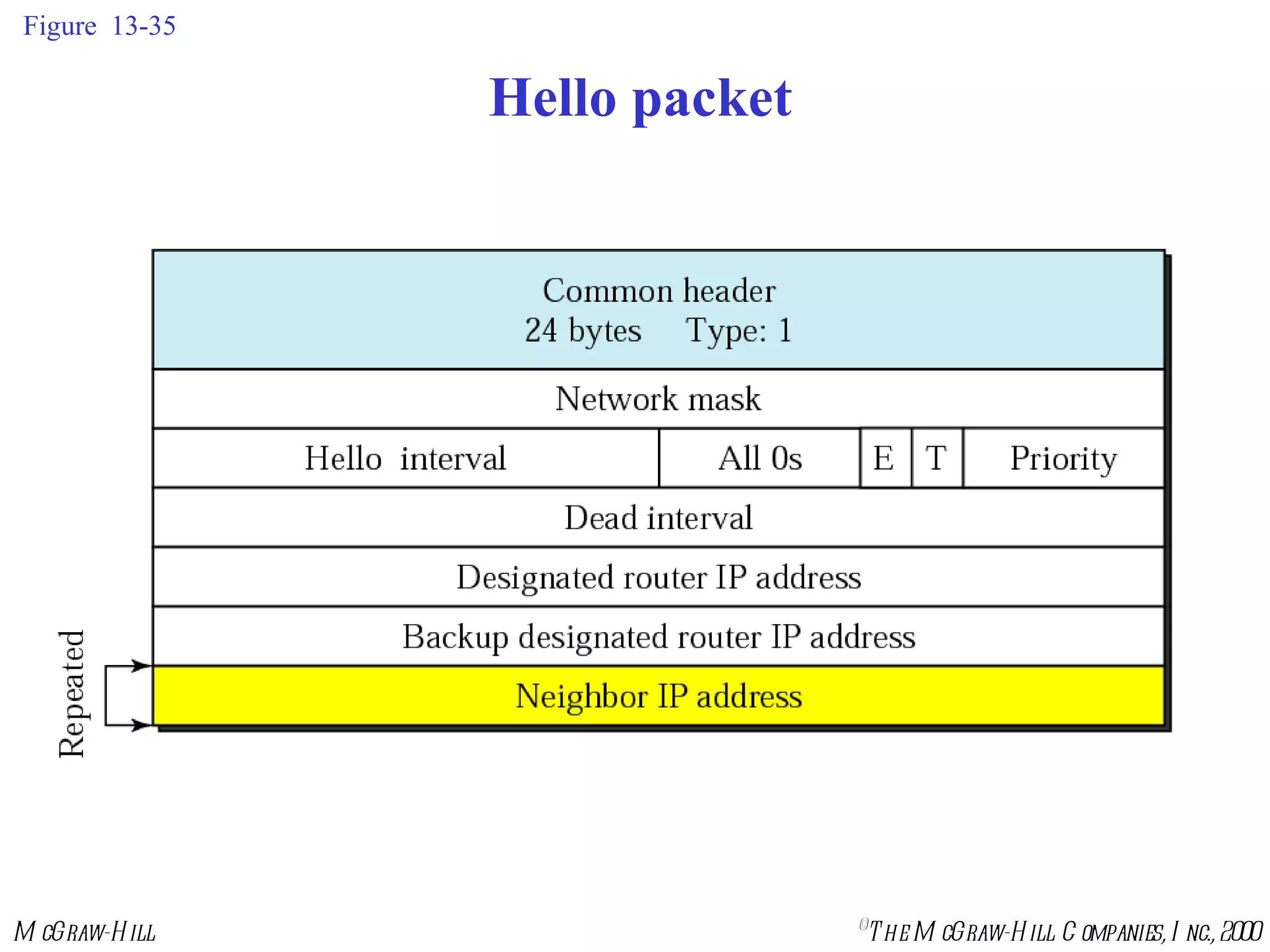
Figure  13-35 Hello packet
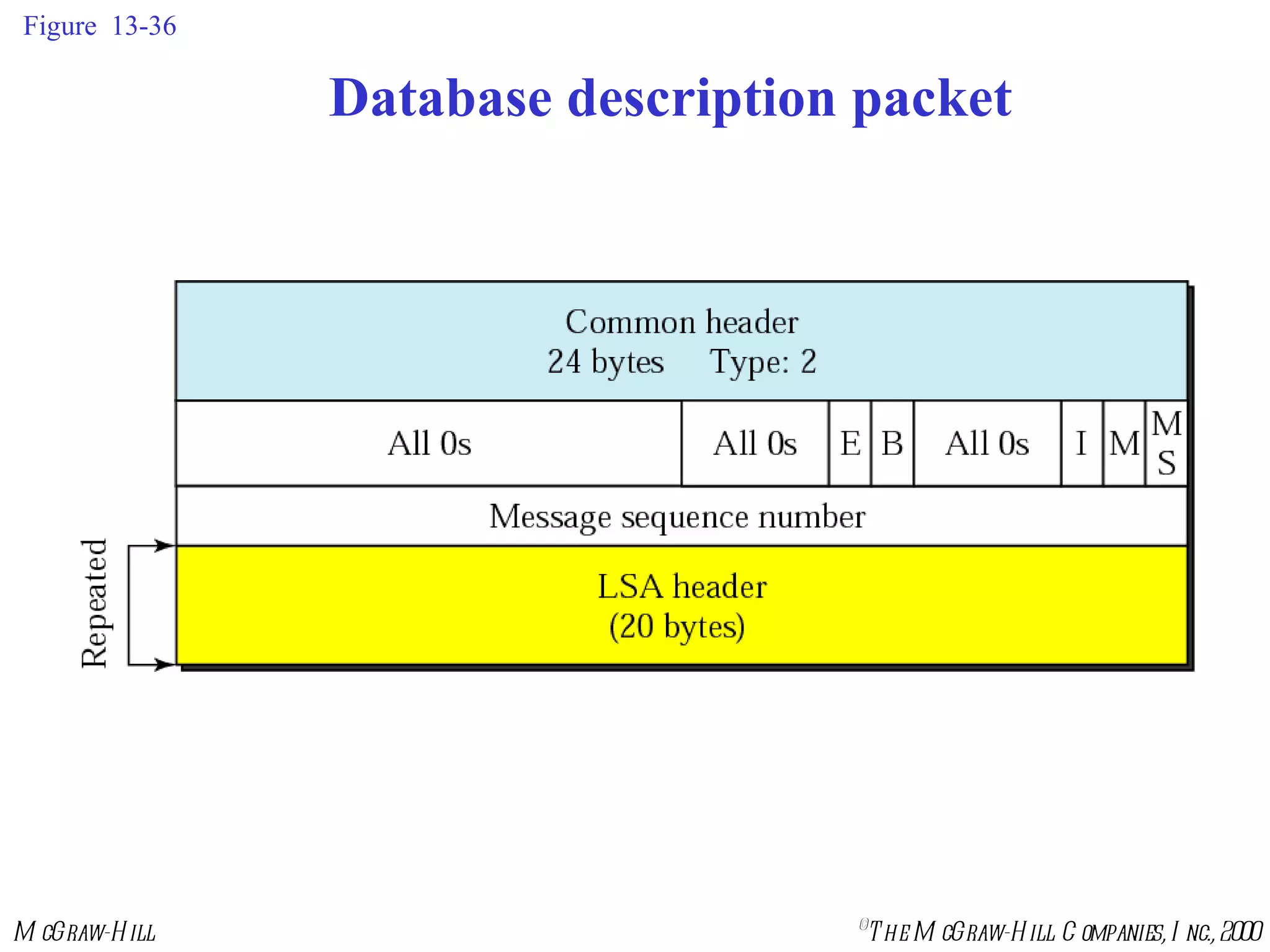
Figure  13-36 Database description packet
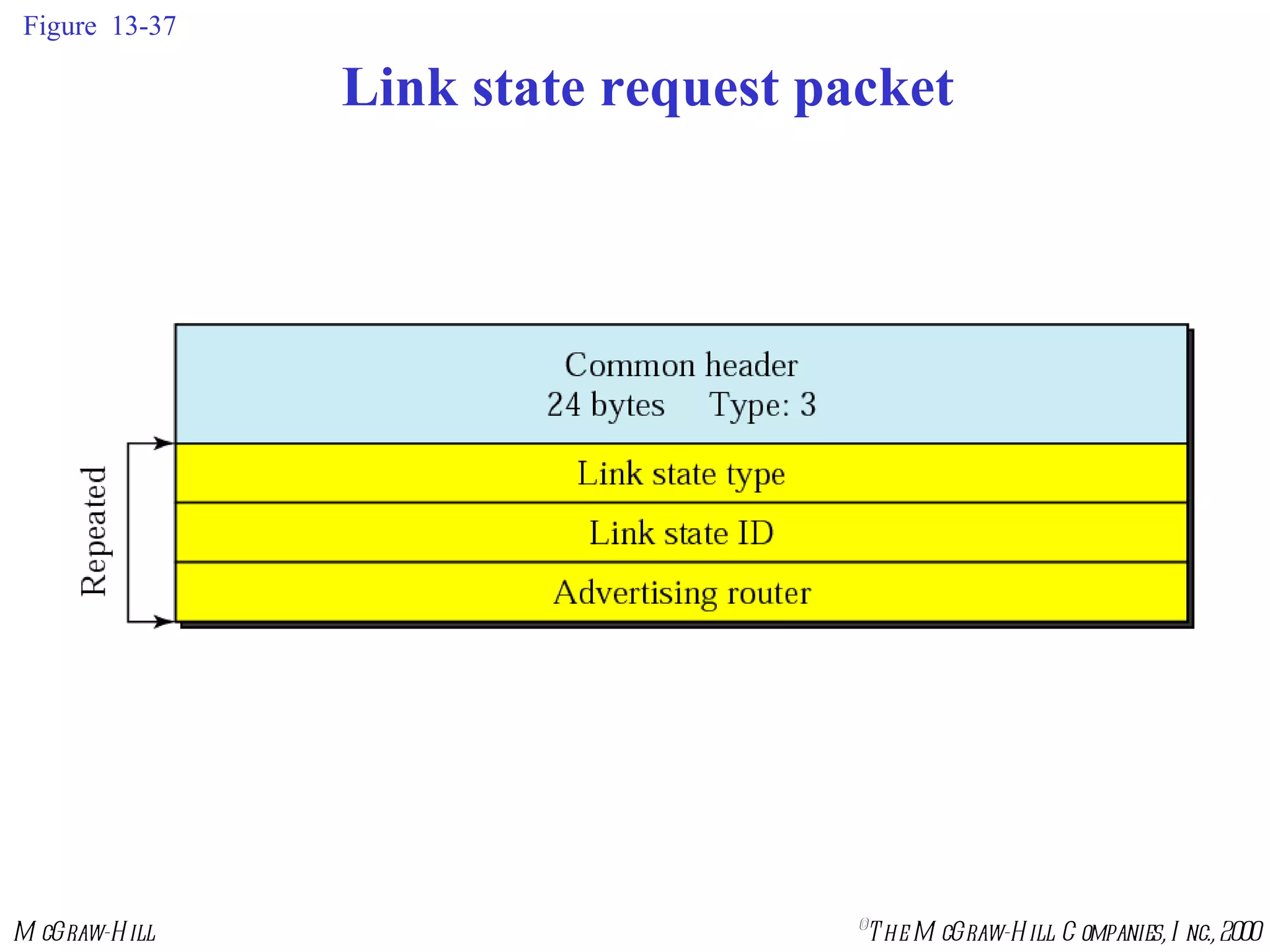
Figure  13-37 Link state request packet
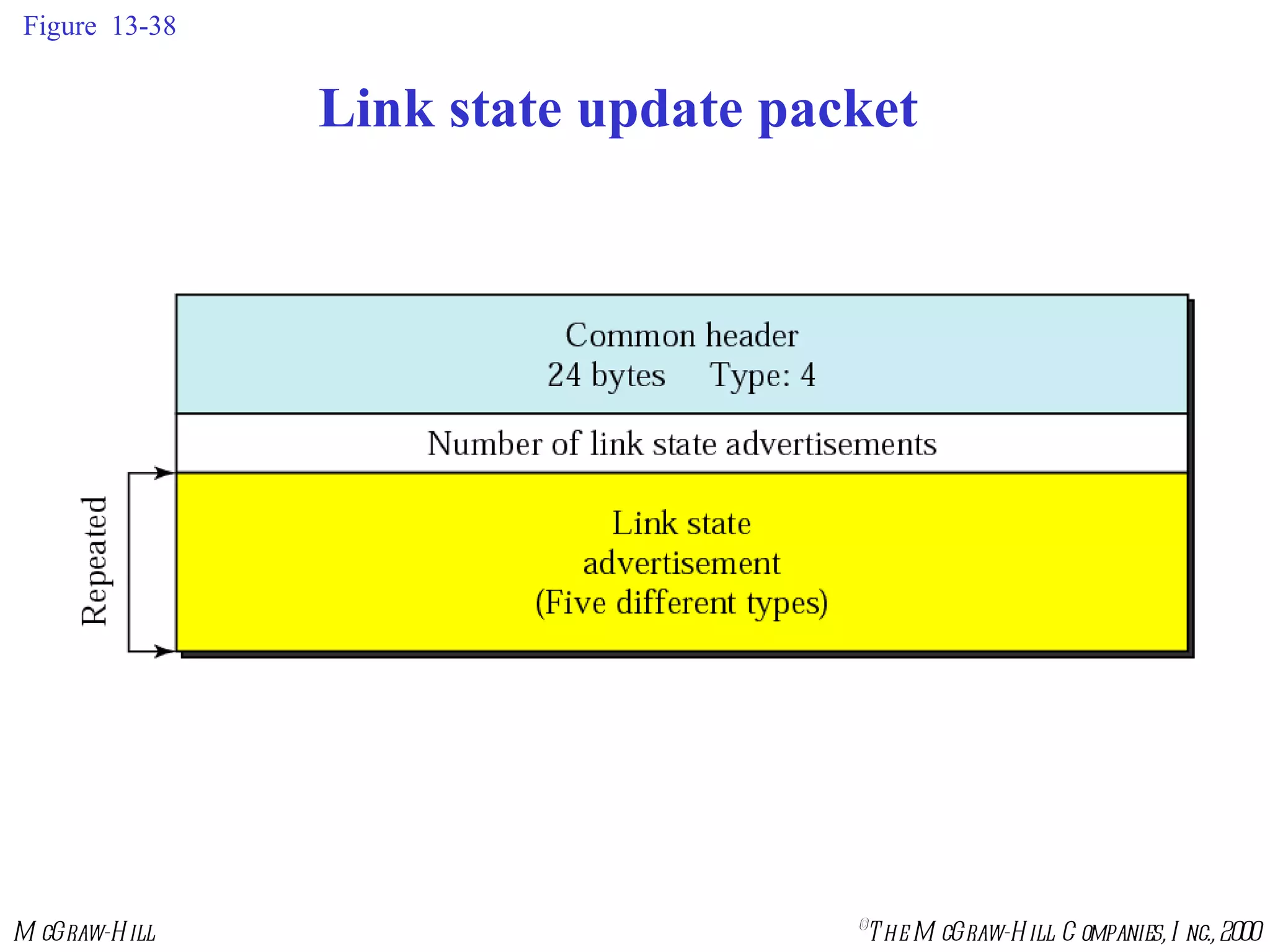
Figure  13-38 Link state update packet
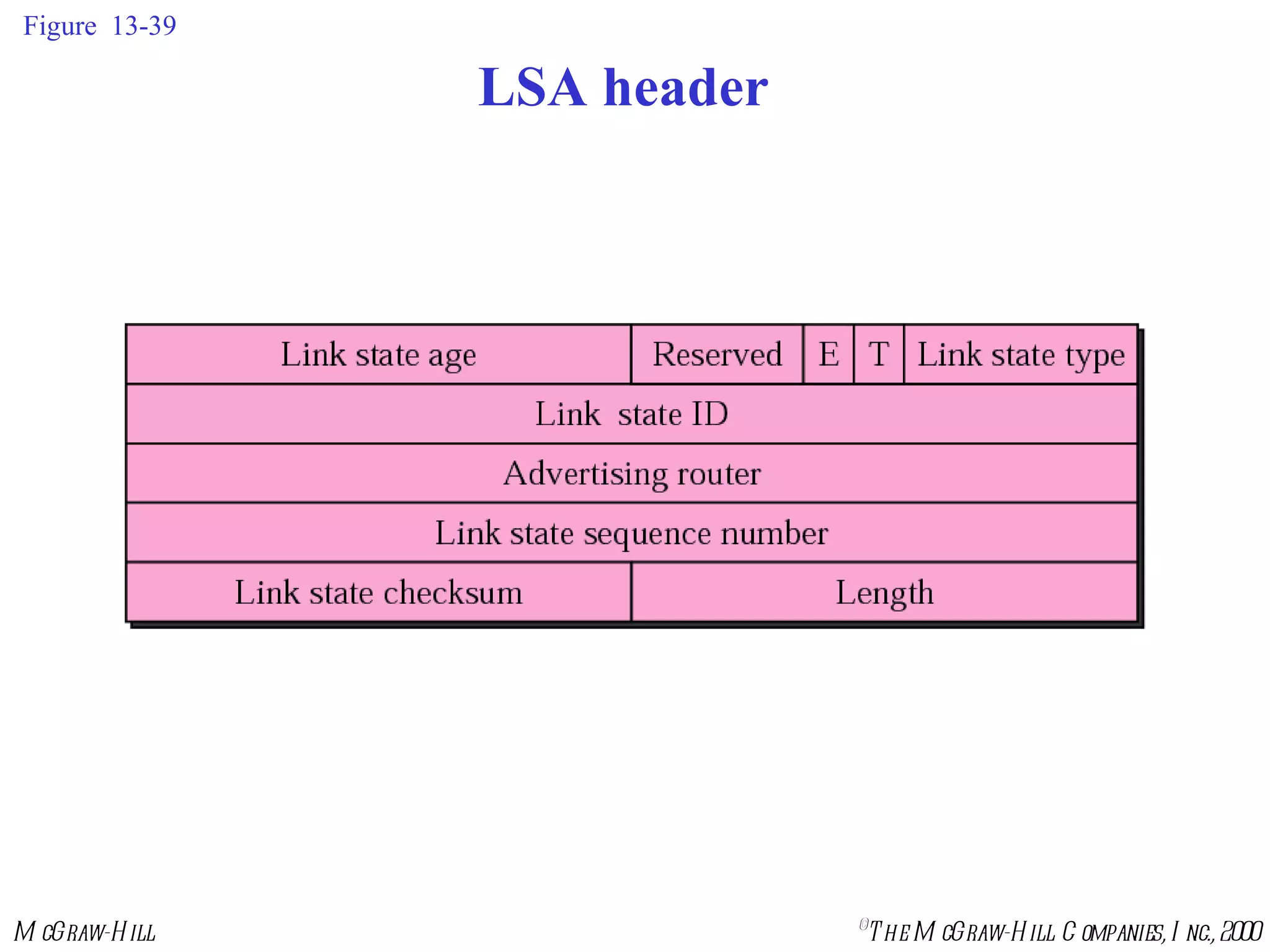
Figure  13-39 LSA header
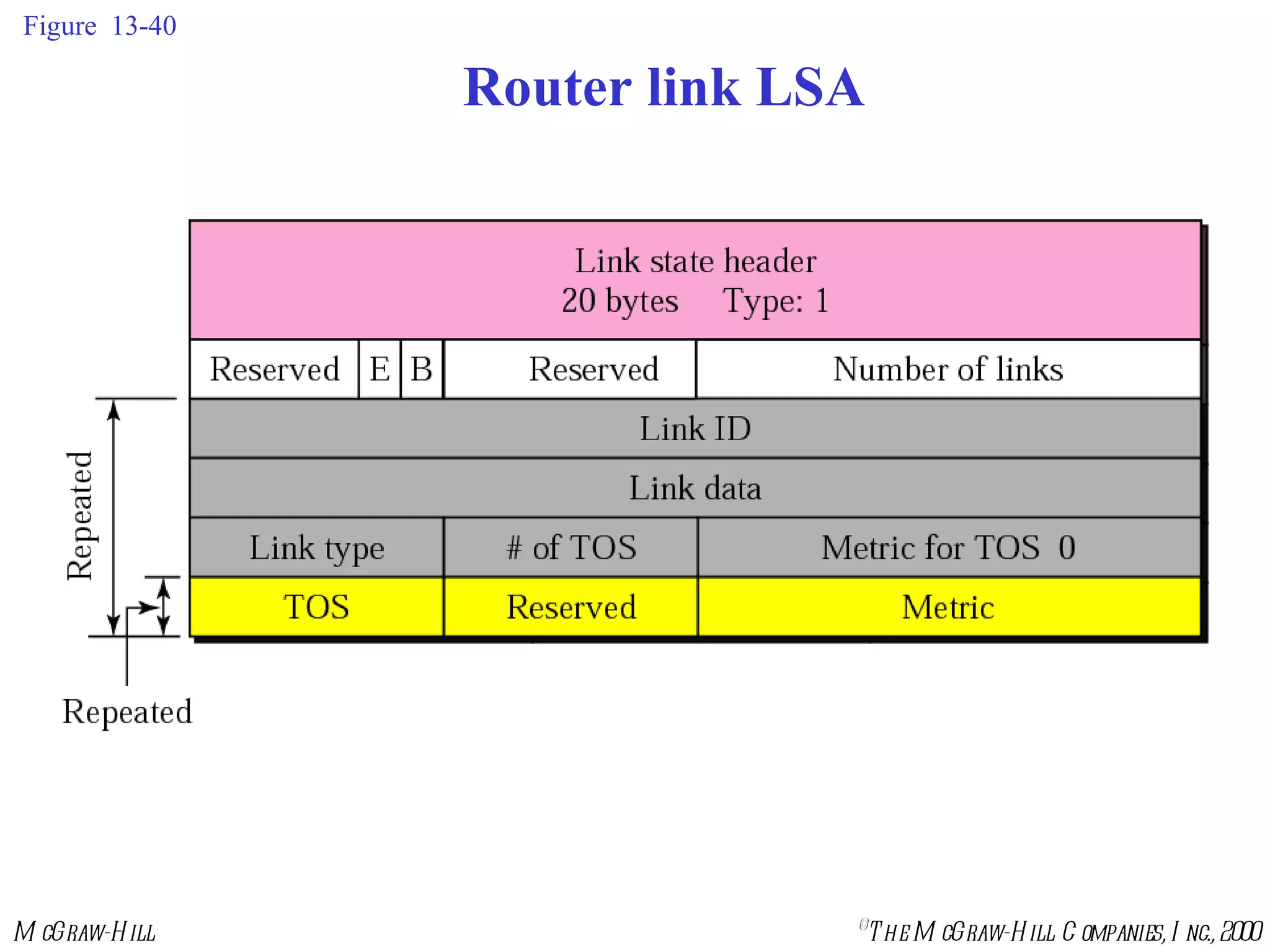
Figure  13-40 Router link LSA
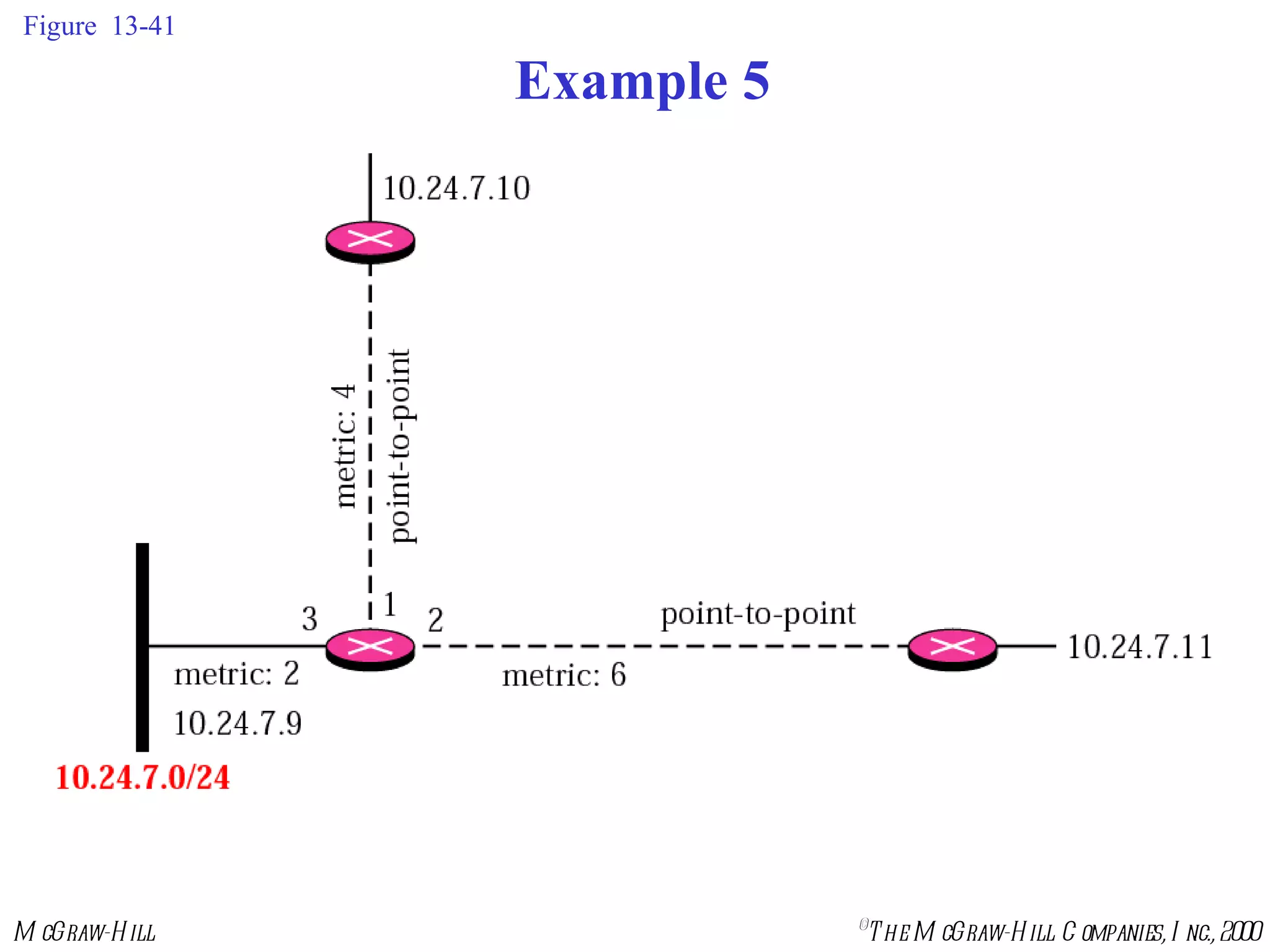
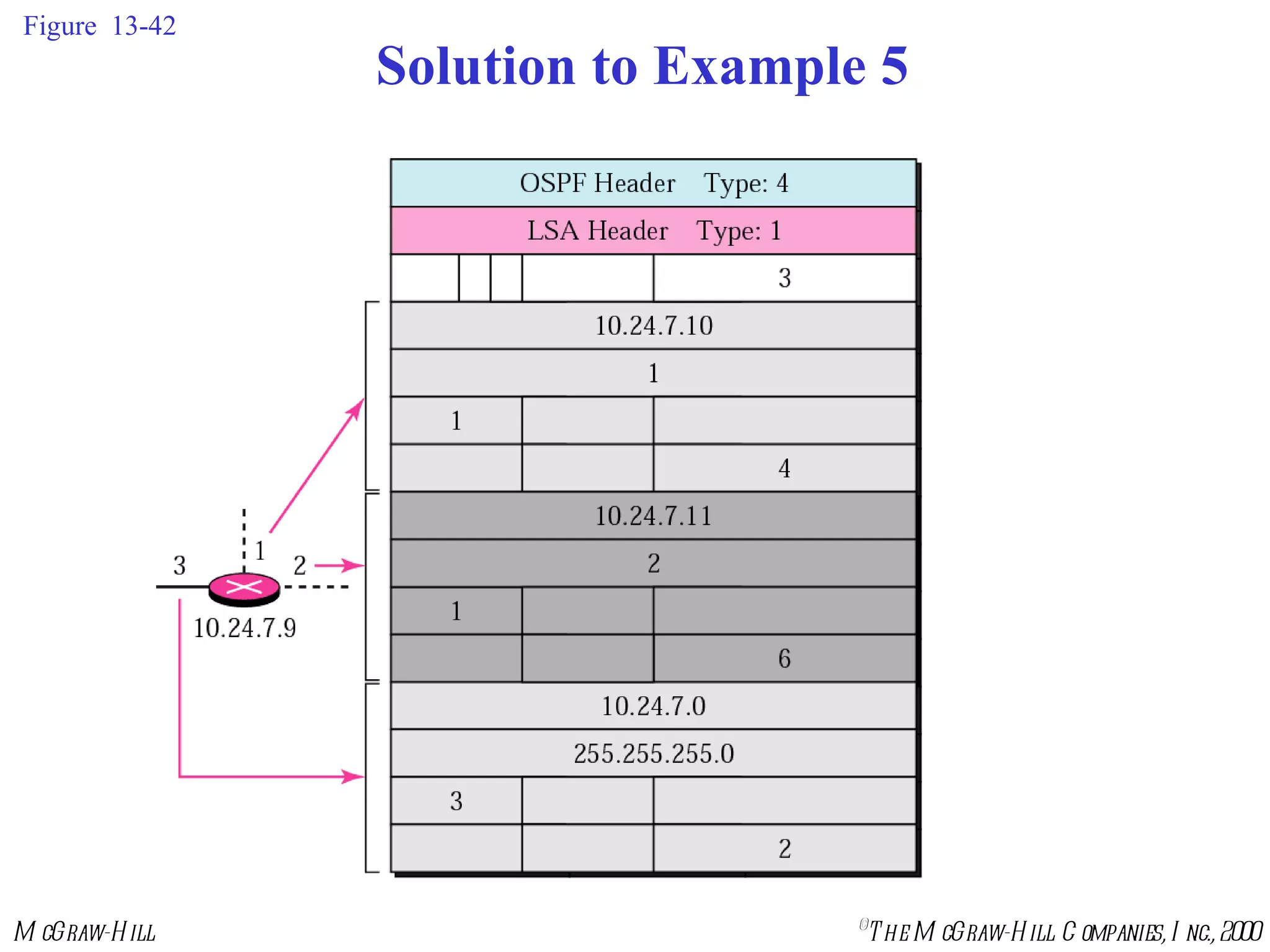
Example 5 Give the router link LSA sent by router 10.24.7.9 in Figure 13.41.
Figure  13-41 Example 5
Solution This router has three links: two of type 1 (point-to-point) and one of type 3 (stub network). Figure 13.42 shows the router link LSA.
Figure  13-42 Solution to Example 5
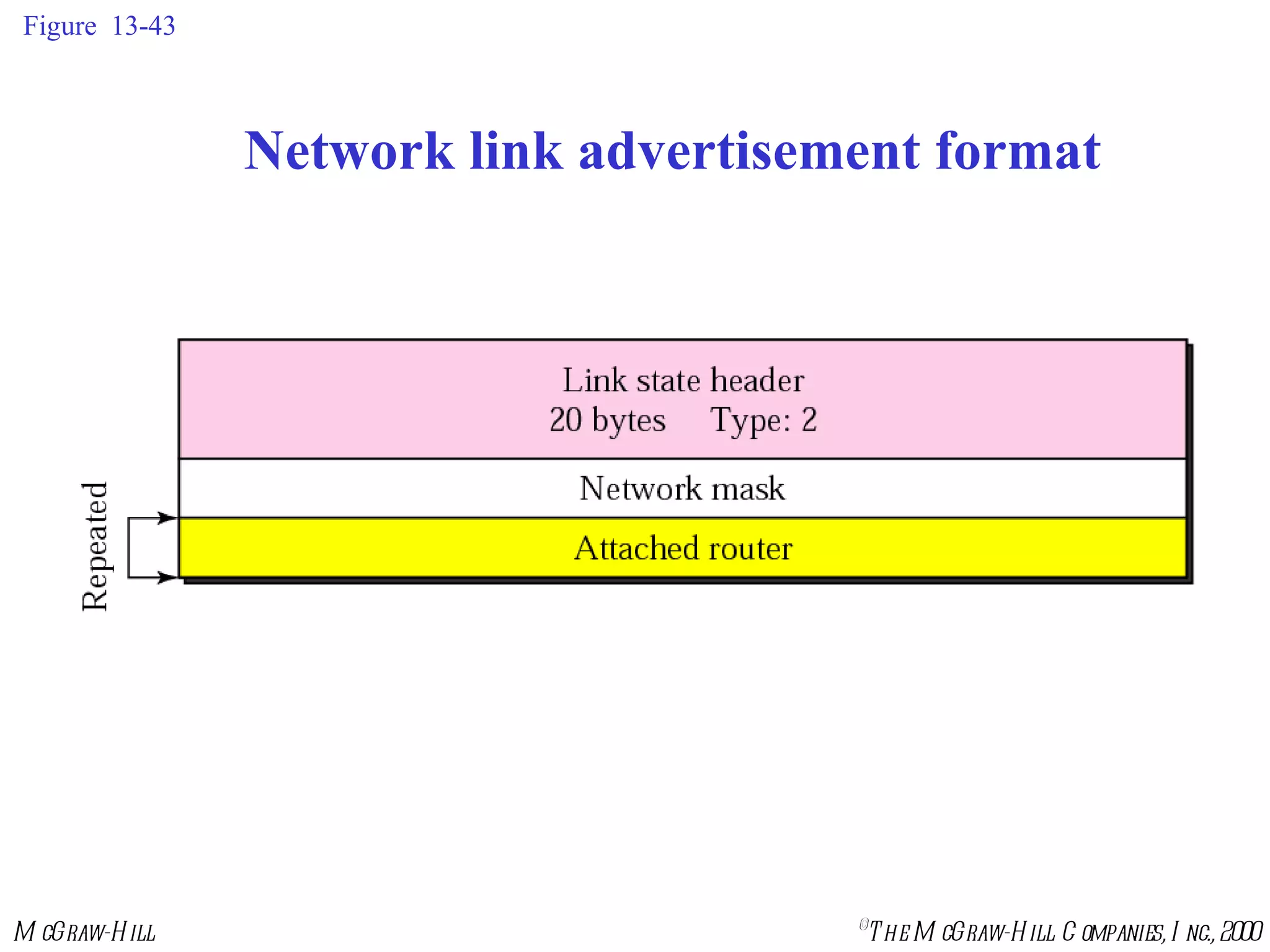
Figure  13-43 Network link advertisement format
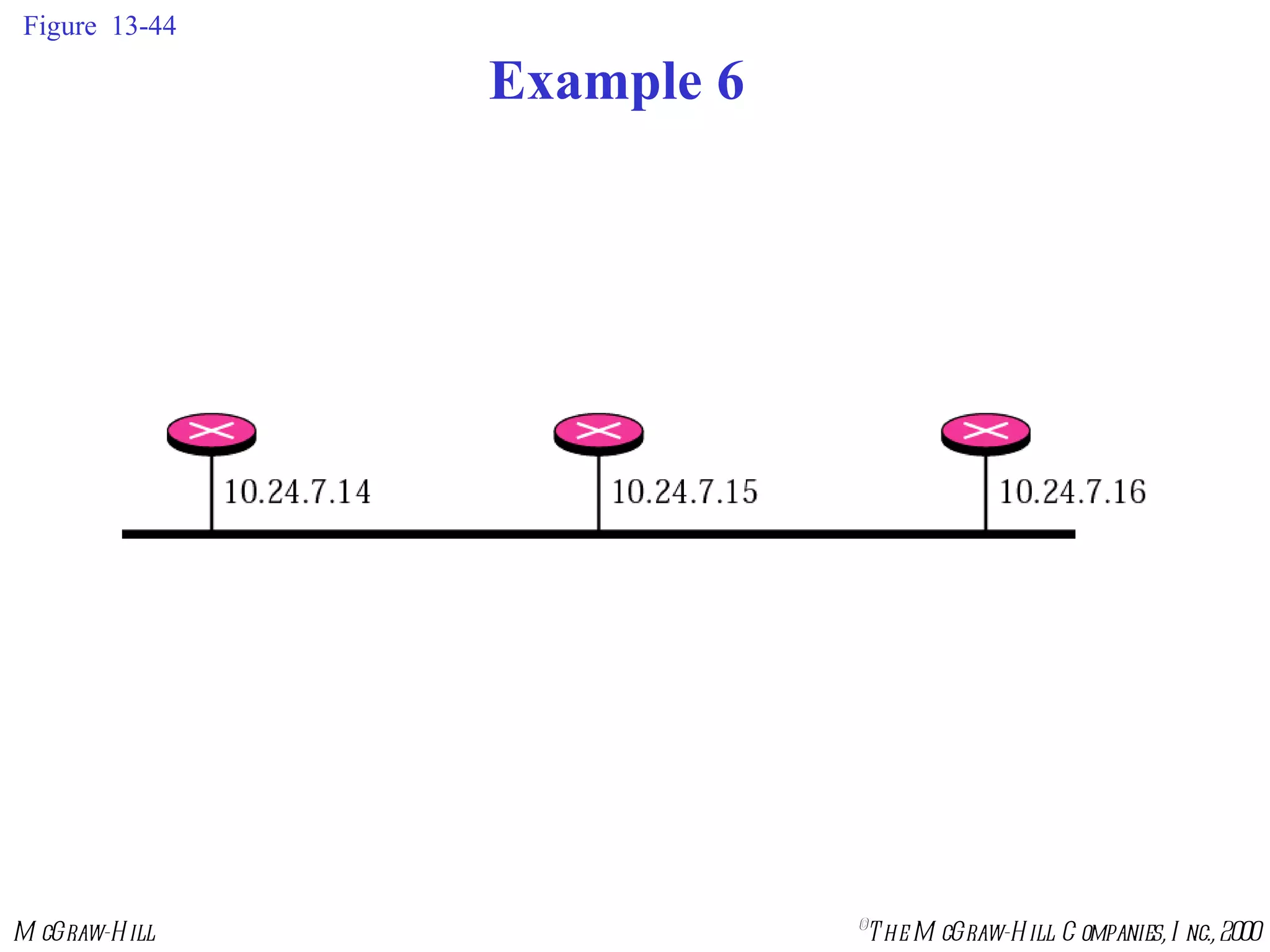
Example 6 Give the network link LSA in Figure 13.44.
Figure  13-44 Example 6
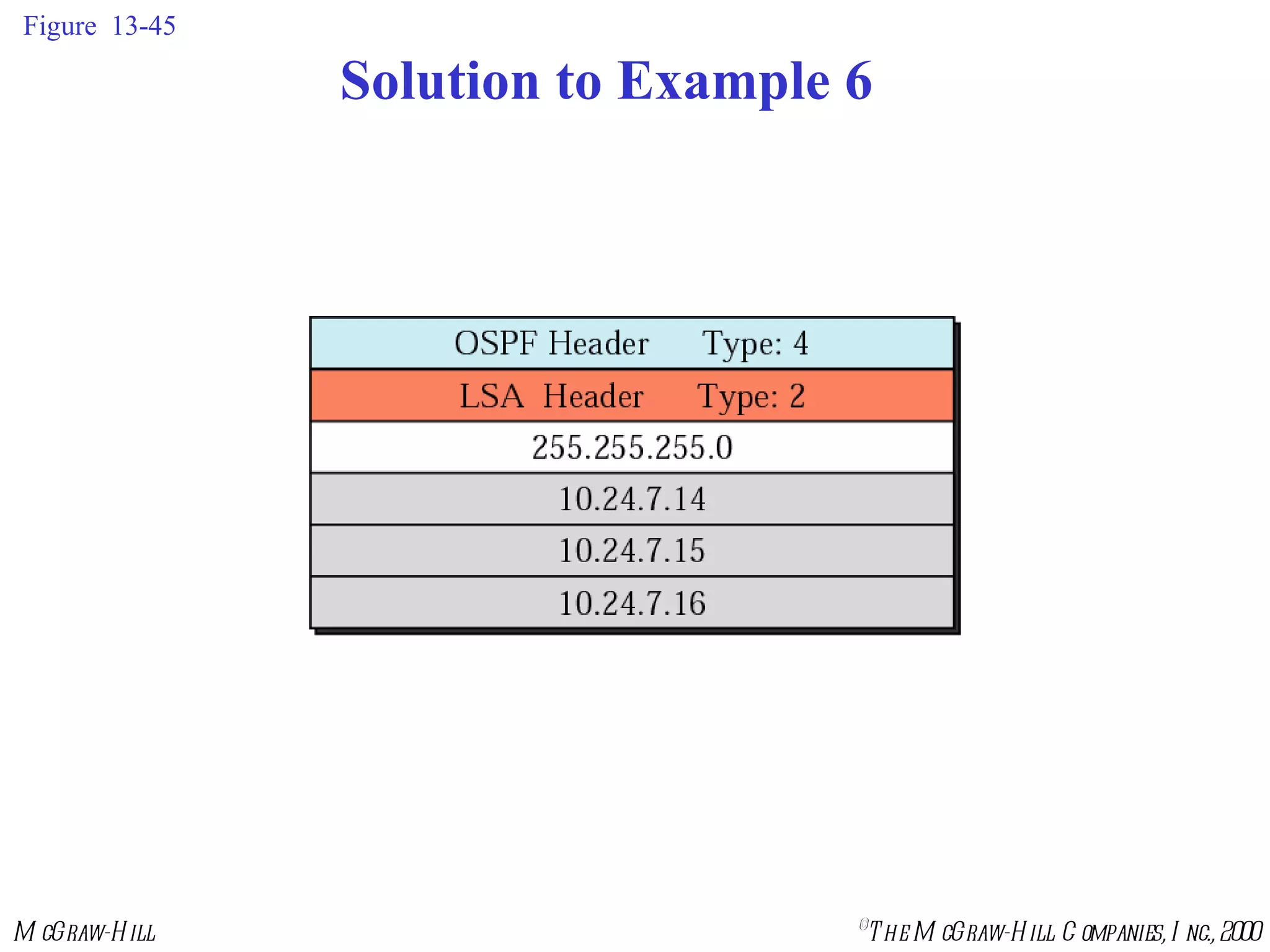
Solution The network, for which the network link advertises, has three routers attached. The LSA shows the mask and the router addresses. See Figure 13.45. Note that only one of the routers,  the designated router , advertises the network link.
Figure  13-45 Solution to Example 6
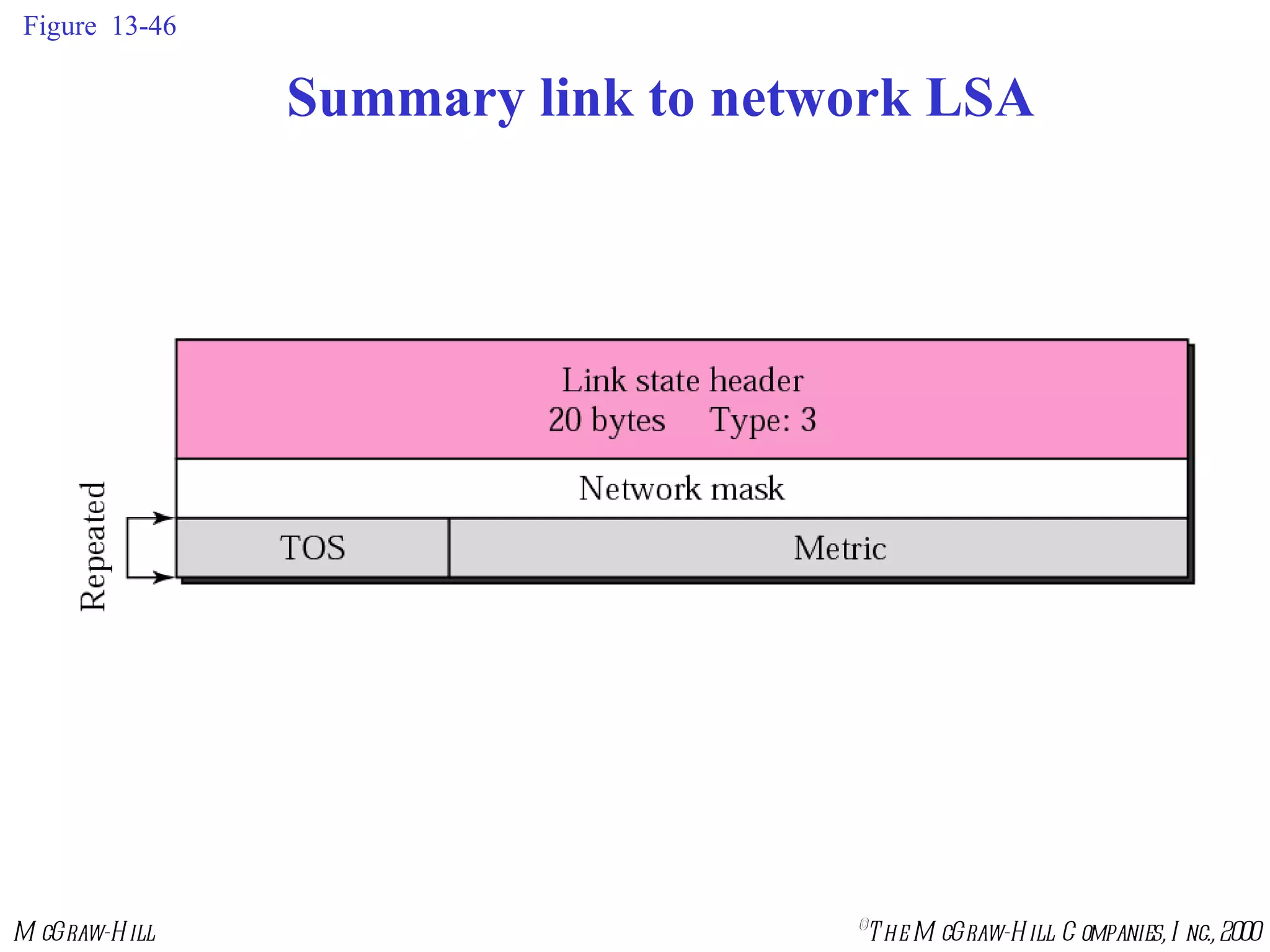
Figure  13-46 Summary link to network LSA
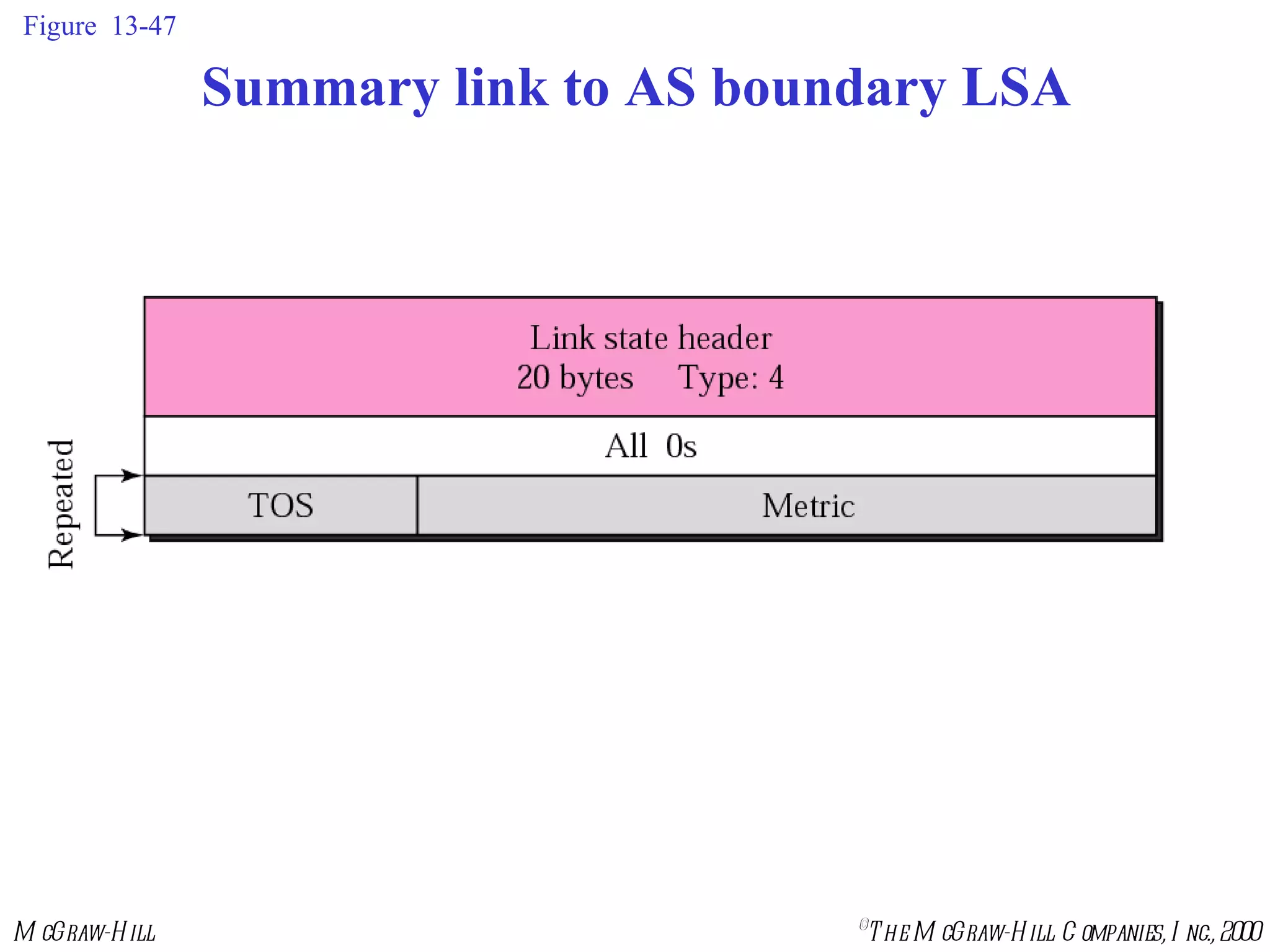
Figure  13-47 Summary link to AS boundary LSA
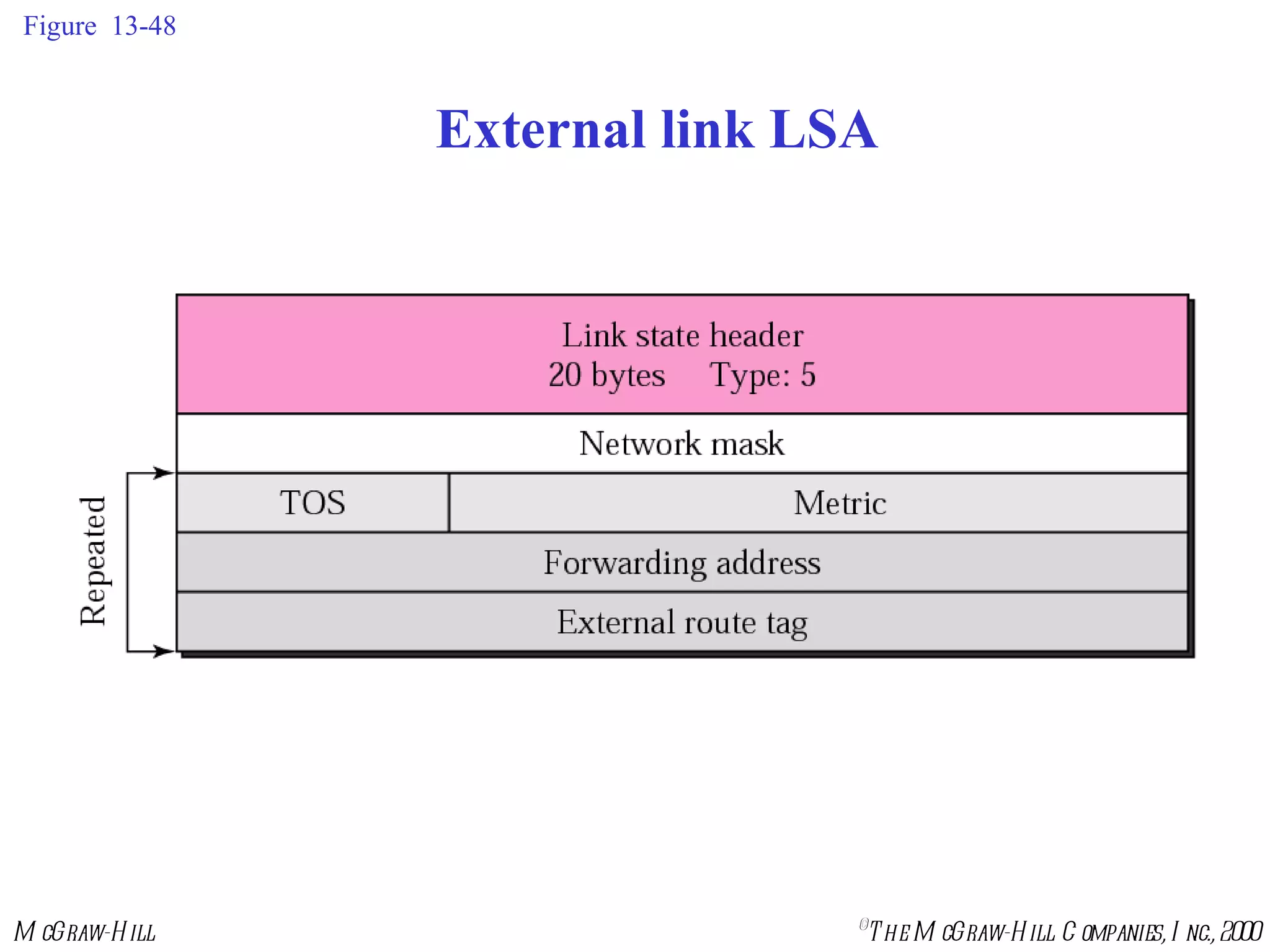
Figure  13-48 External link LSA
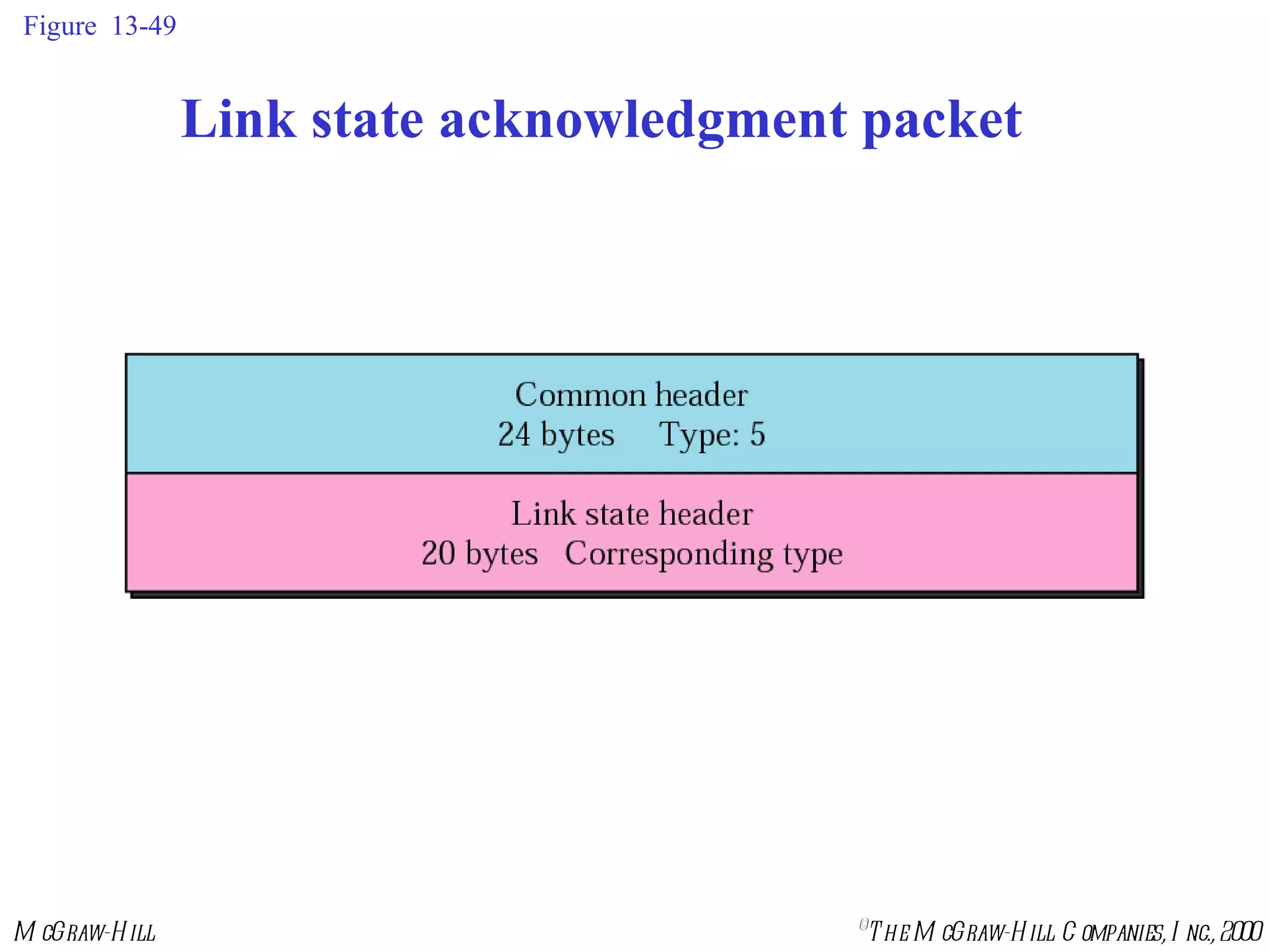
Figure  13-49 Link state acknowledgment packet
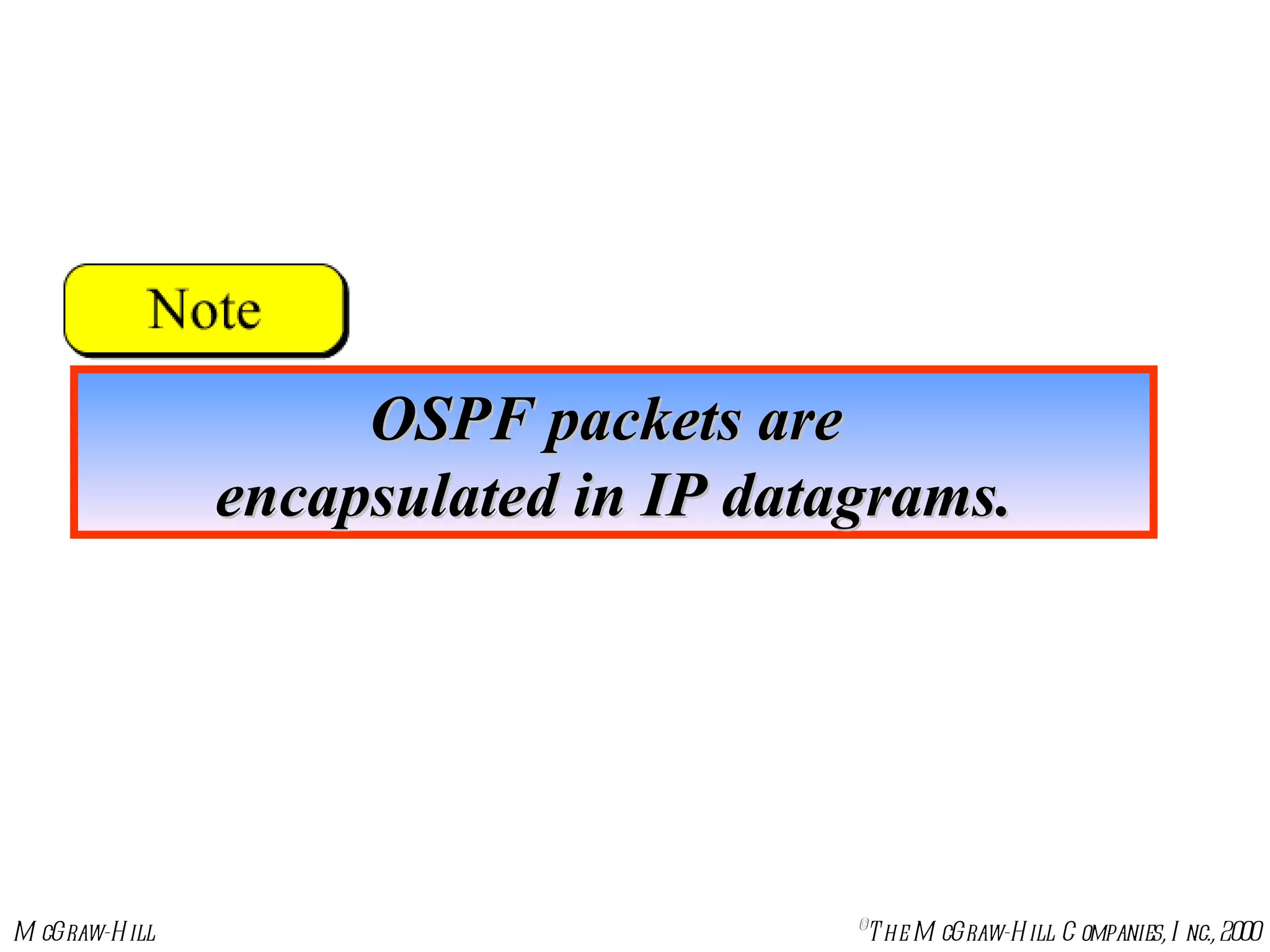
OSPF packets are  encapsulated in IP datagrams.
BGP: Border Gateway Protocol 13.4
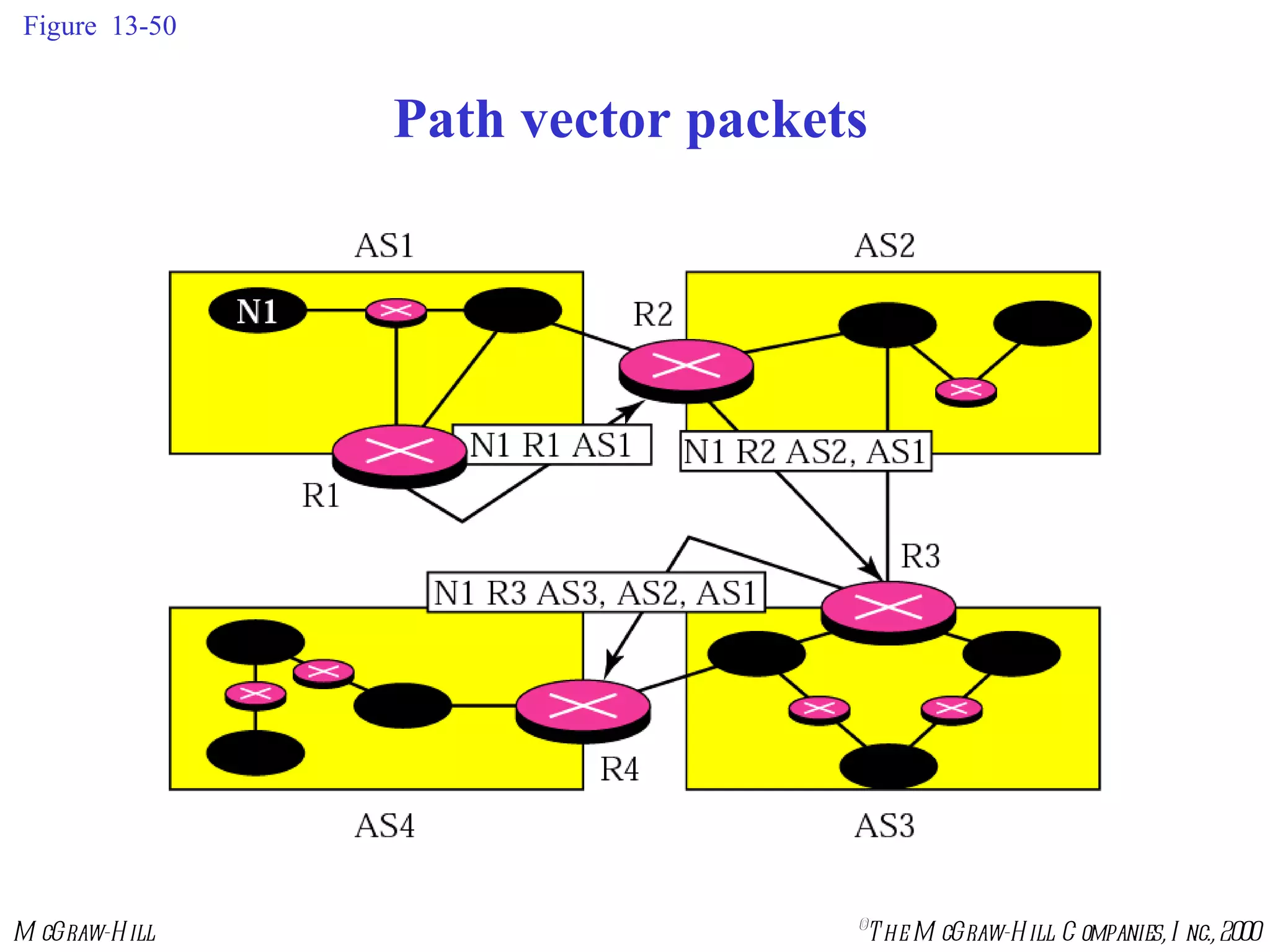
Figure  13-50 Path vector packets
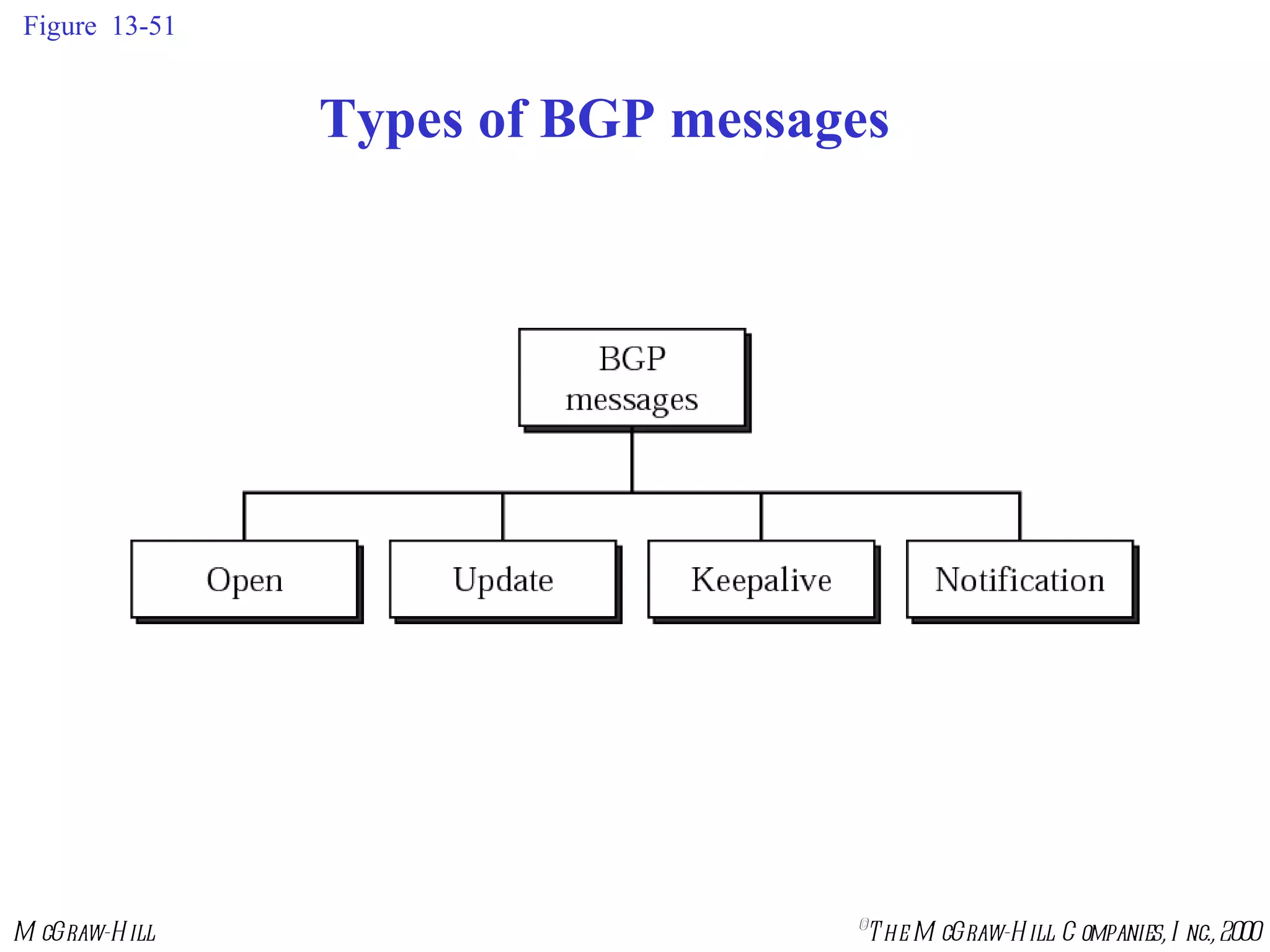
Figure  13-51 Types of BGP messages
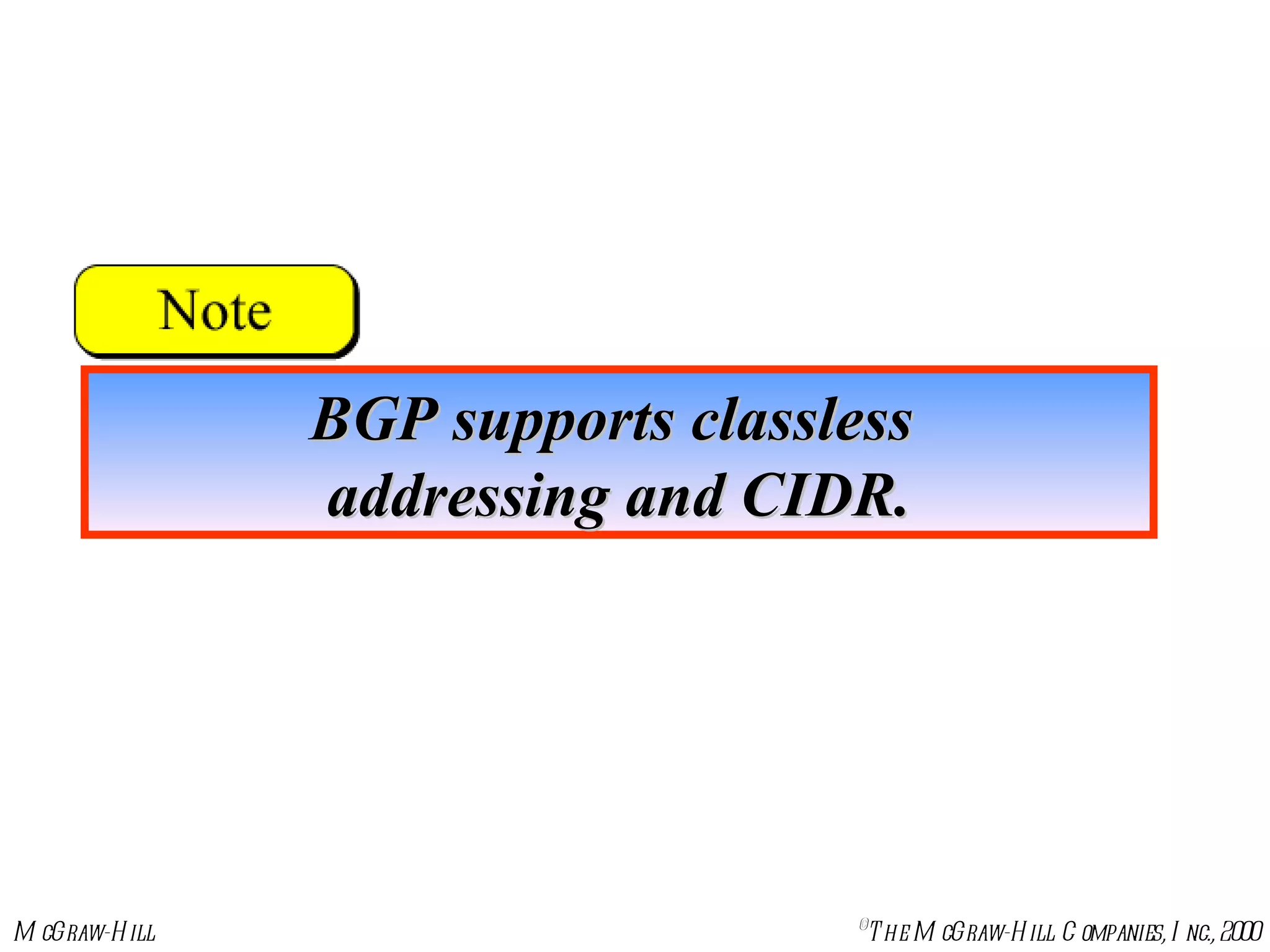
BGP supports classless  addressing and CIDR.
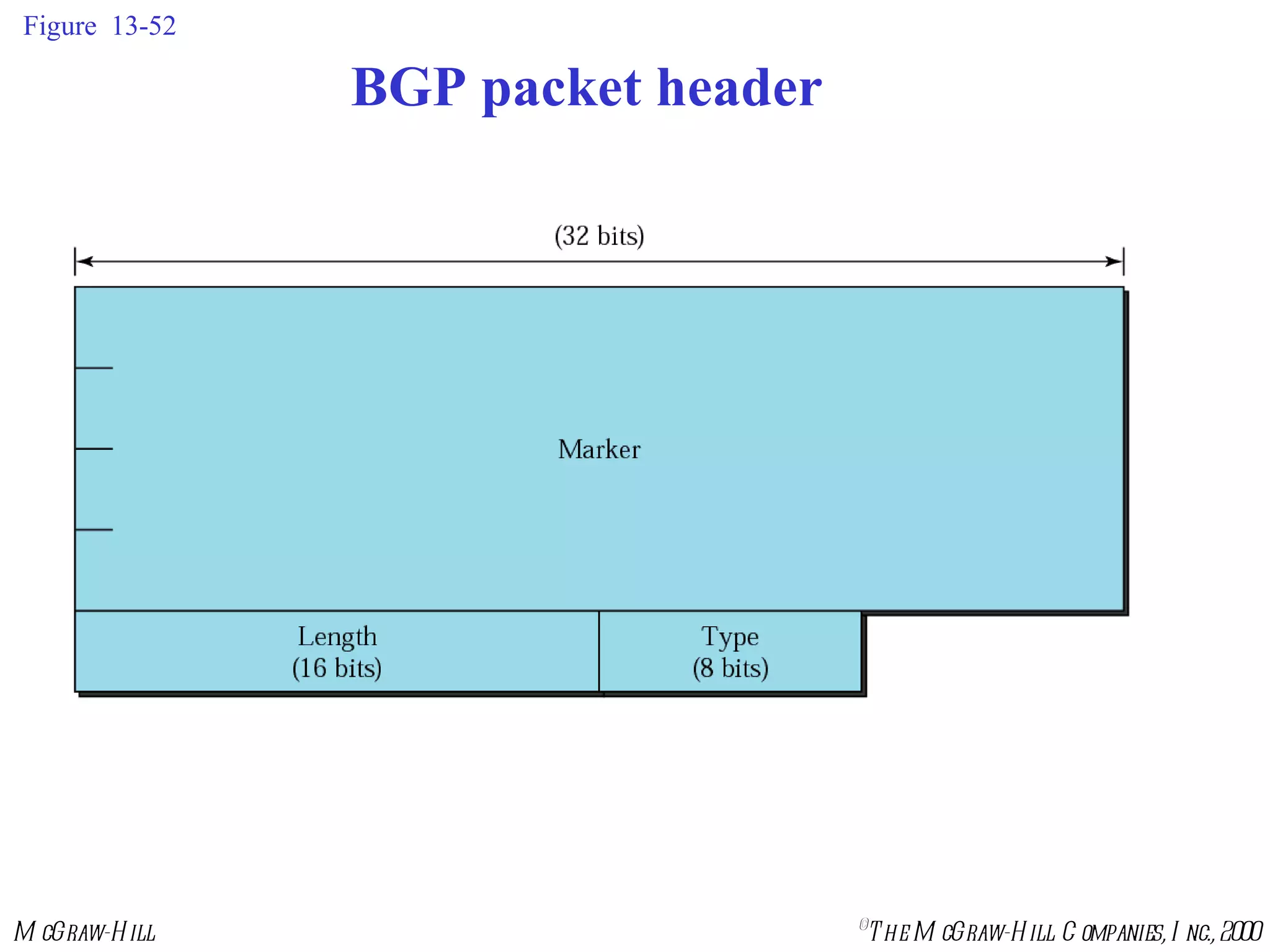
Figure  13-52 BGP packet header
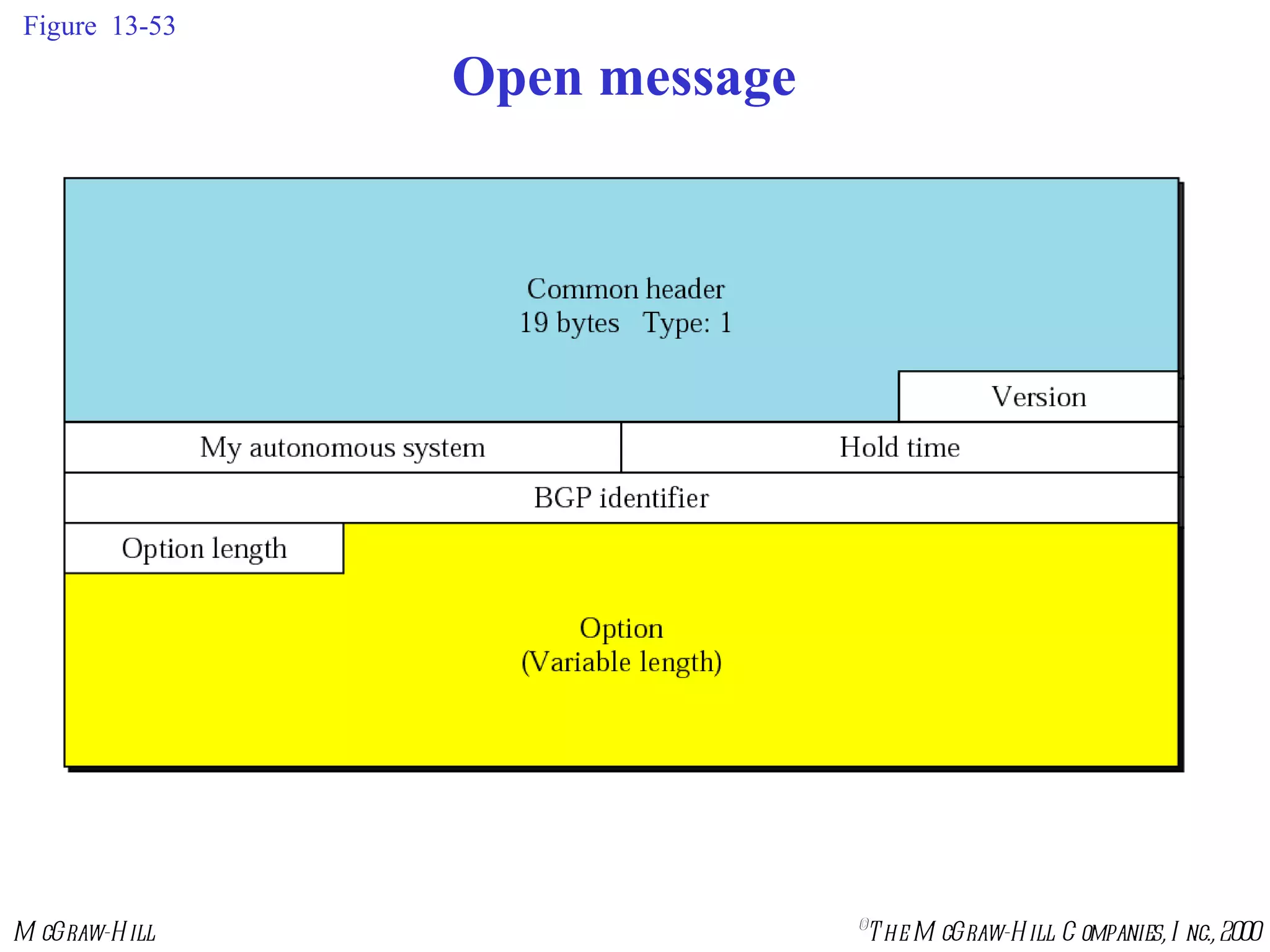
Figure  13-53 Open message
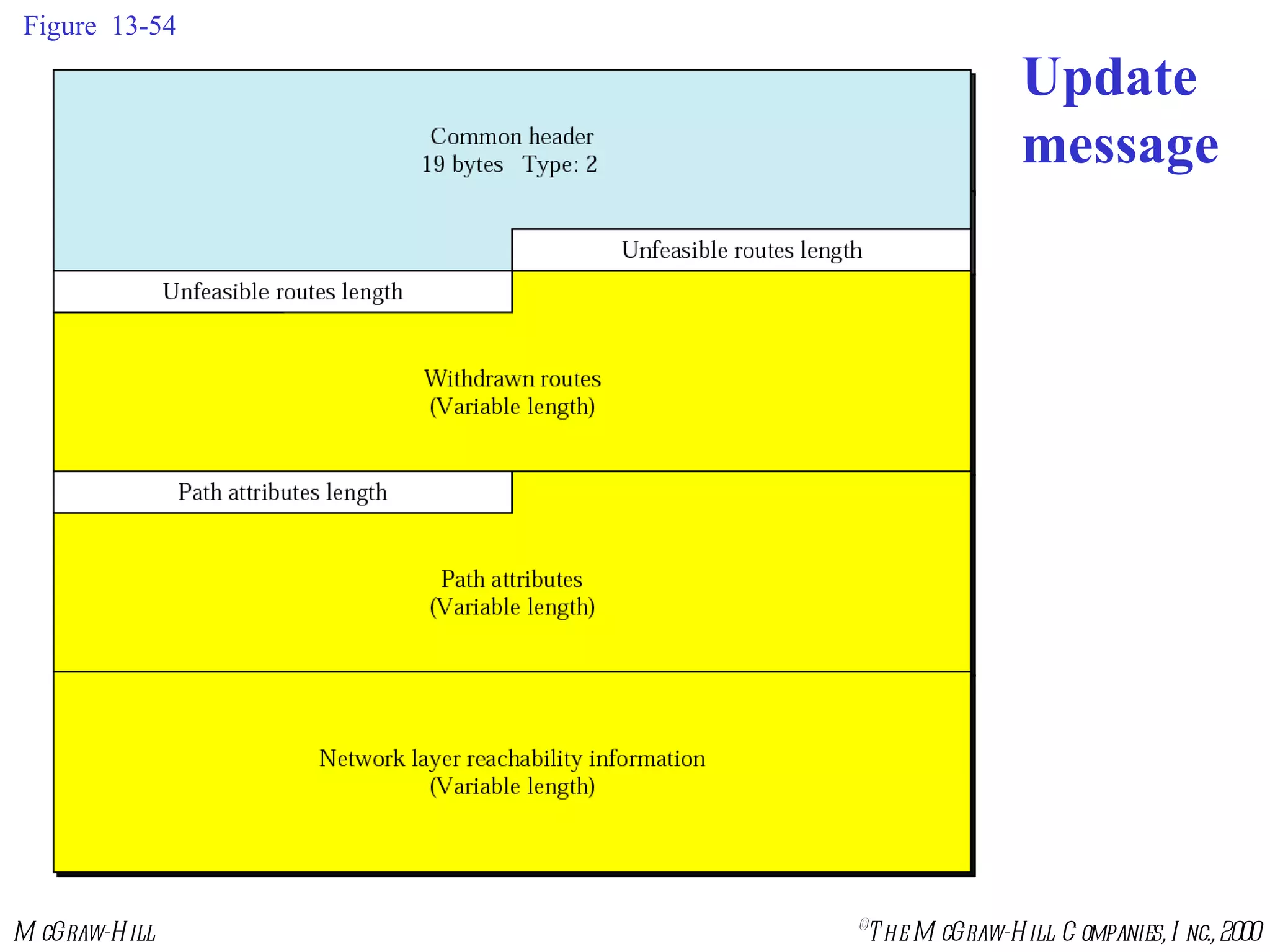
Figure  13-54 Update  message
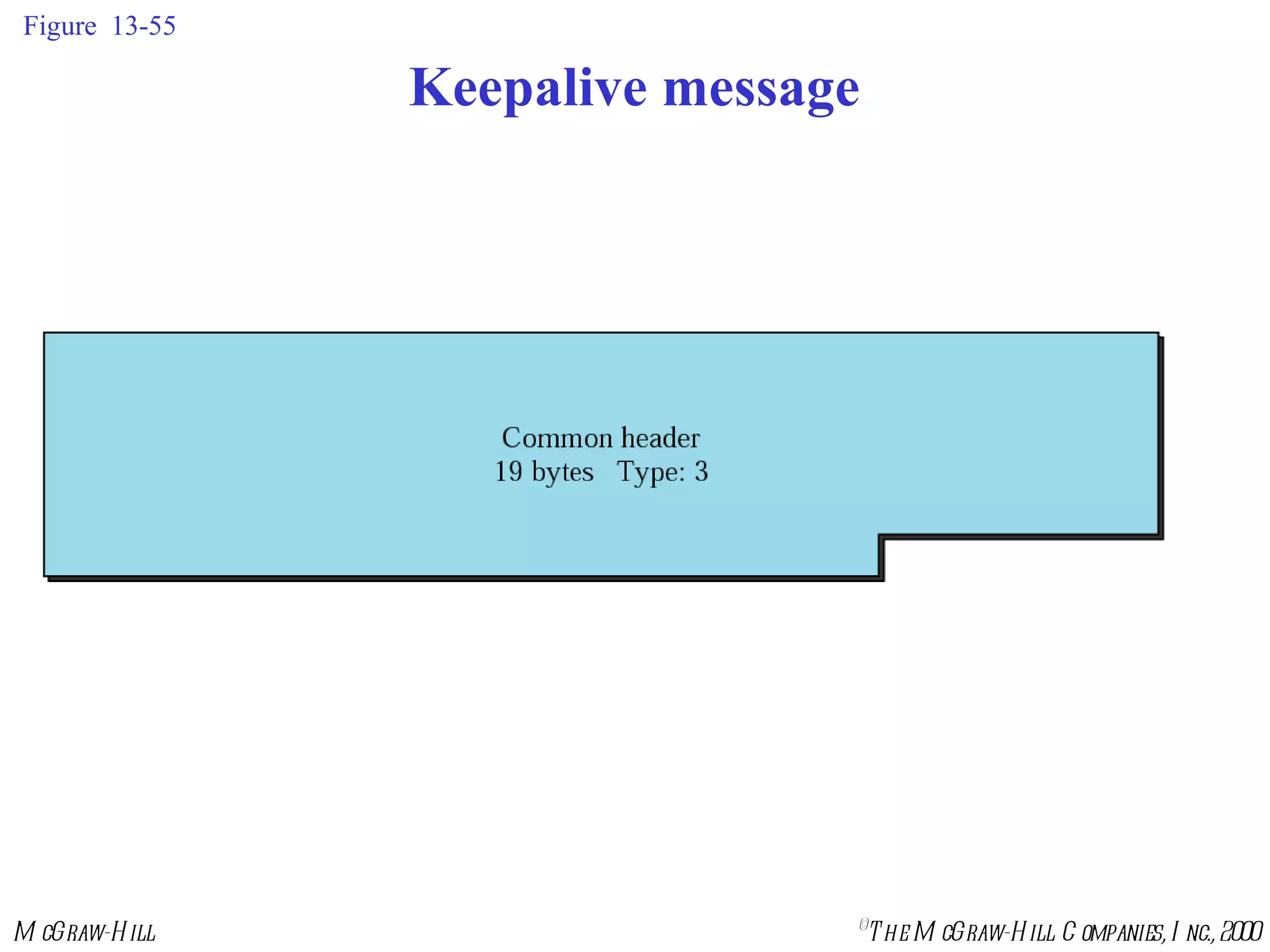
Figure  13-55 Keepalive message
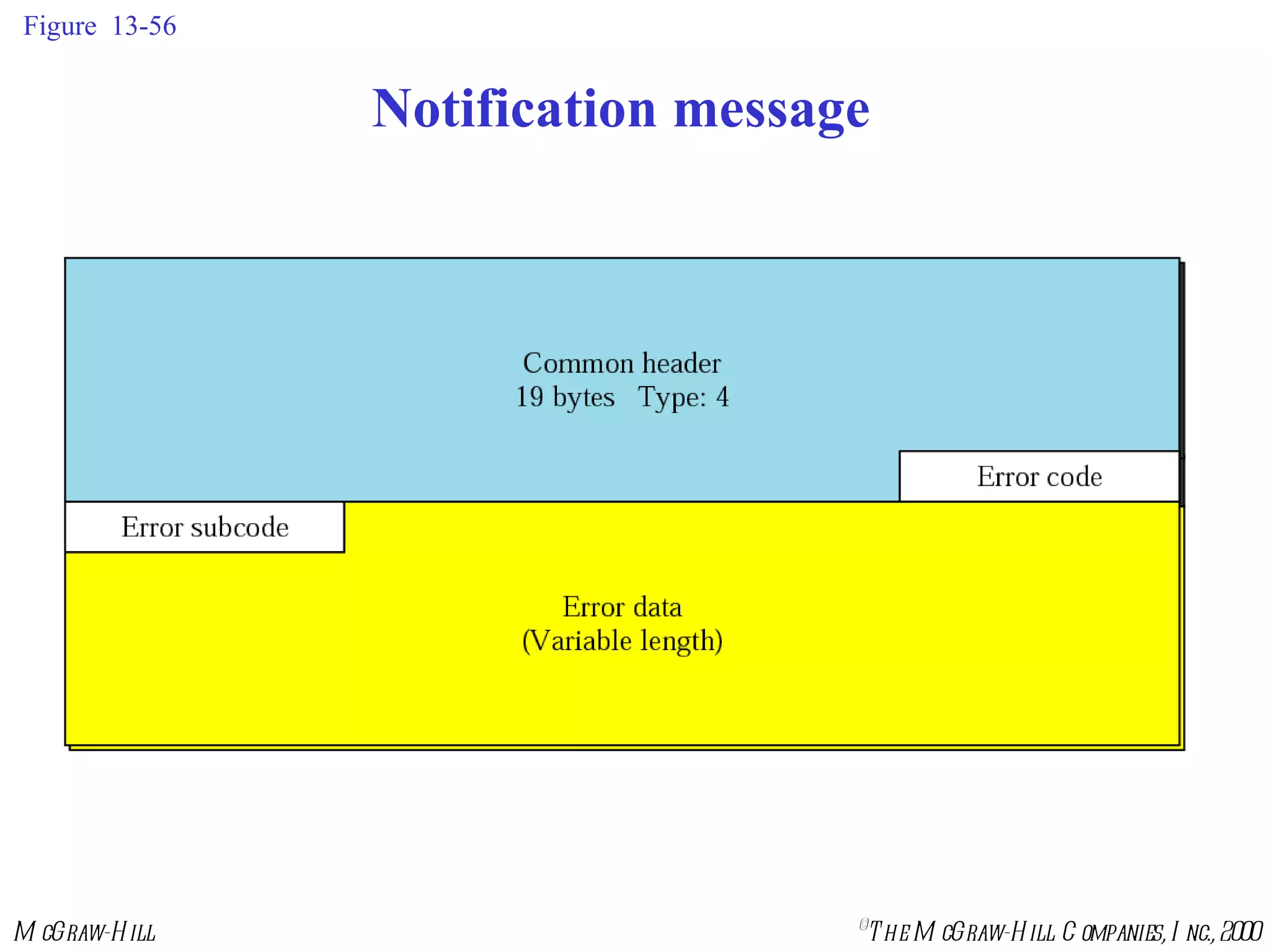
Figure  13-56 Notification message
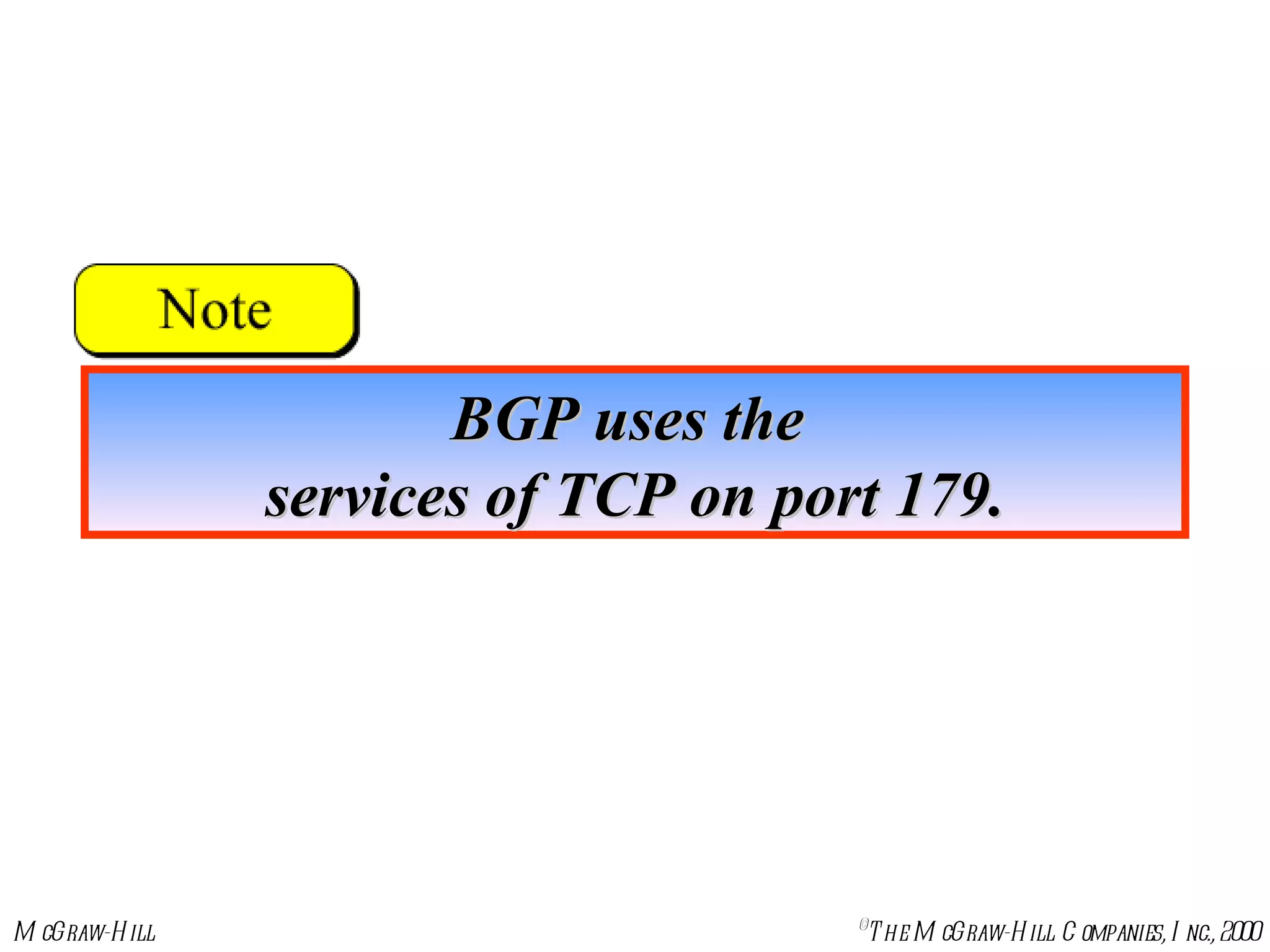
BGP uses the  services of TCP on port 179.

Ch13