Chapter 14 Multicasting And Multicast Routing Protocols
CONTENTS INTRODUCTION MULTICAST ROUTING MULTICAST TREES MULTICAST ROUTING PROTOCOLS DVMRP MOSPF CBT PIM MBONE
INTRODUCTION 14.1
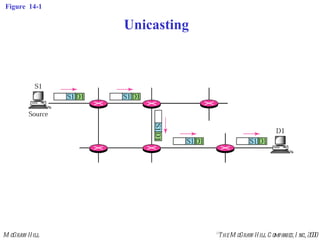
Figure  14-1 Unicasting
In unicast routing, the router forwards  the received packet through  only one of its interfaces.
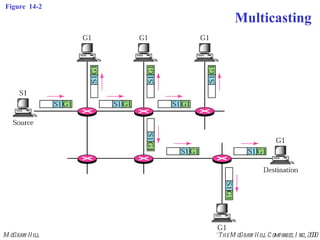
Figure  14-2 Multicasting
In multicast routing,  the router may forward the  received packet  through several of its interfaces.
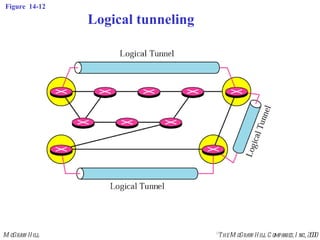
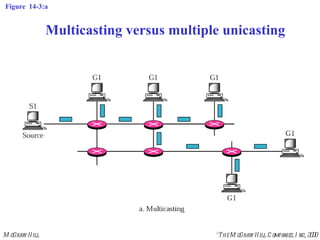
Figure  14-3:a Multicasting versus multiple unicasting
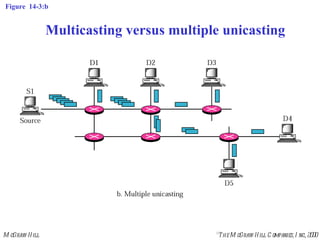
Figure  14-3:b Multicasting versus multiple unicasting
Emulation of multicasting through  multiple unicasting is not  efficient and may  create long delays,  particularly with a large group.
MULTICAST  ROUTING 14.2
MULTICAST TREES 14.3
In a source-based tree approach,  the combination of source  and group determines the tree.
In the group-shared tree approach,  the group determines the tree.
MULTICAST ROUTING PROTOCOLS 14.4
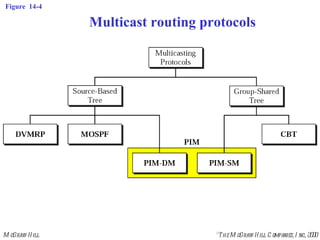
Figure  14-4 Multicast routing protocols
DVMRP 14.5
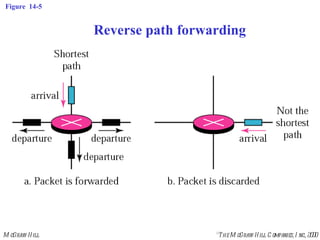
Figure  14-5 Reverse path forwarding
In reverse path forwarding (RPF),  the router forwards only  the packets that have traveled the  shortest path from the source  to the router; all other  copies are discarded.
RPF prevents  the formation of loops.
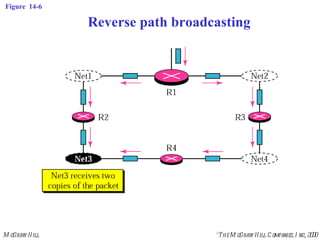
Figure  14-6 Reverse path broadcasting
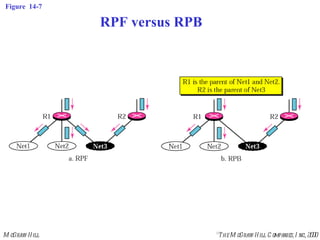
Figure  14-7 RPF versus RPB
RPB creates a shortest path  broadcast tree from the source  to each destination.  It guarantees that each destination  receives one and only  one copy of the packet.
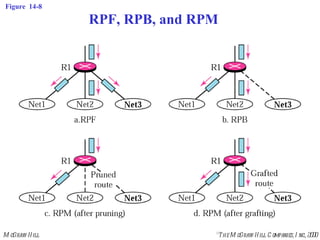
Figure  14-8 RPF, RPB, and RPM
RPM adds pruning and grafting to RPB  to create a multicast shortest  path tree that supports  dynamic membership changes.
MOSPF 14.6
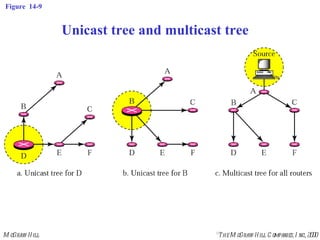
Figure  14-9 Unicast tree and multicast tree
CBT 14.7
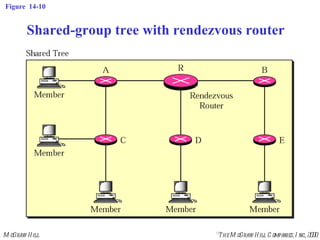
Figure  14-10 Shared-group tree with rendezvous router
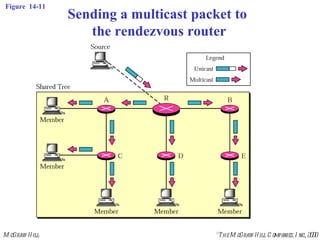
Figure  14-11 Sending a multicast packet to  the rendezvous router
In CBT, the source sends the  multicast packet (encapsulated in a  unicast packet) to the core router.  The core router decapsulates the  packet and forwards it  to all interested hosts.
PIM 14.8
PIM-DM is used in a  dense multicast environment,  such as a LAN environment.
PIM-DM uses RPF and pruning/grafting  strategies to handle multicasting.  However, it is independent from  the underlying unicast protocol.
PIM-SM is used in a sparse multicast environment such as a WAN.
PIM-SM is similar to CBT  but uses a simpler procedure.
MBONE 14.9
Figure  14-12 Logical tunneling
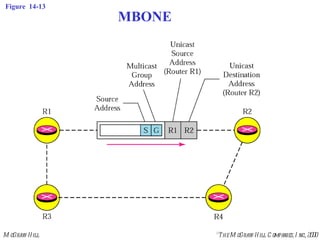
Figure  14-13 MBONE
DVMRP supports MBONE

Ch14