Unit 3: Cells
Chapter 8:
Photosynthesis
Ms. Petrucci
Biology
PhotosynthesiPhotosynthesi
ss
8-1 Energy & Life
Energy and LifeEnergy and Life
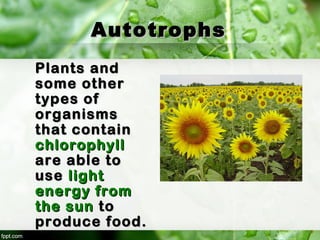
AutotrophsAutotrophs
Plants andPlants and
some othersome other
types oftypes of
organismsorganisms
that containthat contain
chlorophyllchlorophyll
are able toare able to
useuse lightlight
energy fromenergy from
the sunthe sun toto
produce food.produce food.
AutotrophsAutotrophs
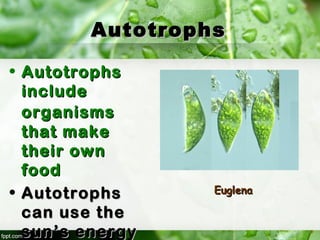
• AutotrophsAutotrophs
includeinclude
organismsorganisms
that makethat make
their owntheir own
foodfood
• AutotrophsAutotrophs
can use thecan use the
sunsun’s energy’s energy
EuglenaEuglena
HeterotrophsHeterotrophs
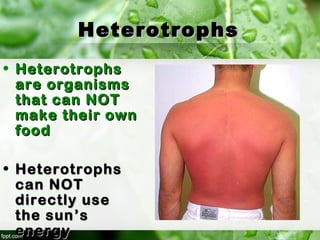
• HeterotrophsHeterotrophs
are organismsare organisms
that can NOTthat can NOT
make their ownmake their own
foodfood
• HeterotrophsHeterotrophs
can NOTcan NOT
directly usedirectly use
the sunthe sun’s’s
energyenergy
EnergyEnergy
• Energy Takes ManyEnergy Takes Many
Forms such asForms such as light,light,
heat, electrical,heat, electrical,
chemical, mechanicalchemical, mechanical
• Energy can be changedEnergy can be changed
fromfrom one form toone form to
anotheranother
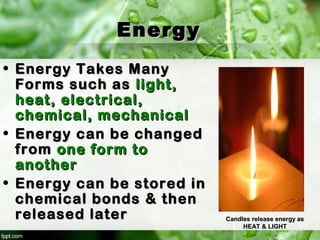
• Energy can be stored inEnergy can be stored in
chemical bonds & thenchemical bonds & then
released laterreleased later Candles release energy asCandles release energy as
HEAT & LIGHTHEAT & LIGHT
ATP – CellularATP – Cellular
EnergyEnergy
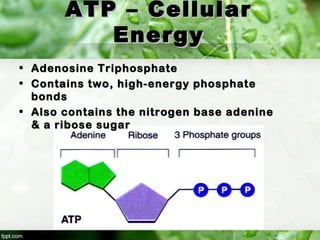
• Adenosine TriphosphateAdenosine Triphosphate
• Contains two, high-energy phosphateContains two, high-energy phosphate
bondsbonds
• Also contains the nitrogen base adenineAlso contains the nitrogen base adenine
& a ribose sugar& a ribose sugar
ADPADP
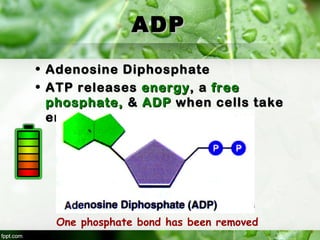
• Adenosine DiphosphateAdenosine Diphosphate
• ATP releasesATP releases energyenergy, a, a freefree
phosphate,phosphate, && ADPADP when cells takewhen cells take
energy from ATPenergy from ATP
One phosphate bond has been removed
10
Sugar in ADP & ATPSugar in ADP & ATP
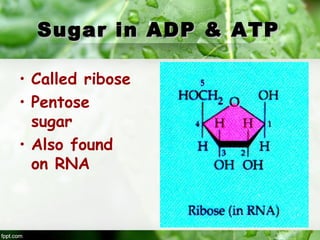
• Called ribose
• Pentose
sugar
• Also found
on RNA
Importance of ATPImportance of ATP
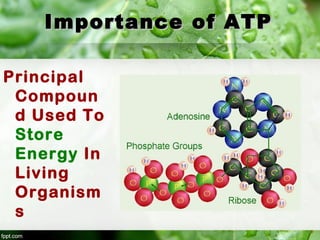
Principal
Compoun
d Used To
Store
Energy In
Living
Organism
s
Storing Energy
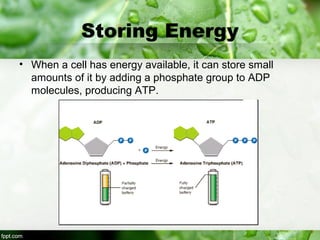
• When a cell has energy available, it can store small
amounts of it by adding a phosphate group to ADP
molecules, producing ATP.
Releasing Energy FromReleasing Energy From
ATPATP
• ATP is constantly beingATP is constantly being used andused and
remade by cellsremade by cells
• ATP provides all of the energy forATP provides all of the energy for
cell activitiescell activities
• The high energy phosphate bondsThe high energy phosphate bonds
can becan be BROKENBROKEN toto releaserelease
energyenergy
• The process of releasing ATPThe process of releasing ATP ’s’s
energy & reforming the moleculeenergy & reforming the molecule
is called phosphorylation
Releasing Energy From ATPReleasing Energy From ATP
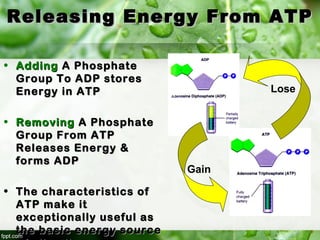
• AddingAdding A PhosphateA Phosphate
Group To ADP storesGroup To ADP stores
Energy in ATPEnergy in ATP
• RemovingRemoving A PhosphateA Phosphate
Group From ATPGroup From ATP
Releases Energy &Releases Energy &
forms ADPforms ADP
• The characteristics ofThe characteristics of
ATP make itATP make it
exceptionally useful asexceptionally useful as
the basic energy sourcethe basic energy source
Lose
Gain
Cells Using BiochemicalCells Using Biochemical
EnergyEnergy
Cells Use ATP For:
• Active transport
• Movement
• Photosynthesis
• Protein Synthesis
• Cellular
respiration
• All other cellular
reactions
More on ATPMore on ATP
• Cells Have Enough ATP ToCells Have Enough ATP To
Last For ALast For A Few SecondsFew Seconds
• ATP mustATP must constantlyconstantly bebe
mademade
• ATPATP Transfers Energy VeryTransfers Energy Very
WellWell
• ATP IsATP Is NOTNOT Good At EnergyGood At Energy
StorageStorage
GlucoseGlucose
• Glucose is aGlucose is a
monosaccharidemonosaccharide
• CC66 HH1212 OO66
• One Molecule ofOne Molecule of
glucose Storesglucose Stores 9090
TimesTimes More ChemicalMore Chemical
Energy Than OneEnergy Than One
Molecule of ATP

8-1 energy and life

  • 1.
    Unit 3: Cells Chapter8: Photosynthesis Ms. Petrucci Biology
  • 2.
  • 3.
  • 4.
    AutotrophsAutotrophs Plants andPlants and someothersome other types oftypes of organismsorganisms that containthat contain chlorophyllchlorophyll are able toare able to useuse lightlight energy fromenergy from the sunthe sun toto produce food.produce food.
  • 5.
    AutotrophsAutotrophs • AutotrophsAutotrophs includeinclude organismsorganisms that makethatmake their owntheir own foodfood • AutotrophsAutotrophs can use thecan use the sunsun’s energy’s energy EuglenaEuglena
  • 6.
    HeterotrophsHeterotrophs • HeterotrophsHeterotrophs are organismsareorganisms that can NOTthat can NOT make their ownmake their own foodfood • HeterotrophsHeterotrophs can NOTcan NOT directly usedirectly use the sunthe sun’s’s energyenergy
  • 7.
    EnergyEnergy • Energy TakesManyEnergy Takes Many Forms such asForms such as light,light, heat, electrical,heat, electrical, chemical, mechanicalchemical, mechanical • Energy can be changedEnergy can be changed fromfrom one form toone form to anotheranother • Energy can be stored inEnergy can be stored in chemical bonds & thenchemical bonds & then released laterreleased later Candles release energy asCandles release energy as HEAT & LIGHTHEAT & LIGHT
  • 8.
    ATP – CellularATP– Cellular EnergyEnergy • Adenosine TriphosphateAdenosine Triphosphate • Contains two, high-energy phosphateContains two, high-energy phosphate bondsbonds • Also contains the nitrogen base adenineAlso contains the nitrogen base adenine & a ribose sugar& a ribose sugar
  • 9.
    ADPADP • Adenosine DiphosphateAdenosineDiphosphate • ATP releasesATP releases energyenergy, a, a freefree phosphate,phosphate, && ADPADP when cells takewhen cells take energy from ATPenergy from ATP One phosphate bond has been removed
  • 10.
    10 Sugar in ADP& ATPSugar in ADP & ATP • Called ribose • Pentose sugar • Also found on RNA
  • 11.
    Importance of ATPImportanceof ATP Principal Compoun d Used To Store Energy In Living Organism s
  • 12.
    Storing Energy • Whena cell has energy available, it can store small amounts of it by adding a phosphate group to ADP molecules, producing ATP.
  • 13.
    Releasing Energy FromReleasingEnergy From ATPATP • ATP is constantly beingATP is constantly being used andused and remade by cellsremade by cells • ATP provides all of the energy forATP provides all of the energy for cell activitiescell activities • The high energy phosphate bondsThe high energy phosphate bonds can becan be BROKENBROKEN toto releaserelease energyenergy • The process of releasing ATPThe process of releasing ATP ’s’s energy & reforming the moleculeenergy & reforming the molecule is called phosphorylation
  • 14.
    Releasing Energy FromATPReleasing Energy From ATP • AddingAdding A PhosphateA Phosphate Group To ADP storesGroup To ADP stores Energy in ATPEnergy in ATP • RemovingRemoving A PhosphateA Phosphate Group From ATPGroup From ATP Releases Energy &Releases Energy & forms ADPforms ADP • The characteristics ofThe characteristics of ATP make itATP make it exceptionally useful asexceptionally useful as the basic energy sourcethe basic energy source Lose Gain
  • 15.
    Cells Using BiochemicalCellsUsing Biochemical EnergyEnergy Cells Use ATP For: • Active transport • Movement • Photosynthesis • Protein Synthesis • Cellular respiration • All other cellular reactions
  • 16.
    More on ATPMoreon ATP • Cells Have Enough ATP ToCells Have Enough ATP To Last For ALast For A Few SecondsFew Seconds • ATP mustATP must constantlyconstantly bebe mademade • ATPATP Transfers Energy VeryTransfers Energy Very WellWell • ATP IsATP Is NOTNOT Good At EnergyGood At Energy StorageStorage
  • 17.
    GlucoseGlucose • Glucose isaGlucose is a monosaccharidemonosaccharide • CC66 HH1212 OO66 • One Molecule ofOne Molecule of glucose Storesglucose Stores 9090 TimesTimes More ChemicalMore Chemical Energy Than OneEnergy Than One Molecule of ATP