Fermentation
Aerobic/anaerobic
• Takes place in the cytoplasm.
• Fermentation is what happens if there is an
absence of oxygen after glycolysis, either it
proceeds with the Krebs cycle(aerobic) or
fermentation(anaerobic).
*Anaerobic doesn’t mean no oxygen when involving cells it
just means there is not a sufficient amount of oxygen.
Alcohol fermentation
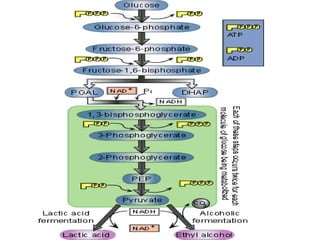
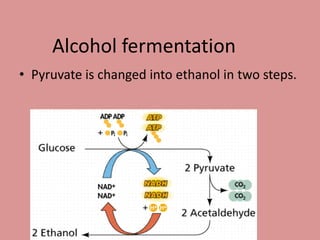
• Pyruvate is changed into ethanol in two steps.
STEP 1
• The release of CO2 from the pyruvate, which
is than converted into two carbon compound
acetaldehyde.
STEP 2
• Acetaldehyde is than reduced by NADH to
ethanol, which than regenerates the supply of
NAD needed for ethanol.
Lactic acid
fermentation
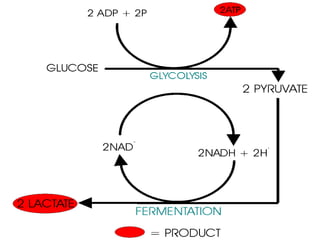
• Pyruvate is reduced directly by NADH to end
up making lactate as a waste product and no
release of CO2.
• Human cells make lactic acid when there body
is either low or lacking oxygen. The muscle
than begins to fatigue and feel painful.

Fermentation

  • 1.
  • 3.
    Aerobic/anaerobic • Takes placein the cytoplasm. • Fermentation is what happens if there is an absence of oxygen after glycolysis, either it proceeds with the Krebs cycle(aerobic) or fermentation(anaerobic). *Anaerobic doesn’t mean no oxygen when involving cells it just means there is not a sufficient amount of oxygen.
  • 4.
    Alcohol fermentation • Pyruvateis changed into ethanol in two steps.
  • 5.
    STEP 1 • Therelease of CO2 from the pyruvate, which is than converted into two carbon compound acetaldehyde.
  • 6.
    STEP 2 • Acetaldehydeis than reduced by NADH to ethanol, which than regenerates the supply of NAD needed for ethanol.
  • 7.
  • 9.
    • Pyruvate isreduced directly by NADH to end up making lactate as a waste product and no release of CO2.
  • 10.
    • Human cellsmake lactic acid when there body is either low or lacking oxygen. The muscle than begins to fatigue and feel painful.