Asexual vs. Sexual Reproduction

   Note: If you are viewing this PPT at
   home, some videos may not play.
Asexual Reproduction
• Asexual reproduction is the process by which
  a single organism produces genetically
  identical offspring.
• This type of reproduction is most common in
  single cell organisms like bacteria, but can be
  found in more complex organisms as well.
Benefits of Asexual Reproduction
• Rapid population growth
• Requires less energy to reproduce
• All organisms are capable of reproduction (not
  just the females of the species)
• One organism can make a whole population
• Less likely to become extinct
• Each offspring is a genetic copy of the parent
Disadvantages of Asexual
             Reproduction
• The primary disadvantage of asexual
  reproduction is:
       THERE IS NO GENETIC DIVERSITY!
• This means that a population of genetically
  identical organisms is more susceptible to
  disease and can’t adapt easily to a changing
  environment.
Types of Asexual Reproduction
• There are four main types of asexual
  reproduction:
  – Binary Fission
  – Budding
  – Vegetative Propagation
  – Regeneration
Binary Fission
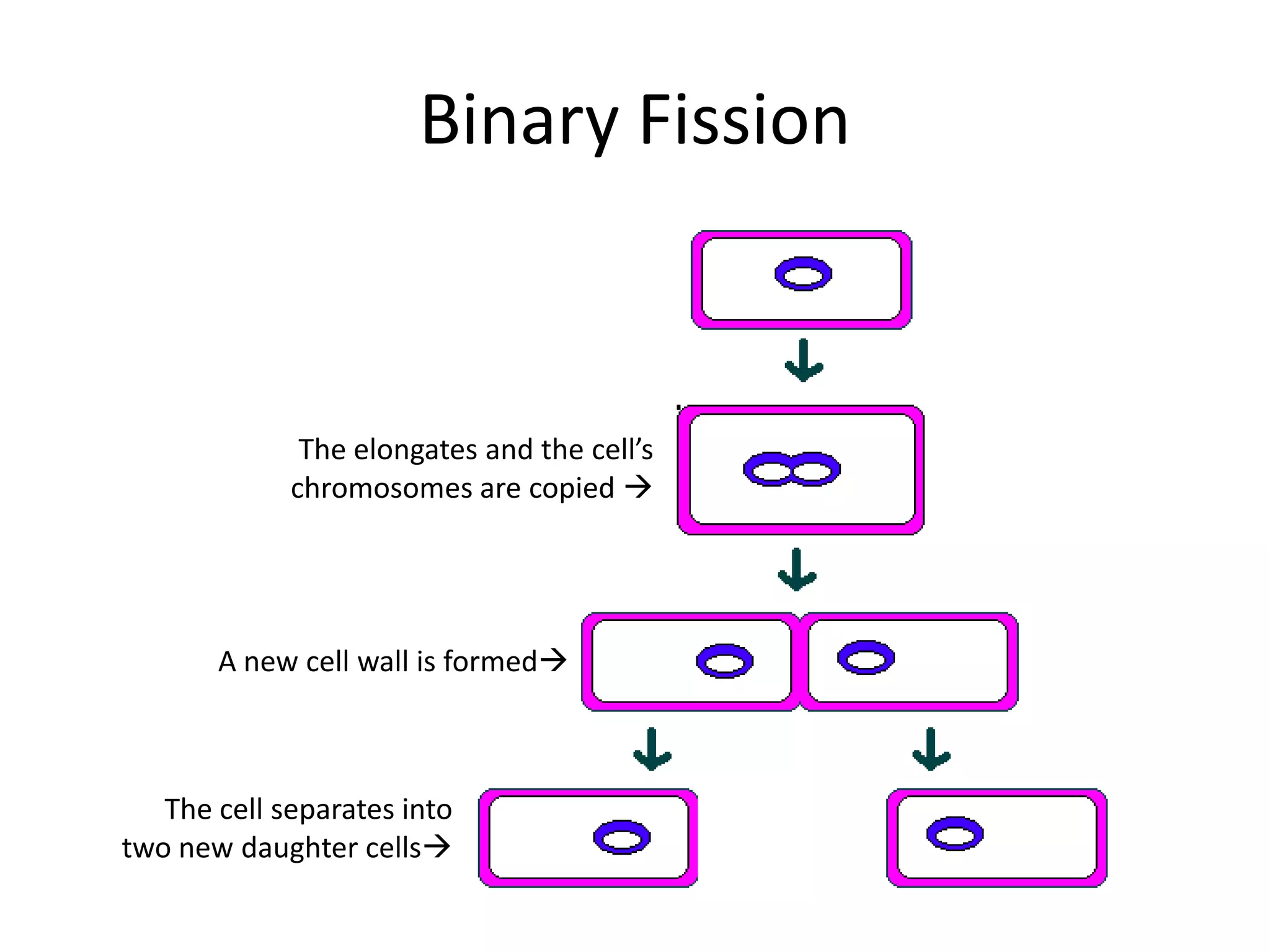
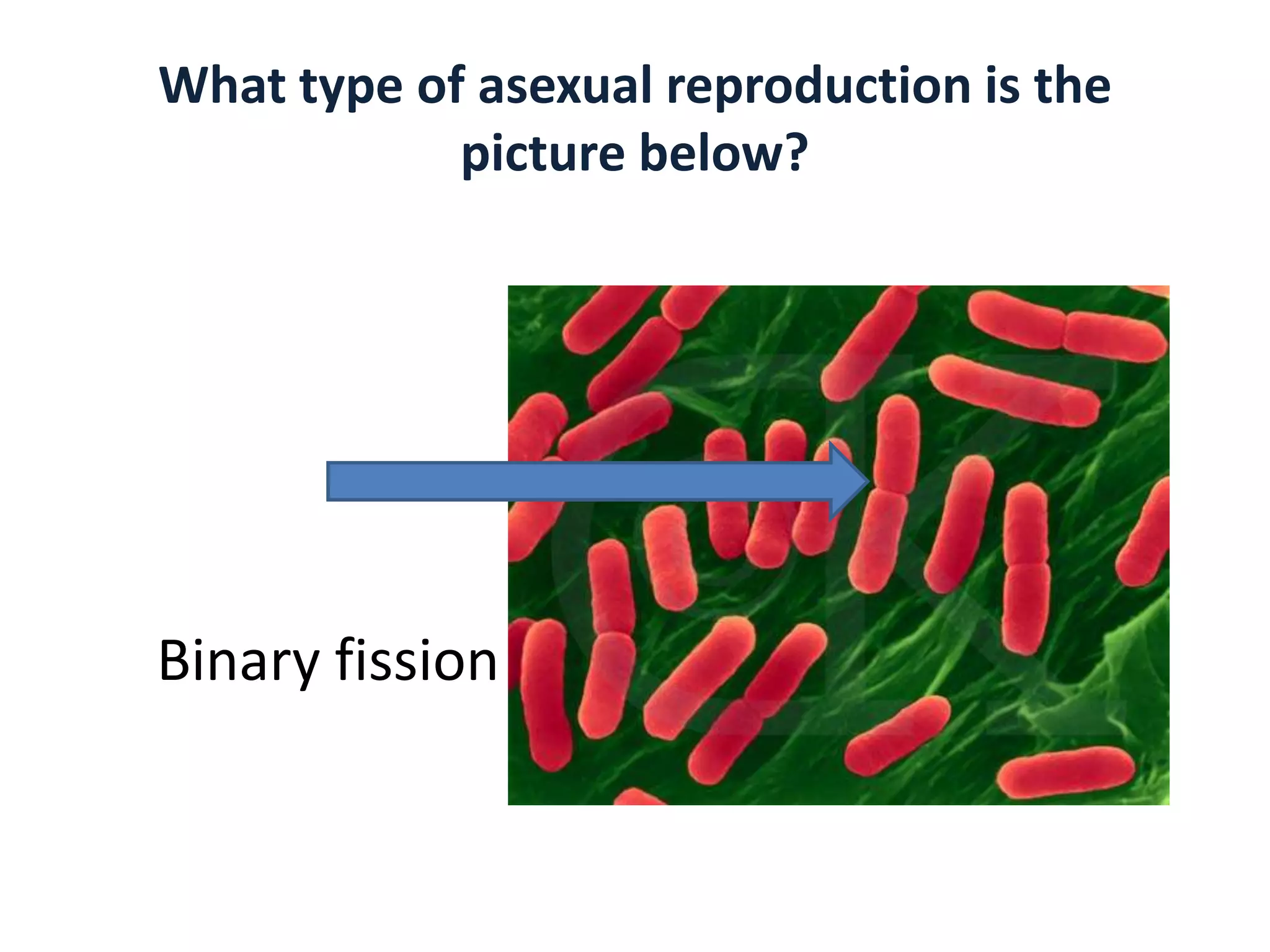
• Binary fission occurs when one parent splits
  into two offspring.
• This is how all bacteria and some single celled
  protists reproduce.
Binary Fission


              The elongates and the cell’s
             chromosomes are copied 


       A new cell wall is formed


   The cell separates into
two new daughter cells
Budding
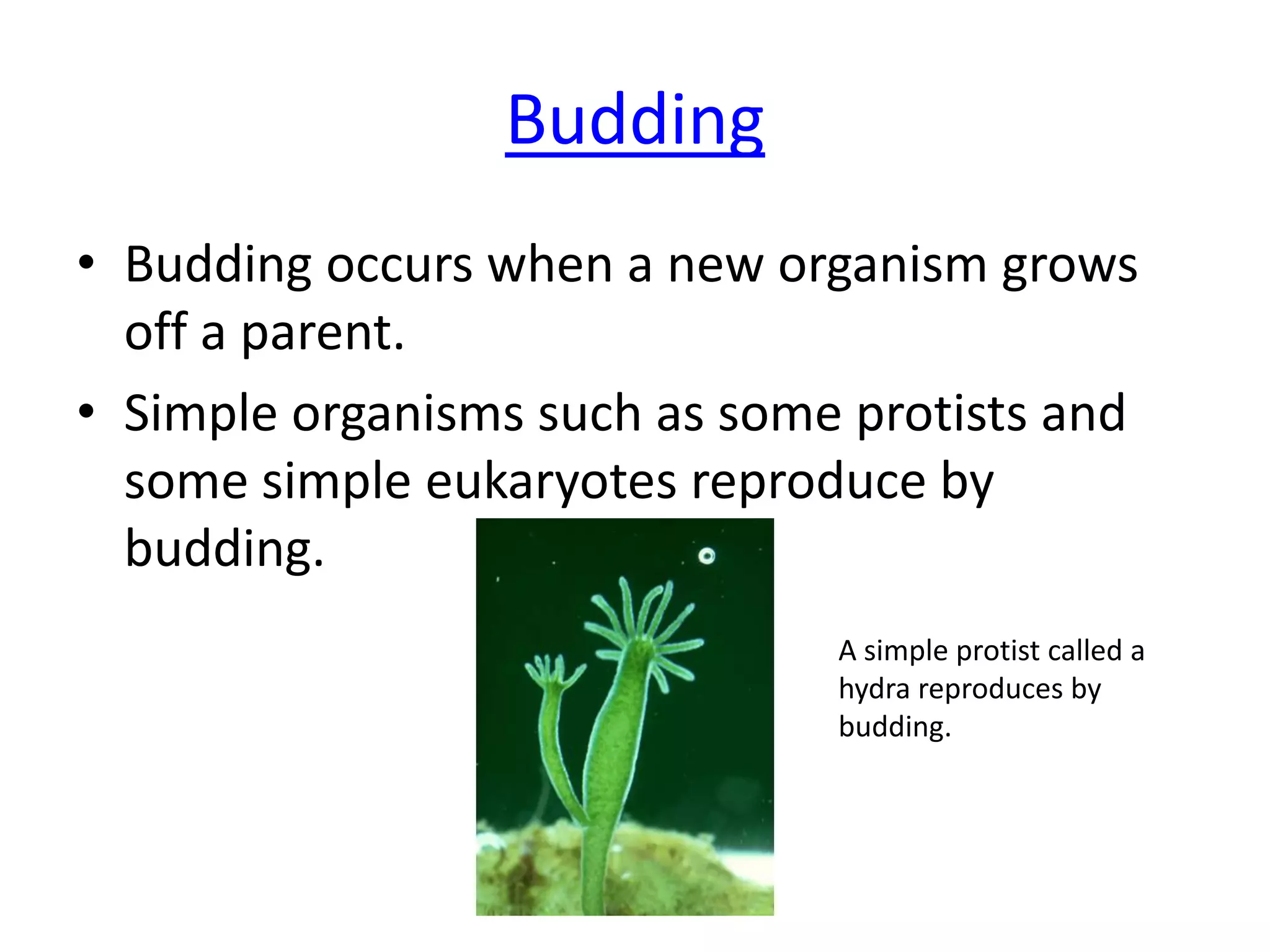
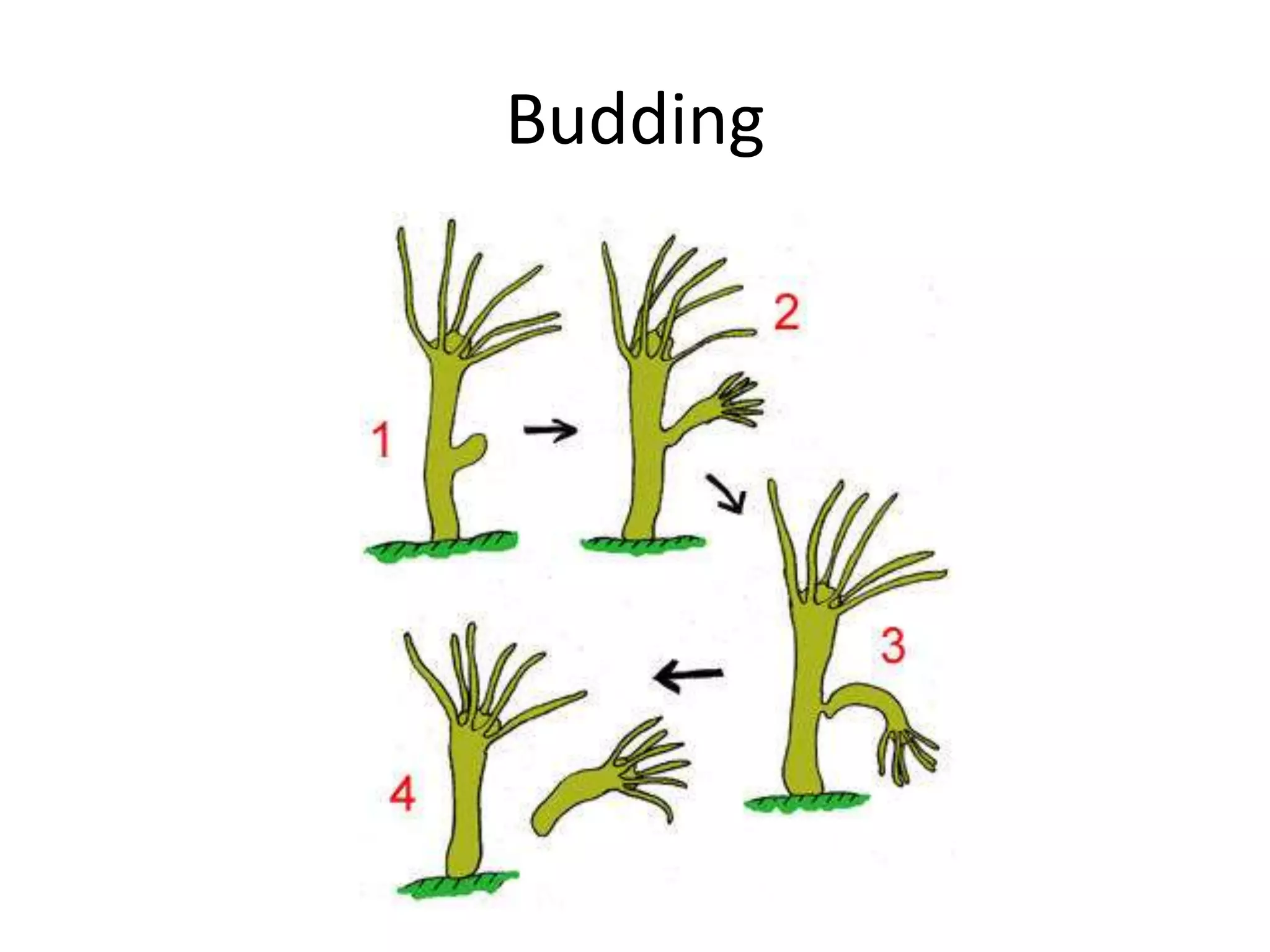
• Budding occurs when a new organism grows
  off a parent.
• Simple organisms such as some protists and
  some simple eukaryotes reproduce by
  budding.
                               A simple protist called a
                               hydra reproduces by
                               budding.
Budding
Regeneration
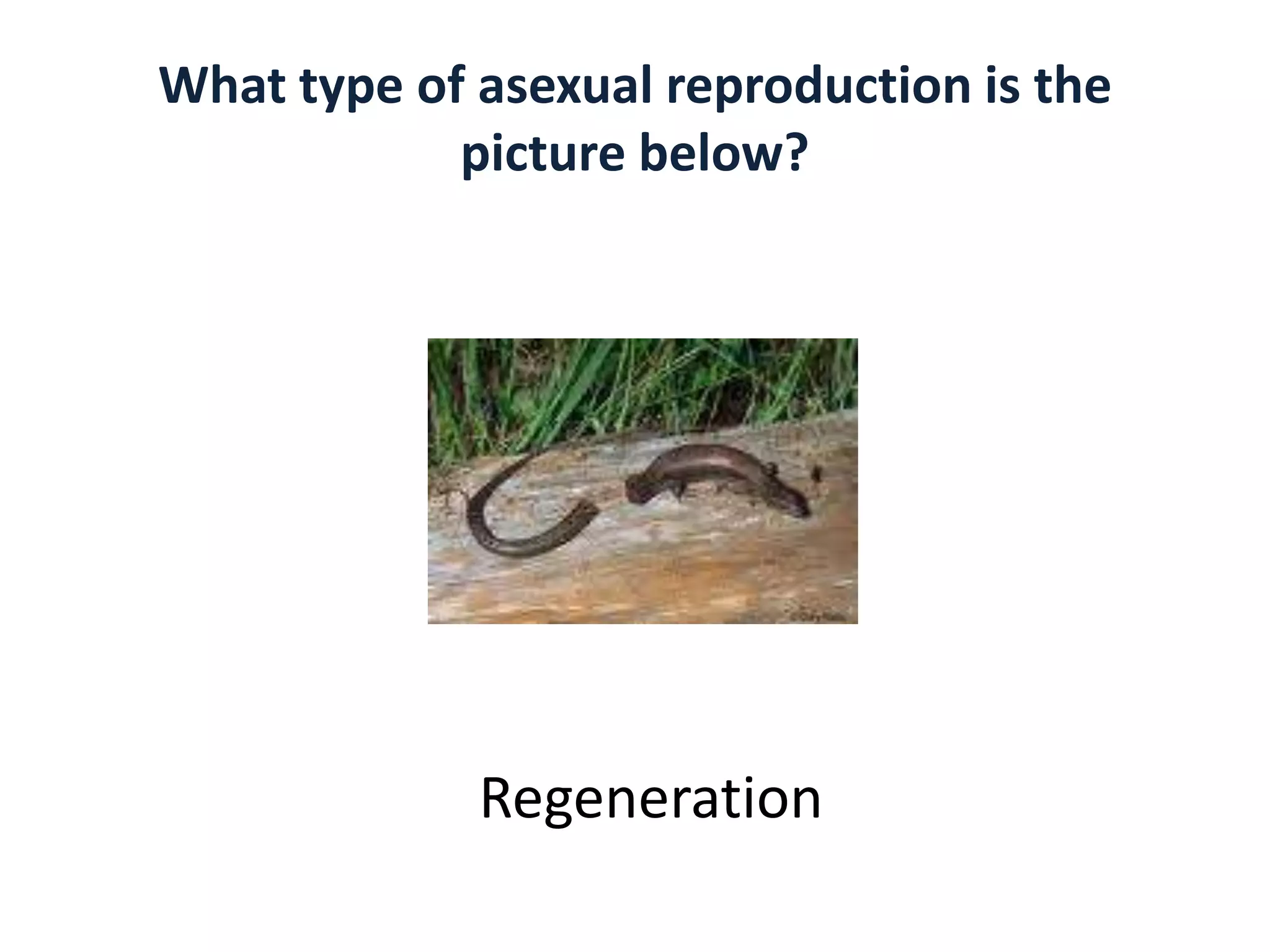
• Regeneration occurs when an organism can
  regrow a lost limb or can grow a whole other
  organism on a cut off piece.
• This is common in simple multicellular
  creatures such as worms, sea stars or geckos.
That is a lot of worm…
• Planarians are marine flatworms. Each slice of
  a planarian can grow into a brand new
  flatworm!
Vegetative (Plant) Propagation
• Vegetative propagation occurs when a new
  plant grows off an existing part of an old plant.
• Many plants can use vegetative propagation.
  – Ivy
  – Grasses
  – Potato plants
  – Strawberries
  – Spider plants
We use vegetative
propagation ALL the time!
Sexual Reproduction
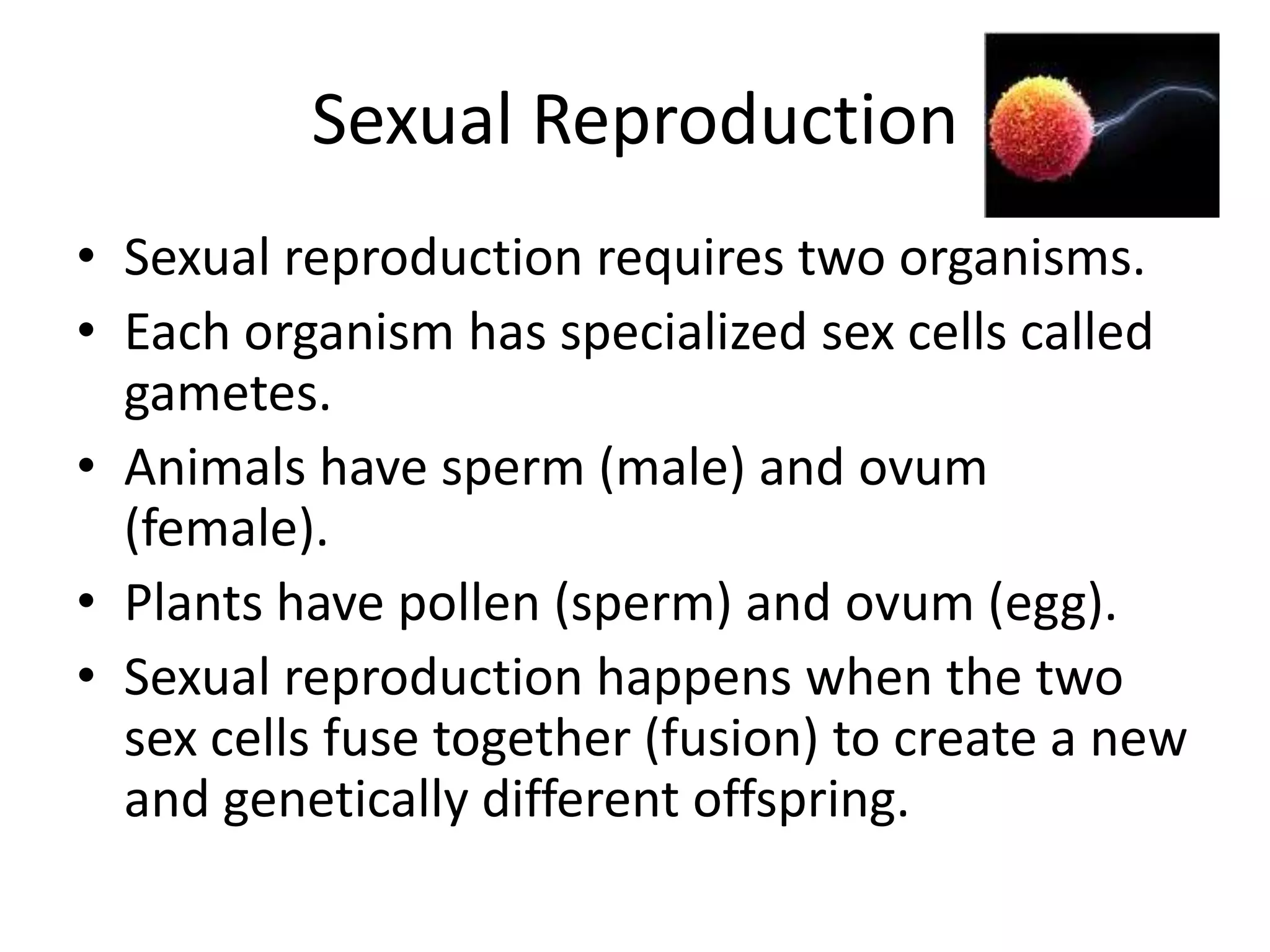
• Sexual reproduction requires two organisms.
• Each organism has specialized sex cells called
  gametes.
• Animals have sperm (male) and ovum
  (female).
• Plants have pollen (sperm) and ovum (egg).
• Sexual reproduction happens when the two
  sex cells fuse together (fusion) to create a new
  and genetically different offspring.
Sexual Reproduction


         Fertilization (fusion)
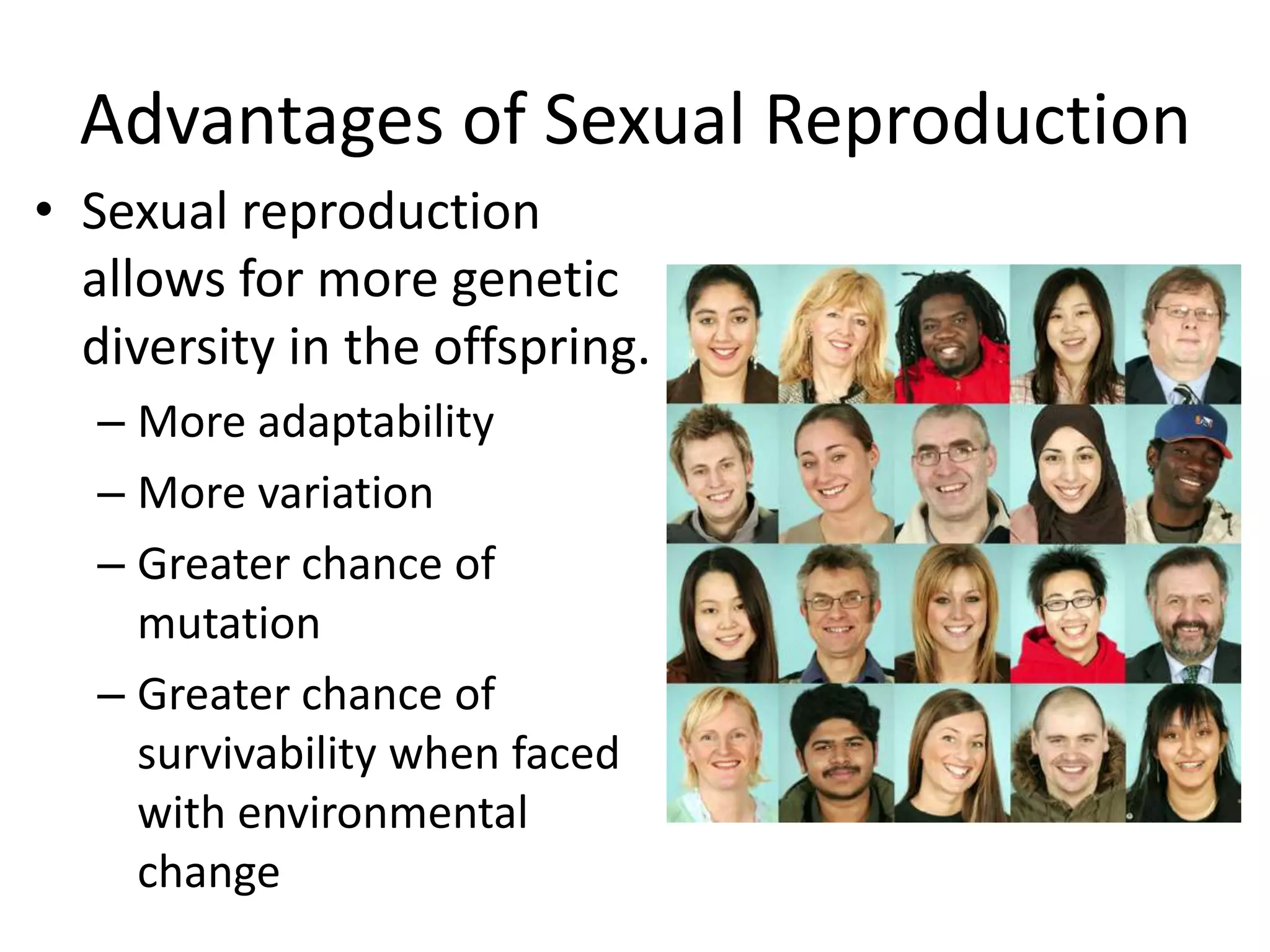
Advantages of Sexual Reproduction
• Sexual reproduction
  allows for more genetic
  diversity in the offspring.
  – More adaptability
  – More variation
  – Greater chance of
    mutation
  – Greater chance of
    survivability when faced
    with environmental
    change
Disadvantages of Sexual Reproduction
• It requires two individuals with opposing
  gametes (sex cells).
• Organisms must use a lot of energy nourishing
  and growing a new baby organism.
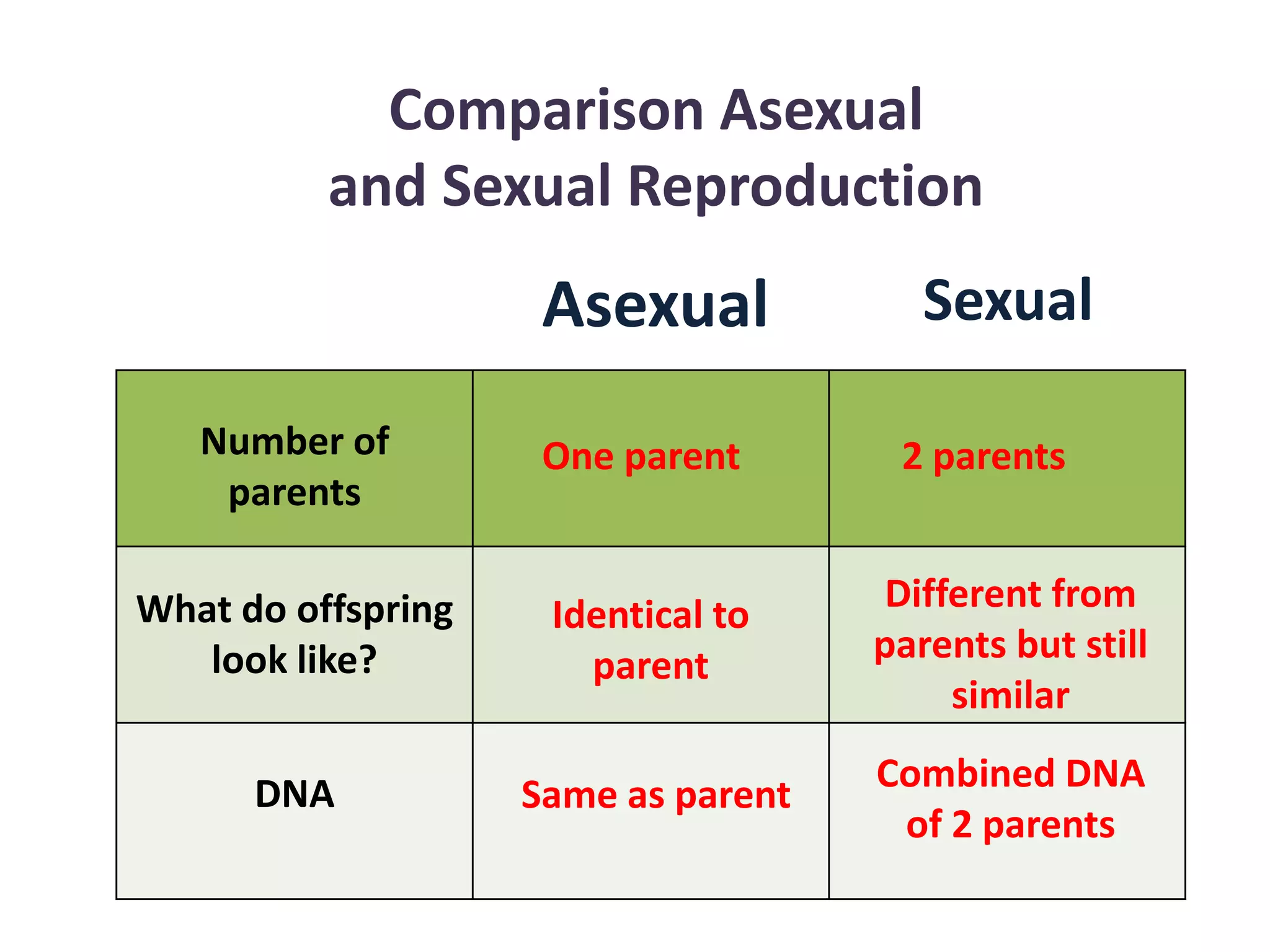
Comparison Asexual
          and Sexual Reproduction
                     Asexual            Sexual

   Number of         One parent       2 parents
    parents

What do offspring                     Different from
                     Identical to
   look like?                        parents but still
                       parent
                                          similar

      DNA           Same as parent   Combined DNA
                                      of 2 parents
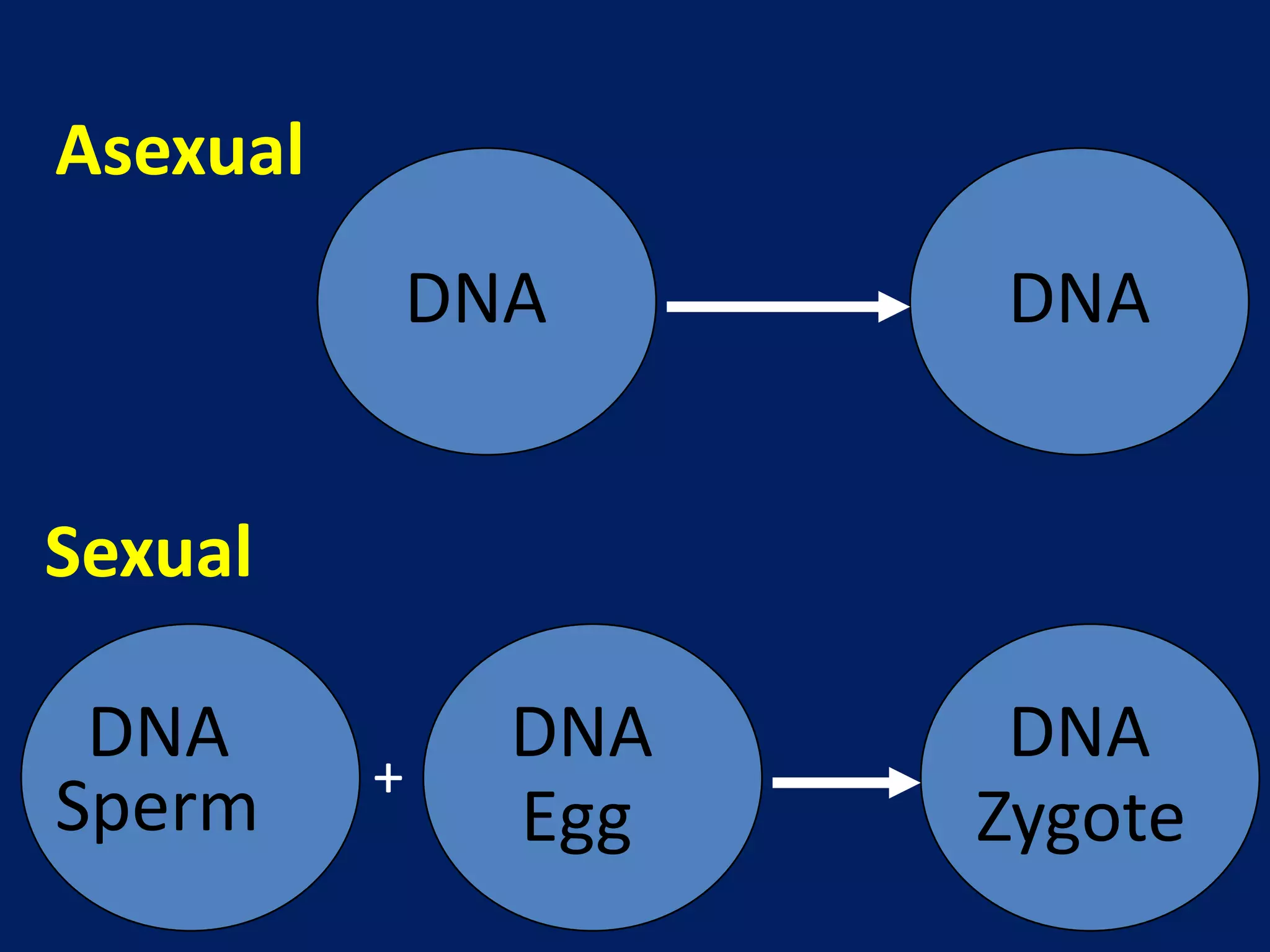
Asexual
              DNA     DNA


Sexual

 DNA            DNA    DNA
          +
Sperm           Egg   Zygote
Asexual
                             All offspring
      DNA                    identical – no
                       DNA
                             variation

Sexual
                             DNA           DNA
   DNA + DNA                          or

                             DNA           DNA
                                      or
All offspring different –
considerable variation
                             DNA           DNA
Define asexual reproduction.


Asexual reproduction – only one parent and the
  offspring are identical to parents
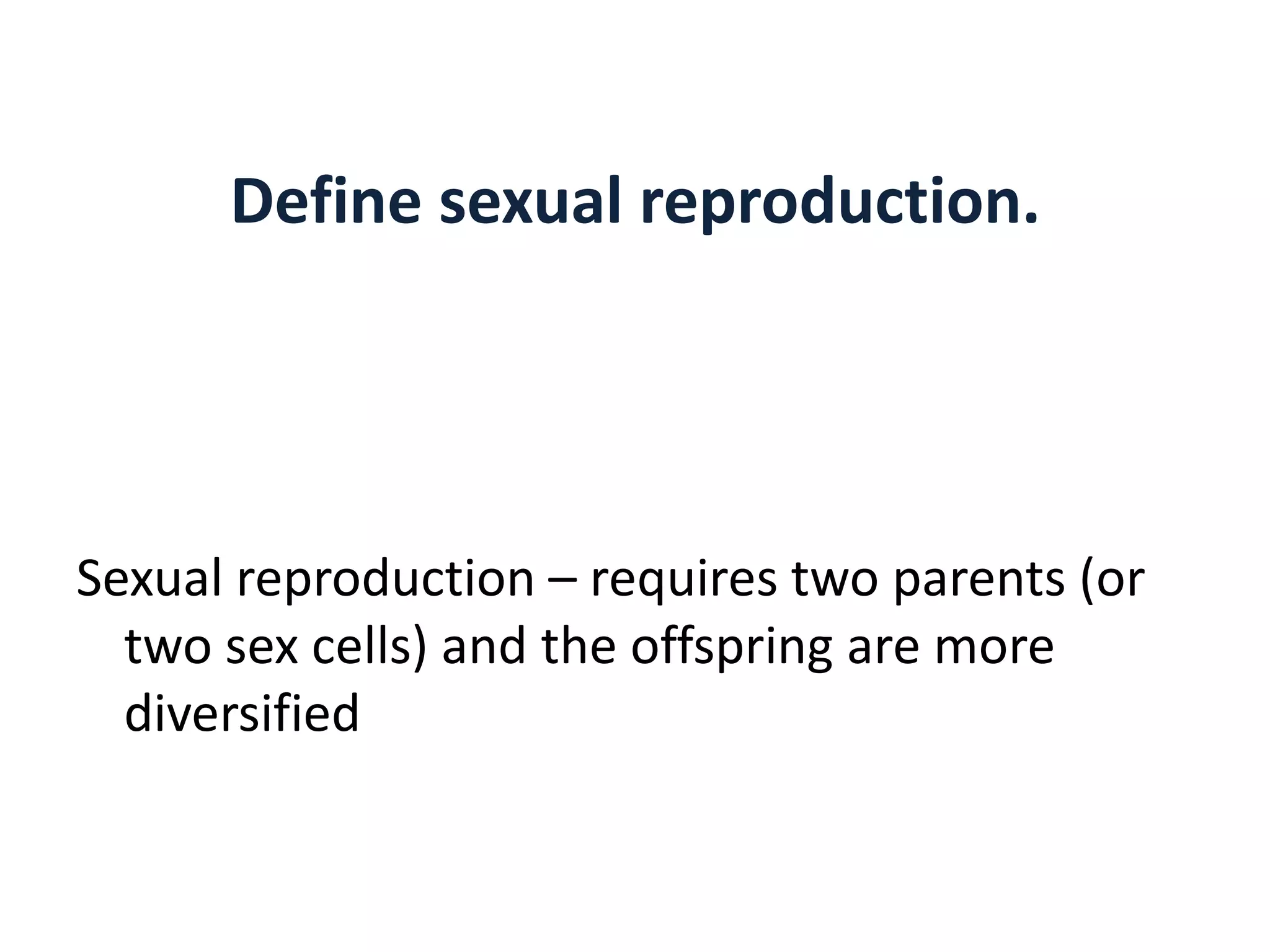
Define sexual reproduction.


Sexual reproduction – requires two parents (or
  two sex cells) and the offspring are more
  diversified
What type of asexual reproduction is the
            picture below?


Binary fission
What type of asexual reproduction is the
            picture below?


                Budding
Which type of reproduction will give
 you a wider diversity of offspring?


         Sexual reproduction
What type of asexual reproduction is the
            picture below?


        Vegetative propagation
What type of asexual reproduction is the
            picture below?


             Regeneration
Which type of reproduction will produce
   offspring identical to the parent?


       Asexual reproduction
In your notes, draw a Venn Diagram
   comparing asexual and sexual
           reproduction.

        Asexual      Sexual

Asexual vs Sexual Reproduction

  • 1.
    Asexual vs. SexualReproduction Note: If you are viewing this PPT at home, some videos may not play.
  • 2.
    Asexual Reproduction • Asexualreproduction is the process by which a single organism produces genetically identical offspring. • This type of reproduction is most common in single cell organisms like bacteria, but can be found in more complex organisms as well.
  • 3.
    Benefits of AsexualReproduction • Rapid population growth • Requires less energy to reproduce • All organisms are capable of reproduction (not just the females of the species) • One organism can make a whole population • Less likely to become extinct • Each offspring is a genetic copy of the parent
  • 4.
    Disadvantages of Asexual Reproduction • The primary disadvantage of asexual reproduction is: THERE IS NO GENETIC DIVERSITY! • This means that a population of genetically identical organisms is more susceptible to disease and can’t adapt easily to a changing environment.
  • 5.
    Types of AsexualReproduction • There are four main types of asexual reproduction: – Binary Fission – Budding – Vegetative Propagation – Regeneration
  • 6.
    Binary Fission • Binaryfission occurs when one parent splits into two offspring. • This is how all bacteria and some single celled protists reproduce.
  • 7.
    Binary Fission The elongates and the cell’s chromosomes are copied  A new cell wall is formed The cell separates into two new daughter cells
  • 8.
    Budding • Budding occurswhen a new organism grows off a parent. • Simple organisms such as some protists and some simple eukaryotes reproduce by budding. A simple protist called a hydra reproduces by budding.
  • 9.
  • 10.
    Regeneration • Regeneration occurswhen an organism can regrow a lost limb or can grow a whole other organism on a cut off piece. • This is common in simple multicellular creatures such as worms, sea stars or geckos.
  • 11.
    That is alot of worm… • Planarians are marine flatworms. Each slice of a planarian can grow into a brand new flatworm!
  • 12.
    Vegetative (Plant) Propagation •Vegetative propagation occurs when a new plant grows off an existing part of an old plant. • Many plants can use vegetative propagation. – Ivy – Grasses – Potato plants – Strawberries – Spider plants
  • 13.
  • 14.
    Sexual Reproduction • Sexualreproduction requires two organisms. • Each organism has specialized sex cells called gametes. • Animals have sperm (male) and ovum (female). • Plants have pollen (sperm) and ovum (egg). • Sexual reproduction happens when the two sex cells fuse together (fusion) to create a new and genetically different offspring.
  • 15.
    Sexual Reproduction Fertilization (fusion)
  • 16.
    Advantages of SexualReproduction • Sexual reproduction allows for more genetic diversity in the offspring. – More adaptability – More variation – Greater chance of mutation – Greater chance of survivability when faced with environmental change
  • 17.
    Disadvantages of SexualReproduction • It requires two individuals with opposing gametes (sex cells). • Organisms must use a lot of energy nourishing and growing a new baby organism.
  • 18.
    Comparison Asexual and Sexual Reproduction Asexual Sexual Number of One parent 2 parents parents What do offspring Different from Identical to look like? parents but still parent similar DNA Same as parent Combined DNA of 2 parents
  • 19.
    Asexual DNA DNA Sexual DNA DNA DNA + Sperm Egg Zygote
  • 20.
    Asexual All offspring DNA identical – no DNA variation Sexual DNA DNA DNA + DNA or DNA DNA or All offspring different – considerable variation DNA DNA
  • 21.
    Define asexual reproduction. Asexualreproduction – only one parent and the offspring are identical to parents
  • 22.
    Define sexual reproduction. Sexualreproduction – requires two parents (or two sex cells) and the offspring are more diversified
  • 23.
    What type ofasexual reproduction is the picture below? Binary fission
  • 24.
    What type ofasexual reproduction is the picture below? Budding
  • 25.
    Which type ofreproduction will give you a wider diversity of offspring? Sexual reproduction
  • 26.
    What type ofasexual reproduction is the picture below? Vegetative propagation
  • 27.
    What type ofasexual reproduction is the picture below? Regeneration
  • 28.
    Which type ofreproduction will produce offspring identical to the parent? Asexual reproduction
  • 29.
    In your notes,draw a Venn Diagram comparing asexual and sexual reproduction. Asexual Sexual

Editor's Notes

  • #18 Yes, plants put a lot of energy into growing new baby plants… Seeds anyone? It takes a lot of energy to produce all the crap tons of pollen in the air and to make fruits/nuts.