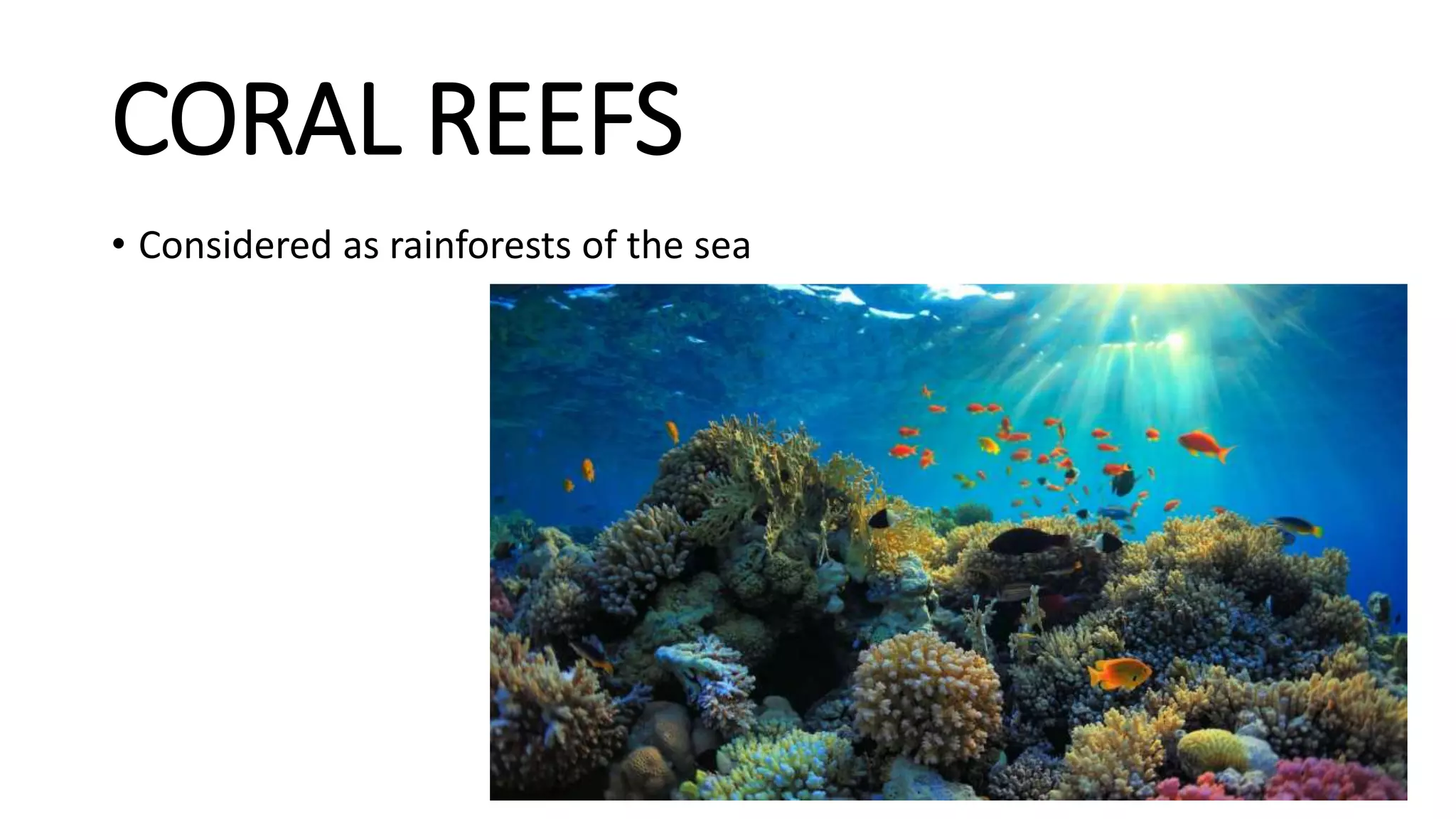
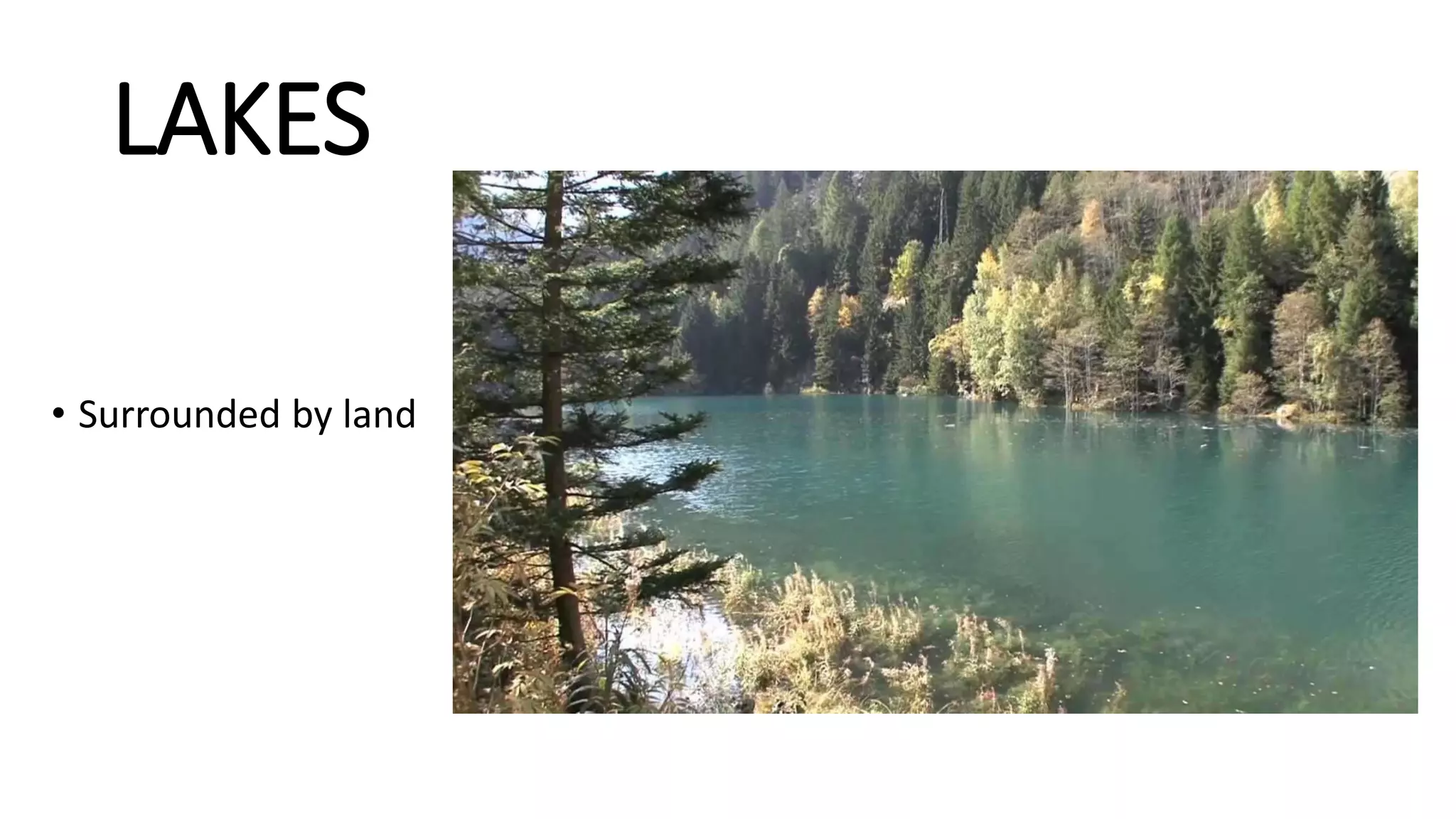
Ecology is the study of how organisms interact with each other and their environment. Organisms are affected by biotic factors like other living things as well as abiotic factors like temperature, sunlight, and rocks that are non-living. A biome is a large geographic region defined by the plants and animals living there. There are two main types of biomes - terrestrial biomes like tropical forests, tundras, and deserts, as well as aquatic biomes including freshwater ecosystems like lakes and rivers, and marine ecosystems like coral reefs and oceans. Biomes provide habitat for many interconnected species but are threatened by human impacts like climate change and habitat destruction.
Defines ecology as the study of organism interactions and environment; distinguishes biotic (living) and abiotic (non-living) factors.
Explains biomes as geographic areas characterized by specific species; differentiates biomes from ecosystems.
Discusses major terrestrial biomes (tropical forests, taiga, tundra) and their climate conditions.
Describes desert and savanna biomes; highlights temperature ranges, geographic locations, and adaptations.
Details characteristics of grassland and shrubland biomes including temperature ranges and ecological features.
Introduces aquatic biomes; classifies them as freshwater and marine; discusses salinity differences.Outlines marine biomes, including coral reefs and mangrove forests, emphasizing ecosystem diversity.
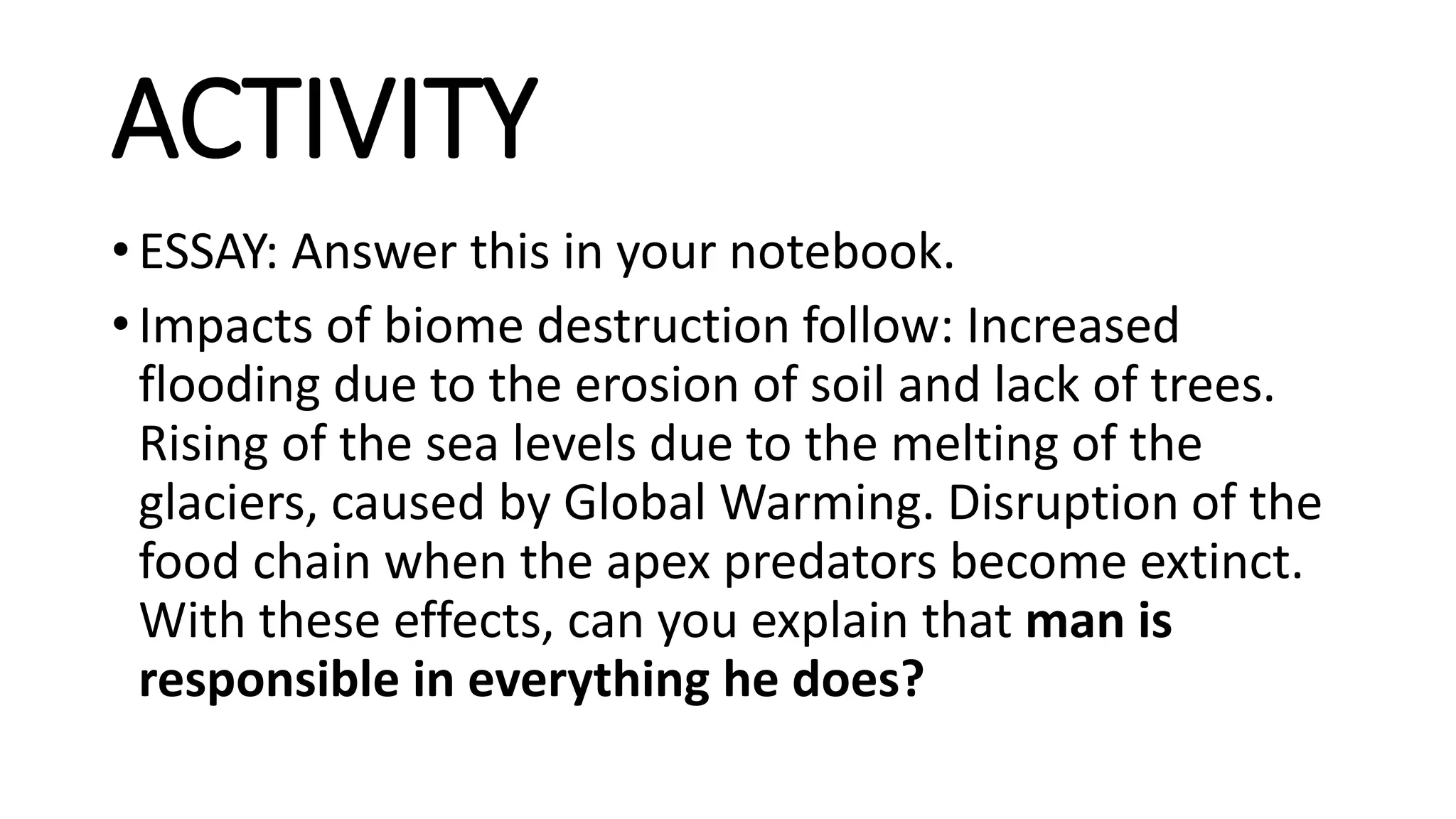
Encourages reflection on biome destruction impacts; prompts an essay on human responsibility towards the environment.
BIOTIC FACTORS
• Theliving factors in the environment.
• “bio” means life
•Biotic factors in a river include: fishes,
phytoplanktons, crabs, and plants near it
6.
ABIOTIC FACTORS
• Thenon-living factors in the environment.
• Abiotic factors in a river include: rocks, sand,
temperature, sunlight, etc…
I. TERRESTRIAL BIOMES
•These biomes contain smaller but related ecosystems
that are distinguished by similar plant and animal life-
forms.
• Eight major terrestrial biomes include: tropical forest,
temperate forest, taiga, tundra, desert, grassland,
savanna, and shrubland.
14.
TROPICAL FOREST
• Foundnear the equator (Asia, Africa, South America,
and Central America)
• Temperature is always warm and varies a little (20 to
34 degrees Celsius)
• Receives abundant rainfall.
• Two types: tropical seasonal forest and tropical
rainforest
TAIGA
• Very coldforests
• Found in the Northern hemisphere (across North
America, Europe, and Asia)
• Temperature ranges from -10 to 14 degrees Celsius
TEMPERATE FOREST
• Foundsouth of taigas (eastern parts of North America,
eastern parts of Asia, Europe, and some parts in the
Southern Hemisphere)
• Temperature ranges from 6 to 28 degrees Celsius and
changes every season
• Has well-defined seasons: summer, spring, winter,
autumn
TUNDRA
• Found inthe Arctic circle, south of the Polar ice caps
in the Northern Hemisphere.
• Temperature ranges from -26 to 12 degrees Celsius
• Characterized by a thin layer of topsoil over the
permafrost
• Permafrost is a layer of frozen ground that reaches a
temperature below 0 degree Celsius.
DESERT
• Found onevery continent except Europe.
• Temperature ranges from 7 to 38 degrees Celsius.
• Plants and animals are adapted to endure dry, hot
conditions.
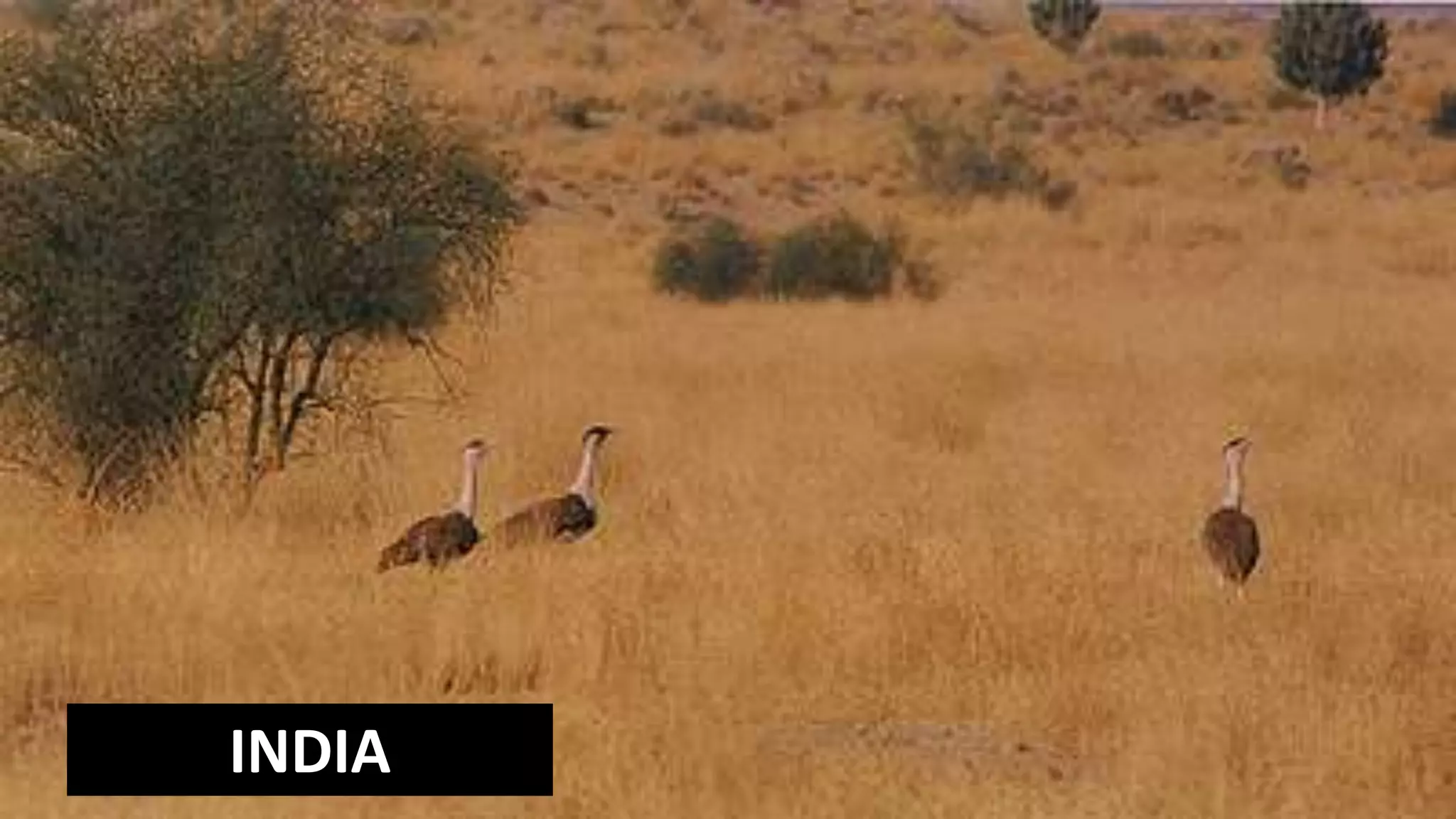
SAVANNA
• Found inSouth Asia, Australia, South America, and in
Central and Southern Africa.
• Temperature ranges from 16 to 24 degrees Celsius
• Characterized as tropical grasslands with scattered
deciduous trees and shrubs
• A deciduous plant loses its leaves in autumn and grows
new ones in the spring.
GRASSLAND
• Found inAsia, North America, South America,
Australia, and Africa.
• Temperature ranges from 0 to 25 degrees Celsius.
• Covered with tall grasses in moist areas and short
grasses in drier areas.
SHRUBLAND
• Also calledas chaparrals
• Found surrounding the Mediterranean Sea, Western
coasts of North and South America, South Africa, and
Australia.
• Temperature ranges from 1- to 40 degrees Celsius.
• Region is dominated by either small trees or shrubs.
• Leaves of the plants in shrublands are called
evergreen.
II. AQUATIC BIOMES
•Watercovers almost three-fourths of the Earth’s
surface and is also a home to aquatic organisms.
•Aquatic biomes are classified into two types:
freshwater and marine biomes
•These biomes differ in salinity (dissolved salt
level – NaCl, Mg, Calcium sulfates, and
bicarbonates)
STREAMS
• a bodyof water with surface water flowing within the bed and banks
of a channel
41.
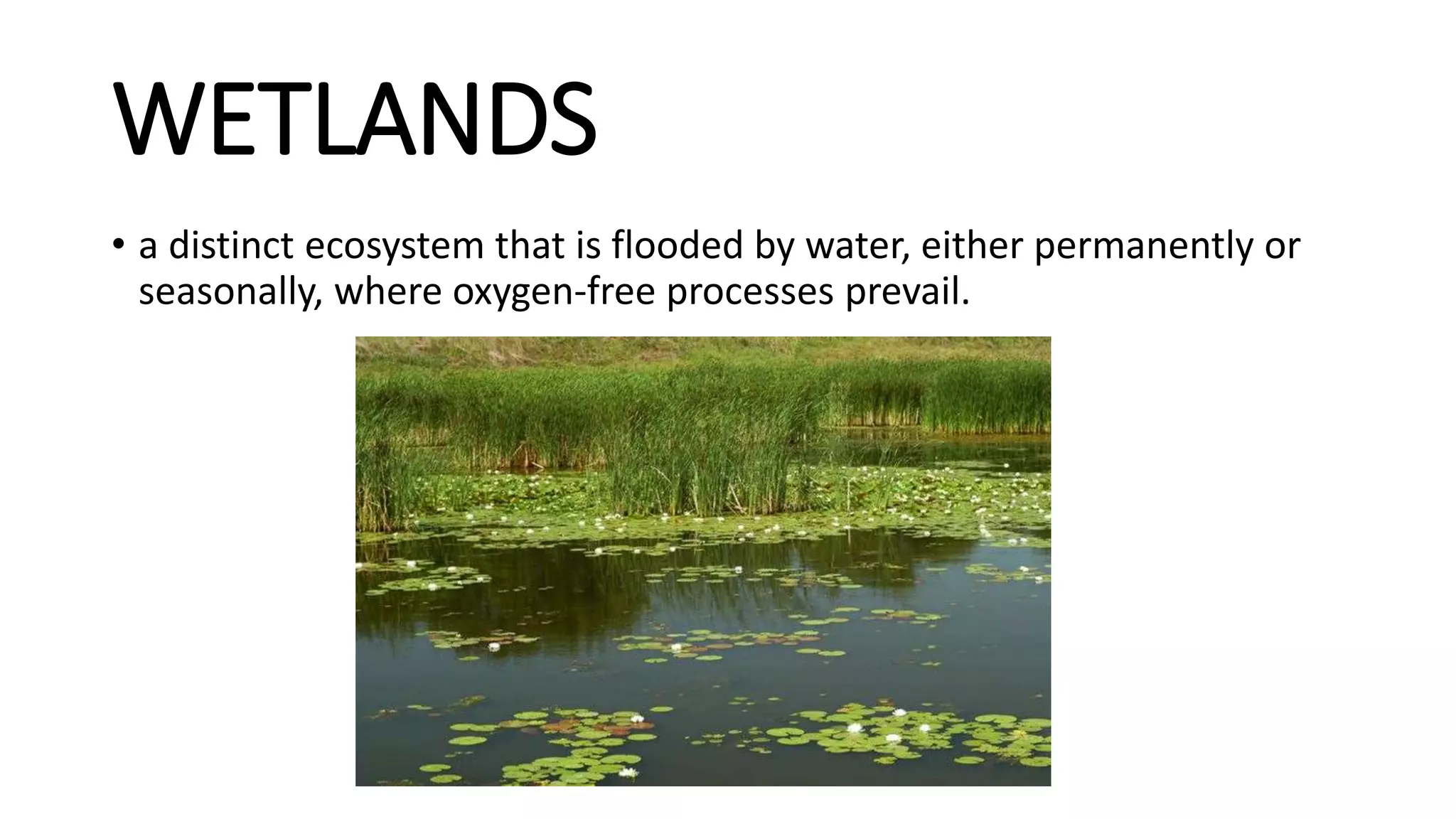
WETLANDS
• a distinctecosystem that is flooded by water, either permanently or
seasonally, where oxygen-free processes prevail.
42.
MARINE BIOMES
•Primarily madeup of the saltwater oceans.
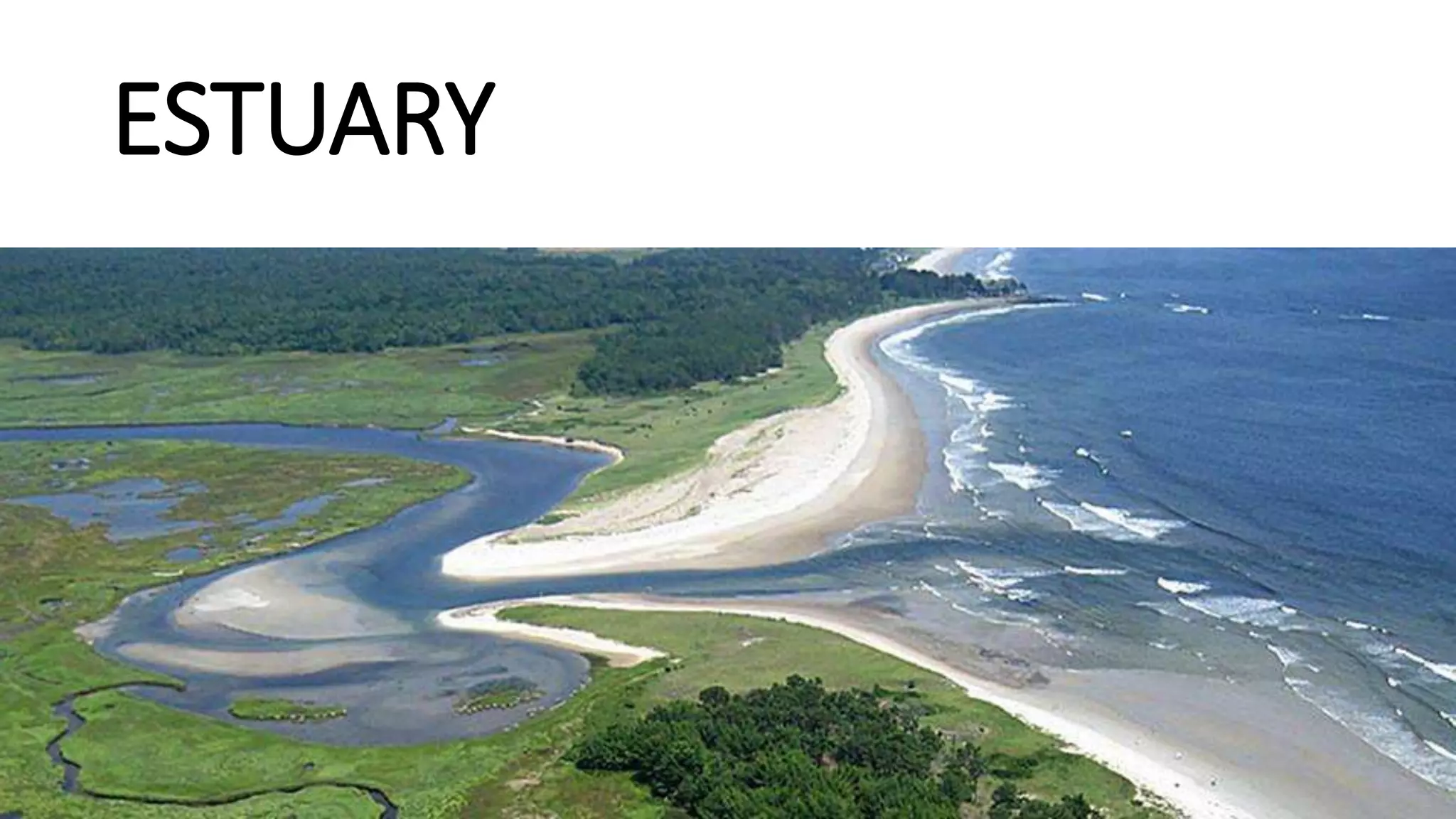
•Estuaries are areas where freshwater from rivers
meet and mix with marine water, creating
brackish water.
•Brackish - saltier than fresh water, but not as salty
as seawater.
ACTIVITY
• ESSAY: Answerthis in your notebook.
• Impacts of biome destruction follow: Increased
flooding due to the erosion of soil and lack of trees.
Rising of the sea levels due to the melting of the
glaciers, caused by Global Warming. Disruption of the
food chain when the apex predators become extinct.
With these effects, can you explain that man is
responsible in everything he does?
Editor's Notes
#33 Evergreen – leaves stay in branches all throughout the year.
#46 A mangrove is a shrub or small tree that grows in coastal saline or brackish water.