Good Day!!!
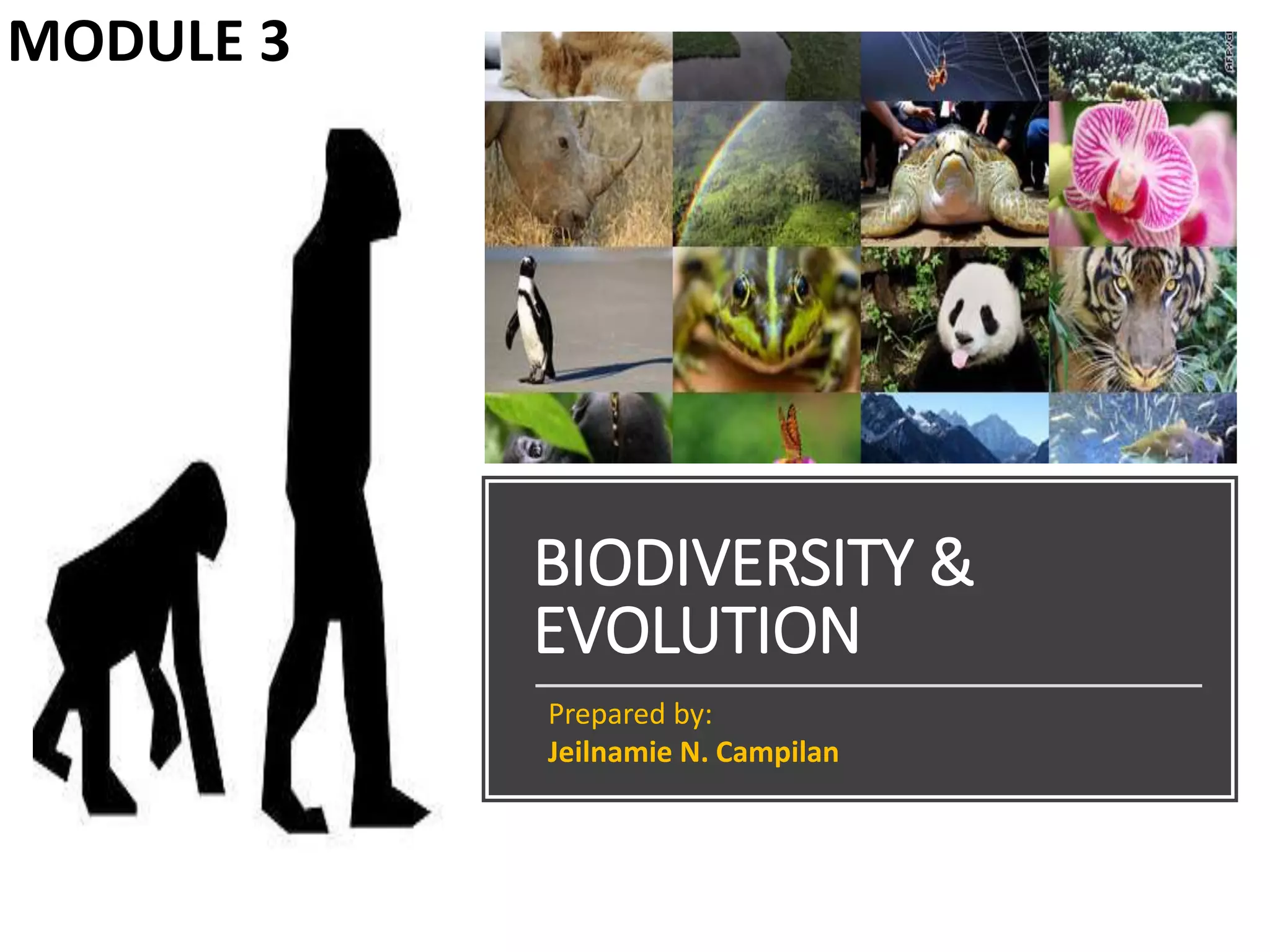
BIODIVERSITY &
EVOLUTION
Prepared by:
Jeilnamie N. Campilan
MODULE 3
Sources of Evidence for Evolution
Organisms inhabiting the earth have
changed overtime. Their structures, traits and
abilities allowed them to adapt and survive in
their environment.
Data from the:
• fossil records
• anatomy and morphology
• embryonic development
• biochemistry
“Evidence of Evolution from
Fossil Records”
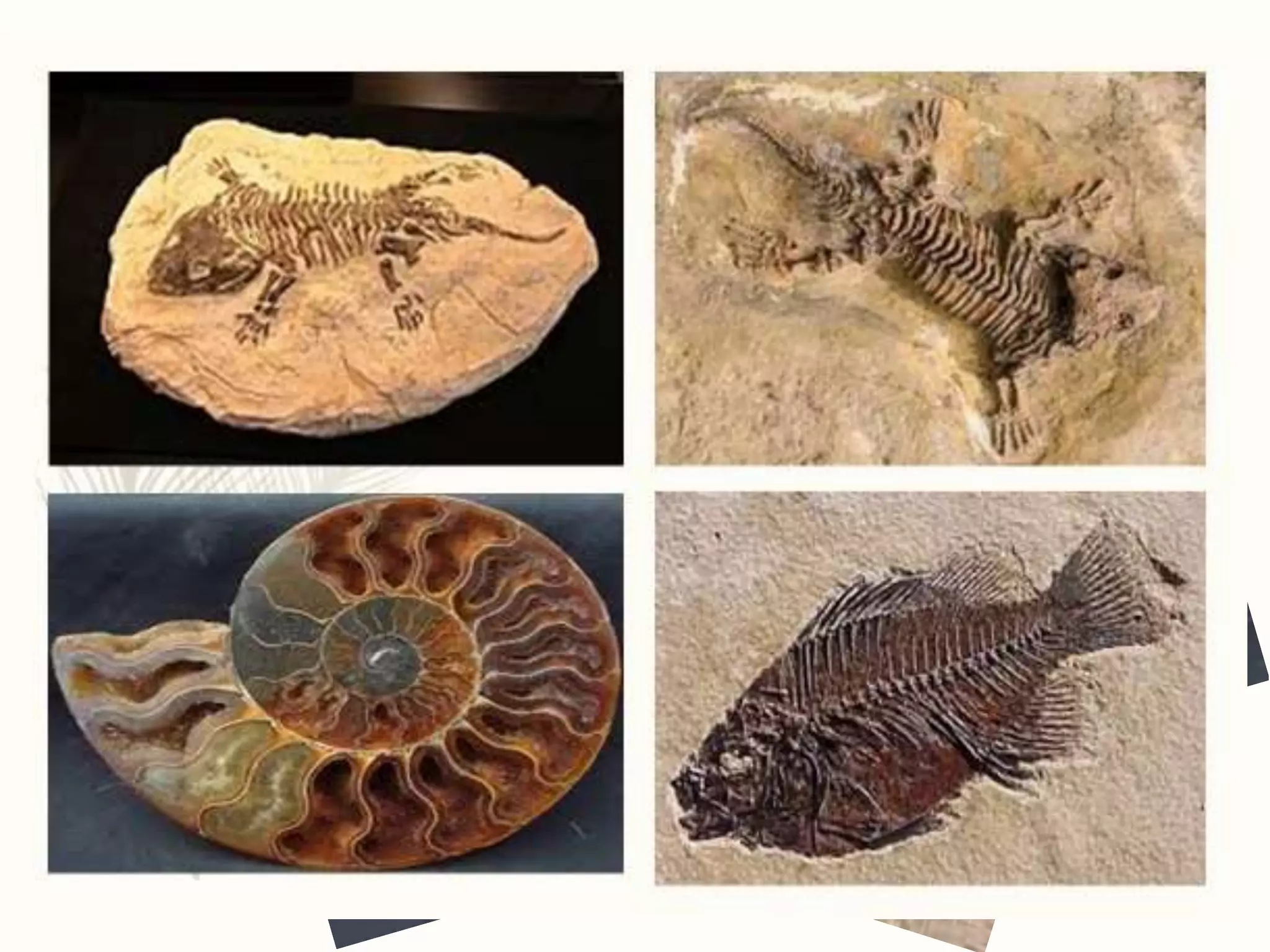
Fossil
• Are examples of evidences that paleontologists use
in studying evolution.
• They are traces of organisms that lived in the past
and were preserved by natural process or
catastrophic events.
• Most fossils were commonly found in sedimentary
rocks. They were from the hard parts of the
organism like woody stem, bones, or teeth
SEDIMENTARY ROCKS
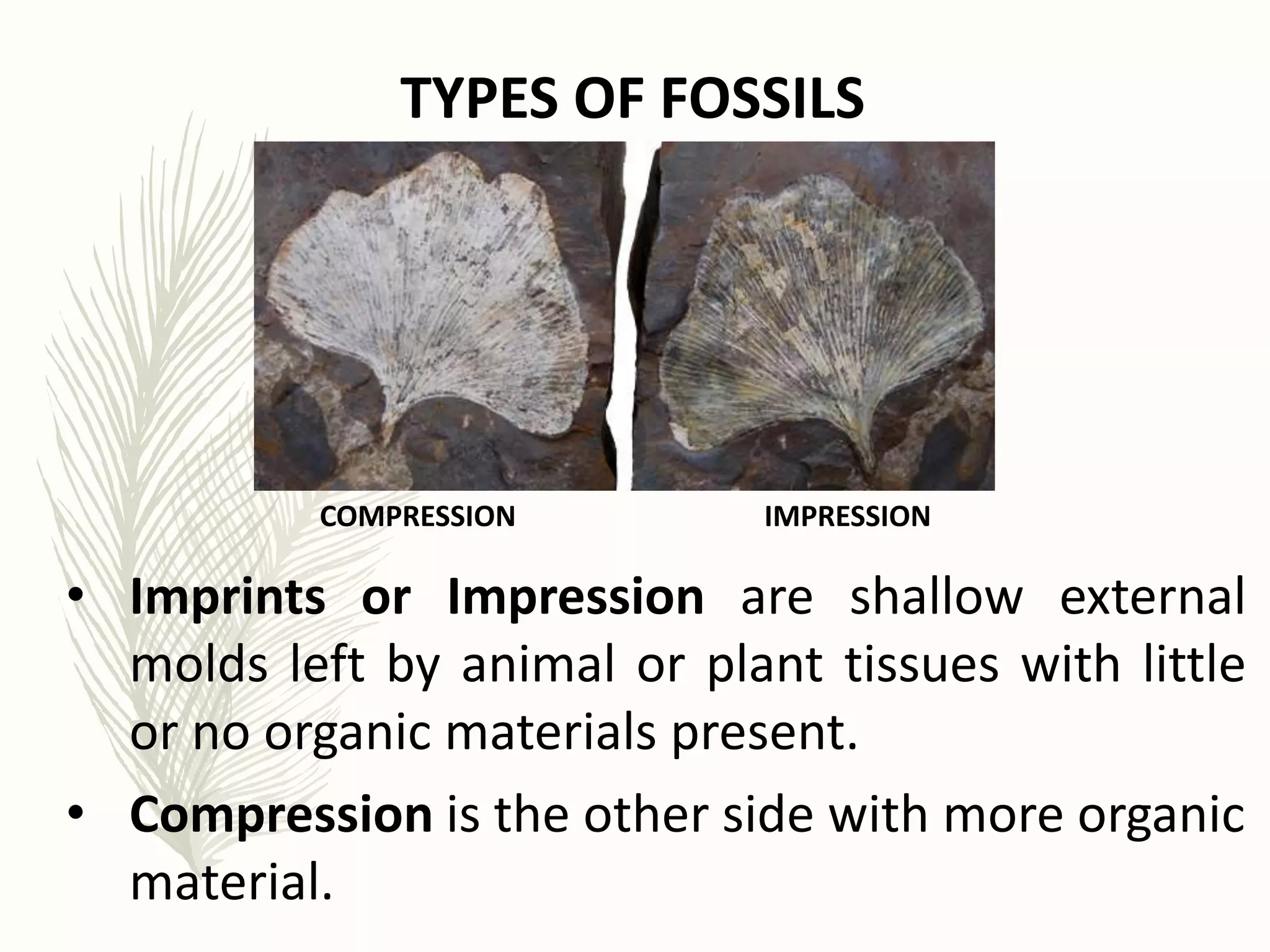
TYPES OF FOSSILS
• Imprints or Impression are shallow external
molds left by animal or plant tissues with little
or no organic materials present.
• Compression is the other side with more organic
material.
COMPRESSION IMPRESSION
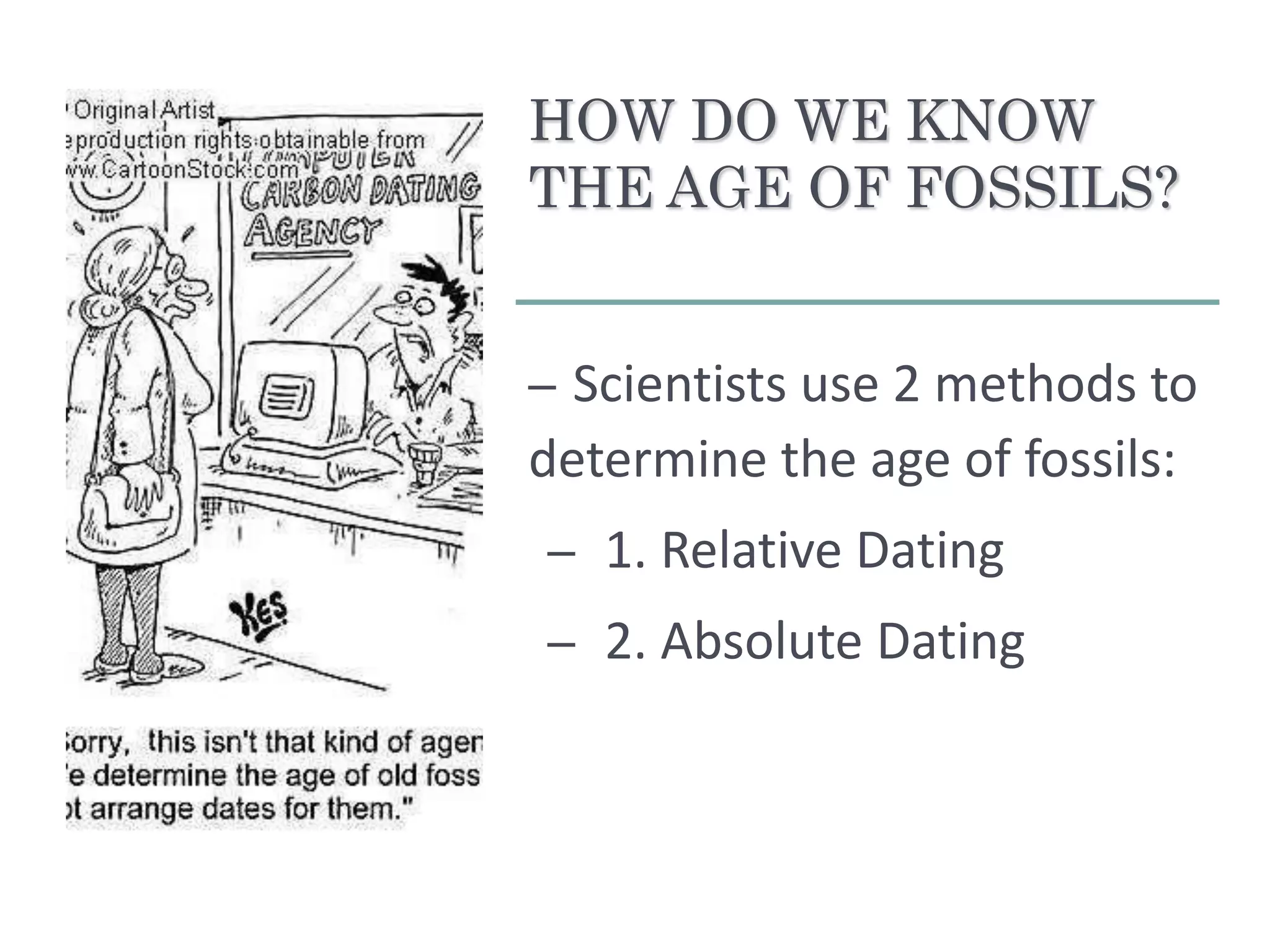
HOW DO WE KNOW
THE AGE OF FOSSILS?
– Scientists use 2 methods to
determine the age of fossils:
– 1. Relative Dating
– 2. Absolute Dating
Relative Dating
– is a method used to determine the age of
the rocks by comparing them with the
rocks in the other layers.
–Use the Law of Superposition
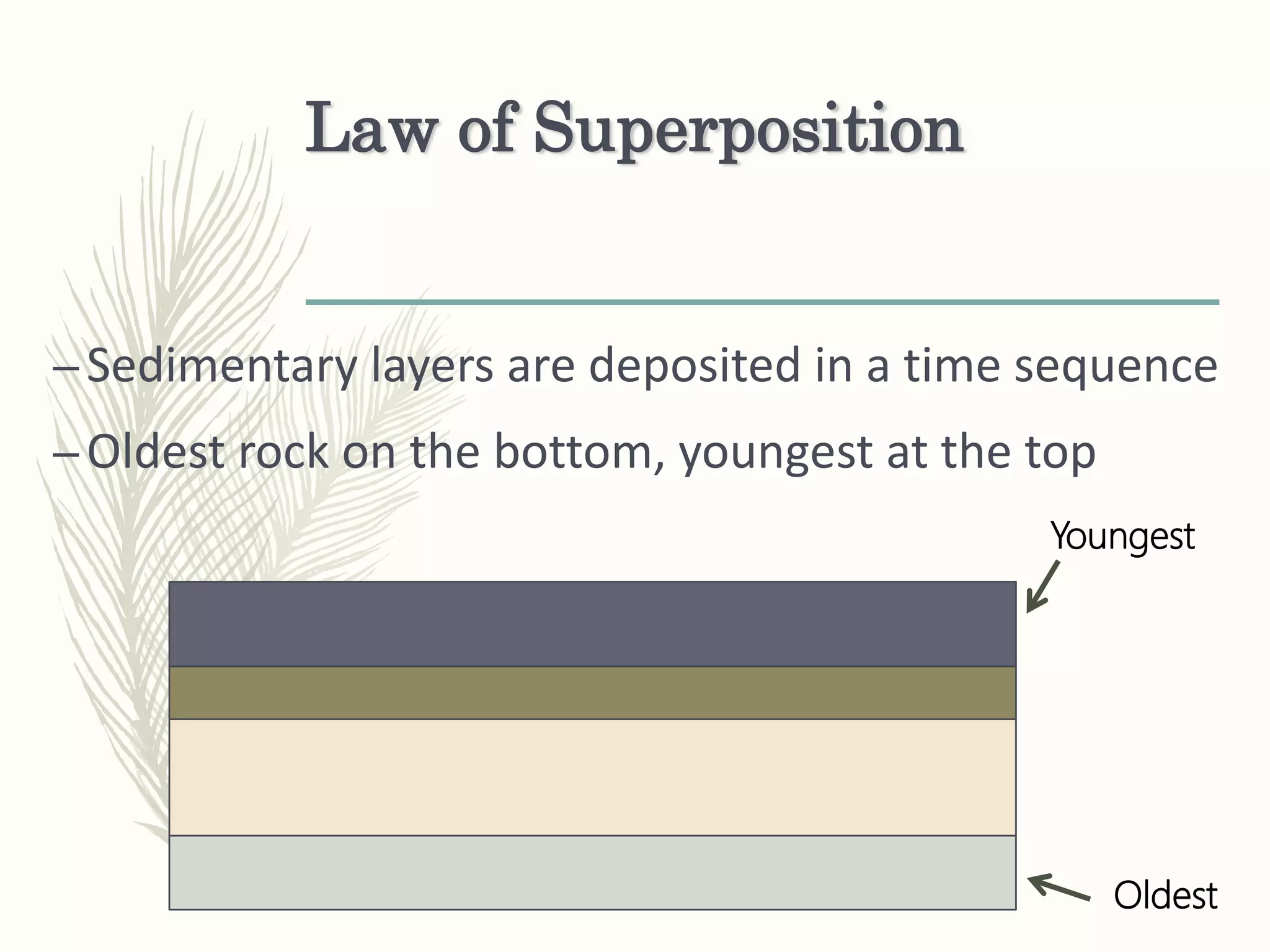
Law of Superposition
–Sedimentary layers are deposited in a time sequence
–Oldest rock on the bottom, youngest at the top
Youngest
Oldest
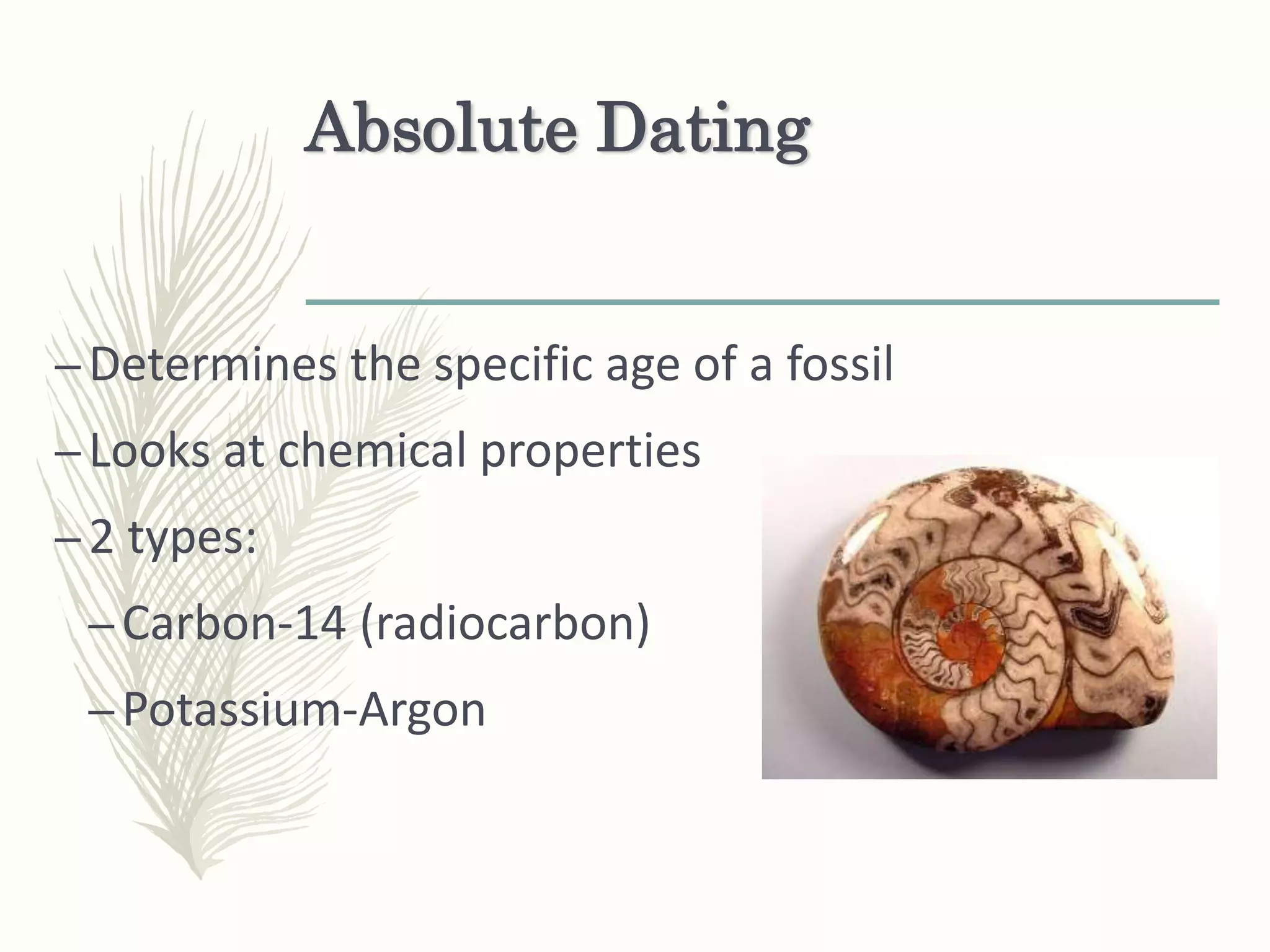
Absolute Dating
–Determines the specific age of a fossil
–Looks at chemical properties
–2 types:
–Carbon-14 (radiocarbon)
–Potassium-Argon
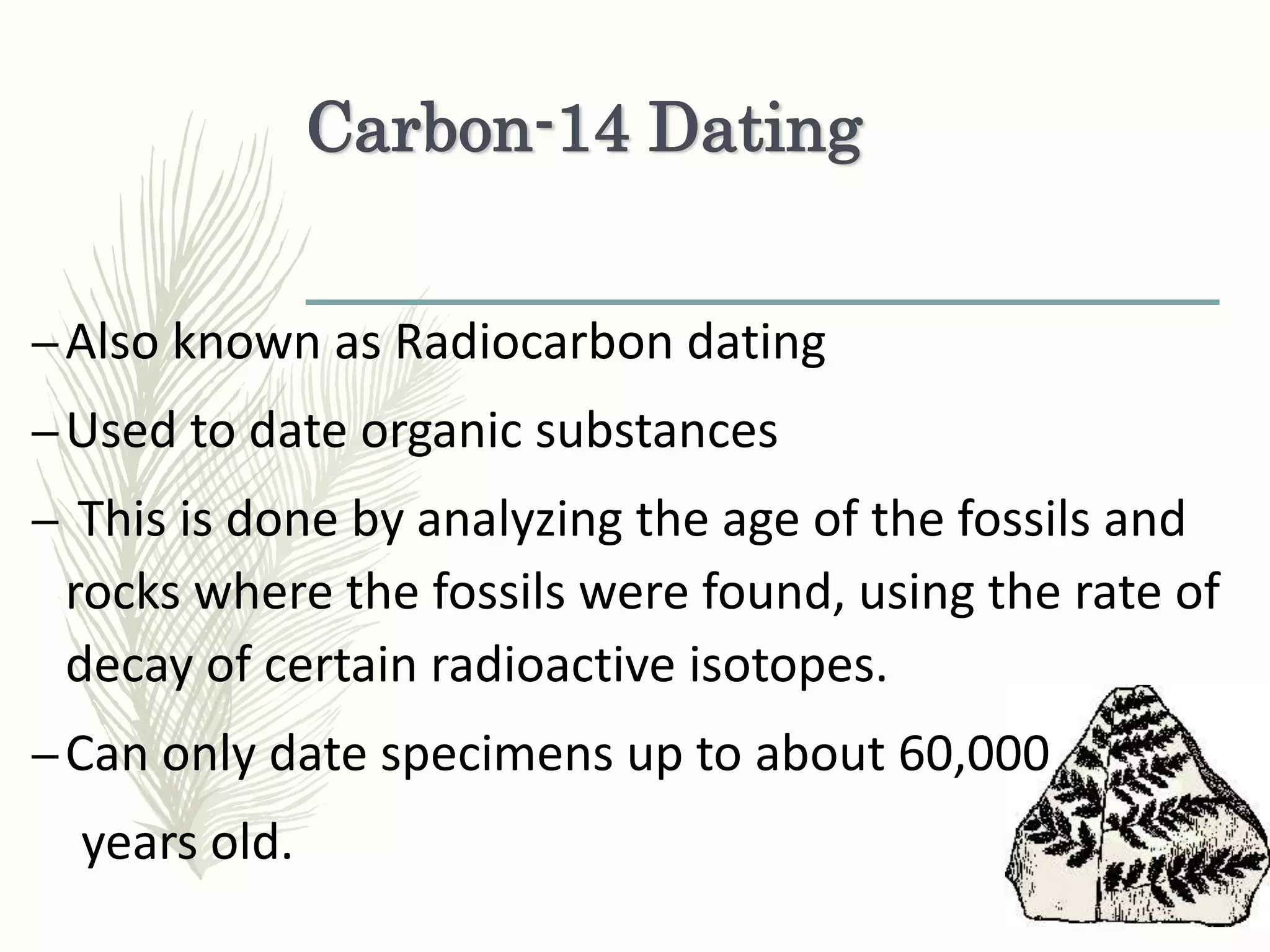
Carbon-14 Dating
–Also known as Radiocarbon dating
–Used to date organic substances
– This is done by analyzing the age of the fossils and
rocks where the fossils were found, using the rate of
decay of certain radioactive isotopes.
–Can only date specimens up to about 60,000
years old.
Potassium-Argon Dating
–Scientists determine the age of the rock surrounding
the fossil to determine the fossil’s age.
–Used only for inorganic substances (rocks and
minerals)
–Scientists measure the amount of argon in the rock
to determine its age
–Dates rock 60,000 years old and older
 ELABORATE
“Where Do I Belong”
 EVALUATE
“What’s My Age”
Evidence from fossil records GRADE10

Evidence from fossil records GRADE10

  • 1.
  • 2.
  • 5.
    Sources of Evidencefor Evolution Organisms inhabiting the earth have changed overtime. Their structures, traits and abilities allowed them to adapt and survive in their environment. Data from the: • fossil records • anatomy and morphology • embryonic development • biochemistry
  • 6.
    “Evidence of Evolutionfrom Fossil Records”
  • 7.
    Fossil • Are examplesof evidences that paleontologists use in studying evolution. • They are traces of organisms that lived in the past and were preserved by natural process or catastrophic events. • Most fossils were commonly found in sedimentary rocks. They were from the hard parts of the organism like woody stem, bones, or teeth
  • 9.
  • 10.
    TYPES OF FOSSILS •Imprints or Impression are shallow external molds left by animal or plant tissues with little or no organic materials present. • Compression is the other side with more organic material. COMPRESSION IMPRESSION
  • 11.
    HOW DO WEKNOW THE AGE OF FOSSILS? – Scientists use 2 methods to determine the age of fossils: – 1. Relative Dating – 2. Absolute Dating
  • 12.
    Relative Dating – isa method used to determine the age of the rocks by comparing them with the rocks in the other layers. –Use the Law of Superposition
  • 13.
    Law of Superposition –Sedimentarylayers are deposited in a time sequence –Oldest rock on the bottom, youngest at the top Youngest Oldest
  • 14.
    Absolute Dating –Determines thespecific age of a fossil –Looks at chemical properties –2 types: –Carbon-14 (radiocarbon) –Potassium-Argon
  • 15.
    Carbon-14 Dating –Also knownas Radiocarbon dating –Used to date organic substances – This is done by analyzing the age of the fossils and rocks where the fossils were found, using the rate of decay of certain radioactive isotopes. –Can only date specimens up to about 60,000 years old.
  • 16.
    Potassium-Argon Dating –Scientists determinethe age of the rock surrounding the fossil to determine the fossil’s age. –Used only for inorganic substances (rocks and minerals) –Scientists measure the amount of argon in the rock to determine its age –Dates rock 60,000 years old and older
  • 17.
  • 18.