Downloaded 164 times

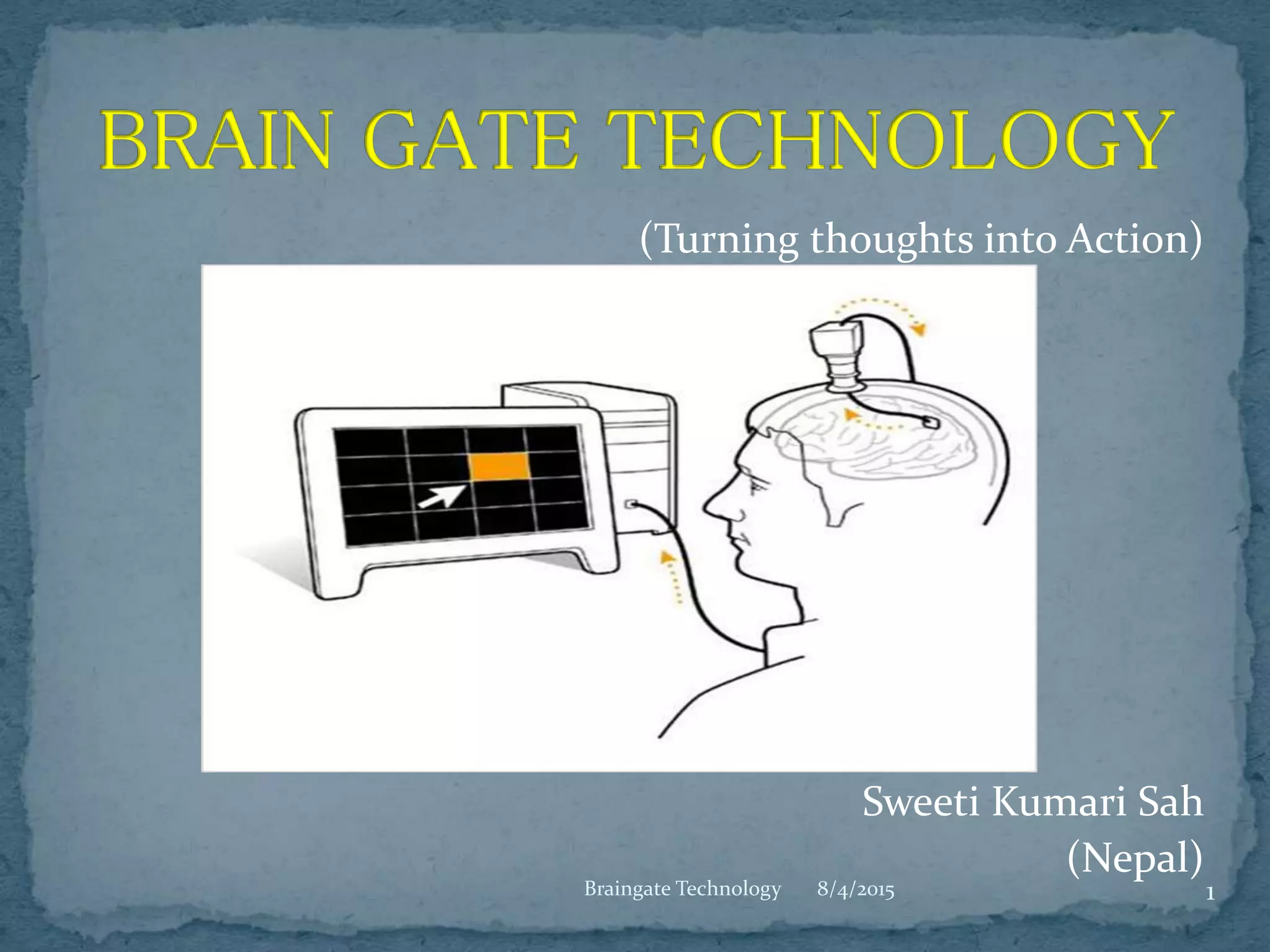

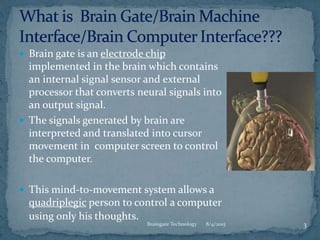

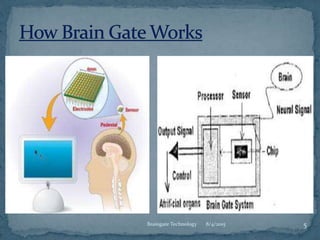


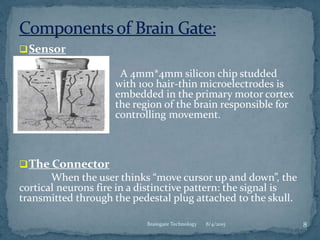
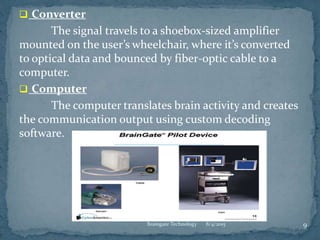
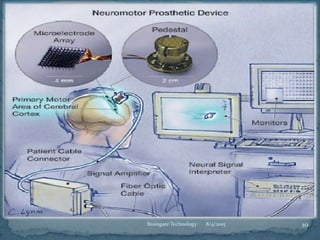




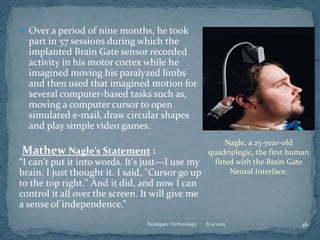
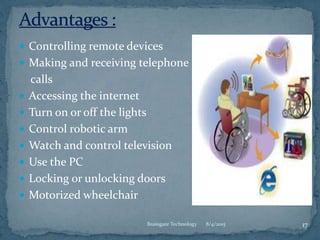





BrainGate is an implantable brain-computer interface developed by Cyberkinetics that allows people with paralysis to control external devices with their thoughts. The BrainGate chip contains electrodes that detect neural signals in the motor cortex, which are translated by an external processor into cursor movements on a computer screen or commands to operate assistive technologies. Initial trials in humans showed a participant was able to control a computer using only his brain signals. While promising, BrainGate still faces challenges such as high costs, limited speed and range of control, and health risks associated with brain surgery. Ongoing research aims to address these issues and expand the technology's capabilities.


