BRAINGATE SYSTEM
Presented by
B.Prudhvi Reddy
13F61A04F2
Guided By
Niraja Reddy
INTRODUCTION
• It is a mind-to-movement system that allows a
quadriplegic man to control a computer using his
Thoughts.
• The system is to help those who have lost control
of their limbs, or other bodily functions,
• It monitors brain activity in the patient and
converts the intention of the user into computer
commands
DEVELOPMENT
• Company and Scientist:
• Brain Gate is a brain implant system
developed by the bio-tech company
Cyber kinetics in 2003 in conjunction with
the Department of Neuroscience at Brown
University.
Working Principle
• The principle of brain gate
neural interface system is that
which intact with brain function,
neural signals generated are
interpreted by the systems and a
cursor is shown to the user on a
computer screen that provides
an alternate “Brain Gate
pathway".
BCI Technology
• “BCIs” usually connects the brain (or nervous system) with a
computer system.
• A Brain Computer Interface, called as direct neural interface
or brain machine interface is a direct communication pathway
between human or animal brain and an external device.
• Based on the communicative Pathway BCI is classified as
follows
 One Way BCI
 Two Way BCI
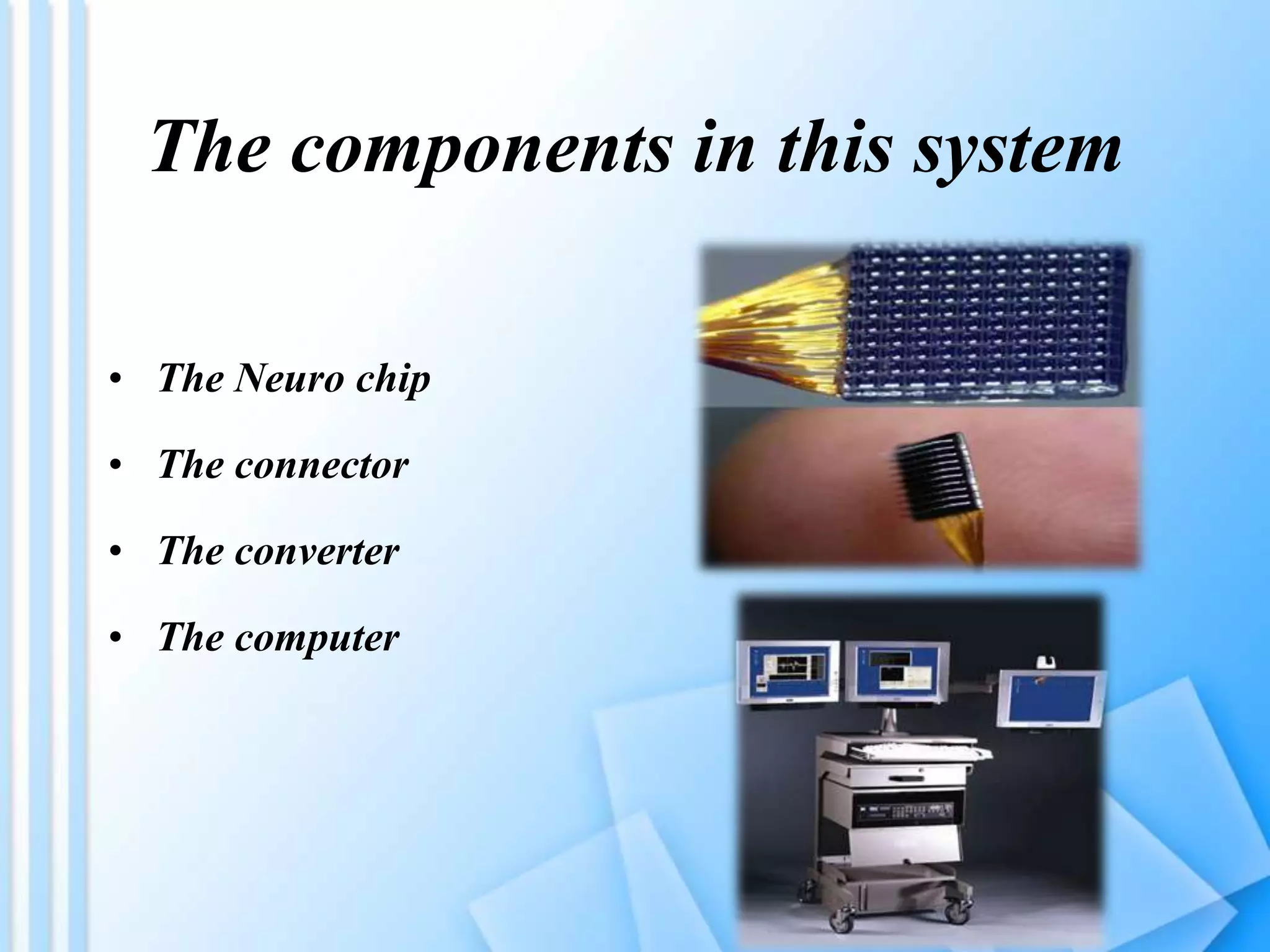
• The Neuro chip
• The connector
• The converter
• The computer
The components in this system
Working
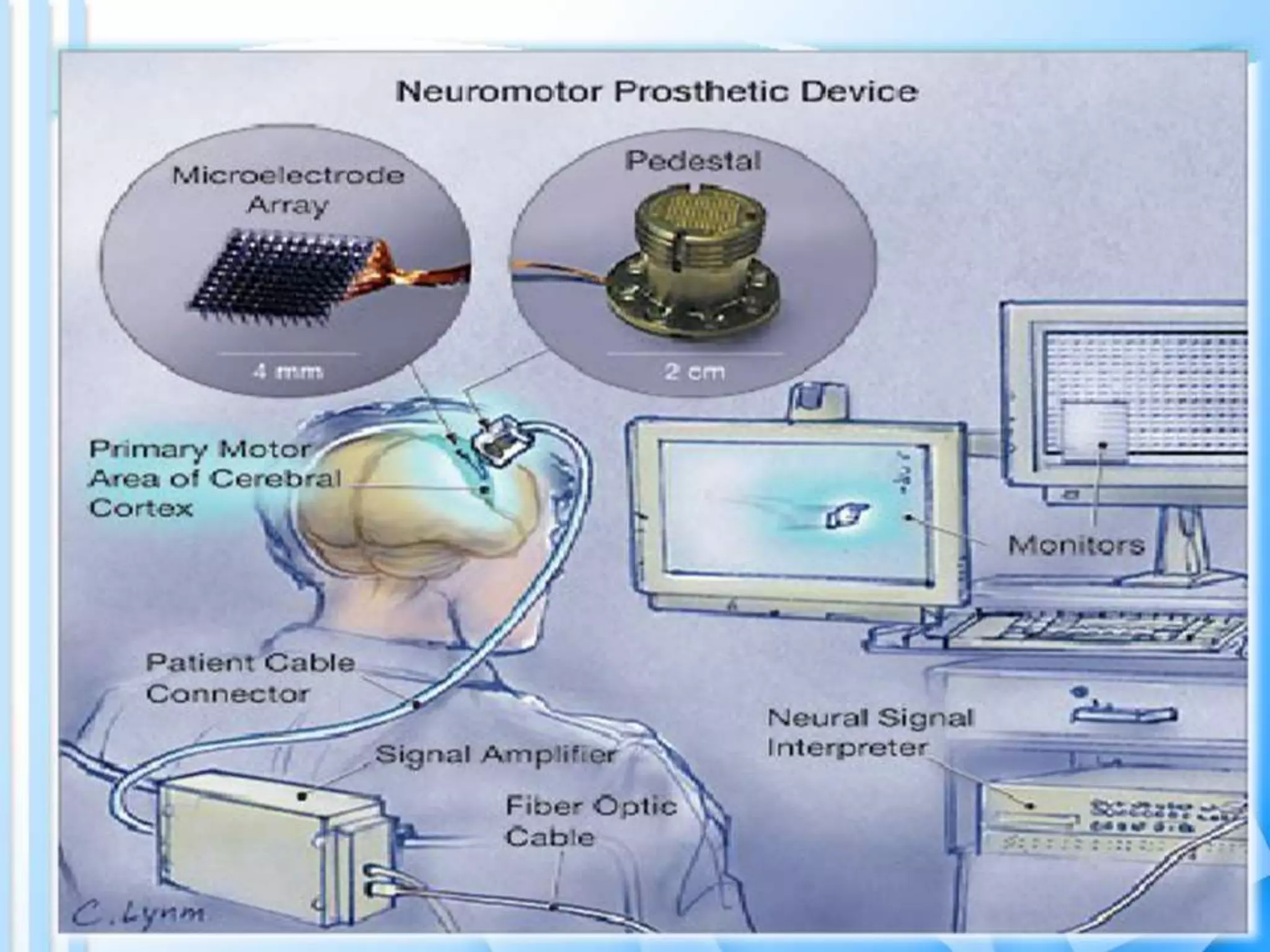
• The Brain Gate neural interface device is a
propriety brain-computer interface that consist
of an Inter neural signal sensor and External
Processors.
• The sensor consists of a tiny chip containing
100 microscopic electrodes that detect brain
cell electrical activity.
• The chip is implanted on the surface of brain in
the motor cortex area that controls movement.
Motor Cortex
Working (Cont.)
• External Processors convert neural signals into an
output signal under the users own control.
• In the pilot version of the device, a cable connects
the sensor to an external processor in a cart that
contains computers.
• The computers translate brain activity and create
the communication output using custom decoding
software.
HOW INFORMATION IS
TRANSMITTED?
• When a work is done through any part of body
then a potential difference is created in the brain.
• This potential difference is captured by the
electrodes and is transmitted via fiber optic to the
Digitizer(external processor).
• The digitizer converts the signal into some 0’s and
1’s and that is feed into the computer.
Brain Gate Research in Human
A boon to the paralyzed
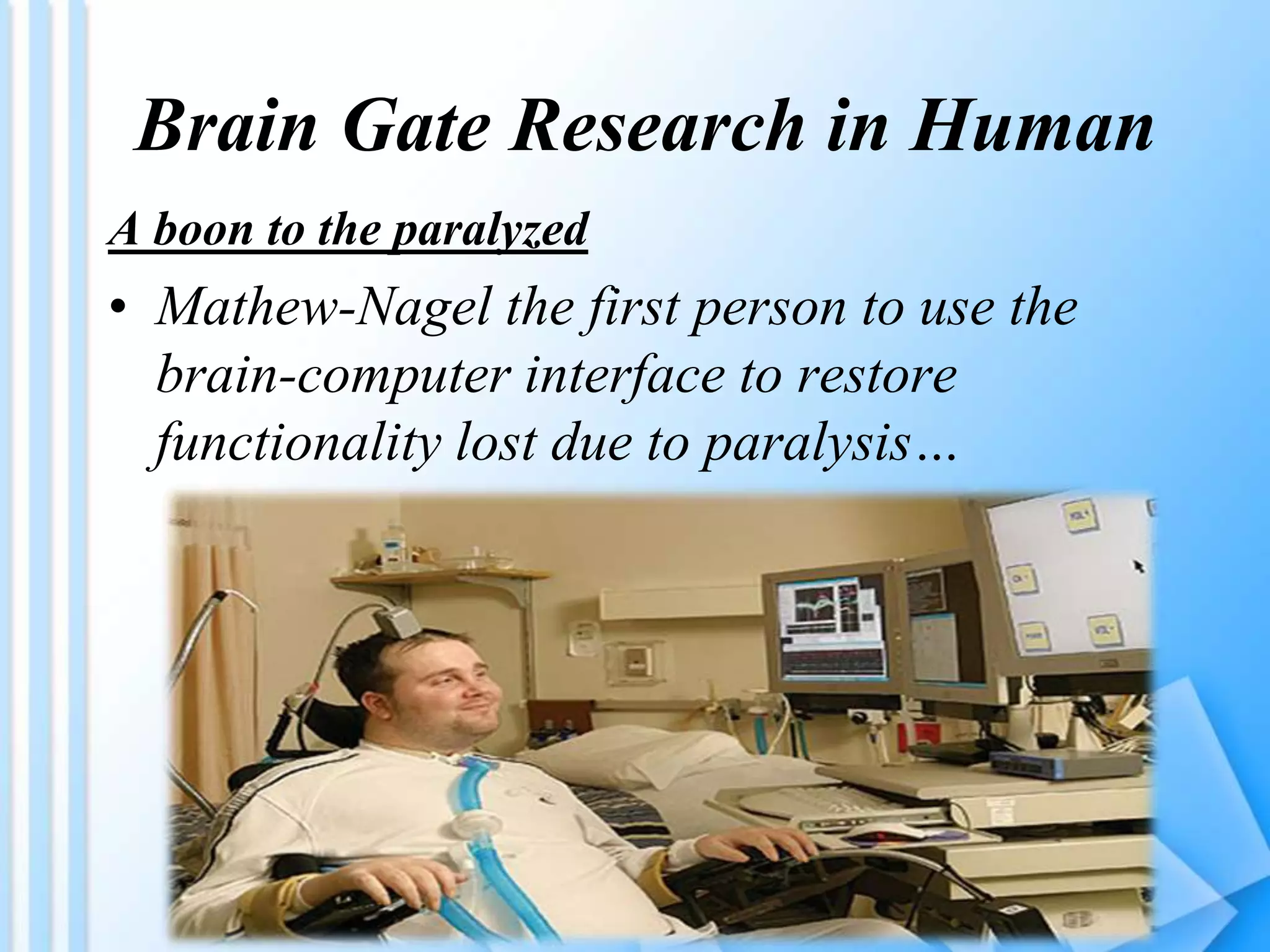
• Mathew-Nagel the first person to use the
brain-computer interface to restore
functionality lost due to paralysis…
ADVANTAGES
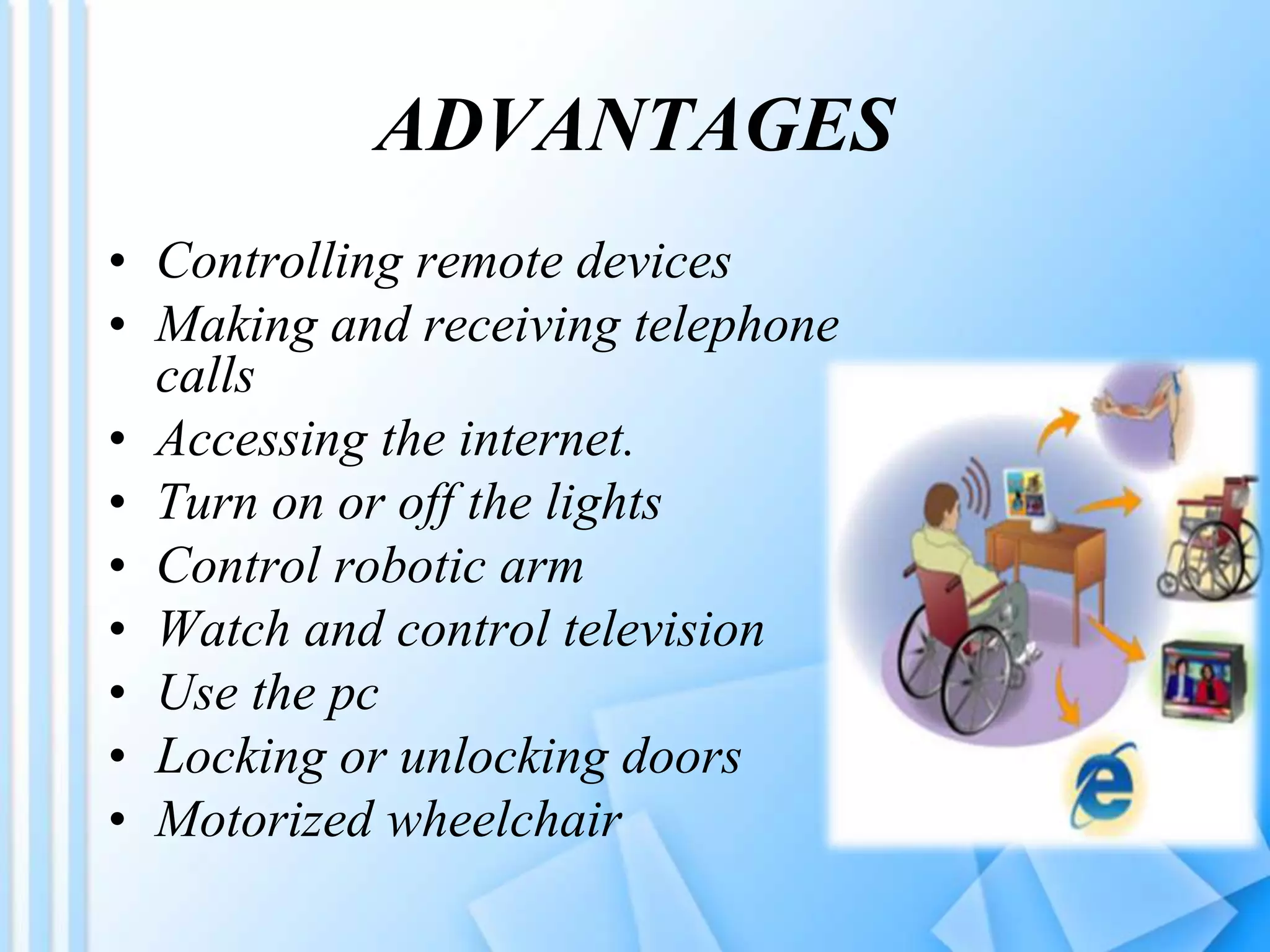
• Controlling remote devices
• Making and receiving telephone
calls
• Accessing the internet.
• Turn on or off the lights
• Control robotic arm
• Watch and control television
• Use the pc
• Locking or unlocking doors
• Motorized wheelchair
DISADVANTAGES
• Expensive
• Risky Surgery
• Not Wireless yet
• Limitation in information transform rate.
The latest technology is 20 bits/min.
Conclusion
• The invention of Brain gate is such a revolution in
medical field. The remarkable breakthrough offers
hope that people who are paralyzed will one day
be able to independently operate artificial limbs,
computers or wheelchairs.
• The idea of moving robots or prosthetic devices
not by manual control, but by mere “thinking”
(i.e., the brain activity of human subjects) has
been a fascinated approach
BRAIN GATE SYSTEM
BRAIN GATE SYSTEM

BRAIN GATE SYSTEM

  • 1.
    BRAINGATE SYSTEM Presented by B.PrudhviReddy 13F61A04F2 Guided By Niraja Reddy
  • 2.
    INTRODUCTION • It isa mind-to-movement system that allows a quadriplegic man to control a computer using his Thoughts. • The system is to help those who have lost control of their limbs, or other bodily functions, • It monitors brain activity in the patient and converts the intention of the user into computer commands
  • 3.
    DEVELOPMENT • Company andScientist: • Brain Gate is a brain implant system developed by the bio-tech company Cyber kinetics in 2003 in conjunction with the Department of Neuroscience at Brown University.
  • 4.
    Working Principle • Theprinciple of brain gate neural interface system is that which intact with brain function, neural signals generated are interpreted by the systems and a cursor is shown to the user on a computer screen that provides an alternate “Brain Gate pathway".
  • 5.
    BCI Technology • “BCIs”usually connects the brain (or nervous system) with a computer system. • A Brain Computer Interface, called as direct neural interface or brain machine interface is a direct communication pathway between human or animal brain and an external device. • Based on the communicative Pathway BCI is classified as follows  One Way BCI  Two Way BCI
  • 6.
    • The Neurochip • The connector • The converter • The computer The components in this system
  • 7.
    Working • The BrainGate neural interface device is a propriety brain-computer interface that consist of an Inter neural signal sensor and External Processors. • The sensor consists of a tiny chip containing 100 microscopic electrodes that detect brain cell electrical activity. • The chip is implanted on the surface of brain in the motor cortex area that controls movement. Motor Cortex
  • 8.
    Working (Cont.) • ExternalProcessors convert neural signals into an output signal under the users own control. • In the pilot version of the device, a cable connects the sensor to an external processor in a cart that contains computers. • The computers translate brain activity and create the communication output using custom decoding software.
  • 10.
    HOW INFORMATION IS TRANSMITTED? •When a work is done through any part of body then a potential difference is created in the brain. • This potential difference is captured by the electrodes and is transmitted via fiber optic to the Digitizer(external processor). • The digitizer converts the signal into some 0’s and 1’s and that is feed into the computer.
  • 11.
    Brain Gate Researchin Human A boon to the paralyzed • Mathew-Nagel the first person to use the brain-computer interface to restore functionality lost due to paralysis…
  • 12.
    ADVANTAGES • Controlling remotedevices • Making and receiving telephone calls • Accessing the internet. • Turn on or off the lights • Control robotic arm • Watch and control television • Use the pc • Locking or unlocking doors • Motorized wheelchair
  • 13.
    DISADVANTAGES • Expensive • RiskySurgery • Not Wireless yet • Limitation in information transform rate. The latest technology is 20 bits/min.
  • 14.
    Conclusion • The inventionof Brain gate is such a revolution in medical field. The remarkable breakthrough offers hope that people who are paralyzed will one day be able to independently operate artificial limbs, computers or wheelchairs. • The idea of moving robots or prosthetic devices not by manual control, but by mere “thinking” (i.e., the brain activity of human subjects) has been a fascinated approach