BRAIN 
GATE 
Presented 
By: 
Manpreet 
Singh 
187/2011
CONTENTS 
 Introduction 
 History 
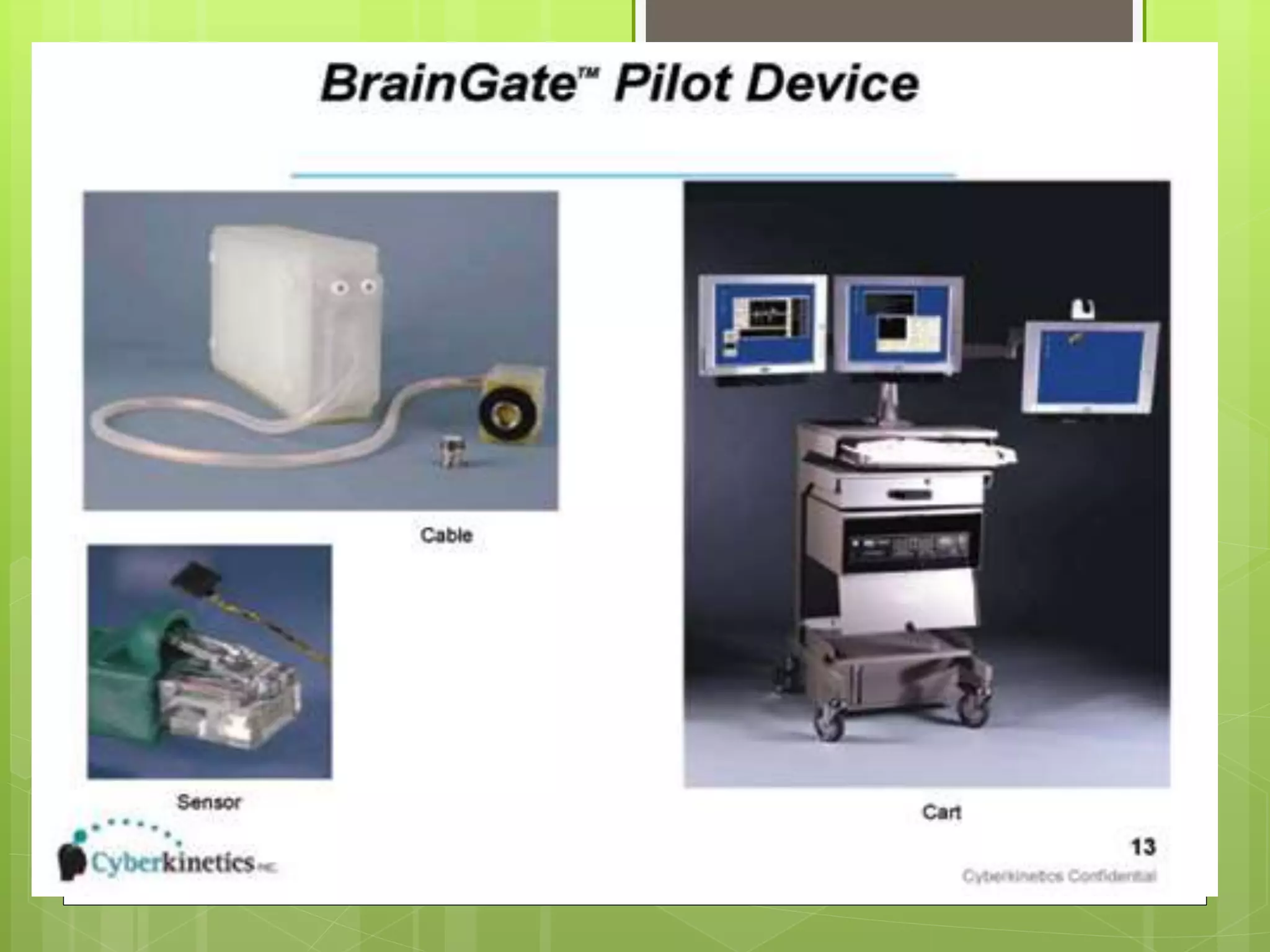
 Brain gate pilot device 
 Underlying principle 
 Components 
Working 
 Transmission of information 
 Software 
 Research in human 
 Advantages 
 Limitation 
 Future scope 
 References 
 Conclusion
INTRODUCTION 
What is Brain Gate Technology? 
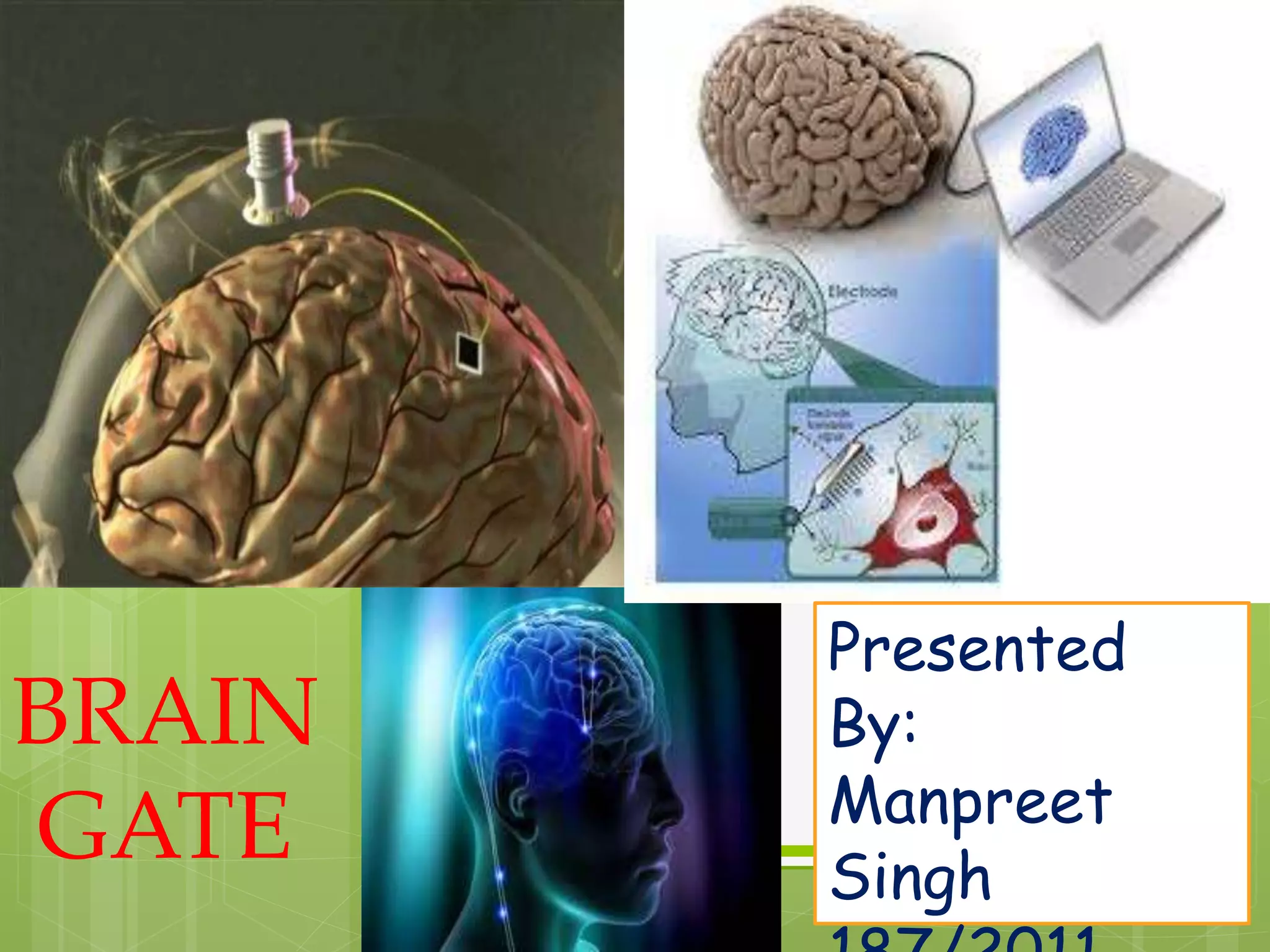
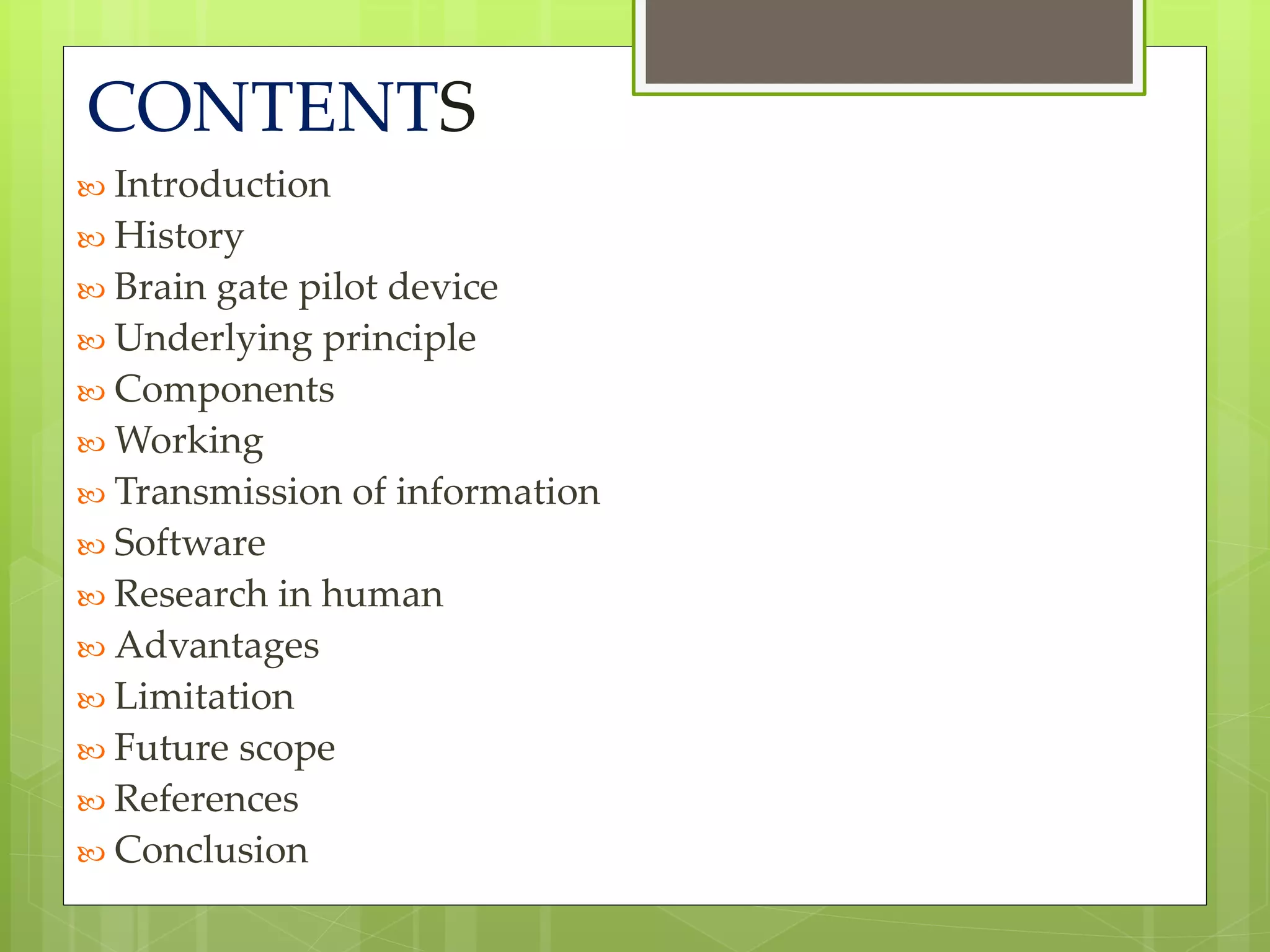
Brain gate is a neuroprosthetic device that 
converts brain activity into computer 
commands. 
This system is designed to help those who have 
lost control of their limbs, 
or other bodily functions, such as patients 
with amyotropic lateral sclerosis (ALS) or 
spinal cord injury.
DEVELOPMENT 
Company and Scientist: 
 Brain Gate is a brain implant system developed by the 
bio-tech company Cyber kinetics in 2003 in conjunction 
with the Department of Neuroscience at Brown 
University.
UNDERLYING PRINCIPLE 
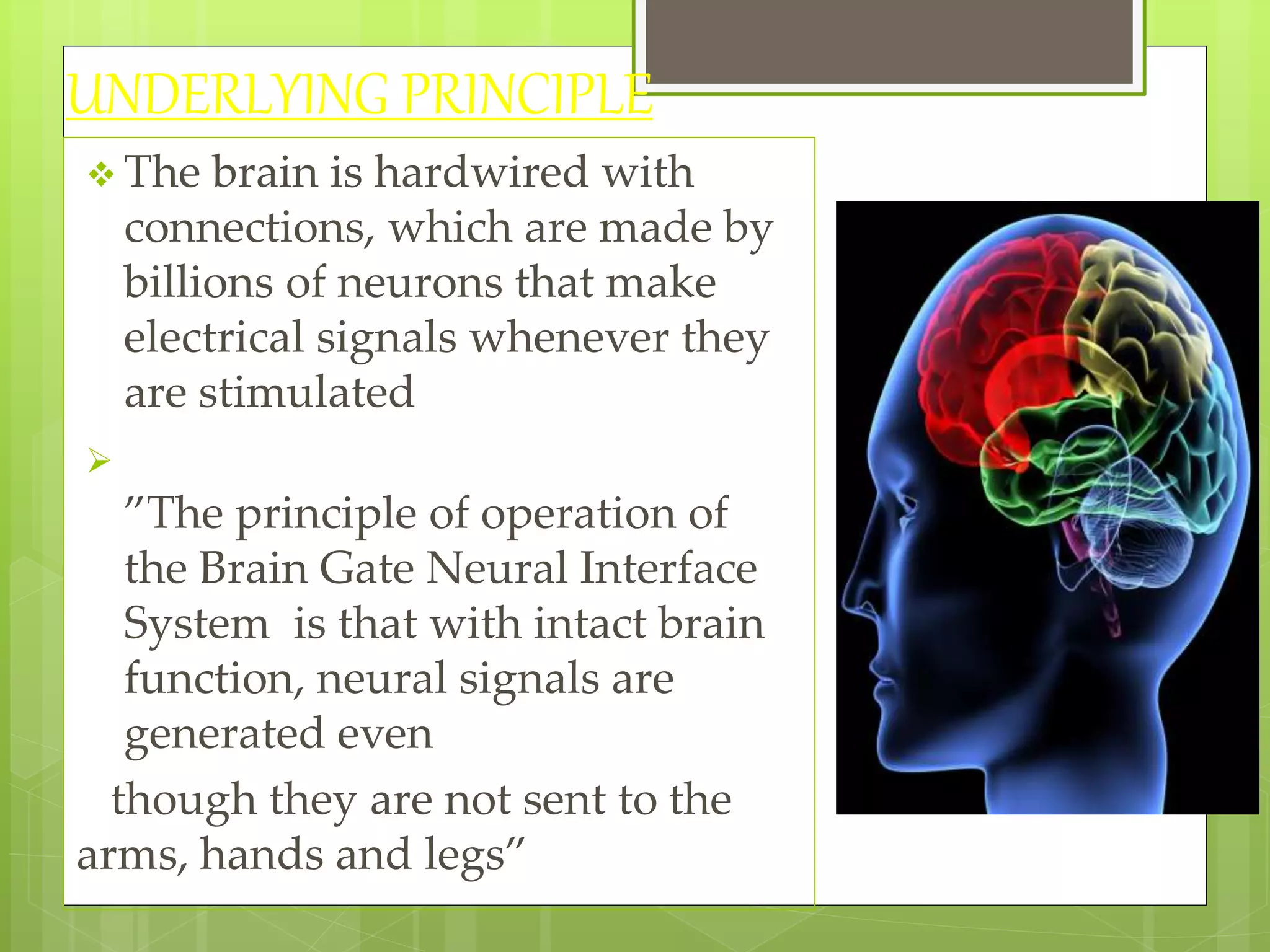
 The brain is hardwired with 
connections, which are made by 
billions of neurons that make 
electrical signals whenever they 
are stimulated 
 
”The principle of operation of 
the Brain Gate Neural Interface 
System is that with intact brain 
function, neural signals are 
generated even 
though they are not sent to the 
arms, hands and legs”
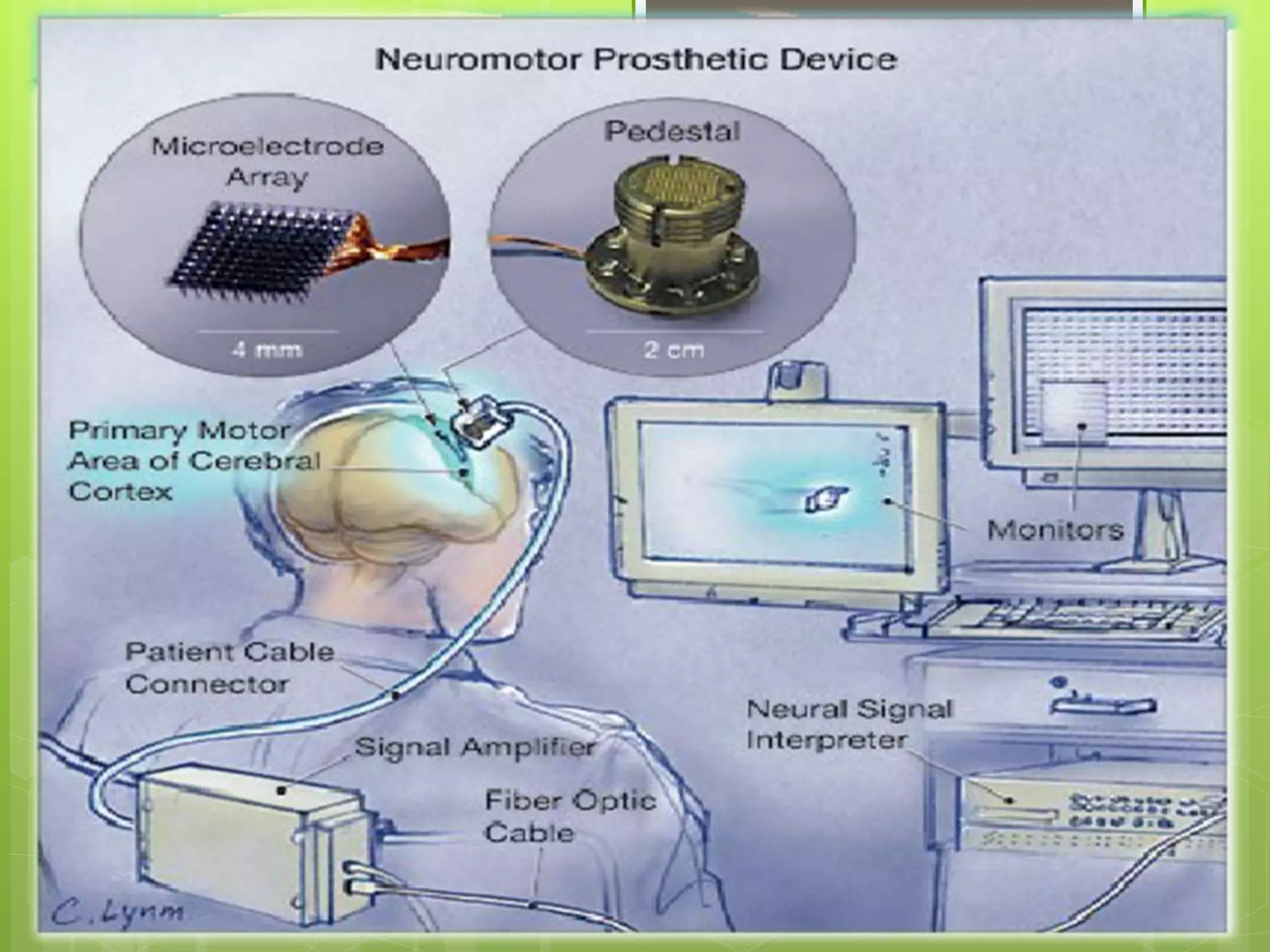
The components in this system 
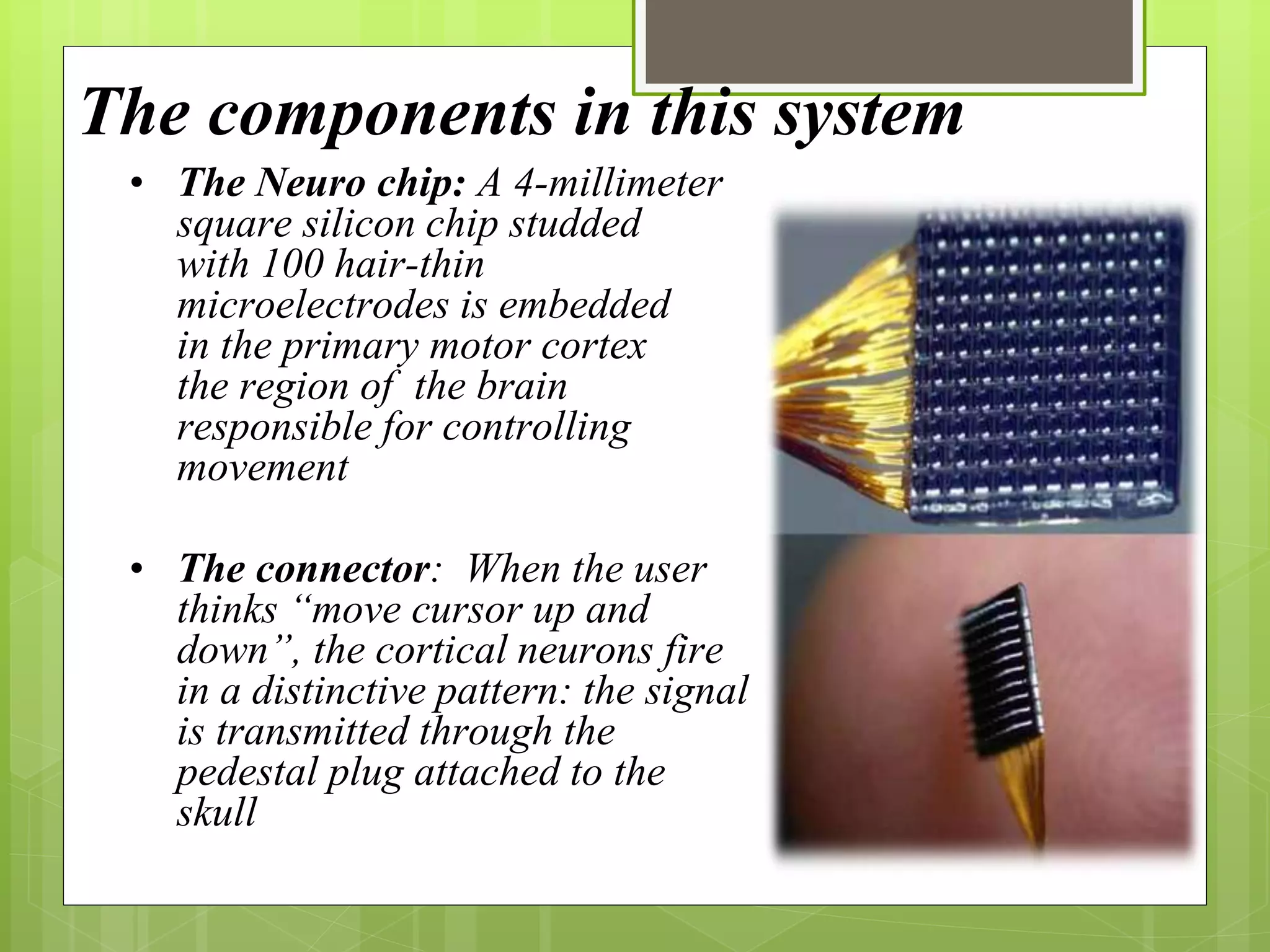
• The Neuro chip: A 4-millimeter 
square silicon chip studded 
with 100 hair-thin 
microelectrodes is embedded 
in the primary motor cortex 
the region of the brain 
responsible for controlling 
movement 
• The connector: When the user 
thinks “move cursor up and 
down”, the cortical neurons fire 
in a distinctive pattern: the signal 
is transmitted through the 
pedestal plug attached to the 
skull
Continued… 
• The converter: The signal 
travels to a shoebox-sized 
amplifier mounted on the 
user’s wheelchair, where 
it’s converted to optical 
data and bounced by fiber-optic 
cable to a computer. 
• The computer: The 
computer translates brain 
activity and creates the 
communication output 
using custom decoding 
software
WORKING 
 The Brain Gate neural interface device 
is a brain-computer interface that 
consist of an Inter neural signal 
sensor and External Processors. 
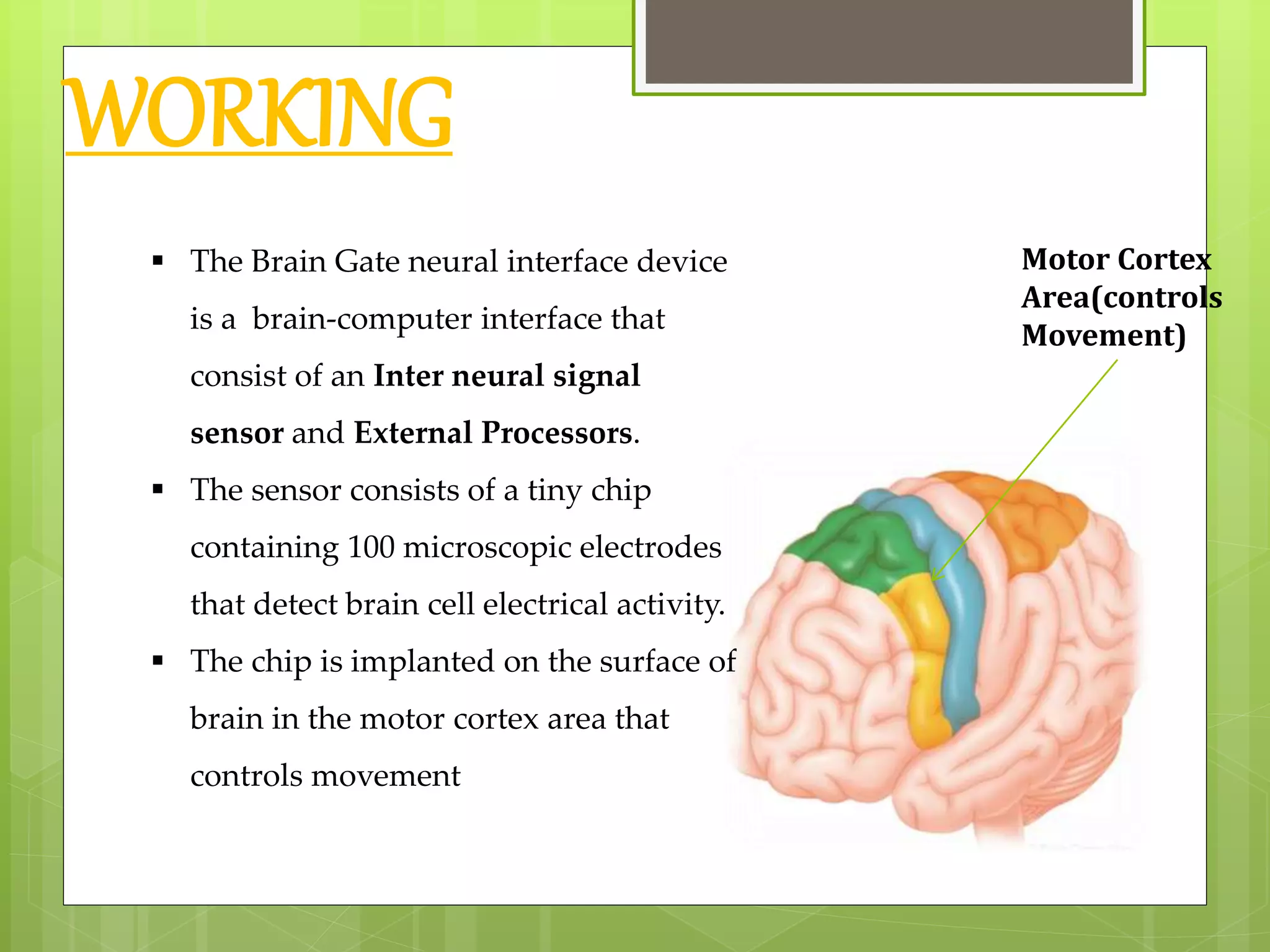
 The sensor consists of a tiny chip 
containing 100 microscopic electrodes 
that detect brain cell electrical activity. 
 The chip is implanted on the surface of 
brain in the motor cortex area that 
controls movement 
Motor Cortex 
Area(controls 
Movement)
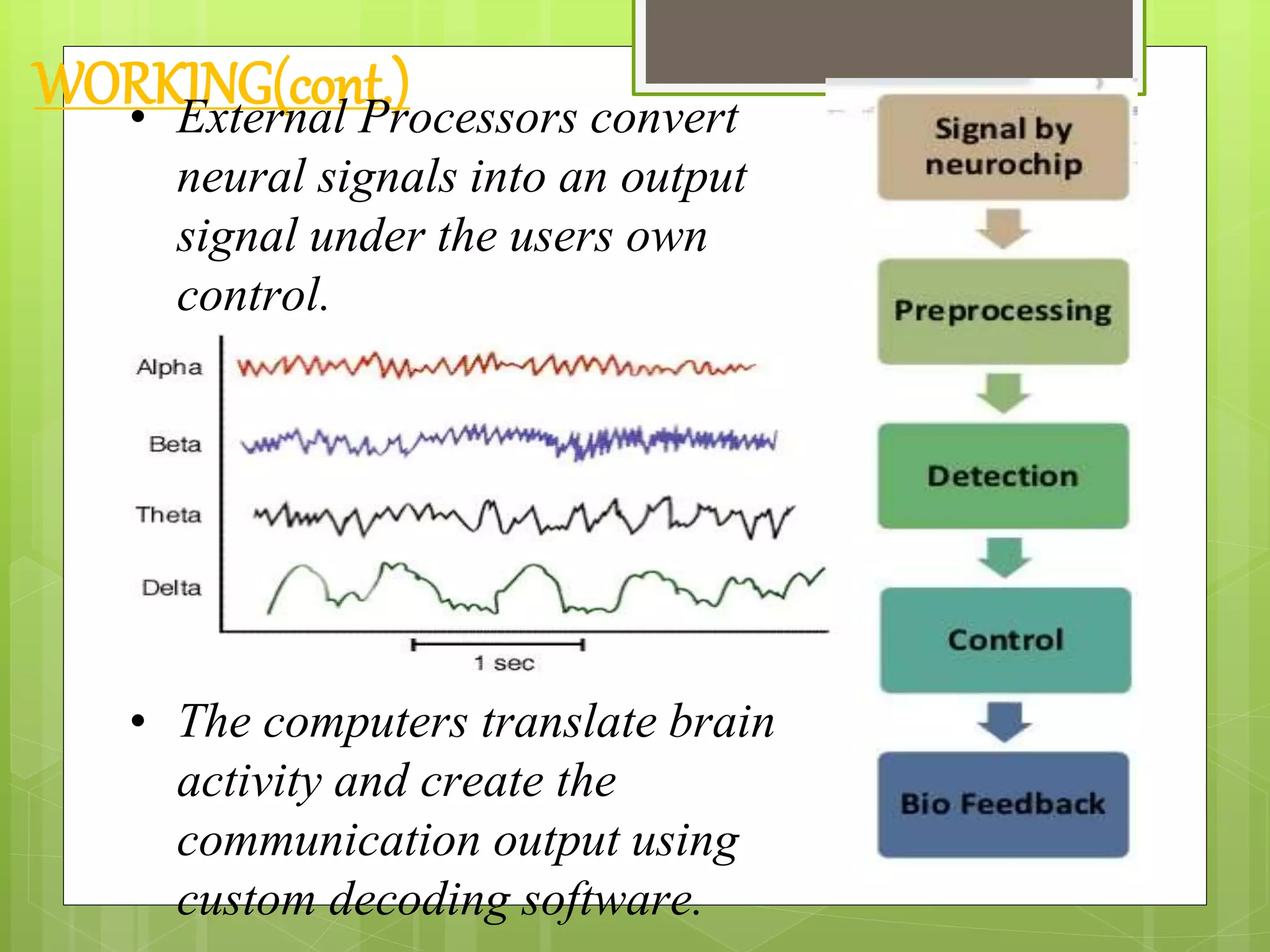
WORKING(cont.) • External Processors convert 
neural signals into an output 
signal under the users own 
control. 
• The computers translate brain 
activity and create the 
communication output using 
custom decoding software.
HOW INFORMATION IS 
TRANSMITTED? 
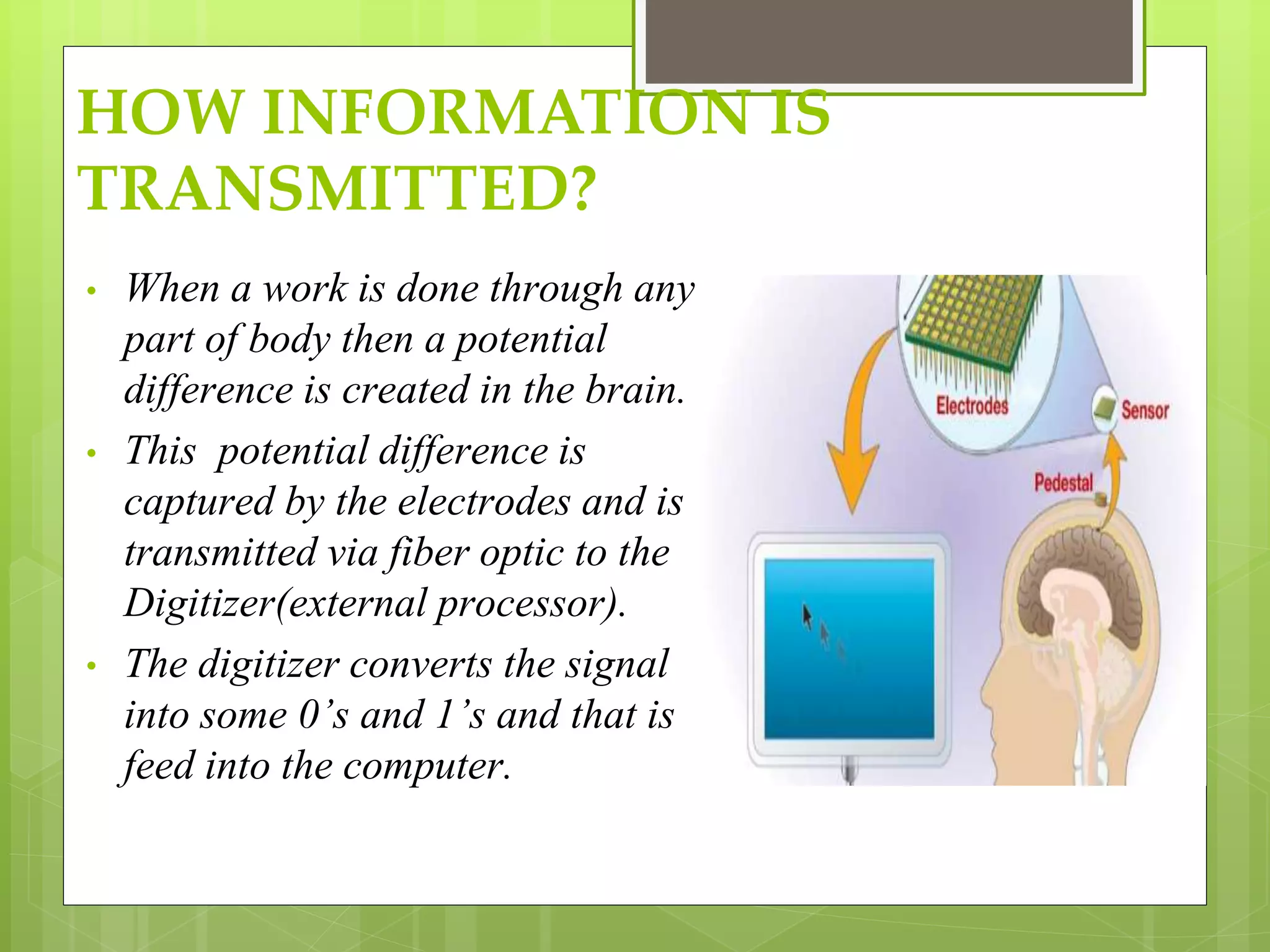
• When a work is done through any 
part of body then a potential 
difference is created in the brain. 
• This potential difference is 
captured by the electrodes and is 
transmitted via fiber optic to the 
Digitizer(external processor). 
• The digitizer converts the signal 
into some 0’s and 1’s and that is 
feed into the computer.
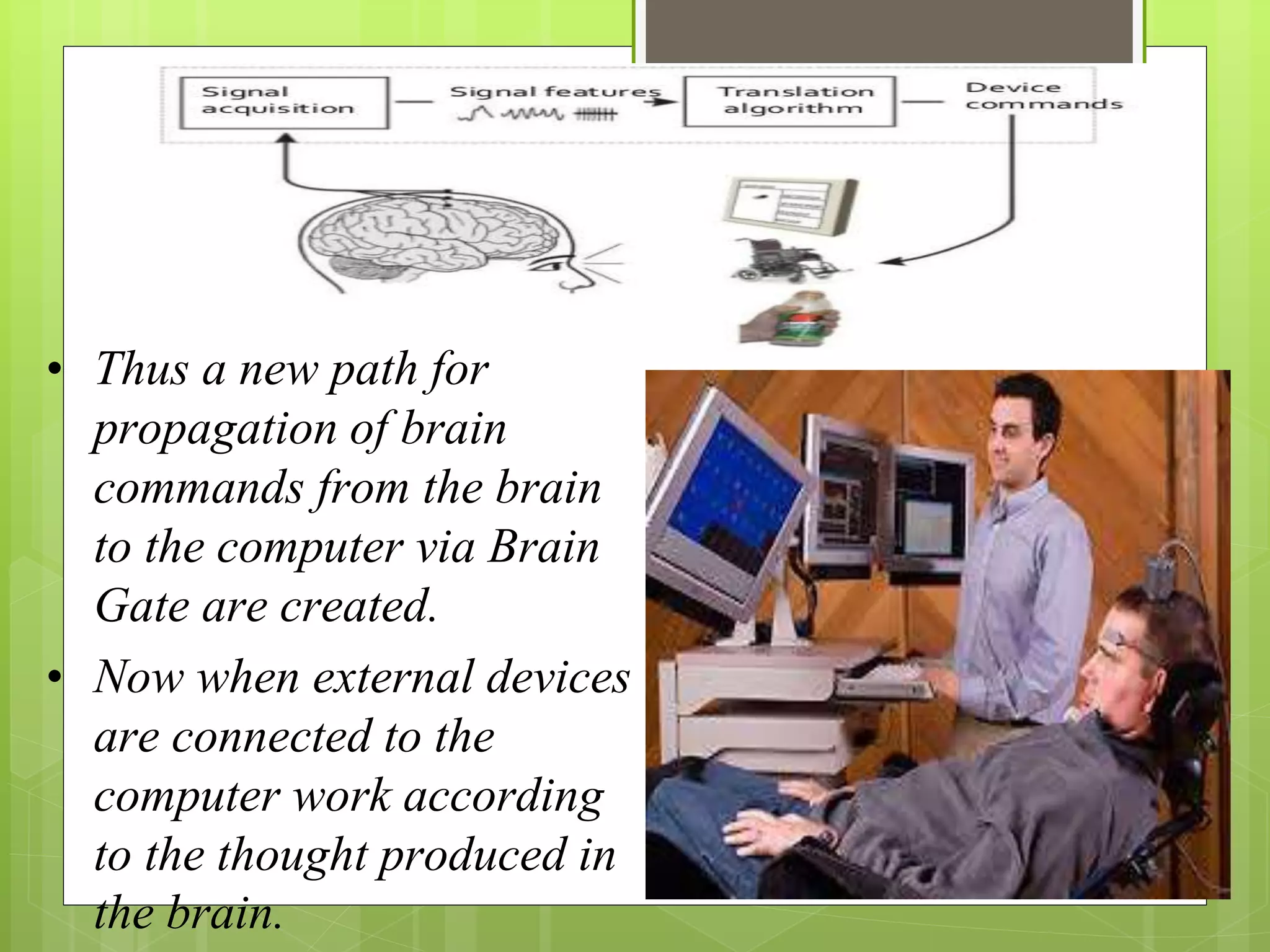
• Thus a new path for 
propagation of brain 
commands from the brain 
to the computer via Brain 
Gate are created. 
• Now when external devices 
are connected to the 
computer work according 
to the thought produced in 
the brain.
Software behind Brain Gate… 
 The computers translate brain activity and create the 
communication output using custom decoding software. 
 System uses translation algorithms written in 
1) C++ 
2) JAVA 
3) MATLAB
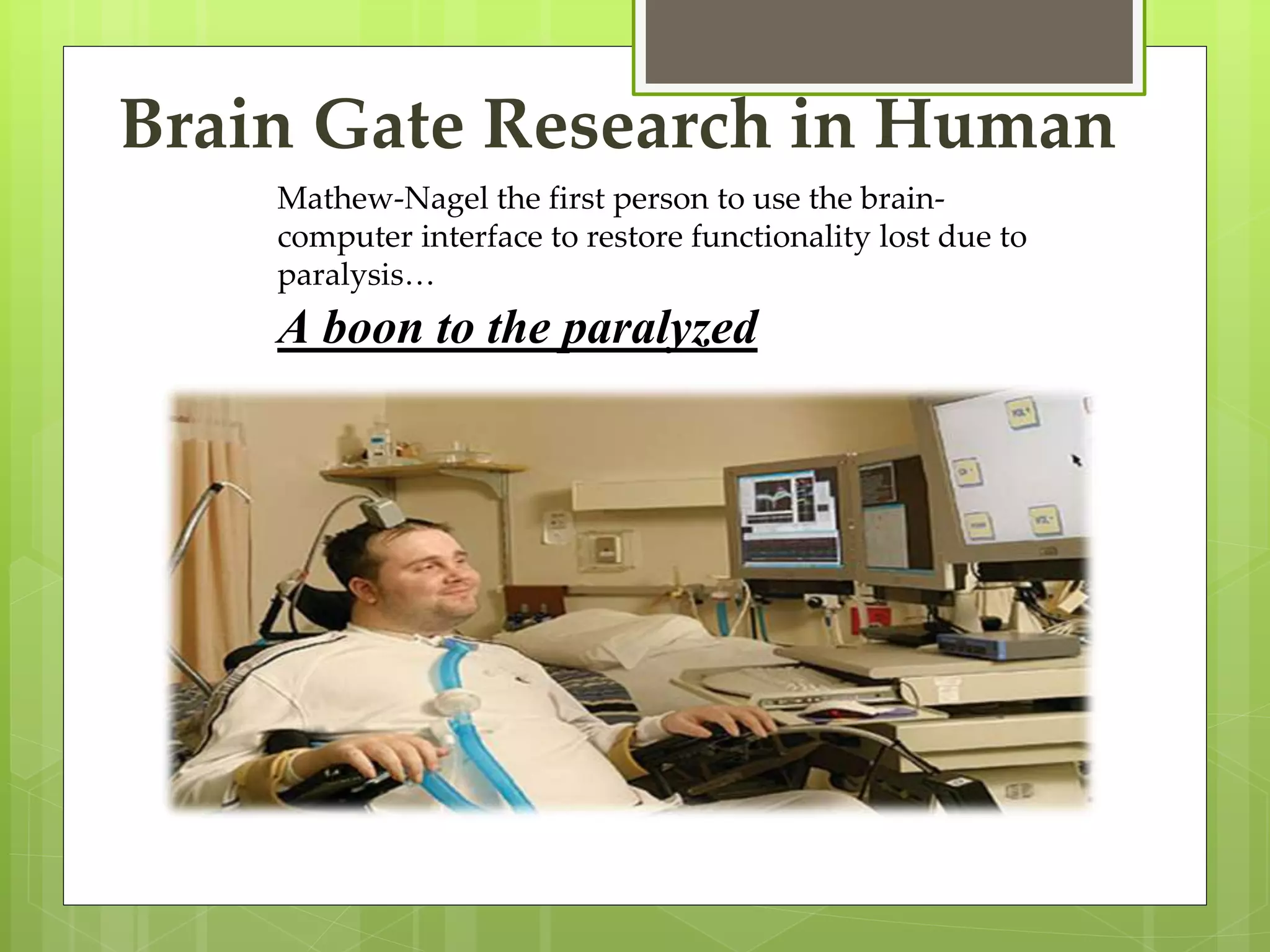
Brain Gate Research in Human 
Mathew-Nagel the first person to use the brain-computer 
interface to restore functionality lost due to 
paralysis… 
A boon to the paralyzed
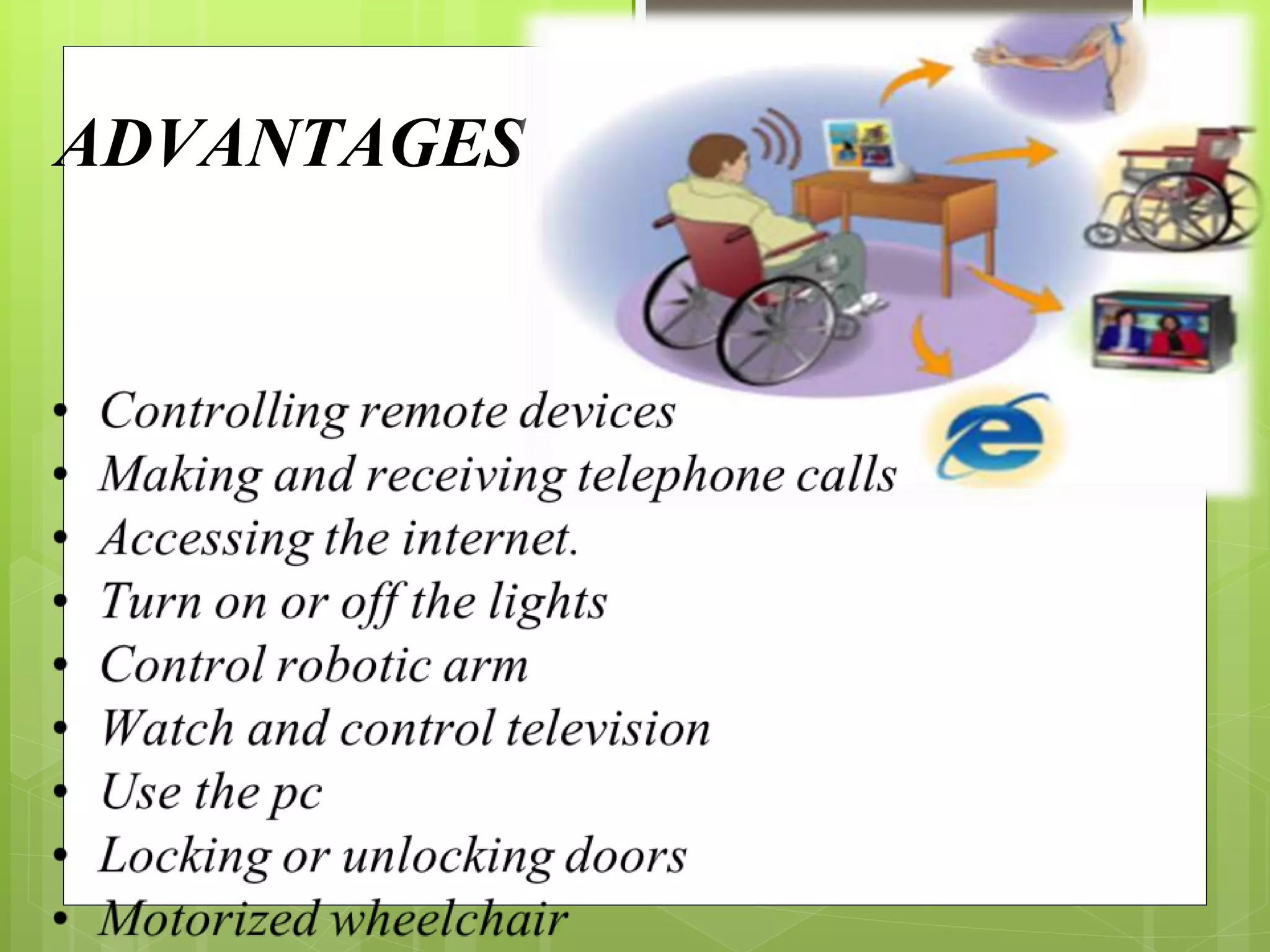
ADVANTAGES
Limitations… 
 At present ,the biggest impediment of BCI 
technology is the lack of sensor modality that 
provides safe, accurate, and robust access to brain 
signals. 
 It is very expensive. 
 Information transformation rate is limited to 20 
bits/min. 
 Difficulty in adaptation and learning
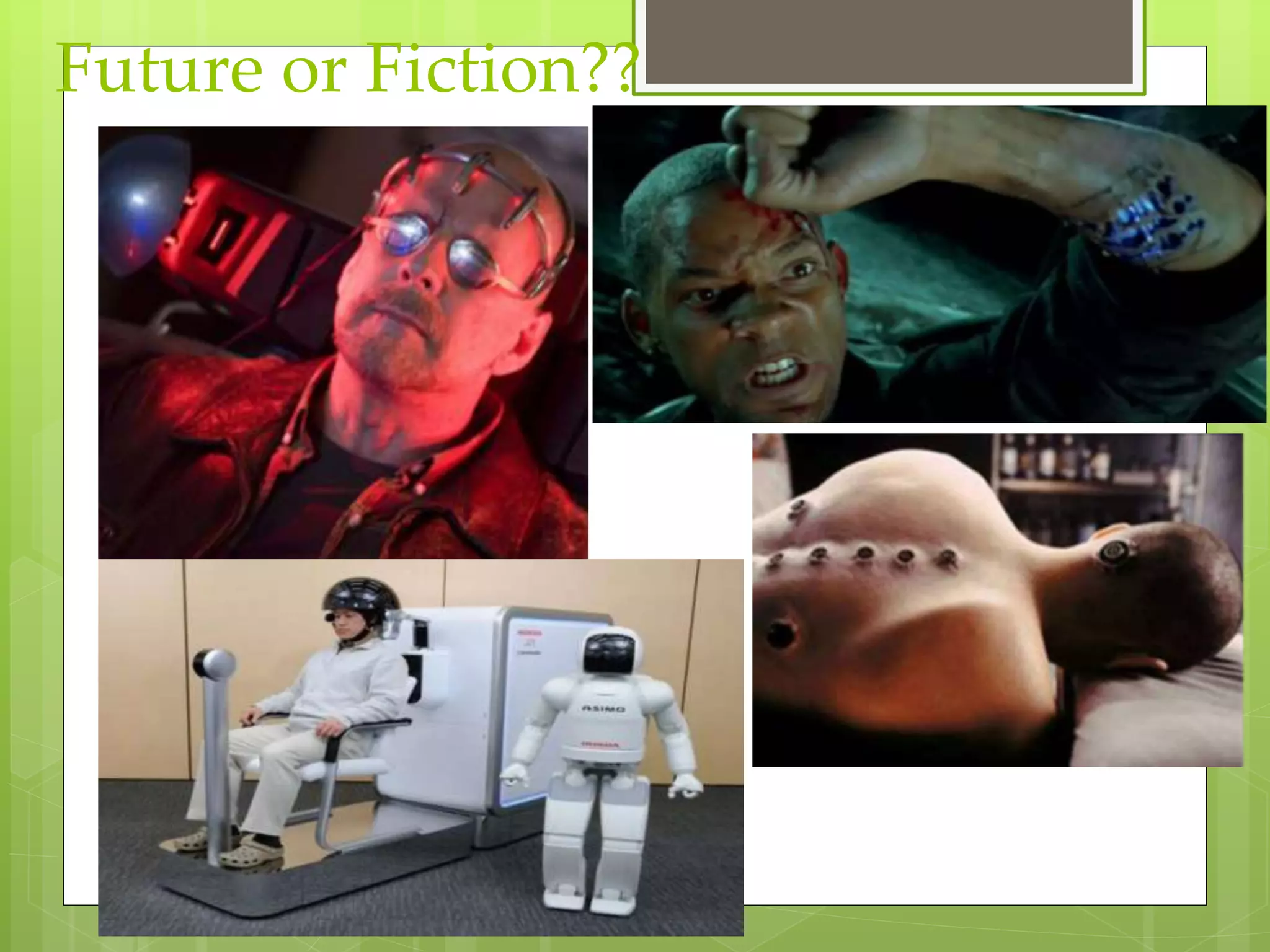
Future or Fiction??
References 
• Sixto Ortiz Jr., "Brain-Computer Interfaces: Where Human and 
Machine Meet," Computer, vol. 40, no. 1, pp. 17-21, Jan., 2007 
• F. Babiloni, A. Cichocki, and S. Gao, eds., special issue, “Brain- 
Computer Interfaces: Towards Practical Implementations and 
Potential Applications,” ComputationalIntelligence and 
Neuroscience, 2007 
• P. Sajda, K-R. Mueller, and K.V. Shenoy, eds., special issue, 
“Brain Computer Interfaces,” IEEE Signal Processing 
Magazine,Jan. 2008 
• The MIT Press – “Toward Brain-Computer Interfacing” 
• Wikipedia, HowStuffWorks and various other website sources…
brain gate system
brain gate system

brain gate system

  • 1.
    BRAIN GATE Presented By: Manpreet Singh 187/2011
  • 2.
    CONTENTS  Introduction  History  Brain gate pilot device  Underlying principle  Components Working  Transmission of information  Software  Research in human  Advantages  Limitation  Future scope  References  Conclusion
  • 3.
    INTRODUCTION What isBrain Gate Technology? Brain gate is a neuroprosthetic device that converts brain activity into computer commands. This system is designed to help those who have lost control of their limbs, or other bodily functions, such as patients with amyotropic lateral sclerosis (ALS) or spinal cord injury.
  • 4.
    DEVELOPMENT Company andScientist:  Brain Gate is a brain implant system developed by the bio-tech company Cyber kinetics in 2003 in conjunction with the Department of Neuroscience at Brown University.
  • 6.
    UNDERLYING PRINCIPLE The brain is hardwired with connections, which are made by billions of neurons that make electrical signals whenever they are stimulated  ”The principle of operation of the Brain Gate Neural Interface System is that with intact brain function, neural signals are generated even though they are not sent to the arms, hands and legs”
  • 7.
    The components inthis system • The Neuro chip: A 4-millimeter square silicon chip studded with 100 hair-thin microelectrodes is embedded in the primary motor cortex the region of the brain responsible for controlling movement • The connector: When the user thinks “move cursor up and down”, the cortical neurons fire in a distinctive pattern: the signal is transmitted through the pedestal plug attached to the skull
  • 8.
    Continued… • Theconverter: The signal travels to a shoebox-sized amplifier mounted on the user’s wheelchair, where it’s converted to optical data and bounced by fiber-optic cable to a computer. • The computer: The computer translates brain activity and creates the communication output using custom decoding software
  • 9.
    WORKING  TheBrain Gate neural interface device is a brain-computer interface that consist of an Inter neural signal sensor and External Processors.  The sensor consists of a tiny chip containing 100 microscopic electrodes that detect brain cell electrical activity.  The chip is implanted on the surface of brain in the motor cortex area that controls movement Motor Cortex Area(controls Movement)
  • 10.
    WORKING(cont.) • ExternalProcessors convert neural signals into an output signal under the users own control. • The computers translate brain activity and create the communication output using custom decoding software.
  • 12.
    HOW INFORMATION IS TRANSMITTED? • When a work is done through any part of body then a potential difference is created in the brain. • This potential difference is captured by the electrodes and is transmitted via fiber optic to the Digitizer(external processor). • The digitizer converts the signal into some 0’s and 1’s and that is feed into the computer.
  • 13.
    • Thus anew path for propagation of brain commands from the brain to the computer via Brain Gate are created. • Now when external devices are connected to the computer work according to the thought produced in the brain.
  • 14.
    Software behind BrainGate…  The computers translate brain activity and create the communication output using custom decoding software.  System uses translation algorithms written in 1) C++ 2) JAVA 3) MATLAB
  • 15.
    Brain Gate Researchin Human Mathew-Nagel the first person to use the brain-computer interface to restore functionality lost due to paralysis… A boon to the paralyzed
  • 16.
  • 17.
    Limitations…  Atpresent ,the biggest impediment of BCI technology is the lack of sensor modality that provides safe, accurate, and robust access to brain signals.  It is very expensive.  Information transformation rate is limited to 20 bits/min.  Difficulty in adaptation and learning
  • 18.
  • 19.
    References • SixtoOrtiz Jr., "Brain-Computer Interfaces: Where Human and Machine Meet," Computer, vol. 40, no. 1, pp. 17-21, Jan., 2007 • F. Babiloni, A. Cichocki, and S. Gao, eds., special issue, “Brain- Computer Interfaces: Towards Practical Implementations and Potential Applications,” ComputationalIntelligence and Neuroscience, 2007 • P. Sajda, K-R. Mueller, and K.V. Shenoy, eds., special issue, “Brain Computer Interfaces,” IEEE Signal Processing Magazine,Jan. 2008 • The MIT Press – “Toward Brain-Computer Interfacing” • Wikipedia, HowStuffWorks and various other website sources…