Downloaded 13 times
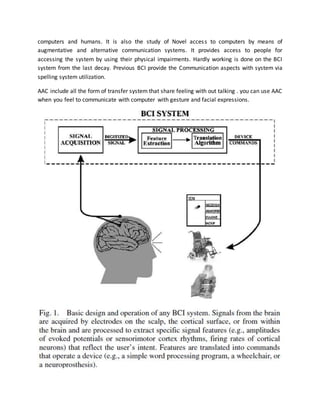
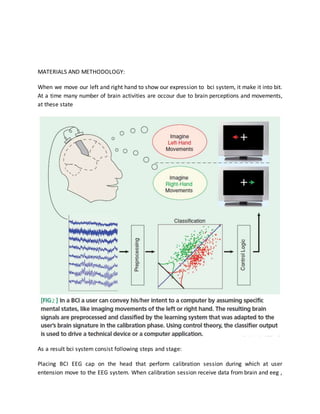

This document discusses the development and applications of brain-computer interfaces (BCIs) to enhance communication for individuals with physical impairments. It highlights the non-invasive nature of BCIs, the methods for translating brain activity into machine-readable signals, and the potential for these technologies to provide greater autonomy and interaction with the environment for disabled users. The research emphasizes the importance of continual improvements in BCI systems to ensure their reliability, performance, and user engagement.


