DRUG RECEPTORS INTERACTIONS BIOTIN – AVIDIN ,DHFRS-TRIMETHOPRIM
                             DNA INTERCALATORS

                     DEPARTMENT OF PHARMACEUTICAL
                              CHEMISTRY
                                 MCOPS


SUBMITTED TO                                     SUBMITTED BY
DR.JAYASHREE.B.S                                   SHIKHA TYAGI
PROFESSOR                                           100602017
CONTENTS
INTRODUCTION

BIOTIN-AVIDIN

DHFRS-TRIMETHOPRIM

DNA INTERCALATORS

CONCLUSION

REFERENCES
INTRODUCTION

The vast majority of drugs show a remarkably high correlation of structure and specificity to
produce pharmacological effects

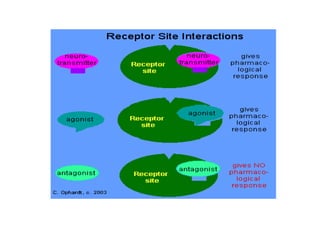
Experimental evidence indicates that drugs interact with receptor sites localized in
macromolecules which have protein-like properties and specific three dimensional shapes.

A minimum three point attachment of a drug to a receptor site is required

Several chemical forces may result in a temporary binding of the drug to the receptor.

Since many drugs contain acid or amine functional groups which are ionized at physiological
pH, ionic bonds are formed by the attraction of opposite charges in the receptor site.
BIOTIN-AVIDIN
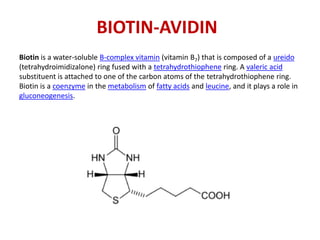
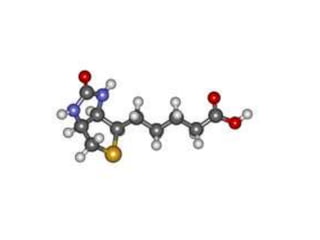
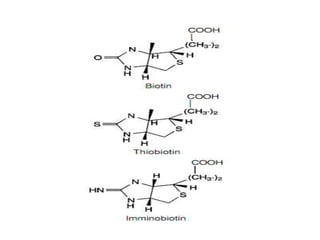
Biotin is a water-soluble B-complex vitamin (vitamin B7) that is composed of a ureido
(tetrahydroimidizalone) ring fused with a tetrahydrothiophene ring. A valeric acid
substituent is attached to one of the carbon atoms of the tetrahydrothiophene ring.
Biotin is a coenzyme in the metabolism of fatty acids and leucine, and it plays a role in
gluconeogenesis.
Biotin is a cofactor responsible for carbon dioxide transfer in several carboxylase
enzymes:

Acetyl-CoA carboxylase

Methylcrotonyl-CoA carboxylase

Propionyl-CoA carboxylase

Pyruvate carboxylase

IT is important in fatty acid synthesis, branched-chain amino acid catabolism, and
gluconeogenesis.
AVIDIN
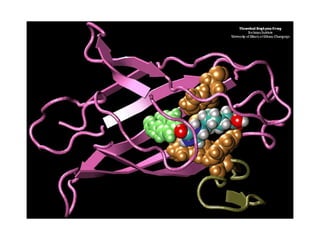
Avidin is a tetrameric biotin-binding protein produced in the oviducts of birds, reptiles and
amphibians deposited in the whites of their eggs.

 In chicken egg white, avidin makes up approximately 0.05% of total protein (approximately
1.8 mg per egg).

The tetrameric protein contains four identical subunits (homotetramer), each of which can
bind to biotin with a high degree of affinity and specificity.

In its tetrameric form, avidin is estimated to be between 66–69 kDa in size[2].

Ten percent of the molecular weight is attributed to carbohydrate content composed of four
to five mannose and three N-acetylglucosamine residues

 The carbohydrate moieties of avidin contain at least three unique oligosaccharide
structural types that are similar in structure and composition.

Functional avidin is found only in raw egg, as the biotin avidity of the protein is destroyed
by cooking.
The natural function of avidin in eggs is not known, although it has been postulated to be made
in the ovaduct as a bacterial growth-inhibitor, by binding biotin the bacteria need.
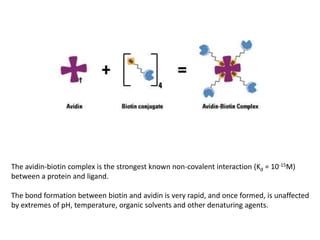
The avidin-biotin complex is the strongest known non-covalent interaction (Kd = 10-15M)
between a protein and ligand.

The bond formation between biotin and avidin is very rapid, and once formed, is unaffected
by extremes of pH, temperature, organic solvents and other denaturing agents.
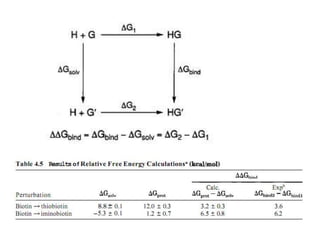
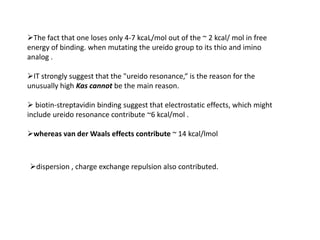
The fact that one loses only 4-7 kcaL/mol out of the ~ 2 kcal/ mol in free
energy of binding. when mutating the ureido group to its thio and imino
analog .

IT strongly suggest that the "ureido resonance,“ is the reason for the
unusually high Kas cannot be the main reason.

 biotin-streptavidin binding suggest that electrostatic effects, which might
include ureido resonance contribute ~6 kcal/mol .

whereas van der Waals effects contribute ~ 14 kcal/lmol


dispersion , charge exchange repulsion also contributed.
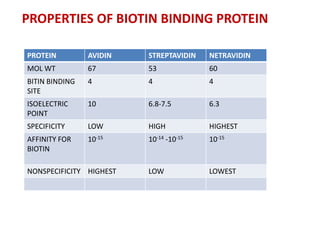
PROPERTIES OF BIOTIN BINDING PROTEIN

PROTEIN         AVIDIN   STREPTAVIDIN   NETRAVIDIN
MOL WT          67       53             60
BITIN BINDING   4        4              4
SITE
ISOELECTRIC     10       6.8-7.5        6.3
POINT
SPECIFICITY     LOW      HIGH           HIGHEST
AFFINITY FOR    10-15    10-14 -10-15   10-15
BIOTIN

NONSPECIFICITY HIGHEST   LOW            LOWEST
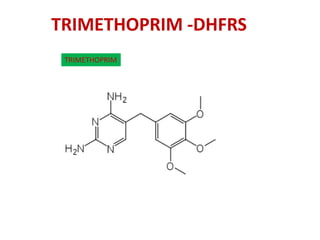
TRIMETHOPRIM -DHFRS
 TRIMETHOPRIM
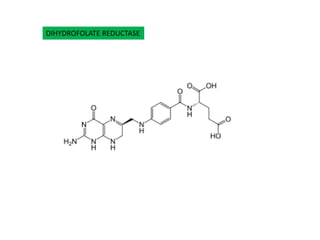
DIHYDROFOLATE REDUCTASE
This drug binds to bacterial dihydrofolate reductase (DHFR)≈104 more tightly
than to the mammalian enzyme


DHFR was the fist example where one has solved the X-ray crystal structure of
the enzyme protein complexes for both bacteria and mammalian enzymes.

That it is a key hydrogen bond involving the pyrimidine ring of TMP, which is
present in the bacterial but not mammalian enzyme complex, that is
responsible for the selectivity
An important role of the three methoxy groups in TMP in causing species
selectivity.

The TMP analog without the three OCH, groups have a binding preference for
the bacterial enzyme of only ~ 1 0
The structure of the bacterial and mammalian complexes and suggested
that the oxygens of the methoxy group plays a key role in species selectivity.

The methoxy oxygens are signficantly more solvent exposed in the bacterial
complex that the mammalian.

Thus, because these oxygens do not form hydrogen bonds to enzyme groups in
either complex,the desolvation penalty for the oxygen is smaller in the bacterial
enzyme and does not as extensively cancel the favorable hydrophobic


Dispersion effects on binding of the methoxy methyl groups. This interpretation is
supported by the fact that replacing the methoxy group with ethyl group makes the
molecules less species selective;

Such analogs bind only a little better to bacterial DHFR but significantly better to
mammalian DHFR
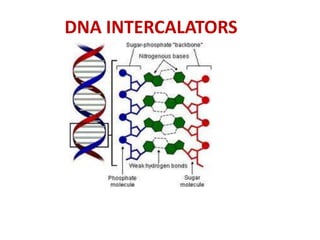
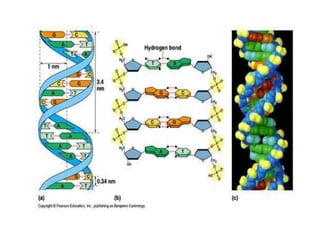
DNA INTERCALATORS
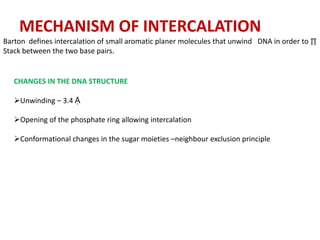
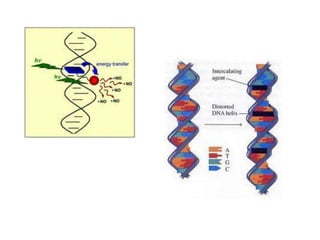
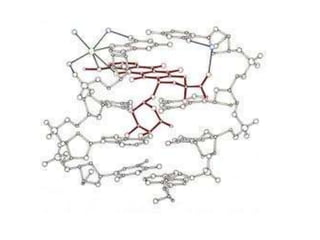
MECHANISM OF INTERCALATION
Barton defines intercalation of small aromatic planer molecules that unwind DNA in order to ∏
Stack between the two base pairs.


   CHANGES IN THE DNA STRUCTURE

   Unwinding – 3.4 Ặ

   Opening of the phosphate ring allowing intercalation

   Conformational changes in the sugar moieties –neighbour exclusion principle
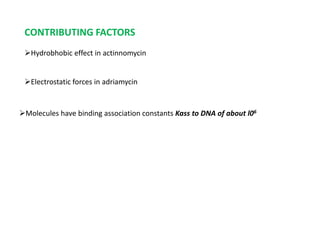
CONTRIBUTING FACTORS
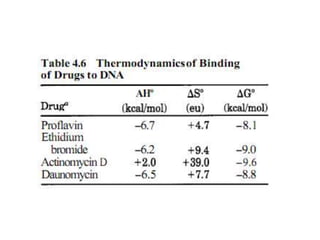
 Hydrobhobic effect in actinnomycin


 Electrostatic forces in adriamycin


Molecules have binding association constants Kass to DNA of about l06
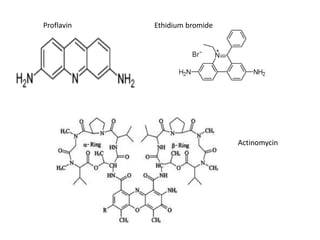
Proflavin   Ethidium bromide


                               Actinomycin
CONCLUSION
MOST OF THE DRUG RECEPTOR INTERACTION INVOLVE THE NONCOVALENT BINDING FORCES

THERMODYNAMICS PLAYS IMPORTANT ROLEIN EXPLAINING THE DRUG RECEPTOR INTERACTION
REFERENCES
1 BURGER'S “MEDICINAL CHEMISTRY AND DRUG DISCOVERY”, 6th Edition,vol-1
page no-184-185


 2 http://www.ncbi.nlm.nih.gov/pubmed/11562309


3 http://pubs.acs.org/doi/abs/10.1021/ed070p263


4 www.mdpi.com/14203049/14/5/1725/pdf+intercalator+drugs&hl=en&gl=in&pid=blsrci
THANkU

Biotin

  • 1.
    DRUG RECEPTORS INTERACTIONSBIOTIN – AVIDIN ,DHFRS-TRIMETHOPRIM DNA INTERCALATORS DEPARTMENT OF PHARMACEUTICAL CHEMISTRY MCOPS SUBMITTED TO SUBMITTED BY DR.JAYASHREE.B.S SHIKHA TYAGI PROFESSOR 100602017
  • 2.
  • 3.
    INTRODUCTION The vast majorityof drugs show a remarkably high correlation of structure and specificity to produce pharmacological effects Experimental evidence indicates that drugs interact with receptor sites localized in macromolecules which have protein-like properties and specific three dimensional shapes. A minimum three point attachment of a drug to a receptor site is required Several chemical forces may result in a temporary binding of the drug to the receptor. Since many drugs contain acid or amine functional groups which are ionized at physiological pH, ionic bonds are formed by the attraction of opposite charges in the receptor site.
  • 6.
    BIOTIN-AVIDIN Biotin is awater-soluble B-complex vitamin (vitamin B7) that is composed of a ureido (tetrahydroimidizalone) ring fused with a tetrahydrothiophene ring. A valeric acid substituent is attached to one of the carbon atoms of the tetrahydrothiophene ring. Biotin is a coenzyme in the metabolism of fatty acids and leucine, and it plays a role in gluconeogenesis.
  • 8.
    Biotin is acofactor responsible for carbon dioxide transfer in several carboxylase enzymes: Acetyl-CoA carboxylase Methylcrotonyl-CoA carboxylase Propionyl-CoA carboxylase Pyruvate carboxylase IT is important in fatty acid synthesis, branched-chain amino acid catabolism, and gluconeogenesis.
  • 9.
    AVIDIN Avidin is atetrameric biotin-binding protein produced in the oviducts of birds, reptiles and amphibians deposited in the whites of their eggs.  In chicken egg white, avidin makes up approximately 0.05% of total protein (approximately 1.8 mg per egg). The tetrameric protein contains four identical subunits (homotetramer), each of which can bind to biotin with a high degree of affinity and specificity. In its tetrameric form, avidin is estimated to be between 66–69 kDa in size[2]. Ten percent of the molecular weight is attributed to carbohydrate content composed of four to five mannose and three N-acetylglucosamine residues  The carbohydrate moieties of avidin contain at least three unique oligosaccharide structural types that are similar in structure and composition. Functional avidin is found only in raw egg, as the biotin avidity of the protein is destroyed by cooking.
  • 10.
    The natural functionof avidin in eggs is not known, although it has been postulated to be made in the ovaduct as a bacterial growth-inhibitor, by binding biotin the bacteria need.
  • 12.
    The avidin-biotin complexis the strongest known non-covalent interaction (Kd = 10-15M) between a protein and ligand. The bond formation between biotin and avidin is very rapid, and once formed, is unaffected by extremes of pH, temperature, organic solvents and other denaturing agents.
  • 15.
    The fact thatone loses only 4-7 kcaL/mol out of the ~ 2 kcal/ mol in free energy of binding. when mutating the ureido group to its thio and imino analog . IT strongly suggest that the "ureido resonance,“ is the reason for the unusually high Kas cannot be the main reason.  biotin-streptavidin binding suggest that electrostatic effects, which might include ureido resonance contribute ~6 kcal/mol . whereas van der Waals effects contribute ~ 14 kcal/lmol dispersion , charge exchange repulsion also contributed.
  • 16.
    PROPERTIES OF BIOTINBINDING PROTEIN PROTEIN AVIDIN STREPTAVIDIN NETRAVIDIN MOL WT 67 53 60 BITIN BINDING 4 4 4 SITE ISOELECTRIC 10 6.8-7.5 6.3 POINT SPECIFICITY LOW HIGH HIGHEST AFFINITY FOR 10-15 10-14 -10-15 10-15 BIOTIN NONSPECIFICITY HIGHEST LOW LOWEST
  • 17.
  • 18.
  • 19.
    This drug bindsto bacterial dihydrofolate reductase (DHFR)≈104 more tightly than to the mammalian enzyme DHFR was the fist example where one has solved the X-ray crystal structure of the enzyme protein complexes for both bacteria and mammalian enzymes. That it is a key hydrogen bond involving the pyrimidine ring of TMP, which is present in the bacterial but not mammalian enzyme complex, that is responsible for the selectivity An important role of the three methoxy groups in TMP in causing species selectivity. The TMP analog without the three OCH, groups have a binding preference for the bacterial enzyme of only ~ 1 0
  • 20.
    The structure ofthe bacterial and mammalian complexes and suggested that the oxygens of the methoxy group plays a key role in species selectivity. The methoxy oxygens are signficantly more solvent exposed in the bacterial complex that the mammalian. Thus, because these oxygens do not form hydrogen bonds to enzyme groups in either complex,the desolvation penalty for the oxygen is smaller in the bacterial enzyme and does not as extensively cancel the favorable hydrophobic Dispersion effects on binding of the methoxy methyl groups. This interpretation is supported by the fact that replacing the methoxy group with ethyl group makes the molecules less species selective; Such analogs bind only a little better to bacterial DHFR but significantly better to mammalian DHFR
  • 21.
  • 23.
    MECHANISM OF INTERCALATION Bartondefines intercalation of small aromatic planer molecules that unwind DNA in order to ∏ Stack between the two base pairs. CHANGES IN THE DNA STRUCTURE Unwinding – 3.4 Ặ Opening of the phosphate ring allowing intercalation Conformational changes in the sugar moieties –neighbour exclusion principle
  • 26.
    CONTRIBUTING FACTORS Hydrobhobiceffect in actinnomycin Electrostatic forces in adriamycin Molecules have binding association constants Kass to DNA of about l06
  • 27.
    Proflavin Ethidium bromide Actinomycin
  • 29.
    CONCLUSION MOST OF THEDRUG RECEPTOR INTERACTION INVOLVE THE NONCOVALENT BINDING FORCES THERMODYNAMICS PLAYS IMPORTANT ROLEIN EXPLAINING THE DRUG RECEPTOR INTERACTION
  • 30.
    REFERENCES 1 BURGER'S “MEDICINALCHEMISTRY AND DRUG DISCOVERY”, 6th Edition,vol-1 page no-184-185 2 http://www.ncbi.nlm.nih.gov/pubmed/11562309 3 http://pubs.acs.org/doi/abs/10.1021/ed070p263 4 www.mdpi.com/14203049/14/5/1725/pdf+intercalator+drugs&hl=en&gl=in&pid=blsrci
  • 31.