Downloaded 6,717 times
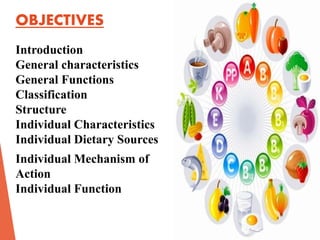
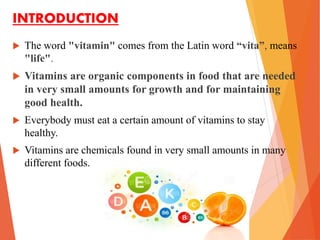
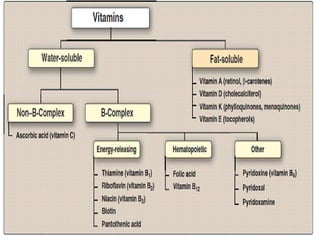
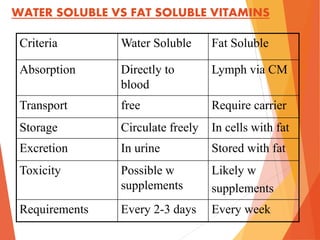
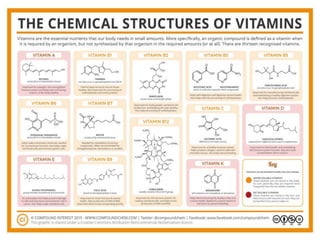
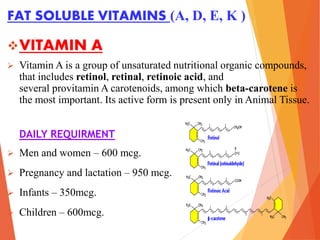
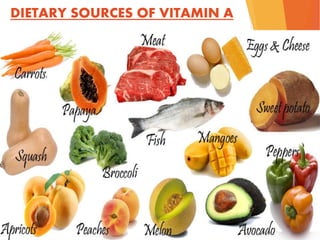
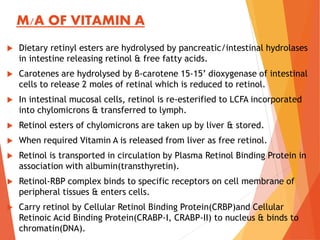
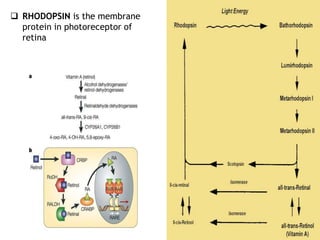
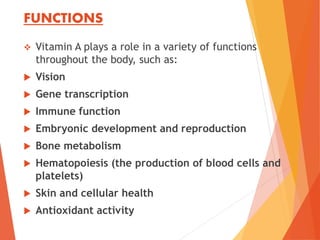
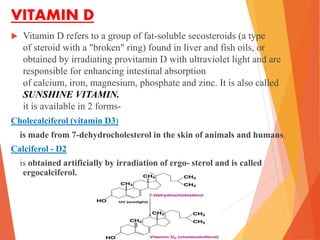
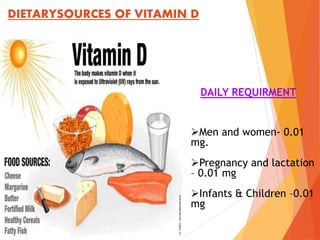
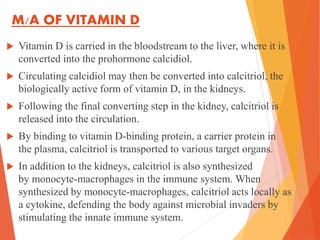
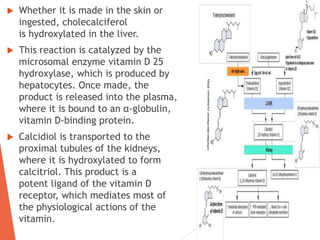
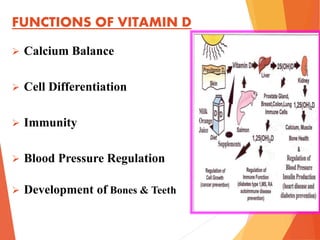
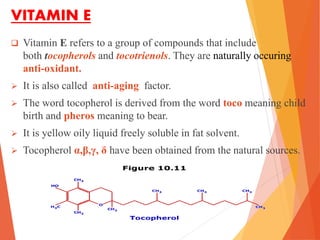
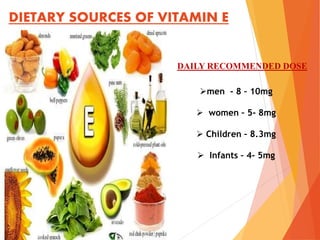
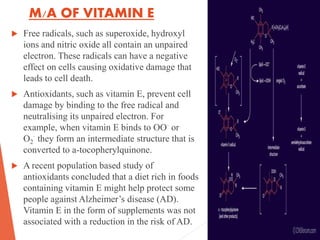
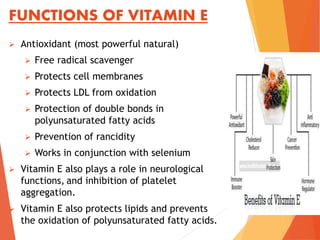
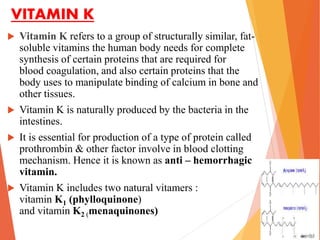
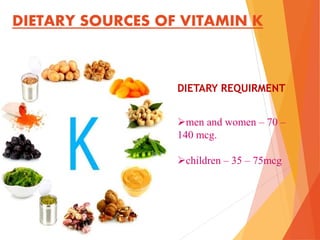
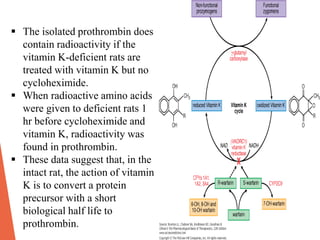
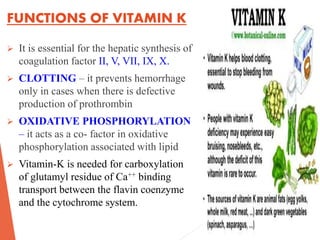
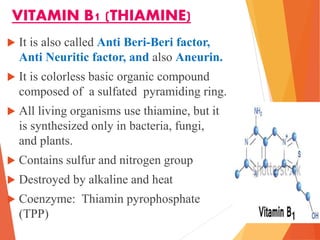
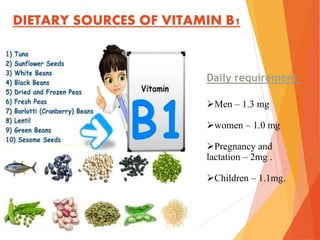
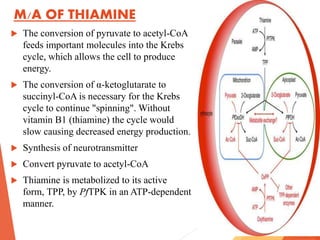
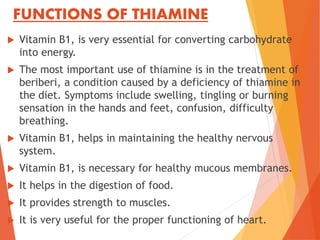
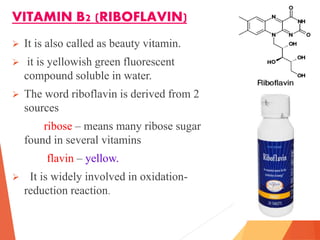
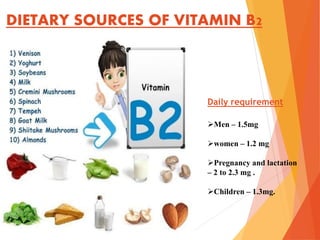
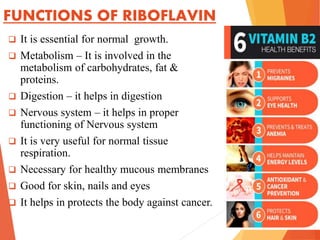
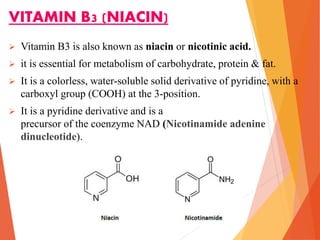
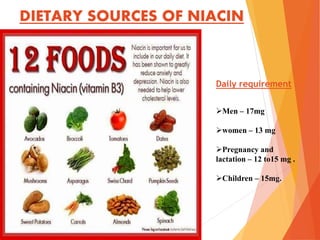
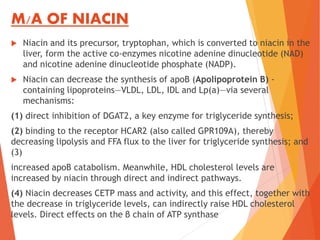
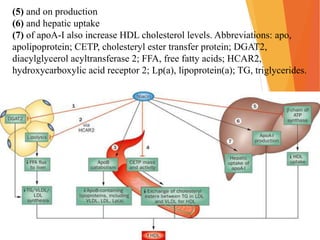
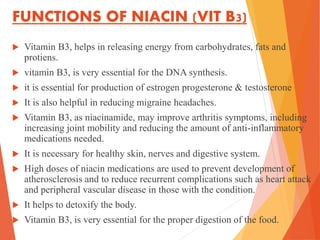
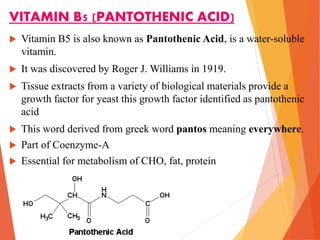
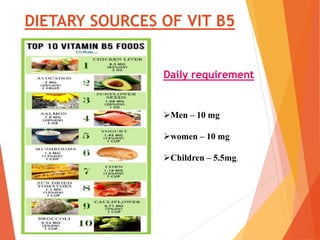
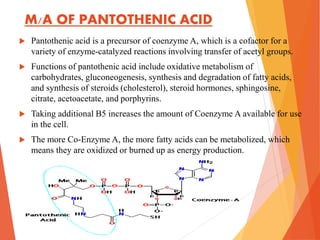
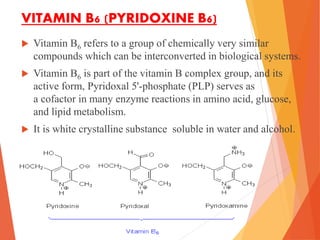
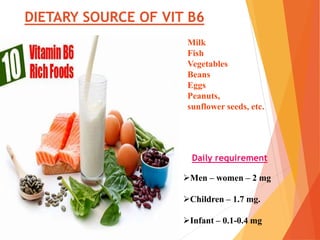
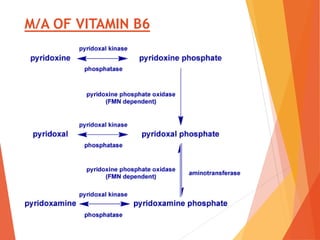
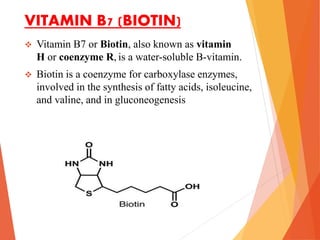
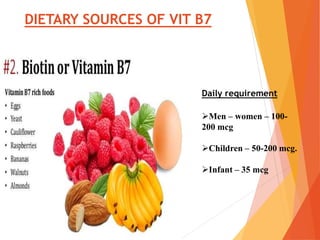
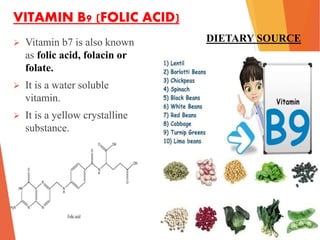
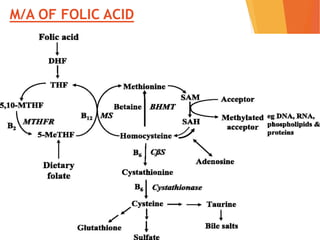
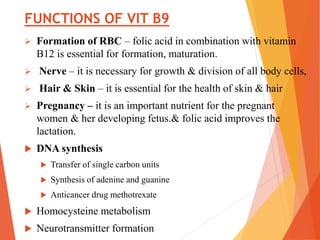
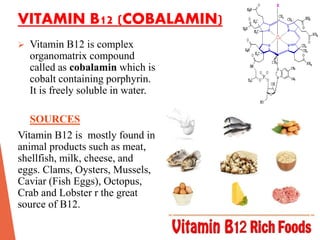
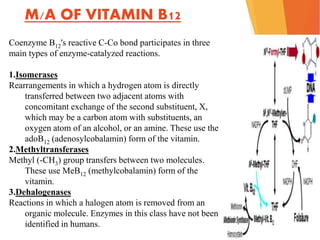
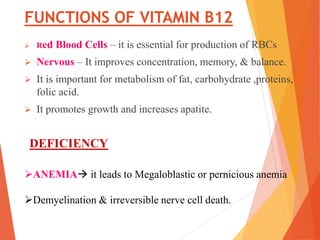
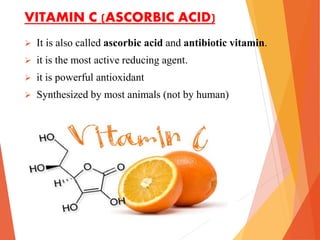
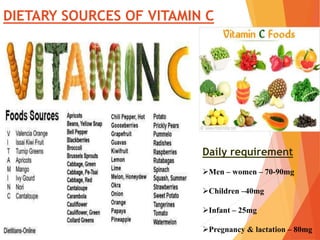
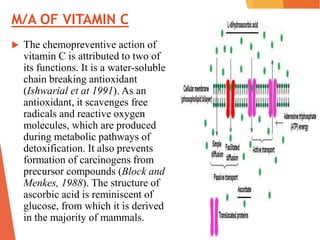
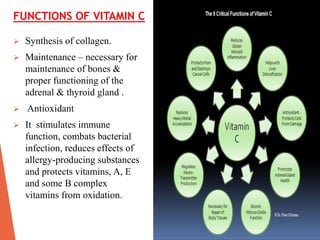
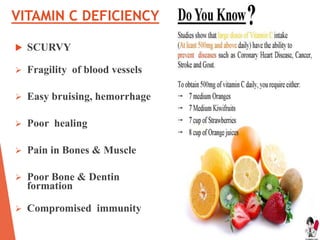


This presentation provides an overview of vitamins, including their classification, functions, sources, and mechanisms of action. It discusses both water soluble vitamins (B vitamins and vitamin C) and fat soluble vitamins (A, D, E, K). Key points include: - Vitamins are organic compounds that are needed in small amounts for growth, cell function, and disease prevention. - They are classified as either water soluble or fat soluble depending on how they are absorbed and transported in the body. - Vitamins act as coenzymes and play important roles in energy production, cell differentiation, bone health, vision, and other processes. - Dietary sources of each vitamin are identified along with recommended daily intake amounts


![ppt_vitamins__192314028L[1].pptHKHKHHGHH](https://cdn.slidesharecdn.com/ss_thumbnails/pptvitamins192314028l1-250328163139-e90aa077-thumbnail.jpg?width=640&height=640&fit=bounds)


