Vitamin C

Abby Hughes
Lauren Bukkhegyi and
Bailey Grinnell
History of Vitamin C
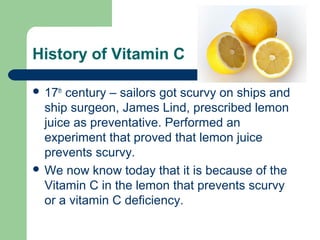
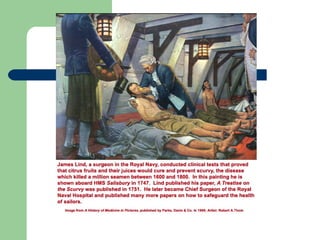
 17th

century – sailors got scurvy on ships and
ship surgeon, James Lind, prescribed lemon
juice as preventative. Performed an
experiment that proved that lemon juice
prevents scurvy.
 We now know today that it is because of the
Vitamin C in the lemon that prevents scurvy
or a vitamin C deficiency.
What is Vitamin C?
 Also

known as L-ascorbic acid it is an
essential nutrient for humans.
 It is needed for metabolic reactions in all
plants and animals.
 It is a water soluble vitamin that is necessary
for growth and development.
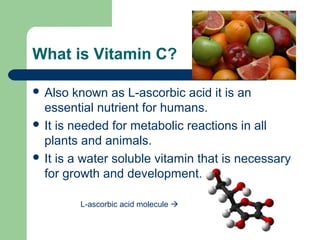
L-ascorbic acid molecule 
Uses of Vitamin C
 Protects

against immune system
deficiencies, cardio vascular
disease, prenatal health
problems, eye disease, and skin
wrinkling.
 Helps form collagen in bones,
cartilage, muscle, and blood
vessels.
 Helps absorb iron.
Vitamin C is Found…
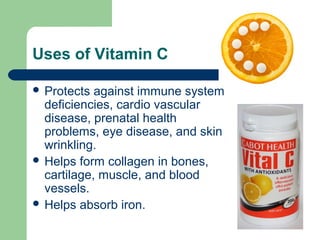
 Mostly

in citrus fruit and juices (limes,
lemons, oranges, peaches, strawberries,
bananas, and grapefruits)
 Also in cabbage, broccoli, cauliflower, leaf
lettuce, tomatoes, potatoes, and beans.
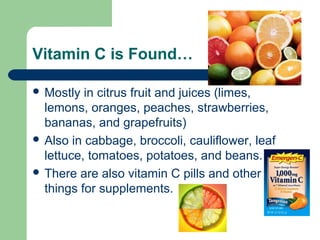
 There are also vitamin C pills and other
things for supplements.
How does Vitamin C work?







Vitamin C reaches every cell of the body and plays a
role in the making and protecting of our connective
tissue that holds the body together.
Helps the immune system fight off diseases
Helps the cardiovascular system by facilitating fat
metabolism
Helps the nervous system by converting amino acids
into neurotransmitters
Vitamin C’s formation of collagen protects teeth and
bones.
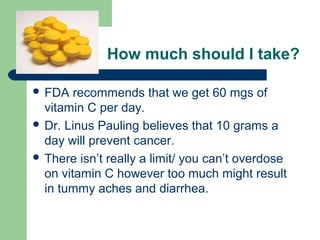
How much should I take?
 FDA

recommends that we get 60 mgs of
vitamin C per day.
 Dr. Linus Pauling believes that 10 grams a
day will prevent cancer.
 There isn’t really a limit/ you can’t overdose
on vitamin C however too much might result
in tummy aches and diarrhea.
What Happens Without Vitamin C
 Most

people don’t lack vitamin C because
everyday foods have it.
 Major effect is known as scurvy – which is a
condition that connective tissue breaks down
and fats are not absorbed causing easy
bruising, hair loss and anemia.
 On average people get 70 mgs of vitamin C
a day and to prevent scurvy you only need 56 mgs.
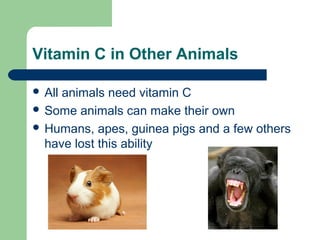
Vitamin C in Other Animals
 All

animals need vitamin C
 Some animals can make their own
 Humans, apes, guinea pigs and a few others
have lost this ability
Where can you get Vitamin C?
 Vitamin

C is in most everyday foods so you
can get it in pretty much anything.
 You can get pills or supplements at any
vitamin store or grocery store.
Vitamin C and allergy video!

 http://link.brightcove.com/services/link/bcpid82472


The End!
Bibliography

Vitamin C power point

  • 1.
    Vitamin C Abby Hughes LaurenBukkhegyi and Bailey Grinnell
  • 2.
    History of VitaminC  17th century – sailors got scurvy on ships and ship surgeon, James Lind, prescribed lemon juice as preventative. Performed an experiment that proved that lemon juice prevents scurvy.  We now know today that it is because of the Vitamin C in the lemon that prevents scurvy or a vitamin C deficiency.
  • 4.
    What is VitaminC?  Also known as L-ascorbic acid it is an essential nutrient for humans.  It is needed for metabolic reactions in all plants and animals.  It is a water soluble vitamin that is necessary for growth and development. L-ascorbic acid molecule 
  • 5.
    Uses of VitaminC  Protects against immune system deficiencies, cardio vascular disease, prenatal health problems, eye disease, and skin wrinkling.  Helps form collagen in bones, cartilage, muscle, and blood vessels.  Helps absorb iron.
  • 6.
    Vitamin C isFound…  Mostly in citrus fruit and juices (limes, lemons, oranges, peaches, strawberries, bananas, and grapefruits)  Also in cabbage, broccoli, cauliflower, leaf lettuce, tomatoes, potatoes, and beans.  There are also vitamin C pills and other things for supplements.
  • 7.
    How does VitaminC work?      Vitamin C reaches every cell of the body and plays a role in the making and protecting of our connective tissue that holds the body together. Helps the immune system fight off diseases Helps the cardiovascular system by facilitating fat metabolism Helps the nervous system by converting amino acids into neurotransmitters Vitamin C’s formation of collagen protects teeth and bones.
  • 8.
    How much shouldI take?  FDA recommends that we get 60 mgs of vitamin C per day.  Dr. Linus Pauling believes that 10 grams a day will prevent cancer.  There isn’t really a limit/ you can’t overdose on vitamin C however too much might result in tummy aches and diarrhea.
  • 9.
    What Happens WithoutVitamin C  Most people don’t lack vitamin C because everyday foods have it.  Major effect is known as scurvy – which is a condition that connective tissue breaks down and fats are not absorbed causing easy bruising, hair loss and anemia.  On average people get 70 mgs of vitamin C a day and to prevent scurvy you only need 56 mgs.
  • 10.
    Vitamin C inOther Animals  All animals need vitamin C  Some animals can make their own  Humans, apes, guinea pigs and a few others have lost this ability
  • 11.
    Where can youget Vitamin C?  Vitamin C is in most everyday foods so you can get it in pretty much anything.  You can get pills or supplements at any vitamin store or grocery store.
  • 12.
    Vitamin C andallergy video!  http://link.brightcove.com/services/link/bcpid82472 
  • 13.
  • 14.