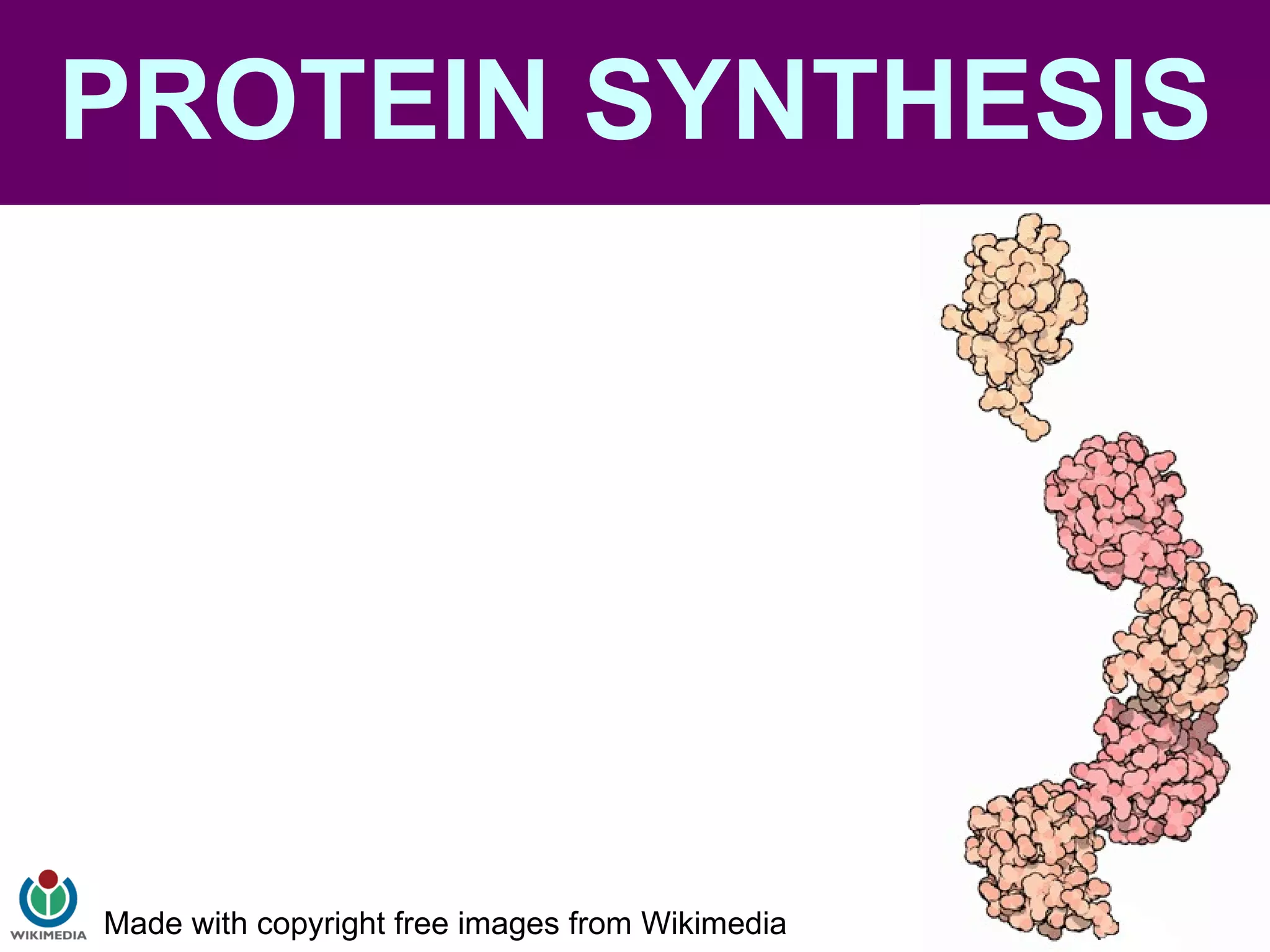
PROTEIN SYNTHESIS Made with copyright free images from Wikimedia
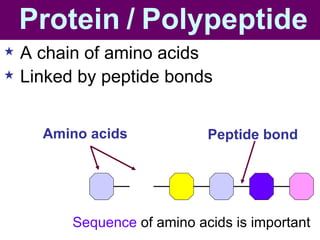
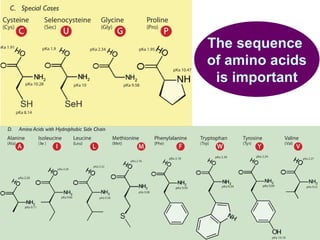
Amino acids Sequence  of amino acids is important Peptide bond Protein   /   Polypeptide A chain of amino acids  Linked by peptide bonds
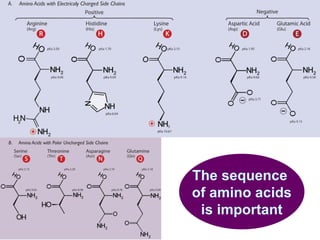
The sequence  of amino acids is important
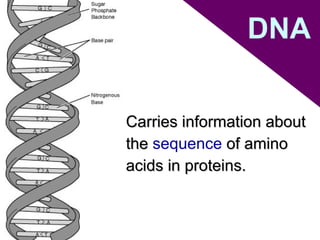
DNA Carries information about the  sequence   of amino acids in proteins.
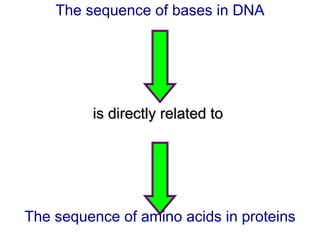
The sequence of bases in DNA is directly related to  The sequence of amino acids in proteins
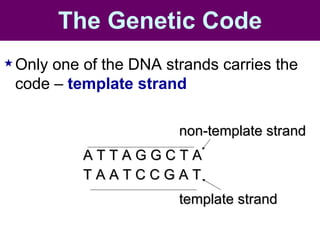
non-template strand A T T A G G C T A T A A T C C G A T template strand  The   Genetic   Code Only one of the DNA strands carries the code –  template strand
Sequence of  3  bases   Codes for  one  amino acid  Called a   triplet The   Genetic   Code
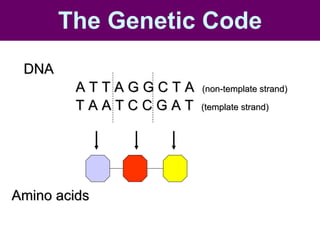
DNA A T T A G G C T A  (non-template strand) T A A T C C G A T  (template strand) Amino acids  The   Genetic   Code
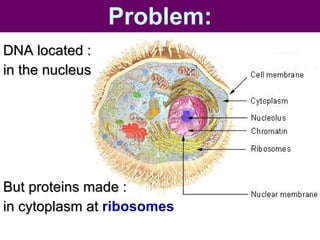
Problem: DNA located : in the nucleus But proteins made :  in cytoplasm at  ribosomes
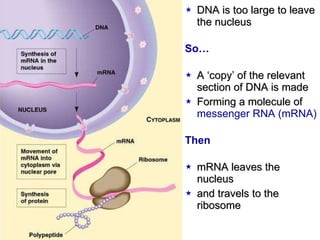
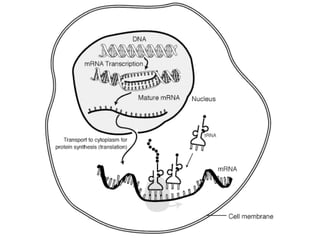
DNA is too large to leave the nucleus So… A ‘copy’ of the relevant section of DNA is made Forming a molecule of  messenger RNA (mRNA) Then mRNA leaves the nucleus and travels to the ribosome
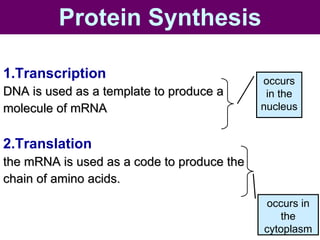
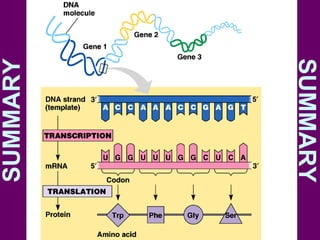
Protein Synthesis 1.Transcription   DNA is used as a template to produce a  molecule of mRNA 2.Translation   the mRNA is used as a code to produce the chain of amino acids. occurs in the nucleus occurs in the cytoplasm
 
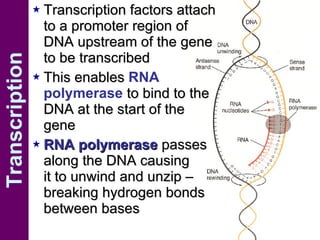
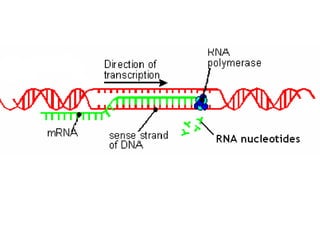
Transcription Transcription factors attach to a promoter region of DNA upstream of the gene to be transcribed This enables  RNA polymerase  to bind to the DNA at the start of the gene RNA polymerase  passes along the DNA causing  it to unwind and unzip – breaking hydrogen bonds between bases
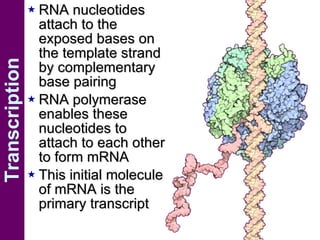
Transcription RNA nucleotides attach to the exposed bases on the template strand by complementary base pairing RNA polymerase enables these nucleotides to attach to each other to form mRNA This initial molecule of mRNA is the primary transcript
 
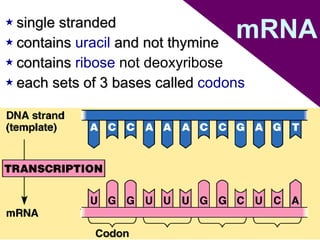
single stranded contains  uracil  and not thymine contains  ribose  not deoxyribose each sets of 3 bases called  codons mRNA
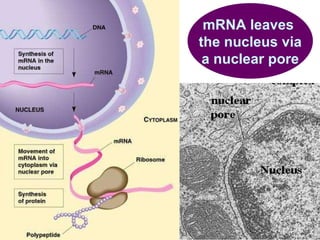
mRNA leaves  the nucleus via a nuclear pore
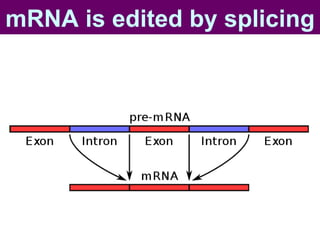
mRNA is edited by splicing
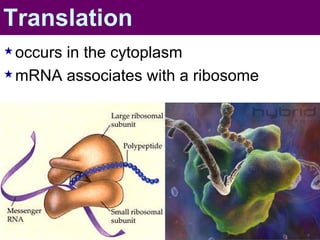
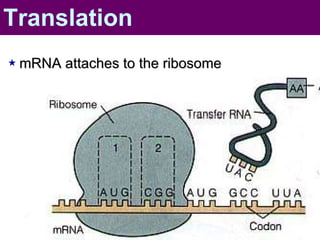
Translation occurs in the cytoplasm mRNA associates with a ribosome
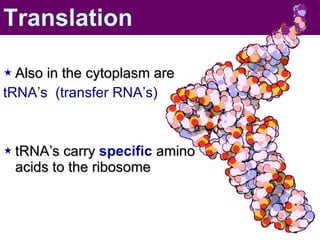
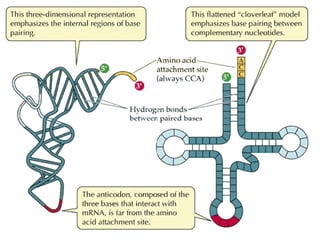
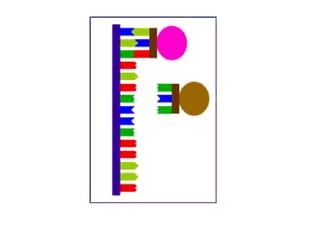
Also in the cytoplasm are  tRNA’s  (transfer RNA’s) tRNA’s carry  specific  amino acids to the ribosome Translation
 
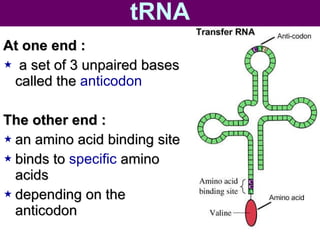
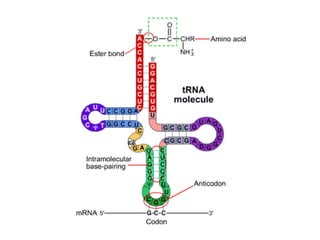
tRNA At one end : a set of 3 unpaired bases called the  anticodon   The other end : an amino acid binding site  binds to  specific  amino acids  depending on the anticodon
mRNA attaches to the ribosome Translation
A tRNA with a complementary anticodon   lines up against  the first codon on the mRNA Translation
 
Translation
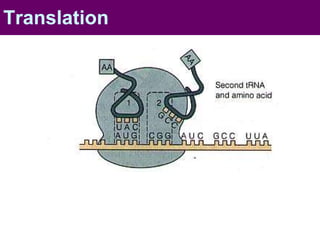
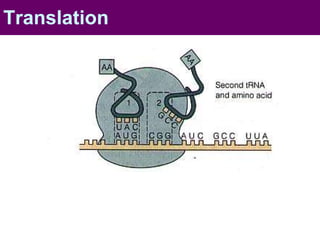
A second tRNA bonds with the next codon Translation
Translation
A  peptide  bond forms between the 2 amino acids Ribosome now moves 1 codon along the mRNA  Translation
Translation
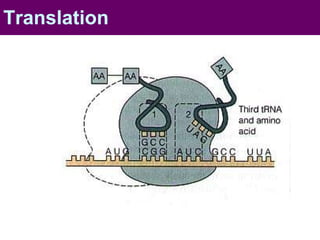
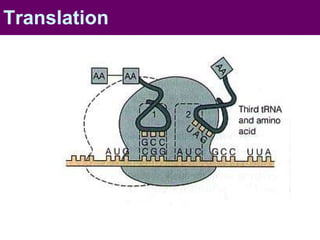
The first tRNA leaves  returns to cytoplasm to attach to another amino acid A third tRNA brings the next amino acid  Translation
Translation
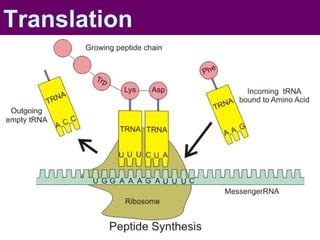
The ribosome continues to move along the mRNA until the polypeptide chain is complete. Translation
Translation
 
SUMMARY SUMMARY
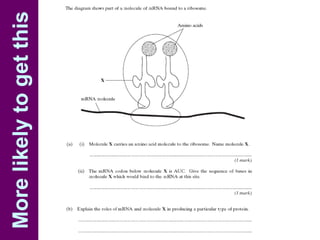
Exam Questions
More likely to get this
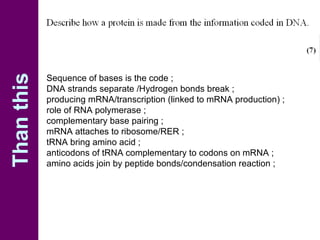
Sequence of bases is the code ; DNA strands separate /Hydrogen bonds break ; producing mRNA/transcription (linked to mRNA production) ; role of RNA polymerase ; complementary base pairing ; mRNA attaches to ribosome/RER ; tRNA bring amino acid ; anticodons of tRNA complementary to codons on mRNA ; amino acids join by peptide bonds/condensation reaction ; Than this
Features of the Genetic Code
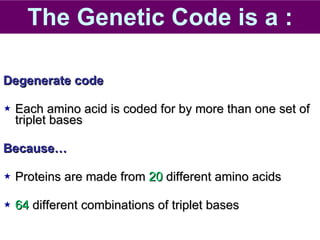
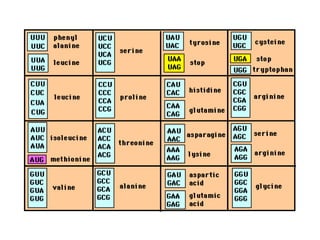
The Genetic Code is a : Degenerate code Each amino acid is coded for by more than one set of triplet bases Because… Proteins are made from  20  different amino acids 64  different combinations of triplet bases
 
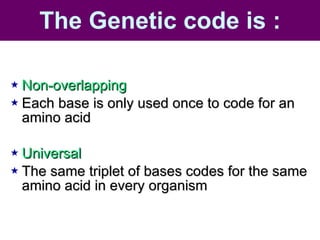
The Genetic code is : Non-overlapping Each base is only used once to code for an amino acid Universal The same triplet of bases codes for the same amino acid in every organism
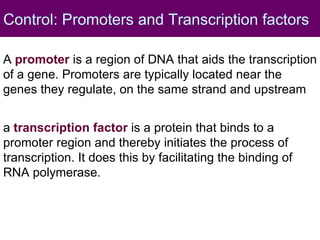
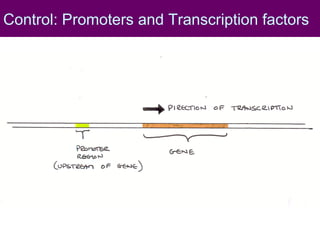
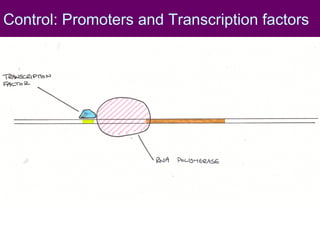
Control: Promoters and Transcription factors A  promoter  is a region of DNA that aids the transcription of a gene. Promoters are typically located near the genes they regulate, on the same strand and upstream a  transcription factor  is a protein that binds to a promoter region and thereby initiates the process of transcription. It does this by facilitating the binding of RNA polymerase.
Control: Promoters and Transcription factors
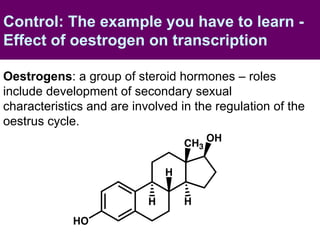
Control: The example you have to learn - Effect of oestrogen on transcription Oestrogens : a group of steroid hormones – roles include development of secondary sexual characteristics and are involved in the regulation of the oestrus cycle.
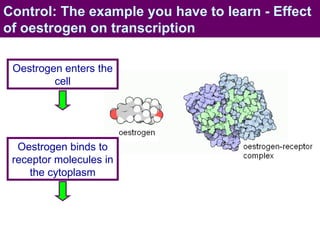
Control: The example you have to learn - Effect of oestrogen on transcription Oestrogen enters the cell Oestrogen binds to receptor molecules in the cytoplasm
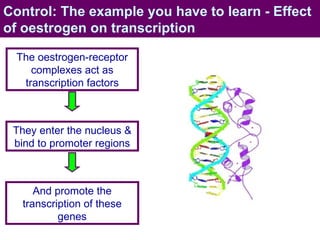
Control: The example you have to learn - Effect of oestrogen on transcription And promote the transcription of these genes They enter the nucleus & bind to promoter regions The oestrogen-receptor complexes act as transcription factors
Control:  Mechanism of RNA interference (RNAi).   The appearance of double stranded RNA [usually as a result of viral infection] can start the process.  The enzyme Dicer [blue] binds to the double stranded RNA and cleaves it into short pieces of approx. 20 base pairs in length known as small interfering RNA (siRNA) [orange-red].
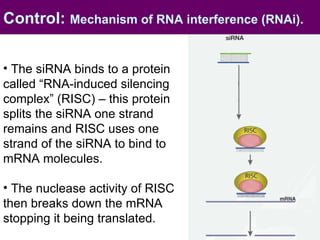
The siRNA binds to a protein called “RNA-induced silencing complex” (RISC) – this protein splits the siRNA one strand remains and RISC uses one strand of the siRNA to bind to mRNA molecules.  The nuclease activity of RISC then breaks down the mRNA stopping it being translated. Control:  Mechanism of RNA interference (RNAi).

BiologyExchange.co.uk Shared Resource

  • 1.
    PROTEIN SYNTHESIS Madewith copyright free images from Wikimedia
  • 2.
    Amino acids Sequence of amino acids is important Peptide bond Protein / Polypeptide A chain of amino acids Linked by peptide bonds
  • 3.
    The sequence of amino acids is important
  • 4.
    The sequence of amino acids is important
  • 5.
    DNA Carries informationabout the sequence of amino acids in proteins.
  • 6.
    The sequence ofbases in DNA is directly related to The sequence of amino acids in proteins
  • 7.
    non-template strand AT T A G G C T A T A A T C C G A T template strand The Genetic Code Only one of the DNA strands carries the code – template strand
  • 8.
    Sequence of 3 bases Codes for one amino acid Called a triplet The Genetic Code
  • 9.
    DNA A TT A G G C T A (non-template strand) T A A T C C G A T (template strand) Amino acids The Genetic Code
  • 10.
    Problem: DNA located: in the nucleus But proteins made : in cytoplasm at ribosomes
  • 11.
    DNA is toolarge to leave the nucleus So… A ‘copy’ of the relevant section of DNA is made Forming a molecule of messenger RNA (mRNA) Then mRNA leaves the nucleus and travels to the ribosome
  • 12.
    Protein Synthesis 1.Transcription DNA is used as a template to produce a molecule of mRNA 2.Translation the mRNA is used as a code to produce the chain of amino acids. occurs in the nucleus occurs in the cytoplasm
  • 13.
  • 14.
    Transcription Transcription factorsattach to a promoter region of DNA upstream of the gene to be transcribed This enables RNA polymerase to bind to the DNA at the start of the gene RNA polymerase passes along the DNA causing it to unwind and unzip – breaking hydrogen bonds between bases
  • 15.
    Transcription RNA nucleotidesattach to the exposed bases on the template strand by complementary base pairing RNA polymerase enables these nucleotides to attach to each other to form mRNA This initial molecule of mRNA is the primary transcript
  • 16.
  • 17.
    single stranded contains uracil and not thymine contains ribose not deoxyribose each sets of 3 bases called codons mRNA
  • 18.
    mRNA leaves the nucleus via a nuclear pore
  • 19.
    mRNA is editedby splicing
  • 20.
    Translation occurs inthe cytoplasm mRNA associates with a ribosome
  • 21.
    Also in thecytoplasm are tRNA’s (transfer RNA’s) tRNA’s carry specific amino acids to the ribosome Translation
  • 22.
  • 23.
    tRNA At oneend : a set of 3 unpaired bases called the anticodon The other end : an amino acid binding site binds to specific amino acids depending on the anticodon
  • 24.
    mRNA attaches tothe ribosome Translation
  • 25.
    A tRNA witha complementary anticodon lines up against the first codon on the mRNA Translation
  • 26.
  • 27.
  • 28.
    A second tRNAbonds with the next codon Translation
  • 29.
  • 30.
    A peptide bond forms between the 2 amino acids Ribosome now moves 1 codon along the mRNA Translation
  • 31.
  • 32.
    The first tRNAleaves returns to cytoplasm to attach to another amino acid A third tRNA brings the next amino acid Translation
  • 33.
  • 34.
    The ribosome continuesto move along the mRNA until the polypeptide chain is complete. Translation
  • 35.
  • 36.
  • 37.
  • 38.
  • 39.
  • 40.
    Sequence of basesis the code ; DNA strands separate /Hydrogen bonds break ; producing mRNA/transcription (linked to mRNA production) ; role of RNA polymerase ; complementary base pairing ; mRNA attaches to ribosome/RER ; tRNA bring amino acid ; anticodons of tRNA complementary to codons on mRNA ; amino acids join by peptide bonds/condensation reaction ; Than this
  • 41.
    Features of theGenetic Code
  • 42.
    The Genetic Codeis a : Degenerate code Each amino acid is coded for by more than one set of triplet bases Because… Proteins are made from 20 different amino acids 64 different combinations of triplet bases
  • 43.
  • 44.
    The Genetic codeis : Non-overlapping Each base is only used once to code for an amino acid Universal The same triplet of bases codes for the same amino acid in every organism
  • 45.
    Control: Promoters andTranscription factors A promoter is a region of DNA that aids the transcription of a gene. Promoters are typically located near the genes they regulate, on the same strand and upstream a transcription factor is a protein that binds to a promoter region and thereby initiates the process of transcription. It does this by facilitating the binding of RNA polymerase.
  • 46.
    Control: Promoters andTranscription factors
  • 47.
    Control: Promoters andTranscription factors
  • 48.
    Control: The exampleyou have to learn - Effect of oestrogen on transcription Oestrogens : a group of steroid hormones – roles include development of secondary sexual characteristics and are involved in the regulation of the oestrus cycle.
  • 49.
    Control: The exampleyou have to learn - Effect of oestrogen on transcription Oestrogen enters the cell Oestrogen binds to receptor molecules in the cytoplasm
  • 50.
    Control: The exampleyou have to learn - Effect of oestrogen on transcription And promote the transcription of these genes They enter the nucleus & bind to promoter regions The oestrogen-receptor complexes act as transcription factors
  • 51.
    Control: Mechanismof RNA interference (RNAi). The appearance of double stranded RNA [usually as a result of viral infection] can start the process. The enzyme Dicer [blue] binds to the double stranded RNA and cleaves it into short pieces of approx. 20 base pairs in length known as small interfering RNA (siRNA) [orange-red].
  • 52.
    The siRNA bindsto a protein called “RNA-induced silencing complex” (RISC) – this protein splits the siRNA one strand remains and RISC uses one strand of the siRNA to bind to mRNA molecules. The nuclease activity of RISC then breaks down the mRNA stopping it being translated. Control: Mechanism of RNA interference (RNAi).