Gas exchange in insects
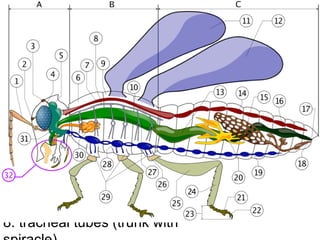
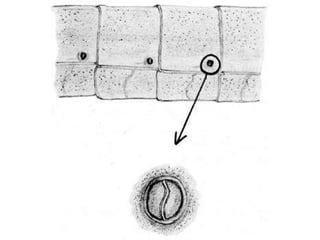
8. tracheal tubes (trunk with spiracle)


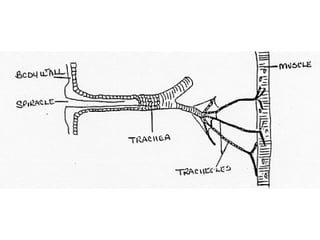
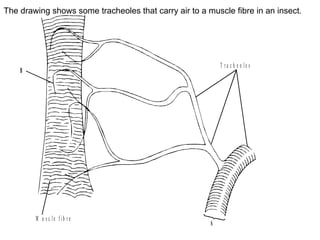
The drawing shows some tracheoles that carry air to a muscle fibre in an insect.
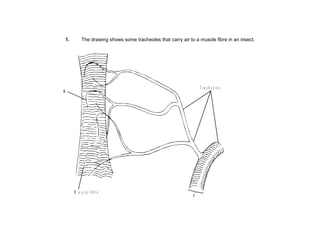
1. The drawing shows some tracheoles that carry air to a muscle fibre in an insect.
(i) Explain how the structure of the gas exchange system of an insect ensures that there is a large surface area for gas exchange.   (1) (ii) Describe  one  way in which the transport of oxygen to a muscle in an insect is different from that in a human.   (1) (b) The diameter of the tracheole at point  A  is 20 mm. Calculate the magnification of the drawing. Show your working. (2) (c) Breathing movements can bring about the mass flow of air as far as point  B . What causes the diffusion of oxygen molecules from  B  into a muscle fibre? (1)
(a) (i) Many, small/ branching tracheoles; 1 (ii) Blood not involved in transport of respiratory gases in insects; 1 (b) Correct answer (ignoring working) 600x =2 marks;; Answer correct for candidate’s R = 1 mark; Candidate clearly derives answer by dividing measured diameter by actual size = 1 mark; 2 (c) Higher concentration of oxygen at S than in muscle; 1 [Not just concentration gradient: direction of gradient must be clear]
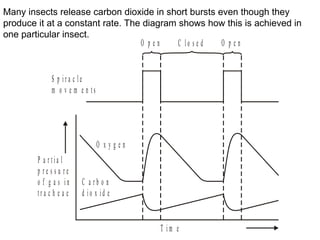
Many insects release carbon dioxide in short bursts even though they produce it at a constant rate. The diagram shows how this is achieved in one particular insect.
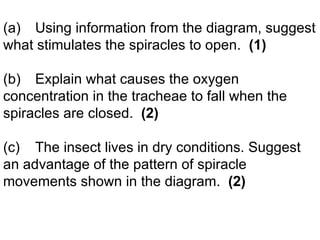
(a) Using information from the diagram, suggest what stimulates the spiracles to open.  (1) (b) Explain what causes the oxygen concentration in the tracheae to fall when the spiracles are closed.  (2) (c) The insect lives in dry conditions. Suggest an advantage of the pattern of spiracle movements shown in the diagram.  (2)
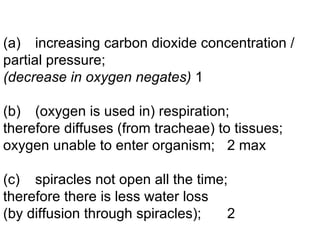
(a) increasing carbon dioxide concentration / partial pressure; (decrease in oxygen negates) 1 (b) (oxygen is used in) respiration; therefore diffuses (from tracheae) to tissues; oxygen unable to enter organism; 2 max (c) spiracles not open all the time; therefore there is less water loss (by diffusion through spiracles); 2

BiologyExchange.co.uk Shared Resource

  • 1.
  • 2.
    8. tracheal tubes(trunk with spiracle)
  • 3.
  • 4.
  • 5.
  • 6.
  • 7.
  • 8.
  • 9.
    The drawing showssome tracheoles that carry air to a muscle fibre in an insect.
  • 10.
    1. The drawingshows some tracheoles that carry air to a muscle fibre in an insect.
  • 11.
    (i) Explain howthe structure of the gas exchange system of an insect ensures that there is a large surface area for gas exchange. (1) (ii) Describe one way in which the transport of oxygen to a muscle in an insect is different from that in a human. (1) (b) The diameter of the tracheole at point A is 20 mm. Calculate the magnification of the drawing. Show your working. (2) (c) Breathing movements can bring about the mass flow of air as far as point B . What causes the diffusion of oxygen molecules from B into a muscle fibre? (1)
  • 12.
    (a) (i) Many,small/ branching tracheoles; 1 (ii) Blood not involved in transport of respiratory gases in insects; 1 (b) Correct answer (ignoring working) 600x =2 marks;; Answer correct for candidate’s R = 1 mark; Candidate clearly derives answer by dividing measured diameter by actual size = 1 mark; 2 (c) Higher concentration of oxygen at S than in muscle; 1 [Not just concentration gradient: direction of gradient must be clear]
  • 13.
    Many insects releasecarbon dioxide in short bursts even though they produce it at a constant rate. The diagram shows how this is achieved in one particular insect.
  • 14.
    (a) Using informationfrom the diagram, suggest what stimulates the spiracles to open. (1) (b) Explain what causes the oxygen concentration in the tracheae to fall when the spiracles are closed. (2) (c) The insect lives in dry conditions. Suggest an advantage of the pattern of spiracle movements shown in the diagram. (2)
  • 15.
    (a) increasing carbondioxide concentration / partial pressure; (decrease in oxygen negates) 1 (b) (oxygen is used in) respiration; therefore diffuses (from tracheae) to tissues; oxygen unable to enter organism; 2 max (c) spiracles not open all the time; therefore there is less water loss (by diffusion through spiracles); 2