Tissue fluid
Exchange across the capillaries Formation of tissue fluid Lymph Tissue fluid
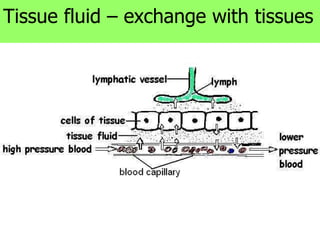
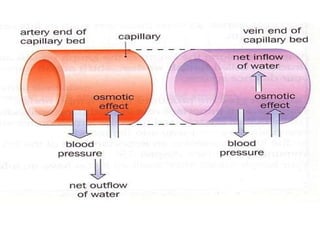
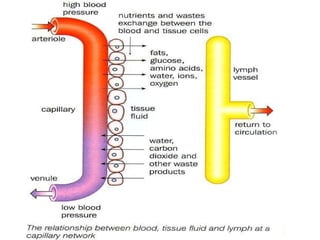
As blood flows through the capillaries some fluid passes out of capillaries This is  tissue fluid  it is very similar to plasma but does not have large plasma protein molecules in it This fluid bathes every cell in the body supplying them with glucose, amino acids, fatty acids, salts and oxygen (Tissue fluid also removes carbon dioxide an other waste material from cells) Tissue fluid - formation
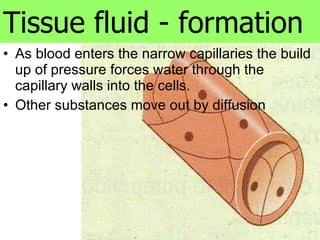
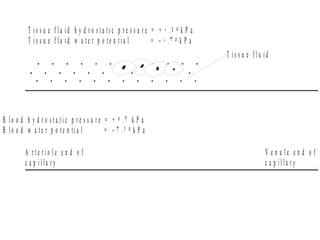
As blood enters the narrow capillaries the build up of pressure forces water through the capillary walls into the cells. Other substances move out by diffusion Tissue fluid - formation
Tissue fluid – exchange with tissues
Quick question – If you take out lots of water from a fluid but leave all the large plasma proteins in it, what happens to the water potential?
As fluid leaves the capillaries the blood has lost a lot of its water and so it is far more concentrated (its water potential becomes more negative / lower) So water passes back into the capillary by osmosis Waste products leave the cells and enter the capillaries by diffusion Tissue fluid - drainage


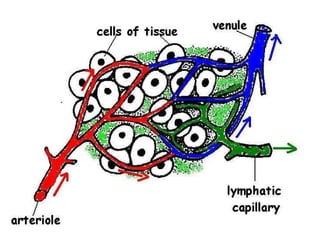
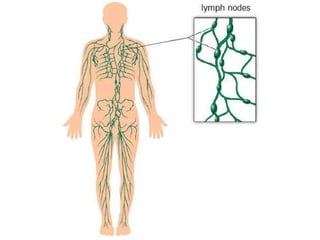
Not all the fluid returns to the blood capillary 10% enters a separate system of microscopic tubes called  lymph capillaries These are part of the  lymph system Lymph vessels have valves that let fluid enter but not leave them The lymph capillaries join to form  lymph vessels Tissue fluid - Lymph
Flow of liquid through the lymph system is very slow It depends on movement of our muscles, the valves in the vessels. Flow is in one direction only, from tissues back towards the bloodstream. Tissue fluid
 
 
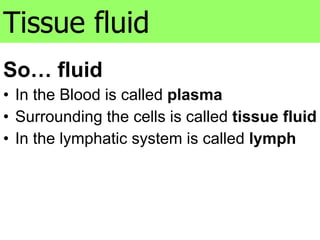
So… fluid In the Blood is called  plasma Surrounding the cells is called  tissue fluid In the lymphatic system is called  lymph Tissue fluid
Tissue  fluid
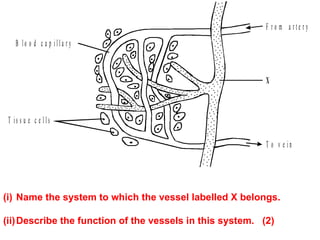
Name the system to which the vessel labelled X belongs.  (ii) Describe the function of the vessels in this system.  (2)
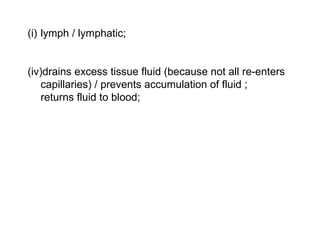
lymph / lymphatic; drains excess tissue fluid (because not all re-enters capillaries) / prevents accumulation of fluid ; returns fluid to blood;
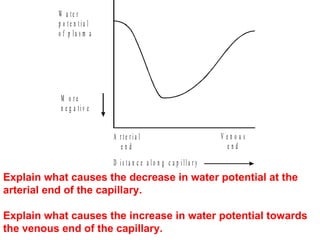
Explain what causes the decrease in water potential at the arterial end of the capillary. Explain what causes the increase in water potential towards the venous end of the capillary.
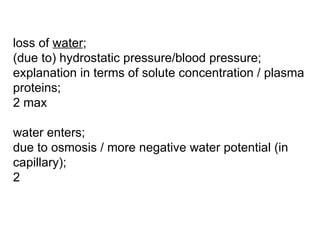
loss of  water ; (due to) hydrostatic pressure/blood pressure; explanation in terms of solute concentration / plasma proteins; 2 max water enters; due to osmosis / more negative water potential (in capillary); 2

BiologyExchange.co.uk Shared Resource

  • 1.
  • 2.
    Exchange across thecapillaries Formation of tissue fluid Lymph Tissue fluid
  • 3.
    As blood flowsthrough the capillaries some fluid passes out of capillaries This is tissue fluid it is very similar to plasma but does not have large plasma protein molecules in it This fluid bathes every cell in the body supplying them with glucose, amino acids, fatty acids, salts and oxygen (Tissue fluid also removes carbon dioxide an other waste material from cells) Tissue fluid - formation
  • 4.
    As blood entersthe narrow capillaries the build up of pressure forces water through the capillary walls into the cells. Other substances move out by diffusion Tissue fluid - formation
  • 5.
    Tissue fluid –exchange with tissues
  • 6.
    Quick question –If you take out lots of water from a fluid but leave all the large plasma proteins in it, what happens to the water potential?
  • 7.
    As fluid leavesthe capillaries the blood has lost a lot of its water and so it is far more concentrated (its water potential becomes more negative / lower) So water passes back into the capillary by osmosis Waste products leave the cells and enter the capillaries by diffusion Tissue fluid - drainage
  • 8.
  • 9.
  • 10.
  • 11.
    Not all thefluid returns to the blood capillary 10% enters a separate system of microscopic tubes called lymph capillaries These are part of the lymph system Lymph vessels have valves that let fluid enter but not leave them The lymph capillaries join to form lymph vessels Tissue fluid - Lymph
  • 12.
    Flow of liquidthrough the lymph system is very slow It depends on movement of our muscles, the valves in the vessels. Flow is in one direction only, from tissues back towards the bloodstream. Tissue fluid
  • 13.
  • 14.
  • 15.
    So… fluid Inthe Blood is called plasma Surrounding the cells is called tissue fluid In the lymphatic system is called lymph Tissue fluid
  • 16.
  • 17.
    Name the systemto which the vessel labelled X belongs. (ii) Describe the function of the vessels in this system. (2)
  • 18.
    lymph / lymphatic;drains excess tissue fluid (because not all re-enters capillaries) / prevents accumulation of fluid ; returns fluid to blood;
  • 19.
    Explain what causesthe decrease in water potential at the arterial end of the capillary. Explain what causes the increase in water potential towards the venous end of the capillary.
  • 20.
    loss of water ; (due to) hydrostatic pressure/blood pressure; explanation in terms of solute concentration / plasma proteins; 2 max water enters; due to osmosis / more negative water potential (in capillary); 2

Editor's Notes