Beta-Lactam Antibiotics
PENICILLINS
Ashok kumar A
I - MDS
Dept of Orthodontics
Antibiotics
Greek words anti = against ; bios = life
Antibiotics are the substances produced by
microorganisms, which suppress the growth or kill
microorganisms at very low concentrations.
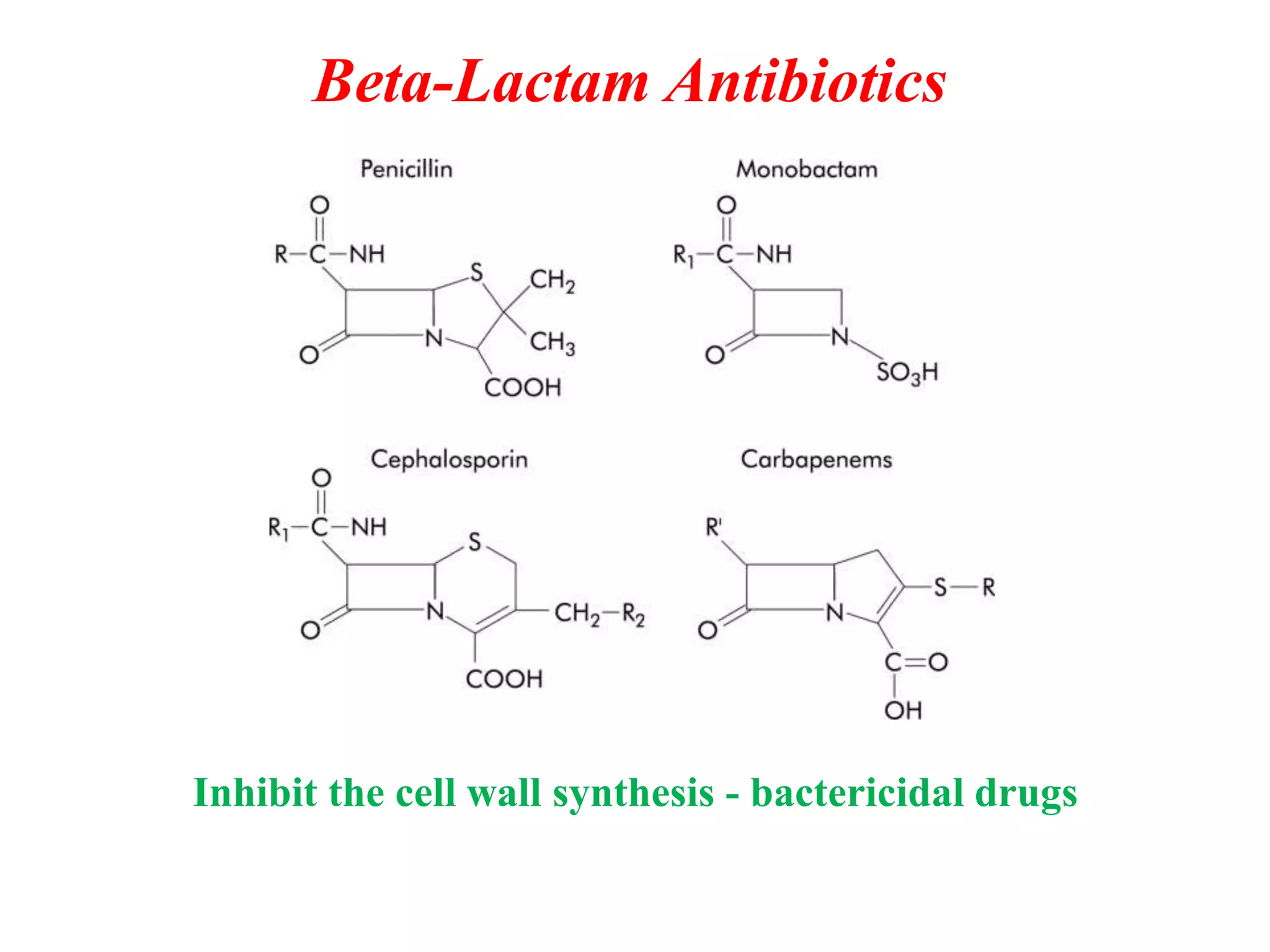
Beta-Lactam Antibiotics
Inhibit the cell wall synthesis - bactericidal drugs
PENICILINS - History
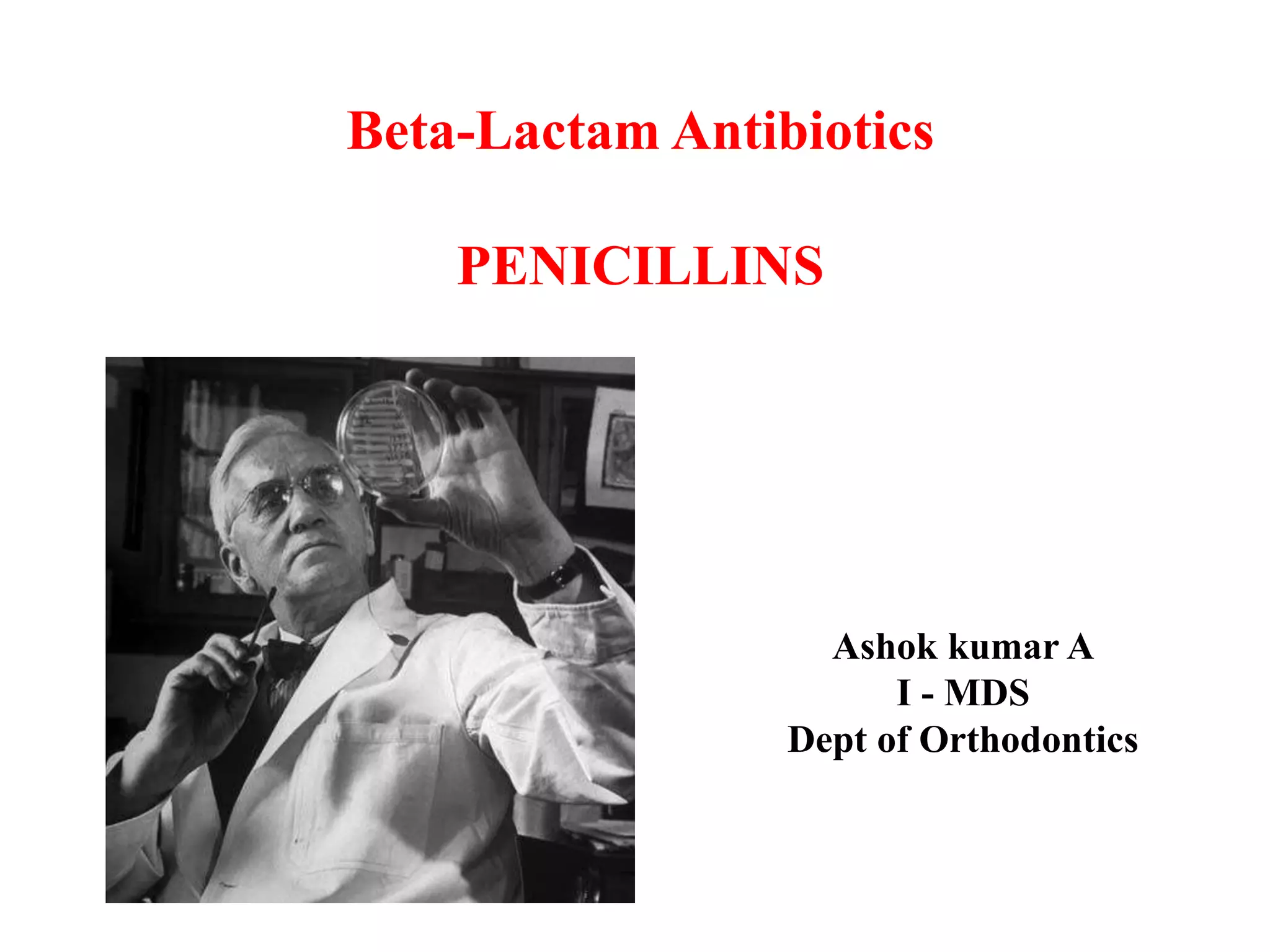
1928-Alexander Fleming
1938-Florey & Chain
1941- Antibiotic first used
clinically
1945-Noble Price
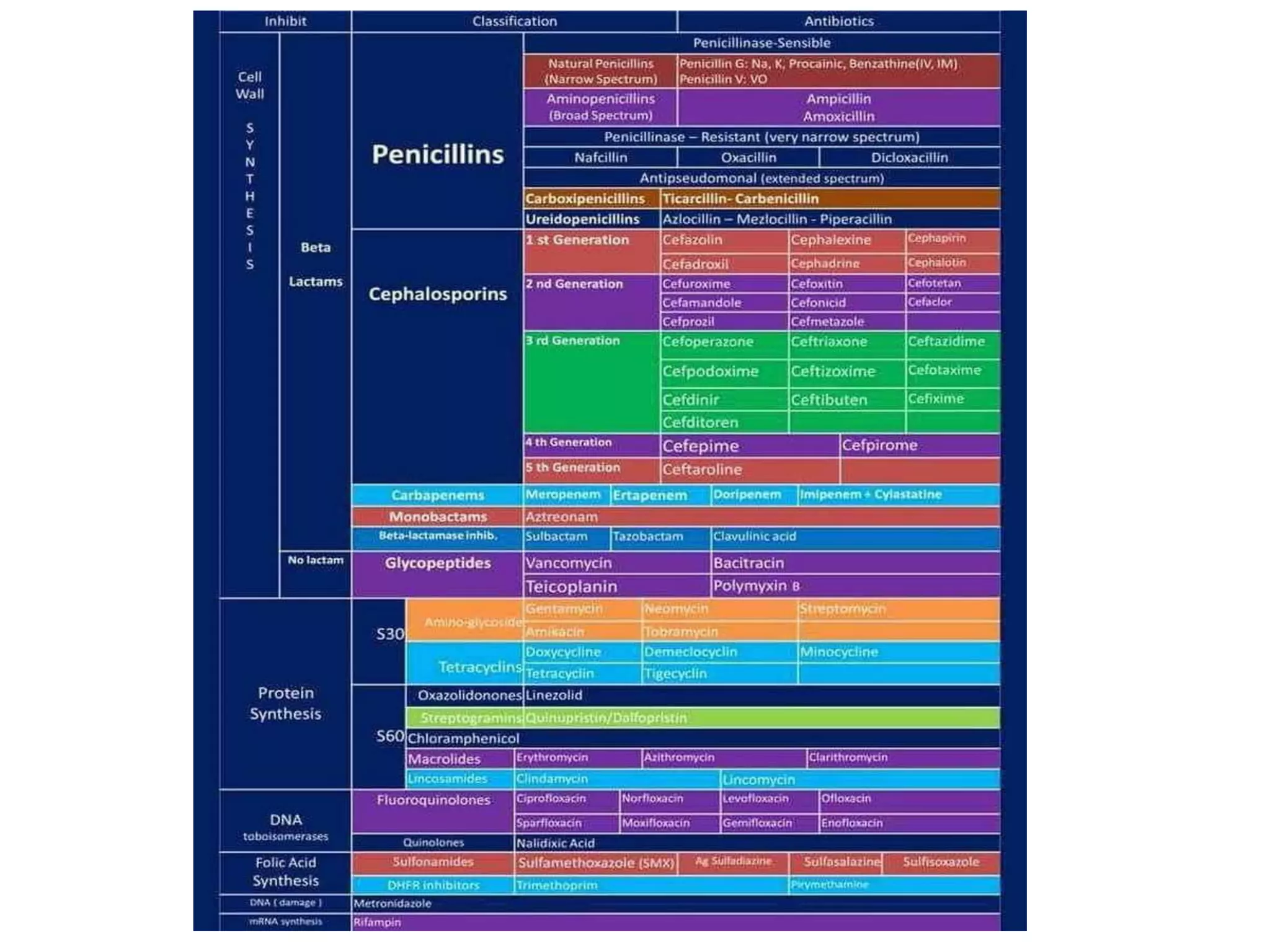
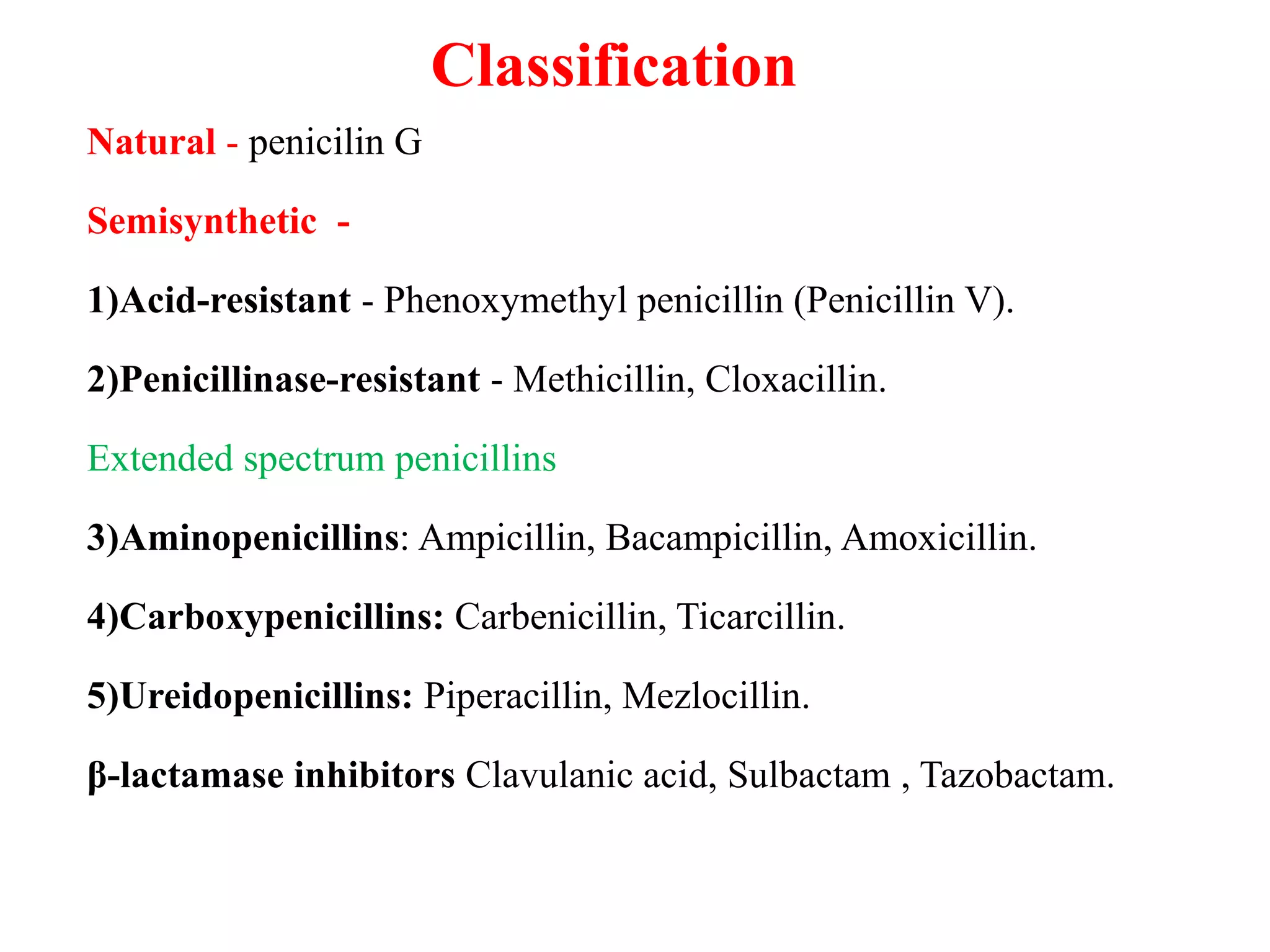
Classification
Natural - penicilin G
Semisynthetic -
1)Acid-resistant - Phenoxymethyl penicillin (Penicillin V).
2)Penicillinase-resistant - Methicillin, Cloxacillin.
Extended spectrum penicillins
3)Aminopenicillins: Ampicillin, Bacampicillin, Amoxicillin.
4)Carboxypenicillins: Carbenicillin, Ticarcillin.
5)Ureidopenicillins: Piperacillin, Mezlocillin.
β-lactamase inhibitors Clavulanic acid, Sulbactam , Tazobactam.
Mechanism of action
Chemistry of Penicilins
• PnG is highly water soluble , thermo labile and acid labile.
• It is stable in the dry state, but solution deteriorates rapidly at
room temperature, though remains stable at 4°C for 3 days.
Therefore, PnG solutions are always prepared freshly.
1 U of crystalline sod. benzyl penicillin = 0.6 μg of the standard preparation.
1 g = 1.6 million units or 1 MU = 0.6 g.
Penicillin G (Benzyl Penicillin)
Antibacterial spectrum –
• Penicillin G (PnG) has a narrow antibacterial spectrum and is
effective against gram-positive cocci and bacilli and a few gram-
negative cocci.
Resistance –
1) Many organisms like staphylococci produce a penicillinase which is
a beta-lactamase ,which opens the β lactam ring and inactivates
penicillins.
2) Altered target proteins on the bacterial cell which reduces affinity for
penicillins also lead to resistance.
Preparations and dose
• PnG is mainly given parenterally ,though orally effective
form-potassium PnG is also available.
• Benzyl penicillin is short-acting, repository forms like
procaine penicillin and benzathine penicillin, which are longer-
acting are made available.
• Given deep IM they release penicillin slowly from the site.
Procaine penicillin is given 12-24 hourly while a single
injection of benzathine penicillin is effective for 3-4 weeks
General Medical Uses
a. Streptococcal infections: pharyngitis, tonsillitis, otitis media,
rheumatic fever, etc.
b. Meningococcal meningitis and other infections.
c. Pneumococcal infections only if the infecting strain is found to be
sensitive to PnG.
d. Syphilis: benzathine penicillin is the drug of choice for all stages
because T.pallidum has not developed penicillin resistance.
e. Diphtheria , tetanus and other infections like gas gangrene, anthrax,
actinomycosis.
Dental infections
• Sequelae of carious lesions and are caused by both aerobic
and anaerobic bacteria such as Streptococci, Peptostreptococci,
Eubacterium, Prevotella, Porphyromonas, Fusobacterium.
• It can be used for periodontal abscess, periapical abscess,
pericoronitis, acute suppurative pulpitis, ANUG, oral cellulitis,
also be employed prophylactically .
In dental practice, use of PnG is very much restricted now
Prophylactic uses of PnG
• To prevent recurrence of rheumatic fever: benzathine penicillin is the
preparation of choice.
• To protect agranulocytosis patients (an aminoglycoside may be given in
combination).
• Gonorrhoea and syphilis -Sexual contacts are effectively protected against
these diseases when treated with penicillin within 12 hours of exposure.
• In Valvular heart diseases - 25% cases of bacterial endocarditis are seen
following dental extractions.
• Surgical prophylaxis (in combination with gentamicin).
Adverse effects
1.Anaphylaxis (in approximately 1 in 100 000 injections);
2. Rashes (3–5% of patients) can, rarely, be severe
(e.g. Stevens Johnson syndrome , Jarisch-Herxheimer reaction)
3. Serum sickness – type III hypersensitivity;
4. Idiosyncratic reactions including haemolytic anaemia and
thrombocytopenia;
5. In renal failure, high-dose penicillin causes encephalopathy and seizures.
• History of allergy to penicillins should be taken before
prescribing; incidence of allergy is higher among atopic
individuals. A scratch test or intradermal sensitivity test
with 2-10 units should be done. Even if this is negative, it does
not completely rule out allergy.
• Penicillin should be given cautiously and a syringe loaded
with adrenaline to treat anaphylaxis
should be kept ready.
Limitations of benzyl penicillin include:
1. It is acid labile and so must be given parenterally
(inactivated in gastric acid).
2. It has a short half-life, so frequent injections are required.
3. Development of resistant β-lactamase-producing strains
can occur.
4. It has a narrow antibacterial spectrum.
5.Hypersensitivity reactions .
Procaine benzylpenicillin –
This complex releases penicillin slowly from an
intramuscular site, so a twice daily dosage only is required.
Phenoxymethylpenicillin (‘penicillin V’) –
Acid stable and so is effective when given orally (40–60%
absorption). Although it is useful for mild infections, blood
concentrations are variable, so it is not used in serious infections
or with poorly sensitive bacteria.
Tablets are given on an empty stomach to improve absorption.
β-LACTAMASE-RESISTANT PENICILLIN
• Flucloxacillin was developed to overcome β-lactamase-
producing strains..
• It is effective against β-lactamase-producing organisms.
• It is used for the treatment of staphylococcal infections (90%
of hospital staphylococci are resistant to benzylpenicillin and
5–10% are resistant to flucloxacillin).
EXTENDED-RANGE PENICILLINS
Uses
• Haemophilus influenzae, E. coli, Streptococcus faecalis and Salmonella.
• They are used for a variety of chest infections (e.g. bronchitis, pneumonia),
otitis media, urinary tract infections, biliary infections and the prevention of
bacterial endocarditis (amoxicillin).
• Amoxicillin is somewhat more potent than ampicillin, penetrates
tissues better and is given three rather than four times daily.
• Both are susceptible to β-lactamases.
Adverse effects
• Diarrhea
• Rashes are common and may appear after dosing has stopped.
• There is an especially high incidence in patients with
infectious mononucleosis or lymphatic leukaemia.
Pharmacokinetics
• The half-life of each drug is about 1.5 hours and they are
predominantly renally excreted.
• Probenecid blocks the renal tubular secretion
Beta-Lactamase Inhibitors
• It extends the antibacterial spectrum of amoxicillin and the
combination inhibits organisms like betalactamase producing
staphylococci, gonococci, E.coli and H. influenzae.
• The combination is used for mixed aerobic anaerobic infections
including oro dental infections, gonorrhoea and nosocomial
infections.
• Adverse effects are similar to those of amoxicillin, but abdominal
discomfort is more common.
ANTIPSEUDOMONAL PENICILLINS
• Pseudomonas infection is important in neutropenic patients
(e.g. those undergoing cancer chemotherapy) and in patients
with cystic fibrosis.
-Piperacillin,
-Azlocillin
-Ticarcillin.
Uses
• These expensive intravenous penicillins are not used routinely.
• They are useful against Gram-negative infections, particularly with
Pseudomonas and they are also effective against many anaerobes.
• These drugs have a synergistic effect when combined with
aminoglycosides in Pseudomonas septicaemias.
• Combinations of ticarcillin or of piperacillin with β-lactamase
inhibitors designed to overcome the problem of β-lactamase
formation by Pseudomonas are commercially available.
Adverse effects
• These drugs predispose to super infection.
• Rashes, sodium overload, thrombocytopenia and platelet dysfunction
can occur
Pharmacokinetics
• Absorption of these drugs from the gut is inadequate in the life-
threatening infections for which they are mainly indicated.
• They are given intravenously every 4–6 hours. Their half-lives range
from 1 to 1.5 hours and they are renally excreted.
Beta lactam antibiotics - penicillins

Beta lactam antibiotics - penicillins

  • 1.
  • 2.
    Antibiotics Greek words anti= against ; bios = life Antibiotics are the substances produced by microorganisms, which suppress the growth or kill microorganisms at very low concentrations.
  • 4.
    Beta-Lactam Antibiotics Inhibit thecell wall synthesis - bactericidal drugs
  • 5.
    PENICILINS - History 1928-AlexanderFleming 1938-Florey & Chain 1941- Antibiotic first used clinically 1945-Noble Price
  • 6.
    Classification Natural - penicilinG Semisynthetic - 1)Acid-resistant - Phenoxymethyl penicillin (Penicillin V). 2)Penicillinase-resistant - Methicillin, Cloxacillin. Extended spectrum penicillins 3)Aminopenicillins: Ampicillin, Bacampicillin, Amoxicillin. 4)Carboxypenicillins: Carbenicillin, Ticarcillin. 5)Ureidopenicillins: Piperacillin, Mezlocillin. β-lactamase inhibitors Clavulanic acid, Sulbactam , Tazobactam.
  • 7.
  • 8.
    Chemistry of Penicilins •PnG is highly water soluble , thermo labile and acid labile. • It is stable in the dry state, but solution deteriorates rapidly at room temperature, though remains stable at 4°C for 3 days. Therefore, PnG solutions are always prepared freshly. 1 U of crystalline sod. benzyl penicillin = 0.6 μg of the standard preparation. 1 g = 1.6 million units or 1 MU = 0.6 g.
  • 9.
    Penicillin G (BenzylPenicillin) Antibacterial spectrum – • Penicillin G (PnG) has a narrow antibacterial spectrum and is effective against gram-positive cocci and bacilli and a few gram- negative cocci. Resistance – 1) Many organisms like staphylococci produce a penicillinase which is a beta-lactamase ,which opens the β lactam ring and inactivates penicillins. 2) Altered target proteins on the bacterial cell which reduces affinity for penicillins also lead to resistance.
  • 10.
    Preparations and dose •PnG is mainly given parenterally ,though orally effective form-potassium PnG is also available. • Benzyl penicillin is short-acting, repository forms like procaine penicillin and benzathine penicillin, which are longer- acting are made available. • Given deep IM they release penicillin slowly from the site. Procaine penicillin is given 12-24 hourly while a single injection of benzathine penicillin is effective for 3-4 weeks
  • 12.
    General Medical Uses a.Streptococcal infections: pharyngitis, tonsillitis, otitis media, rheumatic fever, etc. b. Meningococcal meningitis and other infections. c. Pneumococcal infections only if the infecting strain is found to be sensitive to PnG. d. Syphilis: benzathine penicillin is the drug of choice for all stages because T.pallidum has not developed penicillin resistance. e. Diphtheria , tetanus and other infections like gas gangrene, anthrax, actinomycosis.
  • 13.
    Dental infections • Sequelaeof carious lesions and are caused by both aerobic and anaerobic bacteria such as Streptococci, Peptostreptococci, Eubacterium, Prevotella, Porphyromonas, Fusobacterium. • It can be used for periodontal abscess, periapical abscess, pericoronitis, acute suppurative pulpitis, ANUG, oral cellulitis, also be employed prophylactically . In dental practice, use of PnG is very much restricted now
  • 14.
    Prophylactic uses ofPnG • To prevent recurrence of rheumatic fever: benzathine penicillin is the preparation of choice. • To protect agranulocytosis patients (an aminoglycoside may be given in combination). • Gonorrhoea and syphilis -Sexual contacts are effectively protected against these diseases when treated with penicillin within 12 hours of exposure. • In Valvular heart diseases - 25% cases of bacterial endocarditis are seen following dental extractions. • Surgical prophylaxis (in combination with gentamicin).
  • 15.
    Adverse effects 1.Anaphylaxis (inapproximately 1 in 100 000 injections); 2. Rashes (3–5% of patients) can, rarely, be severe (e.g. Stevens Johnson syndrome , Jarisch-Herxheimer reaction) 3. Serum sickness – type III hypersensitivity; 4. Idiosyncratic reactions including haemolytic anaemia and thrombocytopenia; 5. In renal failure, high-dose penicillin causes encephalopathy and seizures.
  • 16.
    • History ofallergy to penicillins should be taken before prescribing; incidence of allergy is higher among atopic individuals. A scratch test or intradermal sensitivity test with 2-10 units should be done. Even if this is negative, it does not completely rule out allergy. • Penicillin should be given cautiously and a syringe loaded with adrenaline to treat anaphylaxis should be kept ready.
  • 17.
    Limitations of benzylpenicillin include: 1. It is acid labile and so must be given parenterally (inactivated in gastric acid). 2. It has a short half-life, so frequent injections are required. 3. Development of resistant β-lactamase-producing strains can occur. 4. It has a narrow antibacterial spectrum. 5.Hypersensitivity reactions .
  • 18.
    Procaine benzylpenicillin – Thiscomplex releases penicillin slowly from an intramuscular site, so a twice daily dosage only is required. Phenoxymethylpenicillin (‘penicillin V’) – Acid stable and so is effective when given orally (40–60% absorption). Although it is useful for mild infections, blood concentrations are variable, so it is not used in serious infections or with poorly sensitive bacteria. Tablets are given on an empty stomach to improve absorption.
  • 19.
    β-LACTAMASE-RESISTANT PENICILLIN • Flucloxacillinwas developed to overcome β-lactamase- producing strains.. • It is effective against β-lactamase-producing organisms. • It is used for the treatment of staphylococcal infections (90% of hospital staphylococci are resistant to benzylpenicillin and 5–10% are resistant to flucloxacillin).
  • 20.
    EXTENDED-RANGE PENICILLINS Uses • Haemophilusinfluenzae, E. coli, Streptococcus faecalis and Salmonella. • They are used for a variety of chest infections (e.g. bronchitis, pneumonia), otitis media, urinary tract infections, biliary infections and the prevention of bacterial endocarditis (amoxicillin). • Amoxicillin is somewhat more potent than ampicillin, penetrates tissues better and is given three rather than four times daily. • Both are susceptible to β-lactamases.
  • 21.
    Adverse effects • Diarrhea •Rashes are common and may appear after dosing has stopped. • There is an especially high incidence in patients with infectious mononucleosis or lymphatic leukaemia. Pharmacokinetics • The half-life of each drug is about 1.5 hours and they are predominantly renally excreted. • Probenecid blocks the renal tubular secretion
  • 22.
    Beta-Lactamase Inhibitors • Itextends the antibacterial spectrum of amoxicillin and the combination inhibits organisms like betalactamase producing staphylococci, gonococci, E.coli and H. influenzae. • The combination is used for mixed aerobic anaerobic infections including oro dental infections, gonorrhoea and nosocomial infections. • Adverse effects are similar to those of amoxicillin, but abdominal discomfort is more common.
  • 23.
    ANTIPSEUDOMONAL PENICILLINS • Pseudomonasinfection is important in neutropenic patients (e.g. those undergoing cancer chemotherapy) and in patients with cystic fibrosis. -Piperacillin, -Azlocillin -Ticarcillin.
  • 24.
    Uses • These expensiveintravenous penicillins are not used routinely. • They are useful against Gram-negative infections, particularly with Pseudomonas and they are also effective against many anaerobes. • These drugs have a synergistic effect when combined with aminoglycosides in Pseudomonas septicaemias. • Combinations of ticarcillin or of piperacillin with β-lactamase inhibitors designed to overcome the problem of β-lactamase formation by Pseudomonas are commercially available.
  • 25.
    Adverse effects • Thesedrugs predispose to super infection. • Rashes, sodium overload, thrombocytopenia and platelet dysfunction can occur Pharmacokinetics • Absorption of these drugs from the gut is inadequate in the life- threatening infections for which they are mainly indicated. • They are given intravenously every 4–6 hours. Their half-lives range from 1 to 1.5 hours and they are renally excreted.

Editor's Notes

  • #3 Simply a drug fight against bacterial infection .,, when antibiotics was first dicovered they called it as wonder drug
  • #5 . The two major groups are penicillins and cephalosporins. These are the most commonly used antibiotics in dentistry. Monobactams and carbapenems are the newer additions.
  • #6 It was originally obtained from the fungus Penicillium notatum, but the present source is a high yielding mutant of P. chrysogenum Pg was worlds first antibiotic discovered accidently by AF in 1928 on one of his experimrnt with staphylococus . . Unfortuately substance was unstable ,& he unable to isolate pure form ,, Later using process freeze drying and chromatography in 1938 thy isolated the pure form
  • #7 Antipseudomonal penicilin
  • #8 Bacterial cell wall consists of glycan chains which are cross-linked by peptide chains called Peptidoglycan which protects the bacteria from lysis .The synthesis of this peptidoglycan requires enzymes called transpeptidases.
  • #9 The fused beta-lactam & Thiazolidine ring structure. A free carboxyl acid group. One or more substituted amino acid side chains.
  • #11  Oral penicillin is used only in minor infections.
  • #13 (pneumonia, meningitis
  • #14 1)Parenteral PnG remains effective in majority of common infections encountered in dentistry, particularly those arising as . . because many originally susceptible oral pathogens have acquired penicillin resistance and dental practitioners are too scared to inject PnG unless there is no other choice
  • #16 Due to sudden release of spirochetal lytic products
  • #18 Semisynthetic penicillins are produced by chemically combining specific side chains or by incorporating specific precursors in the mould cultures
  • #19 Two preparations with similar antibacterial spectra are used to overcome the problems of acid lability/frequent injection:
  • #20 Otherwise, it has a similar antibacterial spectrum to benzylpenicillin
  • #21 In addition to streptococcal (including pneumococcal) strains, ampicillin and amoxicillin are also effective against many strains of
  • #22 This interaction may be used therapeutically to produce higher and more prolonged blood concentrations of penicillin.
  • #23 β-lactamases are enzymes produced by bacteria that open up the β-lactam ring and inactivatt beta lactam antibiotics
  • #24 Standard penicillins are not effective against Pseudomonas. This is not usually a problem, as these organisms seldom cause disease in otherwise healthy people , however
  • #27 General algorithm for the treatment of bacterial infections.