Presented By:- Dongare P.B. 
7th sem 
BED11ABT03B 
Guided By:- 
Prof. Pawar S.S.
 RNA interfernce (RNAi) is an evolutionally highly 
conserved process of post-transciptional gene 
silencing (PTGS) by which double stranded RNA 
(dsRNA) cause sequence specific degradation of 
mRNA sequence. 
 It was first discovered in 1998 by Andrew Fire and 
Craig Mello in the nematode worm and later found in 
a wide variety of organisms, including mammals.
 PTGS (Post-transcriptional Gene Silencing) 
 Cosuppression 
 Quelling 
 Virus-induced gene silencing
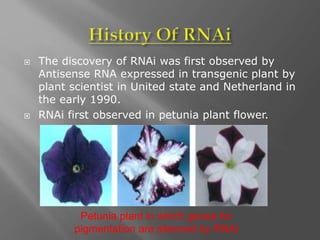
 The discovery of RNAi was first observed by 
Antisense RNA expressed in transgenic plant by 
plant scientist in United state and Netherland in 
the early 1990. 
 RNAi first observed in petunia plant flower. 
Petunia plant in which genes for 
pigmentation are silenced by RNAi
 Craig Mello, born in 1960, is 
a US citizen and professor of 
molecular medicine. 
 Andrew Fire, born in 1959, is 
a US citizen. Since 2003 he 
has been professor of 
Pathology and Genetics at 
Stanford University. 
 Fire and Mello made their key 
discoveries about RNA 
Interferance. 
Craig Mello 
Andrew Fire
 Gene silencing 
mediated by double-stranded 
RNA. 
 RNA-dependant gene 
silencing process that 
is controlled by the 
RNA-induced silencing 
complex(RISC). Mechanism of RNA 
interfance in Mammalian 
cells.
1. Endogenous dsRNa initiates RNAi by activating the 
ribonuclease protein Dicer. 
2. It is bind and cleave dsRNA to produce double 
stranded fragment of 20-25 bp. 
3. Double stranded RNA triggers peocessed in siRNA 
by enzyme RNAseIII family, specifically the Dicer 
family. 
4. Dicer family proteins are ATP-dependant 
nucleases.
 These protein contain an 
Amino-terminal helicase 
domain. 
 Dicer homologous exist in 
many organism including 
c.elegance, Drosophilla, 
yeast and humans. 
 Developmental 
consequence in 
Drosophilla and 
c.elegance. 
The dicer protein 
which catalyzes the 
cleavage of dsRNA 
to siRNAs
> RISC is large (500-kDa) RNA-multiprotein 
complex, which triggers mRNA degradation in 
Response to siRNA. 
> Some componants have been defined by Genetics, 
but function is unknown. 
> Cleaved mRNA is degraded by cellular 
exonucleases.
 The active components of an RNA-induced 
silencing complex (RISC) and endonucleases 
called argonaute proteins, which cleave the 
target mRNA strand complementary to their 
bound siRNA. 
A Full-length argonaute protein from the 
archaea species.
1. RNA-induced transcriptional 
silencing (RITS), and is 
carried out by a complex of 
protein called the RITS 
complex. 
2.The mechanism by which the 
RITS complex induced 
heterochromatin formation 
and orgnization is not well 
understood.
3. In maintenance of existing heterochromatin 
regions, RITS forms a complex with siRNA 
complementary to the local genes. 
4. The formation of such a heterochromatin region 
is dicer-dependant because dicer is required to 
generate the initial complement of siRNA.
1. Alteration of plant aechitecture 
2. Abiotic and Biotic stress tolarance. 
3. Nutritional Improvement. 
4. Deletion of Allergenes. 
5. Removal of toxic compounds.
6. Prolongation of shelf life. 
7. Modulation of Flower colour and 
fragrance. 
8. Engineering of secondary Metabolites. 
9. Seedless fruit development. 
10. Development of Male sterile plants.
RNAi technology

RNAi technology

  • 2.
    Presented By:- DongareP.B. 7th sem BED11ABT03B Guided By:- Prof. Pawar S.S.
  • 3.
     RNA interfernce(RNAi) is an evolutionally highly conserved process of post-transciptional gene silencing (PTGS) by which double stranded RNA (dsRNA) cause sequence specific degradation of mRNA sequence.  It was first discovered in 1998 by Andrew Fire and Craig Mello in the nematode worm and later found in a wide variety of organisms, including mammals.
  • 4.
     PTGS (Post-transcriptionalGene Silencing)  Cosuppression  Quelling  Virus-induced gene silencing
  • 5.
     The discoveryof RNAi was first observed by Antisense RNA expressed in transgenic plant by plant scientist in United state and Netherland in the early 1990.  RNAi first observed in petunia plant flower. Petunia plant in which genes for pigmentation are silenced by RNAi
  • 6.
     Craig Mello,born in 1960, is a US citizen and professor of molecular medicine.  Andrew Fire, born in 1959, is a US citizen. Since 2003 he has been professor of Pathology and Genetics at Stanford University.  Fire and Mello made their key discoveries about RNA Interferance. Craig Mello Andrew Fire
  • 7.
     Gene silencing mediated by double-stranded RNA.  RNA-dependant gene silencing process that is controlled by the RNA-induced silencing complex(RISC). Mechanism of RNA interfance in Mammalian cells.
  • 8.
    1. Endogenous dsRNainitiates RNAi by activating the ribonuclease protein Dicer. 2. It is bind and cleave dsRNA to produce double stranded fragment of 20-25 bp. 3. Double stranded RNA triggers peocessed in siRNA by enzyme RNAseIII family, specifically the Dicer family. 4. Dicer family proteins are ATP-dependant nucleases.
  • 9.
     These proteincontain an Amino-terminal helicase domain.  Dicer homologous exist in many organism including c.elegance, Drosophilla, yeast and humans.  Developmental consequence in Drosophilla and c.elegance. The dicer protein which catalyzes the cleavage of dsRNA to siRNAs
  • 10.
    > RISC islarge (500-kDa) RNA-multiprotein complex, which triggers mRNA degradation in Response to siRNA. > Some componants have been defined by Genetics, but function is unknown. > Cleaved mRNA is degraded by cellular exonucleases.
  • 11.
     The activecomponents of an RNA-induced silencing complex (RISC) and endonucleases called argonaute proteins, which cleave the target mRNA strand complementary to their bound siRNA. A Full-length argonaute protein from the archaea species.
  • 12.
    1. RNA-induced transcriptional silencing (RITS), and is carried out by a complex of protein called the RITS complex. 2.The mechanism by which the RITS complex induced heterochromatin formation and orgnization is not well understood.
  • 13.
    3. In maintenanceof existing heterochromatin regions, RITS forms a complex with siRNA complementary to the local genes. 4. The formation of such a heterochromatin region is dicer-dependant because dicer is required to generate the initial complement of siRNA.
  • 14.
    1. Alteration ofplant aechitecture 2. Abiotic and Biotic stress tolarance. 3. Nutritional Improvement. 4. Deletion of Allergenes. 5. Removal of toxic compounds.
  • 15.
    6. Prolongation ofshelf life. 7. Modulation of Flower colour and fragrance. 8. Engineering of secondary Metabolites. 9. Seedless fruit development. 10. Development of Male sterile plants.