BY SREEREMYA.S
M.phil
Gene silencing is a general term describing
epigenetic processes of gene regulation. The
term gene silencing is generally used to
describe the "switching off" of a gene by a
mechanism other than genetic modification.
That is, a gene which would be expressed
("turned on") under normal circumstances is
switched off by machinery in the cell. Gene
silencing occurs when RNA is unable to make
a protein during translation.
Genes are regulated at either the
transcriptional or post-transcriptional level.
Transcriptional gene silencing is the result of
histone modifications, creating an
environment of heterochromatin around a
gene that makes it inaccessible to
transcriptional machinery (RNA polymerase,
transcription factors, etc.).
Post-transcriptional gene silencing is the
result of mRNA of a particular gene being
destroyed or blocked. The destruction of the
mRNA prevents translation to form an active
gene product (in most cases, a protein). The
blocking of the gene occurs through the
activity of silencers, which bind to repressor
regions. A common mechanism of post-
transcriptional gene silencing is RNAi
Both transcriptional and post-transcriptional
gene silencing are used to regulate
endogenous genes. Mechanisms of gene
silencing also protect the organism's genome
from transposons and viruses. Gene silencing
thus may be part of an ancient immune
system protecting from such infectious DNA
elements.
Genes may be silenced by DNA methylation
during meiosis, as in the filamentous fungus
Neurospora crassa.
The numerous examples of cosuppression
subsequently described were classified into
two categories. Many cases in which
homology existed between the RNA-encoding
portions
of the transgenes were found to have normal
rates in transcriptional run-on assays
These results led to the concept that the
silencing occurred posttranscriptionally,
presumably by affecting RNA turnover
The other class of silencing occurred
between transgene with homology in the
promoter regions. This type was
accompanied by increased methylation in the
regions of homology and was correlated with
reduced rates of transcription
For many years, transgene silencing was
thought to be a phenomenon unique
toplants. In the mid 1990s when the authors
first attempted to publish an example of
trans-gene silencing in Drosophila, a
reviewer, while admitting no criticism of the
data, likened the phenomenon to “cold
fusion.”
Transgene silencing in Drosophila differs
from many cases in plants in that the degree
of silencing is not as strong and seldom
reaches complete null levels.
dosage-dependent gene regulation, our lab
produced a promoter-reporter construct to
test whether modifier effects operating on
the white locus could be conferred onto
another gene via the white promoter
The promoter region of white extending into
the mRNA encoding sequences to the HphI
site(174 bp from the transcriptional initiation
site) was fused with the structural part of
the Alcohol dehydrogenase (Adh) gene
beginning 36 bp 5´ to the initiation AUG
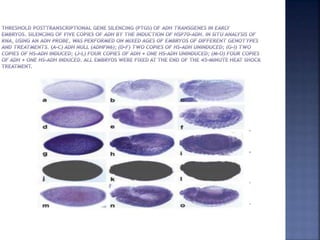
This fusion (w-Adh) was transformed back into
Drosophila carrying a null allele of the
endogenous Adh gene (Adhfn6).
The homozygous constructs produced no ADH
activity.However, one hemizygous copy on the
single X chromosome in males was active.
With this result, it was thought perhaps the
explanation resided in the phenomenon
oftransvection, a situation in Drosophila in which
the pairing (or lack thereof) of alleles on
homologous chromosomes affects their
expression
It should be noted that homologous
chromosomes are paired in somatic cells in
Drosophila, allowing genes at homologous sites
to be in close association.
Gene silencing studies have led to the
discovery of cellular mechanisms that
wereunknown until quite recently. The gene
products identified to date indicate a group
withimplicated functions in RNA metabolism
and another with chromatin functions. Many
of these genes were previously identified for
their role in developmental control.
THANK
YOU
Gene silencing
Gene silencing
Gene silencing
Gene silencing
Gene silencing
Gene silencing
Gene silencing
Gene silencing
Gene silencing
Gene silencing

Gene silencing

  • 1.
  • 2.
    Gene silencing isa general term describing epigenetic processes of gene regulation. The term gene silencing is generally used to describe the "switching off" of a gene by a mechanism other than genetic modification. That is, a gene which would be expressed ("turned on") under normal circumstances is switched off by machinery in the cell. Gene silencing occurs when RNA is unable to make a protein during translation.
  • 3.
    Genes are regulatedat either the transcriptional or post-transcriptional level. Transcriptional gene silencing is the result of histone modifications, creating an environment of heterochromatin around a gene that makes it inaccessible to transcriptional machinery (RNA polymerase, transcription factors, etc.).
  • 4.
    Post-transcriptional gene silencingis the result of mRNA of a particular gene being destroyed or blocked. The destruction of the mRNA prevents translation to form an active gene product (in most cases, a protein). The blocking of the gene occurs through the activity of silencers, which bind to repressor regions. A common mechanism of post- transcriptional gene silencing is RNAi
  • 5.
    Both transcriptional andpost-transcriptional gene silencing are used to regulate endogenous genes. Mechanisms of gene silencing also protect the organism's genome from transposons and viruses. Gene silencing thus may be part of an ancient immune system protecting from such infectious DNA elements. Genes may be silenced by DNA methylation during meiosis, as in the filamentous fungus Neurospora crassa.
  • 6.
    The numerous examplesof cosuppression subsequently described were classified into two categories. Many cases in which homology existed between the RNA-encoding portions of the transgenes were found to have normal rates in transcriptional run-on assays
  • 7.
    These results ledto the concept that the silencing occurred posttranscriptionally, presumably by affecting RNA turnover The other class of silencing occurred between transgene with homology in the promoter regions. This type was accompanied by increased methylation in the regions of homology and was correlated with reduced rates of transcription
  • 8.
    For many years,transgene silencing was thought to be a phenomenon unique toplants. In the mid 1990s when the authors first attempted to publish an example of trans-gene silencing in Drosophila, a reviewer, while admitting no criticism of the data, likened the phenomenon to “cold fusion.” Transgene silencing in Drosophila differs from many cases in plants in that the degree of silencing is not as strong and seldom reaches complete null levels.
  • 9.
    dosage-dependent gene regulation,our lab produced a promoter-reporter construct to test whether modifier effects operating on the white locus could be conferred onto another gene via the white promoter The promoter region of white extending into the mRNA encoding sequences to the HphI site(174 bp from the transcriptional initiation site) was fused with the structural part of the Alcohol dehydrogenase (Adh) gene beginning 36 bp 5´ to the initiation AUG
  • 10.
    This fusion (w-Adh)was transformed back into Drosophila carrying a null allele of the endogenous Adh gene (Adhfn6). The homozygous constructs produced no ADH activity.However, one hemizygous copy on the single X chromosome in males was active. With this result, it was thought perhaps the explanation resided in the phenomenon oftransvection, a situation in Drosophila in which the pairing (or lack thereof) of alleles on homologous chromosomes affects their expression
  • 11.
    It should benoted that homologous chromosomes are paired in somatic cells in Drosophila, allowing genes at homologous sites to be in close association.
  • 13.
    Gene silencing studieshave led to the discovery of cellular mechanisms that wereunknown until quite recently. The gene products identified to date indicate a group withimplicated functions in RNA metabolism and another with chromatin functions. Many of these genes were previously identified for their role in developmental control.
  • 14.