Presentation
on
Marker free transgenic
development strategies
Presented by
Biswajit Sahoo
Ph.D. 1st year
TRANSGENIC PLANT
 Plants that have been genetically engineered,
an approach that uses recombinant DNA techniques
to create plants with new characteristics.
 Also known as Genetically Modified Organism (GMO).
 Plant developed after successful gene transfer
 Have stably integrated foreign gene
MARKER GENES
 Monitoring and detection of plant transformation systems in
order to know DNA successfully transferred in recipient cells
or not.
 A set of genes introduced along with the target gene into the
plasmid.
 Known as Marker genes.
 Antibiotic and herbicide resistance genes successfully used as
marker genes.
 Allow the transformed cell to tolerate the antibiotic or
herbicide and regenerate into plants while the untransformed
ones get killed.
Need for Marker Free Trans-genics
 Marker genes generally have little agronomic
value after selection events.
 Retention of the marker gene in the genome
may be problematic.
In situations requiring more transformations
into cultivars the presence of a particular
marker gene in a transgenic plant - use of the
same marker in subsequent transformation.
Use of a different marker system is required
for each transformation round or event.
For public acceptance of trans-genics, keeping
in mind ecological and food safety.
Marker free trans-genics should be developed.
MARKER FREETRANSGENIC
The generation of transgenic plants
by the elimination of the
“problematic” selectable marker
genes from the genome of the
transgenic plants or avoiding the use
of selectable marker genes in the
beginning of transformation by a
marker-free vector.
Controversy and disadvantages
related to SMG
1. Food safety , effect on natural ecosystem.
2. Gene flow into non-GM crops, human and animal
bacteria, wild and weedy relatives.
3. Inability for gene stacking in already transformed
plant with same SMG.
OUR AIM
To eliminate selectable marker gene.
To avoid use of toxic selectable marker
gene.
(a) Physical diagram of twoT-DNA region showing gene of interest (GOI) and marker gene.
(b)Transformed calli having GOI and marker gene.
(c)T0 plant having GOI and marker gene.
(d)TwoT1 plants one with GOI and another with marker gene.
MAT SYSTEM
 A positive selection system
 Unique as it uses morphological changes caused by
oncogene [ipt gene] or rhizogene (the rol gene) of A.
Tumefaciens which control the endogenous levels of plant
hormones and the cell responses to PGR as the selection
marker.
 A chosen GOI is placed adjacent to a multigenic element
flanked by RS recombination sites. A copy of the selectable
ipt gene from A.tumefaciens is inserted between these sites.
 Together with the R recombinase gene , entire
assembly is situated within a T-DNA element for the
Agrobacterium-mediated transformation.
 Neither antibiotic- nor herbicide-resistance genes
are necessary as a selection marker. In addition, it
allows for repeated transformation of genes of
interest in a plant (Sugita et al. 2000).
 Principle of MAT uses oncogene (ipt) for selection of
transgenic plants and a SSR system.
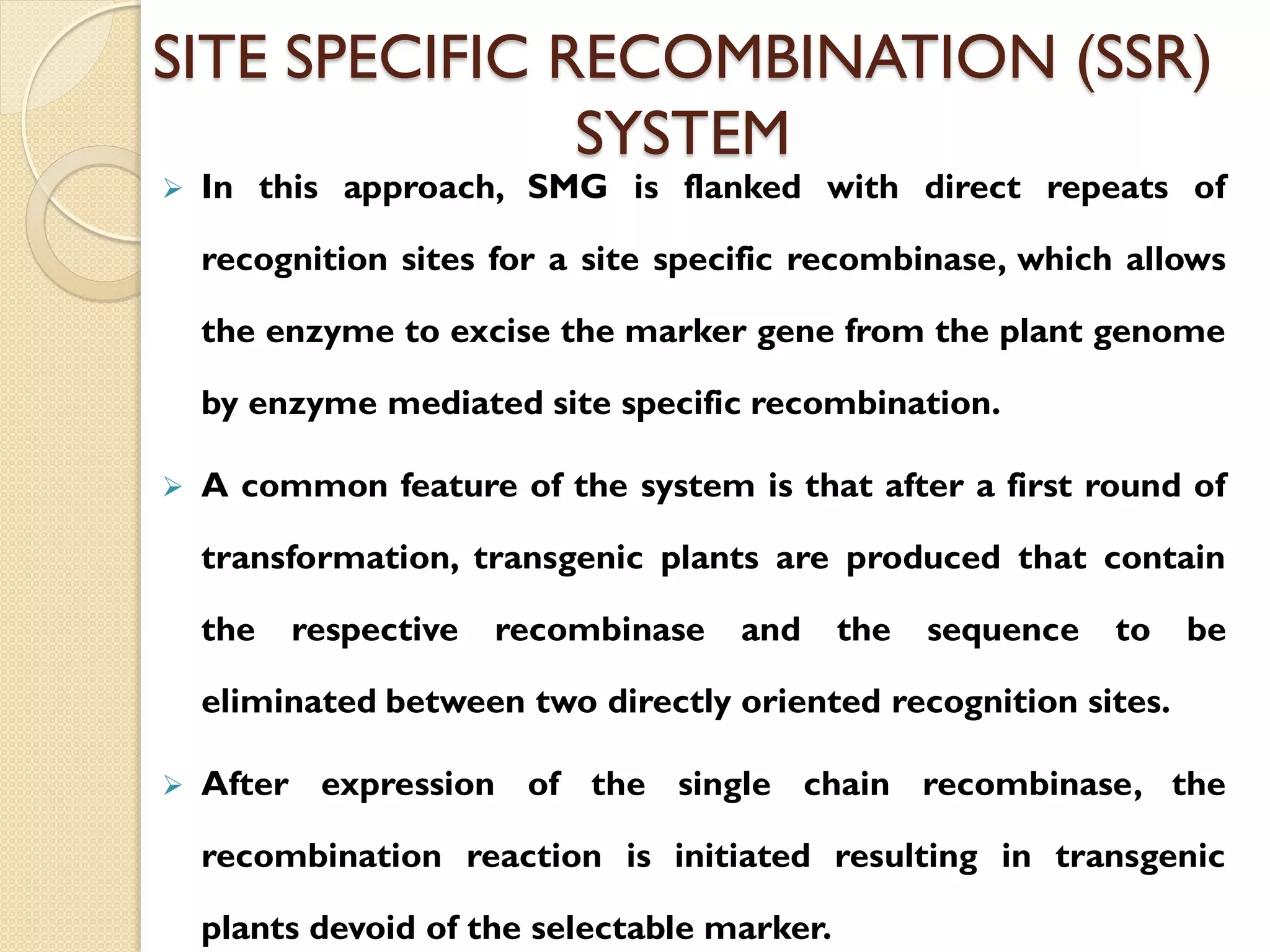
SITE SPECIFIC RECOMBINATION (SSR)
SYSTEM
 In this approach, SMG is flanked with direct repeats of
recognition sites for a site specific recombinase, which allows
the enzyme to excise the marker gene from the plant genome
by enzyme mediated site specific recombination.
 A common feature of the system is that after a first round of
transformation, transgenic plants are produced that contain
the respective recombinase and the sequence to be
eliminated between two directly oriented recognition sites.
 After expression of the single chain recombinase, the
recombination reaction is initiated resulting in transgenic
plants devoid of the selectable marker.
Site‐specific recombination‐mediated
marker deletion
(a) The T-DNA region showing Cre gene followed by the transcribed mRNA and Cre protein
expression. (b) T-DNA region showing GOI and marker gene merged between loxP sites. (c)
Resulting transgenic plants showing excision of marker gene.
NarendraTuteja et al., 2012
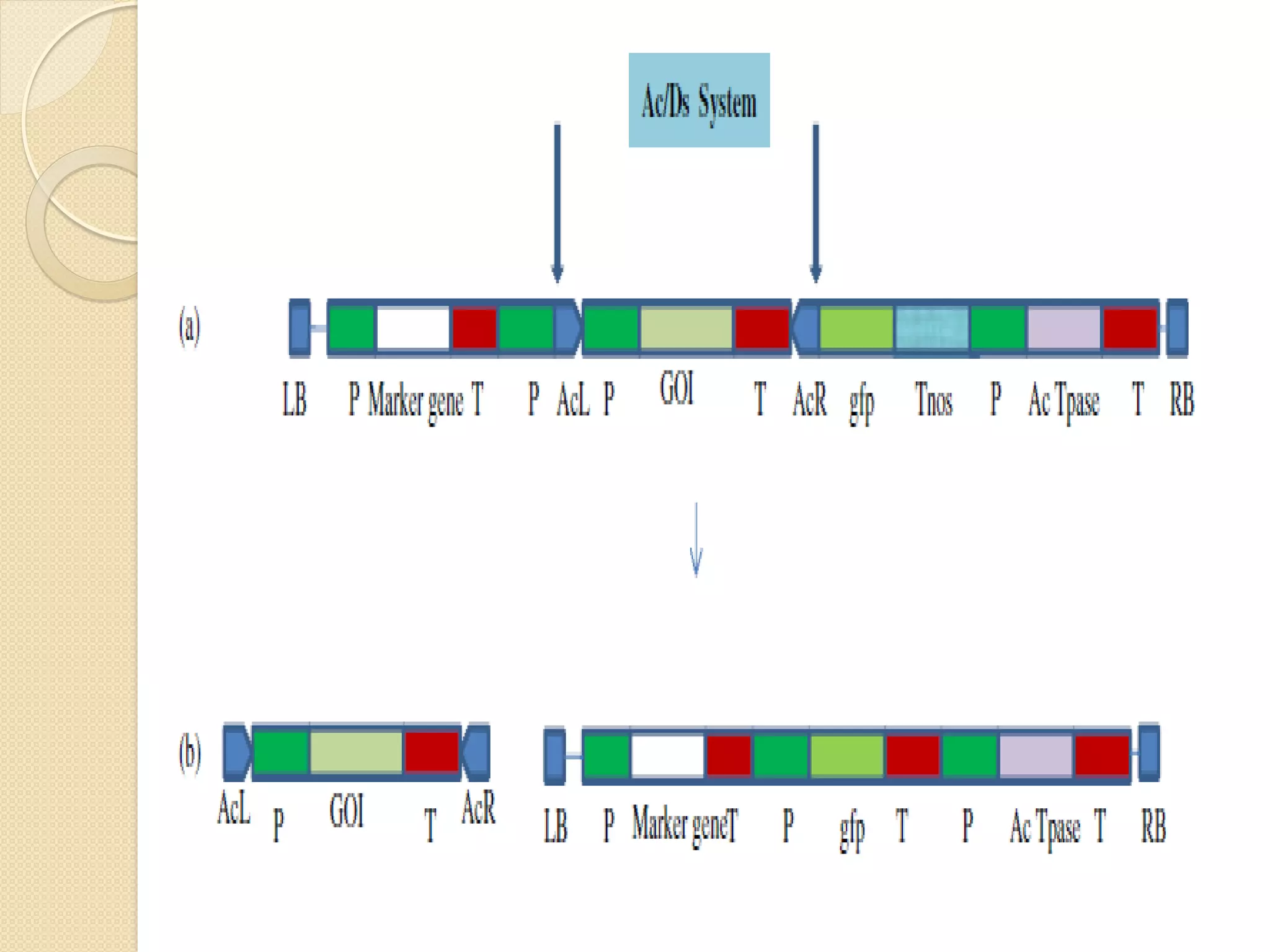
Transposon‐based marker methods
 The maize Ac/Ds transposable element system has been used
to create novel T-DNA vectors for separating genes that are
linked together on the same T-DNA after insertion into
plants.
 Once integrated into the plant genome, the expression of
the Ac transposase within the T-DNA can induce the
transposition of the GOI from the T-DNA to another
chromosomal location.
 This results in the separation of the gene of interest from
theT-DNA and SMG.
Transposon‐based marker methods
Conclusion and future prospects
 The removal of marker gene from the transgenic plants supports
multiple transformation cycles for transgene pyramiding.
 It is clear that several viable methods for the removal of unwanted
marker genes already exist.
 It seems highly likely that continued work in this area will soon
remove the question of publicly unacceptable marker genes.
 At present there is no commercialization of markerfree transgenic
crop.
 But development of marker free transgenics would further increase
the crop improvement programme.
Thank you…………..
For your attention………….

Marker free transgenic strategy

  • 1.
    Presentation on Marker free transgenic developmentstrategies Presented by Biswajit Sahoo Ph.D. 1st year
  • 3.
    TRANSGENIC PLANT  Plantsthat have been genetically engineered, an approach that uses recombinant DNA techniques to create plants with new characteristics.  Also known as Genetically Modified Organism (GMO).  Plant developed after successful gene transfer  Have stably integrated foreign gene
  • 4.
    MARKER GENES  Monitoringand detection of plant transformation systems in order to know DNA successfully transferred in recipient cells or not.  A set of genes introduced along with the target gene into the plasmid.  Known as Marker genes.  Antibiotic and herbicide resistance genes successfully used as marker genes.  Allow the transformed cell to tolerate the antibiotic or herbicide and regenerate into plants while the untransformed ones get killed.
  • 5.
    Need for MarkerFree Trans-genics  Marker genes generally have little agronomic value after selection events.  Retention of the marker gene in the genome may be problematic. In situations requiring more transformations into cultivars the presence of a particular marker gene in a transgenic plant - use of the same marker in subsequent transformation. Use of a different marker system is required for each transformation round or event. For public acceptance of trans-genics, keeping in mind ecological and food safety. Marker free trans-genics should be developed.
  • 9.
    MARKER FREETRANSGENIC The generationof transgenic plants by the elimination of the “problematic” selectable marker genes from the genome of the transgenic plants or avoiding the use of selectable marker genes in the beginning of transformation by a marker-free vector.
  • 10.
    Controversy and disadvantages relatedto SMG 1. Food safety , effect on natural ecosystem. 2. Gene flow into non-GM crops, human and animal bacteria, wild and weedy relatives. 3. Inability for gene stacking in already transformed plant with same SMG.
  • 11.
    OUR AIM To eliminateselectable marker gene. To avoid use of toxic selectable marker gene.
  • 15.
    (a) Physical diagramof twoT-DNA region showing gene of interest (GOI) and marker gene. (b)Transformed calli having GOI and marker gene. (c)T0 plant having GOI and marker gene. (d)TwoT1 plants one with GOI and another with marker gene.
  • 17.
    MAT SYSTEM  Apositive selection system  Unique as it uses morphological changes caused by oncogene [ipt gene] or rhizogene (the rol gene) of A. Tumefaciens which control the endogenous levels of plant hormones and the cell responses to PGR as the selection marker.  A chosen GOI is placed adjacent to a multigenic element flanked by RS recombination sites. A copy of the selectable ipt gene from A.tumefaciens is inserted between these sites.
  • 18.
     Together withthe R recombinase gene , entire assembly is situated within a T-DNA element for the Agrobacterium-mediated transformation.  Neither antibiotic- nor herbicide-resistance genes are necessary as a selection marker. In addition, it allows for repeated transformation of genes of interest in a plant (Sugita et al. 2000).  Principle of MAT uses oncogene (ipt) for selection of transgenic plants and a SSR system.
  • 20.
    SITE SPECIFIC RECOMBINATION(SSR) SYSTEM  In this approach, SMG is flanked with direct repeats of recognition sites for a site specific recombinase, which allows the enzyme to excise the marker gene from the plant genome by enzyme mediated site specific recombination.  A common feature of the system is that after a first round of transformation, transgenic plants are produced that contain the respective recombinase and the sequence to be eliminated between two directly oriented recognition sites.  After expression of the single chain recombinase, the recombination reaction is initiated resulting in transgenic plants devoid of the selectable marker.
  • 21.
  • 22.
    (a) The T-DNAregion showing Cre gene followed by the transcribed mRNA and Cre protein expression. (b) T-DNA region showing GOI and marker gene merged between loxP sites. (c) Resulting transgenic plants showing excision of marker gene. NarendraTuteja et al., 2012
  • 25.
    Transposon‐based marker methods The maize Ac/Ds transposable element system has been used to create novel T-DNA vectors for separating genes that are linked together on the same T-DNA after insertion into plants.  Once integrated into the plant genome, the expression of the Ac transposase within the T-DNA can induce the transposition of the GOI from the T-DNA to another chromosomal location.  This results in the separation of the gene of interest from theT-DNA and SMG.
  • 26.
  • 30.
    Conclusion and futureprospects  The removal of marker gene from the transgenic plants supports multiple transformation cycles for transgene pyramiding.  It is clear that several viable methods for the removal of unwanted marker genes already exist.  It seems highly likely that continued work in this area will soon remove the question of publicly unacceptable marker genes.  At present there is no commercialization of markerfree transgenic crop.  But development of marker free transgenics would further increase the crop improvement programme.
  • 31.
    Thank you………….. For yourattention………….