Basic Neuroanatomy
Chapter 3
The Human
Brain Book
Rita Cater
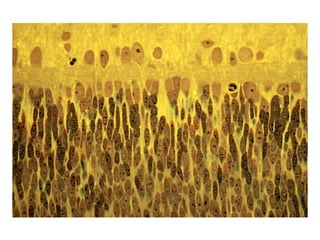
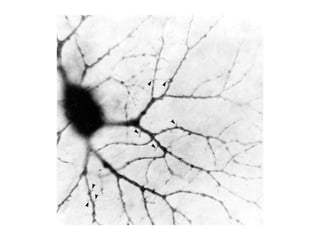
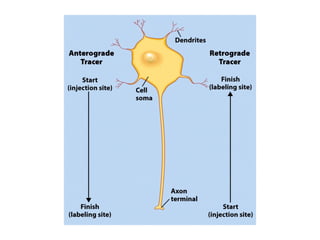
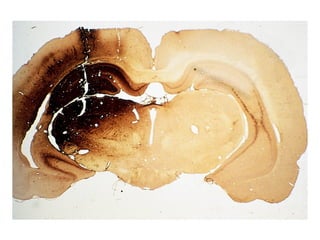
Microanatomy

Gross Anatomy

Neurological Function
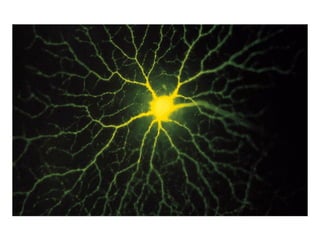
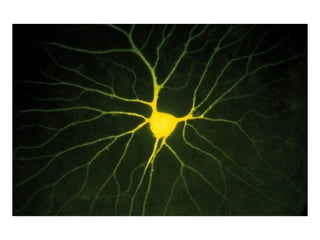
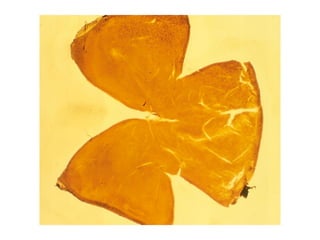
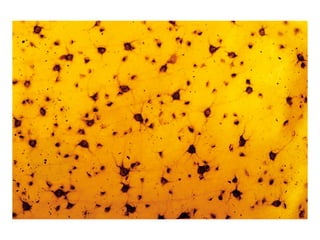
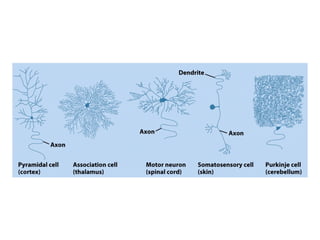
Microanatomy
and Histology
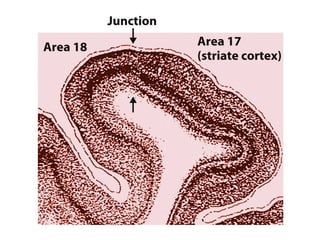
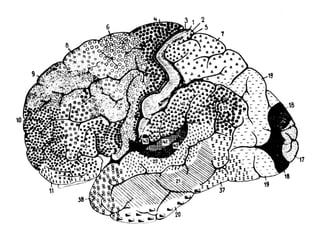
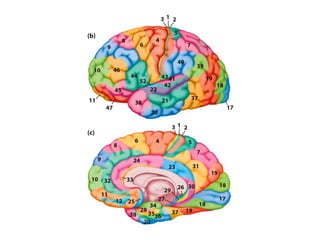
Brodmann Areas
cytoarchitectonic map of the brain
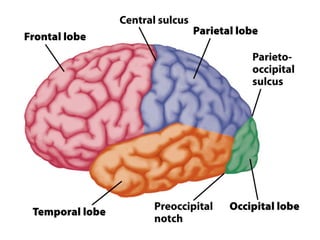
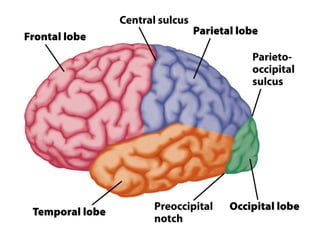
Gross Anatomy
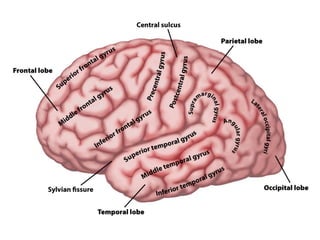
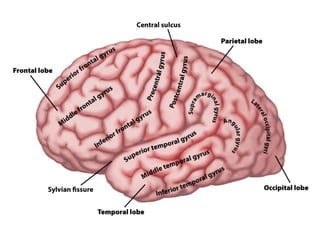
Gyri
       protruding rounded surfaces
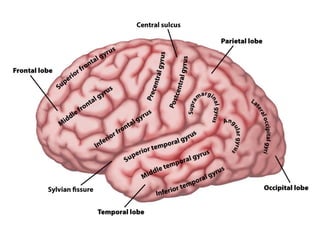
Sulci
shallow furrows / folds / grooves
Fissures
  deep furrows / clefts / grooves
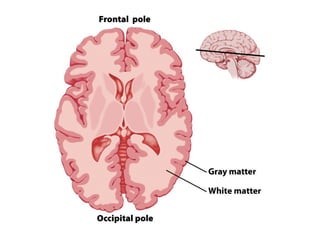
Grey Matter
       forms a cortical sheath
          around white matter

      composed of cell bodies
          of neurons and glia
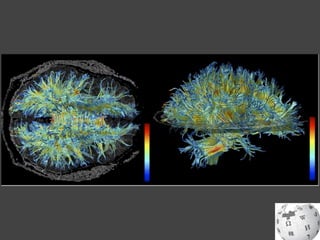
White Matter
           composed mostly of
     glia and myelinated axons
Fiber Tracts
               bundles of axons
Commissure
       a cross-hemispheric
          white matter tract
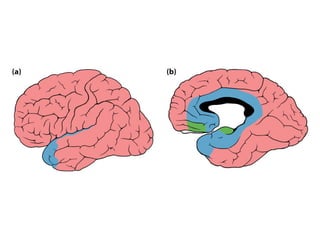
Cerebral Cortex
       outermost sheet of neural tissue
                      of the cerebrum

     “...the bulging wrinkled surface...
 commonly known as the grey matter...”
Neocortex
 outer layer of the cerebral cortex

       90% of the cerebral cortex
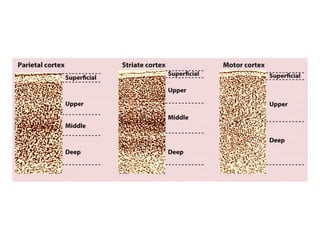
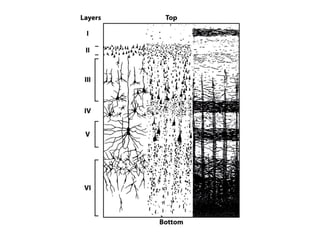
Cortical Layers
              spatial levels of
         neuronal organization
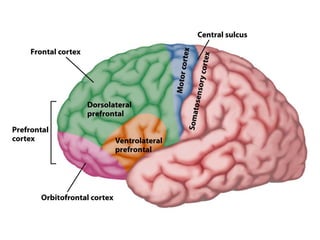
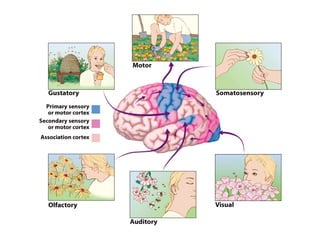
Functional Divisions
of the Cerebral Cortex
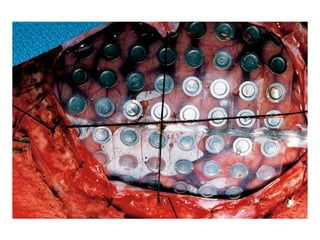
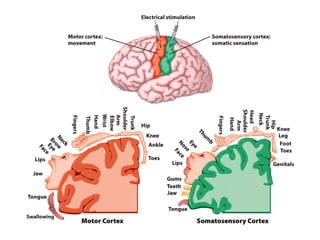
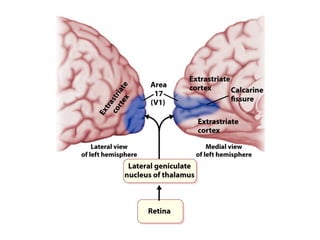
Cortical Topography
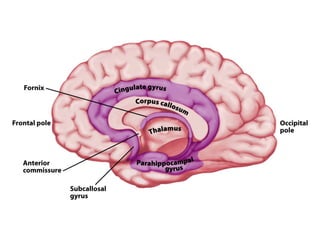
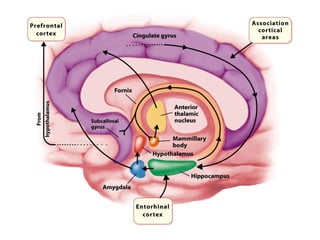
Limbic System
               cingulate gyrus
                hypothalamus
      anterior thalamic nuclei
                 hippocampus
                     amygdala
Limbic System
              “...participates in
        emotional processing,
       learning, and memory.”
Nuclei
            “...discrete collections
  of the cell bodies of neurons...
       ‘islands’ of gray matter...”
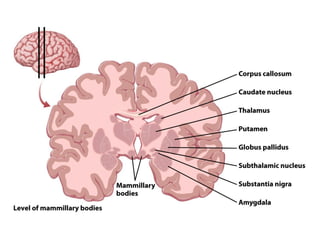
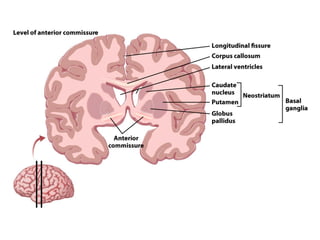
Basal Ganglia
(Basal Nuclei)
                    putamen
               caudate nuclei
              globus pallidus
           subthalamic nuclei
             substantia nigra
Basal Ganglia
             “...help ensure that
           physical movements
   are smooth and coordinated.”
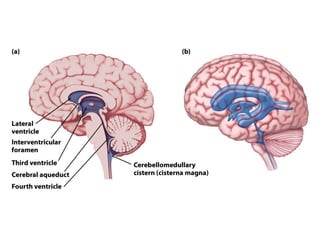
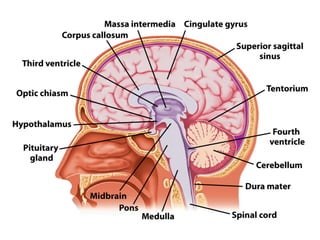
Ventricles
           produce and contain
       cerebrospinal fluid (CSF)
CSF
       buoyancy, protection
      and chemical stability
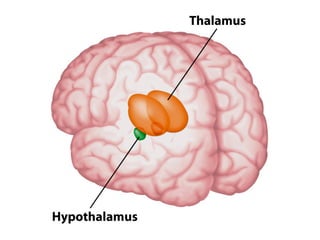
Diencephalon
                   thalamus
               hypothalamus
Thalamus
      “gateway to the cortex”
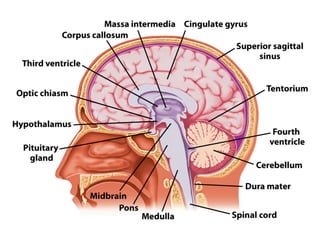
Hypothalamus
 controls functions necessary for
    maintenance of homeostasis

involved in emotional processes
and control of the pituitary gland
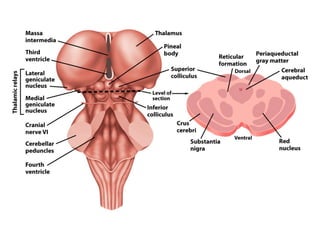
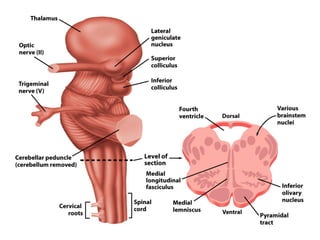
The Brainstem

                midbrain
                   pons
                medulla
Midbrain
           visuomotor functions
                 visual reflexes
                 auditory relays
             motor coordination
Medulla
   monitoring and controlling of
           breathing, heartbeat
            and blood pressure

  controlling vomiting, sneezing,
      swallowing and coughing
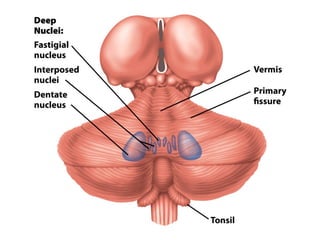
The Cerebellum
        integrates information
               about the body
       and motor commands,
         ultimately resulting in
       coordinated movement
The As If
Principle
Richard Wiseman

Basic Neuroanatomy