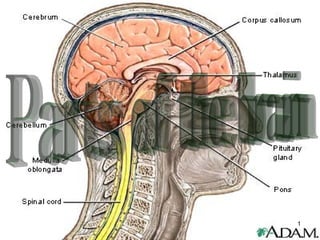
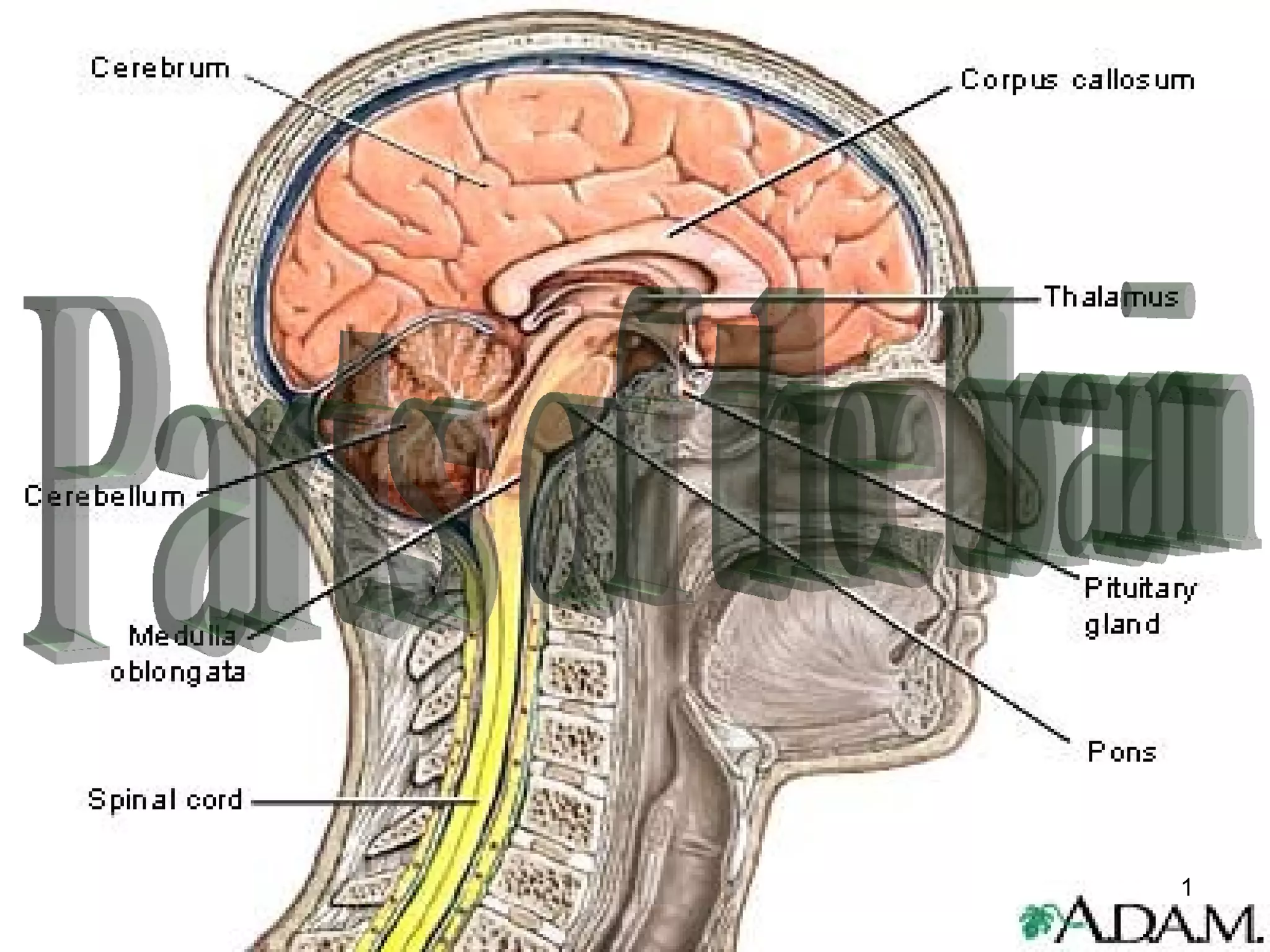
Parts of the brain
Write short note on Circulation of cerebrospinal fluid. Write briefly on Neurologlial cells. Describe the structure and functions of nervous tissue Write a short note on the blood supply of spinal cord. Name the parts of brain. Describe briefly about the internal capsule. Draw the diagram of brain and name the parts  Explain the structure and functions of cerebellum Name the parts of brain Name the parts of the brain. Describe briefly the external and internal features of each part. Add a note on the blood supply of brain.
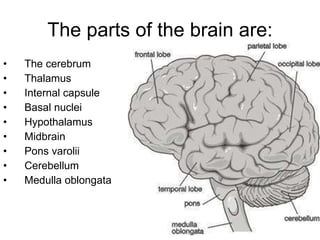
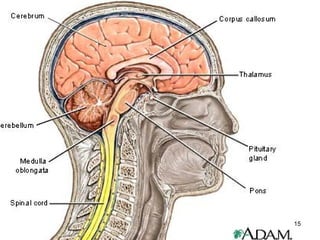
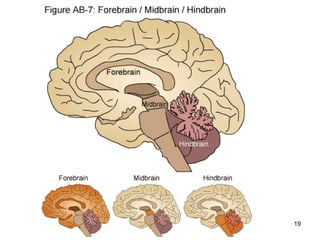
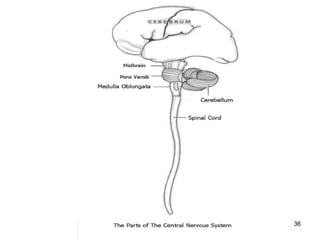
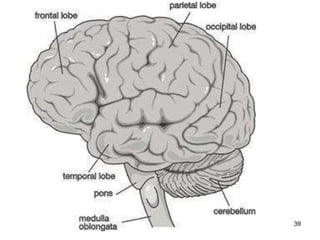
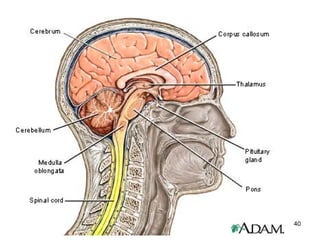
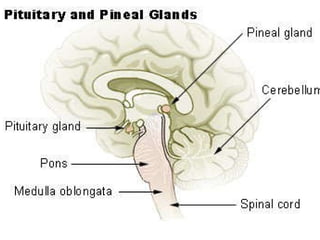
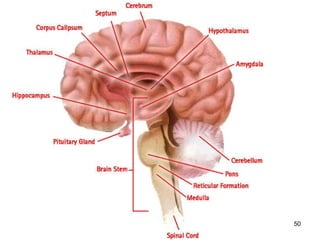
The parts of the brain are: The cerebrum  Thalamus Internal capsule Basal nuclei Hypothalamus Midbrain Pons varolii Cerebellum  Medulla oblongata
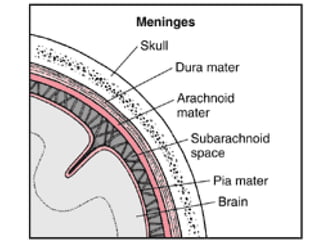
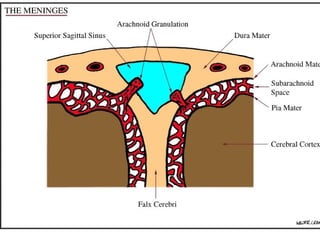
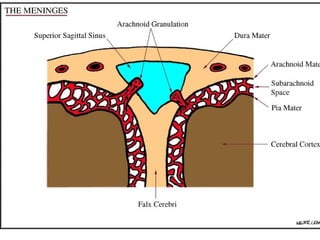
Coverings of the brain Duramater Arachnoid mater piamater
 
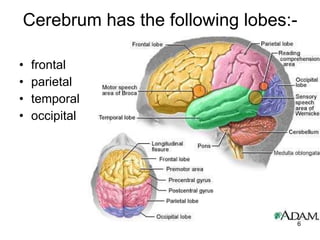
Cerebrum has the following lobes:- frontal parietal temporal  occipital
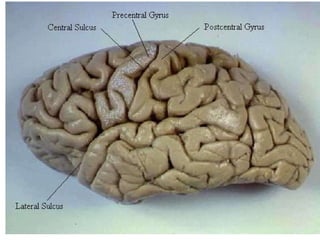
The ridges in the cerebrum are called the  gyri  (gyrus) The grooves are called the  sulci  (sulcus) The ridge in front of the central sulcus is called the  precentral   gyrus The one behind the central sulcus is called the  post-central   gyrus
Interior of the cerebrum  Cerebral cortex is composed of  nerve   cell   bodies  on the surface –  grey   matter Inside the cerebrum are the  nerve   fibres  (tracts) which connect the various lobes –  white   matter   The afferent and efferent fibres linking the different parts of the brain and spinal cord are:- Arcuate fibres  –  interconnecting   fibres  between the different lobes of the  same   hemispheres Commisural   fibres  – connecting  one   hemisphere   to   the   other  e.g.  corpus   callosum Projection   fibres  – which  connect  the cerebral  cortex   to  grey matter of  lower   parts  of the brain and the spinal cord e.g. the  internal   capsule
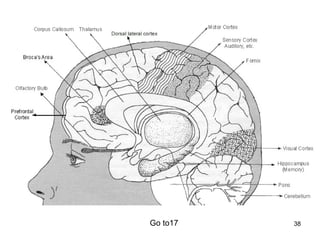
Functions and functional areas of cerebrum Precentral  (motor) area –  initiates  the  contraction  of the voluntary muscles Premotor  area – manual  dexterity Lower  part of  premotor  area –  speech  (motor) ( Broca’s   area ) Frontal  area or pole –  behaviour ,  character , intellectual trait Postcentral  area (sensory) –  pain ,  temperature ,  pressure ,  touch , knowledge  of muscular movements and the position of joints Parietal  area –  knowledge   of   objects  (e.g.touch and recognise) Sensory   speech   area  – situated in the lower part of the parietal lobe and part of the temporal lobe –  perception   o f  speech
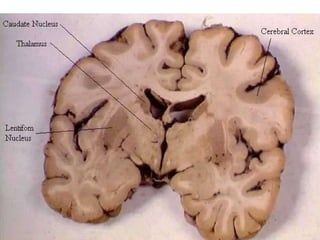
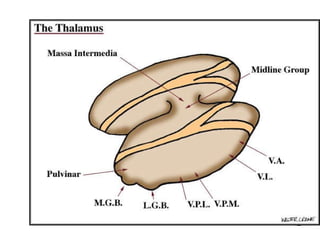
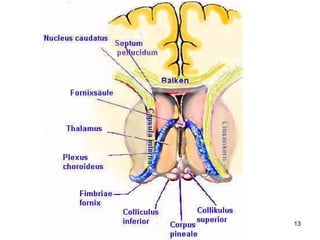
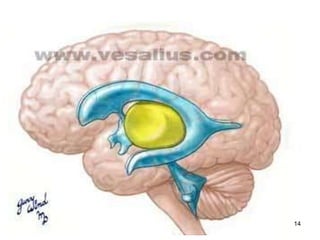
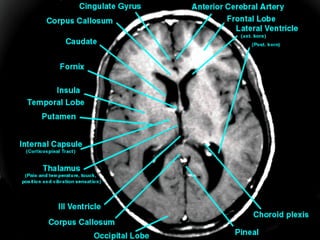
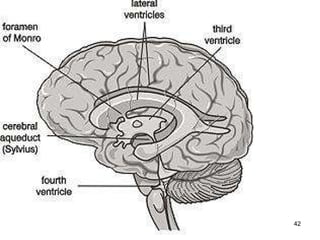
Thalamus  The thalamus consists of two masses of nerve cells and fibres situated withing he cerebral hemispheres just below the corpus callosum one on each side of the third ventricle  This region contains a cluster of nuclei Most of the sensory inputs are conducted to the cerebral cortex through the thalamus  Axons carrying auditory, visual and other sensory informations synapse with specific nuclei of this region This region may also influence mood and general body movements due to strong emotions such as fear or anger


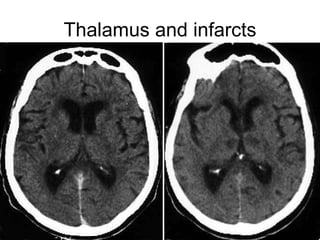
Thalamus and infarcts
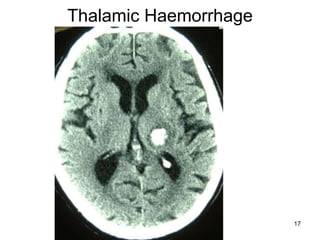
Thalamic Haemorrhage
Hypothalamus  Hypothalamus – The master control of the autonomic nervous system, parasympathetic and sympathetic. This system stimulates and controls structures such as the heart, most glands and smooth muscles. In effect, this system allows your systems to excite and relax, as needed. This system integrates the autonomic and endocrine functions with behavior.   Hippocampus  –  This area of the brain, apart from its other functions, is primarily responsible for short term memory.
 
Hypothalamus  This region contains small nuclei and nerve tracts The nuclei called mammillary bodies are involved in olfactory reflexes and emotional response to odours The funnel shaped infundibulu from the hypothalamus connects to the posterior pituitary or neurohypophysis This region controls the secretions of pituitary gland  The hypothalamus receives inputs from several sensory systems such as tongue,nose and external genitalia. It is associatedwith emotional and mood relationships It provides a relaxed feeling
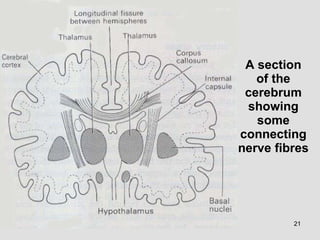
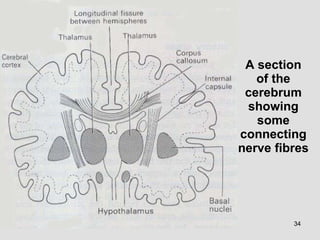
A section of the cerebrum showing some connecting nerve fibres
 
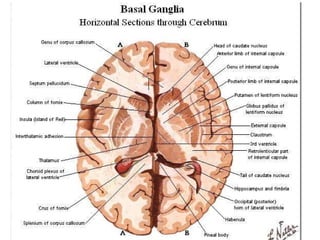
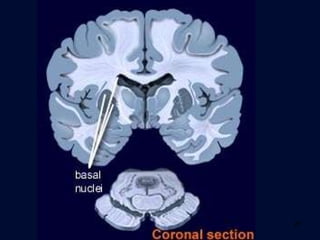
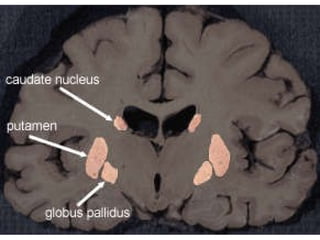
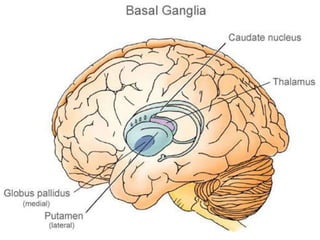
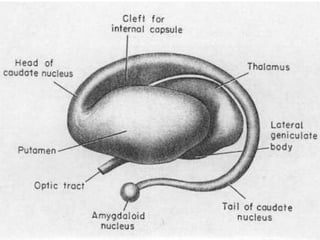
Basal Ganglia This area of grey matter lies deep within the cerebral hemispheres Consist of  the  caudate nucleus ,  putamen  and  globus pallidus .  They are functionally important for  controlling voluntary movements and establishing postures .  It influences skeletal muscle tone When they are altered - say in disorders like Huntington disease or Wilson disease - the person has unwanted movements, such as involuntary jerking movements of an arm or leg or spasmodic movement of facial muscles.
The  caudate   nucleus  and  putamen  along with the interposed anterior limb of the internal capsule are collectively known as the  corpus striatum  (i.e. striated body) because of their appearance.  Similarly, the shape of the  putamen  and  globus   pallidus  resembles a lens, and they are collectively called the  lenticular nucleus .


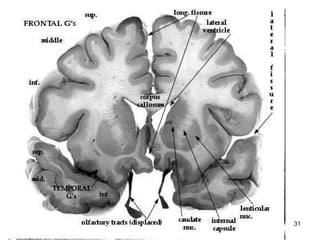
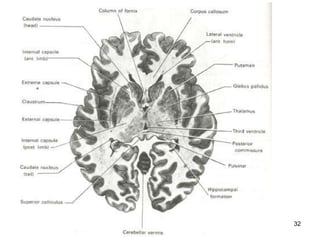
Internal Capsule Consists of  projection   fibres  – fibres connecting the cerebral cortex with the lower parts of the brain and the spinal cord Lies deep within the brain Between   the basal ganglia and the thalamus All the  impulses  passing  to and from the cerebral   cortex  are carried by the fibres in the internal capsule The motor fibres within the internal capsule form the  pyramidal   tracts  (otherwise called the corticospinal tracts) The pyramidal fibres cross to the other side at the level of the medulla oblongata (called  decussation )


A section of the cerebrum showing some connecting nerve fibres


Go to17


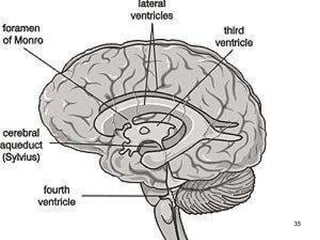
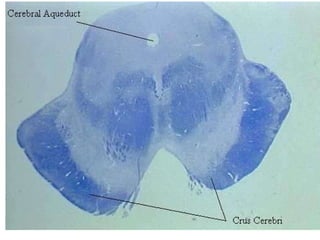
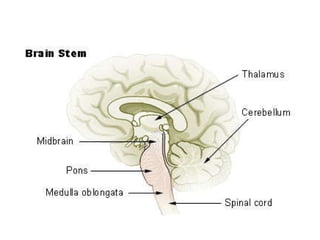
The midbrain Situated around the cerebral aqueduct between the cerebrum and pons varolii Consists of nerve cells and nerve fibres connecting the cerebrum with lower parts of the brain and with the spinal cord The nerve cells serve as relay stations for the ascending and descending fibres The roof of this region contains four nuclei The nuclei form mounds They are collectively called corpora quadrigemina It is formed of two superior colliculi and two inferior The superior colliculi are involved in visual reflexes They control eye and head movements They aid in visual tracking of moving objects The inferior colliculi are involved in hearing
 
 
Hippocampus  – This area of the brain, apart from its other functions, is primarily responsible for short term memory.
Go to Brain Stem


Brain And Its Parts2

  • 1.
  • 2.
    Write short noteon Circulation of cerebrospinal fluid. Write briefly on Neurologlial cells. Describe the structure and functions of nervous tissue Write a short note on the blood supply of spinal cord. Name the parts of brain. Describe briefly about the internal capsule. Draw the diagram of brain and name the parts Explain the structure and functions of cerebellum Name the parts of brain Name the parts of the brain. Describe briefly the external and internal features of each part. Add a note on the blood supply of brain.
  • 3.
    The parts ofthe brain are: The cerebrum Thalamus Internal capsule Basal nuclei Hypothalamus Midbrain Pons varolii Cerebellum Medulla oblongata
  • 4.
    Coverings of thebrain Duramater Arachnoid mater piamater
  • 5.
  • 6.
    Cerebrum has thefollowing lobes:- frontal parietal temporal occipital
  • 7.
    The ridges inthe cerebrum are called the gyri (gyrus) The grooves are called the sulci (sulcus) The ridge in front of the central sulcus is called the precentral gyrus The one behind the central sulcus is called the post-central gyrus
  • 8.
    Interior of thecerebrum Cerebral cortex is composed of nerve cell bodies on the surface – grey matter Inside the cerebrum are the nerve fibres (tracts) which connect the various lobes – white matter The afferent and efferent fibres linking the different parts of the brain and spinal cord are:- Arcuate fibres – interconnecting fibres between the different lobes of the same hemispheres Commisural fibres – connecting one hemisphere to the other e.g. corpus callosum Projection fibres – which connect the cerebral cortex to grey matter of lower parts of the brain and the spinal cord e.g. the internal capsule
  • 9.
    Functions and functionalareas of cerebrum Precentral (motor) area – initiates the contraction of the voluntary muscles Premotor area – manual dexterity Lower part of premotor area – speech (motor) ( Broca’s area ) Frontal area or pole – behaviour , character , intellectual trait Postcentral area (sensory) – pain , temperature , pressure , touch , knowledge of muscular movements and the position of joints Parietal area – knowledge of objects (e.g.touch and recognise) Sensory speech area – situated in the lower part of the parietal lobe and part of the temporal lobe – perception o f speech
  • 10.
    Thalamus Thethalamus consists of two masses of nerve cells and fibres situated withing he cerebral hemispheres just below the corpus callosum one on each side of the third ventricle This region contains a cluster of nuclei Most of the sensory inputs are conducted to the cerebral cortex through the thalamus Axons carrying auditory, visual and other sensory informations synapse with specific nuclei of this region This region may also influence mood and general body movements due to strong emotions such as fear or anger
  • 11.
  • 12.
  • 13.
  • 14.
  • 15.
  • 16.
  • 17.
  • 18.
    Hypothalamus Hypothalamus– The master control of the autonomic nervous system, parasympathetic and sympathetic. This system stimulates and controls structures such as the heart, most glands and smooth muscles. In effect, this system allows your systems to excite and relax, as needed. This system integrates the autonomic and endocrine functions with behavior. Hippocampus – This area of the brain, apart from its other functions, is primarily responsible for short term memory.
  • 19.
  • 20.
    Hypothalamus Thisregion contains small nuclei and nerve tracts The nuclei called mammillary bodies are involved in olfactory reflexes and emotional response to odours The funnel shaped infundibulu from the hypothalamus connects to the posterior pituitary or neurohypophysis This region controls the secretions of pituitary gland The hypothalamus receives inputs from several sensory systems such as tongue,nose and external genitalia. It is associatedwith emotional and mood relationships It provides a relaxed feeling
  • 21.
    A section ofthe cerebrum showing some connecting nerve fibres
  • 22.
  • 23.
    Basal Ganglia Thisarea of grey matter lies deep within the cerebral hemispheres Consist of the caudate nucleus , putamen and globus pallidus . They are functionally important for controlling voluntary movements and establishing postures . It influences skeletal muscle tone When they are altered - say in disorders like Huntington disease or Wilson disease - the person has unwanted movements, such as involuntary jerking movements of an arm or leg or spasmodic movement of facial muscles.
  • 24.
    The caudate nucleus and putamen along with the interposed anterior limb of the internal capsule are collectively known as the corpus striatum (i.e. striated body) because of their appearance. Similarly, the shape of the putamen and globus pallidus resembles a lens, and they are collectively called the lenticular nucleus .
  • 25.
  • 26.
  • 27.
  • 28.
  • 29.
  • 30.
    Internal Capsule Consistsof projection fibres – fibres connecting the cerebral cortex with the lower parts of the brain and the spinal cord Lies deep within the brain Between the basal ganglia and the thalamus All the impulses passing to and from the cerebral cortex are carried by the fibres in the internal capsule The motor fibres within the internal capsule form the pyramidal tracts (otherwise called the corticospinal tracts) The pyramidal fibres cross to the other side at the level of the medulla oblongata (called decussation )
  • 31.
  • 32.
  • 33.
  • 34.
    A section ofthe cerebrum showing some connecting nerve fibres
  • 35.
  • 36.
  • 37.
  • 38.
  • 39.
  • 40.
  • 41.
  • 42.
  • 43.
  • 44.
  • 45.
  • 46.
  • 47.
  • 48.
    The midbrain Situatedaround the cerebral aqueduct between the cerebrum and pons varolii Consists of nerve cells and nerve fibres connecting the cerebrum with lower parts of the brain and with the spinal cord The nerve cells serve as relay stations for the ascending and descending fibres The roof of this region contains four nuclei The nuclei form mounds They are collectively called corpora quadrigemina It is formed of two superior colliculi and two inferior The superior colliculi are involved in visual reflexes They control eye and head movements They aid in visual tracking of moving objects The inferior colliculi are involved in hearing
  • 49.
  • 50.
  • 51.
    Hippocampus –This area of the brain, apart from its other functions, is primarily responsible for short term memory.
  • 52.
  • 53.
  • 54.