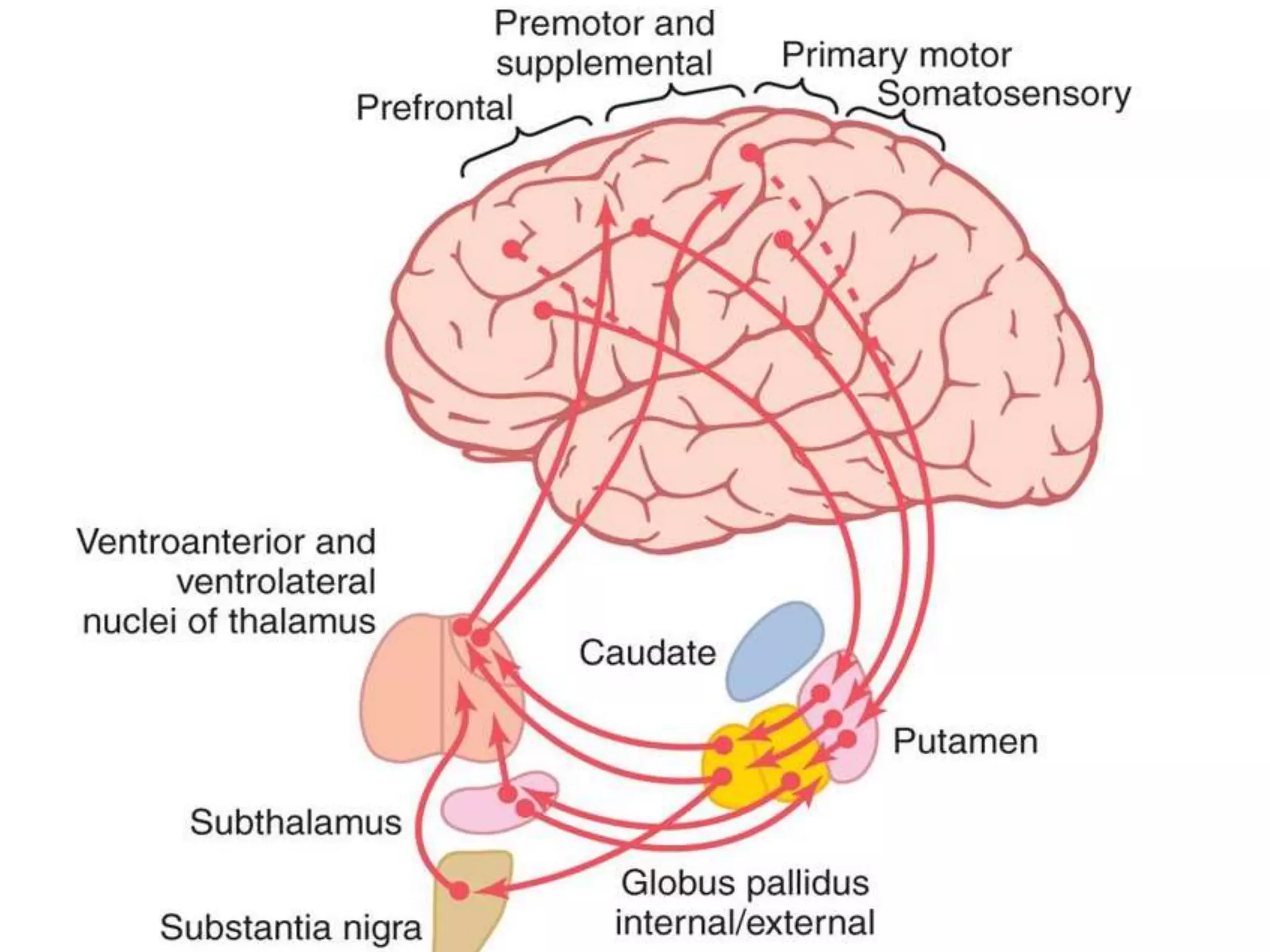
The basal ganglia consist of several structures including the caudate nucleus, putamen, globus pallidus, substantia nigra, and subthalamic nucleus. They are located within the cerebral hemispheres and are involved in motor control and cognition. Two main circuits exist - the putamen circuit for executing movements and the caudate circuit for cognitive motor control. Diseases that impact the basal ganglia like Parkinson's and Huntington's result from dysfunction of neurotransmitter pathways and can cause both hyperkinetic and hypokinetic movement disorders. Common treatments involve replacing dopamine or modifying basal ganglia circuitry.