TENS / TNS
transcutaneous electrical nerve stimulation
TENS DEFINATION:
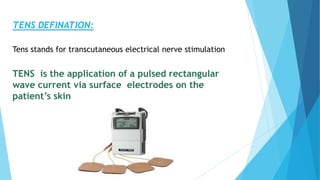
Tens stands for transcutaneous electrical nerve stimulation
TENS is the application of a pulsed rectangular
wave current via surface electrodes on the
patient’s skin
PARAMETERS:
1. Pulse shape or waveform
2. Pulse width or duration
3. Frequency or rate
4. Intensity or amplitude
PARAMETERS:
There are 4 parameters
PULSE SHAPE rectangular
PULSE WIDTH 50 – 300 micro seconds
FREQUENCY 2 – 600 HZ (usually 150 HZ )
INTENSITY 0 – 60 mA
APPLICATION OF TENS
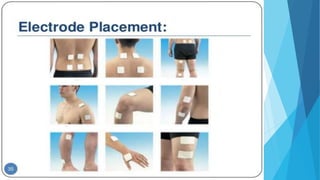
PLACEMENT OF ELECTRODE :
 Acupunture points
 Trigger point , motor points
 Dermatomes , Spinal segments
 Areas with greatest pain intensity
 Peripheral nerves
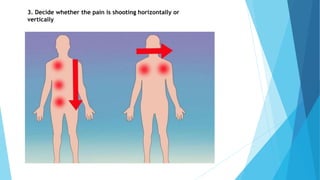
 May be horizontal or vertical
 Crossed or un crossed
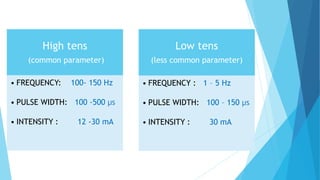
High tens
(common parameter)
• FREQUENCY: 100- 150 Hz
• PULSE WIDTH: 100 -500 μs
• INTENSITY : 12 -30 mA
Low tens
(less common parameter)
• FREQUENCY : 1 – 5 Hz
• PULSE WIDTH: 100 – 150 μs
• INTENSITY : 30 mA
USES OF TENS:
 relief of acute and chronic pain
 Angina pectoris
 Neck and back pain
 Knee pain
 Sports injuries
 Arthritis
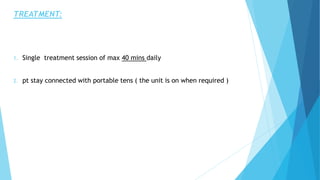
TREATMENT:
1. Single treatment session of max 40 mins daily
2. pt stay connected with portable tens ( the unit is on when required )
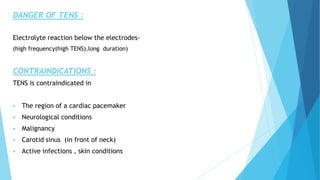
DANGER OF TENS :
Electrolyte reaction below the electrodes-
(high frequency(high TENS),long duration)
CONTRAINDICATIONS :
TENS is contraindicated in
 The region of a cardiac pacemaker
 Neurological conditions
 Malignancy
 Carotid sinus (in front of neck)
 Active infections , skin conditions
PROCEDURE:
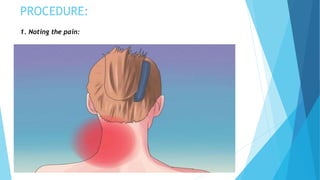
1. Noting the pain:
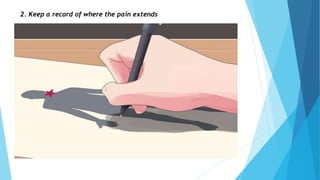
2. Keep a record of where the pain extends
3. Decide whether the pain is shooting horizontally or
vertically
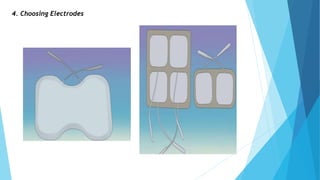
4. Choosing Electrodes
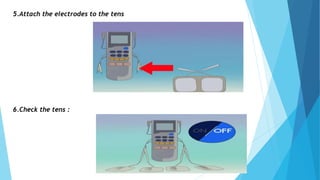
5.Attach the electrodes to the tens
6.Check the tens :
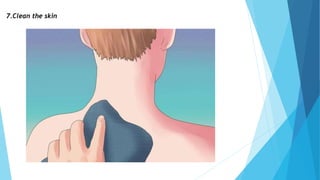
7.Clean the skin
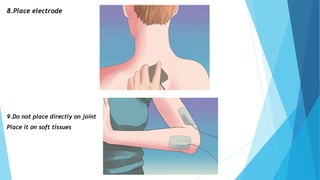
8.Place electrode
9.Do not place directly on joint
Place it on soft tissues
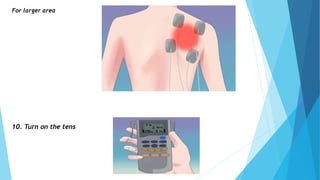
For larger area
10. Turn on the tens
Tens  transcutaneous electrical nerve stimulator

Tens transcutaneous electrical nerve stimulator