BARRIERS TO
COMMUNICATION
SUBMITTED TO : SIR ABDUL GANI
SUBMITTED BY : SAIRASH MASOOD
14201502-009
BS ENGLISH 4TH
WHAT IS COMMUNICATION
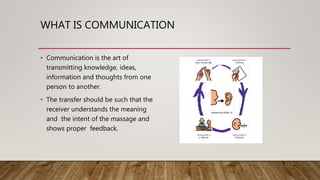
• Communication is the art of
transmitting knowledge, ideas,
information and thoughts from one
person to another.
• The transfer should be such that the
receiver understands the meaning
and the intent of the massage and
shows proper feedback.
THREE TYPES OF COMMUNICATION
• Physical level
• Understanding is at the level of intelligence.
• Acceptance is at the emotional level.
Anything that hinders the process of communication is called barrier to
communication.
FACTORS
Factors involved in breaking communication.
• Environmental
• Technological
• Organisational
• External noise
• Emotions
• Personal interests
• Distance
CLASSIFICATION OF BARRIERS
• Physical barriers
• Semantic and language barrier
• Socio psychological barrier
• Organisational barrier
• Cross cultural barrier
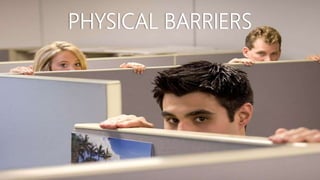
PHYSICAL BARRIERS
 PHYSICAL BARRIER
• Large working areas
• Closed office doors
• Separate areas for people of different status
• It forbids team members from effective interaction with each other.
NOISE
• Physical noise
• Psychological noise
• Written noise (bad hand writing)
• Visual noise (late arrival of employees)
TIME AND DISTURBANCE
• Improper time
• Defects in medium of communication
• Network facilities
• Mechanical background
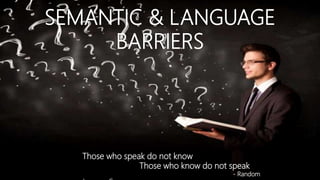
SEMANTIC & LANGUAGE
BARRIERS
Those who speak do not know
Those who know do not speak
- Random
 SEMANTIC AND LANGUAGE BARRIER
• Homophones
• Similar sounding words
Same pronunciation
Different spelling
Different meaning
1: pale / pail
2: alter / altar
3: buy / bye / by
4: rain / reign
WORDS HAVING DIFFERENT PRONUNCIATIONS
Homographs
Same spelling
Different pronunciation
Different meanings
1: the bandage was wound around the wound.
2: we must polish the polish furniture
3: he could lead if he would get the lead out.
WORDS HAVING MULTIPLE MEANING
Homonyms
• Same spelling
• Same pronunciation
• Different meaning
1: Never desert your friend in the desert.
2: close the window before the bee gets too close..
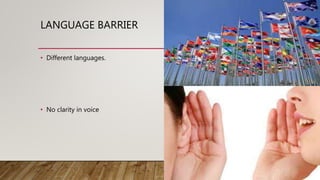
LANGUAGE BARRIER
• Different languages.
• No clarity in voice
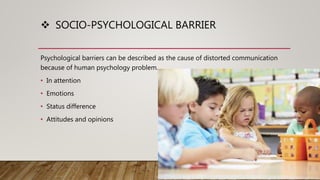
 SOCIO-PSYCHOLOGICAL BARRIER
Psychological barriers can be described as the cause of distorted communication
because of human psychology problem.
• In attention
• Emotions
• Status difference
• Attitudes and opinions
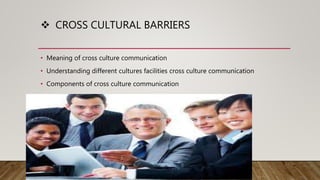
 CROSS CULTURAL BARRIERS
• Meaning of cross culture communication
• Understanding different cultures facilities cross culture communication
• Components of cross culture communication
• Concept of space
• Gestures
ORGANIZATIONAL BARRIERS
• Loss or distortion of messages as they pass from one level to another
• Filtering of information according to one’s understanding/interpretation
• Information gap if upper level does not know the true state of affairs
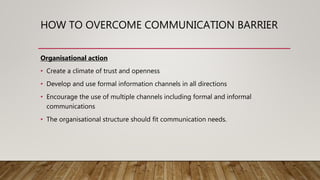
HOW TO OVERCOME COMMUNICATION BARRIER
Organisational action
• Create a climate of trust and openness
• Develop and use formal information channels in all directions
• Encourage the use of multiple channels including formal and informal
communications
• The organisational structure should fit communication needs.
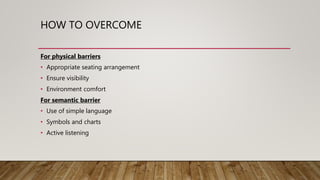
HOW TO OVERCOME
For physical barriers
• Appropriate seating arrangement
• Ensure visibility
• Environment comfort
For semantic barrier
• Use of simple language
• Symbols and charts
• Active listening
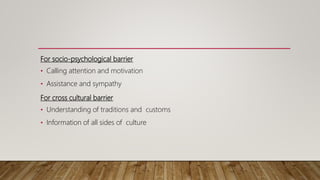
For socio-psychological barrier
• Calling attention and motivation
• Assistance and sympathy
For cross cultural barrier
• Understanding of traditions and customs
• Information of all sides of culture

Barriers to communication

  • 1.
    BARRIERS TO COMMUNICATION SUBMITTED TO: SIR ABDUL GANI SUBMITTED BY : SAIRASH MASOOD 14201502-009 BS ENGLISH 4TH
  • 2.
    WHAT IS COMMUNICATION •Communication is the art of transmitting knowledge, ideas, information and thoughts from one person to another. • The transfer should be such that the receiver understands the meaning and the intent of the massage and shows proper feedback.
  • 3.
    THREE TYPES OFCOMMUNICATION • Physical level • Understanding is at the level of intelligence. • Acceptance is at the emotional level. Anything that hinders the process of communication is called barrier to communication.
  • 4.
    FACTORS Factors involved inbreaking communication. • Environmental • Technological • Organisational • External noise • Emotions • Personal interests • Distance
  • 5.
    CLASSIFICATION OF BARRIERS •Physical barriers • Semantic and language barrier • Socio psychological barrier • Organisational barrier • Cross cultural barrier
  • 6.
  • 7.
     PHYSICAL BARRIER •Large working areas • Closed office doors • Separate areas for people of different status • It forbids team members from effective interaction with each other.
  • 8.
    NOISE • Physical noise •Psychological noise • Written noise (bad hand writing) • Visual noise (late arrival of employees)
  • 9.
    TIME AND DISTURBANCE •Improper time • Defects in medium of communication • Network facilities • Mechanical background
  • 11.
    SEMANTIC & LANGUAGE BARRIERS Thosewho speak do not know Those who know do not speak - Random
  • 12.
     SEMANTIC ANDLANGUAGE BARRIER • Homophones • Similar sounding words Same pronunciation Different spelling Different meaning 1: pale / pail 2: alter / altar 3: buy / bye / by 4: rain / reign
  • 13.
    WORDS HAVING DIFFERENTPRONUNCIATIONS Homographs Same spelling Different pronunciation Different meanings 1: the bandage was wound around the wound. 2: we must polish the polish furniture 3: he could lead if he would get the lead out.
  • 14.
    WORDS HAVING MULTIPLEMEANING Homonyms • Same spelling • Same pronunciation • Different meaning 1: Never desert your friend in the desert. 2: close the window before the bee gets too close..
  • 15.
    LANGUAGE BARRIER • Differentlanguages. • No clarity in voice
  • 16.
     SOCIO-PSYCHOLOGICAL BARRIER Psychologicalbarriers can be described as the cause of distorted communication because of human psychology problem. • In attention • Emotions • Status difference • Attitudes and opinions
  • 17.
     CROSS CULTURALBARRIERS • Meaning of cross culture communication • Understanding different cultures facilities cross culture communication • Components of cross culture communication
  • 18.
    • Concept ofspace • Gestures
  • 19.
    ORGANIZATIONAL BARRIERS • Lossor distortion of messages as they pass from one level to another • Filtering of information according to one’s understanding/interpretation • Information gap if upper level does not know the true state of affairs
  • 20.
    HOW TO OVERCOMECOMMUNICATION BARRIER Organisational action • Create a climate of trust and openness • Develop and use formal information channels in all directions • Encourage the use of multiple channels including formal and informal communications • The organisational structure should fit communication needs.
  • 21.
    HOW TO OVERCOME Forphysical barriers • Appropriate seating arrangement • Ensure visibility • Environment comfort For semantic barrier • Use of simple language • Symbols and charts • Active listening
  • 22.
    For socio-psychological barrier •Calling attention and motivation • Assistance and sympathy For cross cultural barrier • Understanding of traditions and customs • Information of all sides of culture