BARRIERS
TO
COMMUNICATION
BY: PANKAJ(133)
NAVNEET (127)
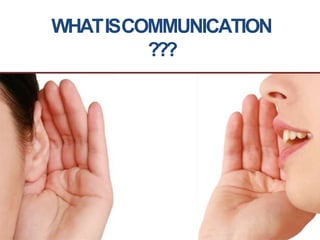
WHATISCOMMUNICATION
???
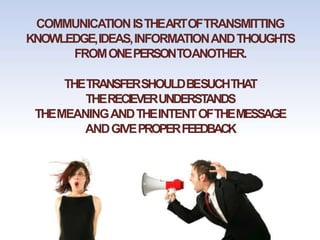
COMMUNICATIONISTHEARTOFTRANSMITTING
KNOWLEDGE,IDEAS,INFORMATIONANDTHOUGHTS
FROMONEPERSONTOANOTHER.
THETRANSFERSHOULDBESUCHTHAT
THERECIEVERUNDERSTANDS
THEMEANINGANDTHEINTENTOFTHEMESSAGE
ANDGIVEPROPERFEEDBACK
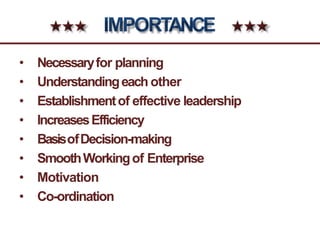
★★★ IMPORTANCE ★★★
• Necessaryfor planning
• Understandingeach other
• Establishmentof effective leadership
• IncreasesEfficiency
• BasisofDecision-making
• SmoothWorkingof Enterprise
• Motivation
• Co-ordination
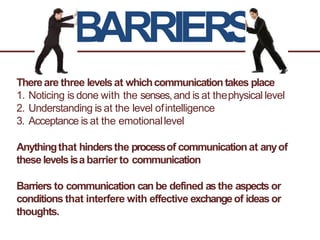
BARRIERS
Thereare three levelsat whichcommunicationtakes place
1. Noticing is done with the senses,and is at thephysical level
2. Understanding is at the level ofintelligence
3. Acceptance is at the emotionallevel
Anythingthat hindersthe processof communication at anyof
theselevelsisa barrier to communication
Barriers to communication can be defined asthe aspects or
conditions that interfere with effective exchangeof ideas or
thoughts.
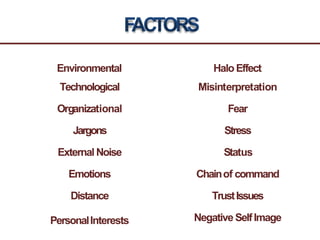
FACTORS
Environmental
Technological
Organizational
Jargons
External Noise
Emotions
Distance
PersonalInterests
HaloEffect
Misinterpretation
Fear
Stress
Status
Chainof command
TrustIssues
Negative SelfImage
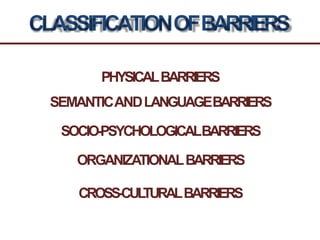
CLASSIFICATIONOFBARRIERS
PHYSICALBARRIERS
SEMANTICANDLANGUAGEBARRIERS
SOCIO-PSYCHOLOGICALBARRIERS
ORGANIZATIONALBARRIERS
CROSS-CULTURALBARRIERS
PHYSICALBARRIERS
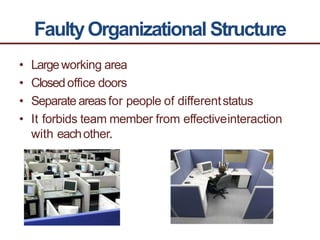
FaultyOrganizational Structure
• Largeworking area
• Closedoffice doors
• Separate areas for people of differentstatus
• It forbids team member from effectiveinteraction
with eachother.
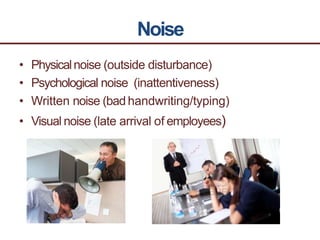
Noise
• Physicalnoise (outside disturbance)
• Psychological noise (inattentiveness)
• Written noise (badhandwriting/typing)
• Visual noise (late arrival of employees)
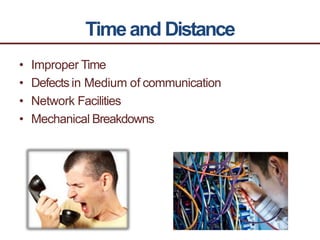
Timeand Distance
• Improper Time
• Defects in Medium of communication
• Network Facilities
• Mechanical Breakdowns
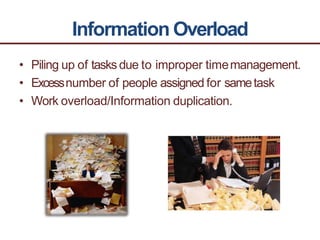
Information Overload
• Piling up of tasks due to improper timemanagement.
• Excessnumber of people assigned for sametask
• Work overload/Information duplication.
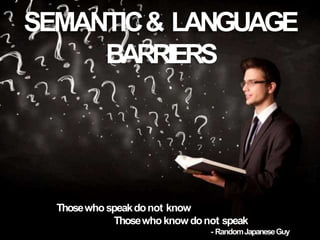
SEMANTIC& LANGUAGE
BARRIERS
Thosewhospeakdonot know
Thosewhoknowdonot speak
- RandomJapaneseGuy
SEMANTICS
• What do you mean bySEMANTICS?
• Why is SEMANTICSrequired?
• When does SEMANTICBARRIERarises?
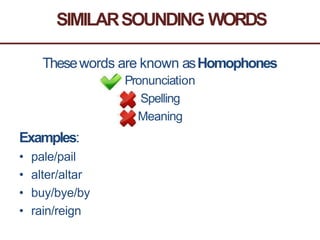
SIMILARSOUNDING WORDS
Thesewords are known asHomophones
Pronunciation
Spelling
Meaning
Examples:
• pale/pail
• alter/altar
• buy/bye/by
• rain/reign
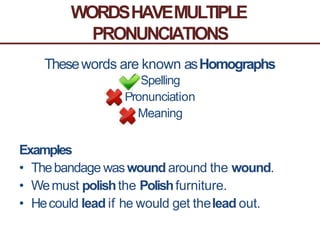
WORDSHAVEMULTIPLE
PRONUNCIATIONS
Thesewords are known asHomographs
Spelling
Pronunciation
Meaning
Examples
• Thebandage waswound around the wound.
• Wemust polishthe Polishfurniture.
• Hecould lead if he would get thelead out.
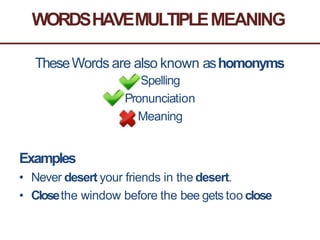
WORDSHAVEMULTIPLEMEANING
TheseWords are also known ashomonyms
Spelling
Pronunciation
Meaning
Examples
• Never desert your friends in the desert.
• Closethe window before the bee gets too close
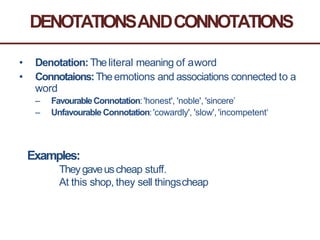
DENOTATIONSANDCONNOTATIONS
• Denotation: Theliteral meaning of aword
• Connotaions:Theemotions and associations connected to a
word
– FavourableConnotation:'honest', 'noble', 'sincere’
– Unfavourable Connotation:'cowardly', 'slow', 'incompetent‘
Examples:
Theygaveuscheap stuff.
At this shop, they sell thingscheap
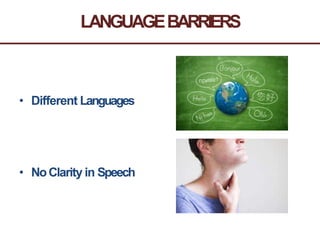
LANGUAGEBARRIERS
• Different Languages
• NoClarity in Speech
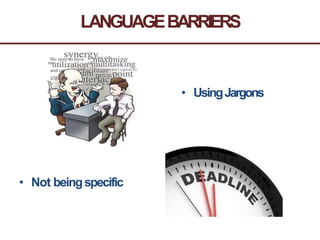
LANGUAGEBARRIERS
• UsingJargons
• Not beingspecific
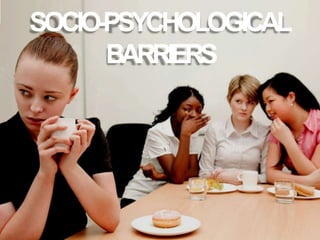
SOCIO-PSYCHOLOGICAL
BARRIERS
What is Pyschological
b a r r i e r
Psychological barriers
can be described as
the cause of distorted
communication
because of human
psychology problems.
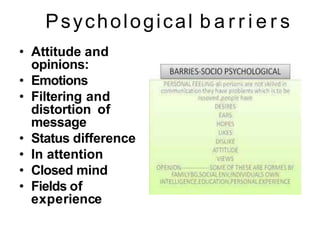
Psychological b a r r i e r s
• Attitude and
opinions:
• Emotions
• Filtering and
distortion of
message
• Status difference
• In attention
• Closed mind
• Fields of
experience
Others include:
• Group identification
• Self-image
• Premature evaluation
• Distrust
• Poor retention
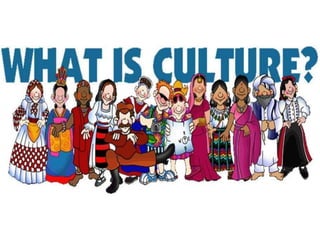
CROSS-CULTURALBARRIERS
CrossCultureCommunication
• Meaning of CrossCultureCommunication
• Understandingdifferent culturesfacilitates
CrossCultureCommunication
• Componentsof CrossCultureCommunication
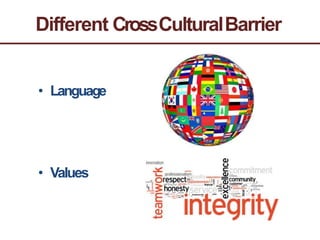
Different CrossCulturalBarrier
• Language
• Values
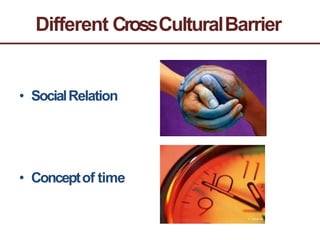
Different CrossCulturalBarrier
• SocialRelation
• Conceptof time
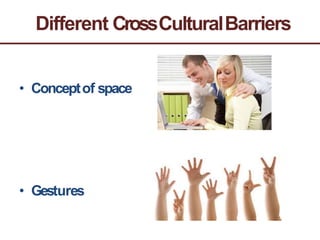
Different CrossCulturalBarriers
• Conceptof space
• Gestures
ORGANISATIONAL
BARRIERS
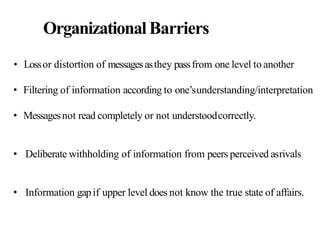
OrganizationalBarriers
• Lossor distortion of messagesasthey passfrom one level to another
• Filtering of information according to one’sunderstanding/interpretation
• Messagesnot read completely or not understoodcorrectly.
• Deliberate withholding of information from peers perceived asrivals
• Information gapif upper level does not know the true state of affairs.
….cont
Lackof communication policy
Authoritarian attitude ofmanagement
Poorly Defined Authority and Responsibility
TooMany Levelsin Organization Structure
Insufficient CommunicationTraining
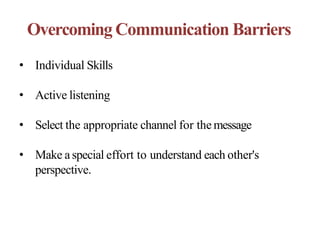
Overcoming Communication Barriers
• Individual Skills
• Active listening
• Select the appropriate channel for the message
• Make aspecial effort to understand each other's
perspective.
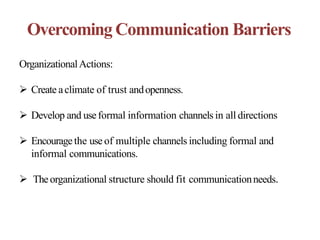
Overcoming Communication Barriers
OrganizationalActions:
 Create aclimate of trust andopenness.
 Develop and useformal information channels in all directions
 Encouragethe use of multiple channels including formal and
informal communications.
 Theorganizational structure should fit communicationneeds.
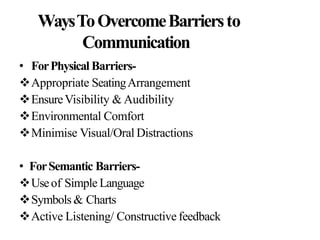
WaysToOvercomeBarriersto
Communication
• ForPhysical Barriers-
Appropriate SeatingArrangement
EnsureVisibility & Audibility
Environmental Comfort
Minimise Visual/Oral Distractions
• ForSemantic Barriers-
Useof Simple Language
Symbols & Charts
Active Listening/ Constructive feedback
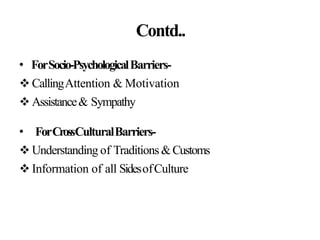
Contd..
• ForSocio-PsychologicalBarriers-
 CallingAttention & Motivation
 Assistance& Sympathy
• ForCrossCulturalBarriers-
 Understanding of Traditions&Customs
 Information of all SidesofCulture
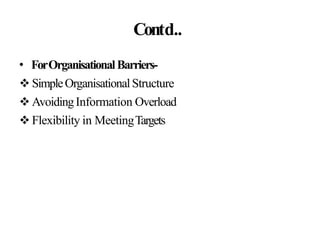
Contd..
• ForOrganisationalBarriers-
 SimpleOrganisationalStructure
 AvoidingInformation Overload
 Flexibility in MeetingTargets
THANK YOU!!

Barrierstocommunication 140505113319-phpapp01 (1)