Chapter 2 Learning Objectives
2.1 To understand the interrelationship among market
segmentation, targeting, and positioning and how to select the
best target markets.
2.2 To understand the bases used to segment consumers,
including demographics, psychographics, product benefits
sought, and product usage-related factors.
2.3 To understand behavioral targeting and its key role in today’s
marketing.
2.4 To understand how to position, differentiate, and reposition
products.
2.1 To understand the interrelationship among
market segmentation, targeting, and positioning and
how to select the best target markets.
Learning Objective 2.1
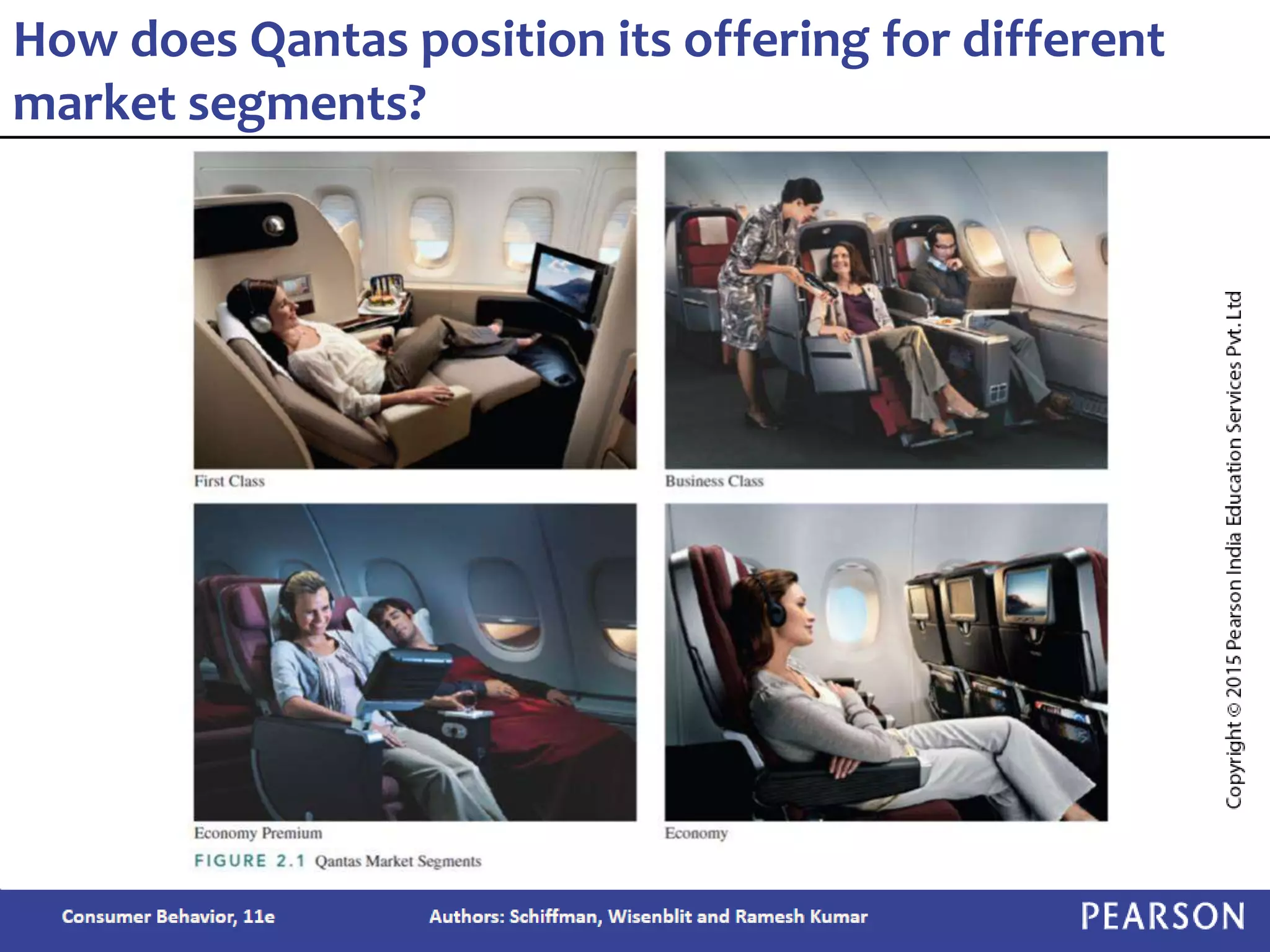
How does Qantas position its offering for different
market segments?
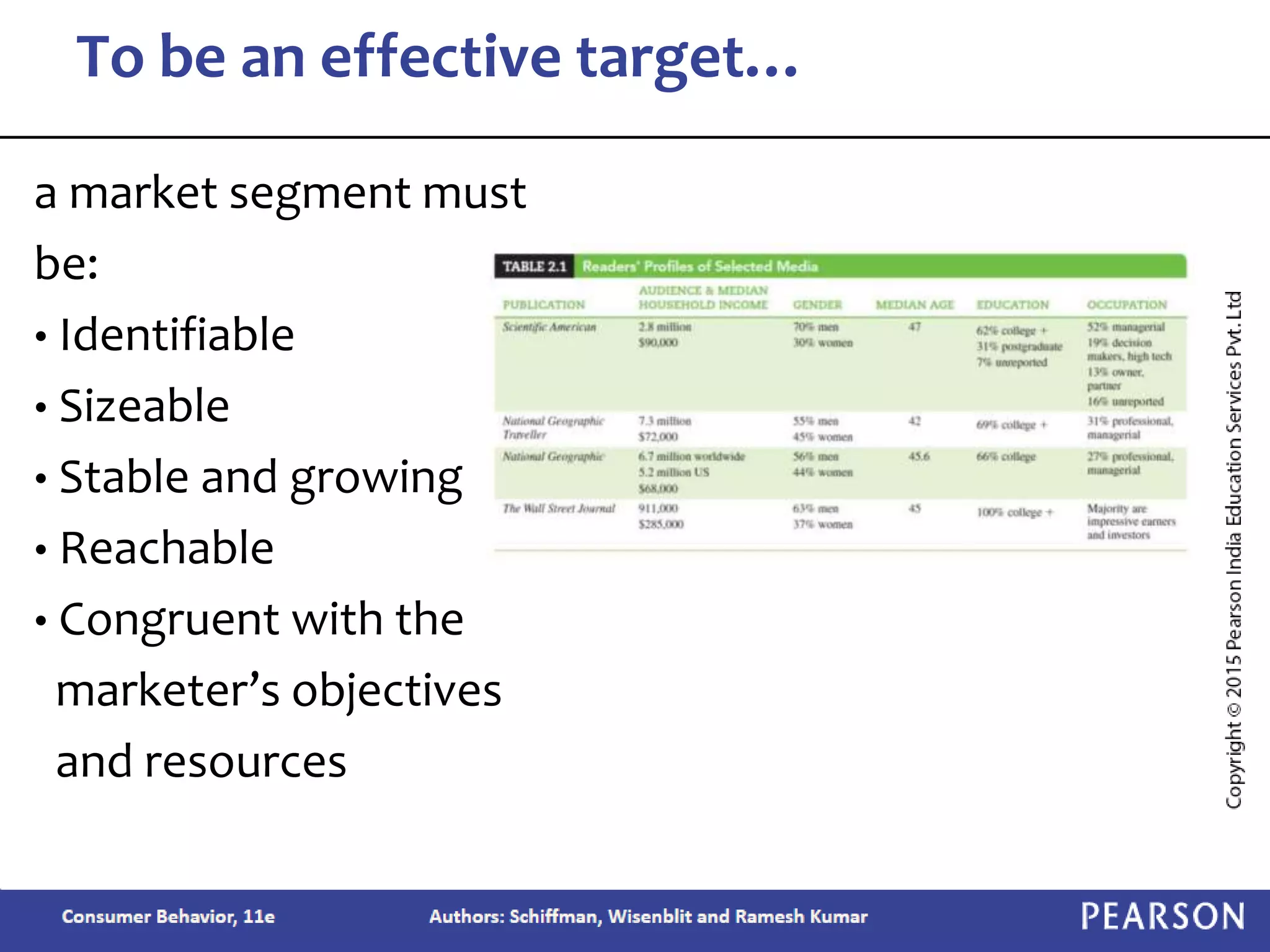
a market segment must
be:
• Identifiable
• Sizeable
• Stable and growing
• Reachable
• Congruent with the
marketer’s objectives
and resources
To be an effective target…
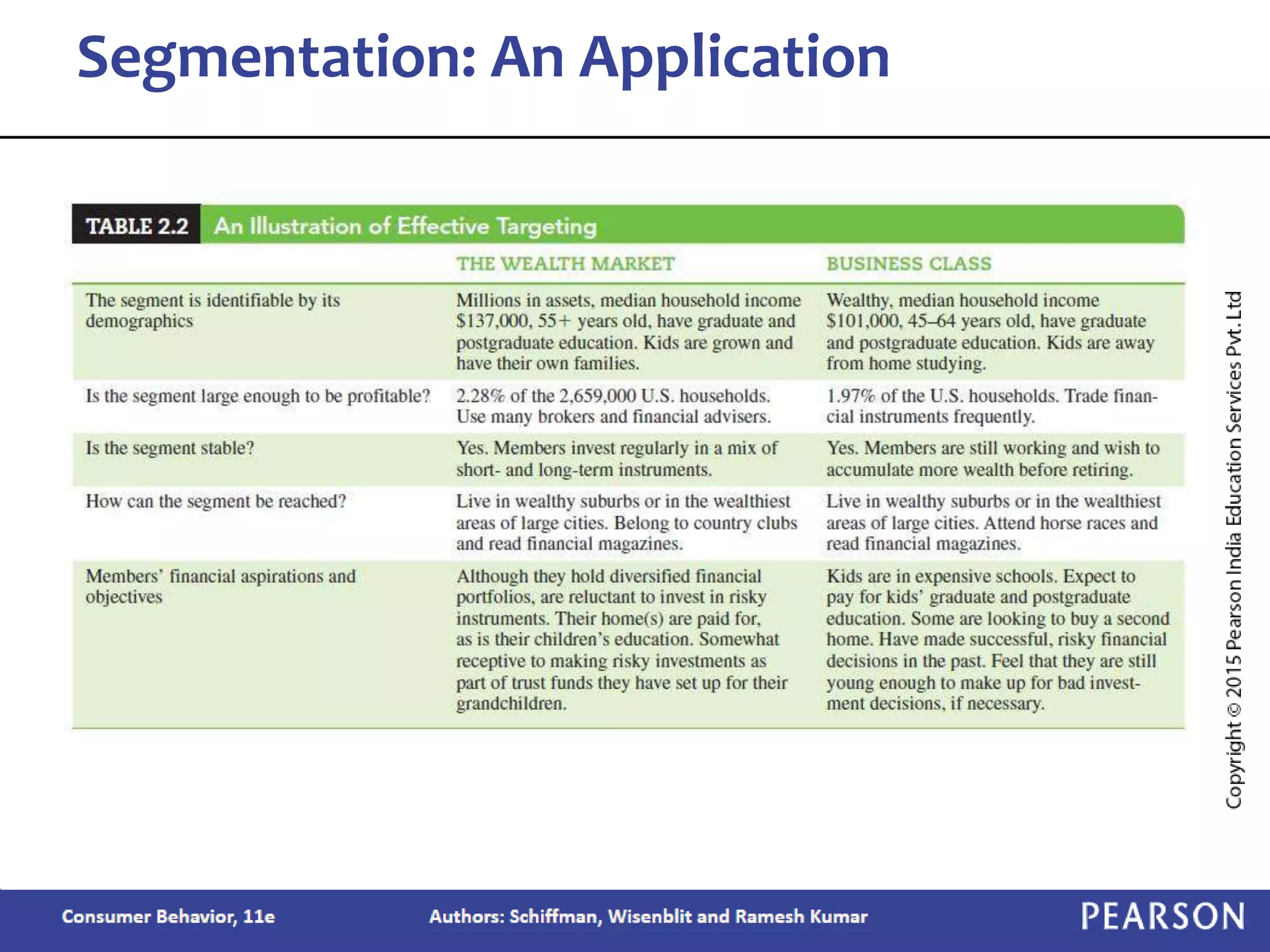
Segmentation: An Application
2.2 To understand the bases used to segment
consumers, including demographics, psychographics,
product benefits sought, and product usage-related
factors.
Learning Objective 2.2
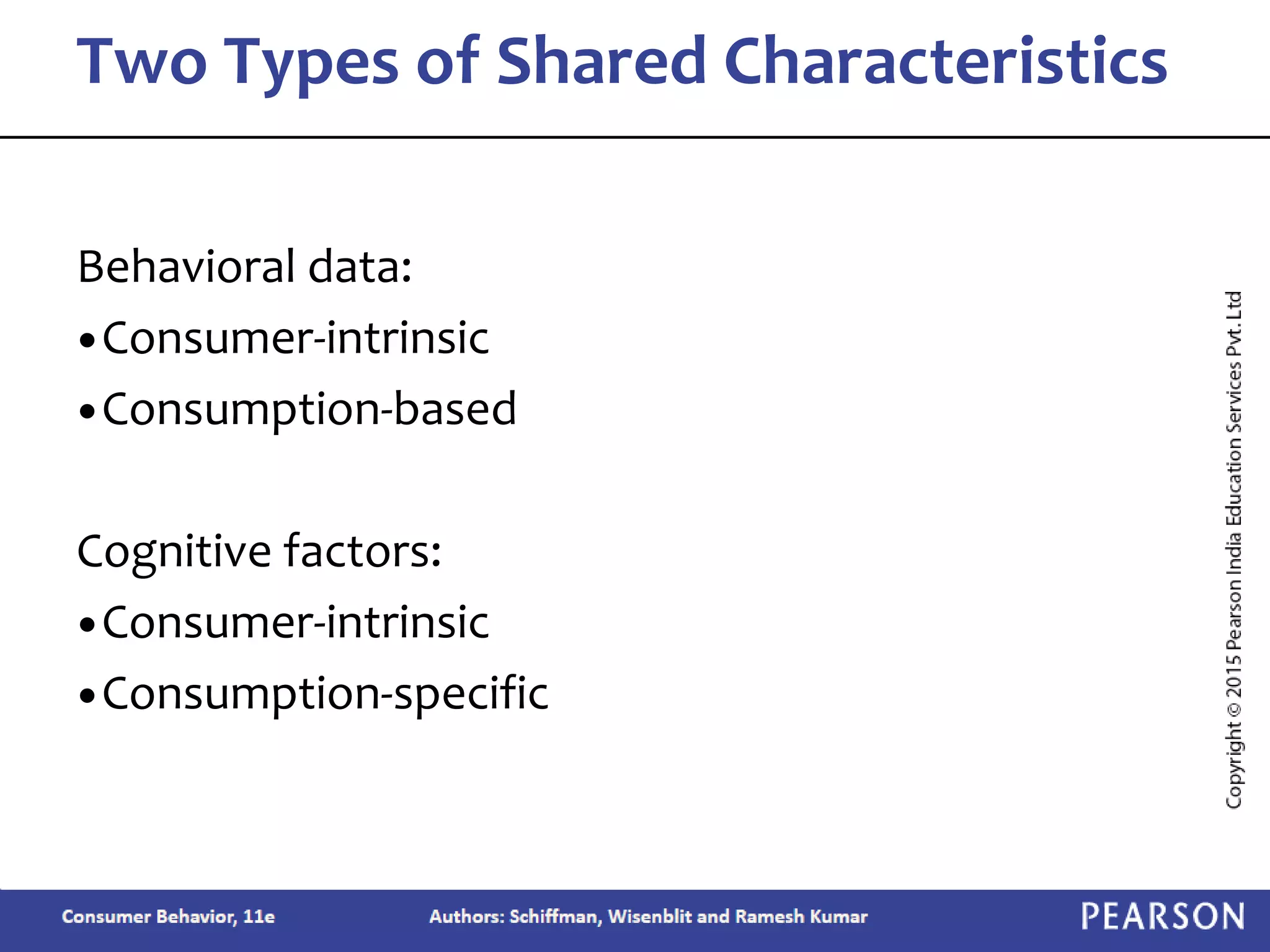
Behavioral data:
•Consumer-intrinsic
•Consumption-based
Cognitive factors:
•Consumer-intrinsic
•Consumption-specific
Two Types of Shared Characteristics
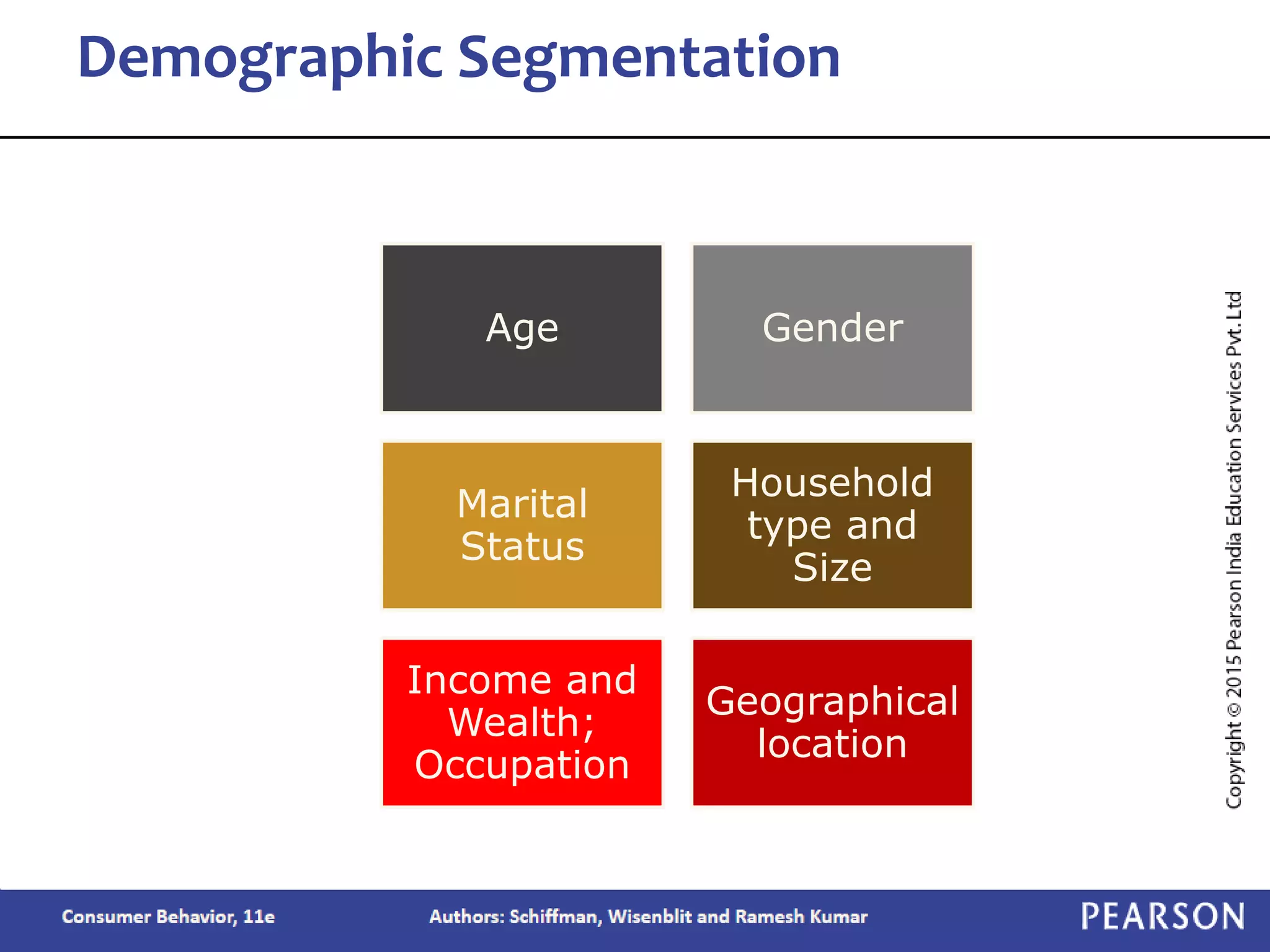
Demographic Segmentation
Age Gender
Marital
Status
Household
type and
Size
Income and
Wealth;
Occupation
Geographical
location
Who is the target of this ad?
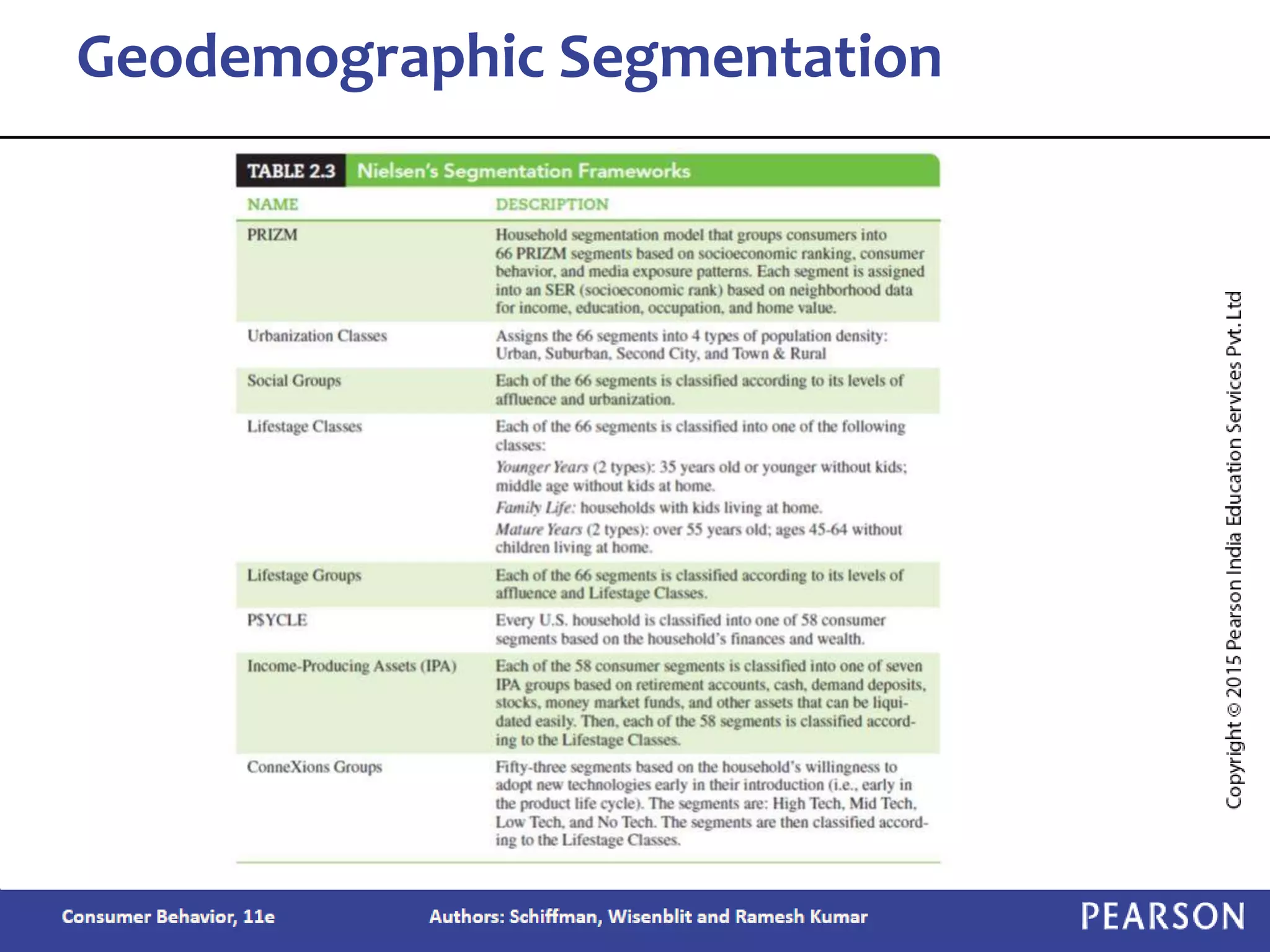
Geodemographic Segmentation
Consumers’ lifestyles, which
include consumers’ activities,
interests, and opinions
Psychographics
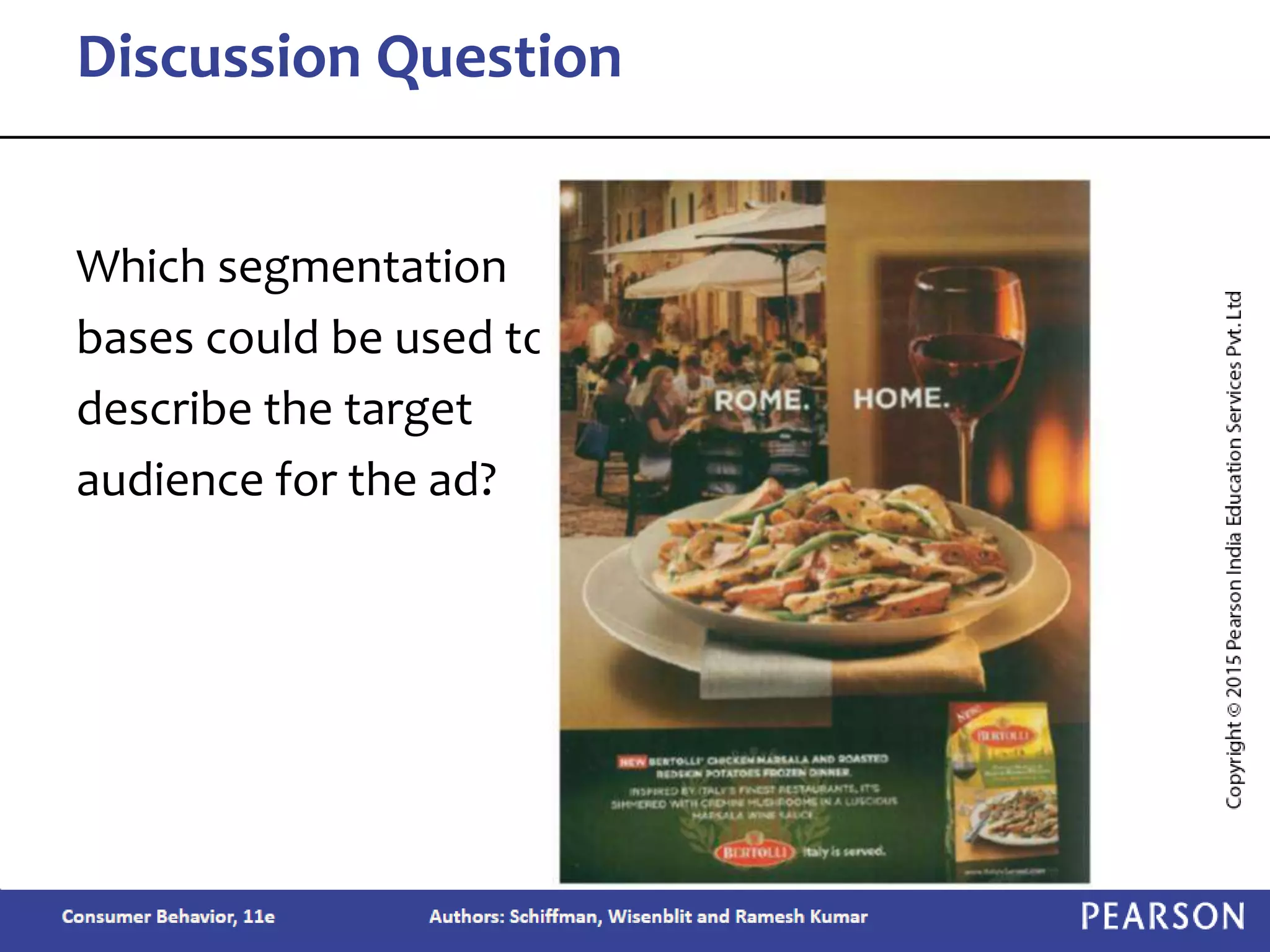
Which segmentation
bases could be used to
describe the target
audience for the ad?
Discussion Question
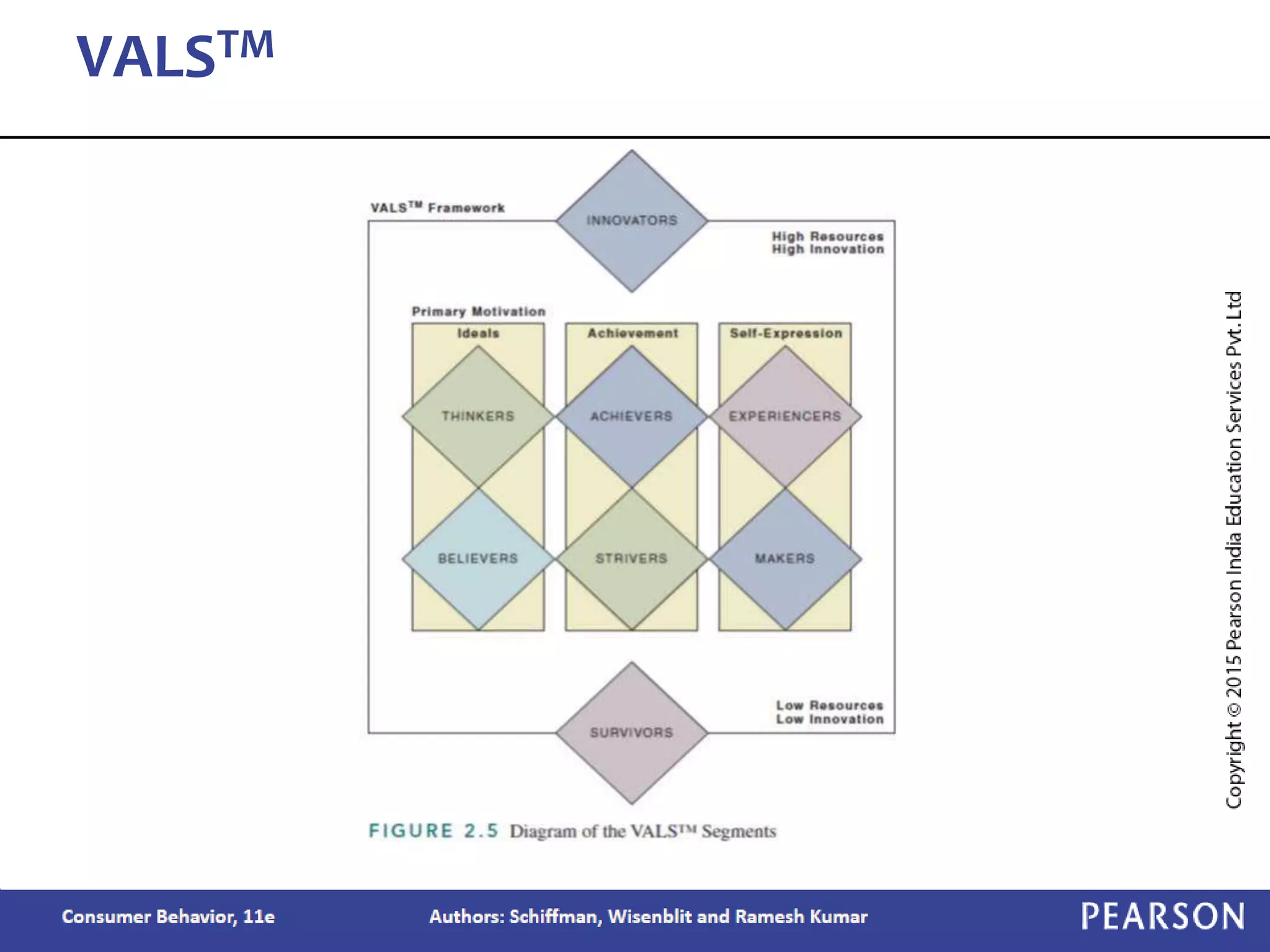
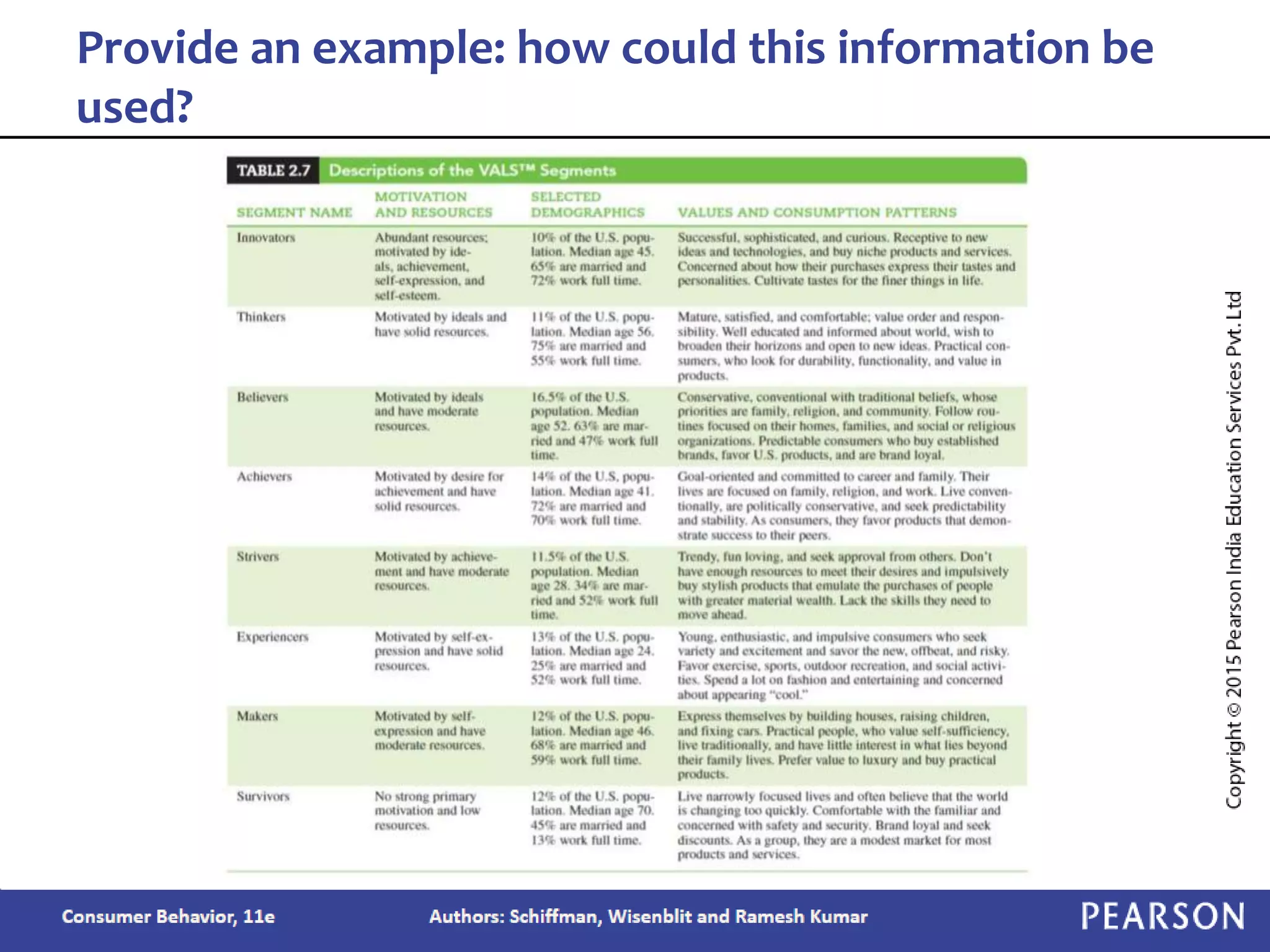
VALSTM
Provide an example: how could this information be
used?
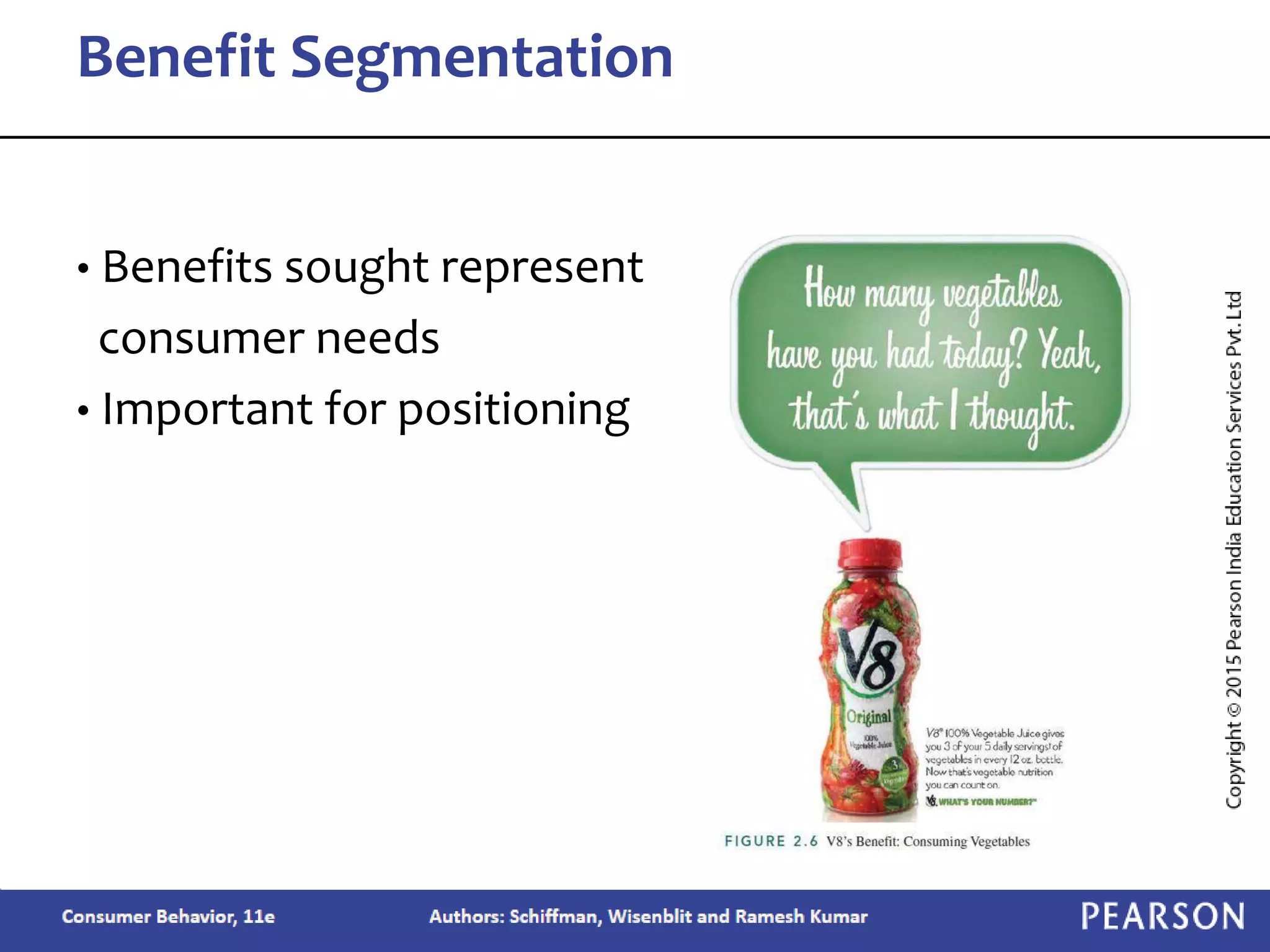
• Benefits sought represent
consumer needs
• Important for positioning
Benefit Segmentation
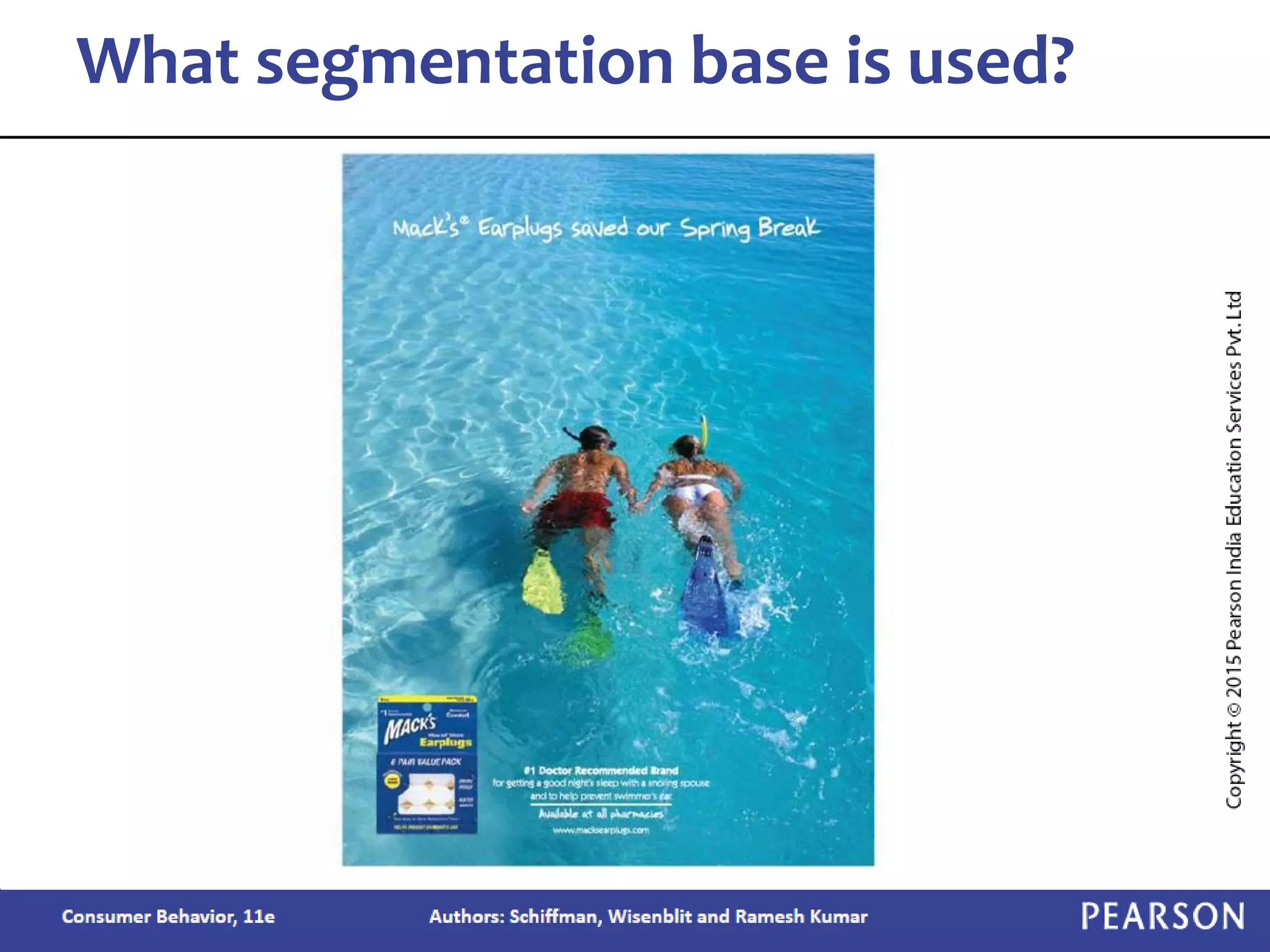
What segmentation base is used?
2.3 To understand behavioral targeting and its key
role in today’s marketing.
Learning Objective 2.3
sending consumers personalized and
prompt offers and promotional messages
designed to reach the right consumers and
deliver to them highly relevant messages at
the right time and more accurately than
when using conventional segmentation
techniques
Behavioral Targeting
• Websites visited
• Engagement on sites
• Lifestyles and personalities
• Purchases, almost purchases, returns, exchanges
Tracking Online Navigation Includes:
Measures that predict consumers’
future purchases on the bases of past
buying information and other data,
and also evaluate the impact of
personalized promotions stemming
from the predictions.
Predictive Analytics
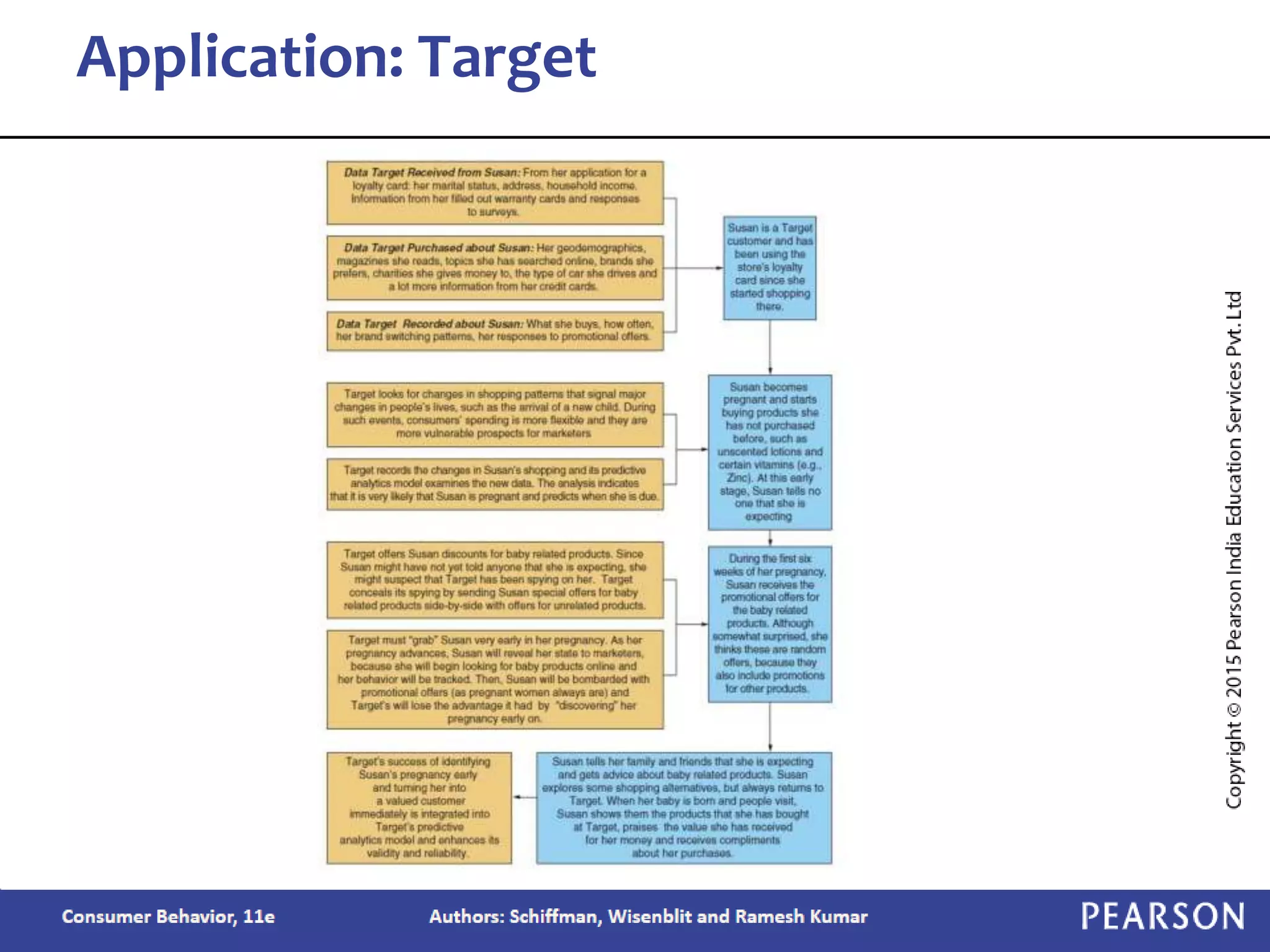
Application: Target
2.4 To understand how to position, differentiate, and
reposition products.
Learning Objective 2.4
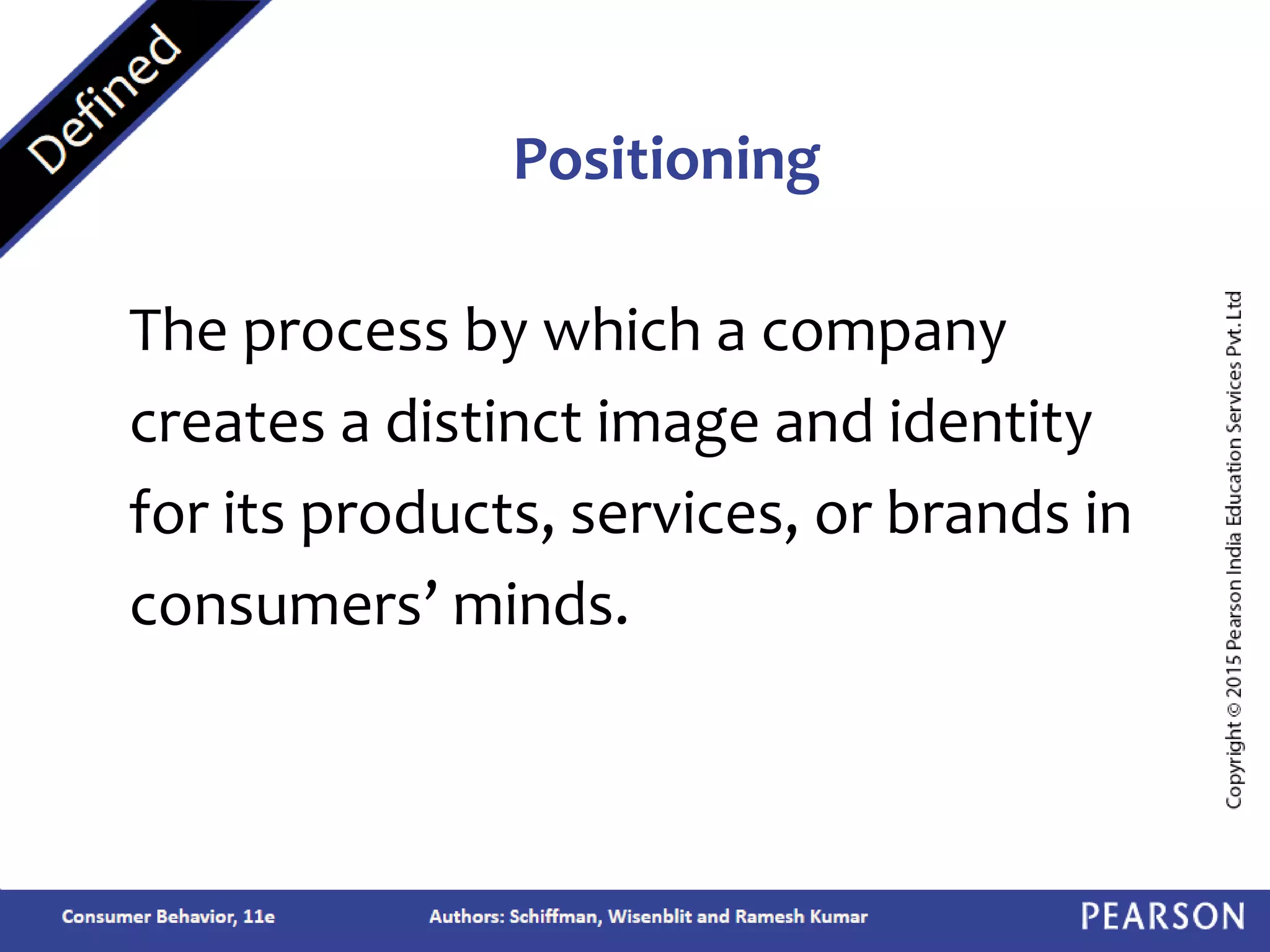
The process by which a company
creates a distinct image and identity
for its products, services, or brands in
consumers’ minds.
Positioning
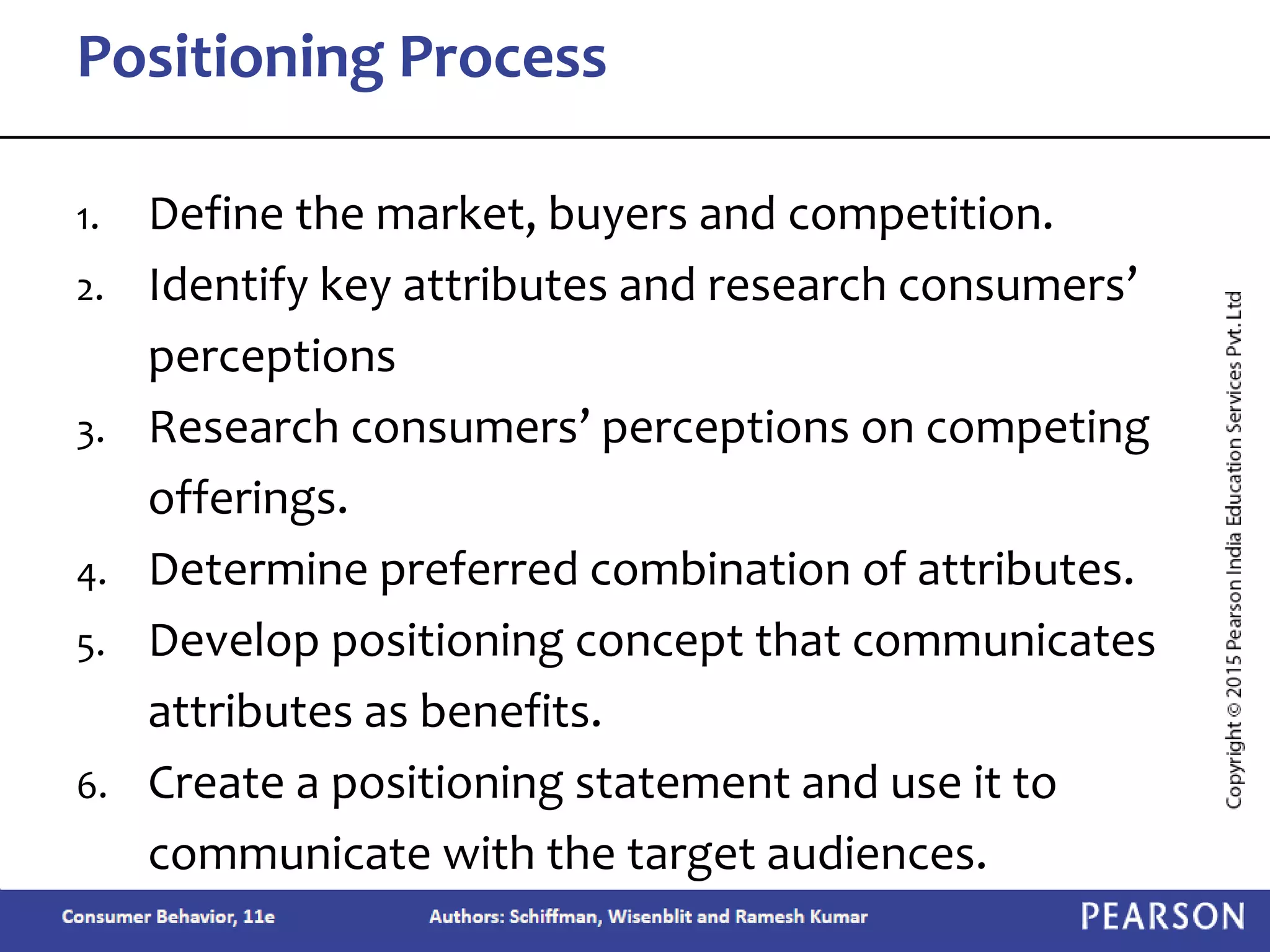
1. Define the market, buyers and competition.
2. Identify key attributes and research consumers’
perceptions
3. Research consumers’ perceptions on competing
offerings.
4. Determine preferred combination of attributes.
5. Develop positioning concept that communicates
attributes as benefits.
6. Create a positioning statement and use it to
communicate with the target audiences.
Positioning Process
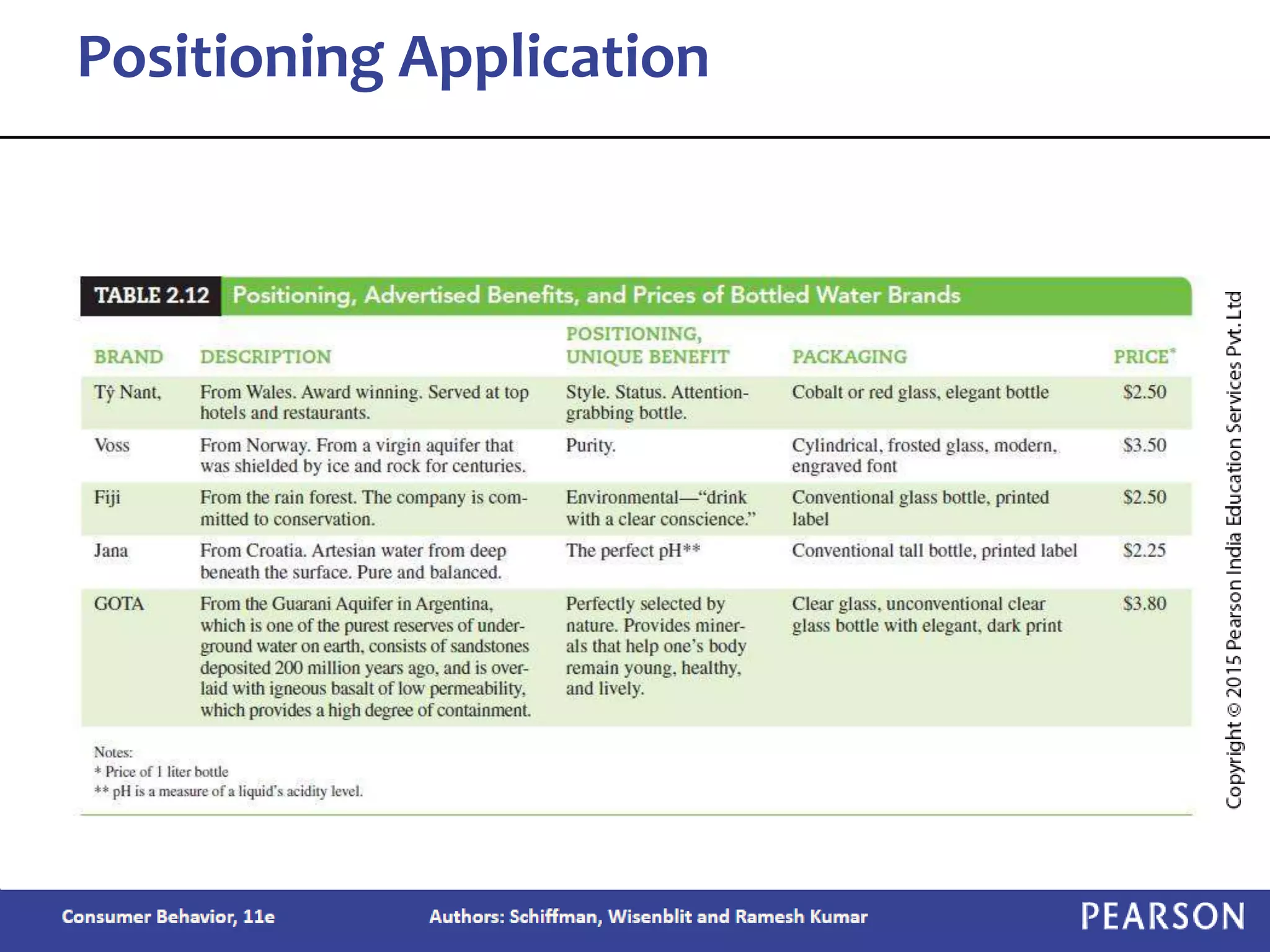
Positioning Application
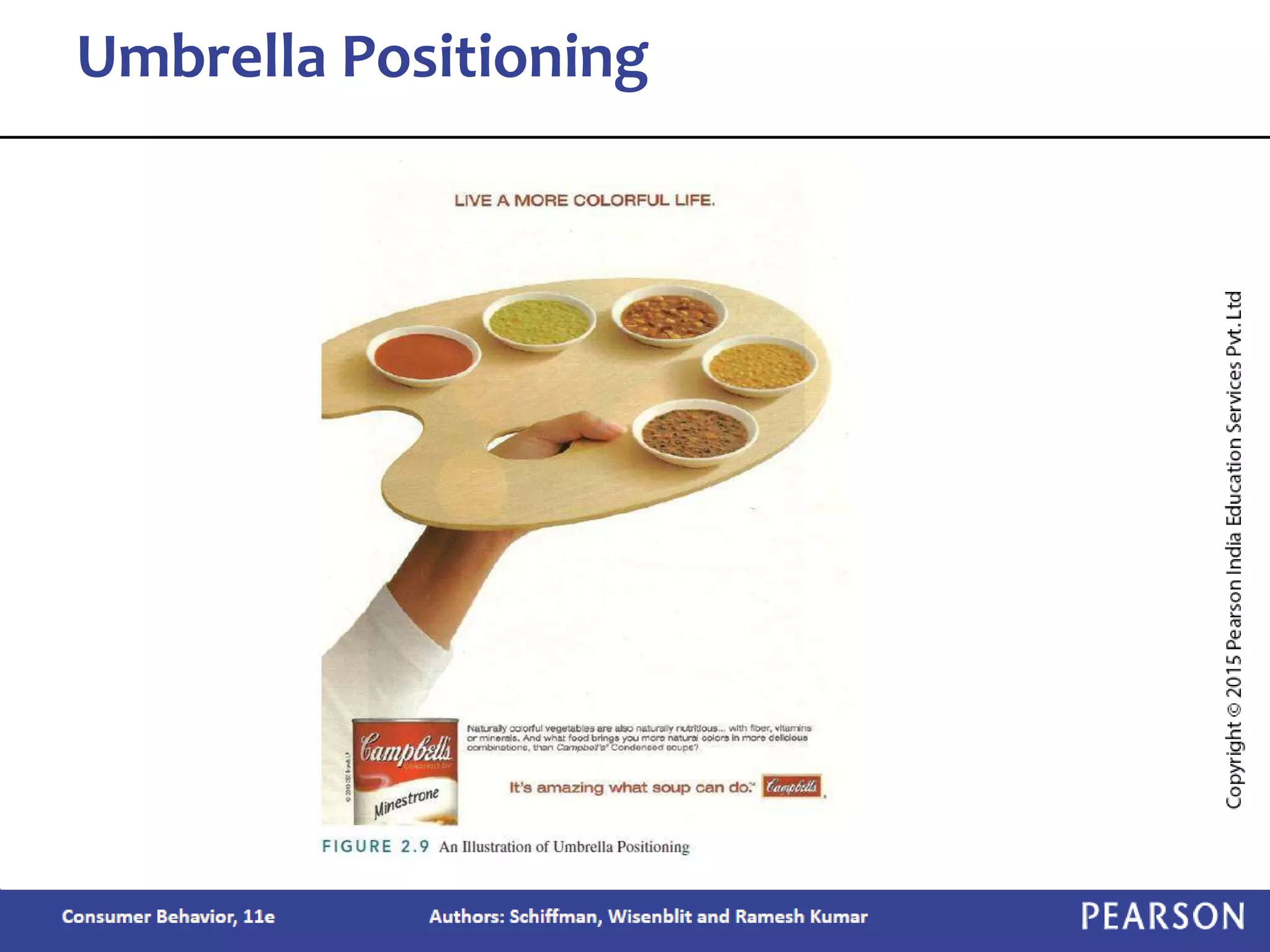
Umbrella Positioning
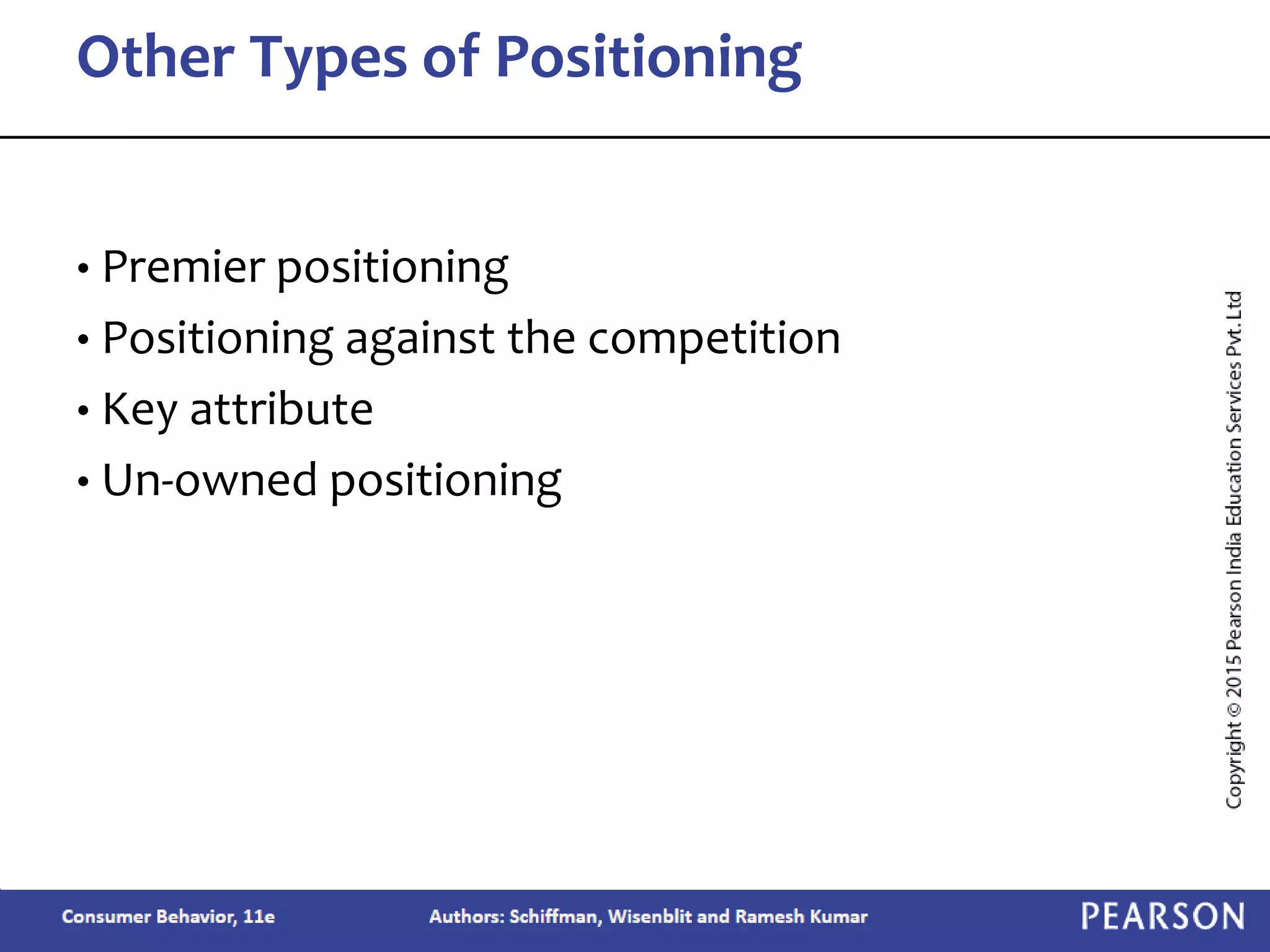
• Premier positioning
• Positioning against the competition
• Key attribute
• Un-owned positioning
Other Types of Positioning
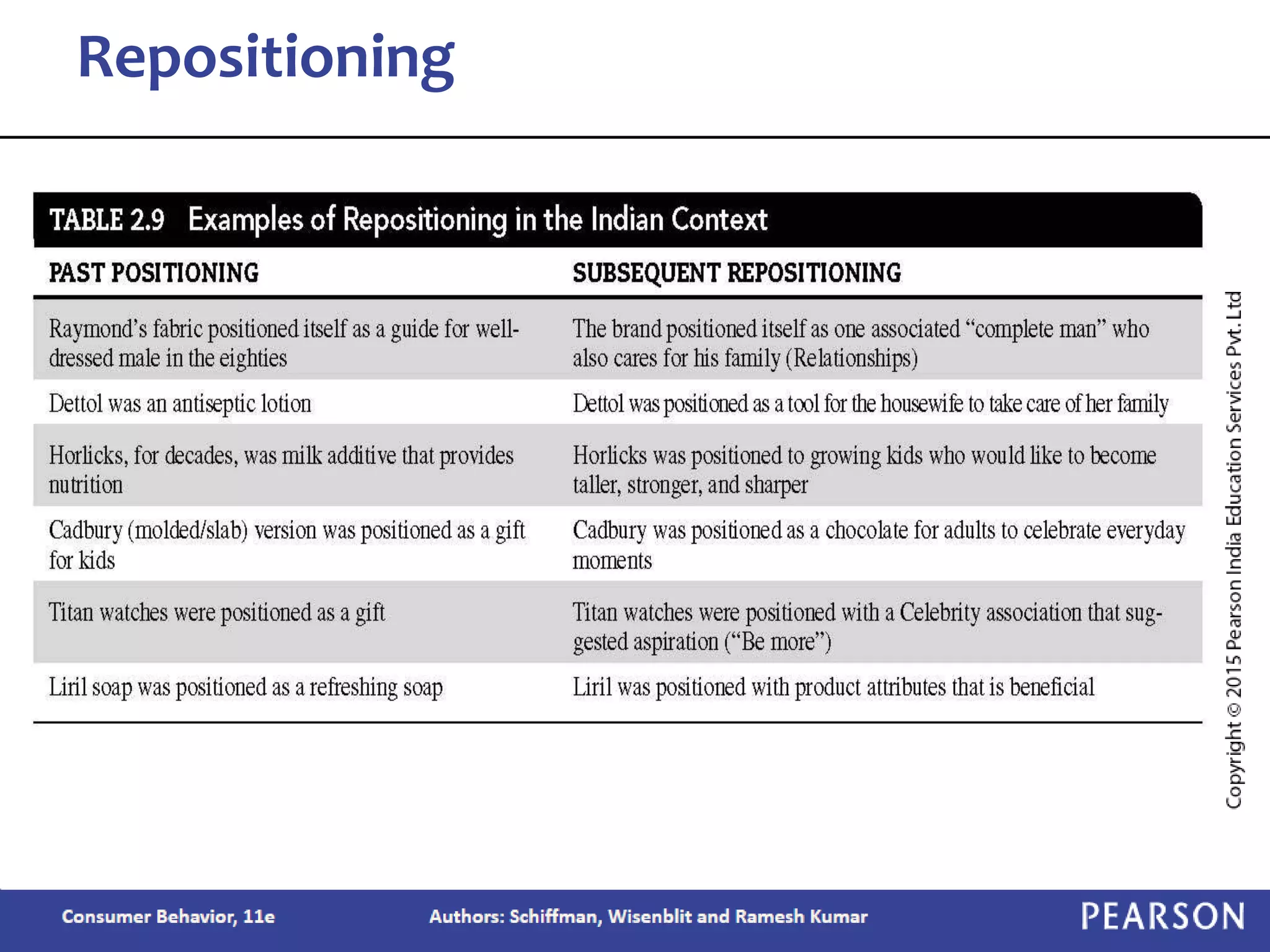
Repositioning
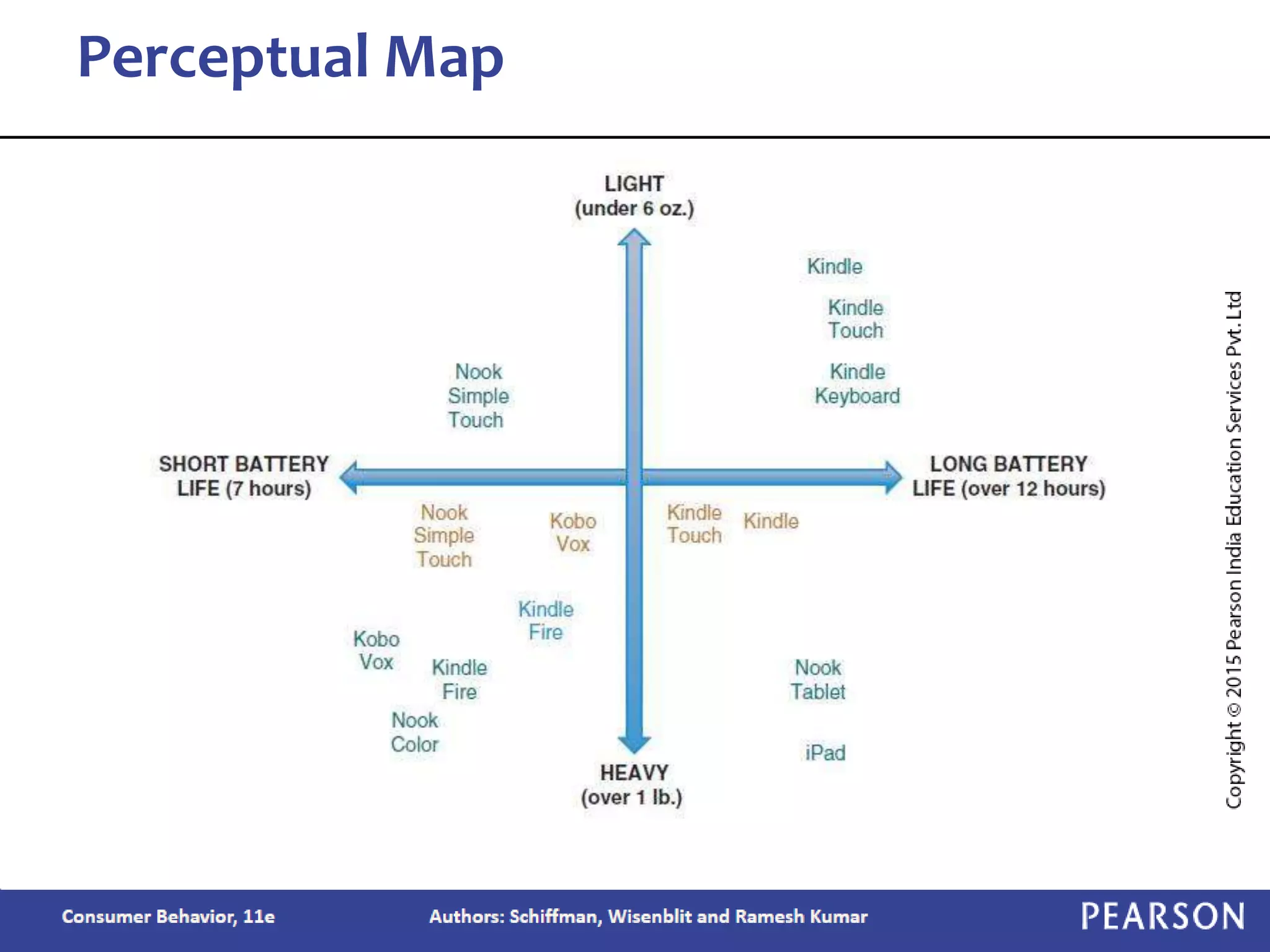
Perceptual Map
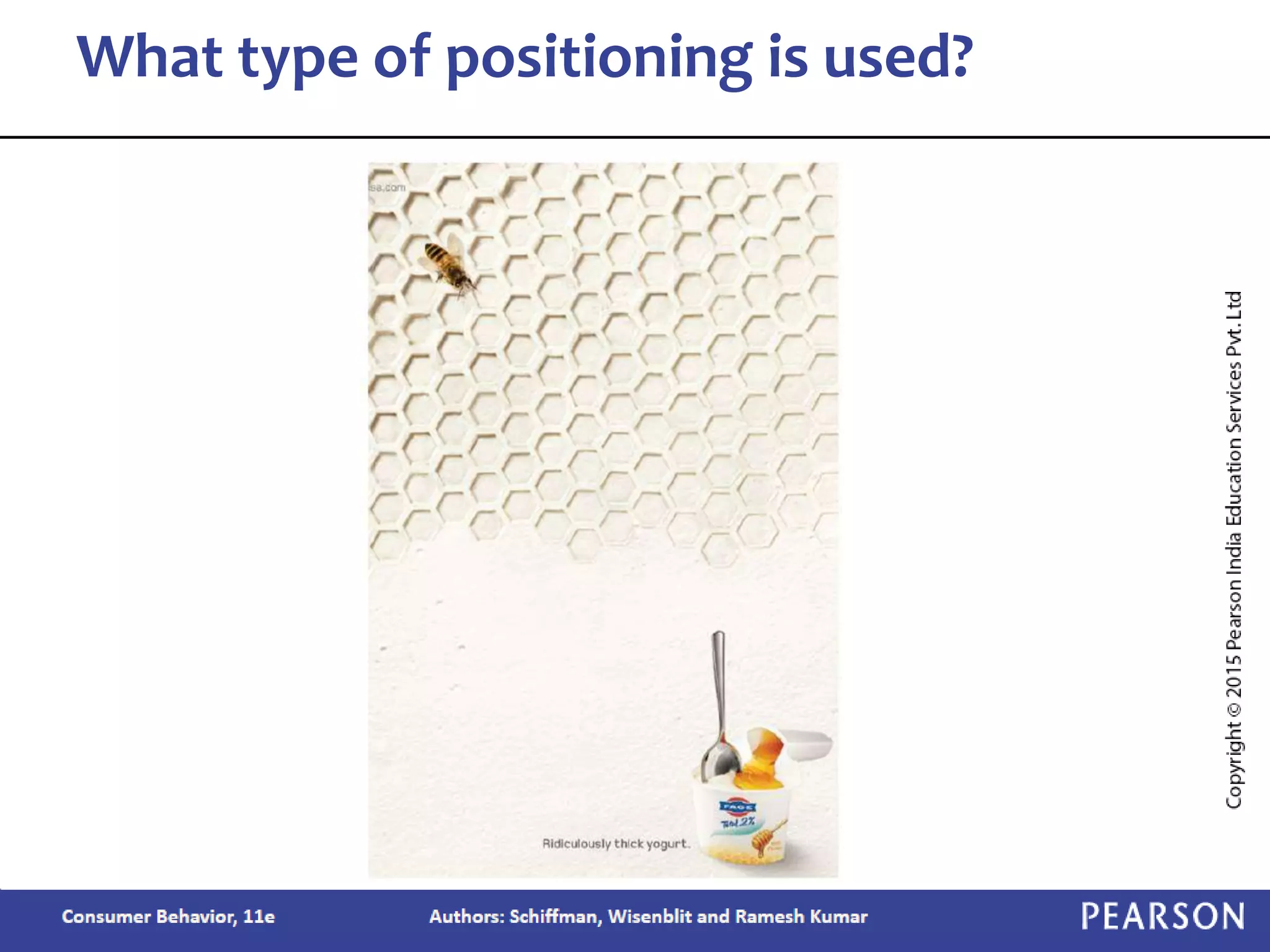
What type of positioning is used?

Segmentation, Targetteing and Positioning.ppt