The word “Communication” is derived
from latin word “Communis”
 It means to impart, to transit , to make
common
 When something is made common it
implies sharing and interaction
 “Communication is a process of passing
information and understanding from one
person to another”
- Keith Davis
 “Communication is any behavior that
results in an exchange of meaning”
- Chappel and Read
 Barriers of communication are the
difficulties involved in the process of
communication which distort the message
being properly understood by the receiver
 Barriers prevent the communication from
being effective
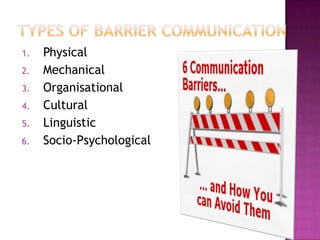
1. Physical
2. Mechanical
3. Organisational
4. Cultural
5. Linguistic
6. Socio-Psychological
 Oral communication –
 Irrelevant Information
 Wrong words
 Poor speaking voice
 Poorer pronunciation
 Written Communication-
 Poor composition
 Wrong syntax
 Incorrect spellings and punctuation
 Location, environment, time and distance, our
physical condition and the medium we choose to
communicate in can all create difficulties for us
 Physical barrier consist of any sound that
prevents a person from being heard. Physical
noise interferes with a speakers ability to send
messages and with an audience’s ability to
receive them
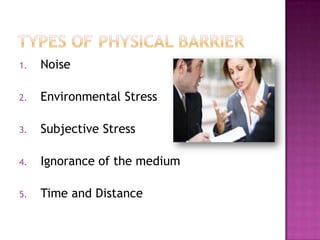
1. Noise
2. Environmental Stress
3. Subjective Stress
4. Ignorance of the medium
5. Time and Distance
 Mechanical communication barriers are
technical sources of interference in the
communication process
 A mechanical barrier stems from a problem in
machinery or instruments used to transmit the
message
 This is not limited to media forms such as radio
and television, it also includes machines used
by those with hearing or speech impairment
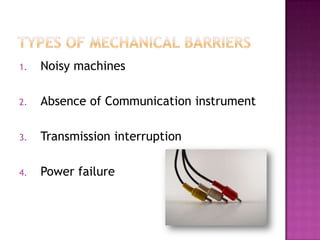
1. Noisy machines
2. Absence of Communication instrument
3. Transmission interruption
4. Power failure
 An organisation is complex structure
which hums with activity
 It is not always smooth sailing
 Miscommunication and misunderstanding
is common
1. Size of an Organisation
2. Emphasis on Specialization
3. Hierarchy and Status
4. Channels used for communication
 Language is what helps us to convey
meaning
 The use of language depends on our
background, culture, experience, attitude
and location
 Words mean different things to different
people and be understood or
misunderstood accordingly
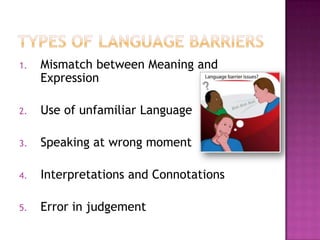
1. Mismatch between Meaning and
Expression
2. Use of unfamiliar Language
3. Speaking at wrong moment
4. Interpretations and Connotations
5. Error in judgement
 Culture is a set of values and attributes of a group; it is the
sum total of the ways of living built up by a group and
transmitted from one generation to another
 Effective business person must have an open mind and be
willing to learn about different cultures and adapt to them
 Knowledge of some of the features in which cultures differ,
provides a good foundation for any training you might like to
take later
 Problems of understanding, interpretation and
response to communication arise from our
socially learnt attributes and personal
attributes.These are called Socio-Psychological
barriers
 Human beings are victims of bias and prejudice,
suffer from anger, fear, joy and sorrow
 Self image and pre-conceived notions
 Abstracting
 Slanting
 Filtering
 Closed mind
 Allness
 Unjust Assumptions
 Orientation
 Halo Effect
 Defensiveness
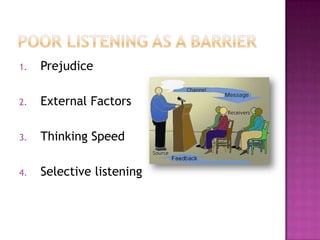
1. Prejudice
2. External Factors
3. Thinking Speed
4. Selective listening
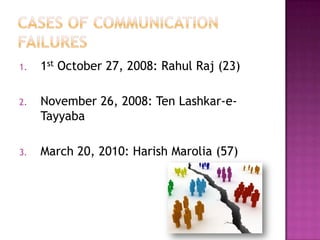
1. 1st October 27, 2008: Rahul Raj (23)
2. November 26, 2008: Ten Lashkar-e-
Tayyaba
3. March 20, 2010: Harish Marolia (57)
 Be clear, precise and to the point. Plan your
communication
 Use simple, direct and free language
 Use repetition to confirm the message is been received
and understood correctly
 Insist on feedback
 Have an open mind. Listen to different point of view
 Improve your levels of concentration to avoid
distractions
 Don’t prejudice. Listen first, evaluate later
 Don’t be selective in your communication
 Develop empathy
 Have an attitude of equality and respect for others
 Aditya Jadav (G.L)
 Kaewal Gala
 Ankur Barot
 Abhay Joshi
 Prakhar JJain
 Dipesh Jain
 Parth Gohil
 Diksha Gusain

Introduction to communication

  • 2.
    The word “Communication”is derived from latin word “Communis”  It means to impart, to transit , to make common  When something is made common it implies sharing and interaction
  • 3.
     “Communication isa process of passing information and understanding from one person to another” - Keith Davis  “Communication is any behavior that results in an exchange of meaning” - Chappel and Read
  • 4.
     Barriers ofcommunication are the difficulties involved in the process of communication which distort the message being properly understood by the receiver  Barriers prevent the communication from being effective
  • 5.
    1. Physical 2. Mechanical 3.Organisational 4. Cultural 5. Linguistic 6. Socio-Psychological
  • 6.
     Oral communication–  Irrelevant Information  Wrong words  Poor speaking voice  Poorer pronunciation
  • 7.
     Written Communication- Poor composition  Wrong syntax  Incorrect spellings and punctuation
  • 8.
     Location, environment,time and distance, our physical condition and the medium we choose to communicate in can all create difficulties for us  Physical barrier consist of any sound that prevents a person from being heard. Physical noise interferes with a speakers ability to send messages and with an audience’s ability to receive them
  • 9.
    1. Noise 2. EnvironmentalStress 3. Subjective Stress 4. Ignorance of the medium 5. Time and Distance
  • 10.
     Mechanical communicationbarriers are technical sources of interference in the communication process  A mechanical barrier stems from a problem in machinery or instruments used to transmit the message  This is not limited to media forms such as radio and television, it also includes machines used by those with hearing or speech impairment
  • 11.
    1. Noisy machines 2.Absence of Communication instrument 3. Transmission interruption 4. Power failure
  • 12.
     An organisationis complex structure which hums with activity  It is not always smooth sailing  Miscommunication and misunderstanding is common
  • 13.
    1. Size ofan Organisation 2. Emphasis on Specialization 3. Hierarchy and Status 4. Channels used for communication
  • 14.
     Language iswhat helps us to convey meaning  The use of language depends on our background, culture, experience, attitude and location  Words mean different things to different people and be understood or misunderstood accordingly
  • 15.
    1. Mismatch betweenMeaning and Expression 2. Use of unfamiliar Language 3. Speaking at wrong moment 4. Interpretations and Connotations 5. Error in judgement
  • 16.
     Culture isa set of values and attributes of a group; it is the sum total of the ways of living built up by a group and transmitted from one generation to another  Effective business person must have an open mind and be willing to learn about different cultures and adapt to them  Knowledge of some of the features in which cultures differ, provides a good foundation for any training you might like to take later
  • 17.
     Problems ofunderstanding, interpretation and response to communication arise from our socially learnt attributes and personal attributes.These are called Socio-Psychological barriers  Human beings are victims of bias and prejudice, suffer from anger, fear, joy and sorrow
  • 18.
     Self imageand pre-conceived notions  Abstracting  Slanting  Filtering  Closed mind
  • 19.
     Allness  UnjustAssumptions  Orientation  Halo Effect  Defensiveness
  • 20.
    1. Prejudice 2. ExternalFactors 3. Thinking Speed 4. Selective listening
  • 21.
    1. 1st October27, 2008: Rahul Raj (23) 2. November 26, 2008: Ten Lashkar-e- Tayyaba 3. March 20, 2010: Harish Marolia (57)
  • 22.
     Be clear,precise and to the point. Plan your communication  Use simple, direct and free language  Use repetition to confirm the message is been received and understood correctly  Insist on feedback  Have an open mind. Listen to different point of view
  • 23.
     Improve yourlevels of concentration to avoid distractions  Don’t prejudice. Listen first, evaluate later  Don’t be selective in your communication  Develop empathy  Have an attitude of equality and respect for others
  • 24.
     Aditya Jadav(G.L)  Kaewal Gala  Ankur Barot  Abhay Joshi  Prakhar JJain  Dipesh Jain  Parth Gohil  Diksha Gusain