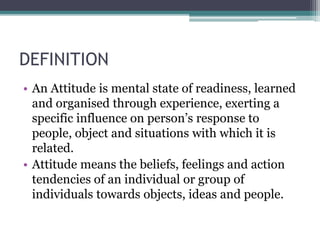
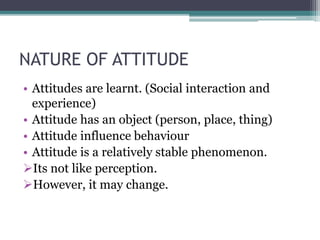
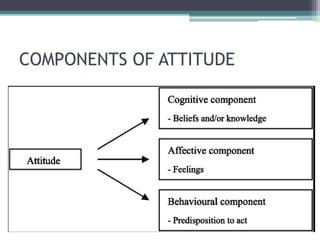
The document defines attitude as a mental state of readiness that influences responses to people, objects, and situations. Attitudes are learned through social interaction and experience. They have three components - cognitive (beliefs), affective (feelings), and behavioral (actions). Attitudes are formed through direct experiences, conditioning, vicarious learning from others, social groups, communication, and one's environment. Positive attitudes benefit individuals and organizations by increasing productivity, teamwork, problem-solving, and relationships while reducing stress. Attitudes help with adjustment, ego defense, knowledge, and expressing values. They can be changed by providing feedback, new information, positive role models, and influencing social groups.