Attitudes
Attitudes
 Positive or negative feelings towards objects
(people, things or situations)
 A mental state of readiness organised through
experience, to behave in a characteristic way
towards the object of the attitude
 Can be thought of as a combined effect of a
belief and a value which gives a feeling about a
particular attitude object
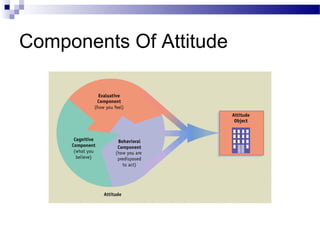
Components Of Attitude
Components of Attitudes
 Evaluative component: the emotional or feeling
aspect of the attitude – refers to our liking or
disliking the object of the attitude
 Cognitive component: the knowledge or belief
aspect of the attitude – refers to what you
believe to be the case about the attitude object
 Behavioural component: the behavioural
predisposition aspect of the attitude – refers to a
predisposition to act in a certain way
Functions of Attitudes
 Adjustment function: instrumental or utilitarian function – helps
the individual to adjust to the world and to obtain rewards and
avoid punishment from the environment
 Ego-defensive function: help people defend against
information that threatens their concept of self – to protect our
self-image by legitimising behaviour which may contradict our
values
 Value-expressive function: allows individuals to derive
satisfaction from expressing attitudes reflecting their central
values and concept of self
 Knowledge function: help in understanding events which
impinge upon them by mentally organising and structuring the
world so that it is more understandable
Formation of Attitudes
 Direct Personal Experience
 Association
 Family and Peer groups
 Neighbourhood
 Economic status and Occupations
 Mass Communications
Types of Job-related Attitudes
 Job Satisfaction: refers to the general
attitude or feeling of an individual towards
his job.
 Job Involvement: refers to the degree to
which employees immerse themselves in
their jobs, invest time and energy in them,
and view work as a central part of their
overall lives.
Types(cont…)
 Organisational Commitment: refers to
employee’s identification with a particular
organisation and its goals and feel proud
of being its employees.
Changing Attitudes: Barriers to
Change
 Prior commitments: People’s commitment
to a particular course of action and are
unwilling to change. This is same like the
tendency of the decision makers to
persist with failing actions.
 Insufficient information: Sometimes people
donot see any reason as to why they
should change their attitude.
Principles of Attitude Change
 Consistency principle: people strive to
maintain consistency between the
affective, behavioural and cognitive
components of an attitude
 If one component changes, the person
has two alternatives:
Reverse the change to a single component
Change the other components to fall in line
Ways of Changing Attitudes
 Providing new information
 Use of Fear
 Resolving Discrepancies
 Influence of friends and peers
 The Co-opting Approach
Types of change
 Congruent change: change in the attitude
in the same direction but the intensity of
feeling is reduced
 Incongruent change: Change in the
attitude direction itself from negative to
positive or vice-versa.

Attitude

  • 1.
  • 2.
    Attitudes  Positive ornegative feelings towards objects (people, things or situations)  A mental state of readiness organised through experience, to behave in a characteristic way towards the object of the attitude  Can be thought of as a combined effect of a belief and a value which gives a feeling about a particular attitude object
  • 3.
  • 4.
    Components of Attitudes Evaluative component: the emotional or feeling aspect of the attitude – refers to our liking or disliking the object of the attitude  Cognitive component: the knowledge or belief aspect of the attitude – refers to what you believe to be the case about the attitude object  Behavioural component: the behavioural predisposition aspect of the attitude – refers to a predisposition to act in a certain way
  • 5.
    Functions of Attitudes Adjustment function: instrumental or utilitarian function – helps the individual to adjust to the world and to obtain rewards and avoid punishment from the environment  Ego-defensive function: help people defend against information that threatens their concept of self – to protect our self-image by legitimising behaviour which may contradict our values  Value-expressive function: allows individuals to derive satisfaction from expressing attitudes reflecting their central values and concept of self  Knowledge function: help in understanding events which impinge upon them by mentally organising and structuring the world so that it is more understandable
  • 6.
    Formation of Attitudes Direct Personal Experience  Association  Family and Peer groups  Neighbourhood  Economic status and Occupations  Mass Communications
  • 7.
    Types of Job-relatedAttitudes  Job Satisfaction: refers to the general attitude or feeling of an individual towards his job.  Job Involvement: refers to the degree to which employees immerse themselves in their jobs, invest time and energy in them, and view work as a central part of their overall lives.
  • 8.
    Types(cont…)  Organisational Commitment:refers to employee’s identification with a particular organisation and its goals and feel proud of being its employees.
  • 9.
    Changing Attitudes: Barriersto Change  Prior commitments: People’s commitment to a particular course of action and are unwilling to change. This is same like the tendency of the decision makers to persist with failing actions.  Insufficient information: Sometimes people donot see any reason as to why they should change their attitude.
  • 10.
    Principles of AttitudeChange  Consistency principle: people strive to maintain consistency between the affective, behavioural and cognitive components of an attitude  If one component changes, the person has two alternatives: Reverse the change to a single component Change the other components to fall in line
  • 11.
    Ways of ChangingAttitudes  Providing new information  Use of Fear  Resolving Discrepancies  Influence of friends and peers  The Co-opting Approach
  • 12.
    Types of change Congruent change: change in the attitude in the same direction but the intensity of feeling is reduced  Incongruent change: Change in the attitude direction itself from negative to positive or vice-versa.