ATTITUDE
Definition:


“An attitude is mental
 state of readiness
 , learned and organized
 through experience
 , exerting a specific
 influence on person’s
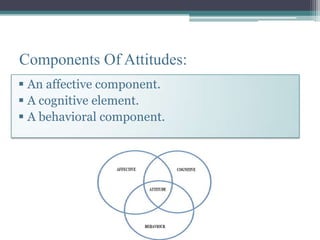
Components Of Attitudes:
 An affective component.
 A cognitive element.
 A behavioral component.
FORMATION OF ATTITUDE:

 Direct experience with the object.
 Classical conditioning and Attitudes.
 Operant conditioning and Attitude acquisition.
 Vicarious learning.
 Family and Peer Groups.
 Neighbourhood.
 Economic Status and Occupations.
 Mass Communications.
Direct experience with the Object.
  Attitudes formed
  through direct
  behavioural experience
  with an attitude object
  have been found to
  better predict later
  behaviour than attitudes
  formed through indirect
  experience.
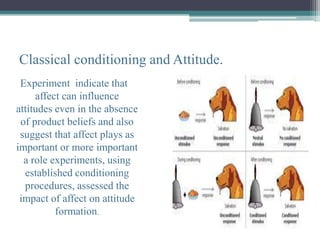
Classical conditioning and Attitude.
 Experiment indicate that
     affect can influence
attitudes even in the absence
 of product beliefs and also
 suggest that affect plays as
important or more important
  a role experiments, using
  established conditioning
  procedures, assessed the
 impact of affect on attitude
          formation.
Operant conditioning and Attitude acquisition.

Attitudes are acquired rather
than inborn , complex
attitudes are probably
formed through operant
conditioning, as an
individual is reinforced for
holding and voicing certain
attitudes.
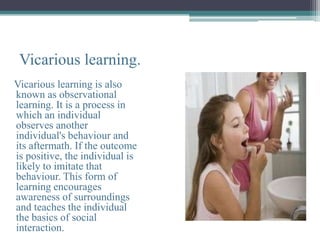
Vicarious learning.
Vicarious learning is also
known as observational
learning. It is a process in
which an individual
observes another
individual's behaviour and
its aftermath. If the outcome
is positive, the individual is
likely to imitate that
behaviour. This form of
learning encourages
awareness of surroundings
and teaches the individual
the basics of social
interaction.
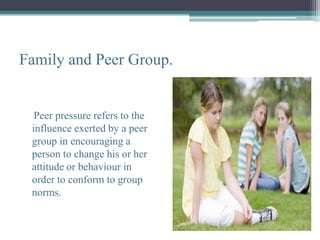
Family and Peer Group.


  Peer pressure refers to the
 influence exerted by a peer
 group in encouraging a
 person to change his or her
 attitude or behaviour in
 order to conform to group
 norms.
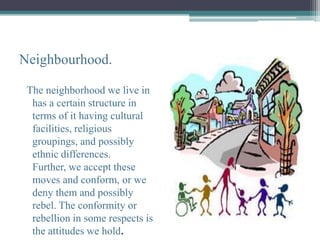
Neighbourhood.

 The neighborhood we live in
  has a certain structure in
  terms of it having cultural
  facilities, religious
  groupings, and possibly
  ethnic differences.
  Further, we accept these
  moves and conform, or we
  deny them and possibly
  rebel. The conformity or
  rebellion in some respects is
  the attitudes we hold.
Economic Status and Occupations.
  Our economic and
 occupational positions also
 contributes to attitudes
 formation. They
 determine, in part, our
 attitudes towards unions and
 management and our belief
 that certain laws are “good”
 or “bad” . Our socio-
 economic background
 influences our present and
 future attitudes.
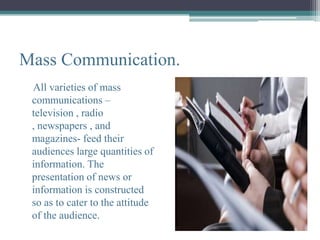
Mass Communication.
 All varieties of mass
 communications –
 television , radio
 , newspapers , and
 magazines- feed their
 audiences large quantities of
 information. The
 presentation of news or
 information is constructed
 so as to cater to the attitude
 of the audience.
Benefits of Positive Attitude.
 Increase productivity.
 Fosters teamwork.
 Solves problems.
 Improves quality.
 Makes for congenial atmosphere.
 Breeds loyalty.
 Increase profits.
 Fosters better relationship with the employers, employees and
  customers.
 Reduces stress.
 Makes for a pleasing personality.
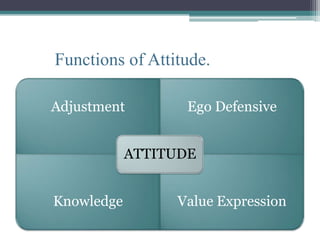
Functions of Attitude.

Adjustment         Ego Defensive


            ATTITUDE


Knowledge        Value Expression
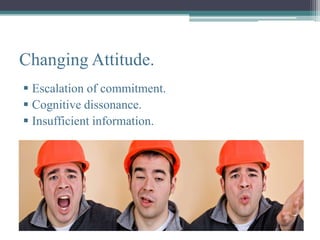
Changing Attitude.
 Escalation of commitment.
 Cognitive dissonance.
 Insufficient information.
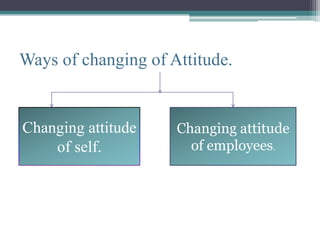
Ways of changing of Attitude.


Changing attitude    Changing attitude
    of self.           of employees.
Changing attitude of self.
 Be aware of one’s attitude.
 Think for self.
 Realize that there are few , if any, benefits from
  harboring negative attitude.
 Keep an open mind.
 Built a positive self esteem.
 Stay away from negative influence.
Changing Attitude of Employees
 Give feedback.
 Accentuated positive conditions.
 Positive role model.
 Providing new information.
 Use of fear.
 Influence of friends or press.
 The co-opting approach
 Others.
Attitude measurement.


 Rating scales.
 Critical Incidents.
 Interviews.
 Action Tendencies
 Likert scale.
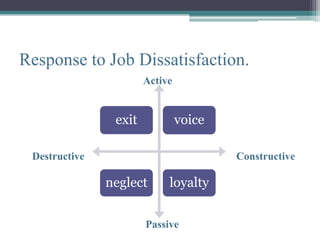
Response to Job Dissatisfaction.
                       Active


                exit            voice

 Destructive                            Constructive

               neglect      loyalty


                       Passive
Attitude

Attitude

  • 1.
  • 2.
    Definition: “An attitude ismental state of readiness , learned and organized through experience , exerting a specific influence on person’s
  • 4.
    Components Of Attitudes: An affective component.  A cognitive element.  A behavioral component.
  • 5.
    FORMATION OF ATTITUDE: Direct experience with the object.  Classical conditioning and Attitudes.  Operant conditioning and Attitude acquisition.  Vicarious learning.  Family and Peer Groups.  Neighbourhood.  Economic Status and Occupations.  Mass Communications.
  • 6.
    Direct experience withthe Object. Attitudes formed through direct behavioural experience with an attitude object have been found to better predict later behaviour than attitudes formed through indirect experience.
  • 7.
    Classical conditioning andAttitude. Experiment indicate that affect can influence attitudes even in the absence of product beliefs and also suggest that affect plays as important or more important a role experiments, using established conditioning procedures, assessed the impact of affect on attitude formation.
  • 8.
    Operant conditioning andAttitude acquisition. Attitudes are acquired rather than inborn , complex attitudes are probably formed through operant conditioning, as an individual is reinforced for holding and voicing certain attitudes.
  • 9.
    Vicarious learning. Vicarious learningis also known as observational learning. It is a process in which an individual observes another individual's behaviour and its aftermath. If the outcome is positive, the individual is likely to imitate that behaviour. This form of learning encourages awareness of surroundings and teaches the individual the basics of social interaction.
  • 10.
    Family and PeerGroup. Peer pressure refers to the influence exerted by a peer group in encouraging a person to change his or her attitude or behaviour in order to conform to group norms.
  • 11.
    Neighbourhood. The neighborhoodwe live in has a certain structure in terms of it having cultural facilities, religious groupings, and possibly ethnic differences. Further, we accept these moves and conform, or we deny them and possibly rebel. The conformity or rebellion in some respects is the attitudes we hold.
  • 12.
    Economic Status andOccupations. Our economic and occupational positions also contributes to attitudes formation. They determine, in part, our attitudes towards unions and management and our belief that certain laws are “good” or “bad” . Our socio- economic background influences our present and future attitudes.
  • 13.
    Mass Communication. Allvarieties of mass communications – television , radio , newspapers , and magazines- feed their audiences large quantities of information. The presentation of news or information is constructed so as to cater to the attitude of the audience.
  • 14.
    Benefits of PositiveAttitude.  Increase productivity.  Fosters teamwork.  Solves problems.  Improves quality.  Makes for congenial atmosphere.  Breeds loyalty.  Increase profits.  Fosters better relationship with the employers, employees and customers.  Reduces stress.  Makes for a pleasing personality.
  • 15.
    Functions of Attitude. Adjustment Ego Defensive ATTITUDE Knowledge Value Expression
  • 16.
    Changing Attitude.  Escalationof commitment.  Cognitive dissonance.  Insufficient information.
  • 17.
    Ways of changingof Attitude. Changing attitude Changing attitude of self. of employees.
  • 18.
    Changing attitude ofself.  Be aware of one’s attitude.  Think for self.  Realize that there are few , if any, benefits from harboring negative attitude.  Keep an open mind.  Built a positive self esteem.  Stay away from negative influence.
  • 19.
    Changing Attitude ofEmployees  Give feedback.  Accentuated positive conditions.  Positive role model.  Providing new information.  Use of fear.  Influence of friends or press.  The co-opting approach  Others.
  • 20.
    Attitude measurement.  Ratingscales.  Critical Incidents.  Interviews.  Action Tendencies  Likert scale.
  • 21.
    Response to JobDissatisfaction. Active exit voice Destructive Constructive neglect loyalty Passive