
Mr.Visanth V S
Asso.Professor
IGSCON, Amethi
 A chemical messenger mostly generated in mast
cells.
 Histamine is present in practically all tissues,
with significant amounts in the lungs, skin, blood
vessels, and GI tract
 Also found in venoms of bees, wasps and other
stinging secretions.
 Found at high concentration in mast cells and
basophils
 Mediates a wide range of cellular responses
◦Allergic and inflammatory reactions
◦Gastric acid secretion
◦Bronchospasm
◦Stimulates nerve ending causing pain and
itching
◦Neurotransmission in parts of the brain
 Most often, histamine is just one of several
chemical mediators released in response to stimuli
 The stimuli for release of histamine from tissues
may include destruction of cells as a result of cold,
toxins from organisms, venoms from insects and
spiders, and trauma
 Allergies and anaphylaxis can also trigger
significant release of histamine.
 Antihistamines are histamine antagonists.
 They can be H1 receptor blockers and H2 receptor
blockers.
 Drugs that block H1 receptor blockers are
conventionally called antihistamines.
 H2 blockers are used in the treatment of peptic ulcer.
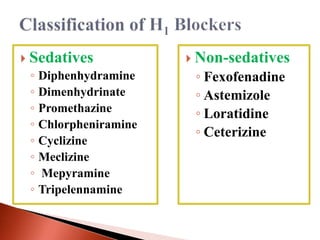
 Sedatives
◦ Diphenhydramine
◦ Dimenhydrinate
◦ Promethazine
◦ Chlorpheniramine
◦ Cyclizine
◦ Meclizine
◦ Mepyramine
◦ Tripelennamine
 Non-sedatives
◦ Fexofenadine
◦ Astemizole
◦ Loratidine
◦ Ceterizine
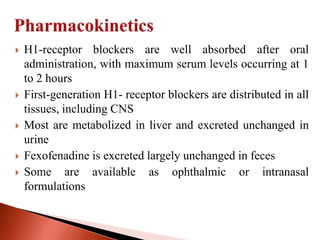
 H1-receptor blockers are well absorbed after oral
administration, with maximum serum levels occurring at 1
to 2 hours
 First-generation H1- receptor blockers are distributed in all
tissues, including CNS
 Most are metabolized in liver and excreted unchanged in
urine
 Fexofenadine is excreted largely unchanged in feces
 Some are available as ophthalmic or intranasal
formulations
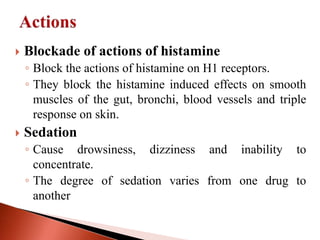
 Blockade of actions of histamine
◦ Block the actions of histamine on H1 receptors.
◦ They block the histamine induced effects on smooth
muscles of the gut, bronchi, blood vessels and triple
response on skin.
 Sedation
◦ Cause drowsiness, dizziness and inability to
concentrate.
◦ The degree of sedation varies from one drug to
another
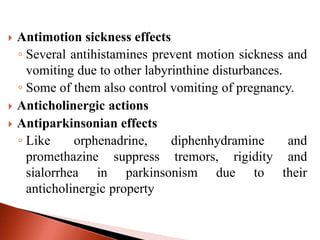
 Antimotion sickness effects
◦ Several antihistamines prevent motion sickness and
vomiting due to other labyrinthine disturbances.
◦ Some of them also control vomiting of pregnancy.
 Anticholinergic actions
 Antiparkinsonian effects
◦ Like orphenadrine, diphenhydramine and
promethazine suppress tremors, rigidity and
sialorrhea in parkinsonism due to their
anticholinergic property
 Sedation
 Dizziness
 Motor incoordination
 Inability to concentrate
 Dry mouth
 Blurred vision
 Constipation
 Urinary retention
 Epigastric distress
 Headache
 Many of them are
teratogenic
 Also called II generation
antihistamines
 No sedation because they poorly
cross BBB
 No anticholinergic side effect
 Allergic reactions
Allergic rhinitis
Conjunctivitis
Hay fever
Urticaria
Pruritis
Allergic skin rashes
Pollinosis
 Common cold
 Motion sickness
 Prevents motion sickness
 Vertigo and vestibular disturbances
 Antiemetic
 Promethazine is used in drug induced post
operative vomiting and morning sickness
 Preanesthetic medication
 For producing sedative, anticholinergic and
antiemetic property.
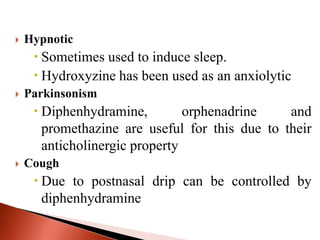
 Hypnotic
 Sometimes used to induce sleep.
 Hydroxyzine has been used as an anxiolytic
 Parkinsonism
 Diphenhydramine, orphenadrine and
promethazine are useful for this due to their
anticholinergic property
 Cough
 Due to postnasal drip can be controlled by
diphenhydramine
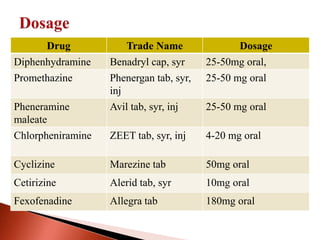
Drug Trade Name Dosage
Diphenhydramine Benadryl cap, syr 25-50mg oral,
Promethazine Phenergan tab, syr,
inj
25-50 mg oral
Pheneramine
maleate
Avil tab, syr, inj 25-50 mg oral
Chlorpheniramine ZEET tab, syr, inj 4-20 mg oral
Cyclizine Marezine tab 50mg oral
Cetirizine Alerid tab, syr 10mg oral
Fexofenadine Allegra tab 180mg oral
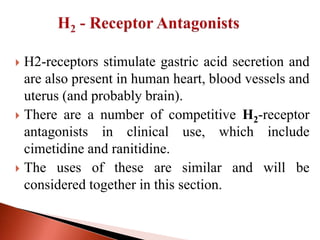
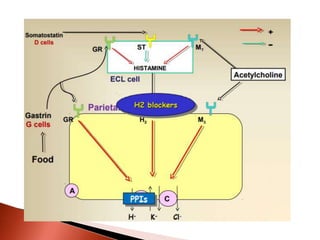
 H2-receptors stimulate gastric acid secretion and
are also present in human heart, blood vessels and
uterus (and probably brain).
 There are a number of competitive H2-receptor
antagonists in clinical use, which include
cimetidine and ranitidine.
 The uses of these are similar and will be
considered together in this section.
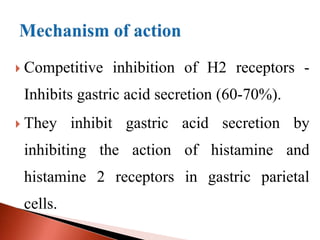
 Competitive inhibition of H2 receptors -
Inhibits gastric acid secretion (60-70%).
 They inhibit gastric acid secretion by
inhibiting the action of histamine and
histamine 2 receptors in gastric parietal
cells.
 Rapidly and absorbed well.
 Cimetidine acts for 5-8 hrs, ranitidine and
famotidine for 12 hrs.
 They are partly metabolized in the liver and
excreted by kidneys.
 They are well tolerated with minor side
effects like;
◦Diarrhea
◦Dizziness
◦Muscle pain
◦Headache
Cimetidine
 Has antiandrogenic effect
It increases plasma prolactin level and
inhibits estrogen metabolism in liver.
On prolonged use
Gynaecomastia
Impotence – men
Menstrual irregularities
Galactorrhea – women
 Ranitidine is well absorbed after oral
administration.
 More potent, longer acting, has no
antiandrogenic effects.
Peptic ulcer : Gastric and Duodenal
ulcer
Gastroesophageal reflux disease
(GERD)
Stress ulcers and Gastritis
Indigestion
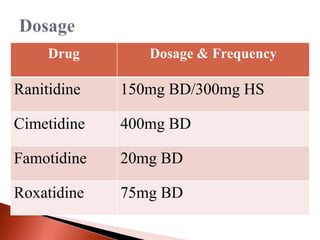
Drug Dosage & Frequency
Ranitidine 150mg BD/300mg HS
Cimetidine 400mg BD
Famotidine 20mg BD
Roxatidine 75mg BD
Antihistamines