BRONCHODILATORS
Dr.ZIKRULLAH
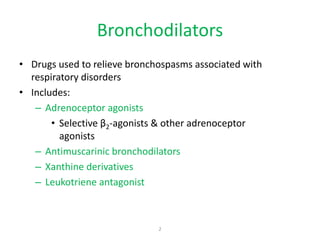
Bronchodilators
• Drugs used to relieve bronchospasms associated with
respiratory disorders
• Includes:
– Adrenoceptor agonists
• Selective β2-agonists & other adrenoceptor
agonists
– Antimuscarinic bronchodilators
– Xanthine derivatives
– Leukotriene antagonist
2
• Adrenoceptor agonists
– (i) Selective beta2 agonists
• Stimulate beta2 receptors in smooth muscle of
the lung, promoting bronchodilation, and
thereby relieving bronchospasms
4
Drug Formulation Dosage
Adult Child
Salbutamol Oral tablet 8 mg twice daily 4 mg twice daily
Inhaler (MDI), 100mcg/dose 100-200mcg up to three to
four times daily
Same as adult
Syrup, 2mg/5ml 4 mg three to four times
daily
1-2 mg three to four times
daily (≥2 yr)
Terbutaline Oral tablet (S.R) 5-7.5 mg two times daily -
Inhaler 500mg / dose
( Turbuhaler)
500 mcg up to four times
daily
-
Inhaler 250mg / dose (MDI) 250-500mcg up to 3-4 times
daily, .04mg/kg sc
Same as adult
6
Short-acting β-2 agonists
Drug Formulation Dosage
Adult Child
Formoterol Inhaler 4.5mcg / dose
(Turbuhaer)
4.5-9 mcg once or twice
daily
Same as adult
Inhaler 9mcg / dose
(Turbuhaer)
Salmeterol Inhaler 25mcg / dose
(MDI)
50-100 mcg twice daily Same as adult
50 mcg / dose (Accuhaler) 50 mcg twice Same as adult
7
Long-acting β-2 agonists
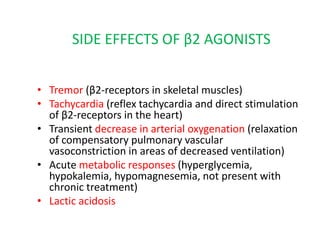
SIDE EFFECTS OF β2 AGONISTS
• Tremor (β2-receptors in skeletal muscles)
• Tachycardia (reflex tachycardia and direct stimulation
of β2-receptors in the heart)
• Transient decrease in arterial oxygenation (relaxation
of compensatory pulmonary vascular
vasoconstriction in areas of decreased ventilation)
• Acute metabolic responses (hyperglycemia,
hypokalemia, hypomagnesemia, not present with
chronic treatment)
• Lactic acidosis
Drug-Drug Interactions
– (ii) Other adrenoceptor agonists
• Less suitable & less safe for use as bronchodilators
because they are more likely to cause arrhythmias .
• Adrenaline (epinephrine) injection is used in the
emergency treatment of acute allergic and
anaphylactic reactions
12
• Antimuscarinic bronchodilators
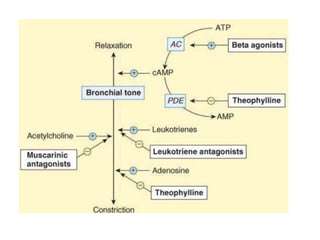
– Blocks the action of acetylcholine in bronchial
smooth muscle, this reduces intracellular GMP, a
bronchoconstrictive substances.
– Used for maintenance therapy of
bronchoconstriction associated with chronic
bronchitis & emphysema
13
Drug Formulation Dosage
Adult Child
Ipratropium Inhaler 20 mcg / dose
(MDI)
20-80 mcg three to four
times a day
20-40 mcg three to four
times a day (≥6yrs)
Tiotropium Inhaler 18 mcg /dose 18 mcg daily Not recommended in
children and adolescents
14
• Adverse effects:
– Dry mouth
– Nausea
– Constipation
– Headache
15
Combination Therapy
• Ipratropium+albuterol (DuoNeb®, generic)
[0.5 mg+3 mg# per 3 ml] 3 ml 6 times per day
• Xanthine Derivatives
– Main xanthine used clinically is theophylline
– Theophylline is a bronchodilator which relaxes smooth
muscle of the bronchi, it is used for reversible airway
obstruction
– One proposed mechanism of action is that it acts by
inhibiting phosphodiesterase, thereby increasing cAMP,
leading to bronchodialtion
17
Drug Formulation Dosage
Adult Child
Theophylline Tablet 200 / 300 mg
(S.R.)
200 – 300 mg twice daily 10 mg / kg ((≥2yrs) twice
daily
Capsule 50 / 100 mg
(Slow release)
7-12 mg/ kg / day in two divided
doses
10-16 mg / kg / day in two
divided doses (9–16yrs)
13-20 mg / kg / day in two
divided doses (30 months – 8
yrs)
Syrup 80 mg / 15 ml 25 ml q6h 1 ml / kg (Max 25 ml) q6h
(≥2yrs)
Aminophylline Injection 25 mg / ml
10 ml
500 mcg / kg / hr IV infusion,
adjust when necessary
1 mg / kg /hr (6 months – 9
years)
800 mcg / kg /hr (10 – 16 yrs)
IV infusion, adjust when
necessary
18
–Adverse effects:
• Toxicity is related to theophyline levels (usually 5-15
µg/ml)
• 20-25 µg/ml : Nausea, vomiting, diarrhea, insomnia,
restlessness
• >30 µg/ml : Serious adverse effects including
dysrhythmias, convulsions, cardiovascular collapse
which may result in death
20
• Bronchodilators are sympathomimetics and commonly
interact with volatile anesthetics to cause cardiac
arrhythmias.
• Aminophyllin commionly interact with halothane.
• It is advisable to wait 13 hrs(approx 3 half lives)after
the last dose of aminophyllin before using halothane
for an asthmatic patient.
• Use of another anaesthetic (enflurane, isoflurane,
sevoflurane) decreases this problem
• The combination of Theophyllin and ketamine may
predispose the patient to seizures.
21
Corticosteroids
1.Used for prophylaxis of chronic asthma
2.Suppressing inflammation
 Decrease synthesis & release of inflammatory mediators
 Decrease infiltration & activity of inflammatory cells
 Decrease edema of the airway mucosa
3.Decrease airway mucus production
4.Increase the number of bronchial beta2 receptors & their
responsiveness to beta2 agonists
22
Drug Formulation Dosage
Adult Child
Beclomethasone Inhaler 50 mcg / dose
(MDI)
200 mcg twice daily /
100mcg three to fours
times daily
Up to 800 mcg daily
50 – 100 mcg two to four
times daily
Inhaler 250 mcg / dose
(MDI)
500 mcg twice daily / 250
mcg four times daily
Not recommended
23
Drug (Cont’d) Formulation Dosage
Adult Child
Budesonide Inhaler 50 mcg / dose
(MDI)
200 mcg twice daily
Up to 1.6 mg daily
50 – 400 mcg twice
daily
Up to 800 mcg daily
Inhaler 200mcg / dose
(MDI)
Inhaler 100 mcg / dose
(Turbuhaler)
200-800 mcg once daily
in evening
Up to 1.6 mg daily in
two divided doses
200-800 mcg daily in
two divided doses /
200-400 mcg once
daily in evening
(<12 yrs)
Inhaler 200 mcg / dose
(Turbuhaler)
Inhaler 400 mcg / dose
(Turbuhaler)
24
Drug (Cont’d) Formulation Dosage
Adult Child
Fluticasone Inhaler 25mcg / dose (MDI) 100 – 1000 mcg
twice daily
50-100 mcg twice daily
(4-16 yrs)
Inhaler 50 mcg / dose (MDI)
Inhaler 125 mcg / dose (MDI)
Inhaler 250 mcg / dose (MDI)
Inhaler 50 mcg / dose (Accuhaler)
Inhaler 100 mcg / dose (Accuhaler)
Inhaler 250 mcg / dose (Accuhaler)
25
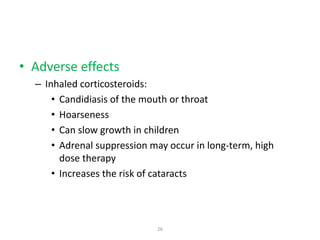
• Adverse effects
– Inhaled corticosteroids:
• Candidiasis of the mouth or throat
• Hoarseness
• Can slow growth in children
• Adrenal suppression may occur in long-term, high
dose therapy
• Increases the risk of cataracts
26
• Perioperative systemic steriods should be administered
to the patients of bronchial asthma if symptoms persist
and PEFR and FEV1 is less than 80% of predicted.
• HPE suppression should be assumed to be present in
the patients who have received systemic steroid for
more than 3 weeks in the past six months.
• These should receive stress dose coverage( inj Hydrocot
100 mg iv 8 hrly with rapid tapering after 24 hrs.
27
Anaesthetics bronchodilator
• Halothane
• Sevoflurane
• Isoflurane
• Desflurane
• Enflurane
• Propofol
Cromoglycates
• Stabilise mast cells & prevent the release of
bronchoconstrictive & inflammatory substances when
mast cells are confronted with allergens & other stimuli
• Only for prophylaxis of acute asthma attacks
29
Drug Formulation Dosage
Adult Child
Cromoglycate Na Inhaler (1 mg
& 5mg/dose)
10 mg four times daily, may be
increased to six to eight times
daily
Same as adult
Nebuliser
solution 10 mg
/ ml 2 ml
20 mg four times daily, may be
increased six times daily
Same as adult
Nedocromil
Sodium
Inhaler 2 mg /
dose (MDI)
4 mg two to four times daily Sames as adult (>6
yrs)
30
Adverse effects
Transient Bronchospasm A selective β2 agonist such as
salbutamol or terbutaline may
be inhaled a few minutes
beforehand
Others: coughing, throat irritation
31
Leukotriene receptor antagonists
• Act by suppressing the effects of leukotrienes,
compounds that promote bronchoconstriction as well
as eosinophil infiltration, mucus productions, & airway
edema
• Help to prevent acute asthma attacks induced by
allergens & other stimuli
• Indicated for long-term treatment of asthma
32
• Dosage:
– Montelukast (5 & 10 mg tablets)
• Adult: 10 mg daily at bedtime
• Child:
– (2-5yrs) 4 mg daily at bedtime
– (6-14yrs) 5 mg daily at bedtime
33
• Adverse effects:
– GI disturbances
– Hypersensitivity reactions
– Restlessness & headache
– Upper respiratory tract infection
– Manufacturer advises to avoid these drugs in
pregnancy & breast-feeding unless essential
34
Thank you
35

Bronchodilators

  • 1.
  • 2.
    Bronchodilators • Drugs usedto relieve bronchospasms associated with respiratory disorders • Includes: – Adrenoceptor agonists • Selective β2-agonists & other adrenoceptor agonists – Antimuscarinic bronchodilators – Xanthine derivatives – Leukotriene antagonist 2
  • 4.
    • Adrenoceptor agonists –(i) Selective beta2 agonists • Stimulate beta2 receptors in smooth muscle of the lung, promoting bronchodilation, and thereby relieving bronchospasms 4
  • 6.
    Drug Formulation Dosage AdultChild Salbutamol Oral tablet 8 mg twice daily 4 mg twice daily Inhaler (MDI), 100mcg/dose 100-200mcg up to three to four times daily Same as adult Syrup, 2mg/5ml 4 mg three to four times daily 1-2 mg three to four times daily (≥2 yr) Terbutaline Oral tablet (S.R) 5-7.5 mg two times daily - Inhaler 500mg / dose ( Turbuhaler) 500 mcg up to four times daily - Inhaler 250mg / dose (MDI) 250-500mcg up to 3-4 times daily, .04mg/kg sc Same as adult 6 Short-acting β-2 agonists
  • 7.
    Drug Formulation Dosage AdultChild Formoterol Inhaler 4.5mcg / dose (Turbuhaer) 4.5-9 mcg once or twice daily Same as adult Inhaler 9mcg / dose (Turbuhaer) Salmeterol Inhaler 25mcg / dose (MDI) 50-100 mcg twice daily Same as adult 50 mcg / dose (Accuhaler) 50 mcg twice Same as adult 7 Long-acting β-2 agonists
  • 9.
    SIDE EFFECTS OFβ2 AGONISTS • Tremor (β2-receptors in skeletal muscles) • Tachycardia (reflex tachycardia and direct stimulation of β2-receptors in the heart) • Transient decrease in arterial oxygenation (relaxation of compensatory pulmonary vascular vasoconstriction in areas of decreased ventilation) • Acute metabolic responses (hyperglycemia, hypokalemia, hypomagnesemia, not present with chronic treatment) • Lactic acidosis
  • 10.
  • 12.
    – (ii) Otheradrenoceptor agonists • Less suitable & less safe for use as bronchodilators because they are more likely to cause arrhythmias . • Adrenaline (epinephrine) injection is used in the emergency treatment of acute allergic and anaphylactic reactions 12
  • 13.
    • Antimuscarinic bronchodilators –Blocks the action of acetylcholine in bronchial smooth muscle, this reduces intracellular GMP, a bronchoconstrictive substances. – Used for maintenance therapy of bronchoconstriction associated with chronic bronchitis & emphysema 13
  • 14.
    Drug Formulation Dosage AdultChild Ipratropium Inhaler 20 mcg / dose (MDI) 20-80 mcg three to four times a day 20-40 mcg three to four times a day (≥6yrs) Tiotropium Inhaler 18 mcg /dose 18 mcg daily Not recommended in children and adolescents 14
  • 15.
    • Adverse effects: –Dry mouth – Nausea – Constipation – Headache 15
  • 16.
    Combination Therapy • Ipratropium+albuterol(DuoNeb®, generic) [0.5 mg+3 mg# per 3 ml] 3 ml 6 times per day
  • 17.
    • Xanthine Derivatives –Main xanthine used clinically is theophylline – Theophylline is a bronchodilator which relaxes smooth muscle of the bronchi, it is used for reversible airway obstruction – One proposed mechanism of action is that it acts by inhibiting phosphodiesterase, thereby increasing cAMP, leading to bronchodialtion 17
  • 18.
    Drug Formulation Dosage AdultChild Theophylline Tablet 200 / 300 mg (S.R.) 200 – 300 mg twice daily 10 mg / kg ((≥2yrs) twice daily Capsule 50 / 100 mg (Slow release) 7-12 mg/ kg / day in two divided doses 10-16 mg / kg / day in two divided doses (9–16yrs) 13-20 mg / kg / day in two divided doses (30 months – 8 yrs) Syrup 80 mg / 15 ml 25 ml q6h 1 ml / kg (Max 25 ml) q6h (≥2yrs) Aminophylline Injection 25 mg / ml 10 ml 500 mcg / kg / hr IV infusion, adjust when necessary 1 mg / kg /hr (6 months – 9 years) 800 mcg / kg /hr (10 – 16 yrs) IV infusion, adjust when necessary 18
  • 20.
    –Adverse effects: • Toxicityis related to theophyline levels (usually 5-15 µg/ml) • 20-25 µg/ml : Nausea, vomiting, diarrhea, insomnia, restlessness • >30 µg/ml : Serious adverse effects including dysrhythmias, convulsions, cardiovascular collapse which may result in death 20
  • 21.
    • Bronchodilators aresympathomimetics and commonly interact with volatile anesthetics to cause cardiac arrhythmias. • Aminophyllin commionly interact with halothane. • It is advisable to wait 13 hrs(approx 3 half lives)after the last dose of aminophyllin before using halothane for an asthmatic patient. • Use of another anaesthetic (enflurane, isoflurane, sevoflurane) decreases this problem • The combination of Theophyllin and ketamine may predispose the patient to seizures. 21
  • 22.
    Corticosteroids 1.Used for prophylaxisof chronic asthma 2.Suppressing inflammation  Decrease synthesis & release of inflammatory mediators  Decrease infiltration & activity of inflammatory cells  Decrease edema of the airway mucosa 3.Decrease airway mucus production 4.Increase the number of bronchial beta2 receptors & their responsiveness to beta2 agonists 22
  • 23.
    Drug Formulation Dosage AdultChild Beclomethasone Inhaler 50 mcg / dose (MDI) 200 mcg twice daily / 100mcg three to fours times daily Up to 800 mcg daily 50 – 100 mcg two to four times daily Inhaler 250 mcg / dose (MDI) 500 mcg twice daily / 250 mcg four times daily Not recommended 23
  • 24.
    Drug (Cont’d) FormulationDosage Adult Child Budesonide Inhaler 50 mcg / dose (MDI) 200 mcg twice daily Up to 1.6 mg daily 50 – 400 mcg twice daily Up to 800 mcg daily Inhaler 200mcg / dose (MDI) Inhaler 100 mcg / dose (Turbuhaler) 200-800 mcg once daily in evening Up to 1.6 mg daily in two divided doses 200-800 mcg daily in two divided doses / 200-400 mcg once daily in evening (<12 yrs) Inhaler 200 mcg / dose (Turbuhaler) Inhaler 400 mcg / dose (Turbuhaler) 24
  • 25.
    Drug (Cont’d) FormulationDosage Adult Child Fluticasone Inhaler 25mcg / dose (MDI) 100 – 1000 mcg twice daily 50-100 mcg twice daily (4-16 yrs) Inhaler 50 mcg / dose (MDI) Inhaler 125 mcg / dose (MDI) Inhaler 250 mcg / dose (MDI) Inhaler 50 mcg / dose (Accuhaler) Inhaler 100 mcg / dose (Accuhaler) Inhaler 250 mcg / dose (Accuhaler) 25
  • 26.
    • Adverse effects –Inhaled corticosteroids: • Candidiasis of the mouth or throat • Hoarseness • Can slow growth in children • Adrenal suppression may occur in long-term, high dose therapy • Increases the risk of cataracts 26
  • 27.
    • Perioperative systemicsteriods should be administered to the patients of bronchial asthma if symptoms persist and PEFR and FEV1 is less than 80% of predicted. • HPE suppression should be assumed to be present in the patients who have received systemic steroid for more than 3 weeks in the past six months. • These should receive stress dose coverage( inj Hydrocot 100 mg iv 8 hrly with rapid tapering after 24 hrs. 27
  • 28.
    Anaesthetics bronchodilator • Halothane •Sevoflurane • Isoflurane • Desflurane • Enflurane • Propofol
  • 29.
    Cromoglycates • Stabilise mastcells & prevent the release of bronchoconstrictive & inflammatory substances when mast cells are confronted with allergens & other stimuli • Only for prophylaxis of acute asthma attacks 29
  • 30.
    Drug Formulation Dosage AdultChild Cromoglycate Na Inhaler (1 mg & 5mg/dose) 10 mg four times daily, may be increased to six to eight times daily Same as adult Nebuliser solution 10 mg / ml 2 ml 20 mg four times daily, may be increased six times daily Same as adult Nedocromil Sodium Inhaler 2 mg / dose (MDI) 4 mg two to four times daily Sames as adult (>6 yrs) 30
  • 31.
    Adverse effects Transient BronchospasmA selective β2 agonist such as salbutamol or terbutaline may be inhaled a few minutes beforehand Others: coughing, throat irritation 31
  • 32.
    Leukotriene receptor antagonists •Act by suppressing the effects of leukotrienes, compounds that promote bronchoconstriction as well as eosinophil infiltration, mucus productions, & airway edema • Help to prevent acute asthma attacks induced by allergens & other stimuli • Indicated for long-term treatment of asthma 32
  • 33.
    • Dosage: – Montelukast(5 & 10 mg tablets) • Adult: 10 mg daily at bedtime • Child: – (2-5yrs) 4 mg daily at bedtime – (6-14yrs) 5 mg daily at bedtime 33
  • 34.
    • Adverse effects: –GI disturbances – Hypersensitivity reactions – Restlessness & headache – Upper respiratory tract infection – Manufacturer advises to avoid these drugs in pregnancy & breast-feeding unless essential 34
  • 35.