DRUGS FOR ASTHMA
PRESENTED BY
ABHILASHA VERMA
LECTURER
JHALAWAR NURSING COLLEGE
TREATMENT APPROCHES
1. Prevention of antigen and antibody reaction.
2. Neutralization of IgE.
3. Suppression of inflammation and bronchial hypereactivity.
4. Blockage of constrictor neurotransmitter by giving anti-
cholinergics.
5. Prevention of release of inflammatory mediators.
6. Dilatation of bronchiols.
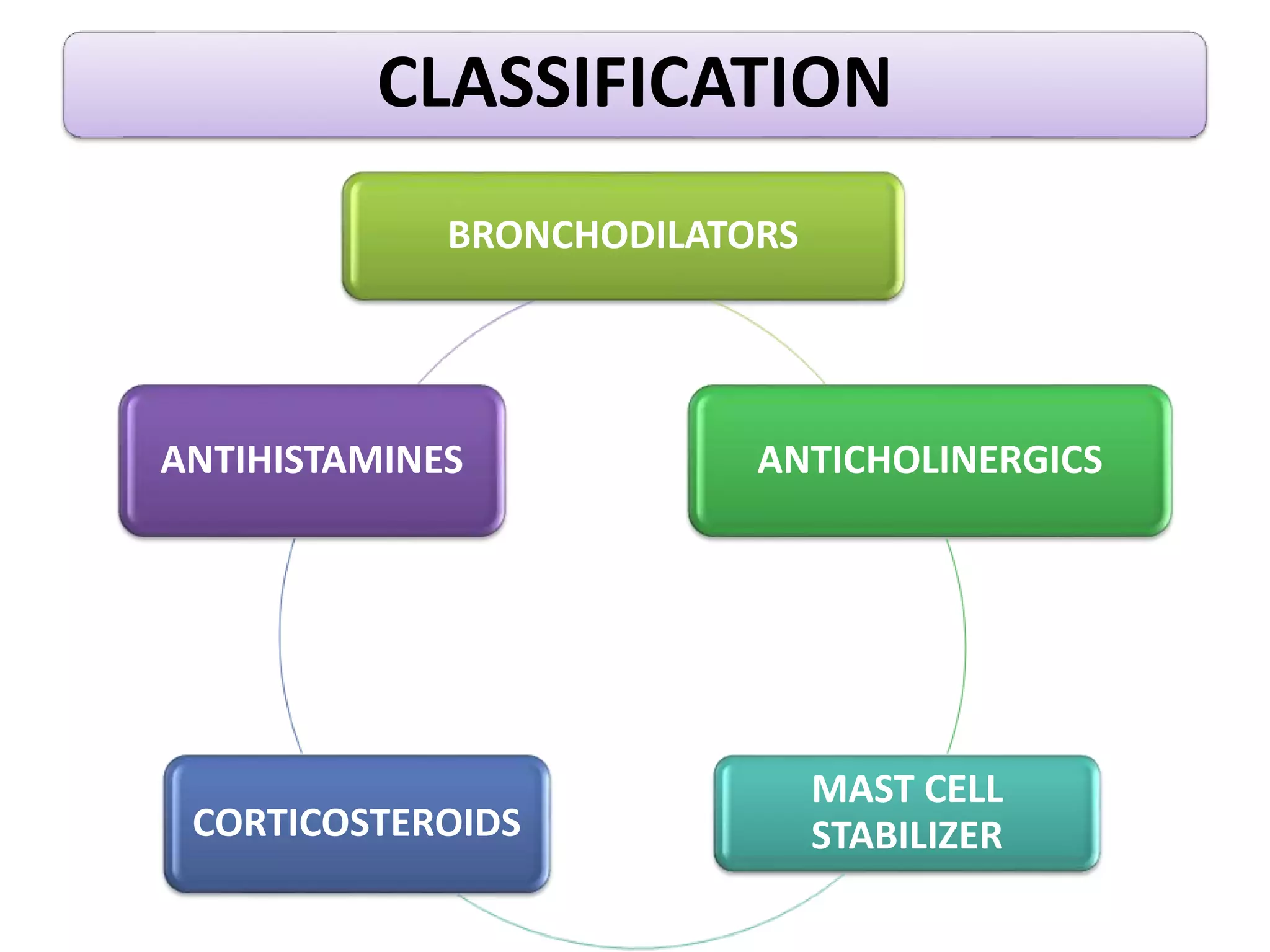
CLASSIFICATION
BRONCHODILATORS
ANTICHOLINERGICS
MAST CELL
STABILIZERCORTICOSTEROIDS
ANTIHISTAMINES
BRONCHODILATORS
1) Sympathomimetics or β-Adrenergic Agonists
a) Non- selective- β-agonists
Epinephrine, ephedrine, isoprotenerol
b). Selective β-agonists
- Salbutamol, terbutaline, metaproterenol, salmeterol,
formaterol etc.
2) Methylxanthine-
Theophylline, Aminophylline, Hydroxy ethyl,
theophylline,doxophylline.
Sympathomimetics or β-Adrenergic
Agonists
M.O.A-
1. Relax smooth muscles by stimulate β-receptors.
2. Inhibit release of inflammatory mediator or broncho
constricting substances from mast cells.
3. Increase mucociliary transport
a) Non-selective β- agonists
• Cause more cardiac stimulation ,they should be reserved for
special situation.
 Epinephrine:
– very effective, rapidly acting especially preferable for the
relief of acute attack of bronchial asthma.
– Administered by inhalation or subcutaneously.
 Ephedrine:
• Compared to epinephrine, it has longer duration of action but
more pronounced central effect
• It can be given orally.
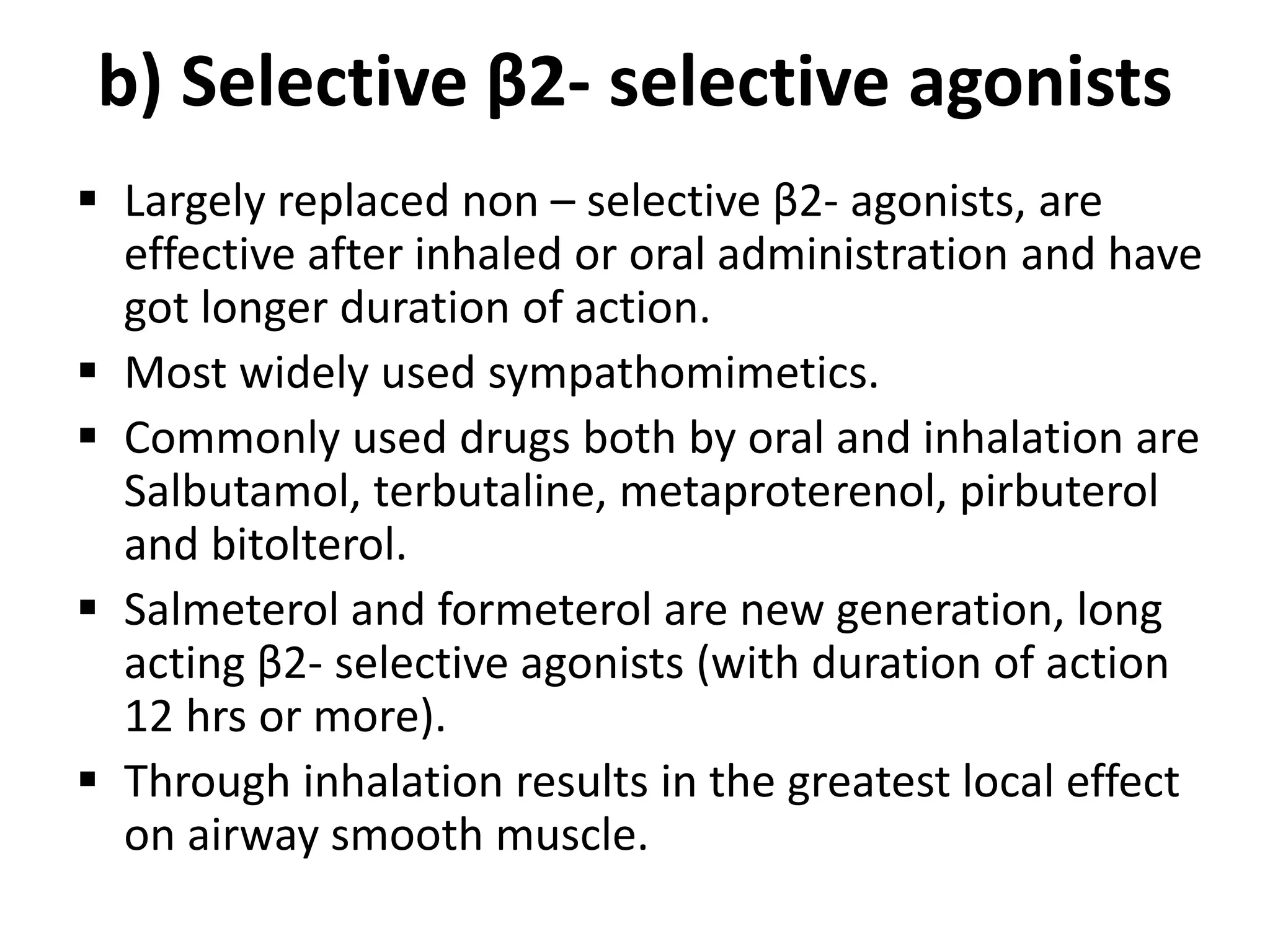
b) Selective β2- selective agonists
 Largely replaced non – selective β2- agonists, are
effective after inhaled or oral administration and have
got longer duration of action.
 Most widely used sympathomimetics.
 Commonly used drugs both by oral and inhalation are
Salbutamol, terbutaline, metaproterenol, pirbuterol
and bitolterol.
 Salmeterol and formeterol are new generation, long
acting β2- selective agonists (with duration of action
12 hrs or more).
 Through inhalation results in the greatest local effect
on airway smooth muscle.
DRUG DOSES & EXAMPLES
(SYMPATHOMIMETICS)
S.N DRUGS DOSE
1. Salbutamol 2-4 mg oral
2. Terbutaline 5 mg oral
3. Formoterol 80 mcg oral
4. Albuterol 200-400 mcg inhaled every 6
hr.
Side effects
• Tremors, anxiety, insomnia, tachycardia, headache,
nervousness, tachycardia, hypertension and etc.
Contraindications:
• Hypersensitivity to the drugs
• arrhythmias
Precautions:
• Used cautiously in patients with hypertension,
cardiac dysfunction, hyperthyroidism, glaucoma,
diabetes, pregnancy.
METHYLXANTHINES
• The theophylline preparations most commonly used for therapeutic
purposes is aminophylline.
Mechanism of Action-
 Inhibit the release of histamines and leukotriens from the mast
cells , the theophylline is most selective in its smooth muscle
effect.
 They competitively inhibit the action of adenosine on adenosine
(A1 and A2) receptors
(adenosine has been shown to cause contraction of airway
smooth muscle and to provoke histamine release from airway
mast cells.
DRUG DOSES & EXAMPLES
(METHYLXANTHINES)
S.N DRUGS DOSE
1. Theophylline 200-400 mg TDS oral
2. Etophylline 250 mgTDS IV/ IM
3. Aminophylline 250-500 mgTDS IV slow
MUSCRANIC RECEPTOR ANTAGONISTS
(Anticholinergics)
Mechanism of Action
• They inhibit or block effect of acetylcholine
neurotransmitter, acetylcholine cause bronchoconstriction.
Adverse effects
 As a result of rapid absorption include urinary retention,
tachycardia, agitation and local effects like excessive dryness of
mouth. ( limits the quantity of atropine used).
IPRATROPIUM BROMIDE
 The antimuscarinic agents appear to be more effective in
chronic obstructive pulmonary diseases - more than asthma.
 Antimuscranic antagonist drugs appear to be slightly less
effective than β- agonists agents in reversing asthmatic
bronchospasm,
 They are useful as alternative therapies for patients intolerant
of β – agonists.
DRUG DOSES & EXAMPLES
(ANTICHOLINERGICS)
S.N DRUGS DOSE
1. Atropine 0.4 – 1 mg IV
2. Ipatropium Bromide 40-80 mcg
3. Diphenhydramine 25-50 mg
CORTICOSTEROIDS
 Corticosteroids are mainly given for patient who need urgent
treatment and those who have not improved with
bronchodilator.
• Commonly used are hydrocortisone, predinisolone,
beclomethasone.
• Route by inhalation as aerosol, oral, or an IV administration
 Mechanism of action-
• Anti inflammatory nature by inhibition of production of
inflammatory mediators.
• They also potentiate the effects of β- receptor agonists. and
inhibit the airway mucosal inflammation.
DRUG DOSES & EXAMPLES
(CORTICOSTEROIDS)
S.N DRUGS DOSE
1. Prednisolone 5-60 mg/day
2. Beclomethasone
Dipropionate
100 µgm 6 hrly by aerosol
inhalation
3. Budisonide 400 µgm daily
4. Fluticasone 100-250 µgm by aerosol
Clinical uses in bronchial asthma
- Urgent treatment of severe asthma not improved with
bronchodilator
- Nocturnal asthma prevention
- Chronic asthma
Side effects:
- Suppression of the hypothalamic-pituitary-adrenal axis
- Osteoporosis
- Sodium retention and hypertension
- Cataract
- Impairment of growth in children
- Susceptibility to infection like oral candidiasis,
tuberculosis
MAST CELL STABILIZERS
Mechanism of action
• They inhibit mast cell activity, thus prevent
release of allergic mediators like histamine,
cytokines. These chemicals are essential for
inflammation and allergic reactions.
• It has no role once mediator is released and is
used for casual prophylaxis.
Side effects
– Poorly absorbed so minimal side effect
– Throat irritation, cough, dryness of mouth, chest
tightness.
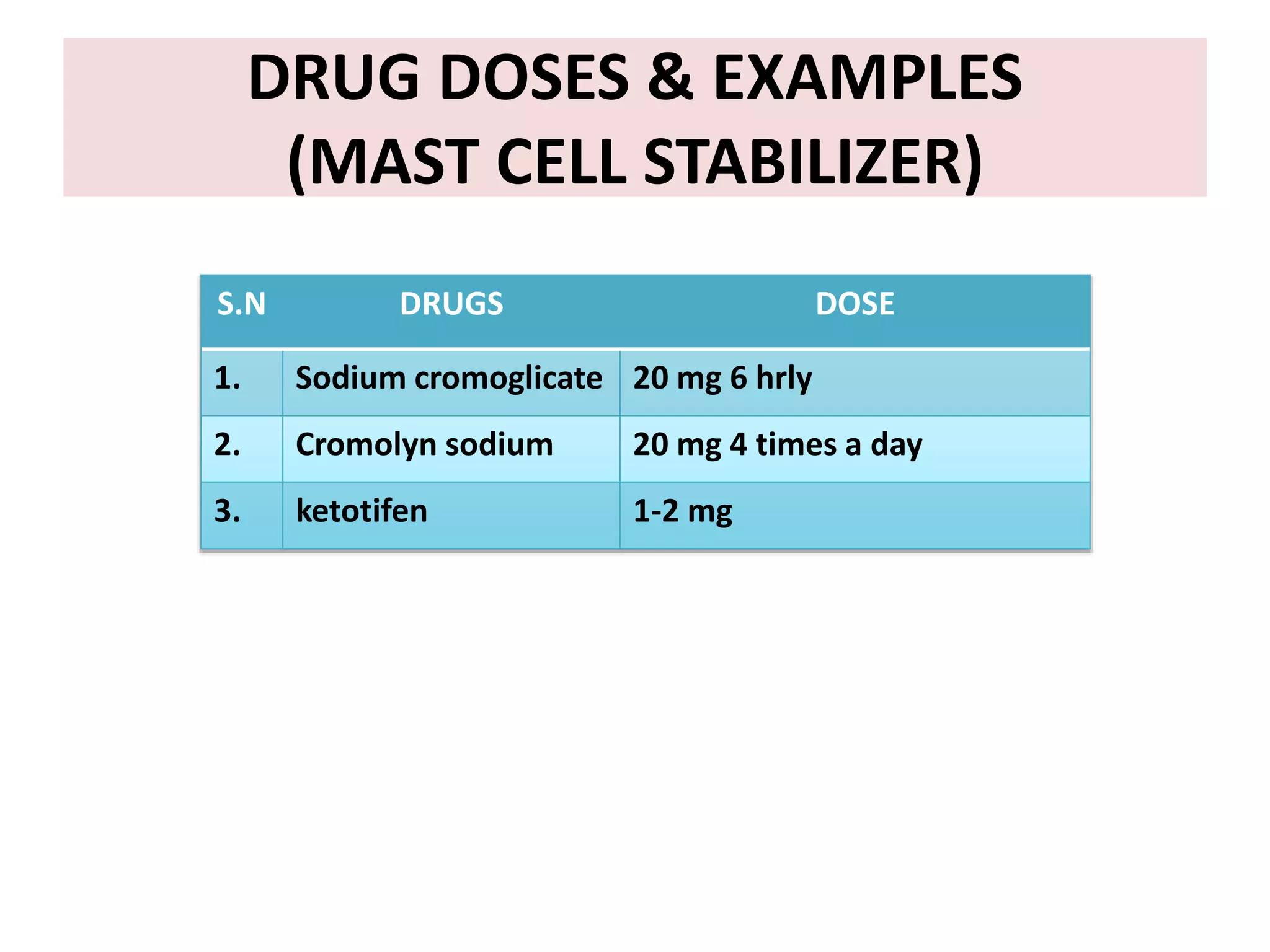
DRUG DOSES & EXAMPLES
(MAST CELL STABILIZER)
S.N DRUGS DOSE
1. Sodium cromoglicate 20 mg 6 hrly
2. Cromolyn sodium 20 mg 4 times a day
3. ketotifen 1-2 mg
ANTIHISTAMINES
M.O.A-
 They blocks effects of histamine and its receptors.
INDICATION-
 Allergic reactions.
 As hypnotics, mild sedatives/anxiolytics.
 As emetics
SIDE EFFECTS-
 Drowsiness
 Dryness mouth
 Blurring vision.
 Urinary retention
 Constipation.
DRUG DOSES & EXAMPLES
(ANTIHISTAMINES)
S.
N
DRUGS DOSE
1. Diphenhydramine 25-50 mg
2. Promethazine 25-50 mg
3. Hydroxyzine 25-50 mg
4. Chlorphenarmine 2-4 mg
5. Cyclizine 50 mg
6. Cetrizine 10 mg
Highly sedative
Mild sedative
Non sedative
TREATMENT OF STATUS ASTHMATICS
 Status asthmatics
• Very sever and sustained attack of asthma which fails to
respond to treatment with usual measures.
 Management:
• Administration of oxygen
• Frequent or continuous administration of aerosolized ß2
agonists like salbutamol
• Systemic corticosteroid like methyl prednisolone or
hydrocortisone IV
• Aminophylline IV infusion
• Iv fluid to avoid dehydration
• Antibiotics in the presence of evidence of infection
DRUG INTERACTION
1. Β-blocker antagonize the effects of β-
sympathomimitic and methylxanthines.
2. Erythromycin increase toxicity risk of
methylxanthines.
3. Prolong use of theophylline cause additive effects.
4. Alcohol and charcol based food decrease
effectiveness of drugs.
NURSING RESPONSIBILITY
• Monitor vital signs closely.
• Teach patients how to use inhalers.
• Instructs patient to avoid respiratory irritants; smoke, duct,
strong smell.
• To detect toxicity monitor therapeutic serum level.
• Monitor adverse reactions.
• Monitor intake output.
• Watch sighs of urinary retention.
• Instruct to rinse mouth after using inhaled steroids.
• Take bronchodilator saveral minute before glucocorticoid
inhaler.
• Care of inhaler properly.
• Give antihistamine at bed time due to sedation efects.
• Avoids sedatives , hypnotics, alcohol.
THANK YOU

Drugs for asthma

  • 1.
    DRUGS FOR ASTHMA PRESENTEDBY ABHILASHA VERMA LECTURER JHALAWAR NURSING COLLEGE
  • 6.
    TREATMENT APPROCHES 1. Preventionof antigen and antibody reaction. 2. Neutralization of IgE. 3. Suppression of inflammation and bronchial hypereactivity. 4. Blockage of constrictor neurotransmitter by giving anti- cholinergics. 5. Prevention of release of inflammatory mediators. 6. Dilatation of bronchiols.
  • 7.
  • 8.
    BRONCHODILATORS 1) Sympathomimetics orβ-Adrenergic Agonists a) Non- selective- β-agonists Epinephrine, ephedrine, isoprotenerol b). Selective β-agonists - Salbutamol, terbutaline, metaproterenol, salmeterol, formaterol etc. 2) Methylxanthine- Theophylline, Aminophylline, Hydroxy ethyl, theophylline,doxophylline.
  • 9.
    Sympathomimetics or β-Adrenergic Agonists M.O.A- 1.Relax smooth muscles by stimulate β-receptors. 2. Inhibit release of inflammatory mediator or broncho constricting substances from mast cells. 3. Increase mucociliary transport
  • 10.
    a) Non-selective β-agonists • Cause more cardiac stimulation ,they should be reserved for special situation.  Epinephrine: – very effective, rapidly acting especially preferable for the relief of acute attack of bronchial asthma. – Administered by inhalation or subcutaneously.  Ephedrine: • Compared to epinephrine, it has longer duration of action but more pronounced central effect • It can be given orally.
  • 11.
    b) Selective β2-selective agonists  Largely replaced non – selective β2- agonists, are effective after inhaled or oral administration and have got longer duration of action.  Most widely used sympathomimetics.  Commonly used drugs both by oral and inhalation are Salbutamol, terbutaline, metaproterenol, pirbuterol and bitolterol.  Salmeterol and formeterol are new generation, long acting β2- selective agonists (with duration of action 12 hrs or more).  Through inhalation results in the greatest local effect on airway smooth muscle.
  • 13.
    DRUG DOSES &EXAMPLES (SYMPATHOMIMETICS) S.N DRUGS DOSE 1. Salbutamol 2-4 mg oral 2. Terbutaline 5 mg oral 3. Formoterol 80 mcg oral 4. Albuterol 200-400 mcg inhaled every 6 hr.
  • 14.
    Side effects • Tremors,anxiety, insomnia, tachycardia, headache, nervousness, tachycardia, hypertension and etc. Contraindications: • Hypersensitivity to the drugs • arrhythmias Precautions: • Used cautiously in patients with hypertension, cardiac dysfunction, hyperthyroidism, glaucoma, diabetes, pregnancy.
  • 15.
    METHYLXANTHINES • The theophyllinepreparations most commonly used for therapeutic purposes is aminophylline. Mechanism of Action-  Inhibit the release of histamines and leukotriens from the mast cells , the theophylline is most selective in its smooth muscle effect.  They competitively inhibit the action of adenosine on adenosine (A1 and A2) receptors (adenosine has been shown to cause contraction of airway smooth muscle and to provoke histamine release from airway mast cells.
  • 16.
    DRUG DOSES &EXAMPLES (METHYLXANTHINES) S.N DRUGS DOSE 1. Theophylline 200-400 mg TDS oral 2. Etophylline 250 mgTDS IV/ IM 3. Aminophylline 250-500 mgTDS IV slow
  • 17.
    MUSCRANIC RECEPTOR ANTAGONISTS (Anticholinergics) Mechanismof Action • They inhibit or block effect of acetylcholine neurotransmitter, acetylcholine cause bronchoconstriction. Adverse effects  As a result of rapid absorption include urinary retention, tachycardia, agitation and local effects like excessive dryness of mouth. ( limits the quantity of atropine used).
  • 18.
    IPRATROPIUM BROMIDE  Theantimuscarinic agents appear to be more effective in chronic obstructive pulmonary diseases - more than asthma.  Antimuscranic antagonist drugs appear to be slightly less effective than β- agonists agents in reversing asthmatic bronchospasm,  They are useful as alternative therapies for patients intolerant of β – agonists.
  • 19.
    DRUG DOSES &EXAMPLES (ANTICHOLINERGICS) S.N DRUGS DOSE 1. Atropine 0.4 – 1 mg IV 2. Ipatropium Bromide 40-80 mcg 3. Diphenhydramine 25-50 mg
  • 20.
    CORTICOSTEROIDS  Corticosteroids aremainly given for patient who need urgent treatment and those who have not improved with bronchodilator. • Commonly used are hydrocortisone, predinisolone, beclomethasone. • Route by inhalation as aerosol, oral, or an IV administration  Mechanism of action- • Anti inflammatory nature by inhibition of production of inflammatory mediators. • They also potentiate the effects of β- receptor agonists. and inhibit the airway mucosal inflammation.
  • 21.
    DRUG DOSES &EXAMPLES (CORTICOSTEROIDS) S.N DRUGS DOSE 1. Prednisolone 5-60 mg/day 2. Beclomethasone Dipropionate 100 µgm 6 hrly by aerosol inhalation 3. Budisonide 400 µgm daily 4. Fluticasone 100-250 µgm by aerosol
  • 22.
    Clinical uses inbronchial asthma - Urgent treatment of severe asthma not improved with bronchodilator - Nocturnal asthma prevention - Chronic asthma Side effects: - Suppression of the hypothalamic-pituitary-adrenal axis - Osteoporosis - Sodium retention and hypertension - Cataract - Impairment of growth in children - Susceptibility to infection like oral candidiasis, tuberculosis
  • 23.
    MAST CELL STABILIZERS Mechanismof action • They inhibit mast cell activity, thus prevent release of allergic mediators like histamine, cytokines. These chemicals are essential for inflammation and allergic reactions. • It has no role once mediator is released and is used for casual prophylaxis. Side effects – Poorly absorbed so minimal side effect – Throat irritation, cough, dryness of mouth, chest tightness.
  • 24.
    DRUG DOSES &EXAMPLES (MAST CELL STABILIZER) S.N DRUGS DOSE 1. Sodium cromoglicate 20 mg 6 hrly 2. Cromolyn sodium 20 mg 4 times a day 3. ketotifen 1-2 mg
  • 25.
    ANTIHISTAMINES M.O.A-  They blockseffects of histamine and its receptors. INDICATION-  Allergic reactions.  As hypnotics, mild sedatives/anxiolytics.  As emetics SIDE EFFECTS-  Drowsiness  Dryness mouth  Blurring vision.  Urinary retention  Constipation.
  • 26.
    DRUG DOSES &EXAMPLES (ANTIHISTAMINES) S. N DRUGS DOSE 1. Diphenhydramine 25-50 mg 2. Promethazine 25-50 mg 3. Hydroxyzine 25-50 mg 4. Chlorphenarmine 2-4 mg 5. Cyclizine 50 mg 6. Cetrizine 10 mg Highly sedative Mild sedative Non sedative
  • 27.
    TREATMENT OF STATUSASTHMATICS  Status asthmatics • Very sever and sustained attack of asthma which fails to respond to treatment with usual measures.  Management: • Administration of oxygen • Frequent or continuous administration of aerosolized ß2 agonists like salbutamol • Systemic corticosteroid like methyl prednisolone or hydrocortisone IV • Aminophylline IV infusion • Iv fluid to avoid dehydration • Antibiotics in the presence of evidence of infection
  • 28.
    DRUG INTERACTION 1. Β-blockerantagonize the effects of β- sympathomimitic and methylxanthines. 2. Erythromycin increase toxicity risk of methylxanthines. 3. Prolong use of theophylline cause additive effects. 4. Alcohol and charcol based food decrease effectiveness of drugs.
  • 29.
    NURSING RESPONSIBILITY • Monitorvital signs closely. • Teach patients how to use inhalers. • Instructs patient to avoid respiratory irritants; smoke, duct, strong smell. • To detect toxicity monitor therapeutic serum level. • Monitor adverse reactions. • Monitor intake output. • Watch sighs of urinary retention. • Instruct to rinse mouth after using inhaled steroids. • Take bronchodilator saveral minute before glucocorticoid inhaler. • Care of inhaler properly. • Give antihistamine at bed time due to sedation efects. • Avoids sedatives , hypnotics, alcohol.
  • 30.