ANGINA PECTORIS.pptx for B.sc 3rd semester students
1.
ANGINA PECTORIS
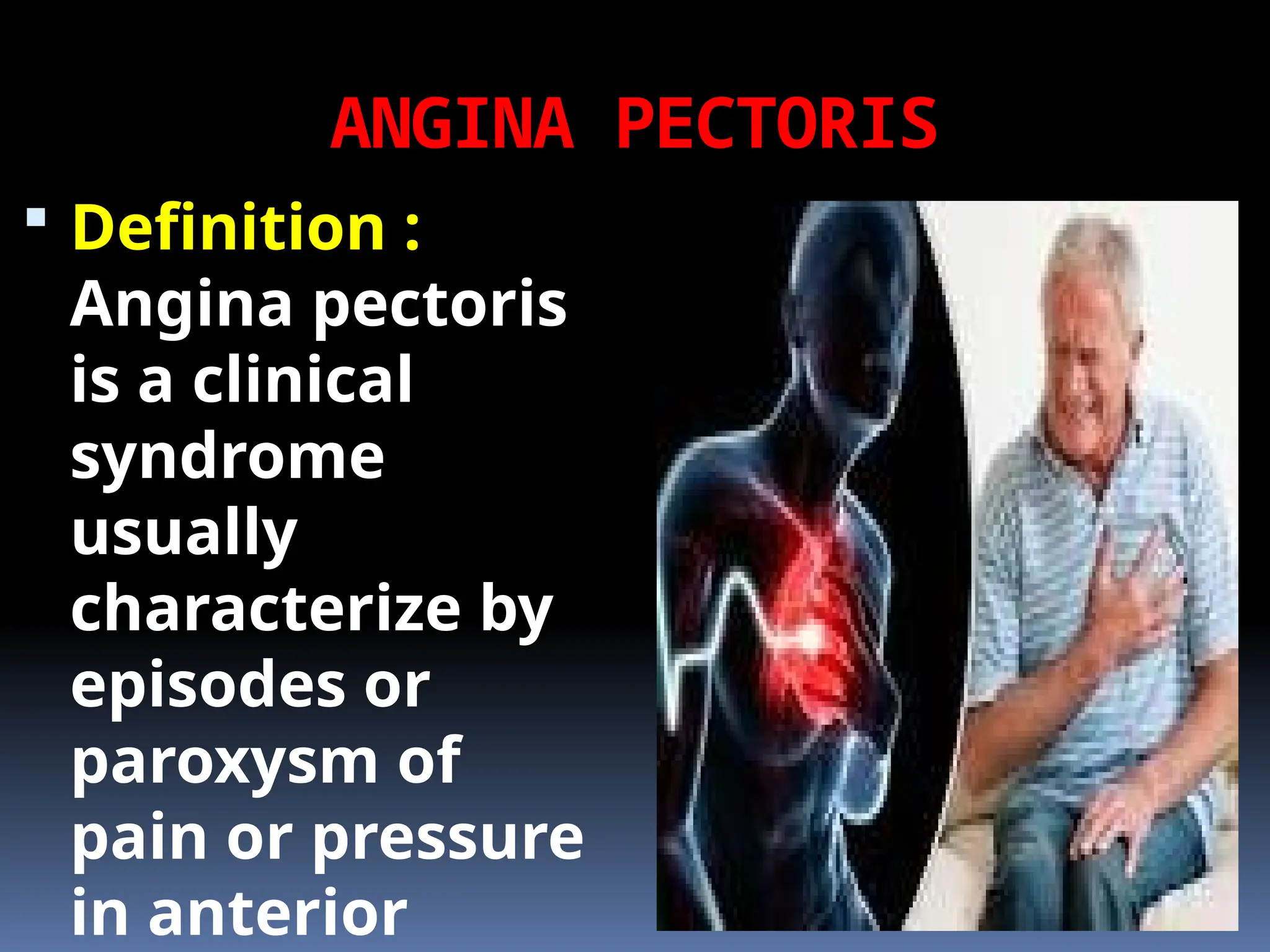
Definition:
Angina pectoris
is a clinical
syndrome
usually
characterize by
episodes or
paroxysm of
pain or pressure
in anterior
2.
TYPES
1. Stable angina:Predictable and
consistent pain that occurs on exertion
and it usually last for 5-10 minutes and
relieved by rest or nitrate.
2. Unstable angina: Also called crescendo
angina- symptoms occurs more frequently
and last longer than stable angina. The
threshold for pain is lower, and pain
occurs at rest.
3.
3. Intractable orrefractory angina:
Sever incapacitating chest pain.
4. Variant angina: Also called
prinzmetal’s angina- pain at rest with
reversible ST- segment elevation.
5. Silence ischemia: Objective evidence
is ischemic but patient reports no
symptoms.
4.
CAUSES:
1. Acute blockageof a coronary
artery or coronary artery spasm
2. Physical exertion, which can
precipitate an attack by increasing
myocardial oxygen demand.
3. Exposure to cold which can cause
vasoconstriction and elevated
blood pressure.
5.
4. Eating aheavy meal
5. Stress or any emotion provoking
situation.
Clinical manifestation
1. Chestpain: pain varying in severity
from a feeling of indigestion to a
choking of heaviness sensation.
2. Diaphoresis
3. Decrease pulse rate
8. Decrease urinaryoutput
9. Nausea and vomiting
10. Cool and pale appearance on
skin.
11. Tightness of a heavy chocking
feeling.
12. Feeling of numbness in the arm,
wrist and hands.
12.
Diagnostic test
1. Historyand physical examination
2. ECG: suggests transient ischemic attacks
with ST segment elevation or depression
and coronary artery involvement.
13.
3. Exercise ECG:During a stress test,
client exercise on treadmill or
stationary bicycle until reaching
85% of maximal heart rate.
4. Radioisotope imaging: regions of
poor perfusion or ischemia
appears areas of diminished or
absent or absent activity.
14.
5. Coronary angiography:To
visualize the patency of
coronary artery and to
determine the extent of
blockage.
15.
MANAGEMENT
The maingoal of treatment is to balance
myocardial oxygen demand.
Medical management
Opiate analgesic:
Vasidilators:
Β- adrenergic blockers: help to reduce the
workload of heart
16.
Calcium channelblockers: Used t o
dilate coronary arteries there by
increasing oxygen supply to
myocardium.
Eg: Nifedipine, Verepamin
17.
Antiplatelet agents:inhibits platelet
aggrigation and reduce coagulation
thus preventing clot formation
Eg: aspirin and ticlopidine
Heparin: prevents formation of new
blood cloths
18.
Oxygen administration:it is usually
initiated at the onset of chest pain in an
attempt to increase the amount of
oxygen delivered to the myocardium
and to decrease pain.