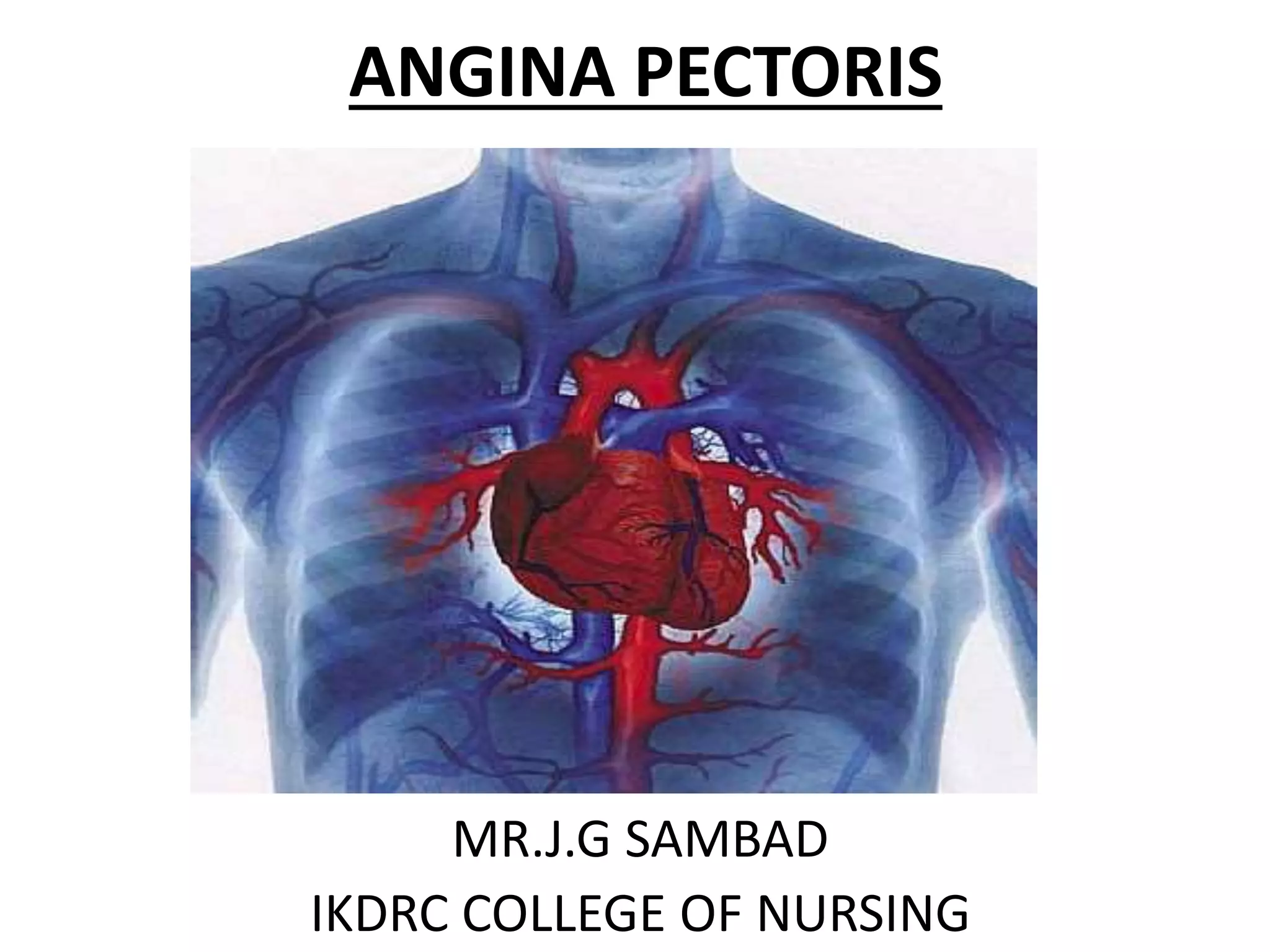

ANGINA PECTORIS
MR.J.G SAMBAD
IKDRC COLLEGE OF NURSING
Introduction
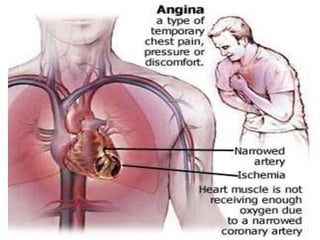
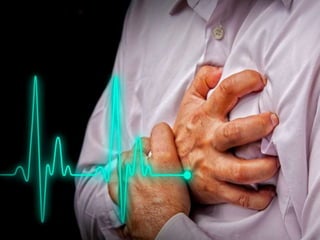
• Angina pectoris is the medical term for chest pain or
discomfort due to coronary heart disease. It occurs
when the heart muscle doesn't get as much blood as it
needs. This usually happens because one or more of
the heart's arteries is narrowed or blocked, also called
ischemia.
• Angina usually causes uncomfortable pressure,
fullness, squeezing or pain in the center of the
chest. You may also feel the discomfort in your neck,
jaw, shoulder, back or arm. (Many types of chest
discomfort — like heartburn, lung infection or
inflammation — aren‘t related to angina.) Angina in
women can be different than in men.
Preceptiing factor
• Physical exertion
• Temp… extrems
• Strong emotion
• Consumption of heavy meals
• Smoking
• Stimulating e.g;cocaine
Risk factor
• Long standing HT
• CAD
• MI
• CHD
• LVH
PATHO-PHYSIOLOGY
• Reduction in coronary flow caused by
epicardial artery stenosis.
• Abnormal constriction of coronary artery.
• Deficient relaxation of coronary arteries.
• Decresed oxygen caring capacity to blood.
Types of angina
1. Stable angina
• Chest pain occurring intermittently over a
long period with some pattern of onset
duration & intensity.
• Last for 3 to 4 min.
• Subside when exertion is relieved.
• ST segment depression.
2.Silent ischemia
• Asymptomatic
• Associated with DM &HT
3.Prinzmetais angina(variants)
• Spasm of coronary arteries by increase ICF in
calcium.
• Frequently with migraine
• May be abases of CAD
4.Nocturnal angina
• At night but necessary during sleep supine
position .
5.Angina decubitas
• Only when person is lying down position
relived by standing /sitting position.
6.Unstable angina
• Also considered as acute coronary syndrome
(ACS).
• Also referred as MI.
• New in onset
• Occurs at rest
• Worsening pattern
• An predictable
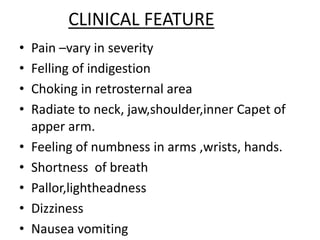
CLINICAL FEATURE
• Pain –vary in severity
• Felling of indigestion
• Choking in retrosternal area
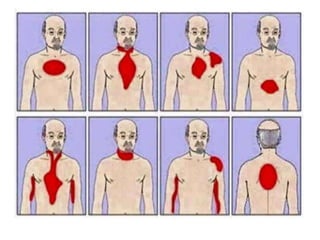
• Radiate to neck, jaw,shoulder,inner Capet of
apper arm.
• Feeling of numbness in arms ,wrists, hands.
• Shortness of breath
• Pallor,lightheadness
• Dizziness
• Nausea vomiting
DIAGNOSTIC STUDY
• 12 lead ECG
• C-reactive protein marker for inflammation.
MANAGEMENT
• NTG-nitroglycerine decreased myocardial
oxygen consumption.
• Beta-adrenergic blocking agent
• Calcium channel blocker.
• Antiplatelet and anticoagulant (aspirin
&heparin)
PREVENTION
• Stop smoking
• More exercise
• Avoid fatty food
• More fruits and vegetable
• Decrease obesity
• Regular BP check
• Less use of contraceptive pills.
THANK YOU!

Angina pectoris

  • 1.
  • 2.
    Introduction • Angina pectorisis the medical term for chest pain or discomfort due to coronary heart disease. It occurs when the heart muscle doesn't get as much blood as it needs. This usually happens because one or more of the heart's arteries is narrowed or blocked, also called ischemia. • Angina usually causes uncomfortable pressure, fullness, squeezing or pain in the center of the chest. You may also feel the discomfort in your neck, jaw, shoulder, back or arm. (Many types of chest discomfort — like heartburn, lung infection or inflammation — aren‘t related to angina.) Angina in women can be different than in men.
  • 4.
    Preceptiing factor • Physicalexertion • Temp… extrems • Strong emotion • Consumption of heavy meals • Smoking • Stimulating e.g;cocaine
  • 5.
    Risk factor • Longstanding HT • CAD • MI • CHD • LVH
  • 6.
    PATHO-PHYSIOLOGY • Reduction incoronary flow caused by epicardial artery stenosis. • Abnormal constriction of coronary artery. • Deficient relaxation of coronary arteries. • Decresed oxygen caring capacity to blood.
  • 7.
    Types of angina 1.Stable angina • Chest pain occurring intermittently over a long period with some pattern of onset duration & intensity. • Last for 3 to 4 min. • Subside when exertion is relieved. • ST segment depression.
  • 8.
  • 9.
    3.Prinzmetais angina(variants) • Spasmof coronary arteries by increase ICF in calcium. • Frequently with migraine • May be abases of CAD
  • 10.
    4.Nocturnal angina • Atnight but necessary during sleep supine position .
  • 11.
    5.Angina decubitas • Onlywhen person is lying down position relived by standing /sitting position.
  • 12.
    6.Unstable angina • Alsoconsidered as acute coronary syndrome (ACS). • Also referred as MI. • New in onset • Occurs at rest • Worsening pattern • An predictable
  • 13.
    CLINICAL FEATURE • Pain–vary in severity • Felling of indigestion • Choking in retrosternal area • Radiate to neck, jaw,shoulder,inner Capet of apper arm. • Feeling of numbness in arms ,wrists, hands. • Shortness of breath • Pallor,lightheadness • Dizziness • Nausea vomiting
  • 16.
    DIAGNOSTIC STUDY • 12lead ECG • C-reactive protein marker for inflammation.
  • 17.
    MANAGEMENT • NTG-nitroglycerine decreasedmyocardial oxygen consumption. • Beta-adrenergic blocking agent • Calcium channel blocker. • Antiplatelet and anticoagulant (aspirin &heparin)
  • 18.
    PREVENTION • Stop smoking •More exercise • Avoid fatty food • More fruits and vegetable • Decrease obesity • Regular BP check • Less use of contraceptive pills.
  • 19.