Development
as Freedom
Amartya Sen
MAINS, SungKungHoe University
International Development in context
Burenjargal Bombish (Rune)
2015.06.26
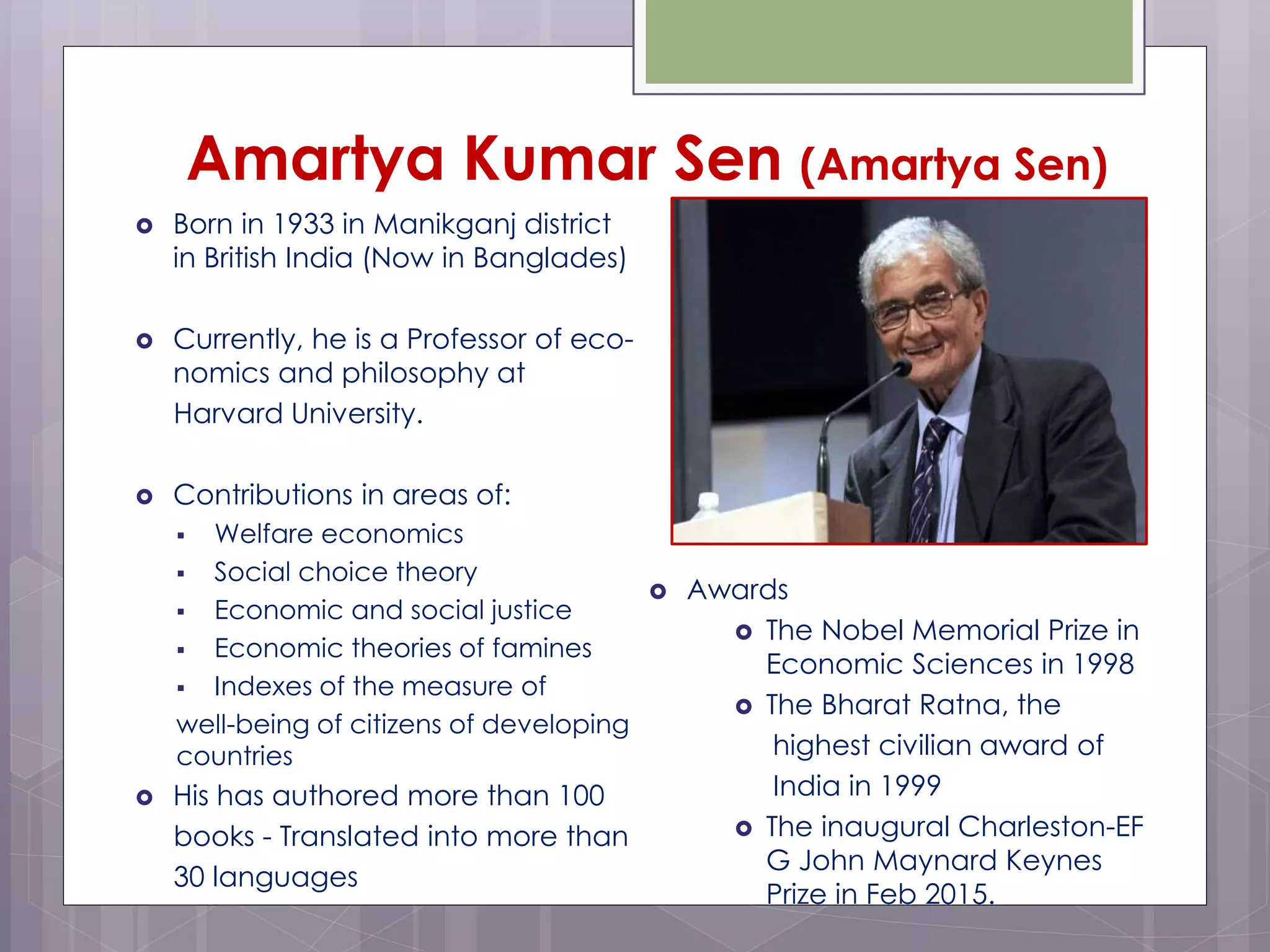
Amartya Kumar Sen (Amartya Sen)
 Born in 1933 in Manikganj district
in British India (Now in Banglades)
 Currently, he is a Professor of eco-
nomics and philosophy at
Harvard University.
 Contributions in areas of:
 Welfare economics
 Social choice theory
 Economic and social justice
 Economic theories of famines
 Indexes of the measure of
well-being of citizens of developing
countries
 His has authored more than 100
books - Translated into more than
30 languages
 Awards
 The Nobel Memorial Prize in
Economic Sciences in 1998
 The Bharat Ratna, the
highest civilian award of
India in 1999
 The inaugural Charleston-EF
G John Maynard Keynes
Prize in Feb 2015.
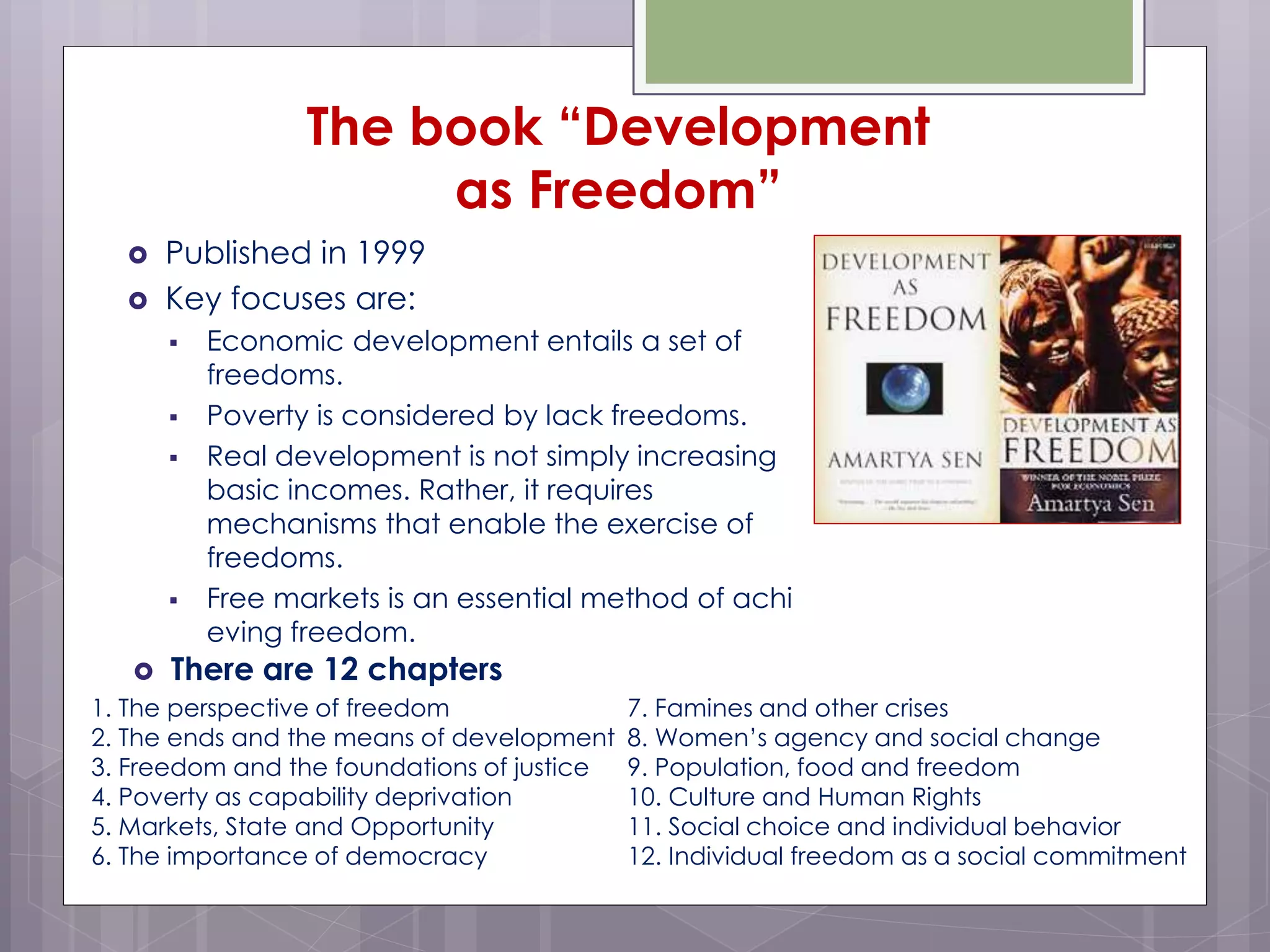
The book “Development
as Freedom”
 Published in 1999
 Key focuses are:
 Economic development entails a set of
freedoms.
 Poverty is considered by lack freedoms.
 Real development is not simply increasing
basic incomes. Rather, it requires
mechanisms that enable the exercise of
freedoms.
 Free markets is an essential method of achi
eving freedom.
 There are 12 chapters
1. The perspective of freedom
2. The ends and the means of development
3. Freedom and the foundations of justice
4. Poverty as capability deprivation
5. Markets, State and Opportunity
6. The importance of democracy
7. Famines and other crises
8. Women’s agency and social change
9. Population, food and freedom
10. Culture and Human Rights
11. Social choice and individual behavior
12. Individual freedom as a social commitment
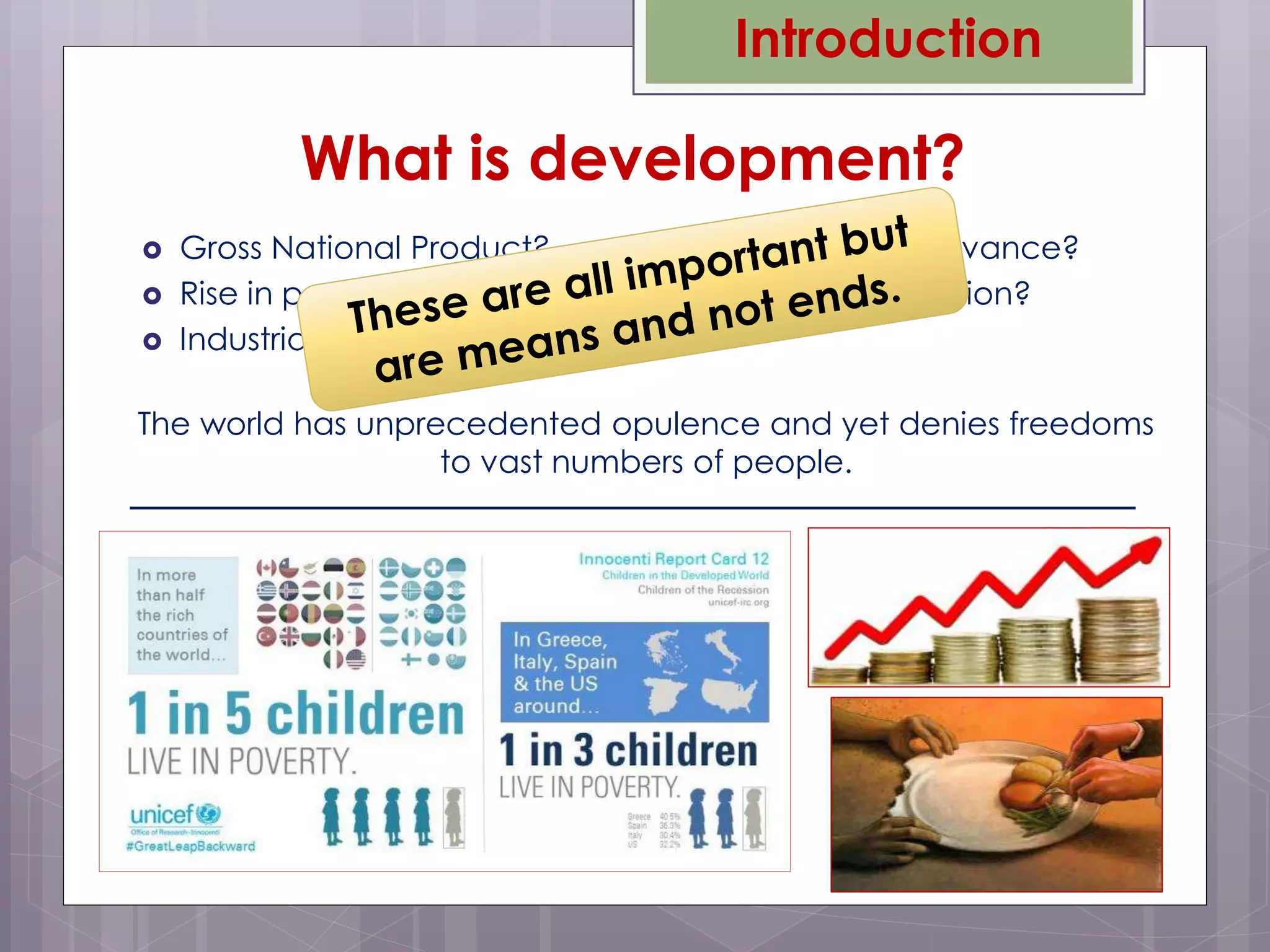
 Gross National Product?
 Rise in personal incomes?
 Industrialization?
 Technological advance?
 Social modernization?
What is development?
The world has unprecedented opulence and yet denies freedoms
to vast numbers of people.
Introduction
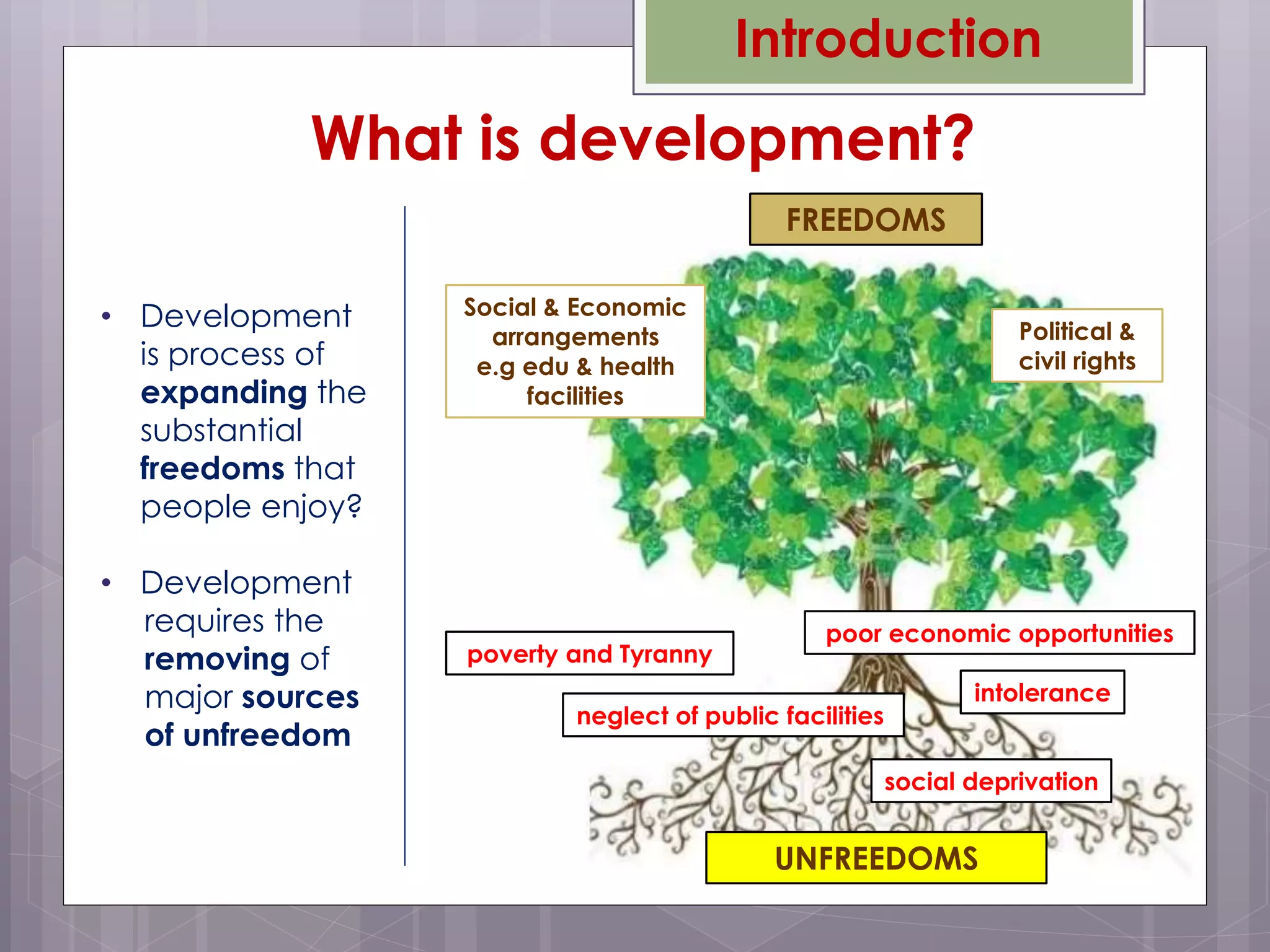
What is development?
• Development
is process of
expanding the
substantial
freedoms that
people enjoy?
• Development
requires the
removing of
major sources
of unfreedom
Social & Economic
arrangements
e.g edu & health
facilities
Political &
civil rights
poverty and Tyranny
poor economic opportunities
social deprivation
neglect of public facilities
intolerance
FREEDOMS
UNFREEDOMS
Introduction
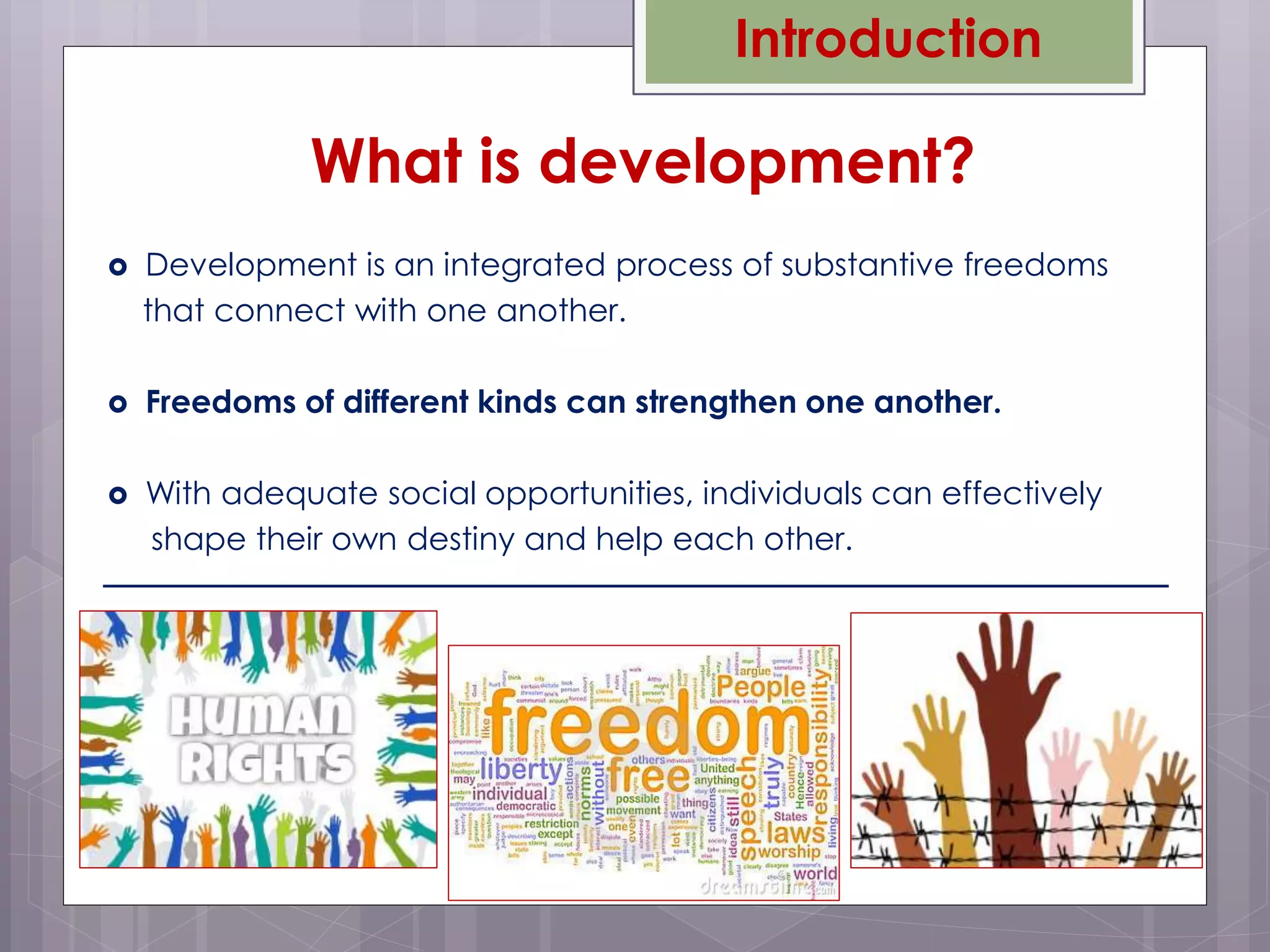
 Development is an integrated process of substantive freedoms
that connect with one another.
 Freedoms of different kinds can strengthen one another.
 With adequate social opportunities, individuals can effectively
shape their own destiny and help each other.
What is development?
Introduction
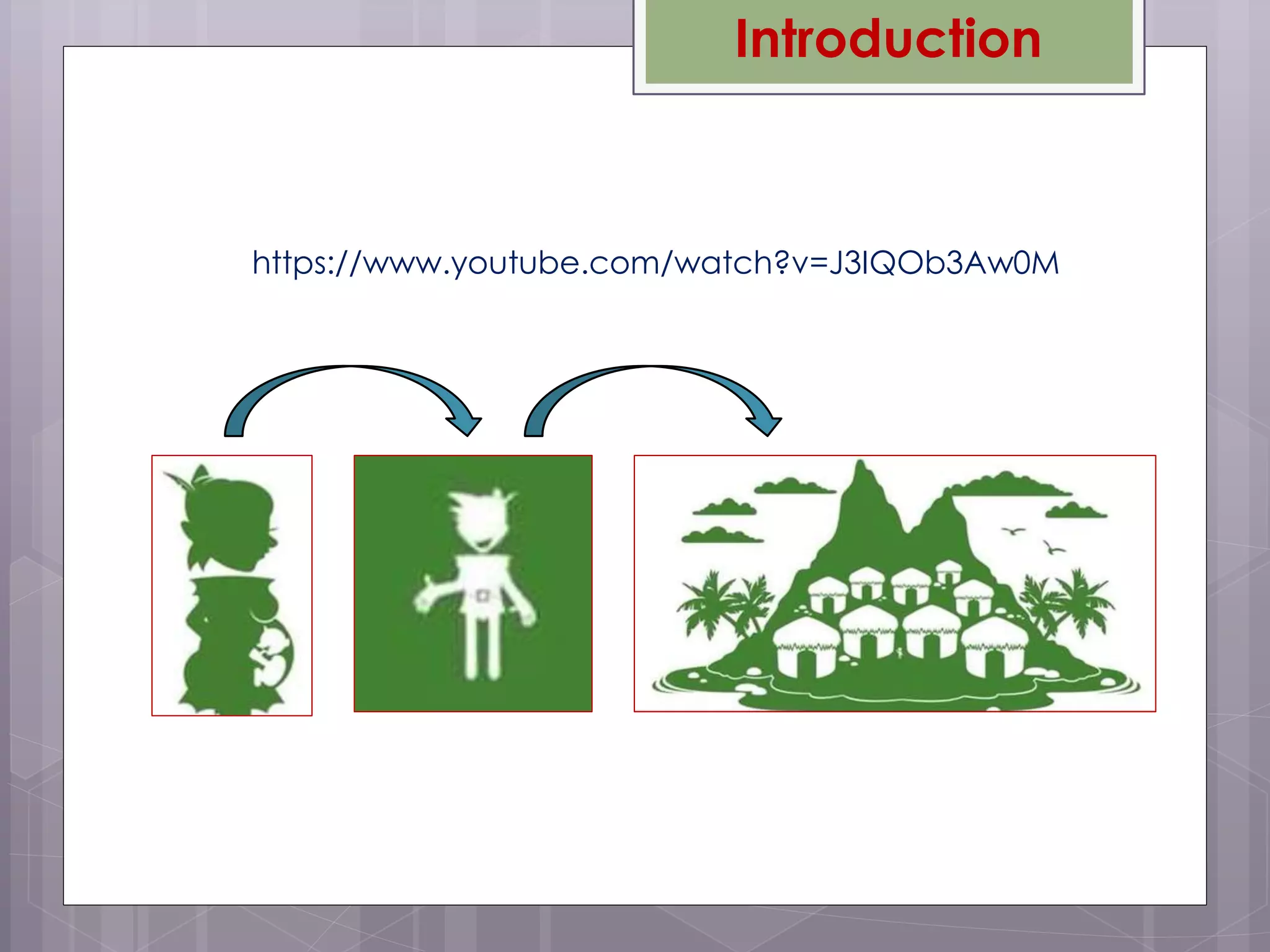
https://www.youtube.com/watch?v=J3IQOb3Aw0M
Introduction
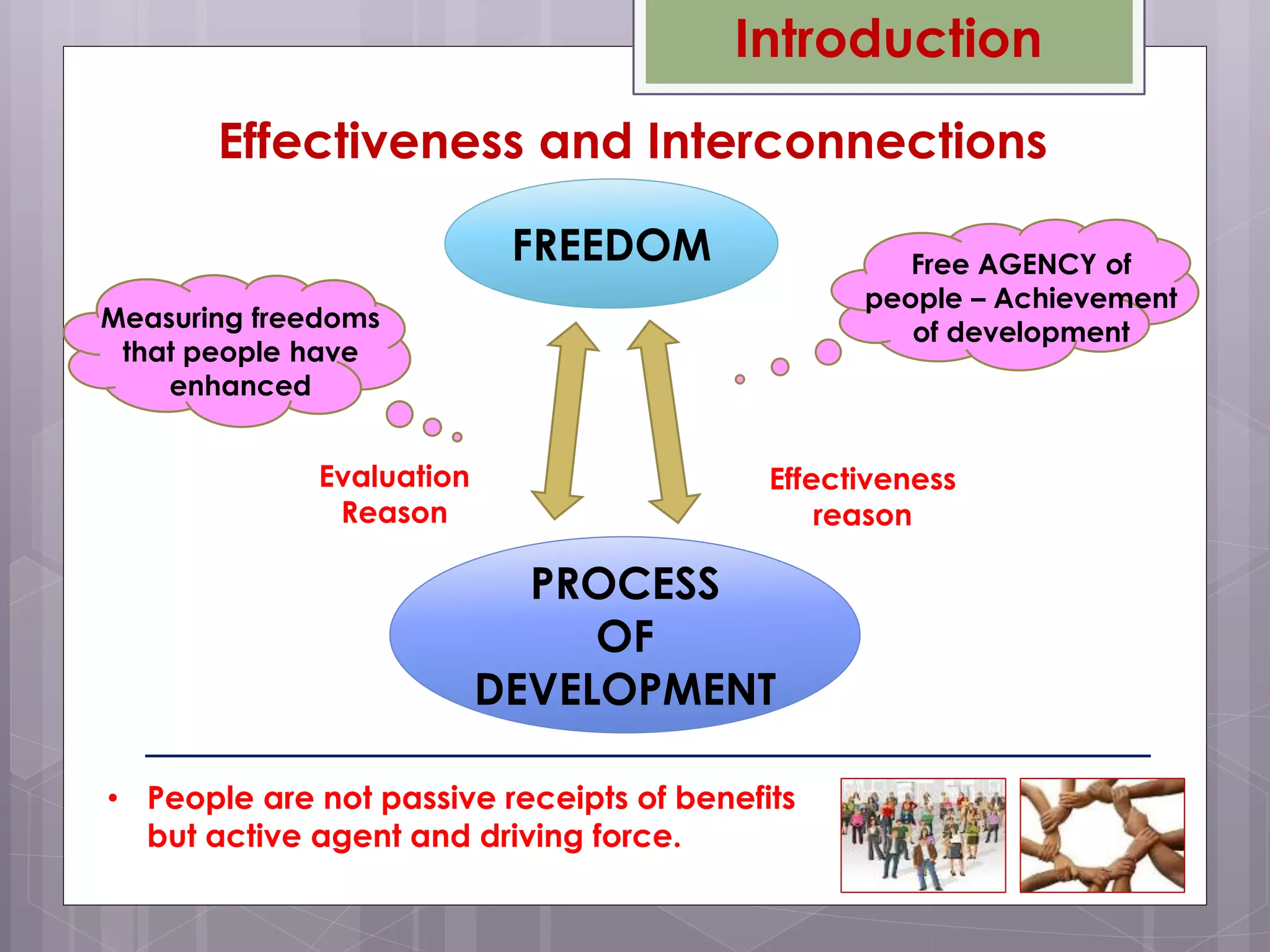
FREEDOM
PROCESS
OF
DEVELOPMENT
Evaluation
Reason
Effectiveness
reason
Effectiveness and Interconnections
Free AGENCY of
people – Achievement
of development
Measuring freedoms
that people have
enhanced
• People are not passive receipts of benefits
but active agent and driving force.
Introduction
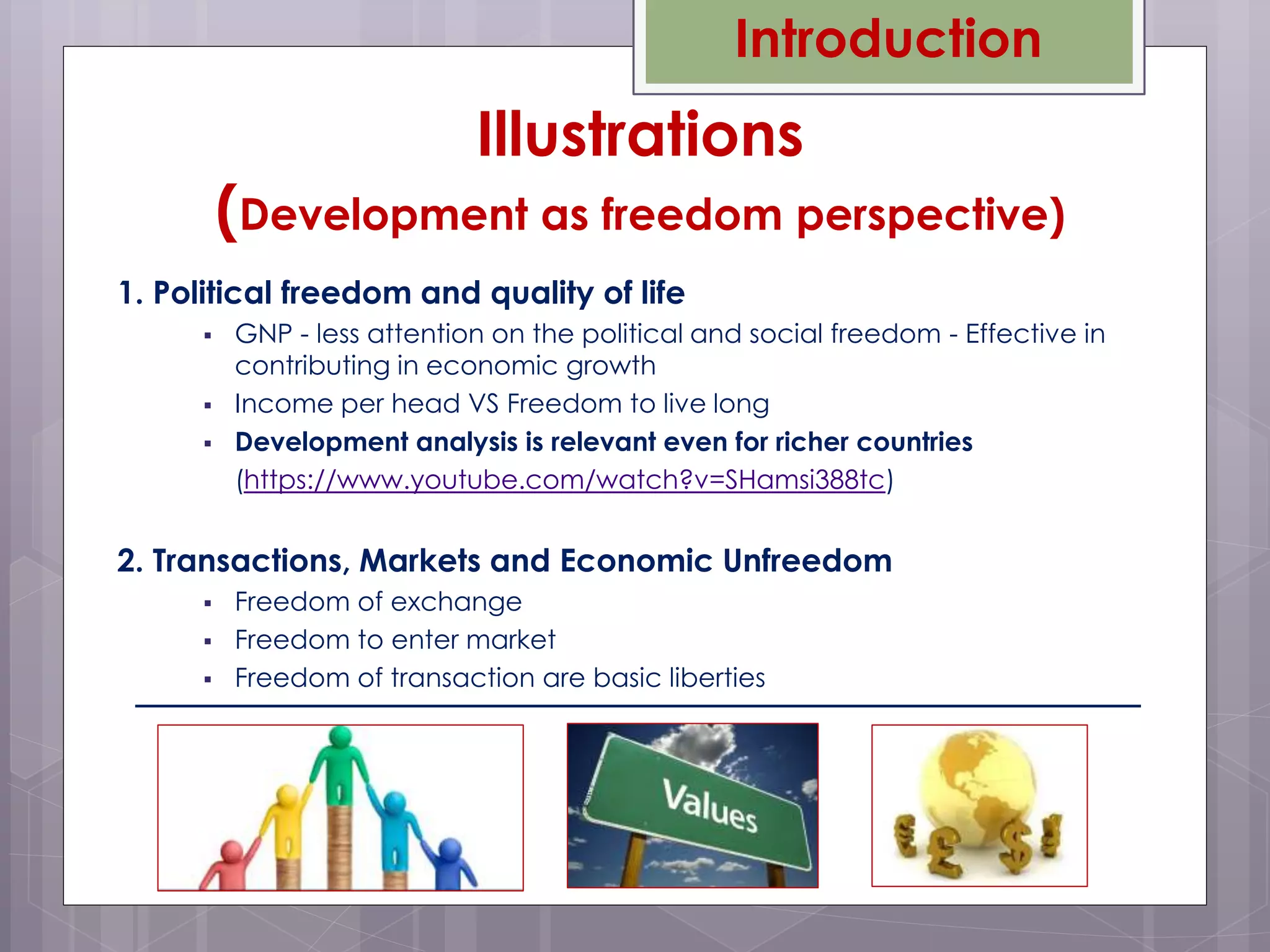
1. Political freedom and quality of life
 GNP - less attention on the political and social freedom - Effective in
contributing in economic growth
 Income per head VS Freedom to live long
 Development analysis is relevant even for richer countries
(https://www.youtube.com/watch?v=SHamsi388tc)
2. Transactions, Markets and Economic Unfreedom
 Freedom of exchange
 Freedom to enter market
 Freedom of transaction are basic liberties
Introduction
Illustrations
(Development as freedom perspective)
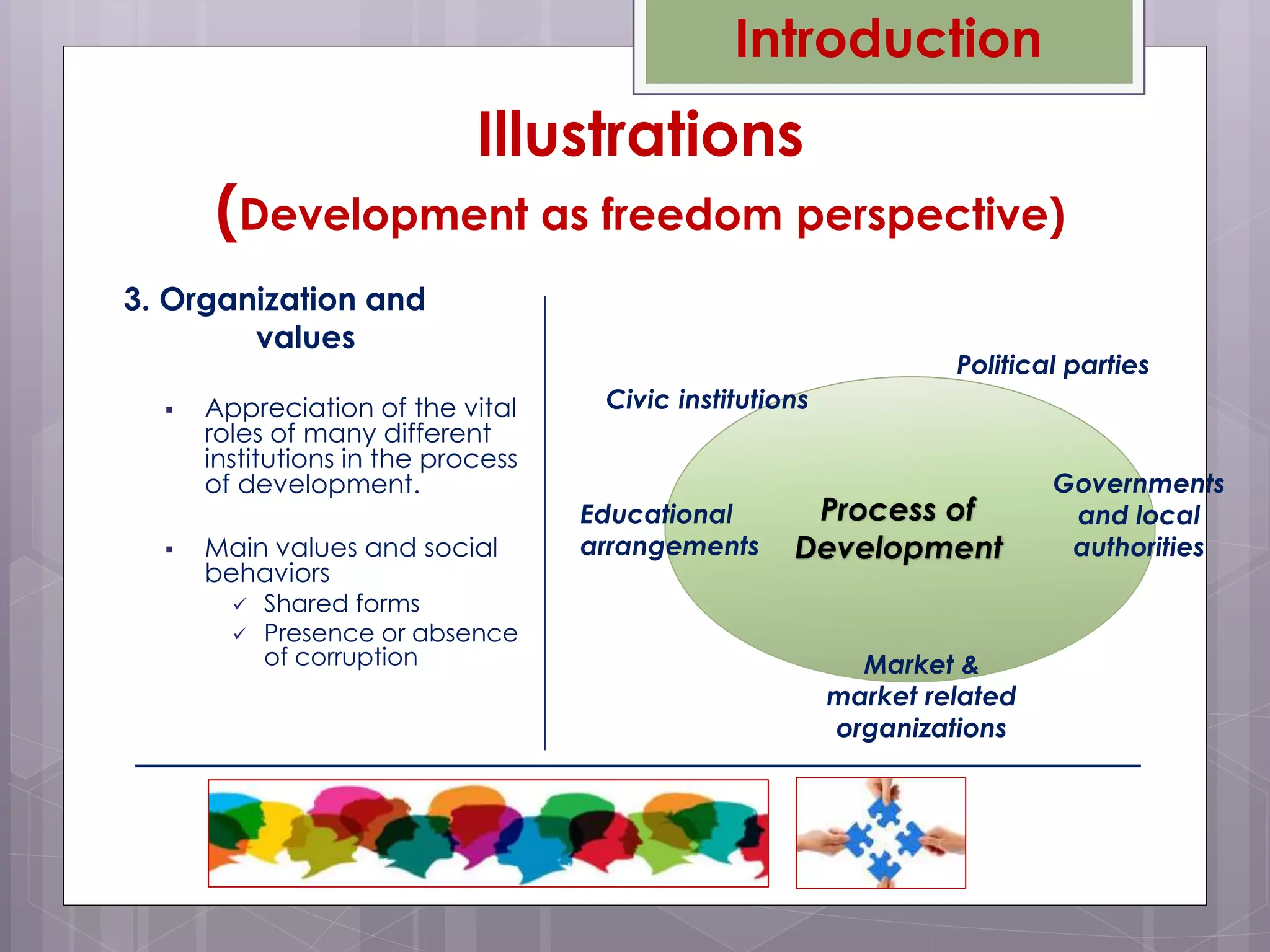
3. Organization and
values
 Appreciation of the vital
roles of many different
institutions in the process
of development.
 Main values and social
behaviors
 Shared forms
 Presence or absence
of corruption
Introduction
Illustrations
(Development as freedom perspective)
Market &
market related
organizations
Governments
and local
authorities
Political parties
Civic institutions
Educational
arrangements
Process of
Development
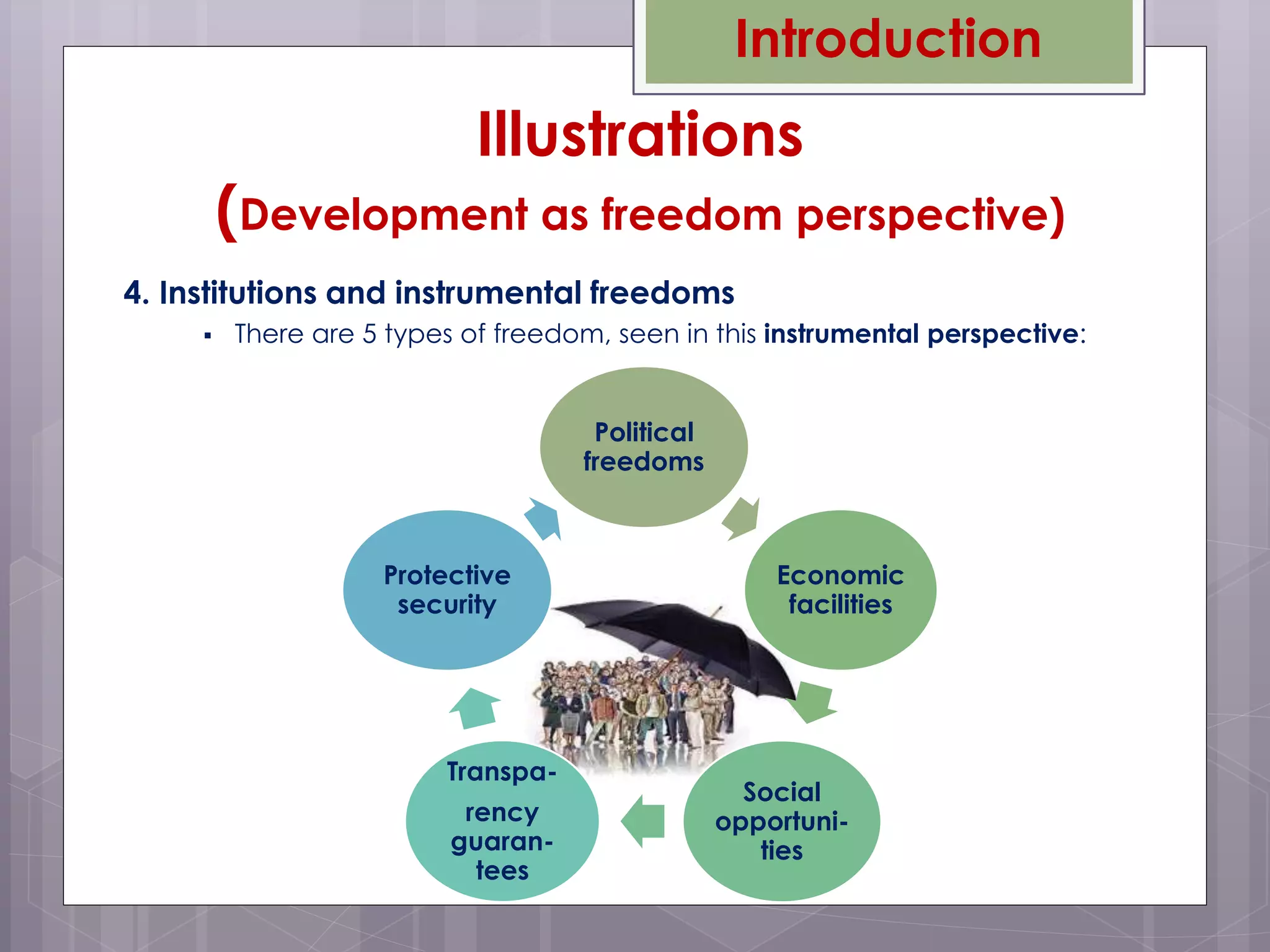
4. Institutions and instrumental freedoms
 There are 5 types of freedom, seen in this instrumental perspective:
Introduction
Illustrations
(Development as freedom perspective)
Political
freedoms
Economic
facilities
Social
opportuni-
ties
Transpa-
rency
guaran-
tees
Protective
security
Chapter 1
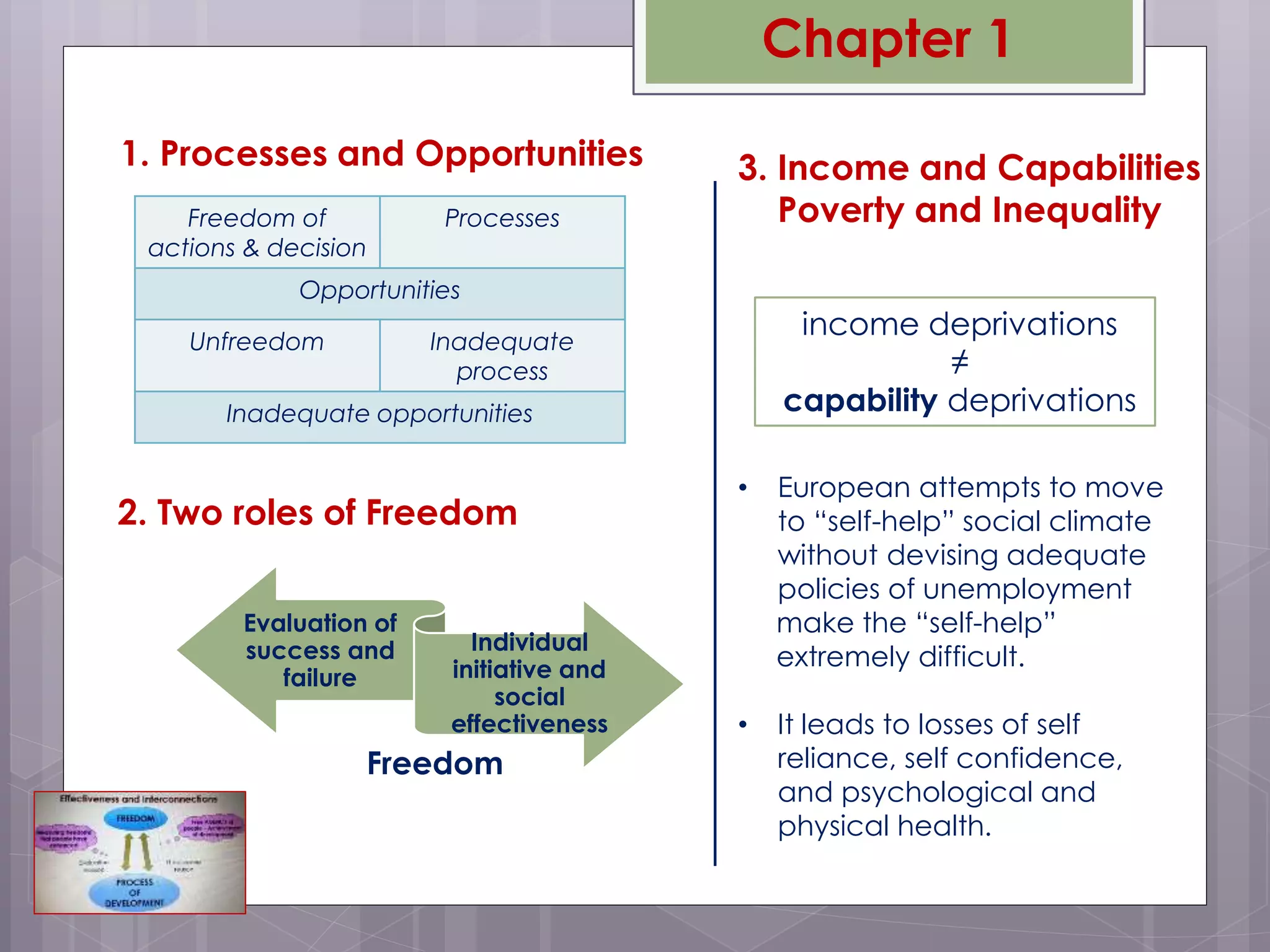
1. Processes and Opportunities
Freedom of
actions & decision
Processes
Opportunities
Unfreedom Inadequate
process
Inadequate opportunities
2. Two roles of Freedom
Evaluation of
success and
failure
Individual
initiative and
social
effectiveness
Freedom
3. Income and Capabilities
Poverty and Inequality
income deprivations
≠
capability deprivations
• European attempts to move
to “self-help” social climate
without devising adequate
policies of unemployment
make the “self-help”
extremely difficult.
• It leads to losses of self
reliance, self confidence,
and psychological and
physical health.
Chapter 1
4. Income and Mortality
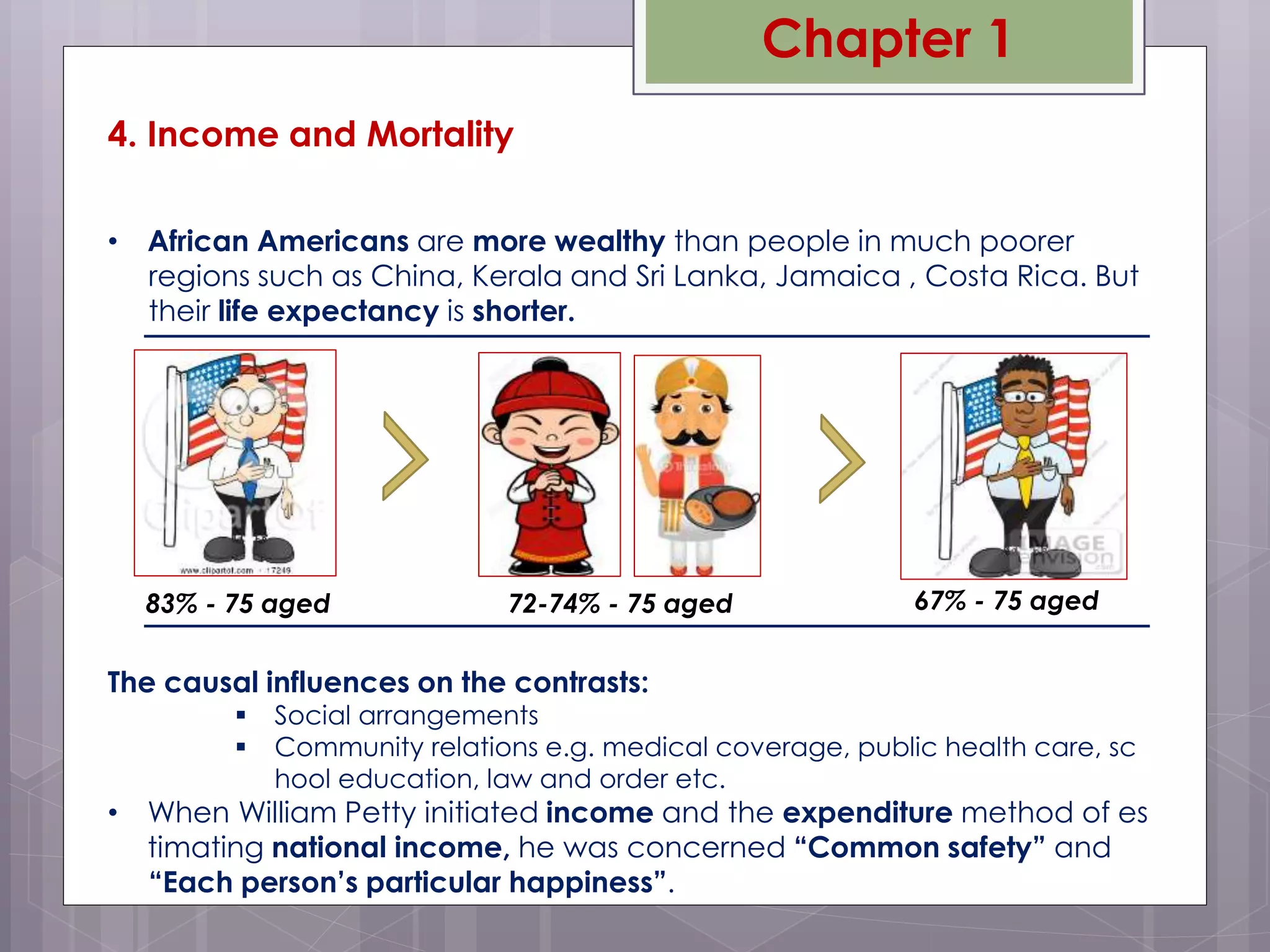
• African Americans are more wealthy than people in much poorer
regions such as China, Kerala and Sri Lanka, Jamaica , Costa Rica. But
their life expectancy is shorter.
The causal influences on the contrasts:
 Social arrangements
 Community relations e.g. medical coverage, public health care, sc
hool education, law and order etc.
• When William Petty initiated income and the expenditure method of es
timating national income, he was concerned “Common safety” and
“Each person’s particular happiness”.
83% - 75 aged 72-74% - 75 aged 67% - 75 aged
5. Markets and Freedom
 There are two arguments in the market mechanism.
1. Denial of opportunities of transaction by arbitrary control, can be
source of unfreedom – Does not depend on the efficiency of
market mechanism or any analysis of the consequences.
2. Arbitrary restriction of the market mechanism can lead to a reduc
tion of freedoms because of the consequential effects of the
absence of market.
 John Hicks - The liberal or non-interference principles of
the classical economists were not in the first place
economic principles but to apply to a much wider field
E.g. Slaves life expectancy and wages were just as high
as many other peoples and yet no-one chose that way
of life when given a choice
Chapter 1
 Issue of participation is central
 Economic development of a nation may lead to loss of
traditions and cultural heritage. Others may say it is better
to be rich and happy than impoverished and traditional.
 In the direct involvement, people should decide “what
should be best”:
1. The basic value – traditions they whish and not wish
to followed
2. The persistence that established traditions be followed
6. Tradition, culture and democracy
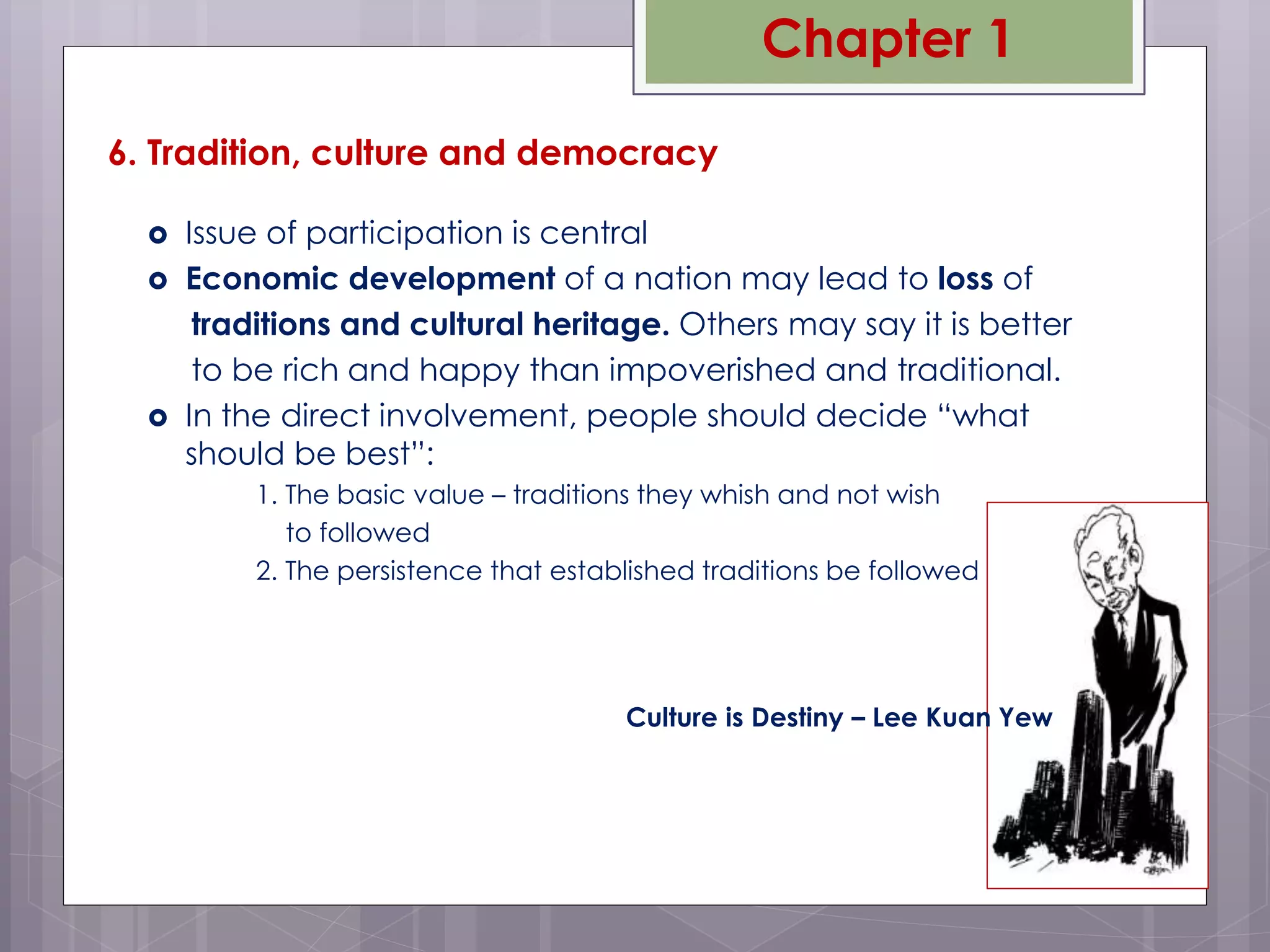
Culture is Destiny – Lee Kuan Yew
Chapter 1
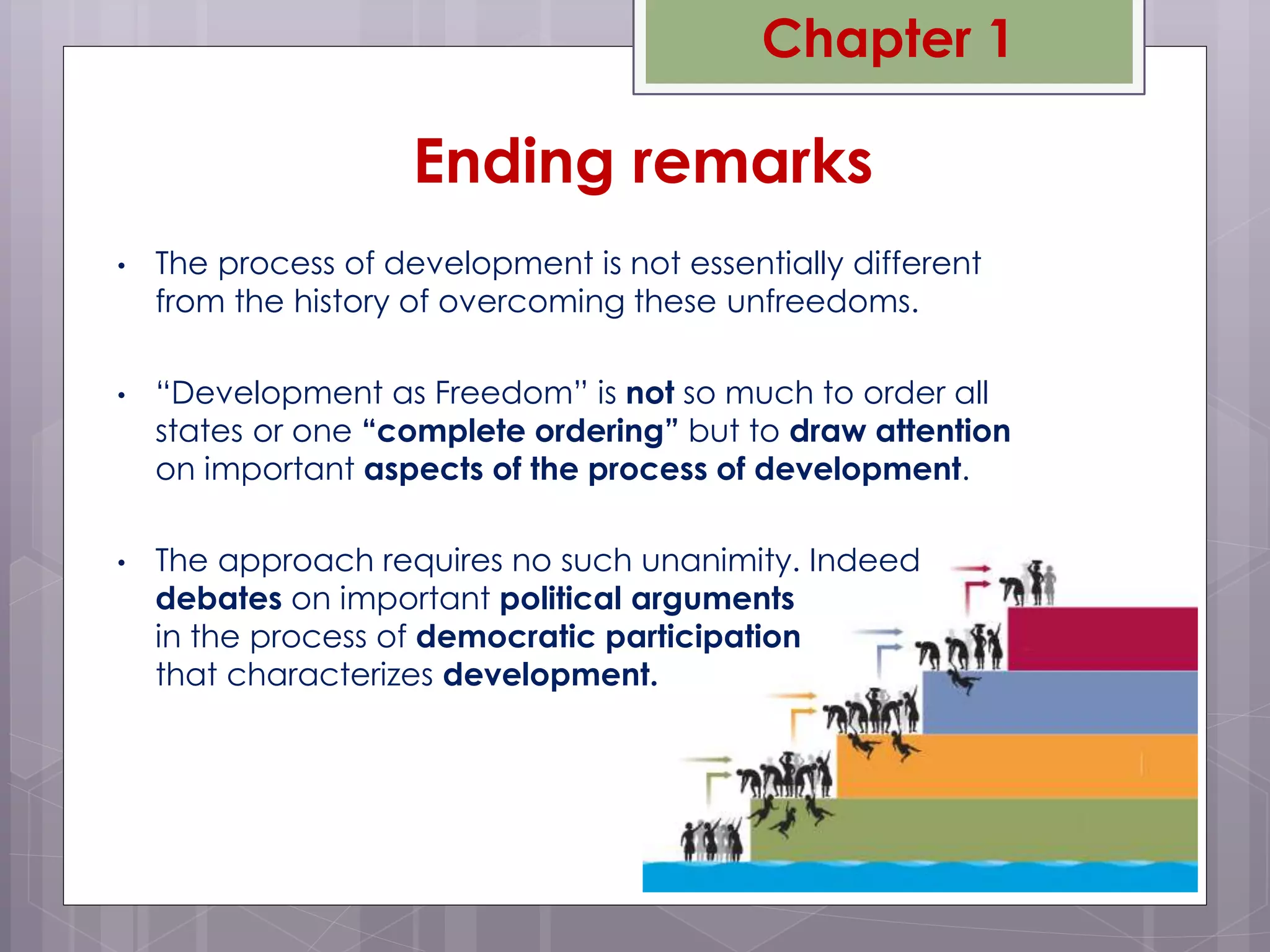
• The process of development is not essentially different
from the history of overcoming these unfreedoms.
• “Development as Freedom” is not so much to order all
states or one “complete ordering” but to draw attention
on important aspects of the process of development.
• The approach requires no such unanimity. Indeed
debates on important political arguments
in the process of democratic participation
that characterizes development.
Ending remarks
Chapter 1
 Through capitalist especially neo-liberal capitalist perspecti
ve, too much attention on freedom (social issues) but not
capital issue both for individuals and community.
 The absence of an analysis of the power relations that
cause and reproduce underdevelopment through
national and international political institutions.
 Promoted the establishment of democratic ideals and free
doms, “unfreedoms” prolonged by contemporary
neo-liberal developmental models.
 Suggested to initiate debates and political arguments to
tackle the poverty and unfreedom in society. But there is
no solid approaches that he offered and no practical achi
evements.
Critics
 What is the key learning in your point of view?
 In the “Development as Freedom” perspective, how do you
define current development/ level of freedom of your
country?
 Among all different freedoms, which one is the most vital in t
he lenses of “Development as freedom”? Why?
 Do you have any disagreements? Why?
Discussion question
 http://currentaffairs.gktoday.in/current-affairs/charleston-efg-john-
maynard-keynes-prize-2015
 https://en.wikipedia.org/wiki/Amartya_Sen
 http://theviewspaper.net/development-as-freedom-amartya-sen/
 http://politics.news.mn/content/182031.shtml
 http://dannyreviews.com/h/Development_Freedom.html
 http://www.reallylearning.com/wp-content/uploads/2013/09/devel
opment-as-freedom1.pdf
 https://www.youtube.com/watch?v=J3IQOb3Aw0M
 https://www.youtube.com/watch?v=SHamsi388tc
 http://www.culturalsurvival.org/publications/cultural-survival-quarte
rly/none/review-development-freedom
 http://www.developmenteducationreview.com/issue8-focus1
 http://www.cmi.no/publications/file/953-a-balanced-view-of-devel
opment-as-freedom.
Resources

Amartya Sen "Development as Freedom"

  • 1.
    Development as Freedom Amartya Sen MAINS,SungKungHoe University International Development in context Burenjargal Bombish (Rune) 2015.06.26
  • 2.
    Amartya Kumar Sen(Amartya Sen)  Born in 1933 in Manikganj district in British India (Now in Banglades)  Currently, he is a Professor of eco- nomics and philosophy at Harvard University.  Contributions in areas of:  Welfare economics  Social choice theory  Economic and social justice  Economic theories of famines  Indexes of the measure of well-being of citizens of developing countries  His has authored more than 100 books - Translated into more than 30 languages  Awards  The Nobel Memorial Prize in Economic Sciences in 1998  The Bharat Ratna, the highest civilian award of India in 1999  The inaugural Charleston-EF G John Maynard Keynes Prize in Feb 2015.
  • 3.
    The book “Development asFreedom”  Published in 1999  Key focuses are:  Economic development entails a set of freedoms.  Poverty is considered by lack freedoms.  Real development is not simply increasing basic incomes. Rather, it requires mechanisms that enable the exercise of freedoms.  Free markets is an essential method of achi eving freedom.  There are 12 chapters 1. The perspective of freedom 2. The ends and the means of development 3. Freedom and the foundations of justice 4. Poverty as capability deprivation 5. Markets, State and Opportunity 6. The importance of democracy 7. Famines and other crises 8. Women’s agency and social change 9. Population, food and freedom 10. Culture and Human Rights 11. Social choice and individual behavior 12. Individual freedom as a social commitment
  • 4.
     Gross NationalProduct?  Rise in personal incomes?  Industrialization?  Technological advance?  Social modernization? What is development? The world has unprecedented opulence and yet denies freedoms to vast numbers of people. Introduction
  • 5.
    What is development? •Development is process of expanding the substantial freedoms that people enjoy? • Development requires the removing of major sources of unfreedom Social & Economic arrangements e.g edu & health facilities Political & civil rights poverty and Tyranny poor economic opportunities social deprivation neglect of public facilities intolerance FREEDOMS UNFREEDOMS Introduction
  • 6.
     Development isan integrated process of substantive freedoms that connect with one another.  Freedoms of different kinds can strengthen one another.  With adequate social opportunities, individuals can effectively shape their own destiny and help each other. What is development? Introduction
  • 7.
  • 8.
    FREEDOM PROCESS OF DEVELOPMENT Evaluation Reason Effectiveness reason Effectiveness and Interconnections FreeAGENCY of people – Achievement of development Measuring freedoms that people have enhanced • People are not passive receipts of benefits but active agent and driving force. Introduction
  • 9.
    1. Political freedomand quality of life  GNP - less attention on the political and social freedom - Effective in contributing in economic growth  Income per head VS Freedom to live long  Development analysis is relevant even for richer countries (https://www.youtube.com/watch?v=SHamsi388tc) 2. Transactions, Markets and Economic Unfreedom  Freedom of exchange  Freedom to enter market  Freedom of transaction are basic liberties Introduction Illustrations (Development as freedom perspective)
  • 10.
    3. Organization and values Appreciation of the vital roles of many different institutions in the process of development.  Main values and social behaviors  Shared forms  Presence or absence of corruption Introduction Illustrations (Development as freedom perspective) Market & market related organizations Governments and local authorities Political parties Civic institutions Educational arrangements Process of Development
  • 11.
    4. Institutions andinstrumental freedoms  There are 5 types of freedom, seen in this instrumental perspective: Introduction Illustrations (Development as freedom perspective) Political freedoms Economic facilities Social opportuni- ties Transpa- rency guaran- tees Protective security
  • 12.
    Chapter 1 1. Processesand Opportunities Freedom of actions & decision Processes Opportunities Unfreedom Inadequate process Inadequate opportunities 2. Two roles of Freedom Evaluation of success and failure Individual initiative and social effectiveness Freedom 3. Income and Capabilities Poverty and Inequality income deprivations ≠ capability deprivations • European attempts to move to “self-help” social climate without devising adequate policies of unemployment make the “self-help” extremely difficult. • It leads to losses of self reliance, self confidence, and psychological and physical health.
  • 13.
    Chapter 1 4. Incomeand Mortality • African Americans are more wealthy than people in much poorer regions such as China, Kerala and Sri Lanka, Jamaica , Costa Rica. But their life expectancy is shorter. The causal influences on the contrasts:  Social arrangements  Community relations e.g. medical coverage, public health care, sc hool education, law and order etc. • When William Petty initiated income and the expenditure method of es timating national income, he was concerned “Common safety” and “Each person’s particular happiness”. 83% - 75 aged 72-74% - 75 aged 67% - 75 aged
  • 14.
    5. Markets andFreedom  There are two arguments in the market mechanism. 1. Denial of opportunities of transaction by arbitrary control, can be source of unfreedom – Does not depend on the efficiency of market mechanism or any analysis of the consequences. 2. Arbitrary restriction of the market mechanism can lead to a reduc tion of freedoms because of the consequential effects of the absence of market.  John Hicks - The liberal or non-interference principles of the classical economists were not in the first place economic principles but to apply to a much wider field E.g. Slaves life expectancy and wages were just as high as many other peoples and yet no-one chose that way of life when given a choice Chapter 1
  • 15.
     Issue ofparticipation is central  Economic development of a nation may lead to loss of traditions and cultural heritage. Others may say it is better to be rich and happy than impoverished and traditional.  In the direct involvement, people should decide “what should be best”: 1. The basic value – traditions they whish and not wish to followed 2. The persistence that established traditions be followed 6. Tradition, culture and democracy Culture is Destiny – Lee Kuan Yew Chapter 1
  • 16.
    • The processof development is not essentially different from the history of overcoming these unfreedoms. • “Development as Freedom” is not so much to order all states or one “complete ordering” but to draw attention on important aspects of the process of development. • The approach requires no such unanimity. Indeed debates on important political arguments in the process of democratic participation that characterizes development. Ending remarks Chapter 1
  • 17.
     Through capitalistespecially neo-liberal capitalist perspecti ve, too much attention on freedom (social issues) but not capital issue both for individuals and community.  The absence of an analysis of the power relations that cause and reproduce underdevelopment through national and international political institutions.  Promoted the establishment of democratic ideals and free doms, “unfreedoms” prolonged by contemporary neo-liberal developmental models.  Suggested to initiate debates and political arguments to tackle the poverty and unfreedom in society. But there is no solid approaches that he offered and no practical achi evements. Critics
  • 18.
     What isthe key learning in your point of view?  In the “Development as Freedom” perspective, how do you define current development/ level of freedom of your country?  Among all different freedoms, which one is the most vital in t he lenses of “Development as freedom”? Why?  Do you have any disagreements? Why? Discussion question
  • 19.
     http://currentaffairs.gktoday.in/current-affairs/charleston-efg-john- maynard-keynes-prize-2015  https://en.wikipedia.org/wiki/Amartya_Sen http://theviewspaper.net/development-as-freedom-amartya-sen/  http://politics.news.mn/content/182031.shtml  http://dannyreviews.com/h/Development_Freedom.html  http://www.reallylearning.com/wp-content/uploads/2013/09/devel opment-as-freedom1.pdf  https://www.youtube.com/watch?v=J3IQOb3Aw0M  https://www.youtube.com/watch?v=SHamsi388tc  http://www.culturalsurvival.org/publications/cultural-survival-quarte rly/none/review-development-freedom  http://www.developmenteducationreview.com/issue8-focus1  http://www.cmi.no/publications/file/953-a-balanced-view-of-devel opment-as-freedom. Resources