Burenjargal. B
2015.03.09
MAINS program
SungKongHoe University
 Country Profile /General information
 Demography
 Brief Mongolian History
 Government structure in brief
 Culture /National holidays, Music, Dressing, Religion/
 Beautiful destinations
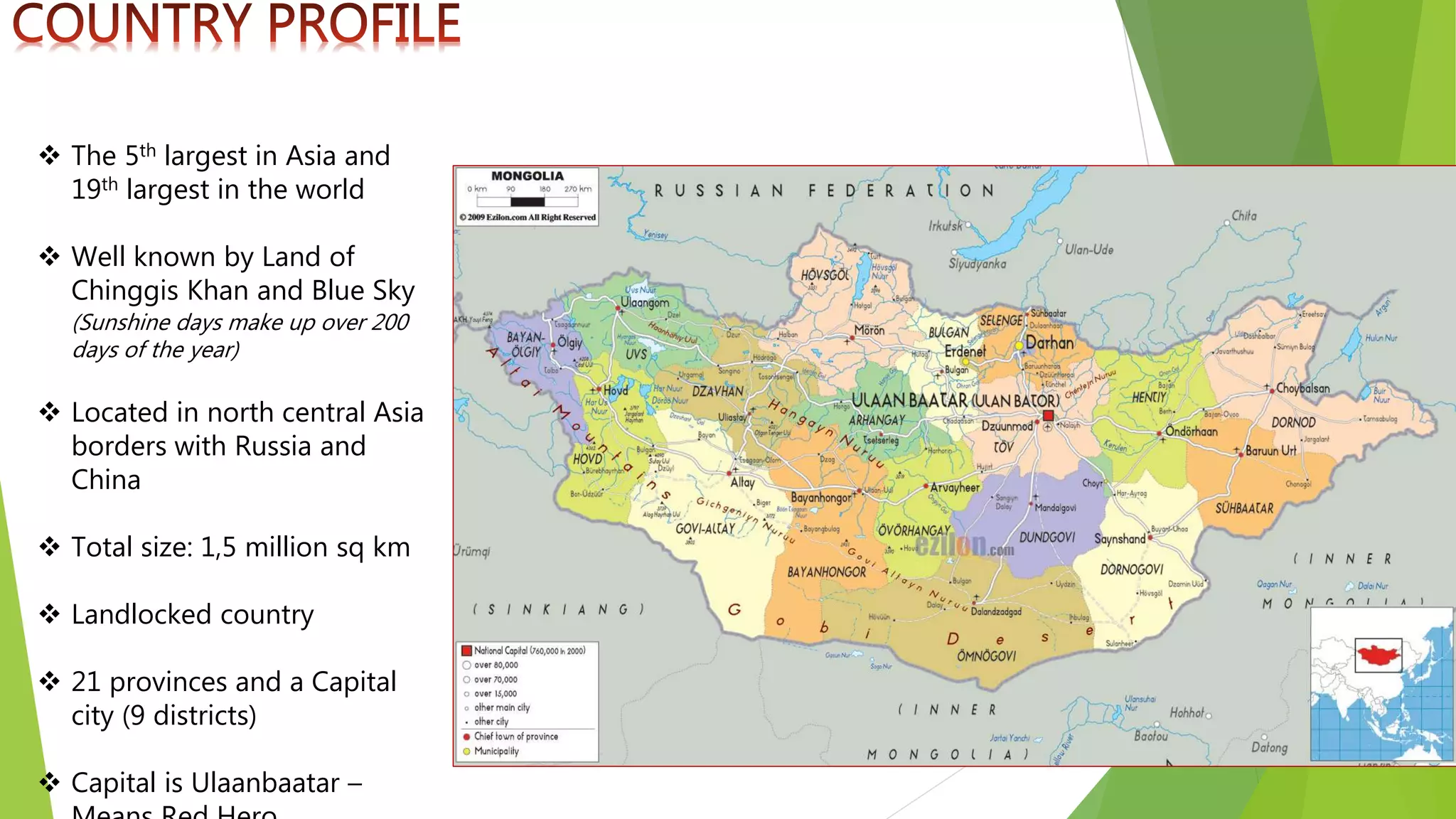
 The 5th largest in Asia and
19th largest in the world
 Well known by Land of
Chinggis Khan and Blue Sky
(Sunshine days make up over 200
days of the year)
 Located in north central Asia
borders with Russia and
China
 Total size: 1,5 million sq km
 Landlocked country
 21 provinces and a Capital
city (9 districts)
 Capital is Ulaanbaatar –
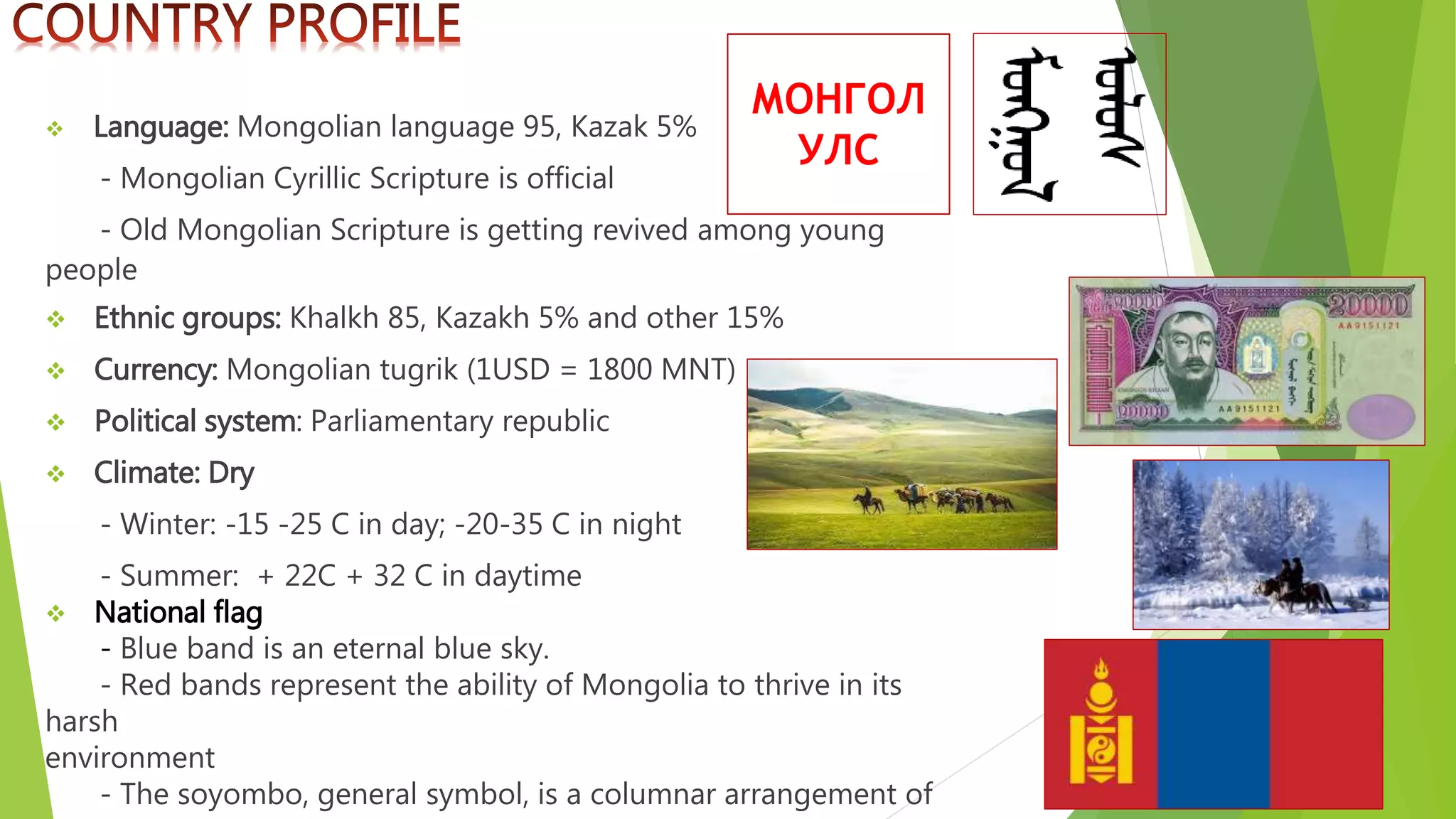
 Language: Mongolian language 95, Kazak 5%
- Mongolian Cyrillic Scripture is official
- Old Mongolian Scripture is getting revived among young
people
 Ethnic groups: Khalkh 85, Kazakh 5% and other 15%
 Currency: Mongolian tugrik (1USD = 1800 MNT)
 Political system: Parliamentary republic
 Climate: Dry
- Winter: -15 -25 C in day; -20-35 C in night
- Summer: + 22C + 32 C in daytime
 National flag
- Blue band is an eternal blue sky.
- Red bands represent the ability of Mongolia to thrive in its
harsh
environment
- The soyombo, general symbol, is a columnar arrangement of
МОНГОЛ
УЛС
https://www.youtube.com/watch?v=lcNq74GqGIk
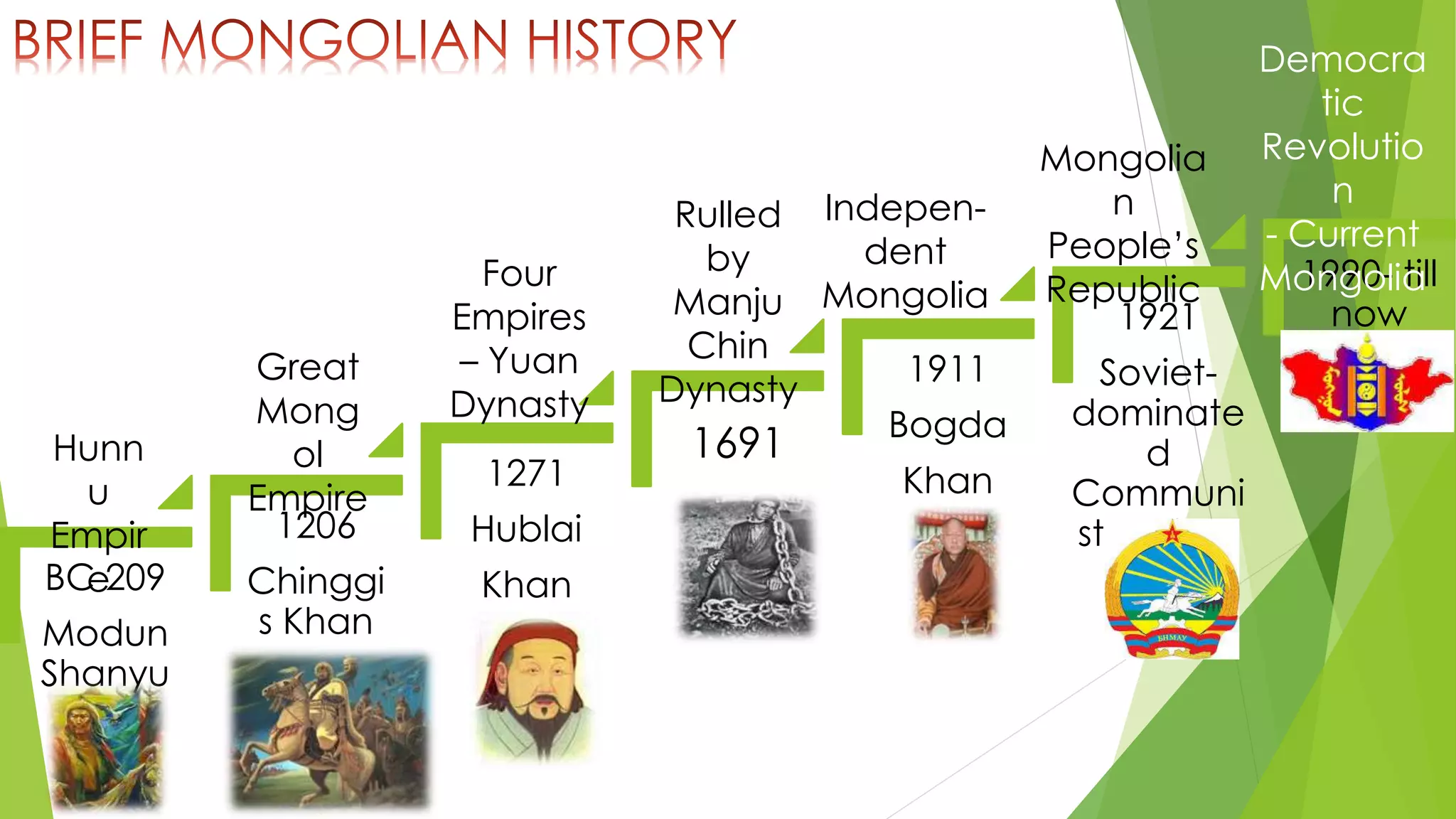
BC 209
Modun
Shanyu
1206
Chinggi
s Khan
1271
Hublai
Khan
1911
Bogda
Khan
1921
Soviet-
dominate
d
Communi
st regime
1990- till
now
Hunn
u
Empir
e
Great
Mong
ol
Empire
Four
Empires
– Yuan
Dynasty
Rulled
by
Manju
Chin
Dynasty
1691
Indepen-
dent
Mongolia
Mongolia
n
People’s
Republic
Democra
tic
Revolutio
n
- Current
Mongolia
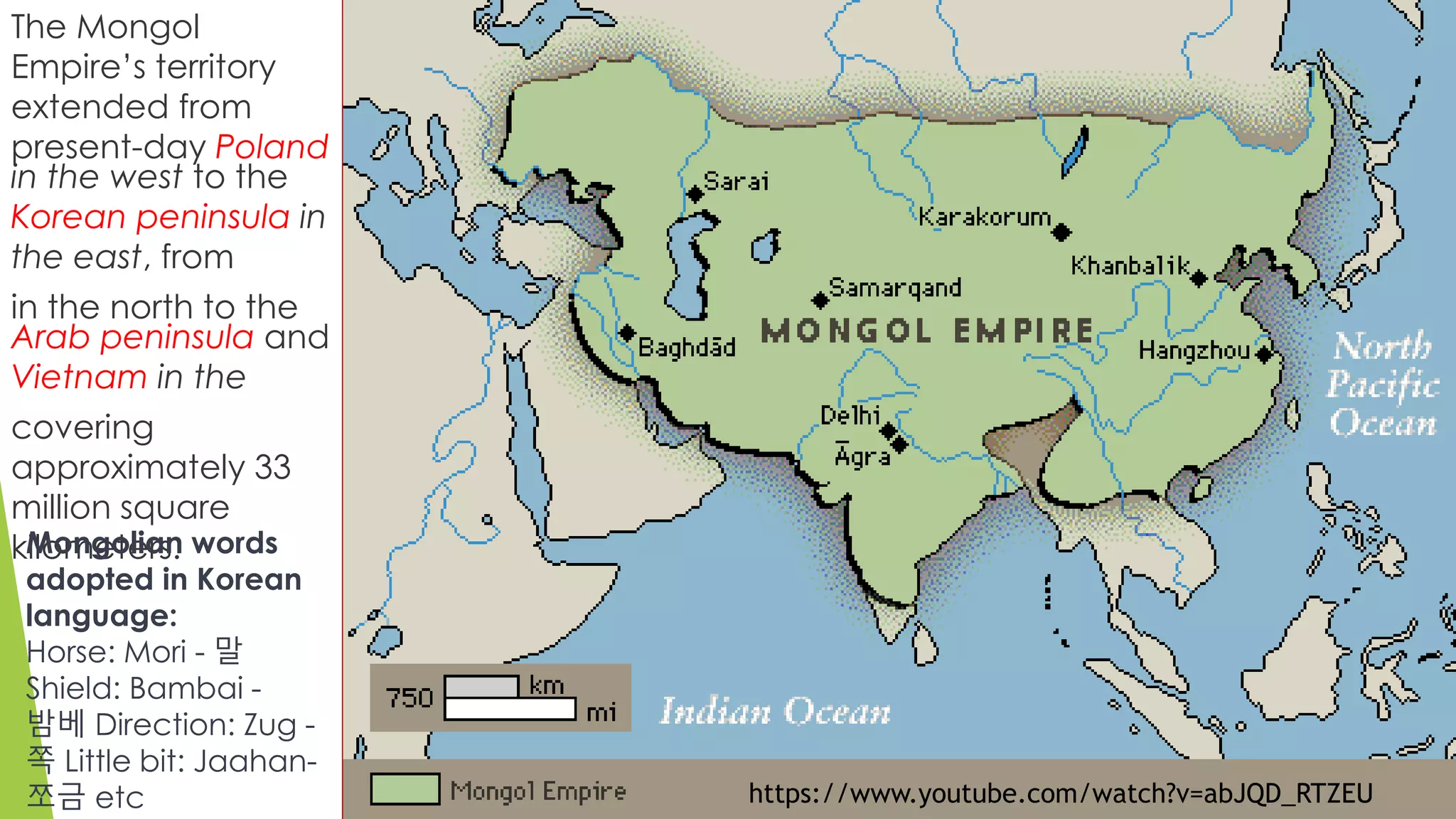
The Mongol
Empire’s territory
extended from
present-day Poland
in the west to the
Korean peninsula in
the east, from
in the north to the
Arab peninsula and
Vietnam in the
covering
approximately 33
million square
kilometers.Mongolian words
adopted in Korean
language:
Horse: Mori - 말
Shield: Bambai -
밤베 Direction: Zug -
쪽 Little bit: Jaahan-
쪼금 etc https://www.youtube.com/watch?v=abJQD_RTZEU
https://www.youtube.com/watch?v=v_NPgM
MazF4
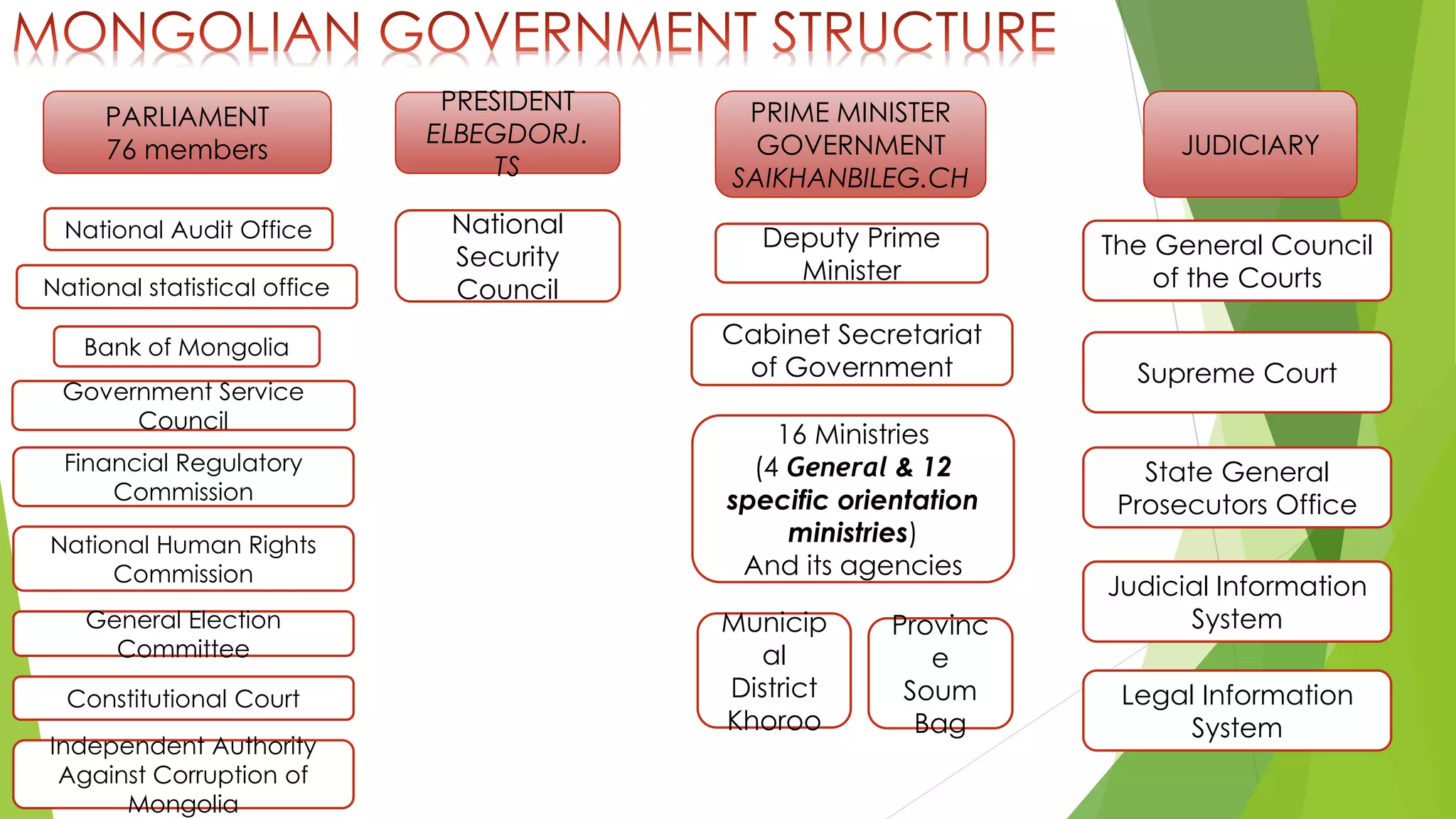
PARLIAMENT
76 members
PRIME MINISTER
GOVERNMENT
SAIKHANBILEG.CH
PRESIDENT
ELBEGDORJ.
TS
16 Ministries
(4 General & 12
specific orientation
ministries)
And its agencies
Provinc
e
Soum
Bag
Municip
al
District
Khoroo
National
Security
Council
National Audit Office
National statistical office
Bank of Mongolia
Government Service
Council
Financial Regulatory
Commission
National Human Rights
Commission
General Election
Committee
Constitutional Court
Independent Authority
Against Corruption of
Mongolia
Deputy Prime
Minister
Cabinet Secretariat
of Government
JUDICIARY
The General Council
of the Courts
Supreme Court
State General
Prosecutors Office
Judicial Information
System
Legal Information
System
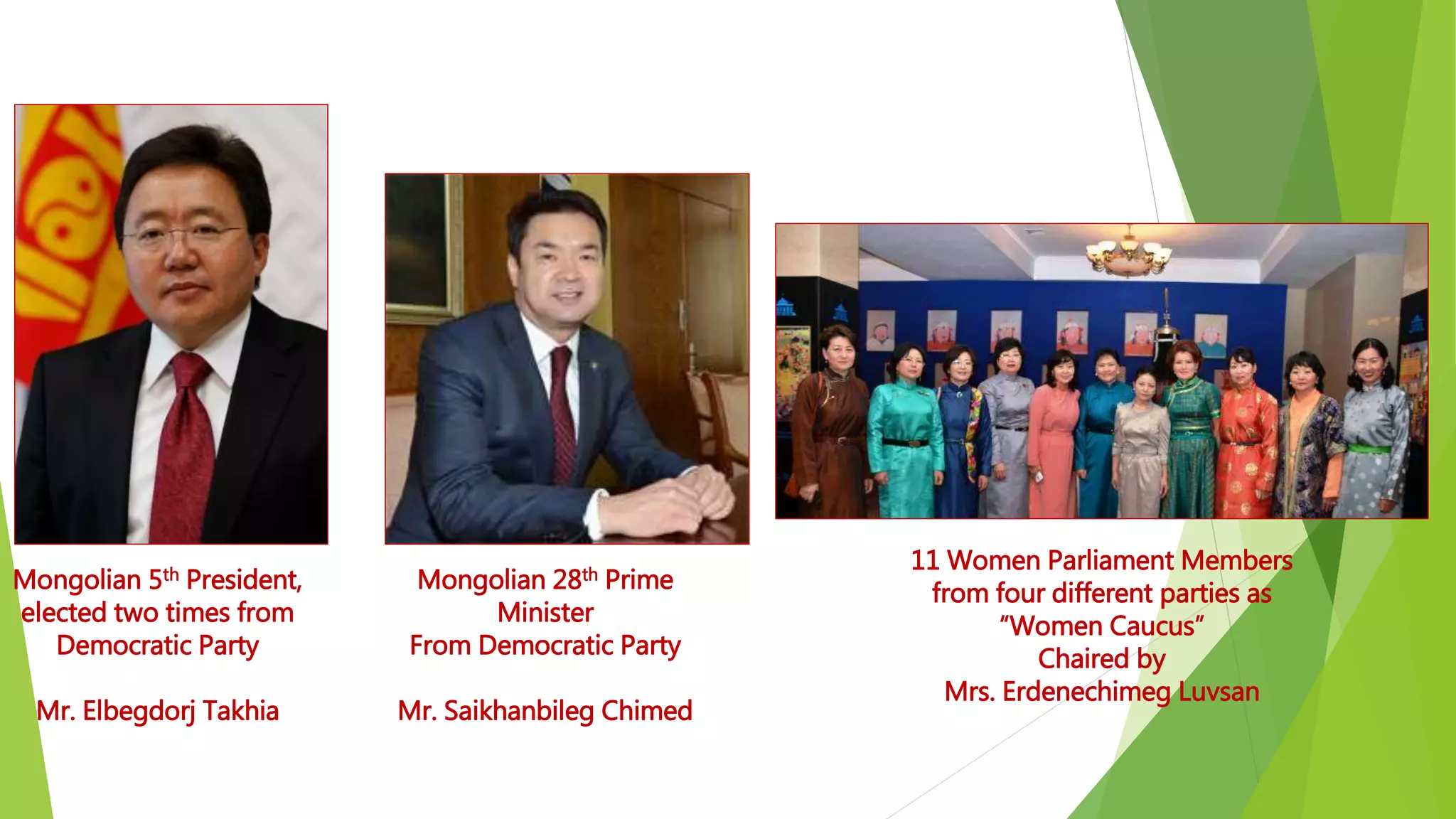
Mongolian 5th President,
elected two times from
Democratic Party
Mr. Elbegdorj Takhia
Mongolian 28th Prime
Minister
From Democratic Party
Mr. Saikhanbileg Chimed
11 Women Parliament Members
from four different parties as
“Women Caucus”
Chaired by
Mrs. Erdenechimeg Luvsan
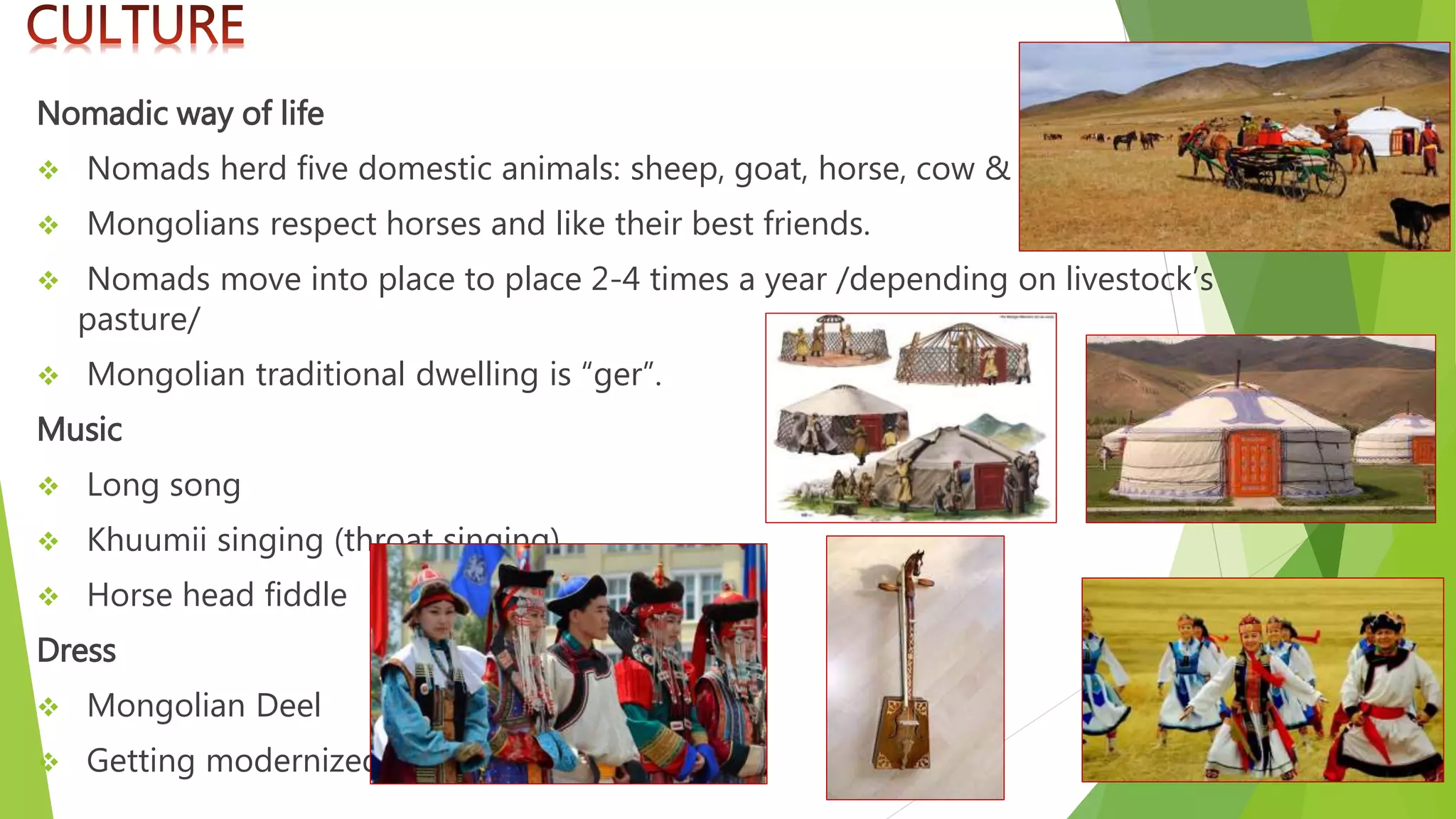
Nomadic way of life
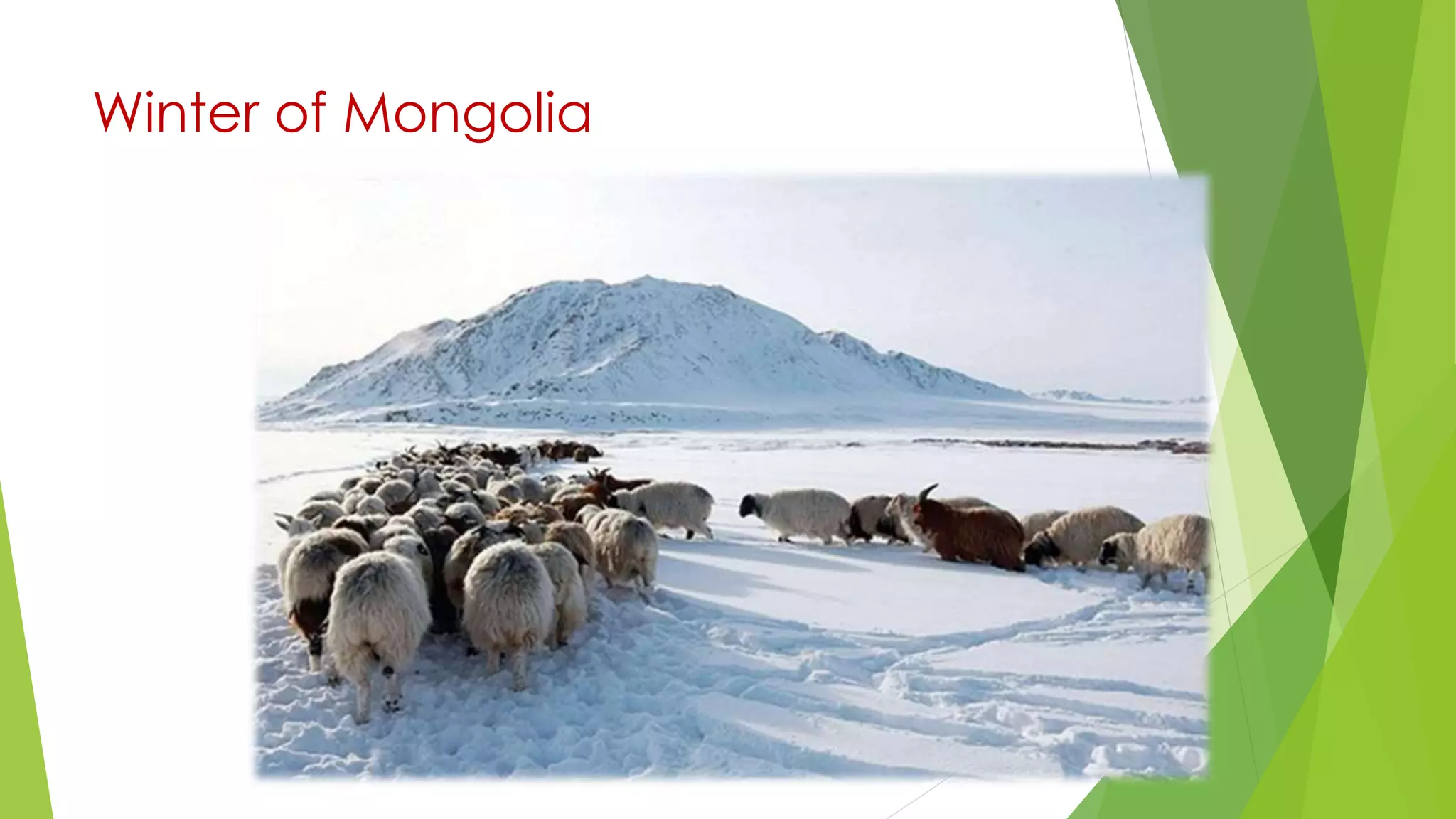
 Nomads herd five domestic animals: sheep, goat, horse, cow & camel
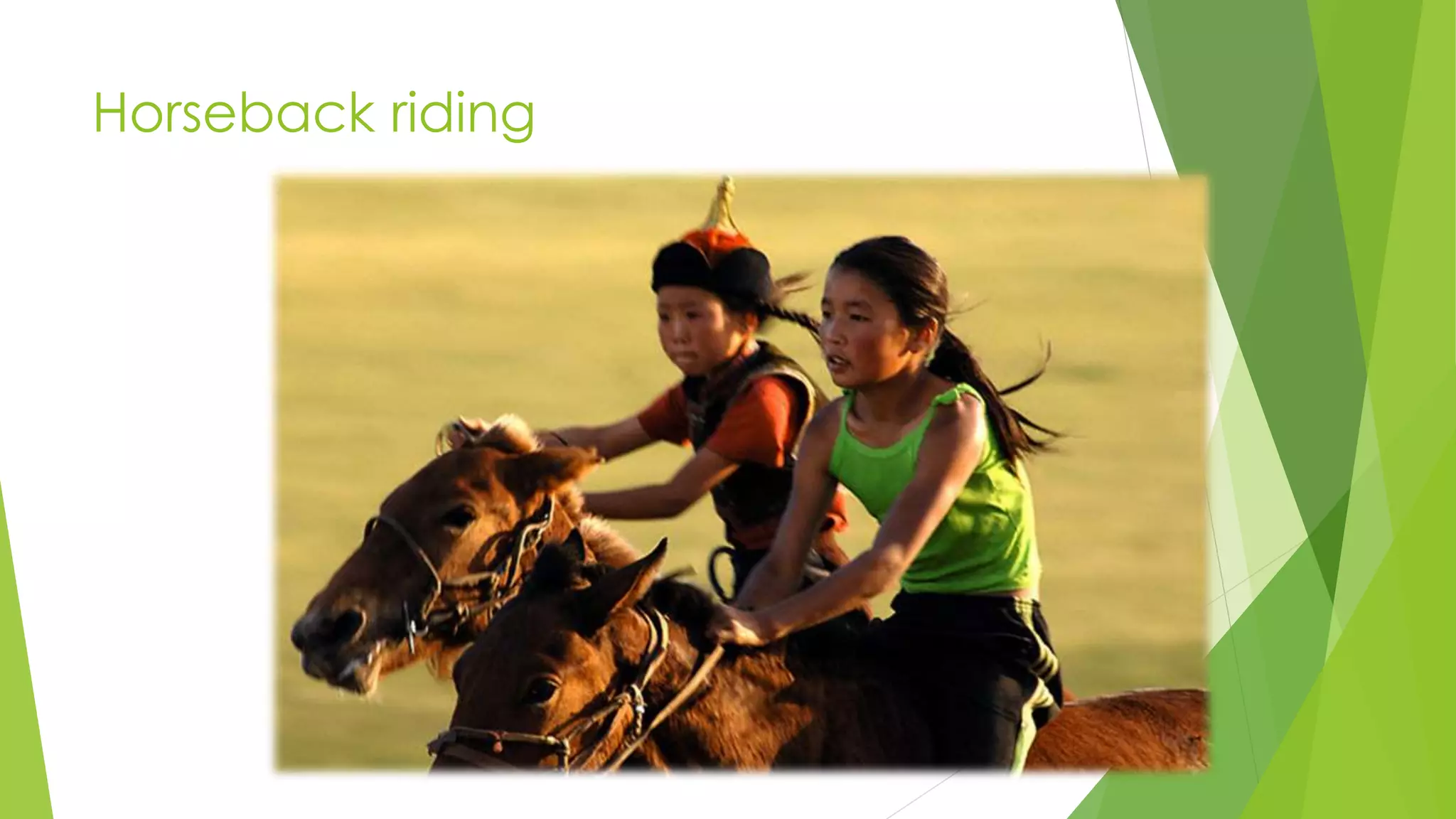
 Mongolians respect horses and like their best friends.
 Nomads move into place to place 2-4 times a year /depending on livestock’s
pasture/
 Mongolian traditional dwelling is “ger”.
Music
 Long song
 Khuumii singing (throat singing)
 Horse head fiddle
Dress
 Mongolian Deel
 Getting modernized
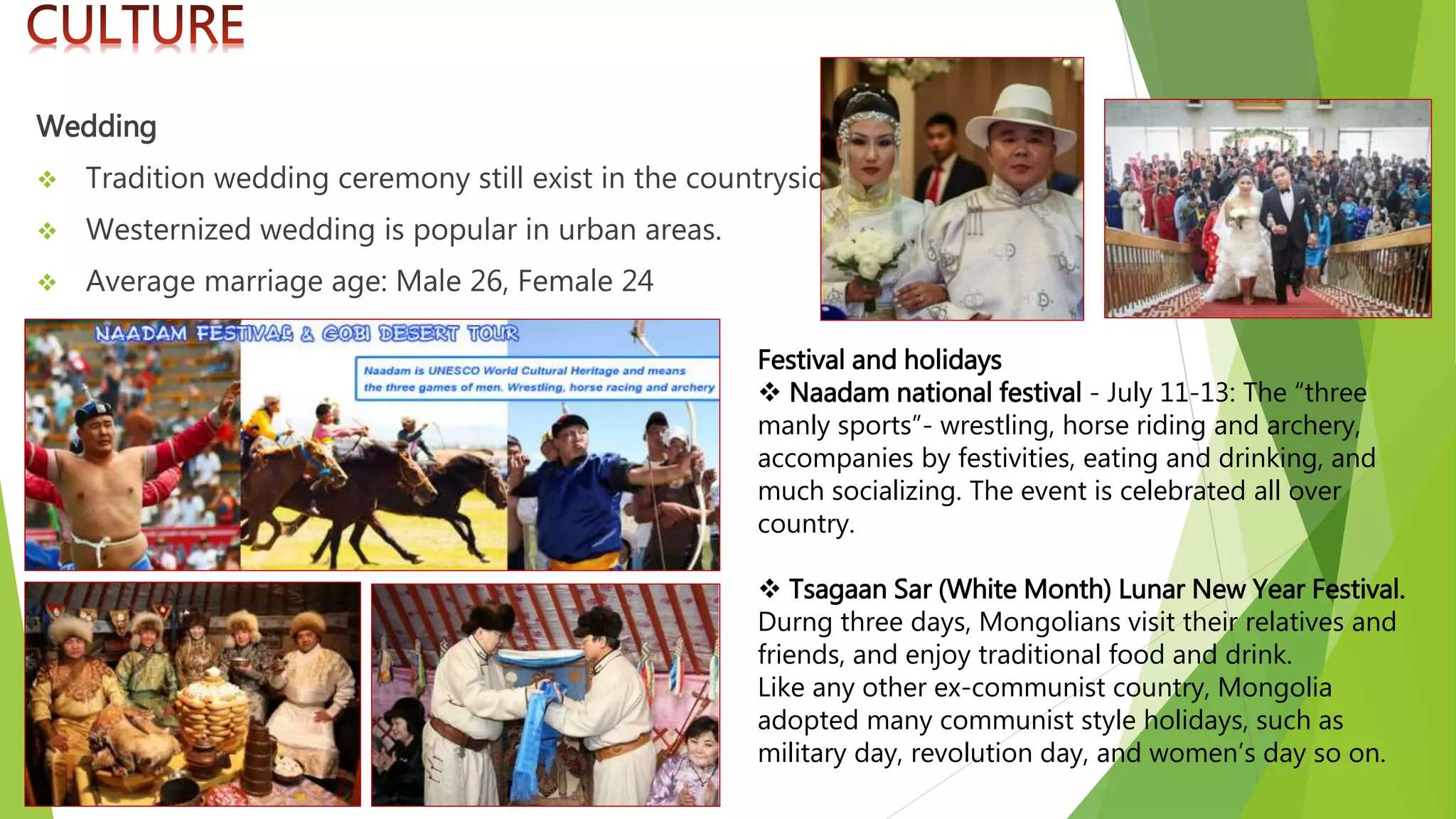
Wedding
 Tradition wedding ceremony still exist in the countryside.
 Westernized wedding is popular in urban areas.
 Average marriage age: Male 26, Female 24
Festival and holidays
 Naadam national festival - July 11-13: The “three
manly sports”- wrestling, horse riding and archery,
accompanies by festivities, eating and drinking, and
much socializing. The event is celebrated all over
country.
 Tsagaan Sar (White Month) Lunar New Year Festival.
Durng three days, Mongolians visit their relatives and
friends, and enjoy traditional food and drink.
Like any other ex-communist country, Mongolia
adopted many communist style holidays, such as
military day, revolution day, and women’s day so on.
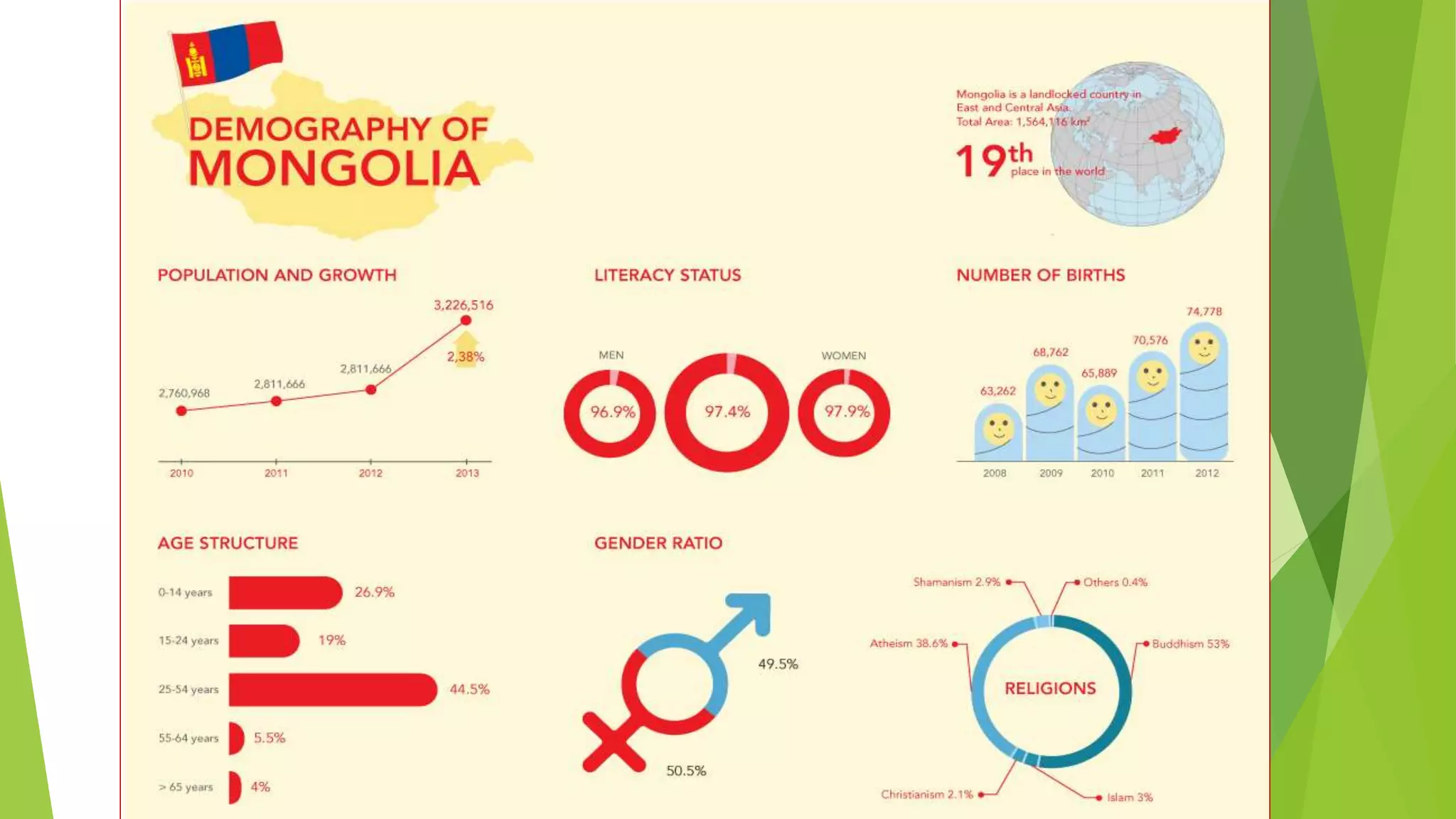
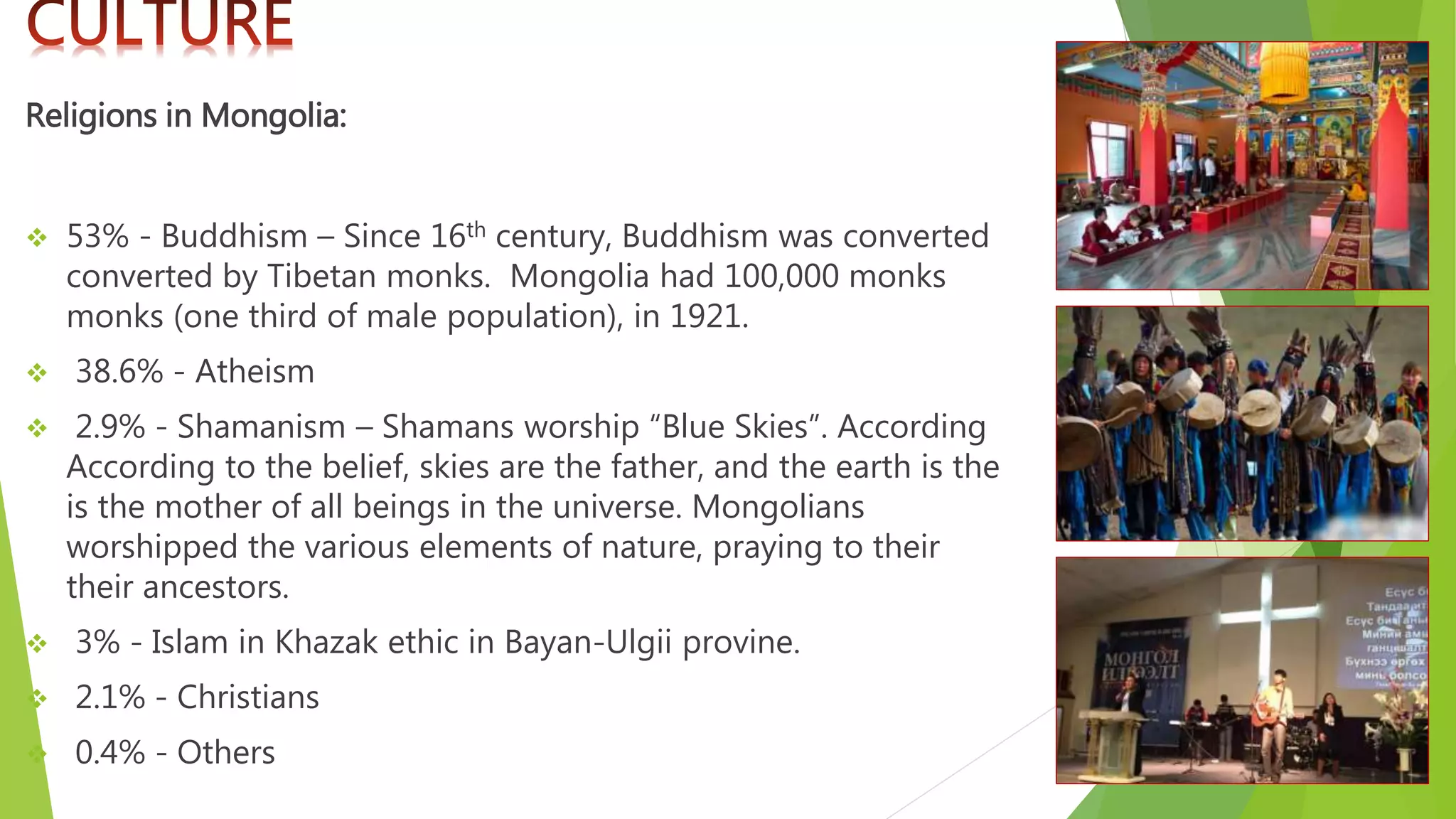
Religions in Mongolia:
 53% - Buddhism – Since 16th century, Buddhism was converted
converted by Tibetan monks. Mongolia had 100,000 monks
monks (one third of male population), in 1921.
 38.6% - Atheism
 2.9% - Shamanism – Shamans worship “Blue Skies”. According
According to the belief, skies are the father, and the earth is the
is the mother of all beings in the universe. Mongolians
worshipped the various elements of nature, praying to their
their ancestors.
 3% - Islam in Khazak ethic in Bayan-Ulgii provine.
 2.1% - Christians
 0.4% - Others
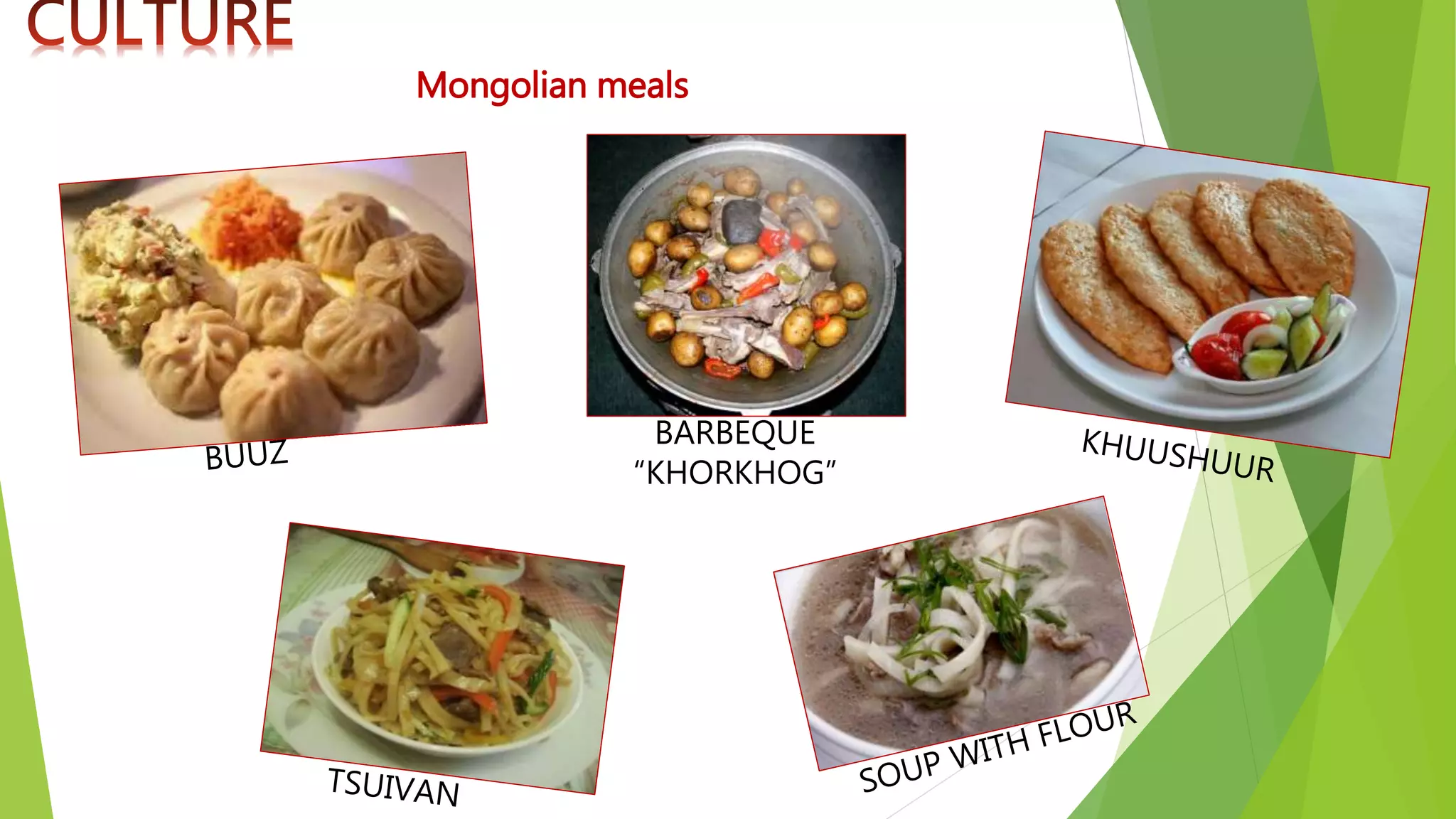
BARBEQUE
“KHORKHOG”
Mongolian meals
https://www.youtube.com/watch?v=M_gtZX_Bxpo
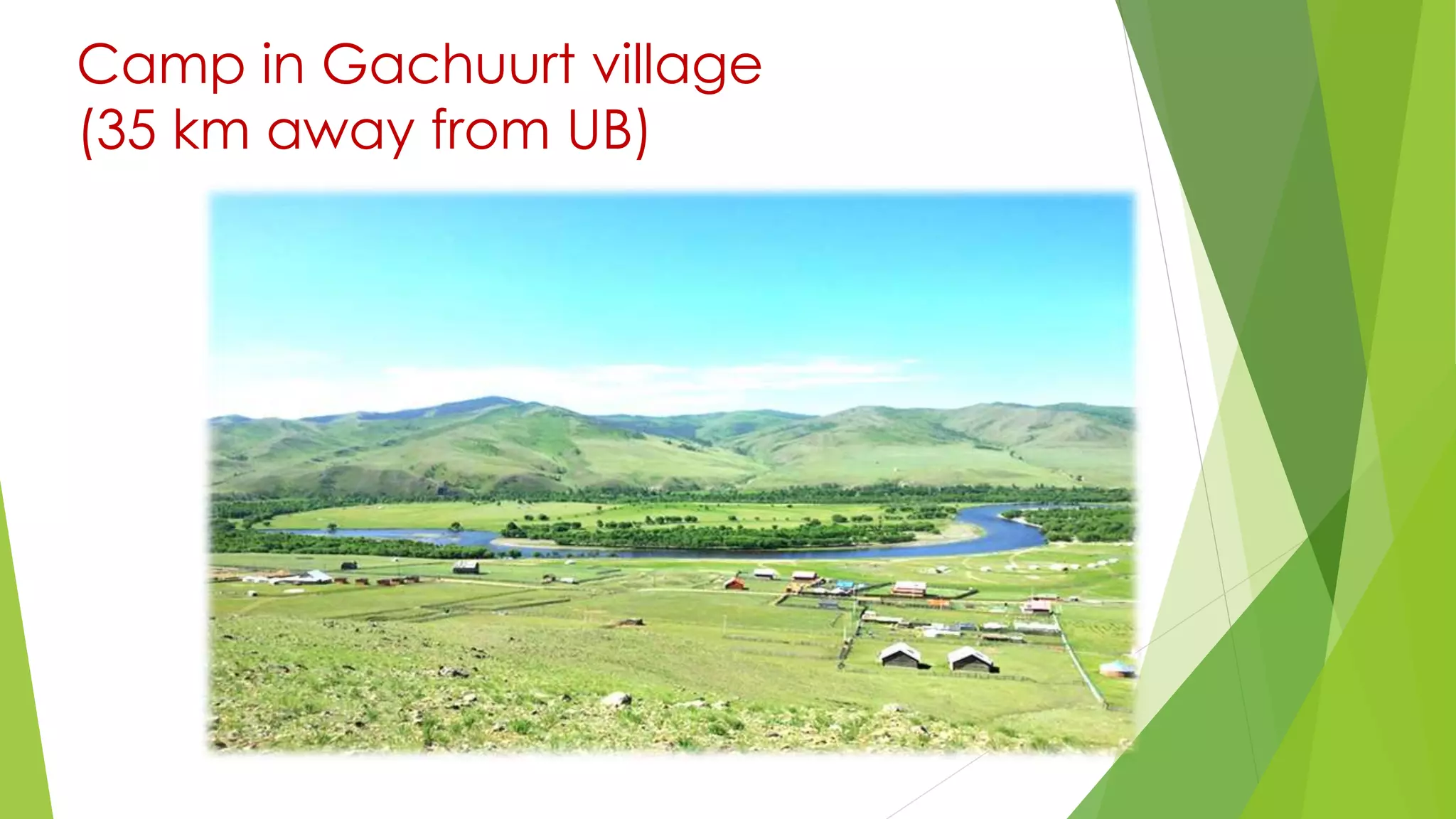
Camp in Gachuurt village
(35 km away from UB)
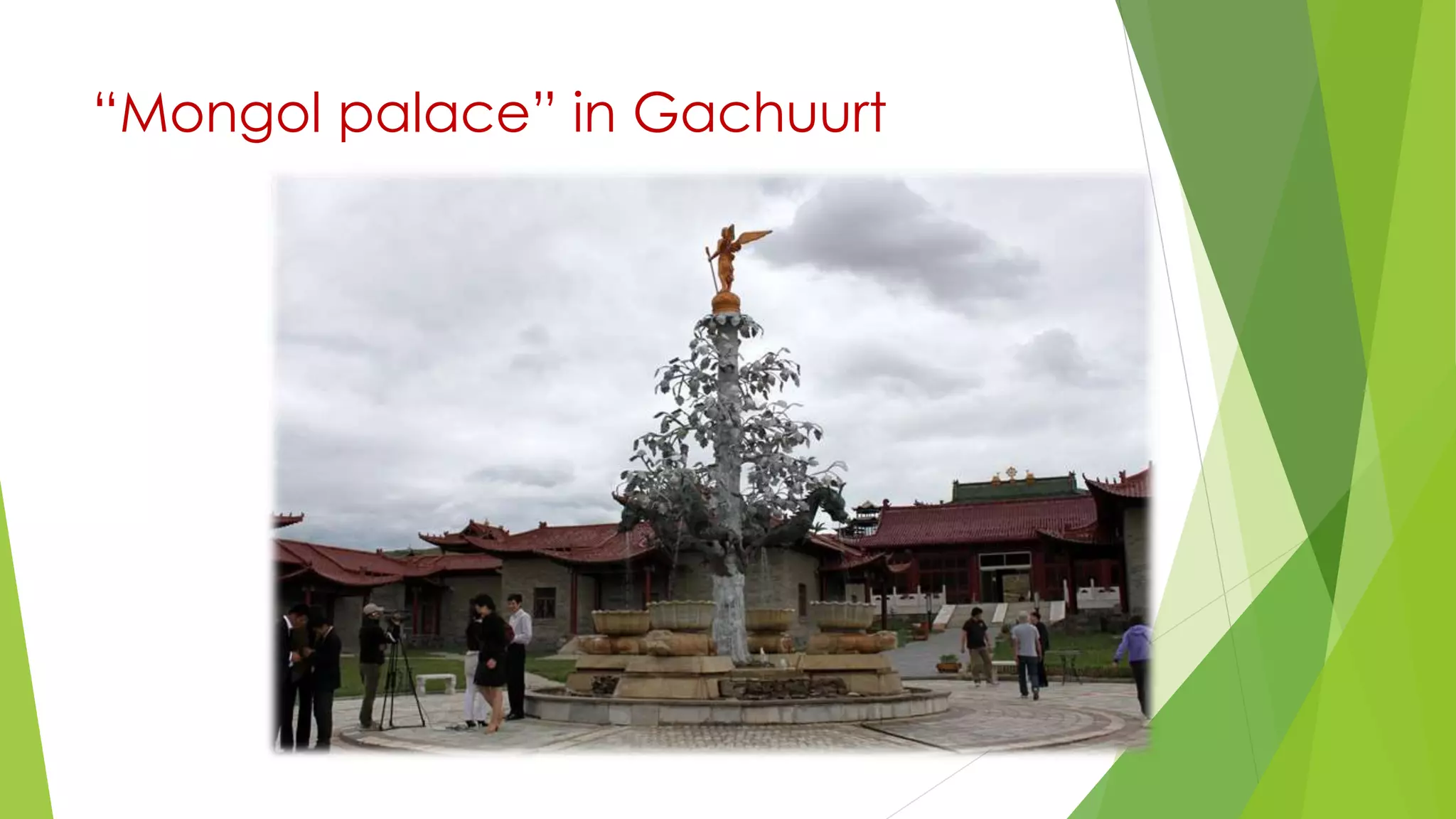
“Mongol palace” in Gachuurt
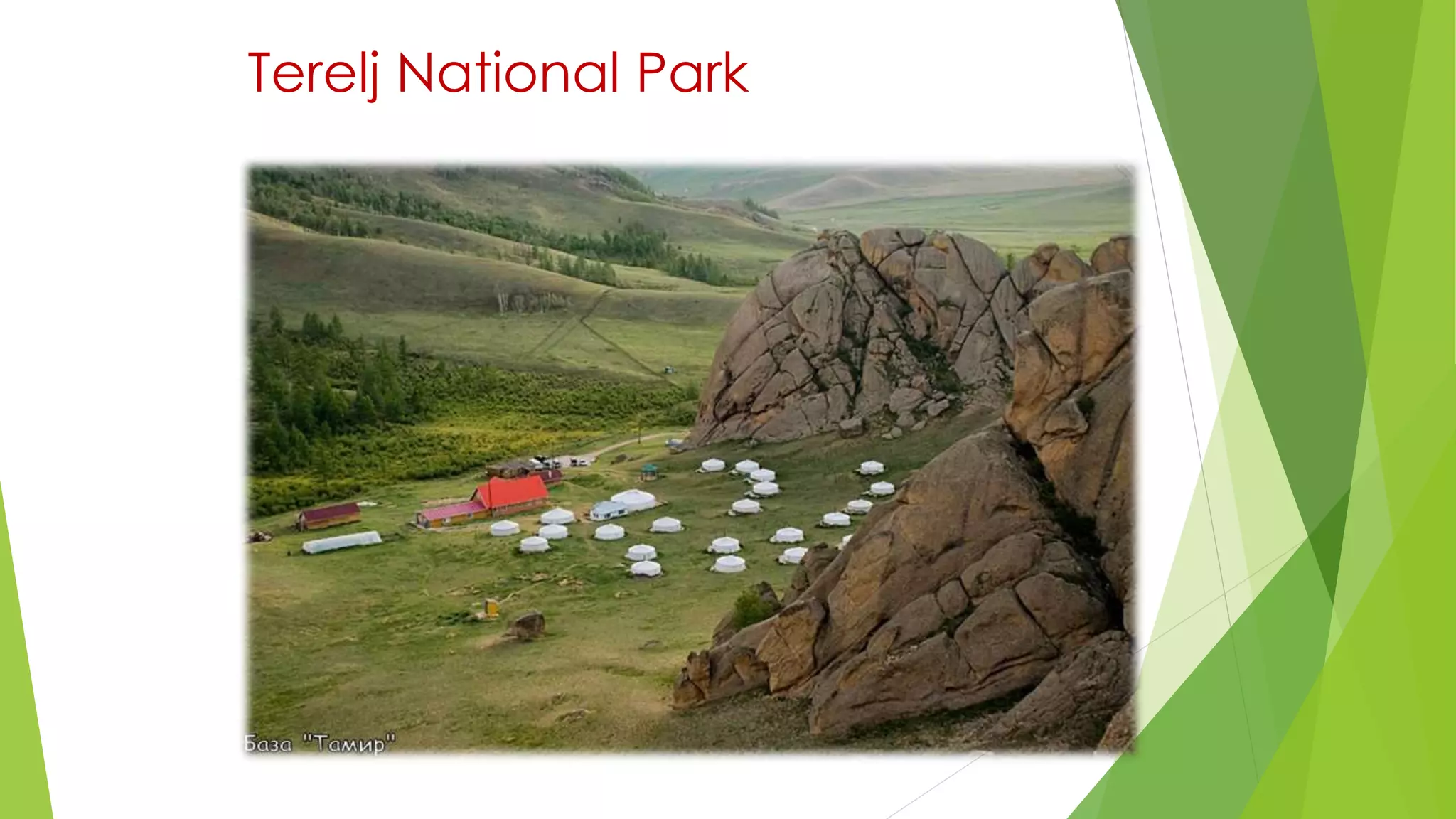
Terelj National Park
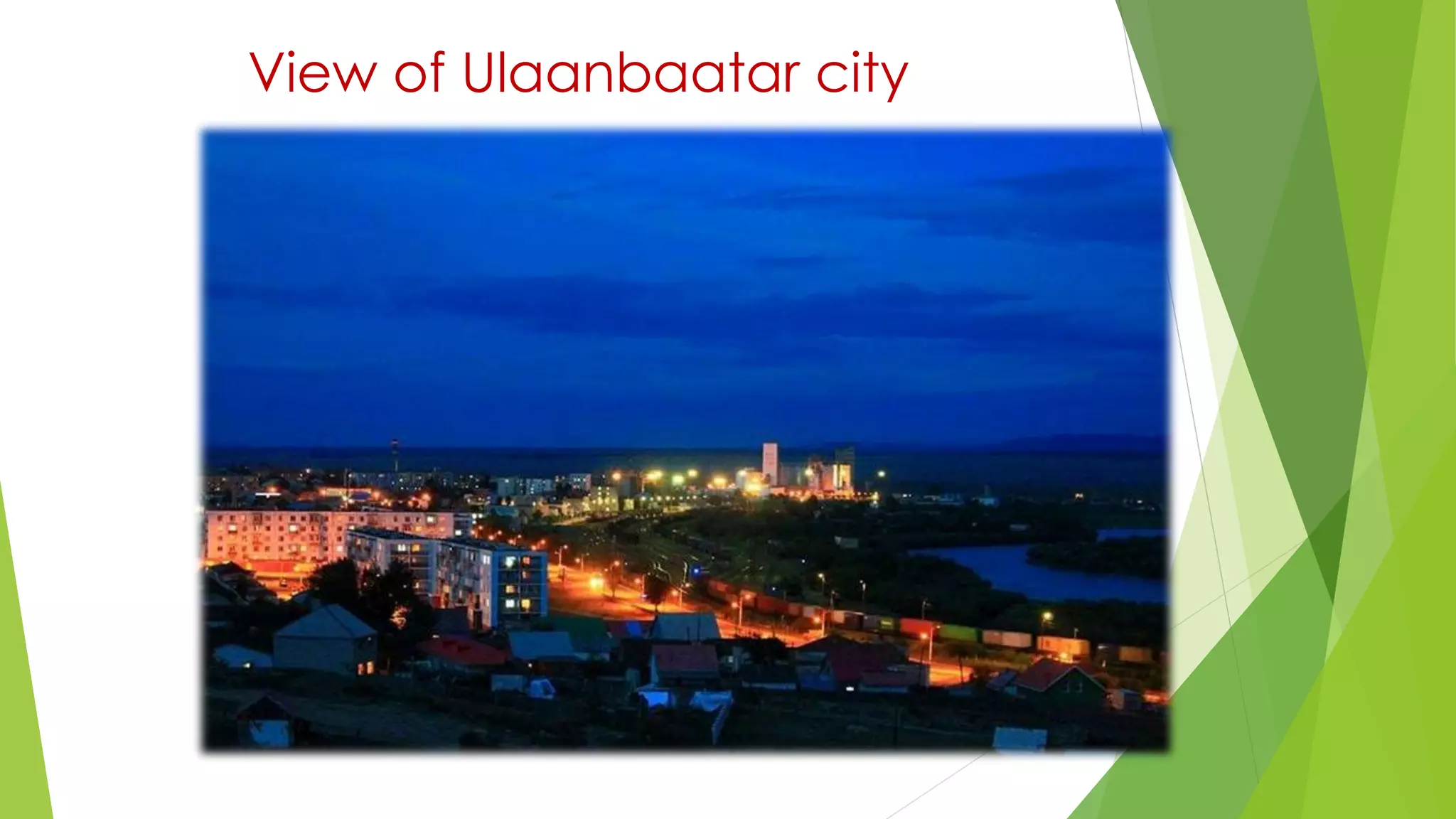
View of Ulaanbaatar city
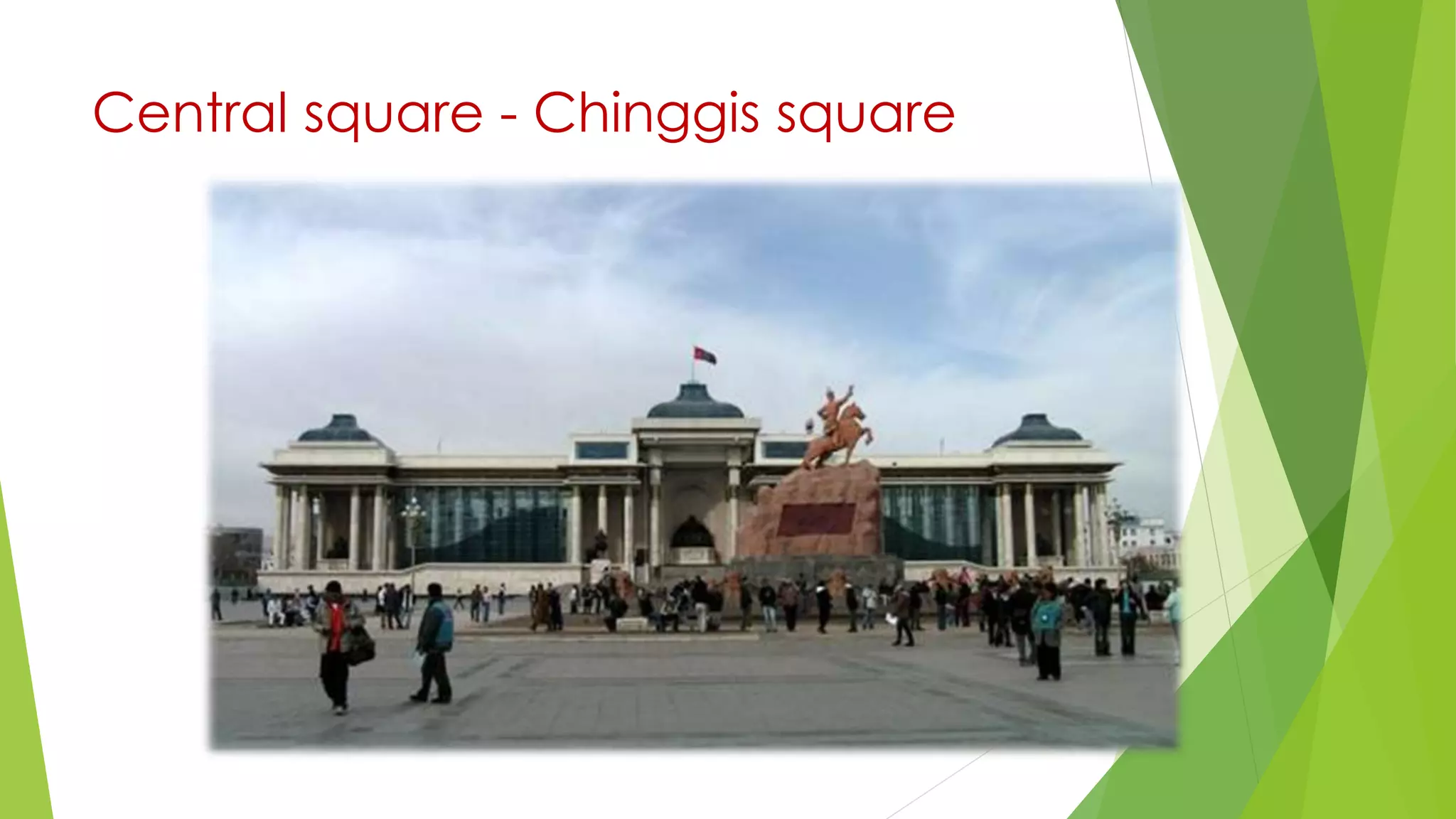
Central square - Chinggis square
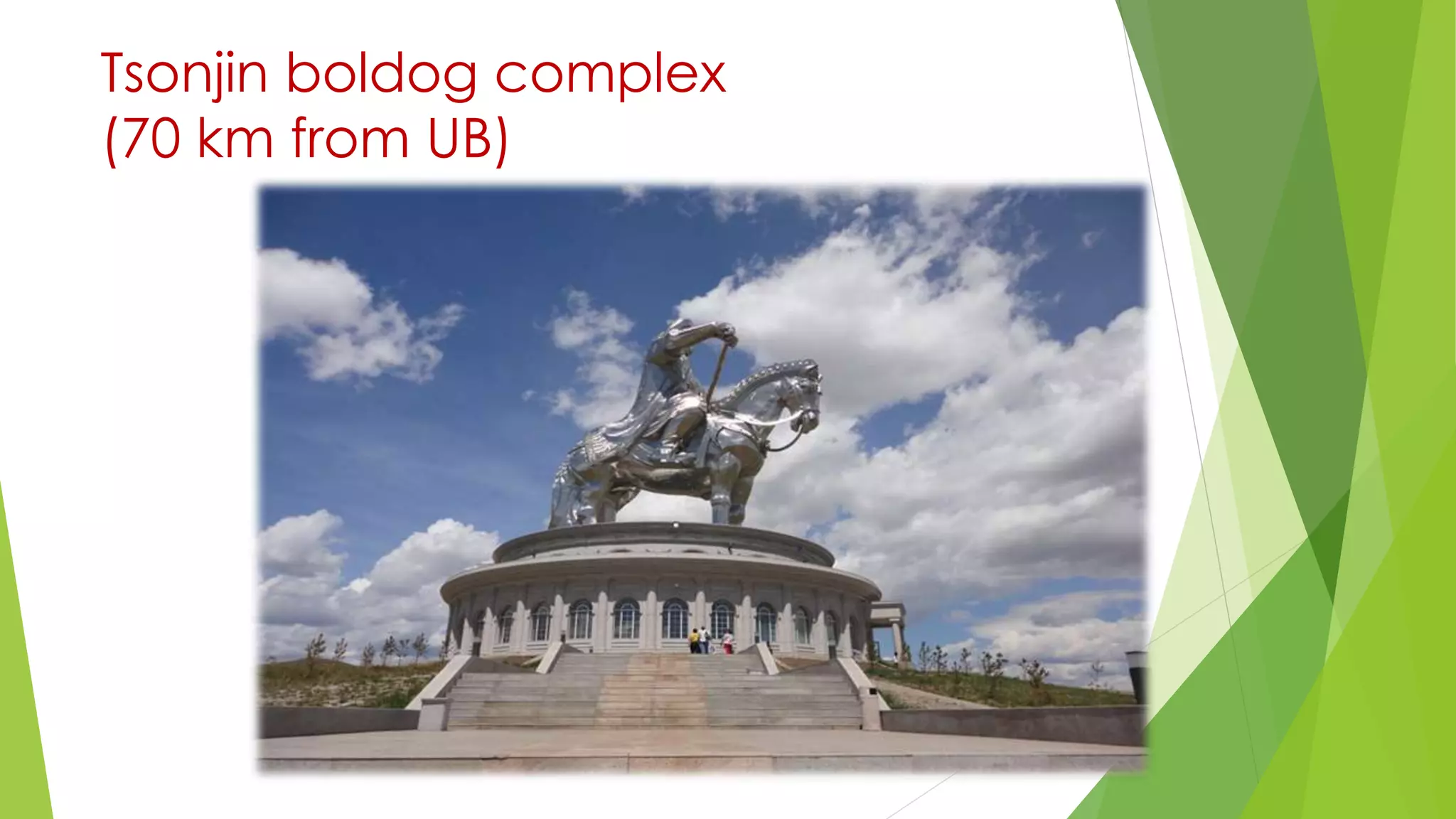
Tsonjin boldog complex
(70 km from UB)
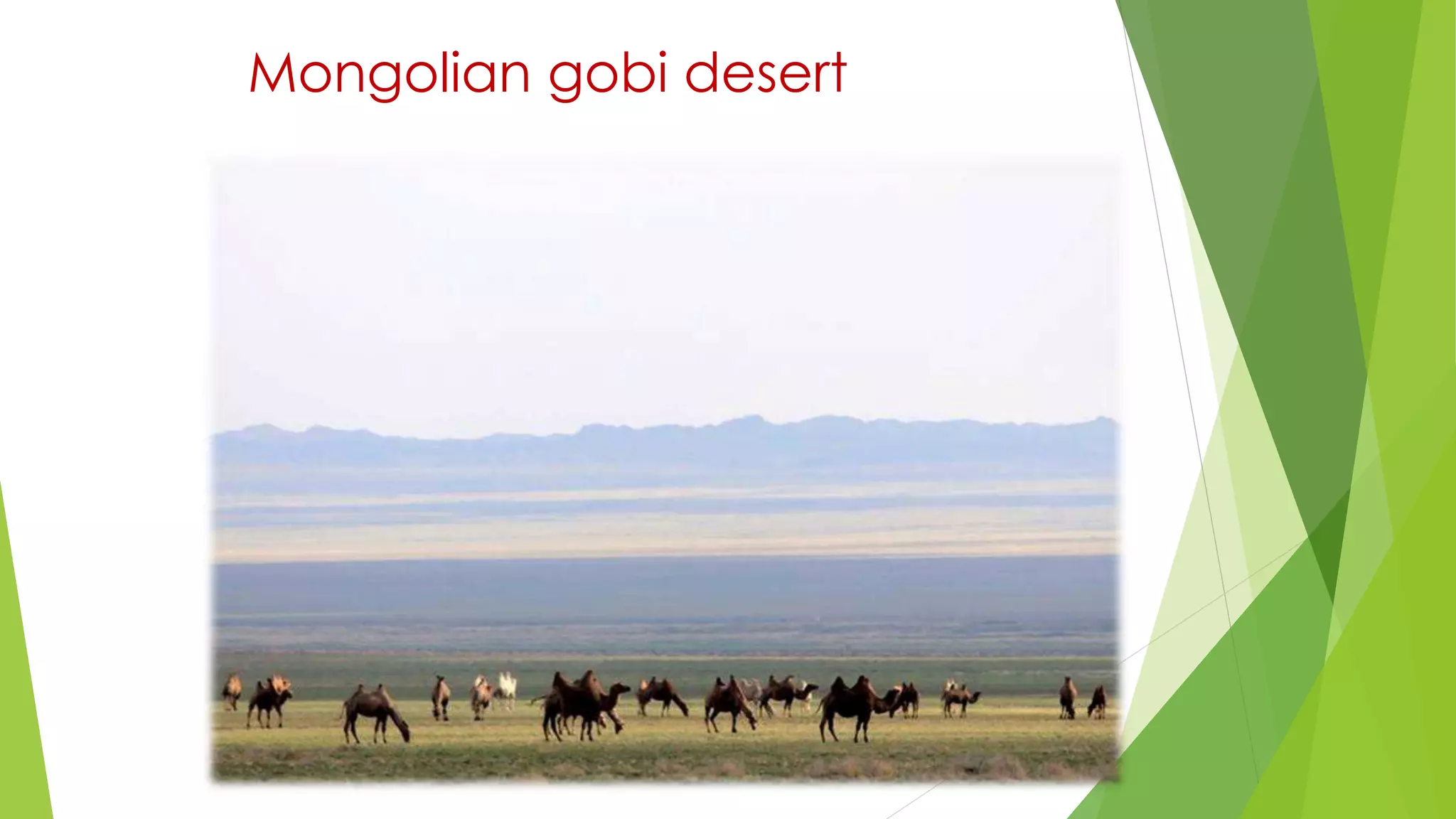
Mongolian gobi desert
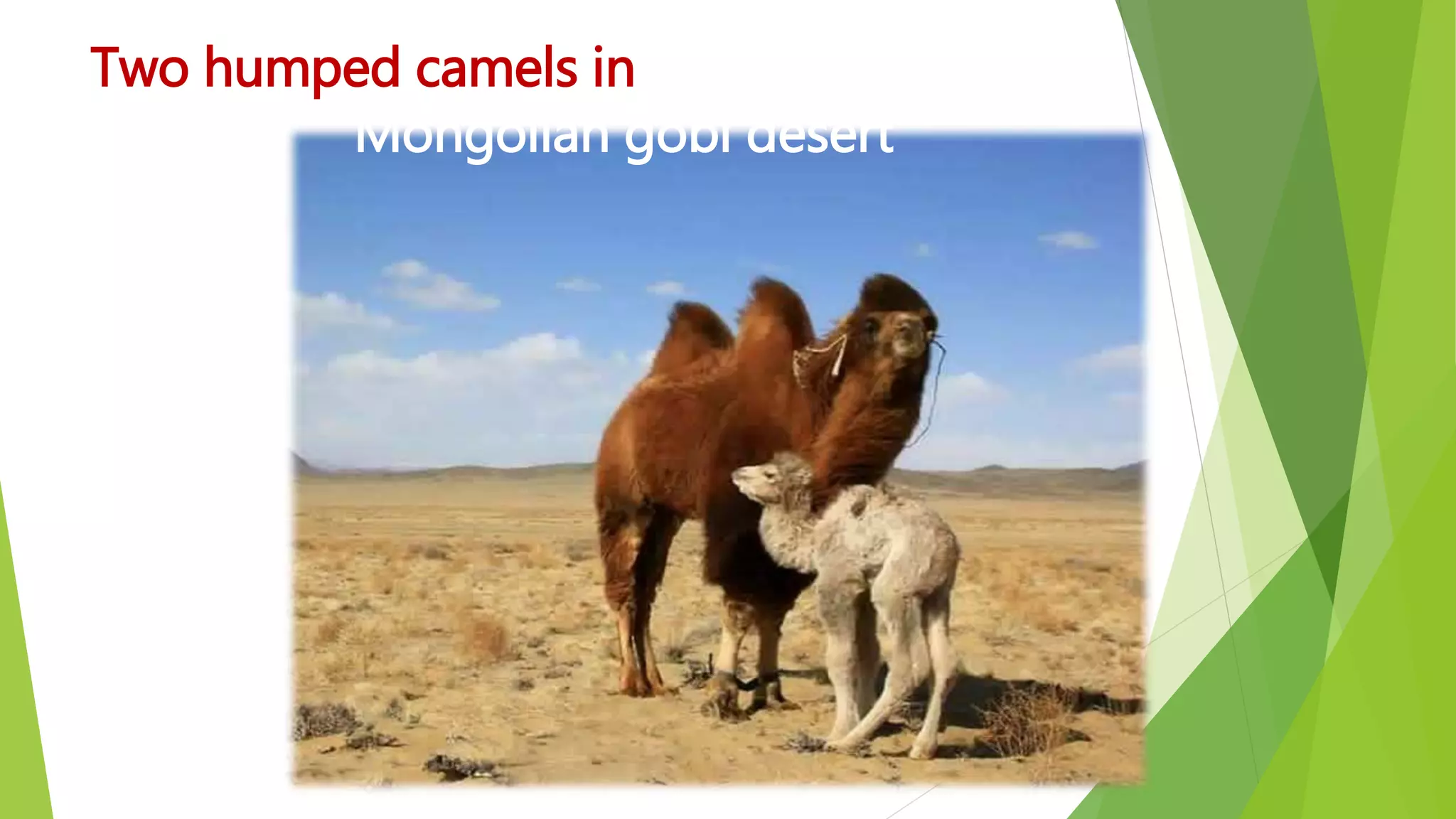
Two humped camels in
Mongolian gobi desert
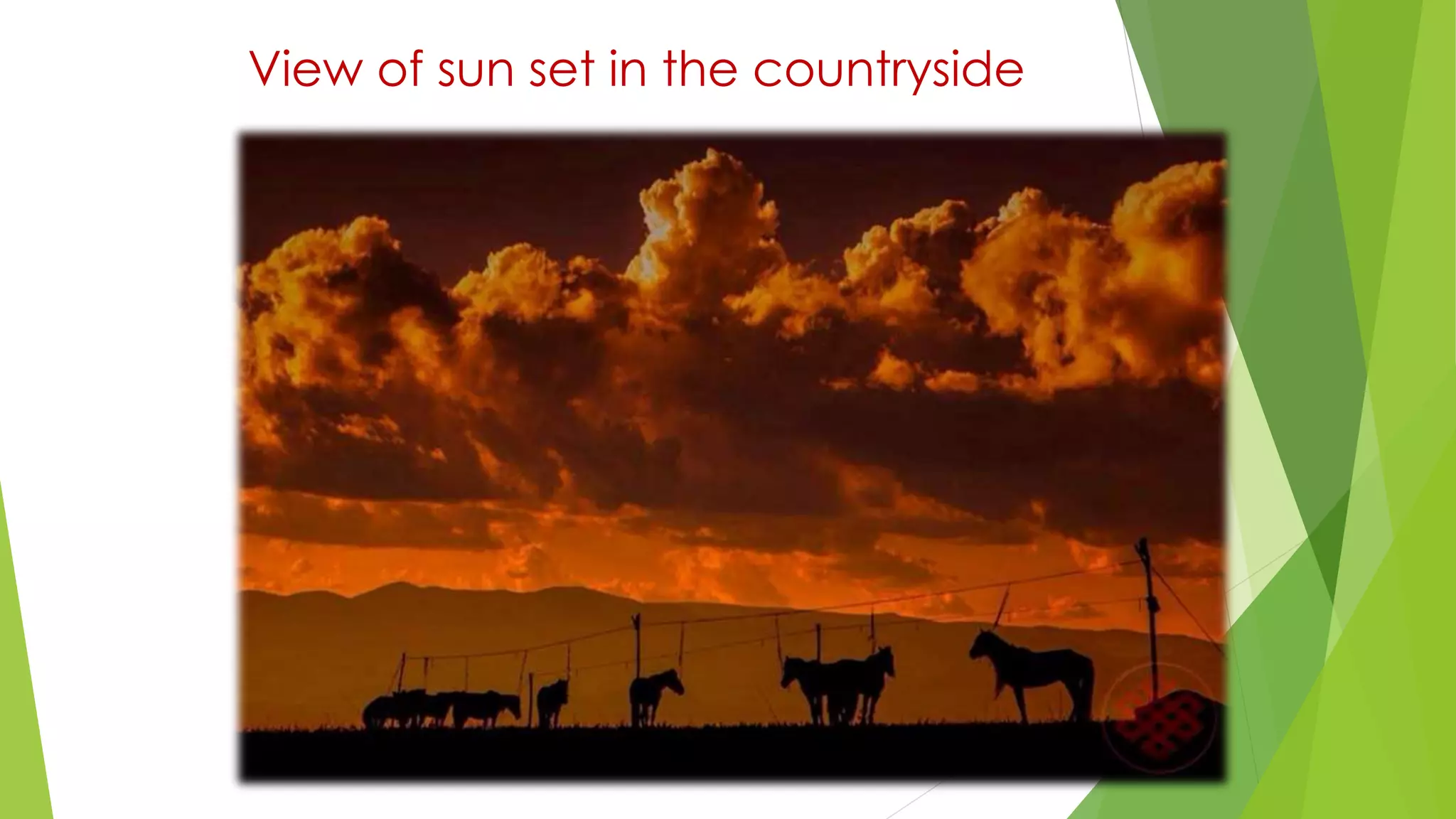
View of sun set in the countryside
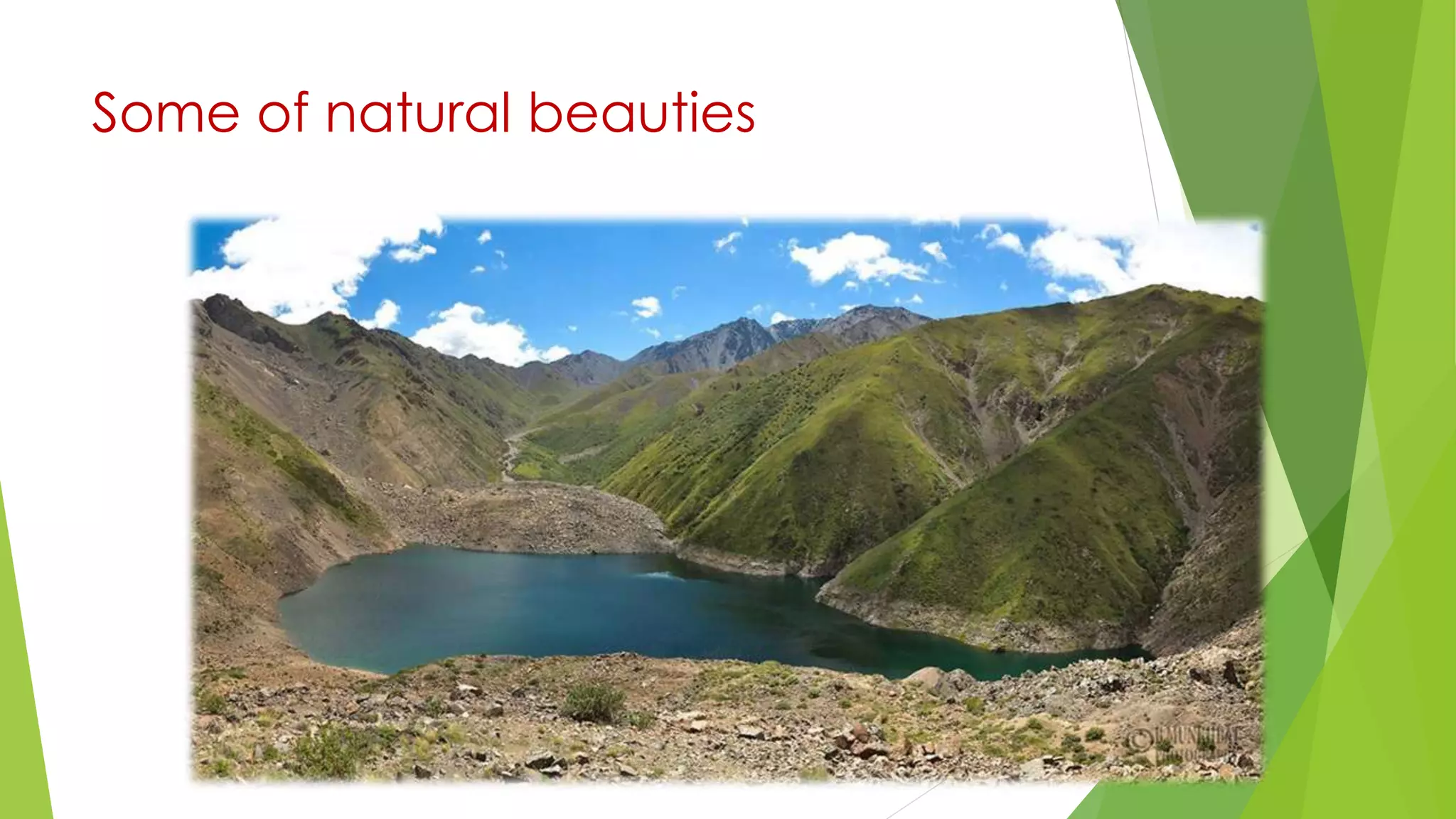
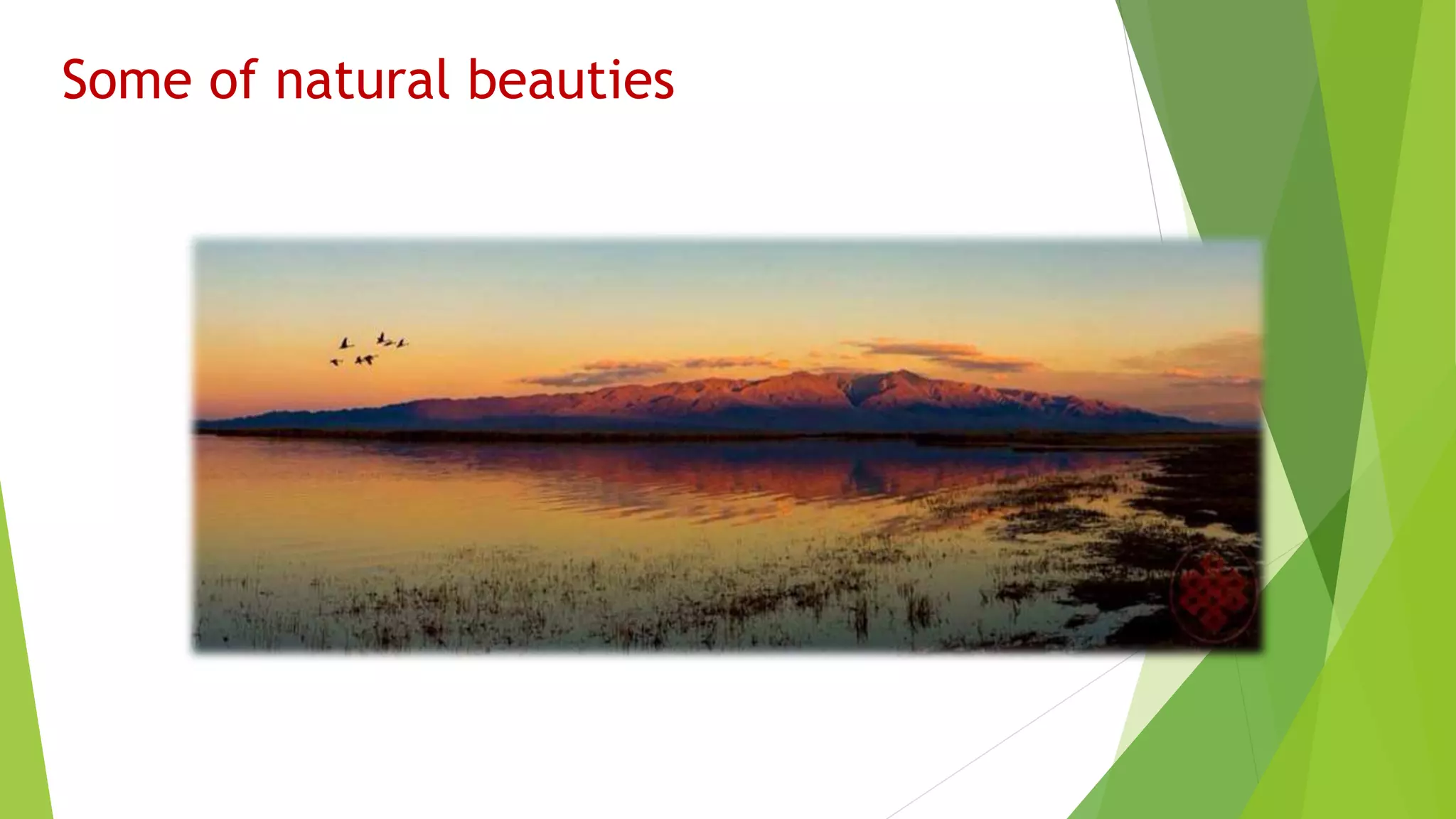
Some of natural beauties
Winter of Mongolia
Horseback riding
General introduction - Mongolia

General introduction - Mongolia

  • 1.
  • 2.
     Country Profile/General information  Demography  Brief Mongolian History  Government structure in brief  Culture /National holidays, Music, Dressing, Religion/  Beautiful destinations
  • 3.
     The 5thlargest in Asia and 19th largest in the world  Well known by Land of Chinggis Khan and Blue Sky (Sunshine days make up over 200 days of the year)  Located in north central Asia borders with Russia and China  Total size: 1,5 million sq km  Landlocked country  21 provinces and a Capital city (9 districts)  Capital is Ulaanbaatar –
  • 4.
     Language: Mongolianlanguage 95, Kazak 5% - Mongolian Cyrillic Scripture is official - Old Mongolian Scripture is getting revived among young people  Ethnic groups: Khalkh 85, Kazakh 5% and other 15%  Currency: Mongolian tugrik (1USD = 1800 MNT)  Political system: Parliamentary republic  Climate: Dry - Winter: -15 -25 C in day; -20-35 C in night - Summer: + 22C + 32 C in daytime  National flag - Blue band is an eternal blue sky. - Red bands represent the ability of Mongolia to thrive in its harsh environment - The soyombo, general symbol, is a columnar arrangement of МОНГОЛ УЛС
  • 8.
  • 9.
    BC 209 Modun Shanyu 1206 Chinggi s Khan 1271 Hublai Khan 1911 Bogda Khan 1921 Soviet- dominate d Communi stregime 1990- till now Hunn u Empir e Great Mong ol Empire Four Empires – Yuan Dynasty Rulled by Manju Chin Dynasty 1691 Indepen- dent Mongolia Mongolia n People’s Republic Democra tic Revolutio n - Current Mongolia
  • 10.
    The Mongol Empire’s territory extendedfrom present-day Poland in the west to the Korean peninsula in the east, from in the north to the Arab peninsula and Vietnam in the covering approximately 33 million square kilometers.Mongolian words adopted in Korean language: Horse: Mori - 말 Shield: Bambai - 밤베 Direction: Zug - 쪽 Little bit: Jaahan- 쪼금 etc https://www.youtube.com/watch?v=abJQD_RTZEU
  • 11.
  • 12.
    PARLIAMENT 76 members PRIME MINISTER GOVERNMENT SAIKHANBILEG.CH PRESIDENT ELBEGDORJ. TS 16Ministries (4 General & 12 specific orientation ministries) And its agencies Provinc e Soum Bag Municip al District Khoroo National Security Council National Audit Office National statistical office Bank of Mongolia Government Service Council Financial Regulatory Commission National Human Rights Commission General Election Committee Constitutional Court Independent Authority Against Corruption of Mongolia Deputy Prime Minister Cabinet Secretariat of Government JUDICIARY The General Council of the Courts Supreme Court State General Prosecutors Office Judicial Information System Legal Information System
  • 13.
    Mongolian 5th President, electedtwo times from Democratic Party Mr. Elbegdorj Takhia Mongolian 28th Prime Minister From Democratic Party Mr. Saikhanbileg Chimed 11 Women Parliament Members from four different parties as “Women Caucus” Chaired by Mrs. Erdenechimeg Luvsan
  • 14.
    Nomadic way oflife  Nomads herd five domestic animals: sheep, goat, horse, cow & camel  Mongolians respect horses and like their best friends.  Nomads move into place to place 2-4 times a year /depending on livestock’s pasture/  Mongolian traditional dwelling is “ger”. Music  Long song  Khuumii singing (throat singing)  Horse head fiddle Dress  Mongolian Deel  Getting modernized
  • 15.
    Wedding  Tradition weddingceremony still exist in the countryside.  Westernized wedding is popular in urban areas.  Average marriage age: Male 26, Female 24 Festival and holidays  Naadam national festival - July 11-13: The “three manly sports”- wrestling, horse riding and archery, accompanies by festivities, eating and drinking, and much socializing. The event is celebrated all over country.  Tsagaan Sar (White Month) Lunar New Year Festival. Durng three days, Mongolians visit their relatives and friends, and enjoy traditional food and drink. Like any other ex-communist country, Mongolia adopted many communist style holidays, such as military day, revolution day, and women’s day so on.
  • 16.
    Religions in Mongolia: 53% - Buddhism – Since 16th century, Buddhism was converted converted by Tibetan monks. Mongolia had 100,000 monks monks (one third of male population), in 1921.  38.6% - Atheism  2.9% - Shamanism – Shamans worship “Blue Skies”. According According to the belief, skies are the father, and the earth is the is the mother of all beings in the universe. Mongolians worshipped the various elements of nature, praying to their their ancestors.  3% - Islam in Khazak ethic in Bayan-Ulgii provine.  2.1% - Christians  0.4% - Others
  • 17.
  • 18.
  • 19.
    Camp in Gachuurtvillage (35 km away from UB)
  • 20.
  • 21.
  • 22.
  • 23.
    Central square -Chinggis square
  • 24.
  • 25.
  • 26.
    Two humped camelsin Mongolian gobi desert
  • 27.
    View of sunset in the countryside
  • 28.
  • 29.
  • 30.
  • 31.