Theories and Models of
Development
A brief synopsis
GEO 210 Aimee Kelly
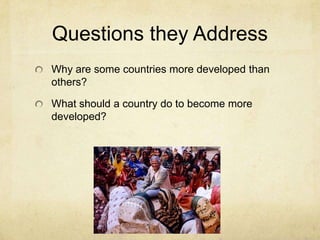
Questions they Address
Why are some countries more developed than
others?

What should a country do to become more
developed?
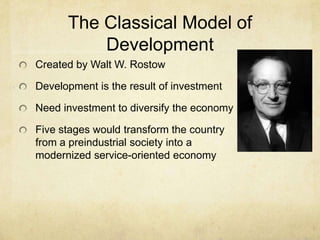
The Classical Model of
          Development
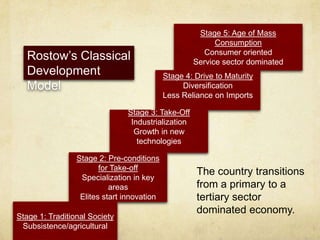
Created by Walt W. Rostow

Development is the result of investment

Need investment to diversify the economy

Five stages would transform the country
from a preindustrial society into a
modernized service-oriented economy
Stage 5: Age of Mass
                                                          Consumption
   Rostow’s Classical                                  Consumer oriented
                                                    Service sector dominated
   Development                              Stage 4: Drive to Maturity
   Model                                         Diversification
                                            Less Reliance on Imports

                               Stage 3: Take-Off
                                Industrialization
                                 Growth in new
                                  technologies

                 Stage 2: Pre-conditions
                        for Take-off
                                                     The country transitions
                  Specialization in key
                           areas                     from a primary to a
                  Elites start innovation            tertiary sector
                                                     dominated economy.
Stage 1: Traditional Society
 Subsistence/agricultural
Dependency Theory
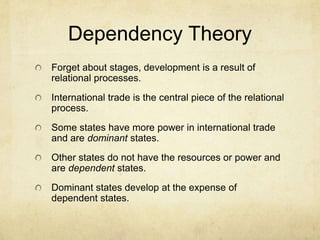
Forget about stages, development is a result of
relational processes.
International trade is the central piece of the relational
process.
Some states have more power in international trade
and are dominant states.
Other states do not have the resources or power and
are dependent states.
Dominant states develop at the expense of
dependent states.
World-System Theory
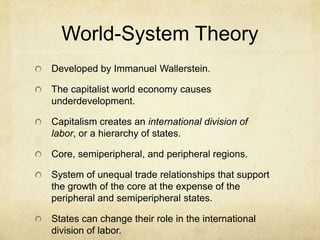
Developed by Immanuel Wallerstein.

The capitalist world economy causes
underdevelopment.

Capitalism creates an international division of
labor, or a hierarchy of states.

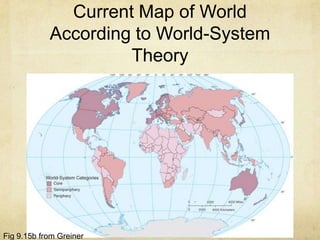
Core, semiperipheral, and peripheral regions.

System of unequal trade relationships that support
the growth of the core at the expense of the
peripheral and semiperipheral states.

States can change their role in the international
division of labor.
Current Map of World
            According to World-System
                     Theory


Fig 9.15b from Greiner
Neoliberal Model of
      Development
Based on the liberalist ideas of Rousseau, T.
Jefferson, and Adam Smith.
Suggests that capitalism can help countries
develop as long as markets were free and open.
Suggested underdevelopment was the result of
government policies that prevent economic
growth.
So, countries should engage in structural
adjustment programs that involve strategies for
market reform and deregulation.

Development Theories

  • 1.
    Theories and Modelsof Development A brief synopsis GEO 210 Aimee Kelly
  • 2.
    Questions they Address Whyare some countries more developed than others? What should a country do to become more developed?
  • 3.
    The Classical Modelof Development Created by Walt W. Rostow Development is the result of investment Need investment to diversify the economy Five stages would transform the country from a preindustrial society into a modernized service-oriented economy
  • 4.
    Stage 5: Ageof Mass Consumption Rostow’s Classical Consumer oriented Service sector dominated Development Stage 4: Drive to Maturity Model Diversification Less Reliance on Imports Stage 3: Take-Off Industrialization Growth in new technologies Stage 2: Pre-conditions for Take-off The country transitions Specialization in key areas from a primary to a Elites start innovation tertiary sector dominated economy. Stage 1: Traditional Society Subsistence/agricultural
  • 5.
    Dependency Theory Forget aboutstages, development is a result of relational processes. International trade is the central piece of the relational process. Some states have more power in international trade and are dominant states. Other states do not have the resources or power and are dependent states. Dominant states develop at the expense of dependent states.
  • 6.
    World-System Theory Developed byImmanuel Wallerstein. The capitalist world economy causes underdevelopment. Capitalism creates an international division of labor, or a hierarchy of states. Core, semiperipheral, and peripheral regions. System of unequal trade relationships that support the growth of the core at the expense of the peripheral and semiperipheral states. States can change their role in the international division of labor.
  • 7.
    Current Map ofWorld According to World-System Theory Fig 9.15b from Greiner
  • 8.
    Neoliberal Model of Development Based on the liberalist ideas of Rousseau, T. Jefferson, and Adam Smith. Suggests that capitalism can help countries develop as long as markets were free and open. Suggested underdevelopment was the result of government policies that prevent economic growth. So, countries should engage in structural adjustment programs that involve strategies for market reform and deregulation.