LIBERALISM
Liberalism defined…
• A political philosophy or worldview founded
on ideas of liberty and equality. (Wikipedia)
• Liberalism emphasizes that the broad ties
among states have both made it difficult to
define national interest and decreased the
usefulness of military power. (Sparknotes)
Reason for its emergence and its use
• “The contrast is with a society in which the
society decides what the individual is to do or
believe. ” (encyclopedia.com)
• In those areas of a society in which individual
liberty prevails, social outcomes will be the
result of a myriad of individual decisions
taken by individuals for themselves or in
voluntary cooperation with some others.
Liberalism…
• Begun with John Locke in the 17th century,
who saw great potential for human progress
in modern civil society and capitalist
economy both of which could flourish in
states which guaranteed individual liberty.
Basic Liberal Assumptions
 a positive view of human nature
 a conviction that international relations can
be cooperative rather than conflictual
 a belief in progress
LIBERALISM
Classical Liberalism
FOCUS:
freedom, cooperation, peace, progress
EARLY THINKERS:
Locke (1632-1704) Bentham (1748-1832) Kant (1724-1804)
The rule of law Liberal states respect ‘Republics will establish
‘Rechtsstaat’ international law perpetual peace’
LIBERALISM
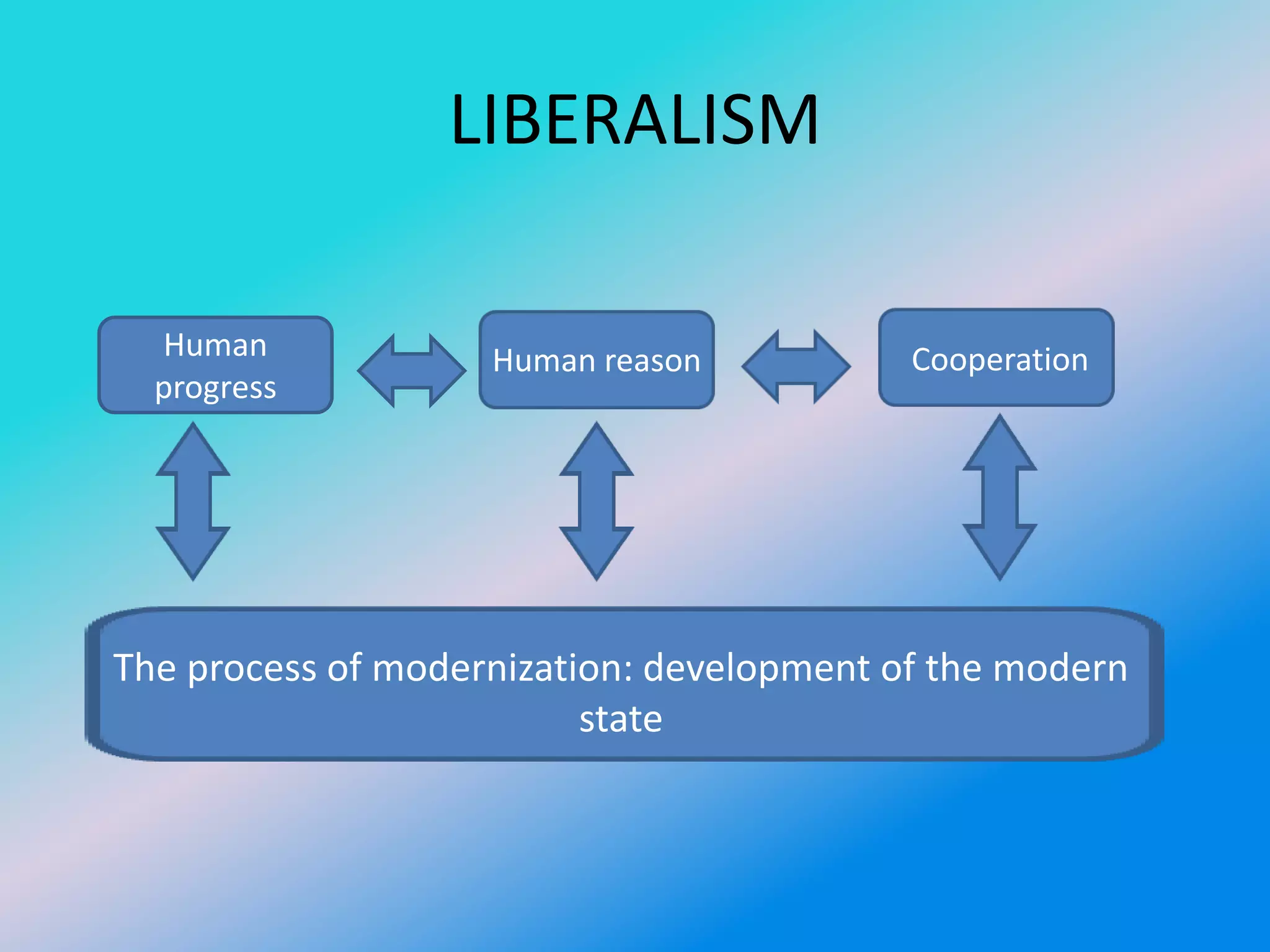
Human
progress
Human reason Cooperation
The process of modernization: development of the modern
state
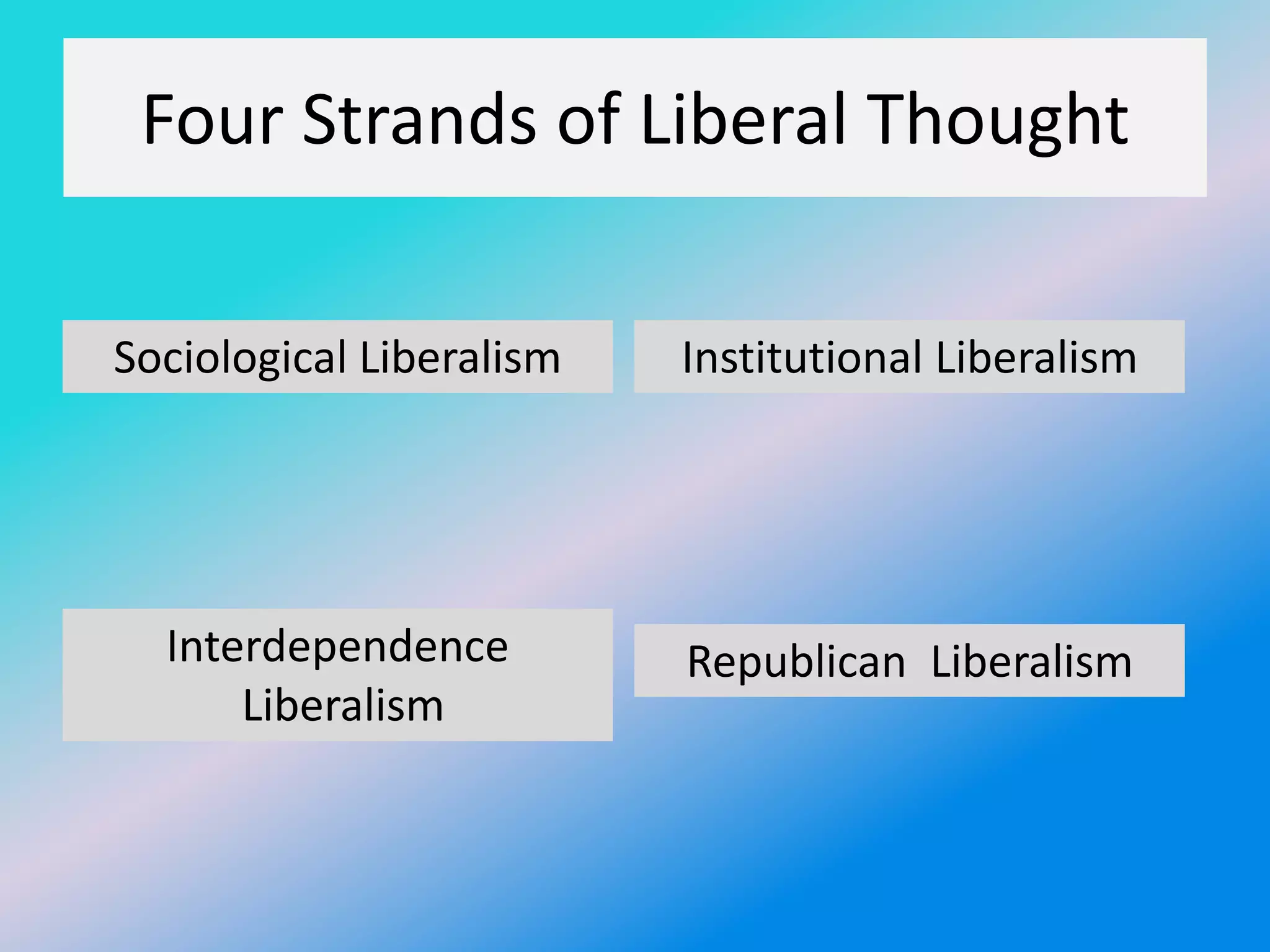
Four Strands of Liberal Thought
Institutional Liberalism
Interdependence
Liberalism
Sociological Liberalism
Republican Liberalism
Sociological Liberalism
• highlights the transnational non-governmental
ties between societies, such as
communication between individuals and
between groups
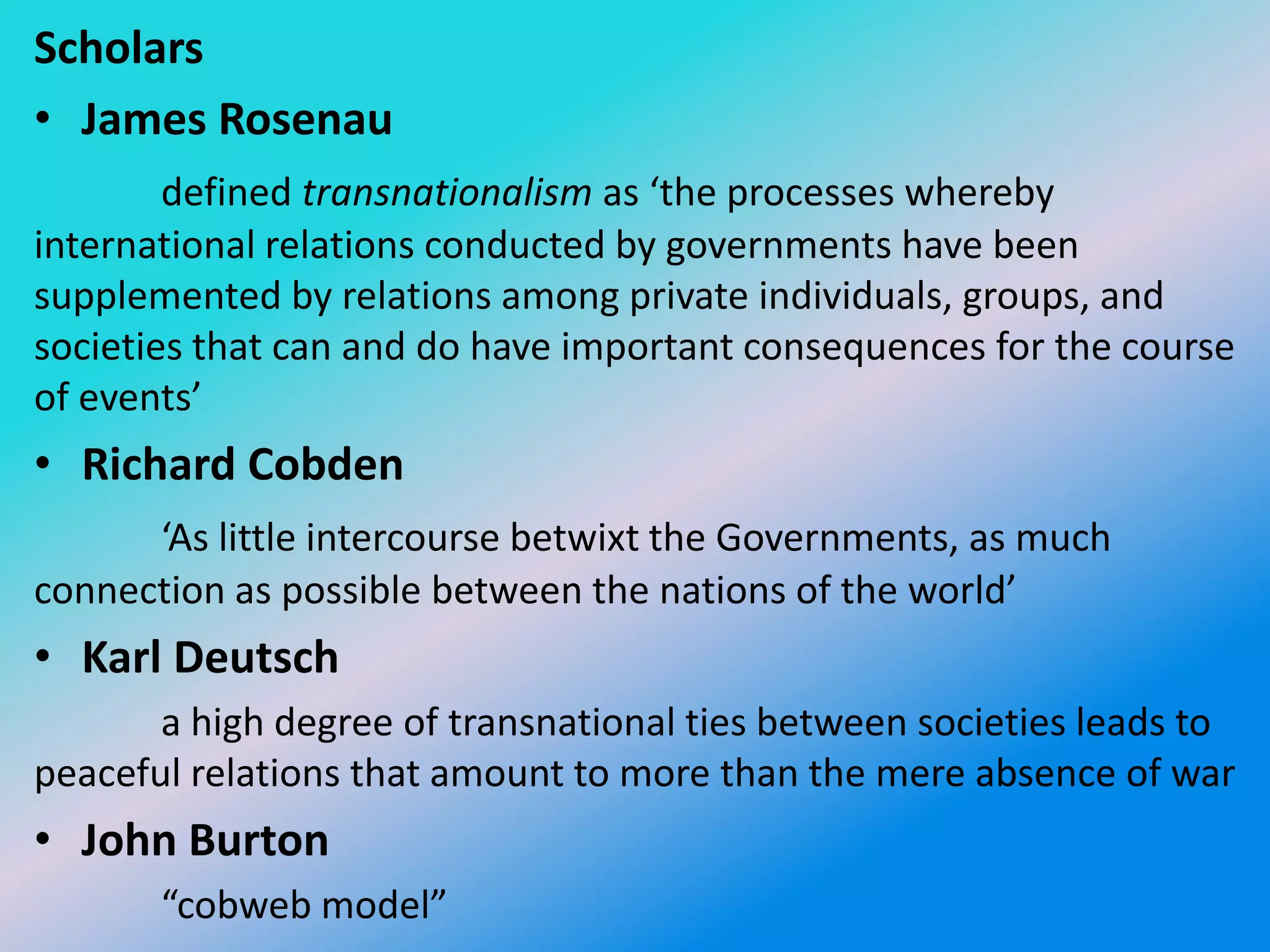
Scholars
• James Rosenau
defined transnationalism as ‘the processes whereby
international relations conducted by governments have been
supplemented by relations among private individuals, groups, and
societies that can and do have important consequences for the course
of events’
• Richard Cobden
‘As little intercourse betwixt the Governments, as much
connection as possible between the nations of the world’
• Karl Deutsch
a high degree of transnational ties between societies leads to
peaceful relations that amount to more than the mere absence of war
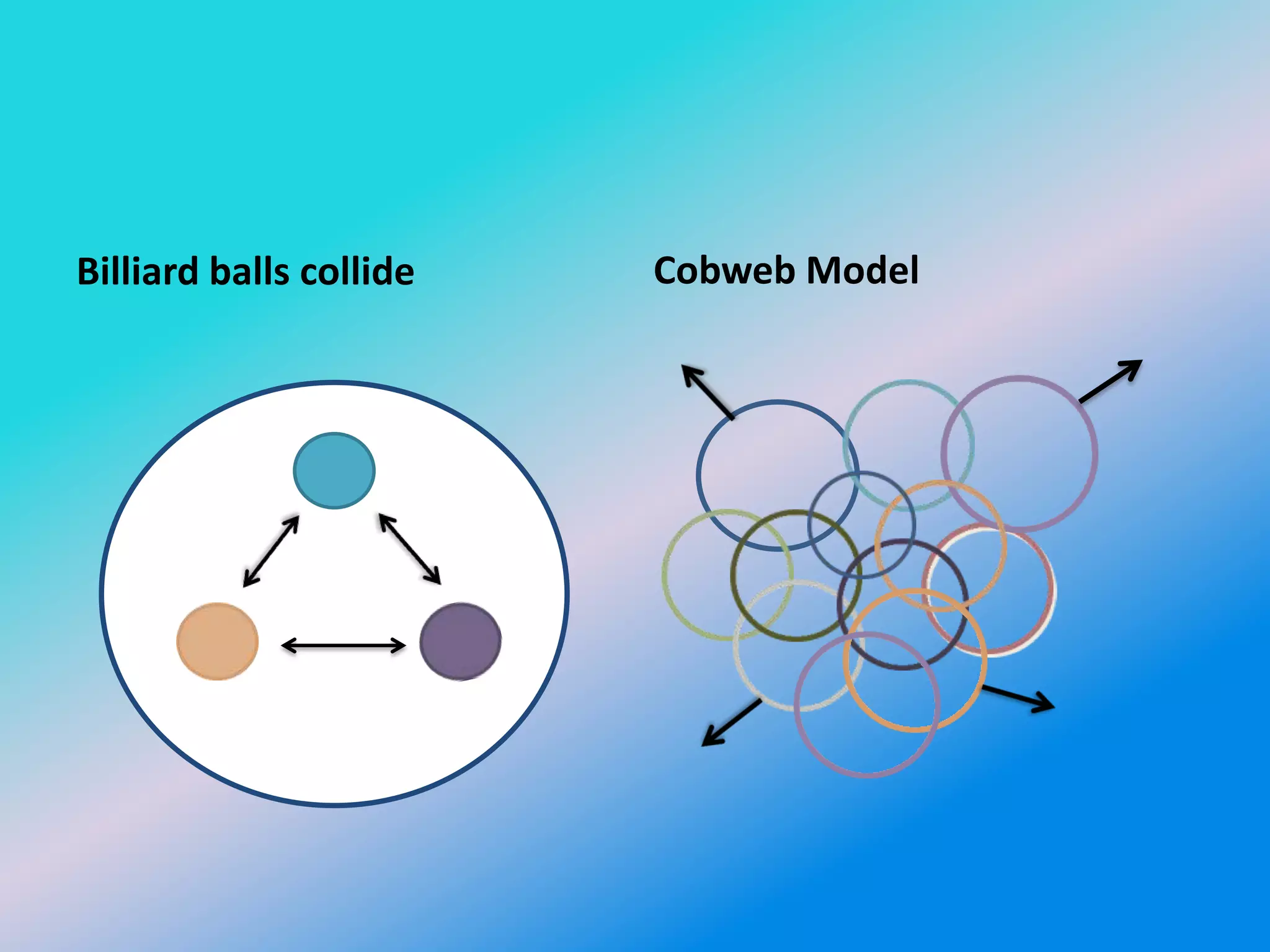
• John Burton
“cobweb model”
Billiard balls collide Cobweb Model
Interdependence Liberalism
• pays attention to the economic ties of mutual
exchange and mutual dependence between
peoples and governments
• argues that a high division of labour in the
international economy increases
interdependence between states, and that
discourages and reduces violent conflict
between states
Scholars:
• Richard Rosecrance
traditional military vs. trading states
• David Mitrany
cooperation should be arranged by experts, not by
politicians
• Ernst Haas
‘Spillover’ would ensure that political elites marched
inexorably towards the promotion of integration
• Robert Keohane and Joseph Nye
states become more preoccupied with ‘low politics’ of
welfare and less concerned with ‘high politics’ of national
security
Institutional Liberalism
• underscores the importance of organized
cooperation between the states
• institutions alleviate problems concerning lack of
trust between states and they reduce states’ fear
for each other
The extent of institutionalization can be
measured on two dimensions:
Scope
Depth
For assessing the depth, there are three
measures:
• Commonality
• Specificity
• Autonomy
A typology of international and transnational organizations
GOAL OF ORGANIZATION
TERMSOFMEMBERSHIP
UniversalRegional
Intergovernmental
Supranational
Transnational
Intergovernmental
Supranational
Transnational
Specific General
NATO
NAFTA
ECSC (European Coal and
Steel Community)
EURATOM
European Anti-Poverty
Network
WHO (World Health Organization)
IAEA (International Atomic
Energy Agency)
---
Amnesty International
AU(African Union)
European Union
European Movement
UN
---
World Federalist
Association
Adapted from Heurlin (1996)
Republican Liberalism
• argues that liberal democratic constitutions
and forms of government are of vital
importance for inducing peaceful and
cooperative relations between states
Scholars:
• Immanuel Kant
democracies do not fight each other
• Dean Babst
• Francis Fukuyama
‘the end of history as such: that is, the end
point of mankind’s ideological evolution and the
universalization of Western liberal democracy as the
final form of human government’
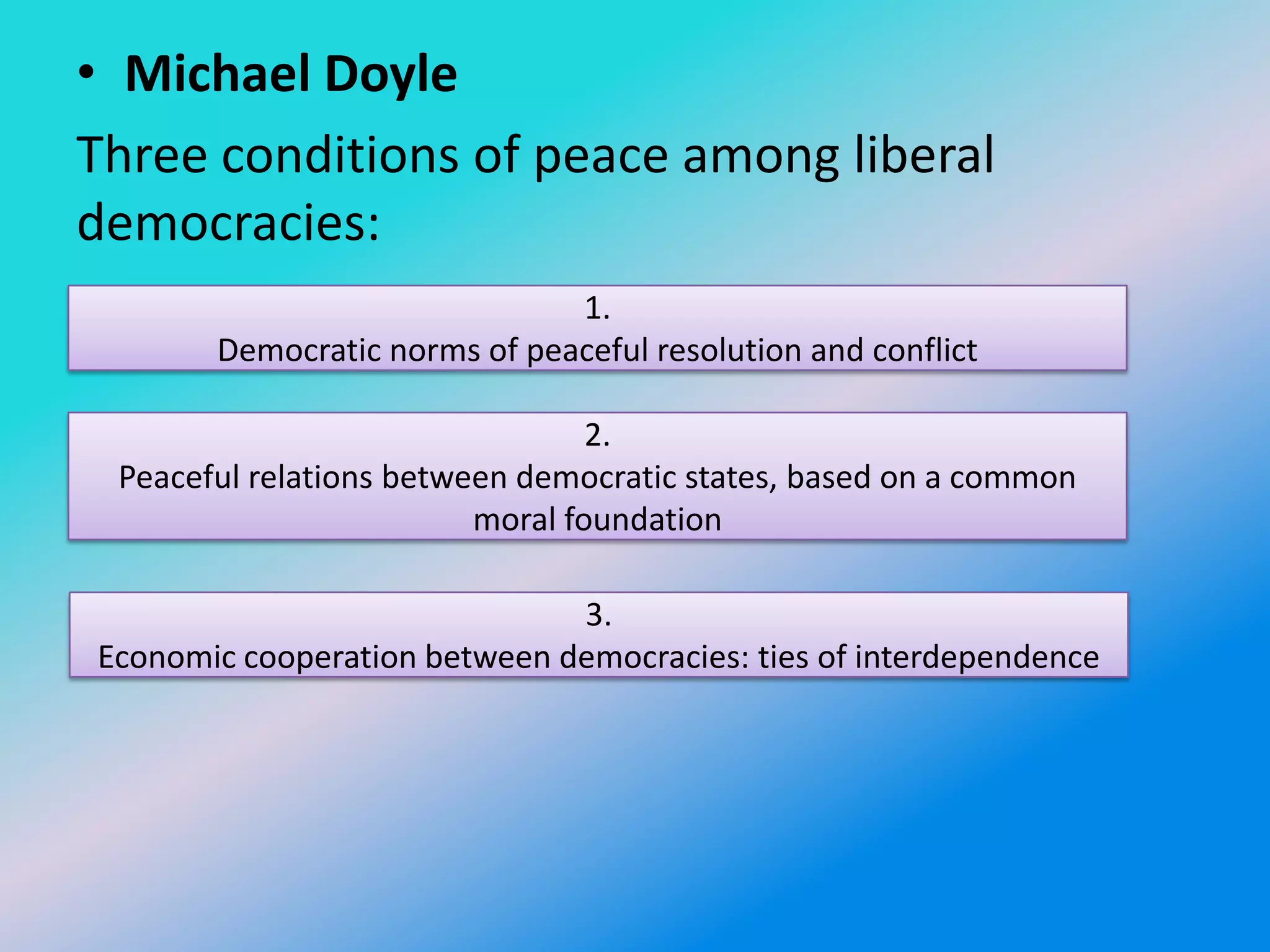
• Michael Doyle
Three conditions of peace among liberal
democracies:
1.
Democratic norms of peaceful resolution and conflict
2.
Peaceful relations between democratic states, based on a common
moral foundation
3.
Economic cooperation between democracies: ties of interdependence

Liberalism

  • 1.
  • 2.
    Liberalism defined… • Apolitical philosophy or worldview founded on ideas of liberty and equality. (Wikipedia) • Liberalism emphasizes that the broad ties among states have both made it difficult to define national interest and decreased the usefulness of military power. (Sparknotes)
  • 3.
    Reason for itsemergence and its use • “The contrast is with a society in which the society decides what the individual is to do or believe. ” (encyclopedia.com) • In those areas of a society in which individual liberty prevails, social outcomes will be the result of a myriad of individual decisions taken by individuals for themselves or in voluntary cooperation with some others.
  • 4.
    Liberalism… • Begun withJohn Locke in the 17th century, who saw great potential for human progress in modern civil society and capitalist economy both of which could flourish in states which guaranteed individual liberty.
  • 5.
    Basic Liberal Assumptions a positive view of human nature  a conviction that international relations can be cooperative rather than conflictual  a belief in progress
  • 6.
    LIBERALISM Classical Liberalism FOCUS: freedom, cooperation,peace, progress EARLY THINKERS: Locke (1632-1704) Bentham (1748-1832) Kant (1724-1804) The rule of law Liberal states respect ‘Republics will establish ‘Rechtsstaat’ international law perpetual peace’
  • 7.
    LIBERALISM Human progress Human reason Cooperation Theprocess of modernization: development of the modern state
  • 8.
    Four Strands ofLiberal Thought Institutional Liberalism Interdependence Liberalism Sociological Liberalism Republican Liberalism
  • 9.
    Sociological Liberalism • highlightsthe transnational non-governmental ties between societies, such as communication between individuals and between groups
  • 10.
    Scholars • James Rosenau definedtransnationalism as ‘the processes whereby international relations conducted by governments have been supplemented by relations among private individuals, groups, and societies that can and do have important consequences for the course of events’ • Richard Cobden ‘As little intercourse betwixt the Governments, as much connection as possible between the nations of the world’ • Karl Deutsch a high degree of transnational ties between societies leads to peaceful relations that amount to more than the mere absence of war • John Burton “cobweb model”
  • 11.
  • 12.
    Interdependence Liberalism • paysattention to the economic ties of mutual exchange and mutual dependence between peoples and governments • argues that a high division of labour in the international economy increases interdependence between states, and that discourages and reduces violent conflict between states
  • 13.
    Scholars: • Richard Rosecrance traditionalmilitary vs. trading states • David Mitrany cooperation should be arranged by experts, not by politicians • Ernst Haas ‘Spillover’ would ensure that political elites marched inexorably towards the promotion of integration • Robert Keohane and Joseph Nye states become more preoccupied with ‘low politics’ of welfare and less concerned with ‘high politics’ of national security
  • 14.
    Institutional Liberalism • underscoresthe importance of organized cooperation between the states • institutions alleviate problems concerning lack of trust between states and they reduce states’ fear for each other
  • 15.
    The extent ofinstitutionalization can be measured on two dimensions: Scope Depth For assessing the depth, there are three measures: • Commonality • Specificity • Autonomy
  • 16.
    A typology ofinternational and transnational organizations GOAL OF ORGANIZATION TERMSOFMEMBERSHIP UniversalRegional Intergovernmental Supranational Transnational Intergovernmental Supranational Transnational Specific General NATO NAFTA ECSC (European Coal and Steel Community) EURATOM European Anti-Poverty Network WHO (World Health Organization) IAEA (International Atomic Energy Agency) --- Amnesty International AU(African Union) European Union European Movement UN --- World Federalist Association Adapted from Heurlin (1996)
  • 17.
    Republican Liberalism • arguesthat liberal democratic constitutions and forms of government are of vital importance for inducing peaceful and cooperative relations between states
  • 18.
    Scholars: • Immanuel Kant democraciesdo not fight each other • Dean Babst • Francis Fukuyama ‘the end of history as such: that is, the end point of mankind’s ideological evolution and the universalization of Western liberal democracy as the final form of human government’
  • 19.
    • Michael Doyle Threeconditions of peace among liberal democracies: 1. Democratic norms of peaceful resolution and conflict 2. Peaceful relations between democratic states, based on a common moral foundation 3. Economic cooperation between democracies: ties of interdependence

Editor's Notes

  • #3 Explain LIBERTY2ND BULLET = WHY?
  • #4  Explain first bullet
  • #7 Liberalism’s focus (as a whole)
  • #8 Basic liberal assumptions
  • #10 Explanation and example
  • #13 Explanation and example
  • #15 Explanation and example
  • #18 Explanation and example