Making a Career Out of This:
Adventures with Learning
Technologies
Professor Mike Keppell
Pro Vice-Chancellor, Learning
Transformations
1
2
Adventures
don’t always
go to plan…
Overview
• Values
• Design thinking
• Personalised learning
• Being connected
• Affordances
• Networks
• Distributive leadership
• Change management
• Changing mindsets
3
Values
Reflect the fundamental beliefs that
underpin everyday decisions and actions.
•Inclusive: promote equity
•Innovative: emerging idea
•Transformative: thoughtful redesign
•Interdisciplinary: cross discipline
Collaborative: collaboration
•Sustainable: generative strategies
•Connected: connected world
•Evidence-based: scholarship & research
•Open: opportunities of open education
4
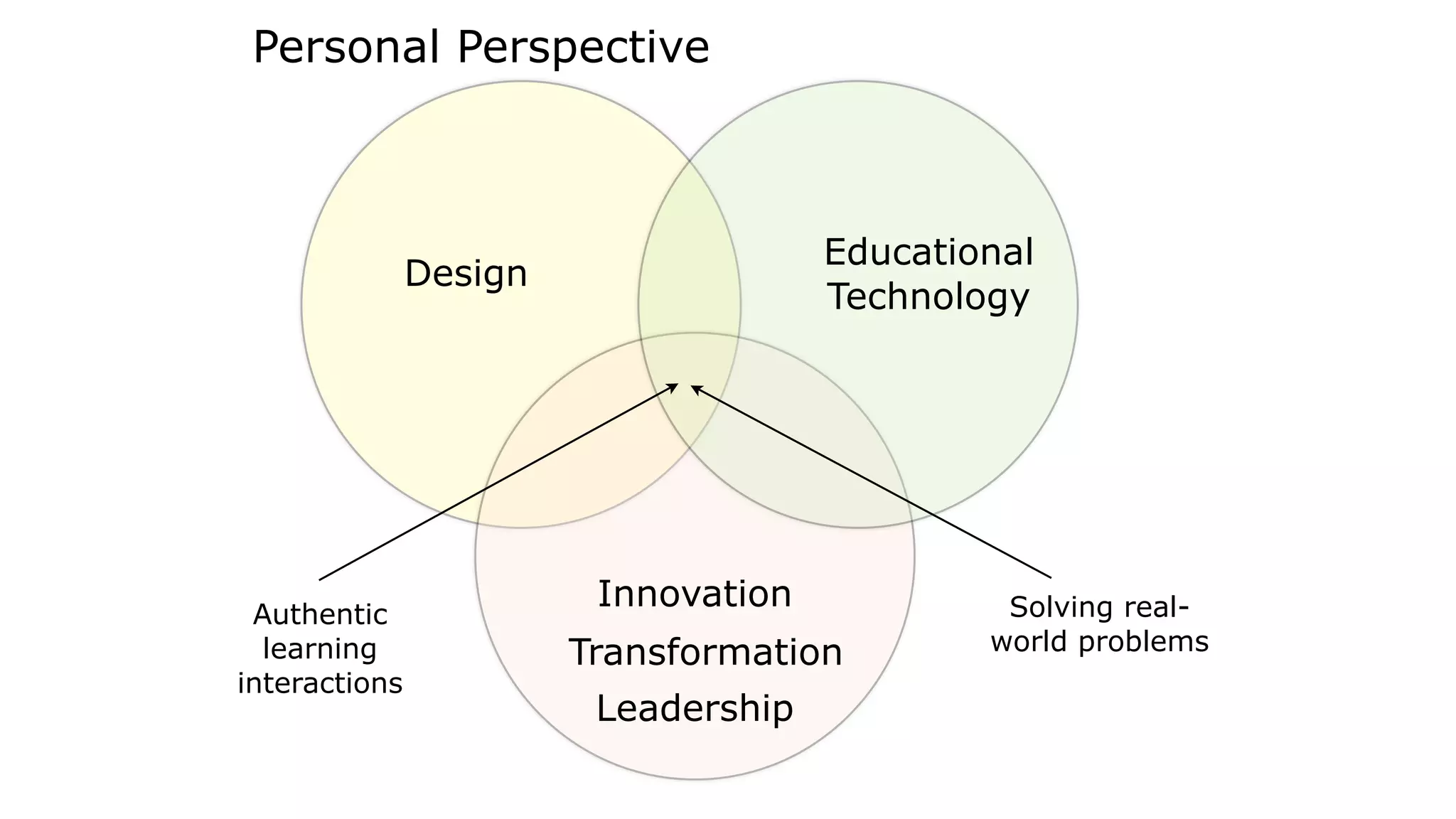
Design
Educational
Technology
Innovation Solving real-
world problems
Authentic
learning
interactions
Transformation
Leadership
Personal Perspective
Design thinking by its nature is
strategic and future focussed.
It is a thoughtful and considered
pedagogical approach to ensure
relevance for both learners and
teachers.
6
Design Thinking
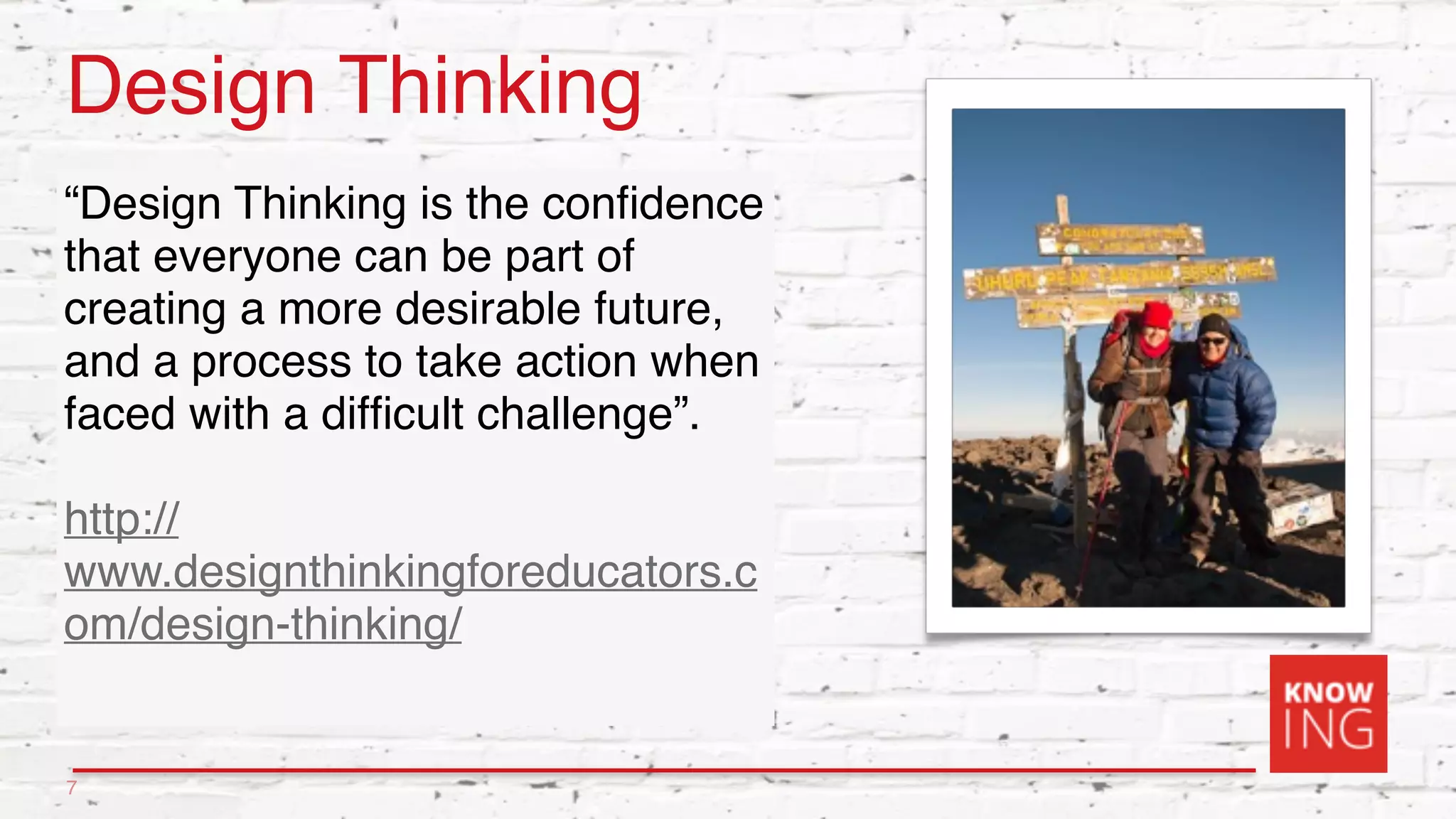
“Design Thinking is the confidence
that everyone can be part of
creating a more desirable future,
and a process to take action when
faced with a difficult challenge”.
http://
www.designthinkingforeducators.c
om/design-thinking/
7
Design Thinking
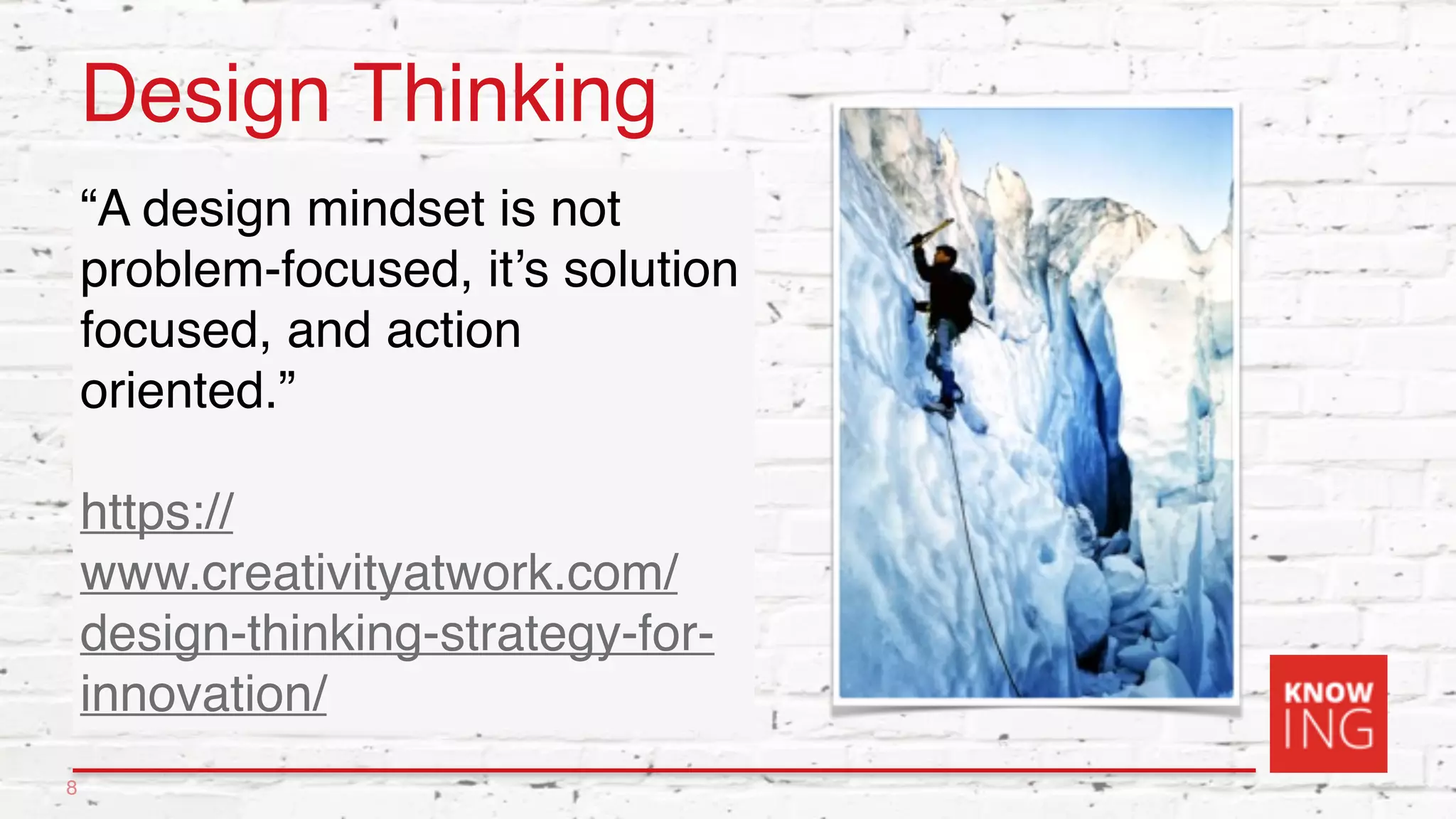
“A design mindset is not
problem-focused, it’s solution
focused, and action
oriented.”
https://
www.creativityatwork.com/
design-thinking-strategy-for-
innovation/
8
Being a Personalised
Learner
9
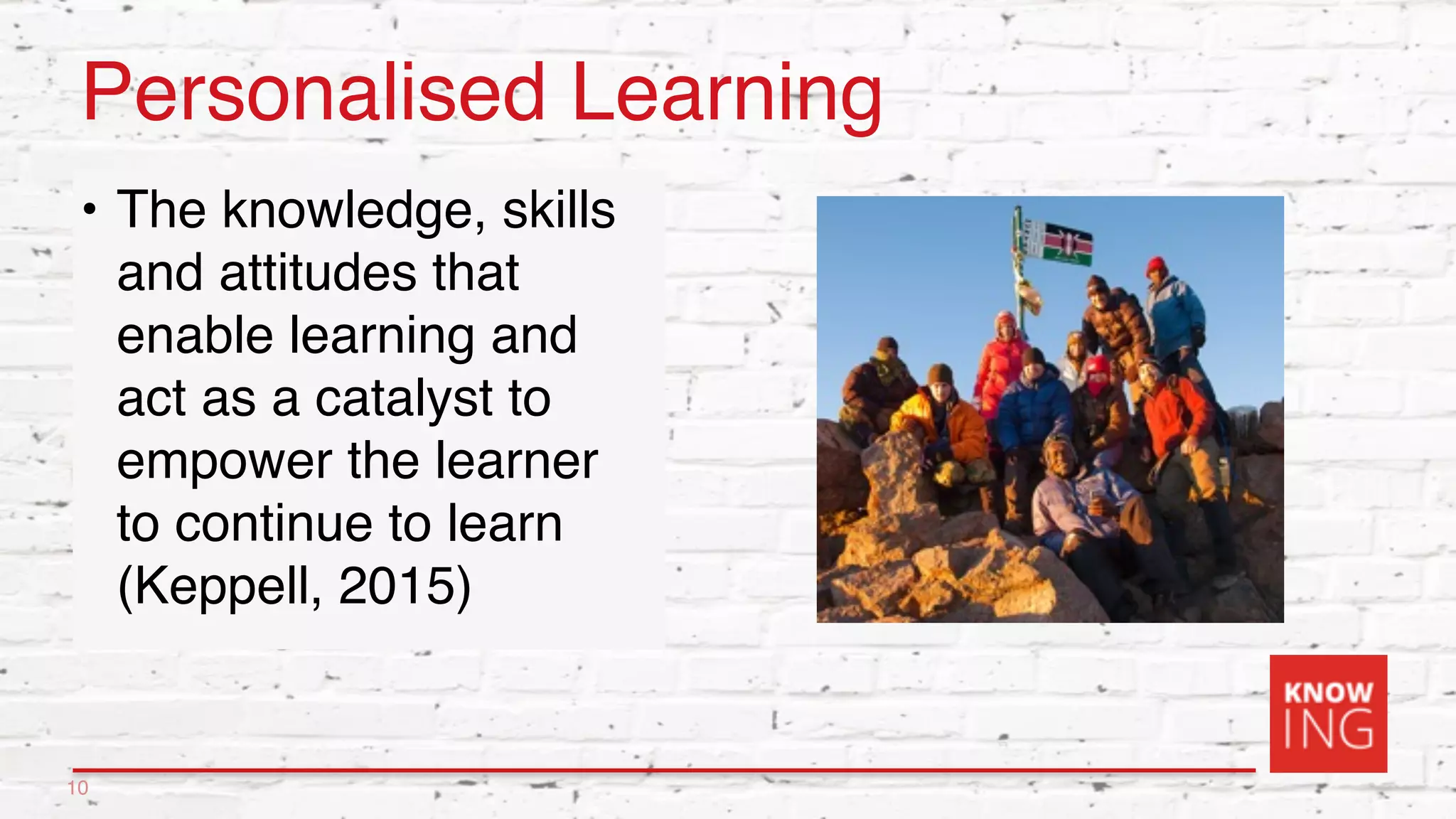
Personalised Learning
• The knowledge, skills
and attitudes that
enable learning and
act as a catalyst to
empower the learner
to continue to learn
(Keppell, 2015)
10
Knowledge, Skills and Attitudes
• Knowledge is now co-created
• Skills form a basis for learning
• Attitudes influence beliefs and
behaviours
• Growth mindset (Dweck,
2006)
• Openly seek challenge
11
Personalised Learning Toolkit
• Digital literacies
• Seamless learning
• Self-regulated learning
• Learning-oriented assessment
• Lifelong and life-wide learning
• Flexible learning pathways
12
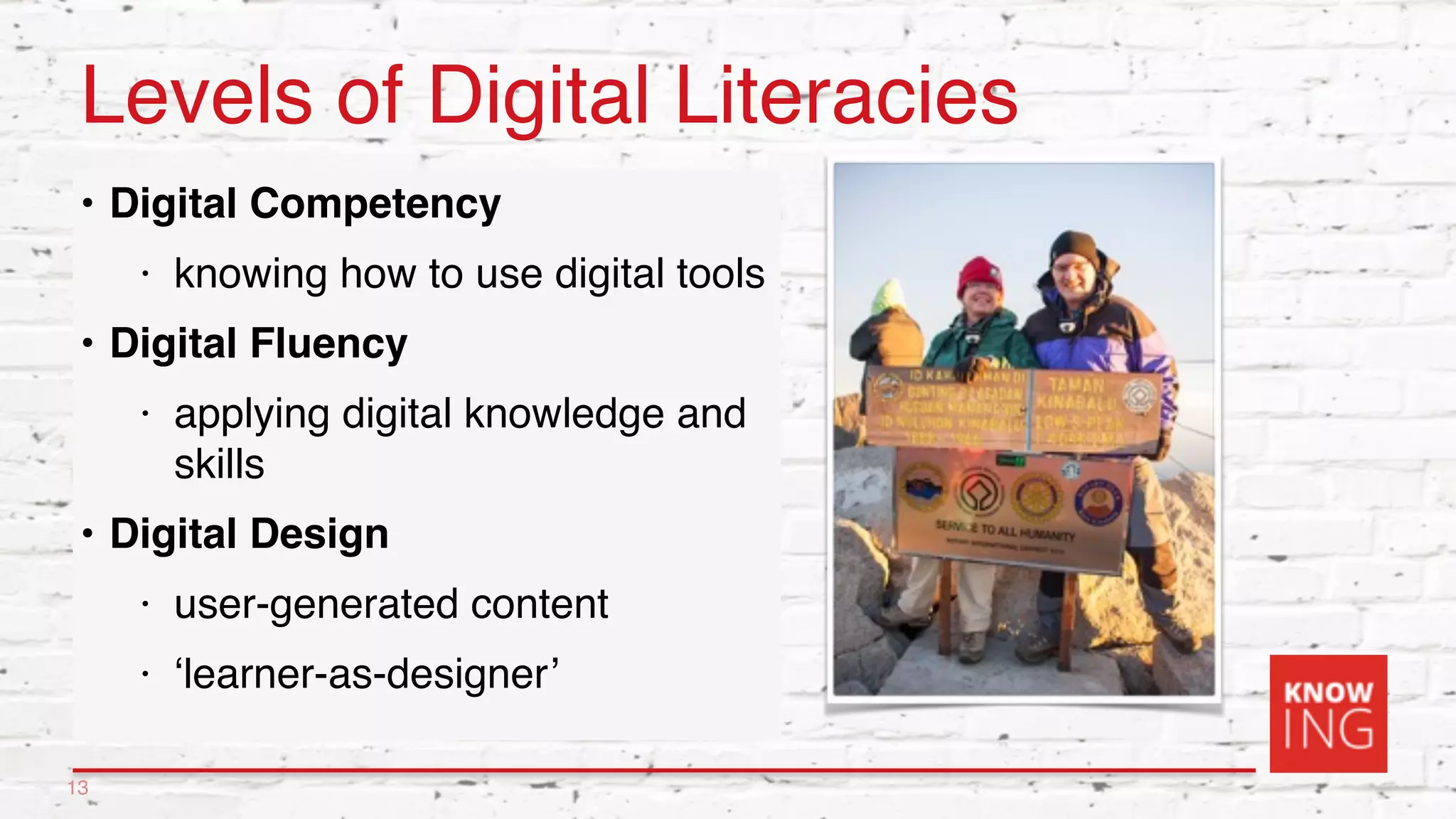
Levels of Digital Literacies
• Digital Competency
• knowing how to use digital tools
• Digital Fluency
• applying digital knowledge and
skills
• Digital Design
• user-generated content
• ‘learner-as-designer’
13
14
The future will require
learners to be lifelong
learners whose ability to
learn will be an essential
survival skill set to thrive
in this changing world
(Keppell, 2015).
Being Connected
15
Affordances
18
Affordances
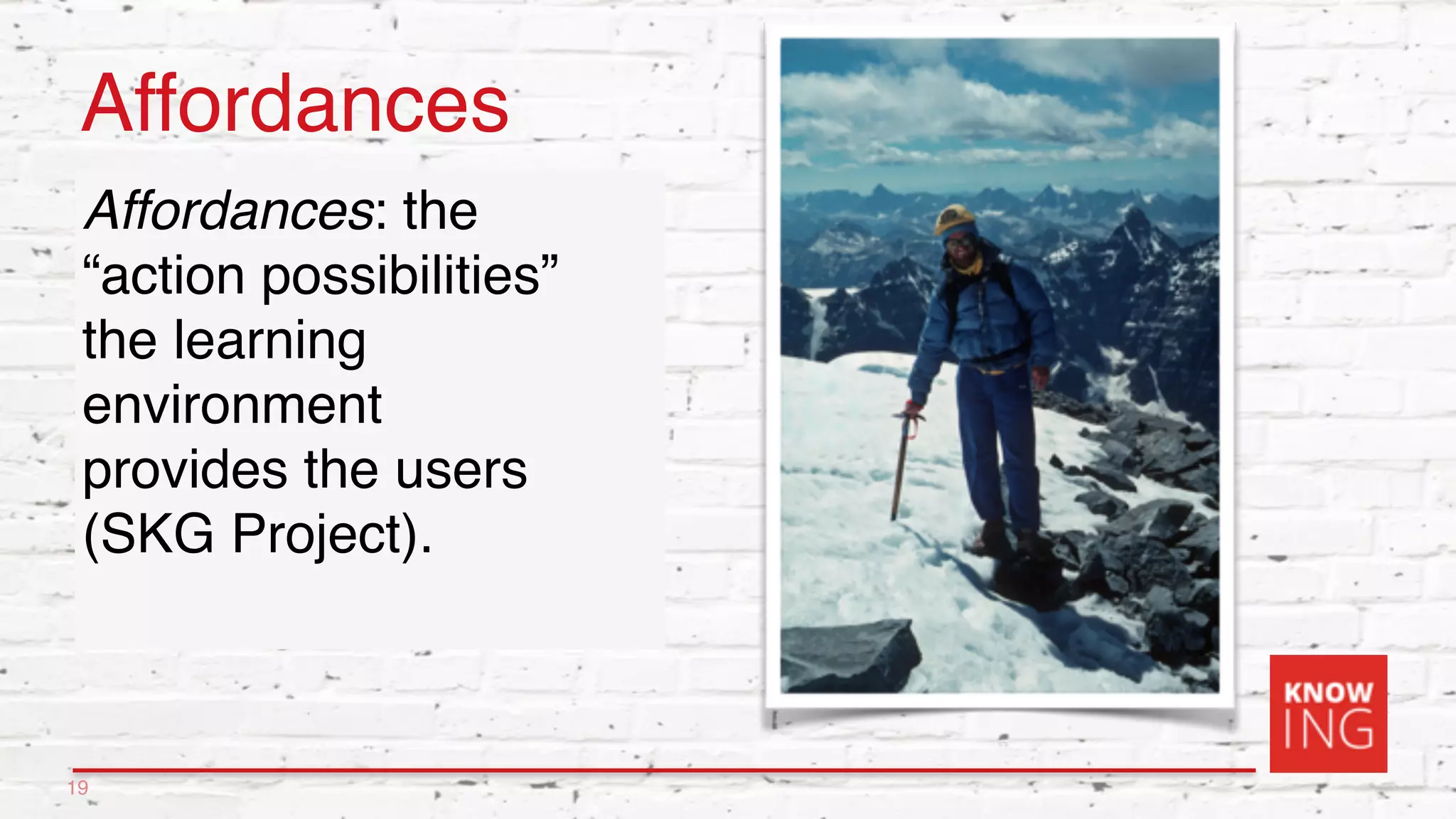
Affordances: the
“action possibilities”
the learning
environment
provides the users
(SKG Project).
19
Networks
20
Networks
• Connectivism (Siemens, 2006)
suggests that ‘knowledge is in the
network’
• “Learning in a richly networked
society involves complex, shifting
configurations of tasks, tools and
people, with new distributions of
activity across time, space and
media (Caralho & Goodyear, 2014,
p.xiv).
21
Recent Publication
• Carvalho, L. &
Goodyear, P. (Eds.).
2014. The
architecture of
productive learning
networks. Routledge:
Taylor and Francis
Group, New York.
22
Networks in Higher Education
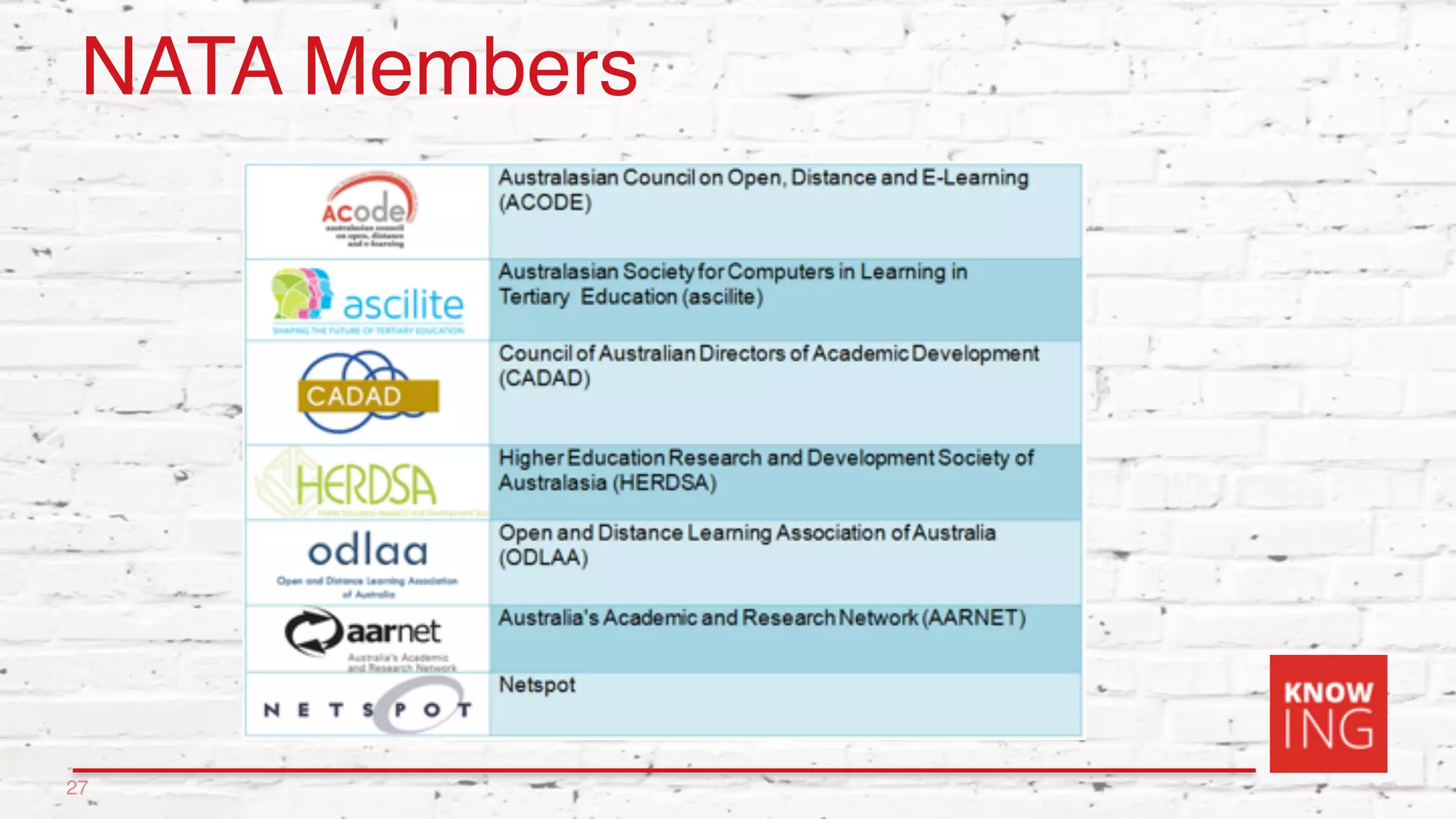
• Academic Associations:
Groups of academics and
educators with a common focus
and formal structure. For
example, ACODE, ascilite,
CADAD, HERDSA, ODLAA.
• Professional Associations:
Normally non-profit organisations
focused on a particular profession
and may include accreditation.
For example, CPA Australia.
23
Networks in Higher Education
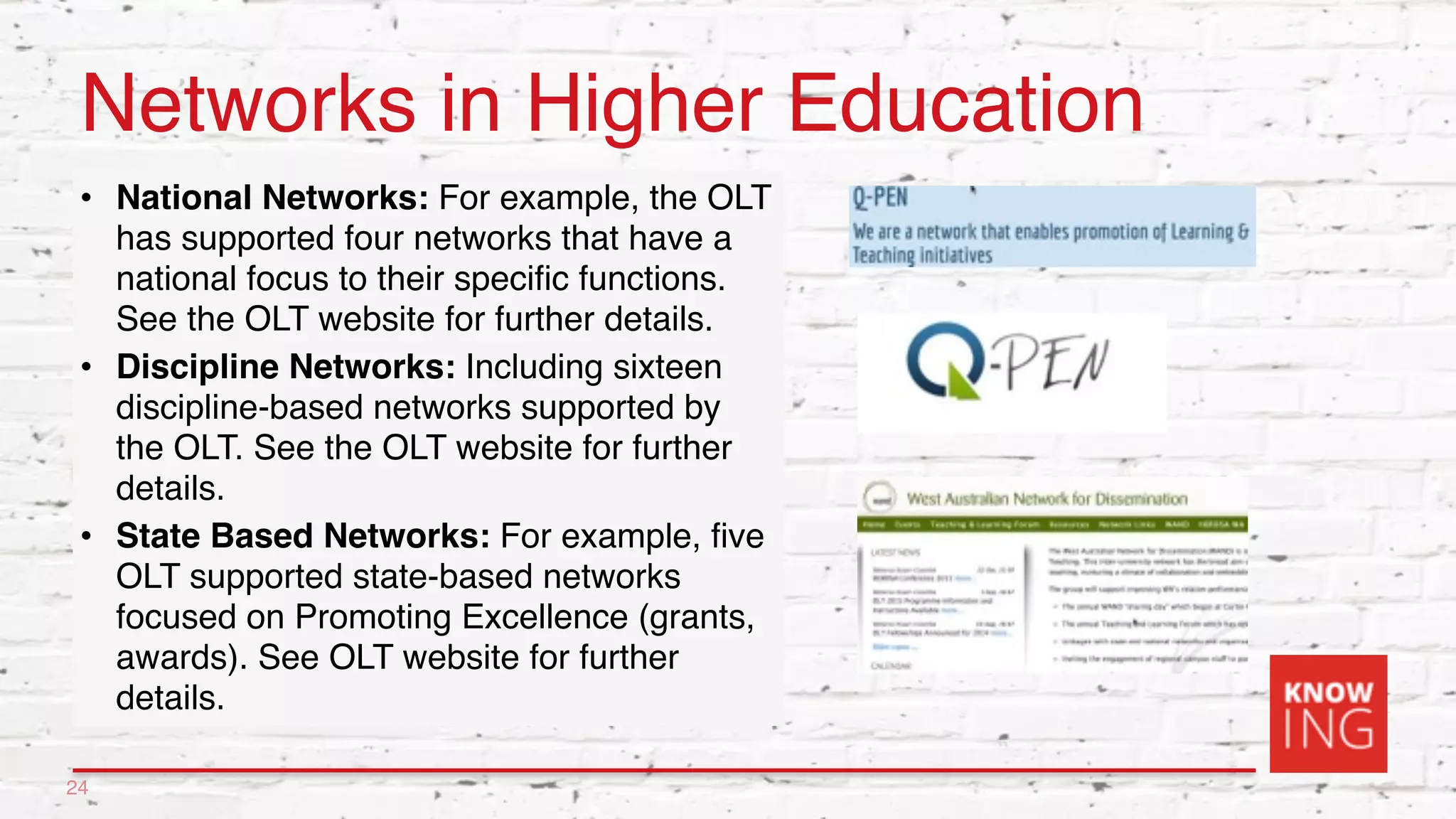
• National Networks: For example, the OLT
has supported four networks that have a
national focus to their specific functions.
See the OLT website for further details.
• Discipline Networks: Including sixteen
discipline-based networks supported by
the OLT. See the OLT website for further
details.
• State Based Networks: For example, five
OLT supported state-based networks
focused on Promoting Excellence (grants,
awards). See OLT website for further
details.
24
Benefits of Being Part of a Network
• Building connections and professional networks
beyond your institution and immediate
colleagues.
• Gaining access to regular and structured
opportunities for professional development such
as conferences, webinars or structured
workshops.
25
Benefits of Being Part of a Network
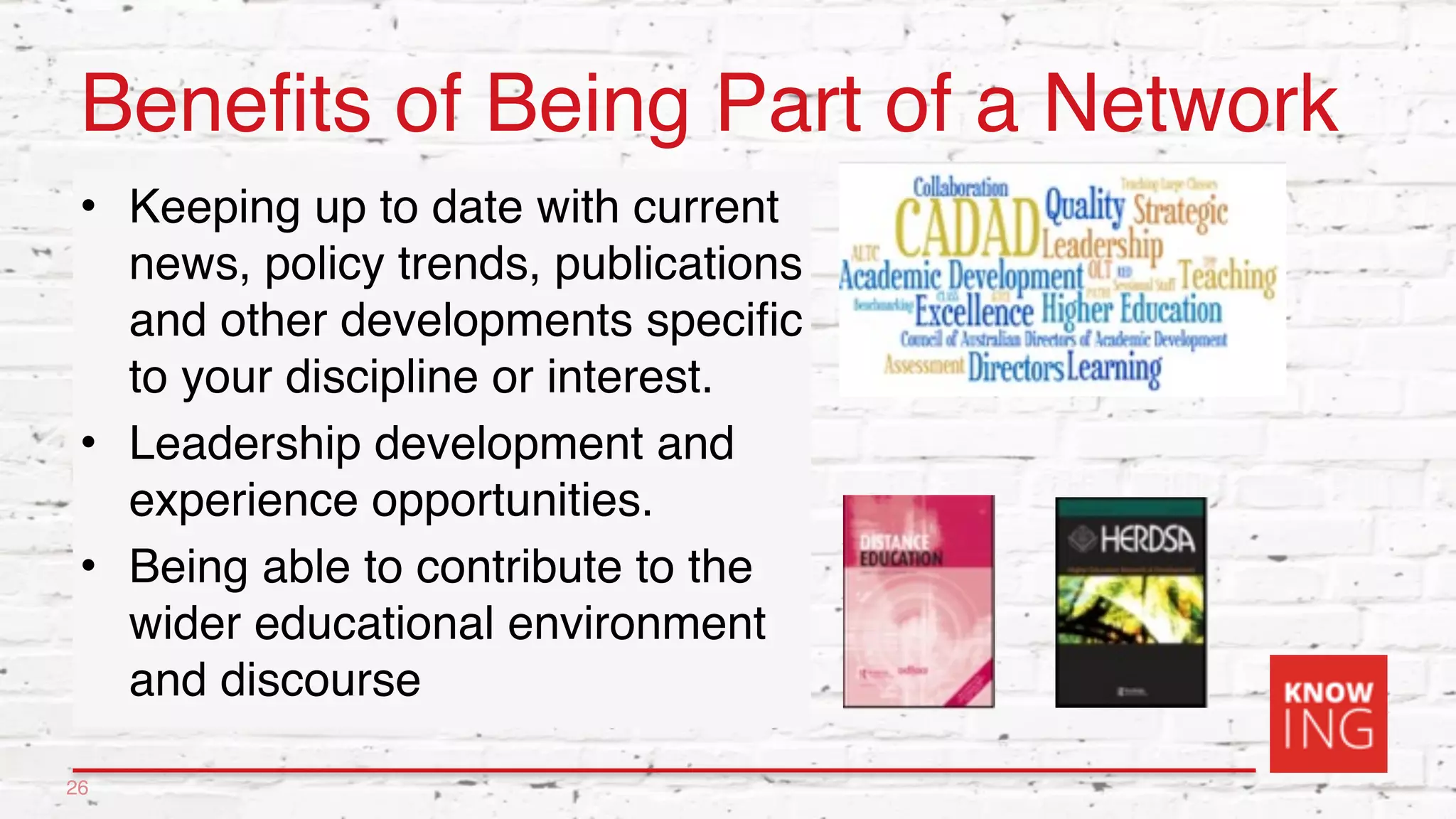
• Keeping up to date with current
news, policy trends, publications
and other developments specific
to your discipline or interest.
• Leadership development and
experience opportunities.
• Being able to contribute to the
wider educational environment
and discourse
26
NATA Members
27
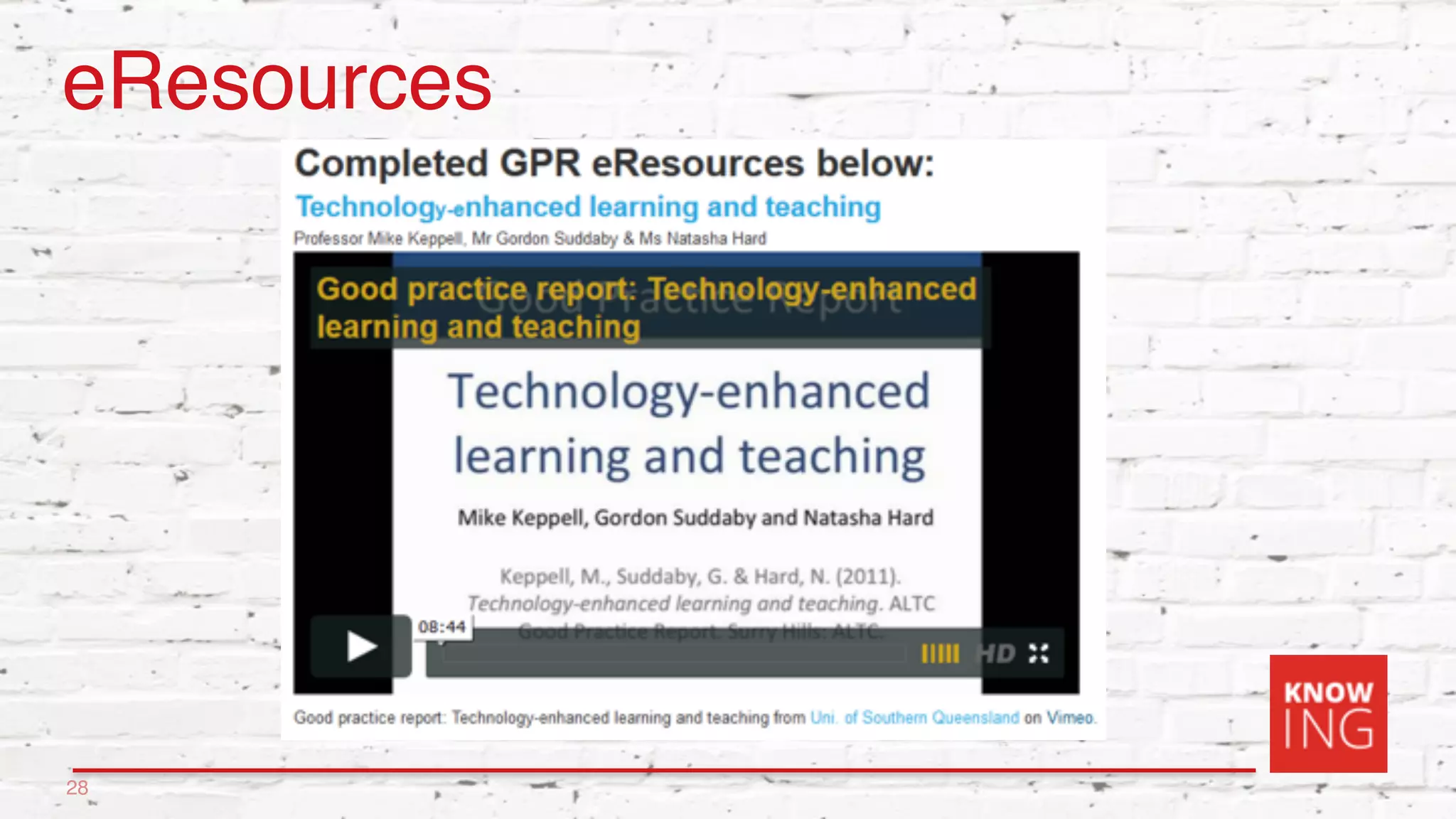
eResources
28
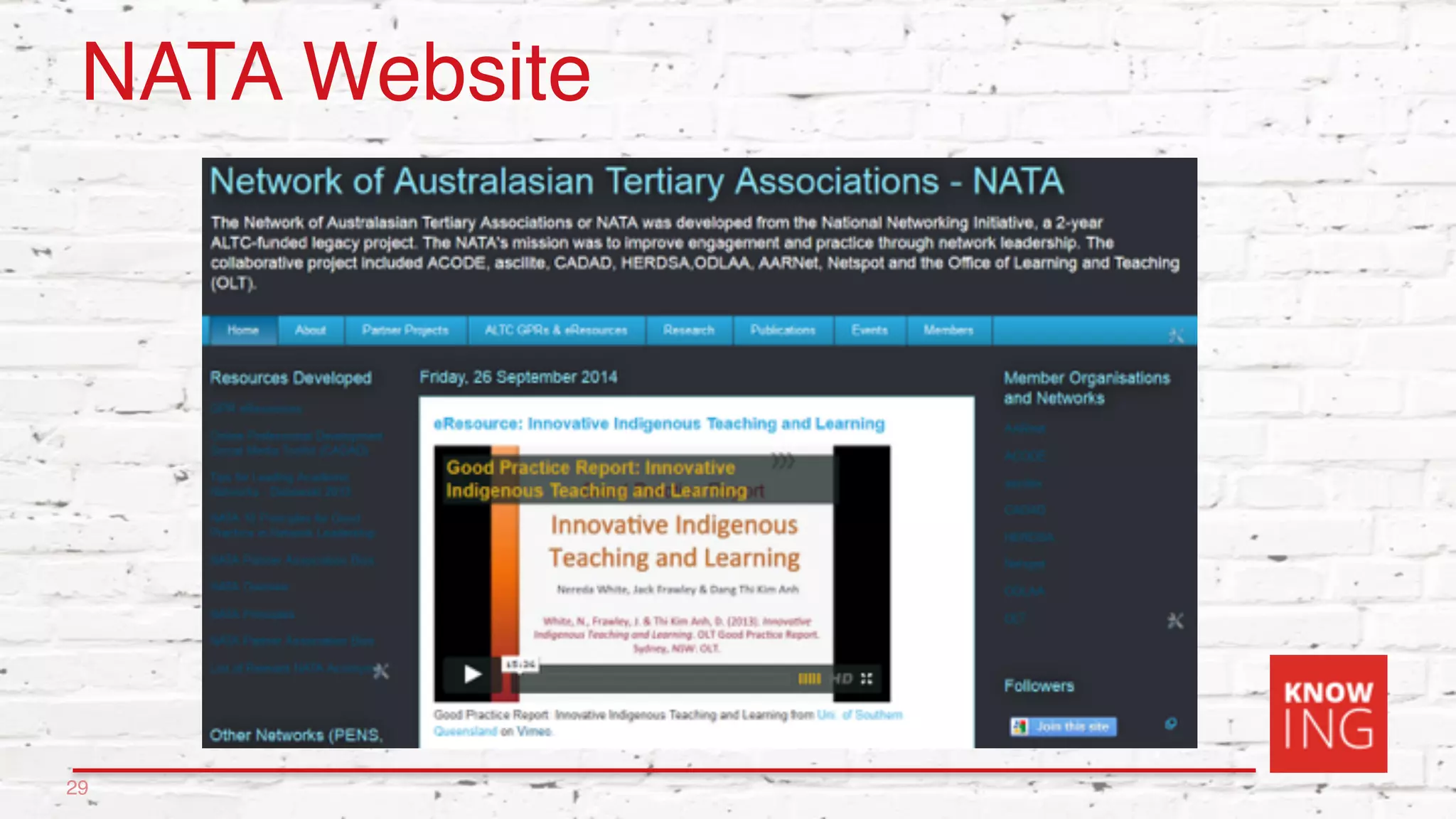
NATA Website
29
Change Management
30
• http://www.slideshare.net/mkeppell/csu-report-jov3hrtd05082013
• http://learningleadershipstudy.wordpress.com
31
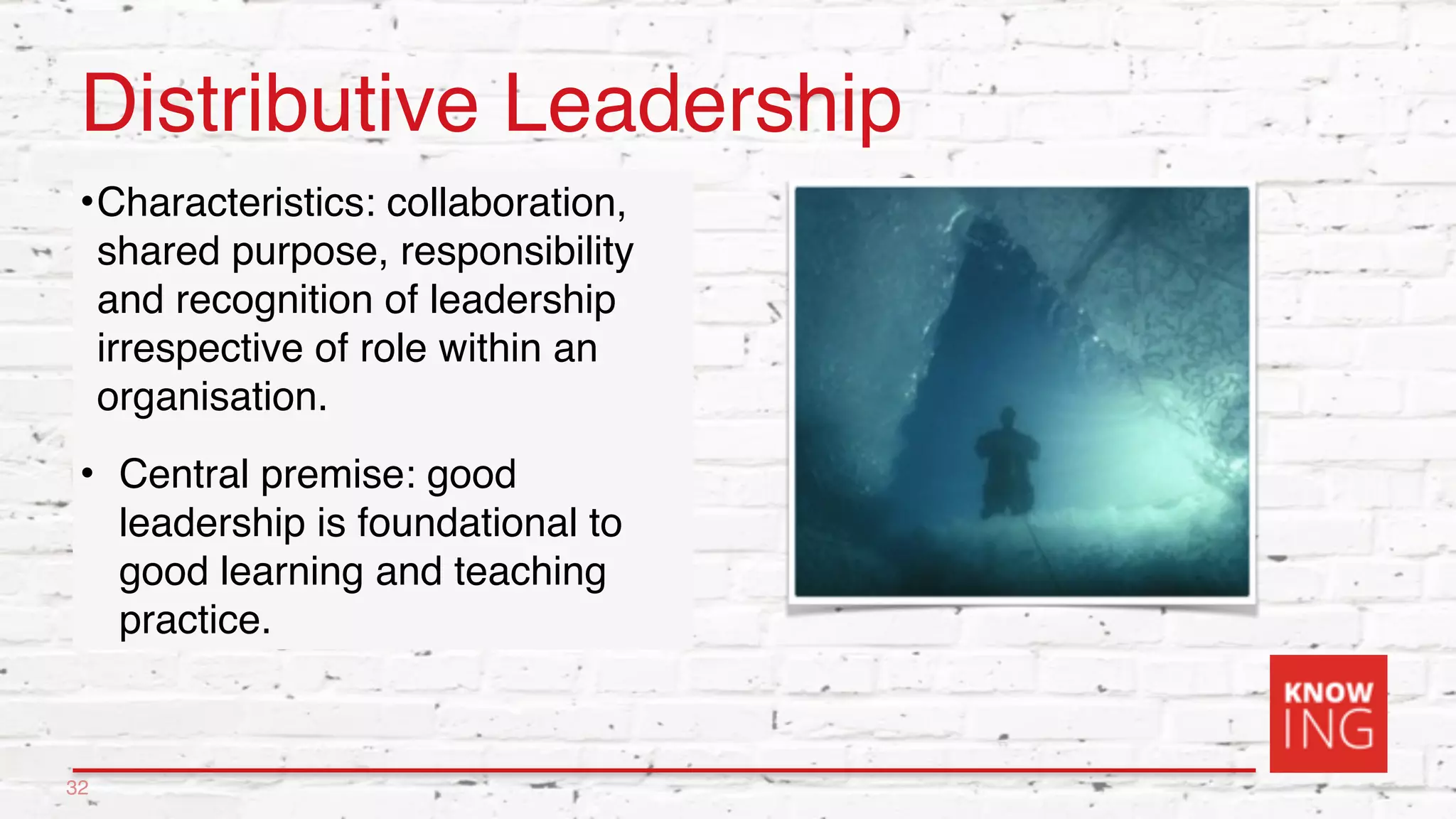
Distributive Leadership
•Characteristics: collaboration,
shared purpose, responsibility
and recognition of leadership
irrespective of role within an
organisation.
• Central premise: good
leadership is foundational to
good learning and teaching
practice.
32
Changing Mindsets
33
25
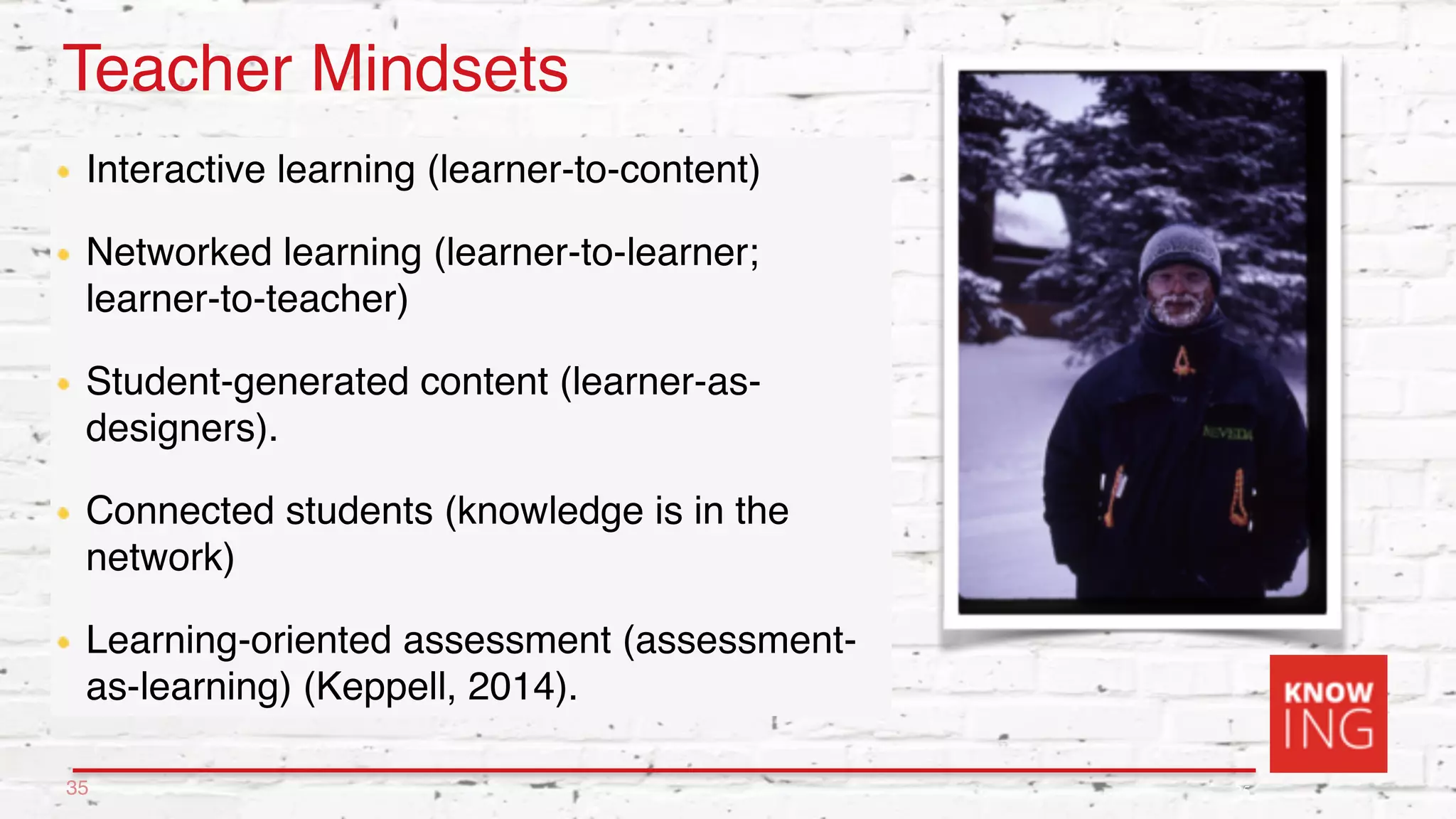
Teacher Mindsets
Interactive learning (learner-to-content)
Networked learning (learner-to-learner;
learner-to-teacher)
Student-generated content (learner-as-
designers).
Connected students (knowledge is in the
network)
Learning-oriented assessment (assessment-
as-learning) (Keppell, 2014).
35
25
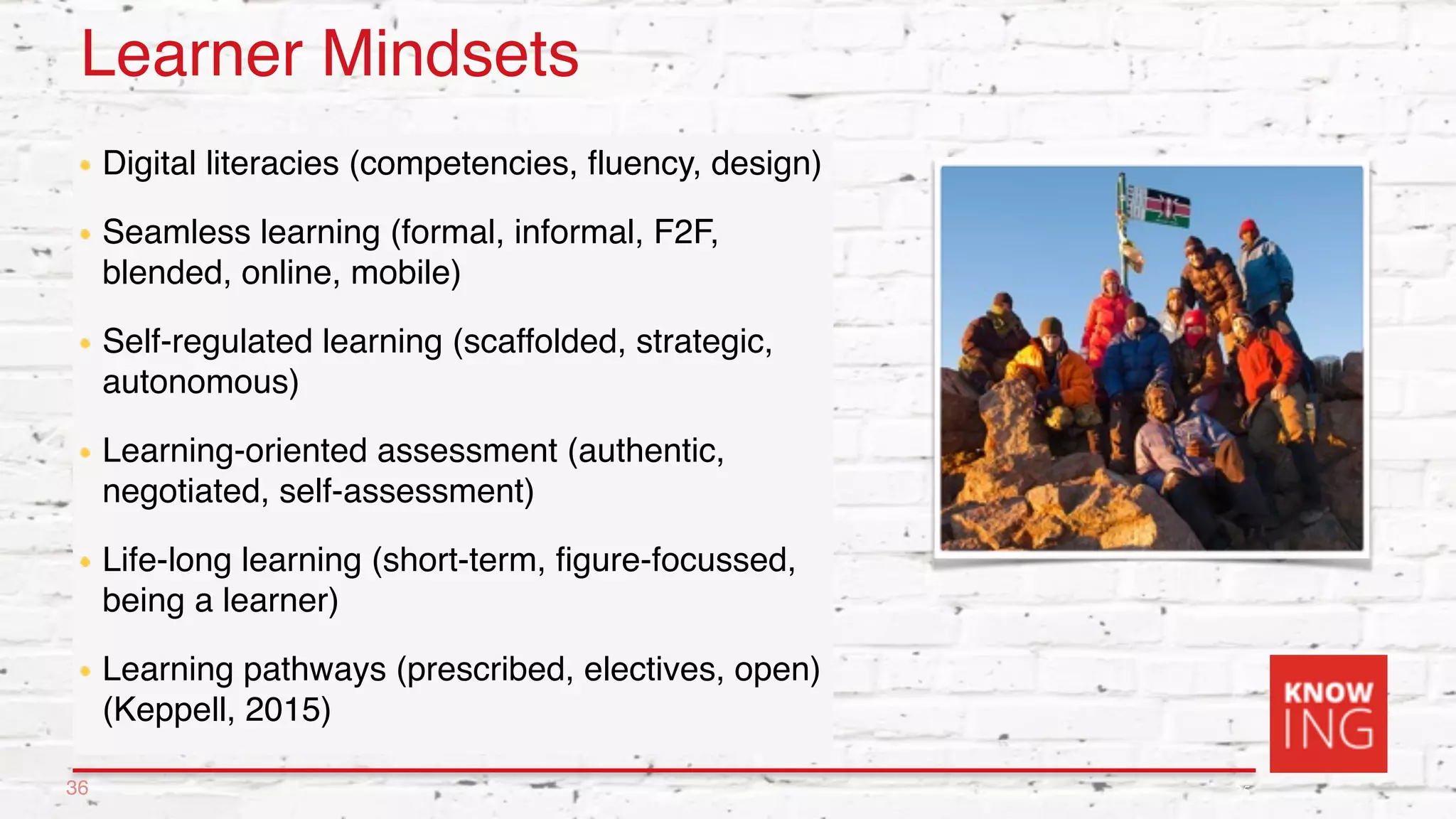
Learner Mindsets
Digital literacies (competencies, fluency, design)
Seamless learning (formal, informal, F2F,
blended, online, mobile)
Self-regulated learning (scaffolded, strategic,
autonomous)
Learning-oriented assessment (authentic,
negotiated, self-assessment)
Life-long learning (short-term, figure-focussed,
being a learner)
Learning pathways (prescribed, electives, open)
(Keppell, 2015)
36
Institutional Mindsets
• Encouraging teacher and learner
mindsets
• Utilising distributive leadership to
create strategic change
37
References
Carless, D. (2014). Exploring learning-oriented assessment processes. Higher Education. DOI
10.1007/s10734-014-9816-z.
Johnson, L., Adams Becker, S., Estrada, V., Freeman, A. (2014). NMC Horizon Report: 2014
Higher Education Edition. Austin, Texas: The New Media Consortium.http://www.nmc.org/
pdf/2014-nmc-horizon-report-he-EN.pdf.
Keppell, M., & Riddle, M. (2013). Principles for design and evaluation of learning spaces. In
R. Luckin, S. Puntambekar, P. Goodyear, B. Grabowski, J. Underwood, & N. Winters (Eds.),
Handbook of design in educational technology (pp. 20-32). New York, NY: Routledge.
Keppell, M., Au, E., Ma, A. & Chan, C. (2006). Peer learning and learning-oriented assessment
in technology-enhanced environments. Assessment and Evaluation in Higher Education,
31(4), 453-464.
Keppell, M. & Carless, D. (2006). Learning-oriented assessment: A technology-based case
study. Assessment in Education, 13(2), 153-165.
38
References
Keppell, M., Souter, K. & Riddle, M. (Eds.). (2012). Physical and virtual learning spaces in higher
education: Concepts for the modern learning environment. IGI Global, Hershey: New York.
ISBN13: 9781609601140.
Keppell, M. & Riddle, M. (2012). Distributed learning places: Physical, blended and virtual
learning spaces in higher education. (pp. 1-20). In Mike Keppell, Kay Souter & Matthew
Riddle (Eds.). (2011). Physical and virtual learning spaces in higher education: Concepts for
the modern learning environment. Information Science Publishing, Hershey.
Keppell, M.J. (2014). Personalised learning strategies for higher education. In Kym Fraser (Ed.)
The Future of Learning and Teaching in Next Generation Learning Spaces. International
Perspectives on Higher Education Research, Volume 12, 3-21. Copyright 2014 by Emerald
Group Publishing Limited.
Keppell, M.J. (2015). The learning future: Personalised learning in an open world. In Curtis J.
Bonk, Mimi Miyoung Lee, Thomas C. Reeves, and Thomas H. Reynolds. MOOCs and Open
Education around the World. Routledge/Taylor and Francis.
39
References
Sharples, M., McAndrew, P., Weller, M., Ferguson, R., FitzGerald, E., Hirst, T., &
Gaved,M. (2013). Innovating pedagogy 2013: Open University Innovation Report
Milton Keynes: The Open University.
Sharples, M., McAndrew, P., Weller, M., Ferguson, R., FitzGerald, E., Hirst, T., & Whitelock, D.
(2012). Innovating pedagogy 2012: Open University Innovation Report 1. Milton Keynes:
The Open University.
Siemens, G. (2006). Knowing knowledge. Creative commons. Retrieved from http://
www.elearn space.org/KnowingKnowledge_LowRes.pdf
Souter, K., Riddle, M., Sellers, W., & Keppell, M. (2011). Final report: Spaces for knowledge
generation. The Australian Learning and Teaching Council (ALTC). Retrieved from
http://documents.skgproject.com/skg-final-report.pdf
Wheeler, S. (2010). Digital literacies. Retrieved from http://steve-
wheeler.blogspot.com.au/2010/11/what-digital-literacies.html?q=digital+literacies
40
Making a Career out of This: Adventures with Learning Technologies

Making a Career out of This: Adventures with Learning Technologies

  • 1.
    Making a CareerOut of This: Adventures with Learning Technologies Professor Mike Keppell Pro Vice-Chancellor, Learning Transformations 1
  • 2.
  • 3.
    Overview • Values • Designthinking • Personalised learning • Being connected • Affordances • Networks • Distributive leadership • Change management • Changing mindsets 3
  • 4.
    Values Reflect the fundamentalbeliefs that underpin everyday decisions and actions. •Inclusive: promote equity •Innovative: emerging idea •Transformative: thoughtful redesign •Interdisciplinary: cross discipline Collaborative: collaboration •Sustainable: generative strategies •Connected: connected world •Evidence-based: scholarship & research •Open: opportunities of open education 4
  • 5.
    Design Educational Technology Innovation Solving real- worldproblems Authentic learning interactions Transformation Leadership Personal Perspective
  • 6.
    Design thinking byits nature is strategic and future focussed. It is a thoughtful and considered pedagogical approach to ensure relevance for both learners and teachers. 6
  • 7.
    Design Thinking “Design Thinkingis the confidence that everyone can be part of creating a more desirable future, and a process to take action when faced with a difficult challenge”. http:// www.designthinkingforeducators.c om/design-thinking/ 7
  • 8.
    Design Thinking “A designmindset is not problem-focused, it’s solution focused, and action oriented.” https:// www.creativityatwork.com/ design-thinking-strategy-for- innovation/ 8
  • 9.
  • 10.
    Personalised Learning • Theknowledge, skills and attitudes that enable learning and act as a catalyst to empower the learner to continue to learn (Keppell, 2015) 10
  • 11.
    Knowledge, Skills andAttitudes • Knowledge is now co-created • Skills form a basis for learning • Attitudes influence beliefs and behaviours • Growth mindset (Dweck, 2006) • Openly seek challenge 11
  • 12.
    Personalised Learning Toolkit •Digital literacies • Seamless learning • Self-regulated learning • Learning-oriented assessment • Lifelong and life-wide learning • Flexible learning pathways 12
  • 13.
    Levels of DigitalLiteracies • Digital Competency • knowing how to use digital tools • Digital Fluency • applying digital knowledge and skills • Digital Design • user-generated content • ‘learner-as-designer’ 13
  • 14.
    14 The future willrequire learners to be lifelong learners whose ability to learn will be an essential survival skill set to thrive in this changing world (Keppell, 2015).
  • 15.
  • 18.
  • 19.
    Affordances Affordances: the “action possibilities” thelearning environment provides the users (SKG Project). 19
  • 20.
  • 21.
    Networks • Connectivism (Siemens,2006) suggests that ‘knowledge is in the network’ • “Learning in a richly networked society involves complex, shifting configurations of tasks, tools and people, with new distributions of activity across time, space and media (Caralho & Goodyear, 2014, p.xiv). 21
  • 22.
    Recent Publication • Carvalho,L. & Goodyear, P. (Eds.). 2014. The architecture of productive learning networks. Routledge: Taylor and Francis Group, New York. 22
  • 23.
    Networks in HigherEducation • Academic Associations: Groups of academics and educators with a common focus and formal structure. For example, ACODE, ascilite, CADAD, HERDSA, ODLAA. • Professional Associations: Normally non-profit organisations focused on a particular profession and may include accreditation. For example, CPA Australia. 23
  • 24.
    Networks in HigherEducation • National Networks: For example, the OLT has supported four networks that have a national focus to their specific functions. See the OLT website for further details. • Discipline Networks: Including sixteen discipline-based networks supported by the OLT. See the OLT website for further details. • State Based Networks: For example, five OLT supported state-based networks focused on Promoting Excellence (grants, awards). See OLT website for further details. 24
  • 25.
    Benefits of BeingPart of a Network • Building connections and professional networks beyond your institution and immediate colleagues. • Gaining access to regular and structured opportunities for professional development such as conferences, webinars or structured workshops. 25
  • 26.
    Benefits of BeingPart of a Network • Keeping up to date with current news, policy trends, publications and other developments specific to your discipline or interest. • Leadership development and experience opportunities. • Being able to contribute to the wider educational environment and discourse 26
  • 27.
  • 28.
  • 29.
  • 30.
  • 31.
  • 32.
    Distributive Leadership •Characteristics: collaboration, sharedpurpose, responsibility and recognition of leadership irrespective of role within an organisation. • Central premise: good leadership is foundational to good learning and teaching practice. 32
  • 33.
  • 35.
    25 Teacher Mindsets Interactive learning(learner-to-content) Networked learning (learner-to-learner; learner-to-teacher) Student-generated content (learner-as- designers). Connected students (knowledge is in the network) Learning-oriented assessment (assessment- as-learning) (Keppell, 2014). 35
  • 36.
    25 Learner Mindsets Digital literacies(competencies, fluency, design) Seamless learning (formal, informal, F2F, blended, online, mobile) Self-regulated learning (scaffolded, strategic, autonomous) Learning-oriented assessment (authentic, negotiated, self-assessment) Life-long learning (short-term, figure-focussed, being a learner) Learning pathways (prescribed, electives, open) (Keppell, 2015) 36
  • 37.
    Institutional Mindsets • Encouragingteacher and learner mindsets • Utilising distributive leadership to create strategic change 37
  • 38.
    References Carless, D. (2014).Exploring learning-oriented assessment processes. Higher Education. DOI 10.1007/s10734-014-9816-z. Johnson, L., Adams Becker, S., Estrada, V., Freeman, A. (2014). NMC Horizon Report: 2014 Higher Education Edition. Austin, Texas: The New Media Consortium.http://www.nmc.org/ pdf/2014-nmc-horizon-report-he-EN.pdf. Keppell, M., & Riddle, M. (2013). Principles for design and evaluation of learning spaces. In R. Luckin, S. Puntambekar, P. Goodyear, B. Grabowski, J. Underwood, & N. Winters (Eds.), Handbook of design in educational technology (pp. 20-32). New York, NY: Routledge. Keppell, M., Au, E., Ma, A. & Chan, C. (2006). Peer learning and learning-oriented assessment in technology-enhanced environments. Assessment and Evaluation in Higher Education, 31(4), 453-464. Keppell, M. & Carless, D. (2006). Learning-oriented assessment: A technology-based case study. Assessment in Education, 13(2), 153-165. 38
  • 39.
    References Keppell, M., Souter,K. & Riddle, M. (Eds.). (2012). Physical and virtual learning spaces in higher education: Concepts for the modern learning environment. IGI Global, Hershey: New York. ISBN13: 9781609601140. Keppell, M. & Riddle, M. (2012). Distributed learning places: Physical, blended and virtual learning spaces in higher education. (pp. 1-20). In Mike Keppell, Kay Souter & Matthew Riddle (Eds.). (2011). Physical and virtual learning spaces in higher education: Concepts for the modern learning environment. Information Science Publishing, Hershey. Keppell, M.J. (2014). Personalised learning strategies for higher education. In Kym Fraser (Ed.) The Future of Learning and Teaching in Next Generation Learning Spaces. International Perspectives on Higher Education Research, Volume 12, 3-21. Copyright 2014 by Emerald Group Publishing Limited. Keppell, M.J. (2015). The learning future: Personalised learning in an open world. In Curtis J. Bonk, Mimi Miyoung Lee, Thomas C. Reeves, and Thomas H. Reynolds. MOOCs and Open Education around the World. Routledge/Taylor and Francis. 39
  • 40.
    References Sharples, M., McAndrew,P., Weller, M., Ferguson, R., FitzGerald, E., Hirst, T., & Gaved,M. (2013). Innovating pedagogy 2013: Open University Innovation Report Milton Keynes: The Open University. Sharples, M., McAndrew, P., Weller, M., Ferguson, R., FitzGerald, E., Hirst, T., & Whitelock, D. (2012). Innovating pedagogy 2012: Open University Innovation Report 1. Milton Keynes: The Open University. Siemens, G. (2006). Knowing knowledge. Creative commons. Retrieved from http:// www.elearn space.org/KnowingKnowledge_LowRes.pdf Souter, K., Riddle, M., Sellers, W., & Keppell, M. (2011). Final report: Spaces for knowledge generation. The Australian Learning and Teaching Council (ALTC). Retrieved from http://documents.skgproject.com/skg-final-report.pdf Wheeler, S. (2010). Digital literacies. Retrieved from http://steve- wheeler.blogspot.com.au/2010/11/what-digital-literacies.html?q=digital+literacies 40