CRICOS 00111D TOID 3059
AUTHENTIC ASSESSMENT:
BROADENING PRACTICE
TO EMPOWER STUDENT
ENGAGEMENT
Professor Mike Keppell
Pro Vice-Chancellor, Learning Transformations
Learning Innovation Week
Innovation in Assessment and Credentials
October 2016
Preparing Students to
Solve the Problems of
the Future
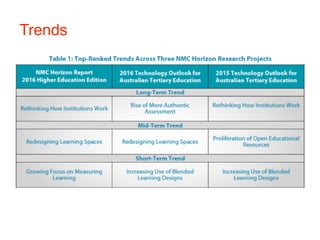
Trends
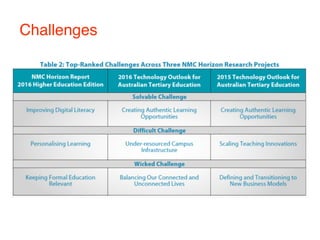
Challenges
Authenticity
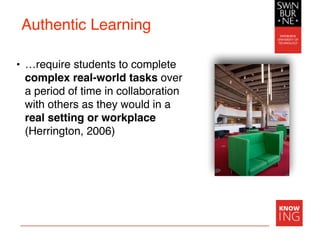
Authentic Learning
• …require students to complete
complex real-world tasks over
a period of time in collaboration
with others as they would in a
real setting or workplace
(Herrington, 2006)
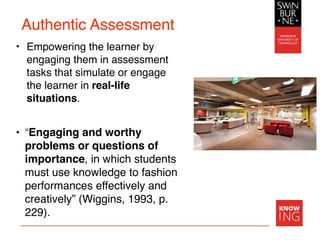
Authentic Assessment
• Empowering the learner by
engaging them in assessment
tasks that simulate or engage
the learner in real-life
situations.
• “Engaging and worthy
problems or questions of
importance, in which students
must use knowledge to fashion
performances effectively and
creatively” (Wiggins, 1993, p.
229).
Personal Example
of Authentic
Assessment
Assessment 2020
• Assessment is a central feature
of teaching and the curriculum
• Assessment is the making of
judgements about how students’
work meets appropriate
standards
• Assessment plays a key role in
both fostering learning and the
certification of students (Boud
and Associates).
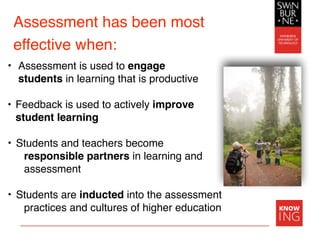
Assessment has been most
effective when:
• Assessment is used to engage
students in learning that is productive
• Feedback is used to actively improve
student learning
• Students and teachers become
responsible partners in learning and
assessment
• Students are inducted into the assessment
practices and cultures of higher education
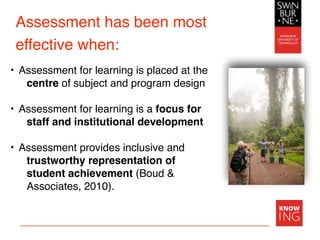
Assessment has been most
effective when:
• Assessment for learning is placed at the
centre of subject and program design
• Assessment for learning is a focus for
staff and institutional development
• Assessment provides inclusive and
trustworthy representation of
student achievement (Boud &
Associates, 2010).
Learning-oriented
Assessment
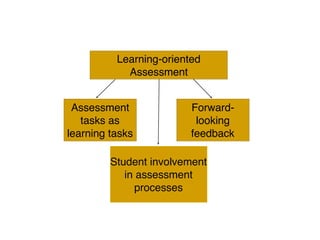
Learning-oriented
Assessment
Assessment
tasks as
learning tasks
Student involvement
in assessment
processes
Forward-
looking
feedback
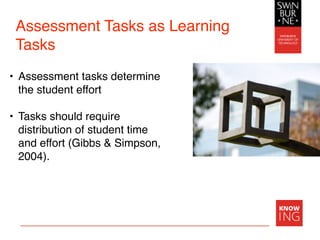
Assessment Tasks as Learning
Tasks
• Assessment tasks determine
the student effort
• Tasks should require
distribution of student time
and effort (Gibbs & Simpson,
2004).
Student Involvement in
Assessment
• A Students begin to learn
about assessment
• Students begin to determine
the quality of their own work
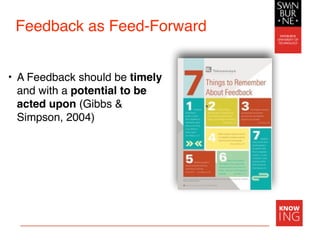
Feedback as Feed-Forward
• A Feedback should be timely
and with a potential to be
acted upon (Gibbs &
Simpson, 2004)
Levels of Learning-oriented
Assessment
• Authentic assessment
• learners focus on
questions of importance
• Negotiated assessment
• learners negotiate
assessment with teachers
• Self-assessment
• learners act on ‘feedback
as feed-forward’
Learning-oriented
Assessment Example
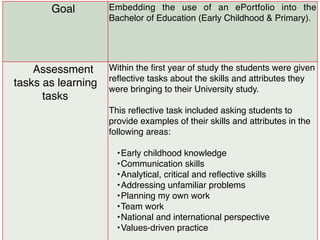
Goal Embedding the use of an ePortfolio into the
Bachelor of Education (Early Childhood & Primary).
Assessment
tasks as learning
tasks
Within the first year of study the students were given
reflective tasks about the skills and attributes they
were bringing to their University study.
This reflective task included asking students to
provide examples of their skills and attributes in the
following areas:
•Early childhood knowledge
•Communication skills
•Analytical, critical and reflective skills
•Addressing unfamiliar problems
•Planning my own work
•Team work
•National and international perspective
•Values-driven practice
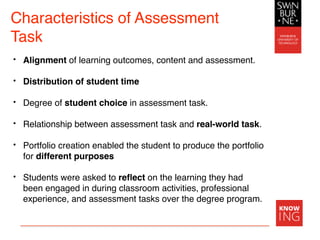
• Alignment of learning outcomes, content and assessment.
• Distribution of student time
• Degree of student choice in assessment task.
• Relationship between assessment task and real-world task.
• Portfolio creation enabled the student to produce the portfolio
for different purposes
• Students were asked to reflect on the learning they had
been engaged in during classroom activities, professional
experience, and assessment tasks over the degree program.
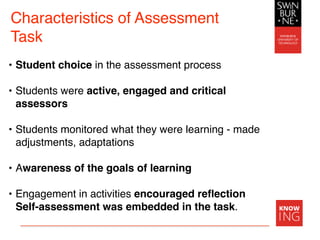
Characteristics of Assessment
Task
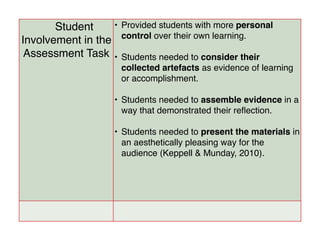
Student
Involvement in the
Assessment Task
• Provided students with more personal
control over their own learning.
• Students needed to consider their
collected artefacts as evidence of learning
or accomplishment.
• Students needed to assemble evidence in a
way that demonstrated their reflection.
• Students needed to present the materials in
an aesthetically pleasing way for the
audience (Keppell & Munday, 2010).
• Student choice in the assessment process
• Students were active, engaged and critical
assessors
• Students monitored what they were learning - made
adjustments, adaptations
• Awareness of the goals of learning
• Engagement in activities encouraged reflection
Self-assessment was embedded in the task.
Characteristics of Assessment
Task
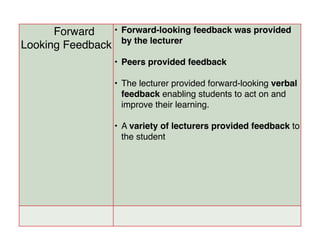
Forward
Looking Feedback
• Forward-looking feedback was provided
by the lecturer
• Peers provided feedback
• The lecturer provided forward-looking verbal
feedback enabling students to act on and
improve their learning.
• A variety of lecturers provided feedback to
the student
Professional
Development
Authentic Assessment and Student Engagement

Authentic Assessment and Student Engagement

  • 1.
    CRICOS 00111D TOID3059 AUTHENTIC ASSESSMENT: BROADENING PRACTICE TO EMPOWER STUDENT ENGAGEMENT Professor Mike Keppell Pro Vice-Chancellor, Learning Transformations Learning Innovation Week Innovation in Assessment and Credentials October 2016
  • 2.
    Preparing Students to Solvethe Problems of the Future
  • 3.
  • 4.
  • 5.
  • 6.
    Authentic Learning • …requirestudents to complete complex real-world tasks over a period of time in collaboration with others as they would in a real setting or workplace (Herrington, 2006)
  • 7.
    Authentic Assessment • Empoweringthe learner by engaging them in assessment tasks that simulate or engage the learner in real-life situations. • “Engaging and worthy problems or questions of importance, in which students must use knowledge to fashion performances effectively and creatively” (Wiggins, 1993, p. 229).
  • 8.
  • 9.
    Assessment 2020 • Assessmentis a central feature of teaching and the curriculum • Assessment is the making of judgements about how students’ work meets appropriate standards • Assessment plays a key role in both fostering learning and the certification of students (Boud and Associates).
  • 10.
    Assessment has beenmost effective when: • Assessment is used to engage students in learning that is productive • Feedback is used to actively improve student learning • Students and teachers become responsible partners in learning and assessment • Students are inducted into the assessment practices and cultures of higher education
  • 11.
    Assessment has beenmost effective when: • Assessment for learning is placed at the centre of subject and program design • Assessment for learning is a focus for staff and institutional development • Assessment provides inclusive and trustworthy representation of student achievement (Boud & Associates, 2010).
  • 12.
  • 13.
    Learning-oriented Assessment Assessment tasks as learning tasks Studentinvolvement in assessment processes Forward- looking feedback
  • 14.
    Assessment Tasks asLearning Tasks • Assessment tasks determine the student effort • Tasks should require distribution of student time and effort (Gibbs & Simpson, 2004).
  • 15.
    Student Involvement in Assessment •A Students begin to learn about assessment • Students begin to determine the quality of their own work
  • 16.
    Feedback as Feed-Forward •A Feedback should be timely and with a potential to be acted upon (Gibbs & Simpson, 2004)
  • 20.
    Levels of Learning-oriented Assessment •Authentic assessment • learners focus on questions of importance • Negotiated assessment • learners negotiate assessment with teachers • Self-assessment • learners act on ‘feedback as feed-forward’
  • 21.
  • 22.
    Goal Embedding theuse of an ePortfolio into the Bachelor of Education (Early Childhood & Primary). Assessment tasks as learning tasks Within the first year of study the students were given reflective tasks about the skills and attributes they were bringing to their University study. This reflective task included asking students to provide examples of their skills and attributes in the following areas: •Early childhood knowledge •Communication skills •Analytical, critical and reflective skills •Addressing unfamiliar problems •Planning my own work •Team work •National and international perspective •Values-driven practice
  • 23.
    • Alignment oflearning outcomes, content and assessment. • Distribution of student time • Degree of student choice in assessment task. • Relationship between assessment task and real-world task. • Portfolio creation enabled the student to produce the portfolio for different purposes • Students were asked to reflect on the learning they had been engaged in during classroom activities, professional experience, and assessment tasks over the degree program. Characteristics of Assessment Task
  • 24.
    Student Involvement in the AssessmentTask • Provided students with more personal control over their own learning. • Students needed to consider their collected artefacts as evidence of learning or accomplishment. • Students needed to assemble evidence in a way that demonstrated their reflection. • Students needed to present the materials in an aesthetically pleasing way for the audience (Keppell & Munday, 2010).
  • 25.
    • Student choicein the assessment process • Students were active, engaged and critical assessors • Students monitored what they were learning - made adjustments, adaptations • Awareness of the goals of learning • Engagement in activities encouraged reflection Self-assessment was embedded in the task. Characteristics of Assessment Task
  • 26.
    Forward Looking Feedback • Forward-lookingfeedback was provided by the lecturer • Peers provided feedback • The lecturer provided forward-looking verbal feedback enabling students to act on and improve their learning. • A variety of lecturers provided feedback to the student
  • 27.