CRICOS 00111D TOID 3059
DEVELOPING
INTEGRATED LEARNING
CURRICULUM TO
ENGAGE LEARNERS
Professor Mike Keppell
Pro Vice-Chancellor, Learning Transformations
Overview
• Enhancing student experience
• Ecosystem
• Trends and challenges
• Guiding pedagogies
• Blended learning
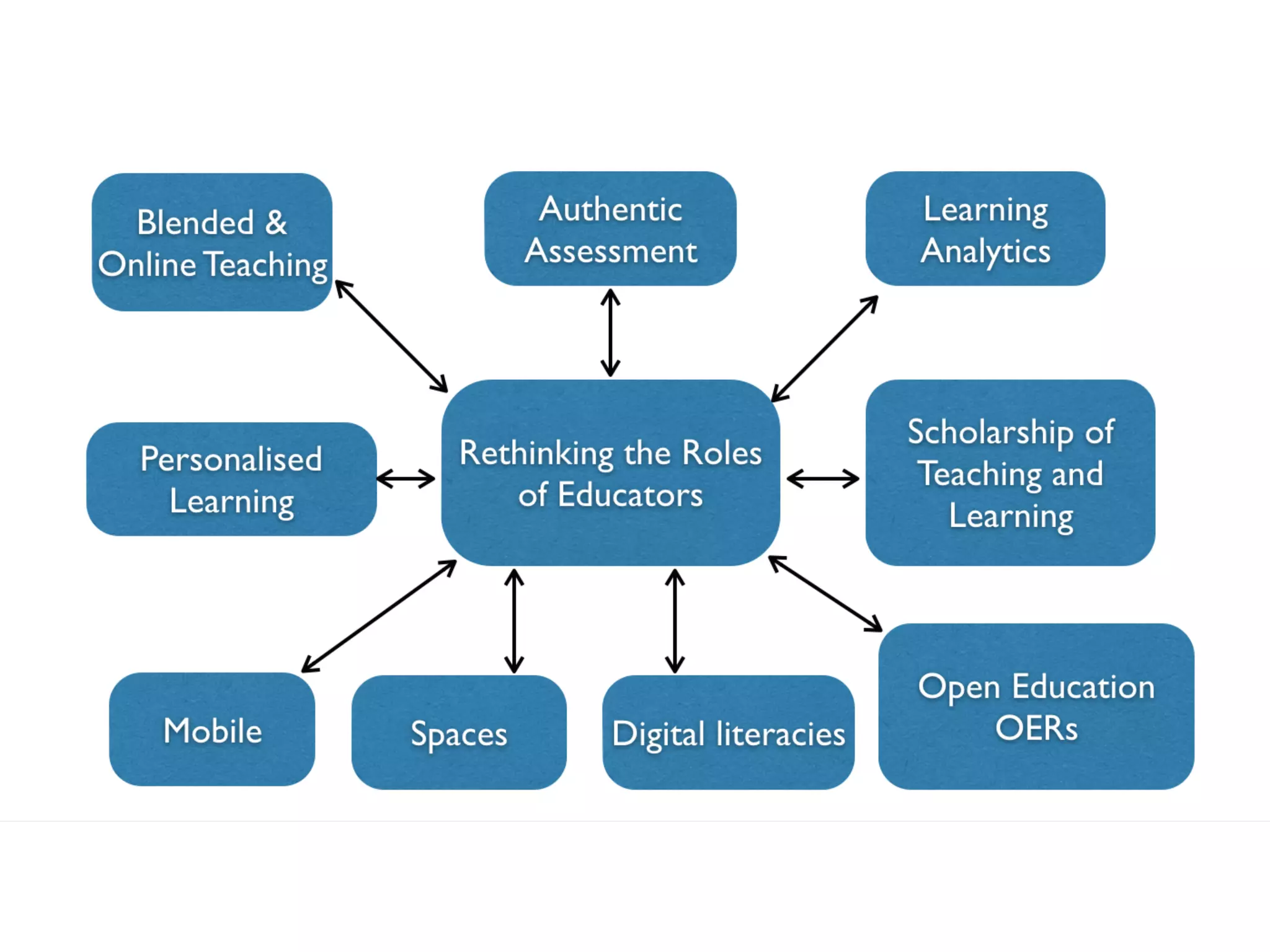
• Role of educators
• Professional development
Ecosystem
Swinburne
Online
Open
Universities
Australia
Pathways and
Vocational
Education
Higher
Education
Work Integrated
Learning
Trends
Challenges
Guiding Pedagogies
• Authentic learning
• Authentic assessment
• Personalised learning
• Peer learning
Authentic Learning
• …require students to complete
complex real-world tasks over
a period of time in collaboration
with others as they would in a
real setting or workplace
(Herrington, 2006)
Authentic Assessment
• Empowering the learner by
engaging them in assessment
tasks that simulate or engage
the learner in real-life
situations.
• “Engaging and worthy
problems or questions of
importance, in which students
must use knowledge to fashion
performances effectively and
creatively” (Wiggins, 1993, p.
229).
Personalised Learning
• Learning pathways
• ePortfolios
• The knowledge, skills and
attitudes that enable learning
and act as a catalyst to
empower the learner to continue
to learn (Keppell, 2015)
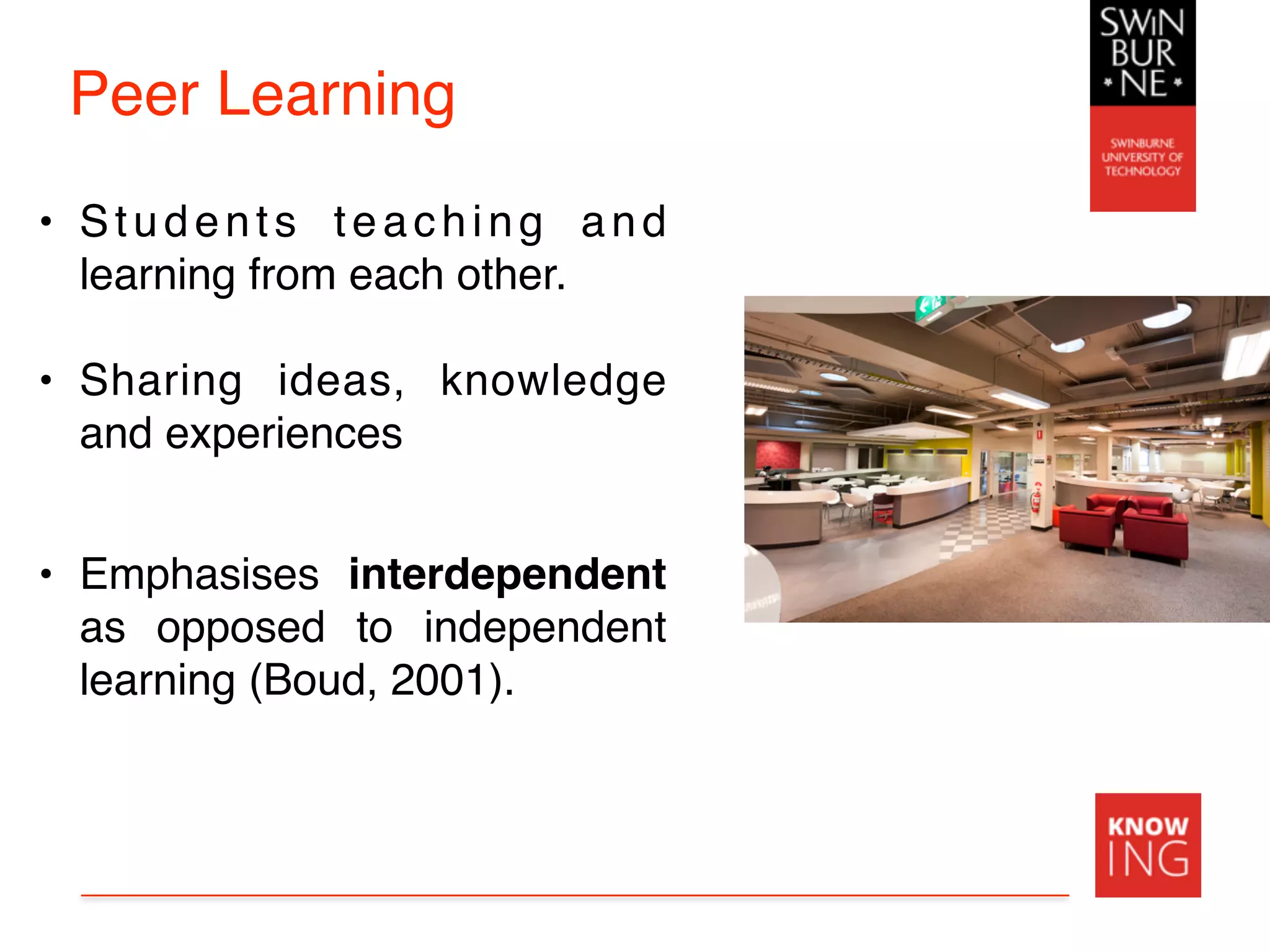
Peer Learning
• Students teaching and
learning from each other.
• Sharing ideas, knowledge
and experiences
• Emphasises interdependent
as opposed to independent
learning (Boud, 2001).
Interactions
• Interactive learning (learner-
to-content)
• Networked learning (learner-
to-learner; learner-to-teacher)
• Student-generated content
(learner-as-designers).
• Connected students
(knowledge is in the network)
• Learning-oriented
assessment (assessment-as-
learning).
Formal
on-campus
teaching
spaces
Informal
on-campus
learning spaces
Online learning
and teaching
spacesBlended
Learning
On-Campus Learning and Teaching
at Swinburne
Teaching Expectations
• Compliance with policies and
standards
• Practice alignment with the
Learning and Teaching
Strategy
• Capabilities and behaviours at
different levels of appointment
• Professional development and
scholarship
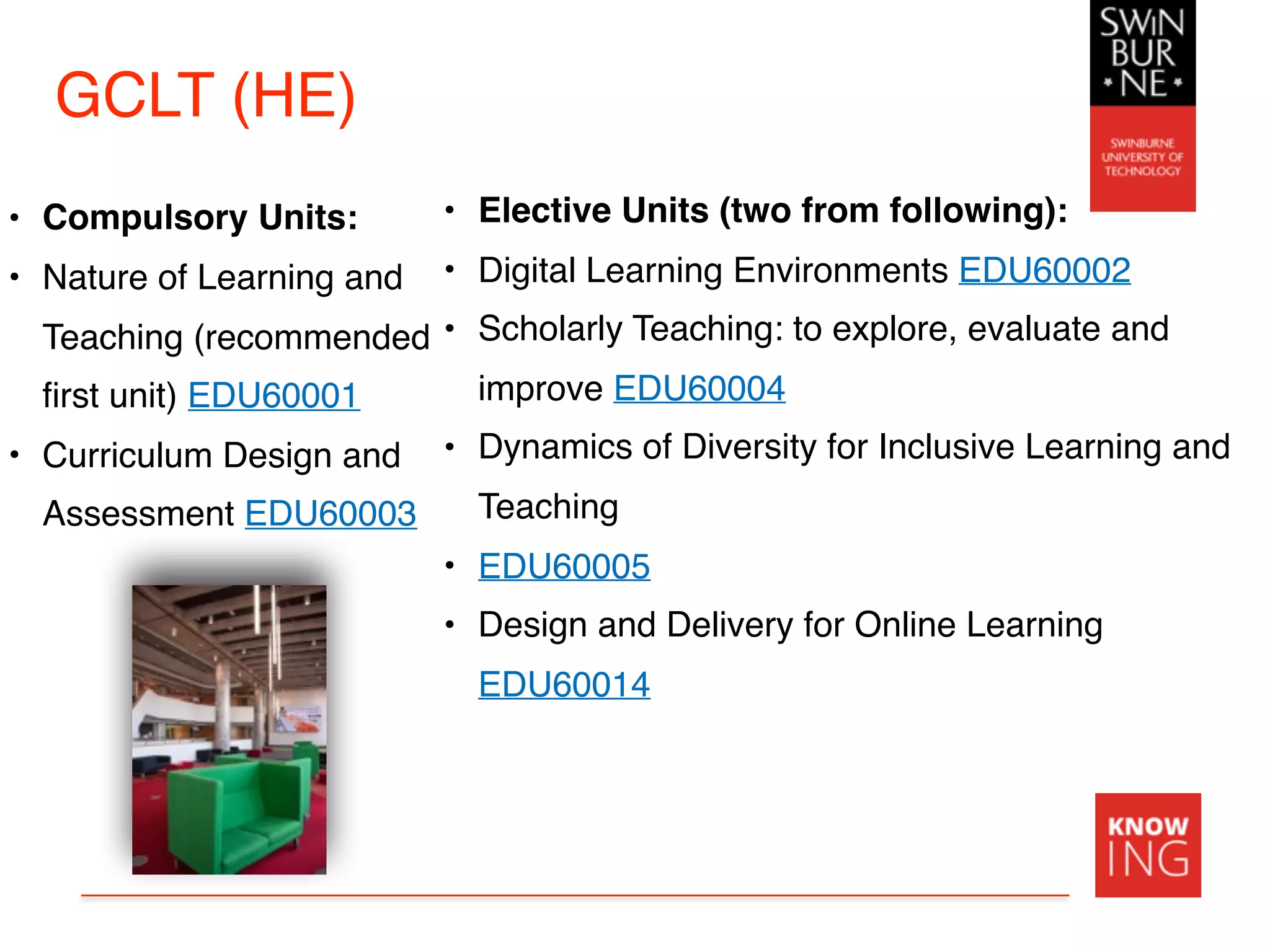
GCLT (HE)
• Compulsory Units:
• Nature of Learning and
Teaching (recommended
first unit) EDU60001
• Curriculum Design and
Assessment EDU60003
• Elective Units (two from following): 
• Digital Learning Environments EDU60002
• Scholarly Teaching: to explore, evaluate and
improve EDU60004
• Dynamics of Diversity for Inclusive Learning and
Teaching
• EDU60005
• Design and Delivery for Online Learning
EDU60014
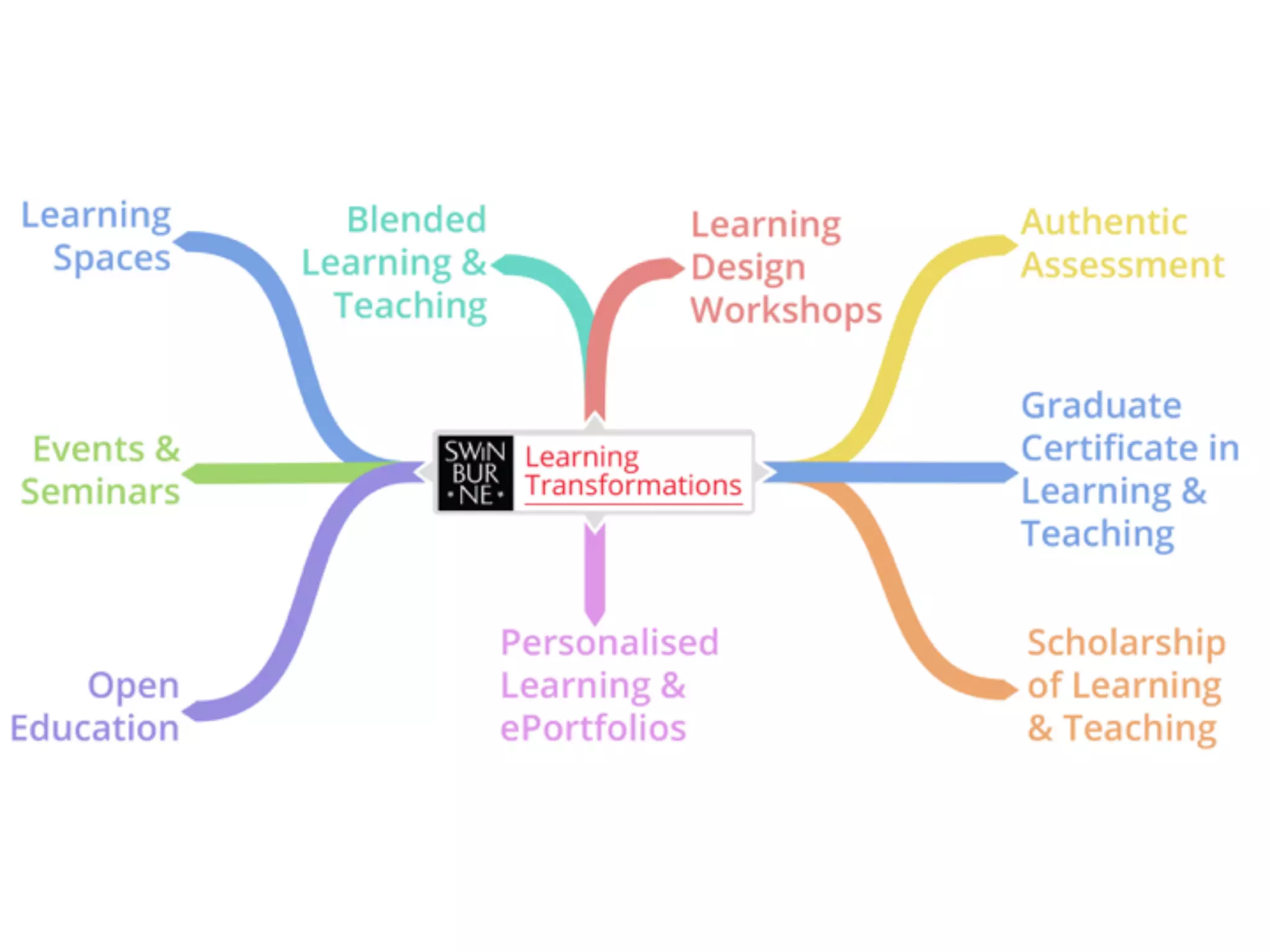
Learning Design Workshops
• Unit design (large first
year units, priority units,
UIP identified units)
• Majors/Discipline-based
learning design
• Course-based Learning
design
• Blended learning
• Authentic learning
• Authentic assessment
• Personalised learning
• OERs
• Mobile learning
2016 Engaging Students

2016 Engaging Students

  • 1.
    CRICOS 00111D TOID3059 DEVELOPING INTEGRATED LEARNING CURRICULUM TO ENGAGE LEARNERS Professor Mike Keppell Pro Vice-Chancellor, Learning Transformations
  • 2.
    Overview • Enhancing studentexperience • Ecosystem • Trends and challenges • Guiding pedagogies • Blended learning • Role of educators • Professional development
  • 3.
  • 4.
  • 5.
  • 6.
    Guiding Pedagogies • Authenticlearning • Authentic assessment • Personalised learning • Peer learning
  • 7.
    Authentic Learning • …requirestudents to complete complex real-world tasks over a period of time in collaboration with others as they would in a real setting or workplace (Herrington, 2006)
  • 8.
    Authentic Assessment • Empoweringthe learner by engaging them in assessment tasks that simulate or engage the learner in real-life situations. • “Engaging and worthy problems or questions of importance, in which students must use knowledge to fashion performances effectively and creatively” (Wiggins, 1993, p. 229).
  • 9.
    Personalised Learning • Learningpathways • ePortfolios • The knowledge, skills and attitudes that enable learning and act as a catalyst to empower the learner to continue to learn (Keppell, 2015)
  • 14.
    Peer Learning • Studentsteaching and learning from each other. • Sharing ideas, knowledge and experiences • Emphasises interdependent as opposed to independent learning (Boud, 2001).
  • 15.
    Interactions • Interactive learning(learner- to-content) • Networked learning (learner- to-learner; learner-to-teacher) • Student-generated content (learner-as-designers). • Connected students (knowledge is in the network) • Learning-oriented assessment (assessment-as- learning).
  • 16.
    Formal on-campus teaching spaces Informal on-campus learning spaces Online learning andteaching spacesBlended Learning On-Campus Learning and Teaching at Swinburne
  • 18.
    Teaching Expectations • Compliancewith policies and standards • Practice alignment with the Learning and Teaching Strategy • Capabilities and behaviours at different levels of appointment • Professional development and scholarship
  • 21.
    GCLT (HE) • CompulsoryUnits: • Nature of Learning and Teaching (recommended first unit) EDU60001 • Curriculum Design and Assessment EDU60003 • Elective Units (two from following):  • Digital Learning Environments EDU60002 • Scholarly Teaching: to explore, evaluate and improve EDU60004 • Dynamics of Diversity for Inclusive Learning and Teaching • EDU60005 • Design and Delivery for Online Learning EDU60014
  • 22.
    Learning Design Workshops •Unit design (large first year units, priority units, UIP identified units) • Majors/Discipline-based learning design • Course-based Learning design • Blended learning • Authentic learning • Authentic assessment • Personalised learning • OERs • Mobile learning