CRICOS 00111D TOID 3059
PERSONALISED
LEARNING IN A
CONNECTED WORLD
Professor Mike Keppell
Pro Vice-Chancellor, Learning Transformations
Innovative Learning Spaces Summit
September 2016, Prague, Czech Republic
Preparing Students to
Solve the Problems of
the Future
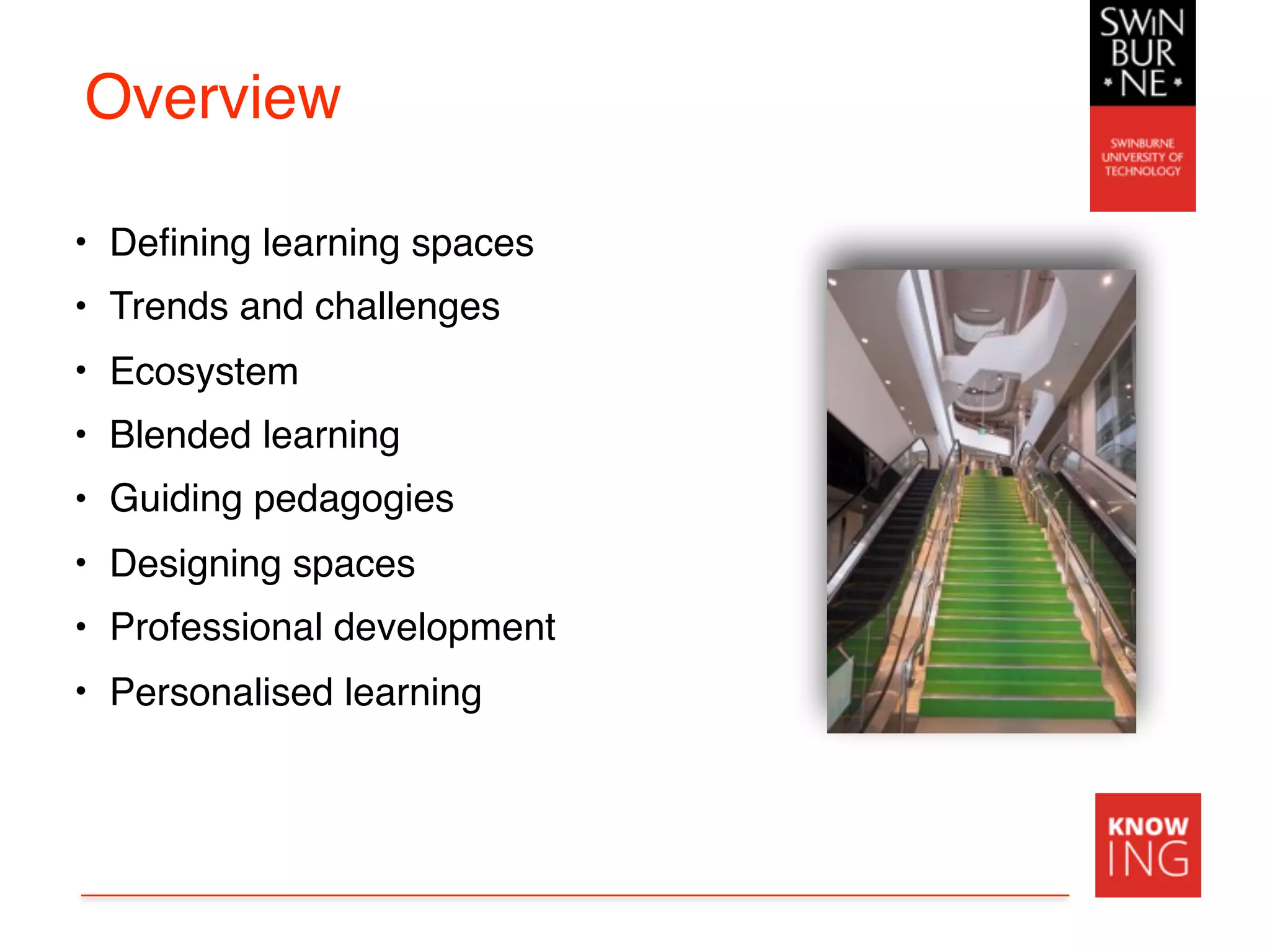
Overview
• Defining learning spaces
• Trends and challenges
• Ecosystem
• Blended learning
• Guiding pedagogies
• Designing spaces
• Professional development
• Personalised learning
Defining Learning
Spaces
Defining Learning Spaces
• Physical, blended or virtual
learning environments that
enhance learning
• Physical, blended or virtual
‘areas’ that motivate a learner
to learn
Defining Learning Spaces
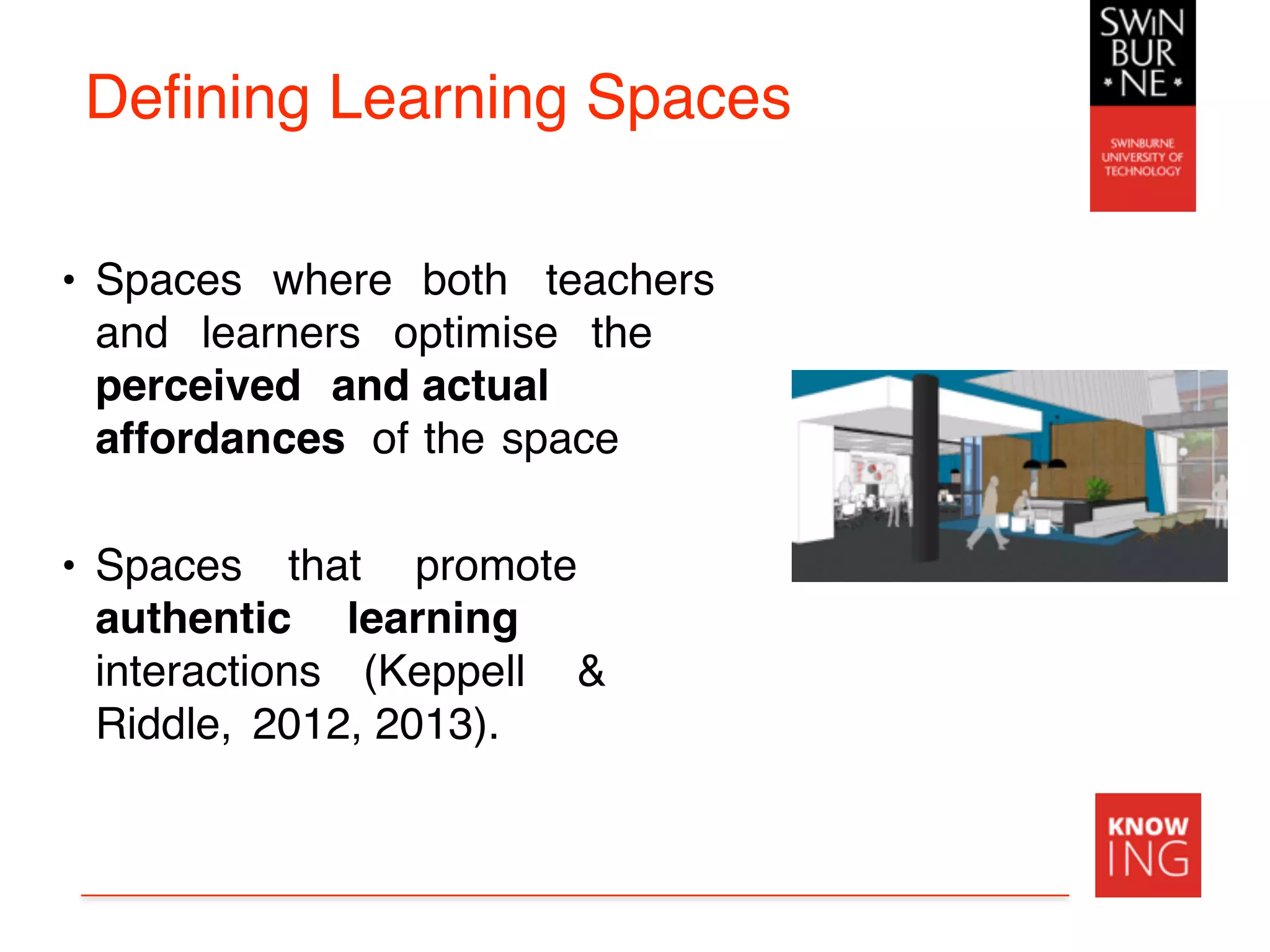
• Spaces where both teachers
and learners optimise the
perceived and actual
affordances of the space
• Spaces that promote
authentic learning
interactions (Keppell &
Riddle, 2012, 2013).
Trends and Challenges
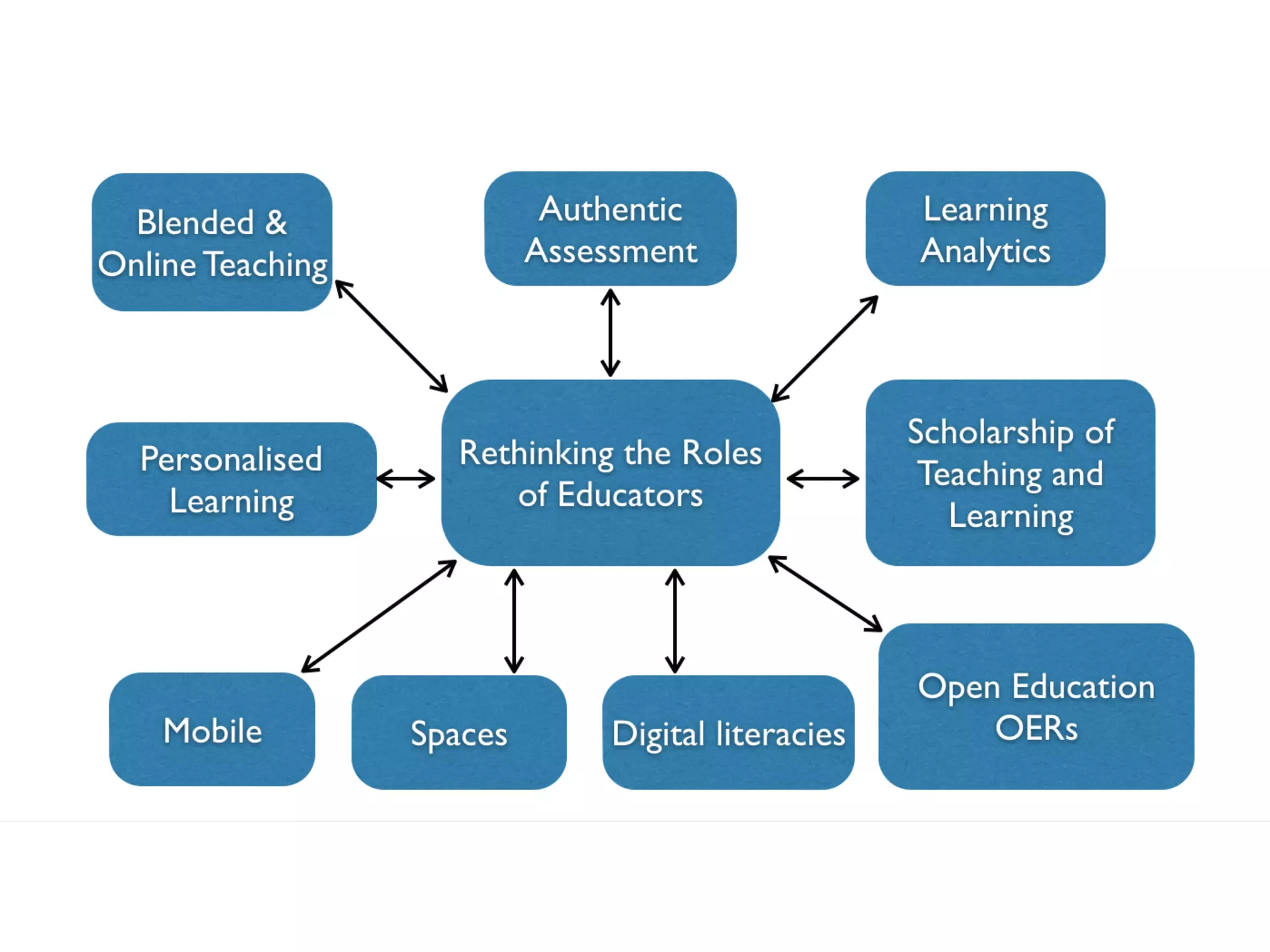
Trends
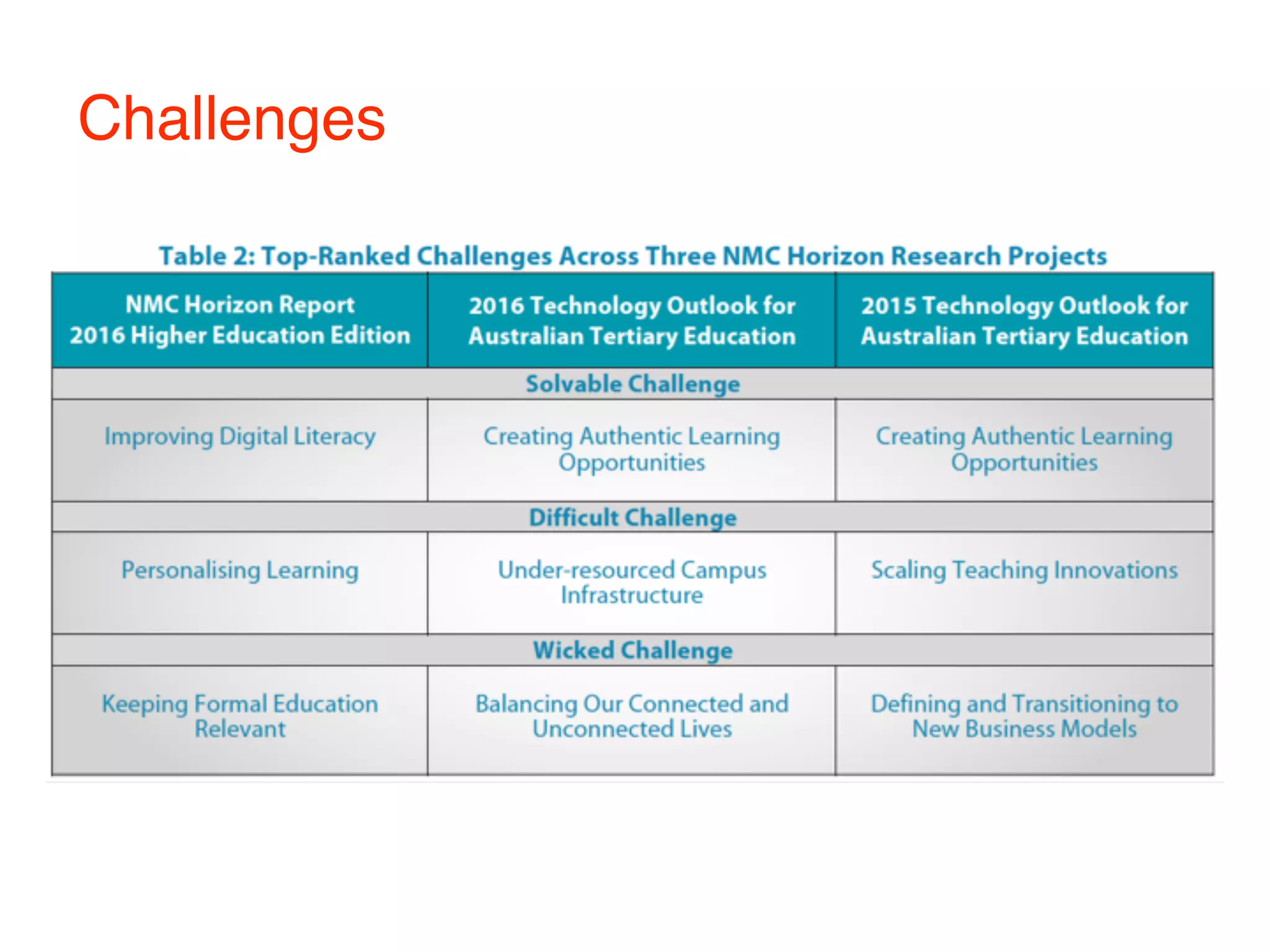
Challenges
Swinburne Ecosystem
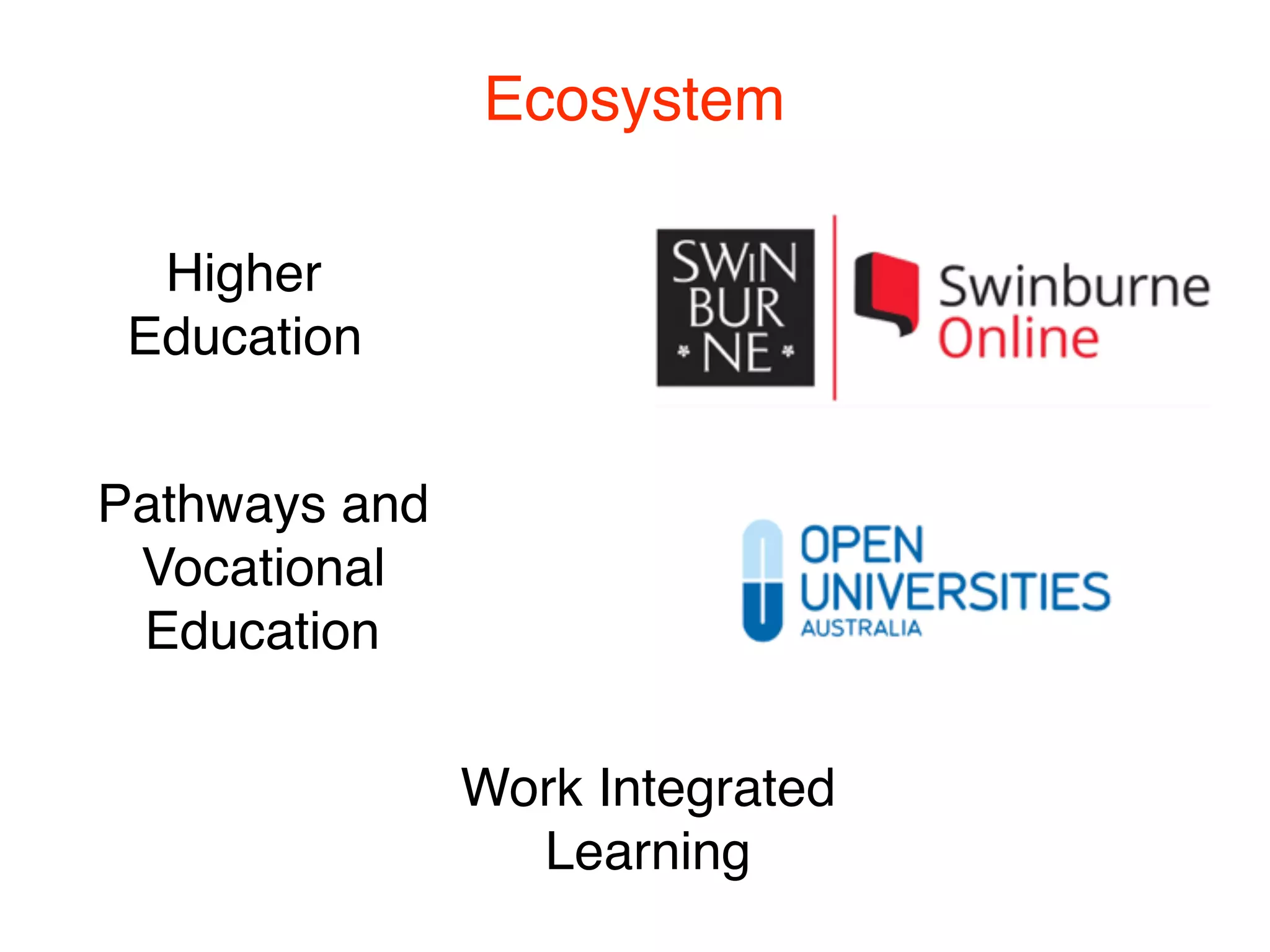
Ecosystem
Pathways and
Vocational
Education
Higher
Education
Work Integrated
Learning
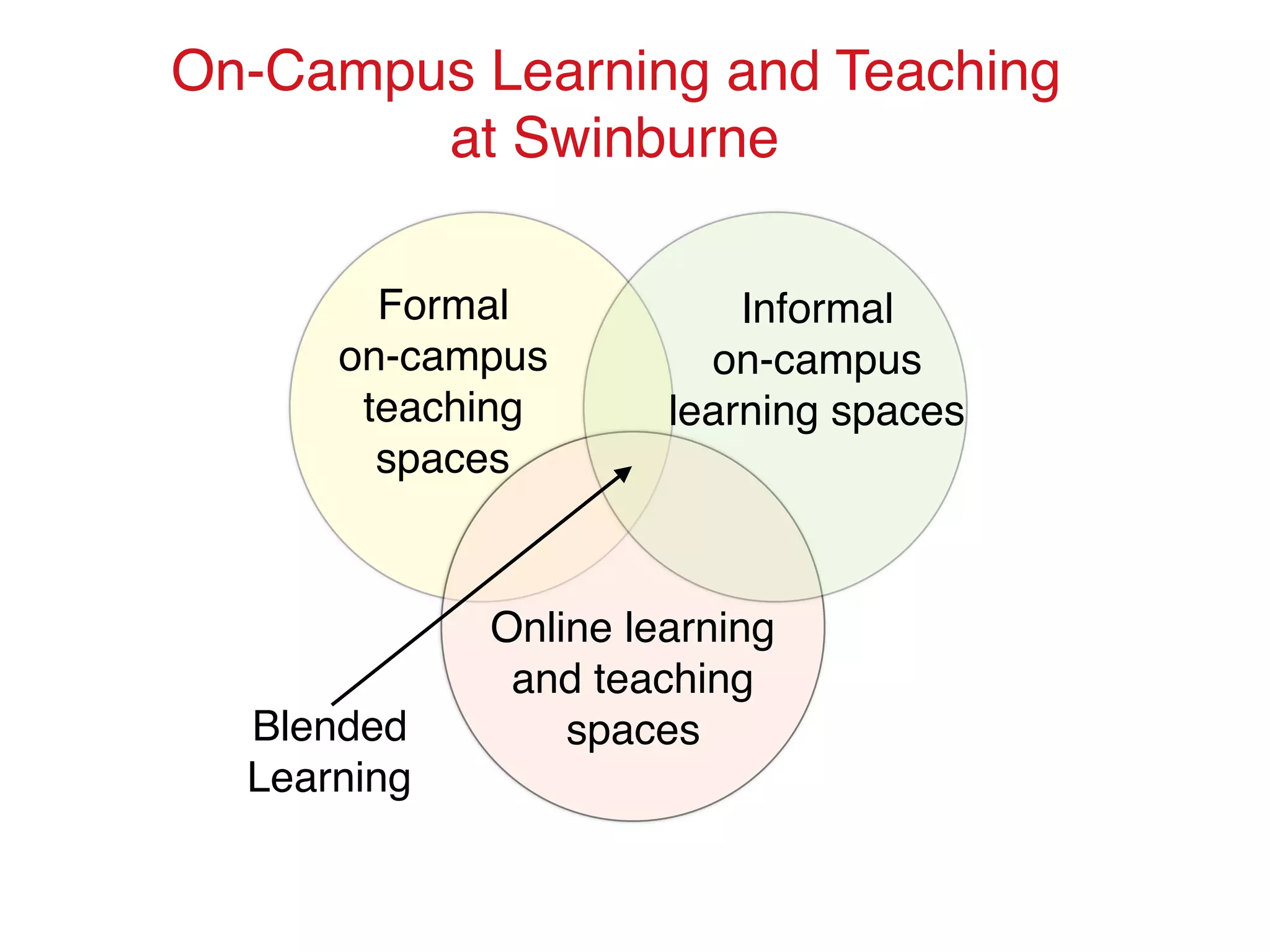
Blended Learning
Formal
on-campus
teaching
spaces
Informal
on-campus
learning spaces
Online learning
and teaching
spacesBlended
Learning
On-Campus Learning and Teaching
at Swinburne
Guiding Pedagogies
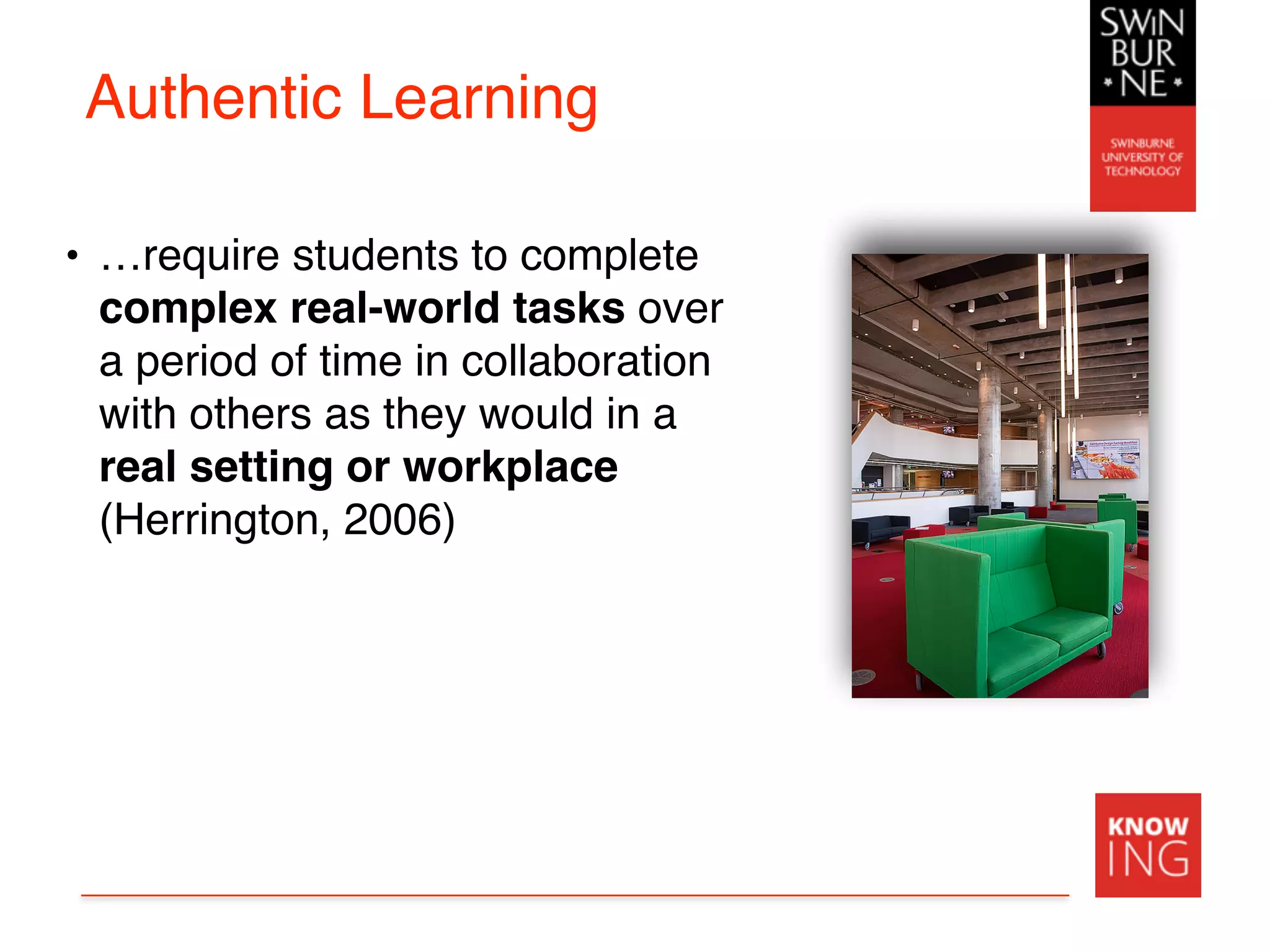
Authentic Learning
• …require students to complete
complex real-world tasks over
a period of time in collaboration
with others as they would in a
real setting or workplace
(Herrington, 2006)
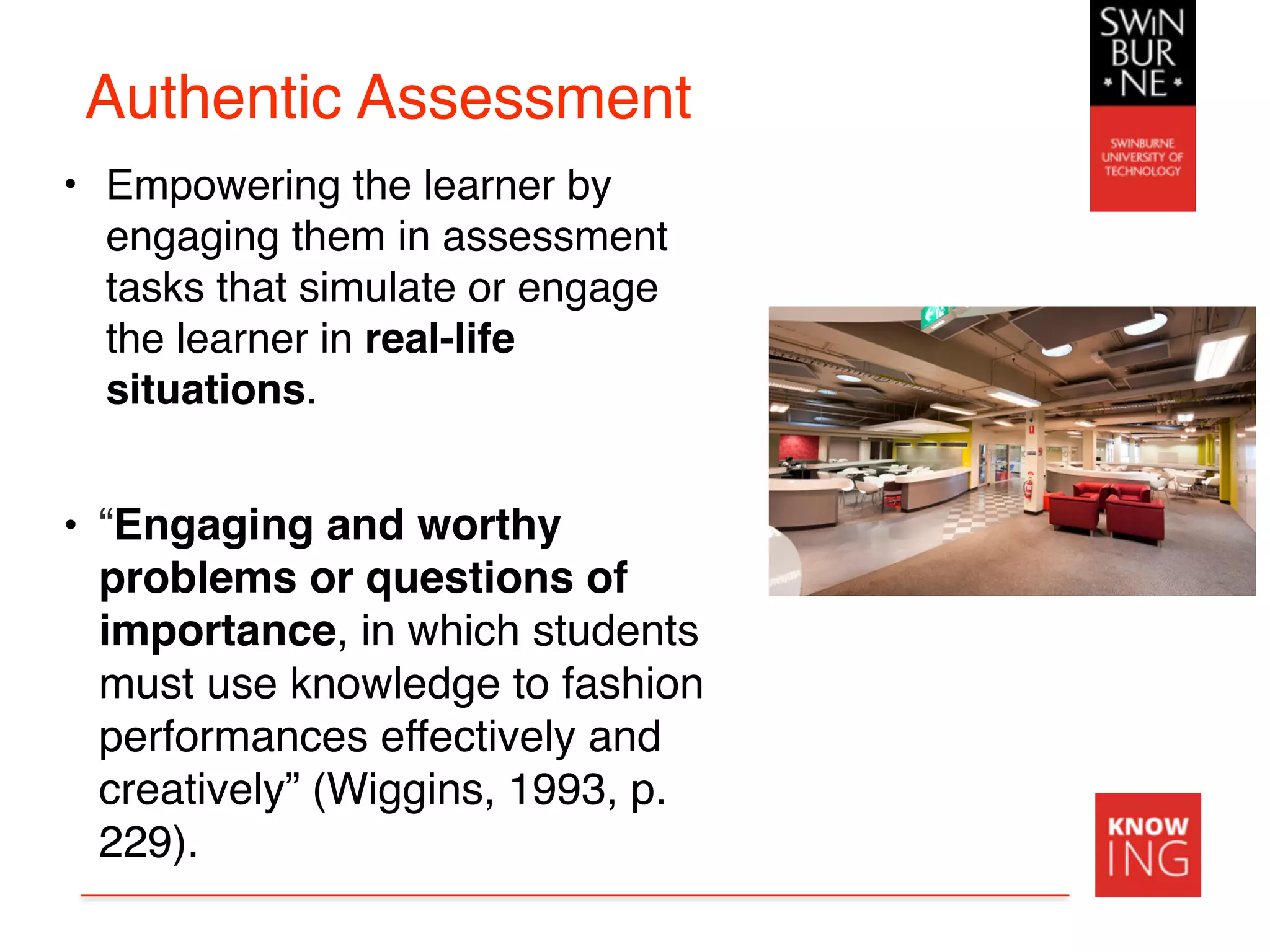
Authentic Assessment
• Empowering the learner by
engaging them in assessment
tasks that simulate or engage
the learner in real-life
situations.
• “Engaging and worthy
problems or questions of
importance, in which students
must use knowledge to fashion
performances effectively and
creatively” (Wiggins, 1993, p.
229).
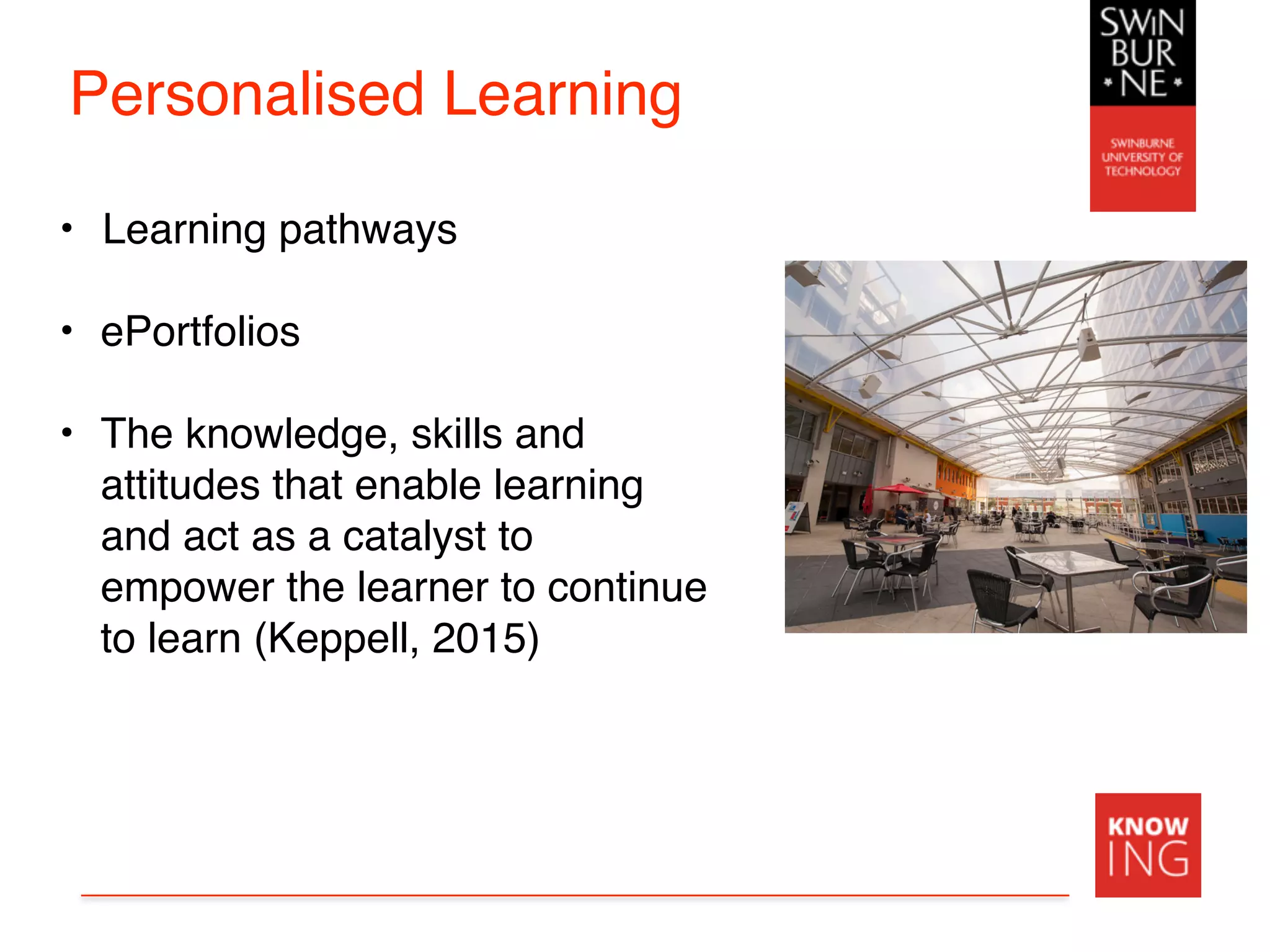
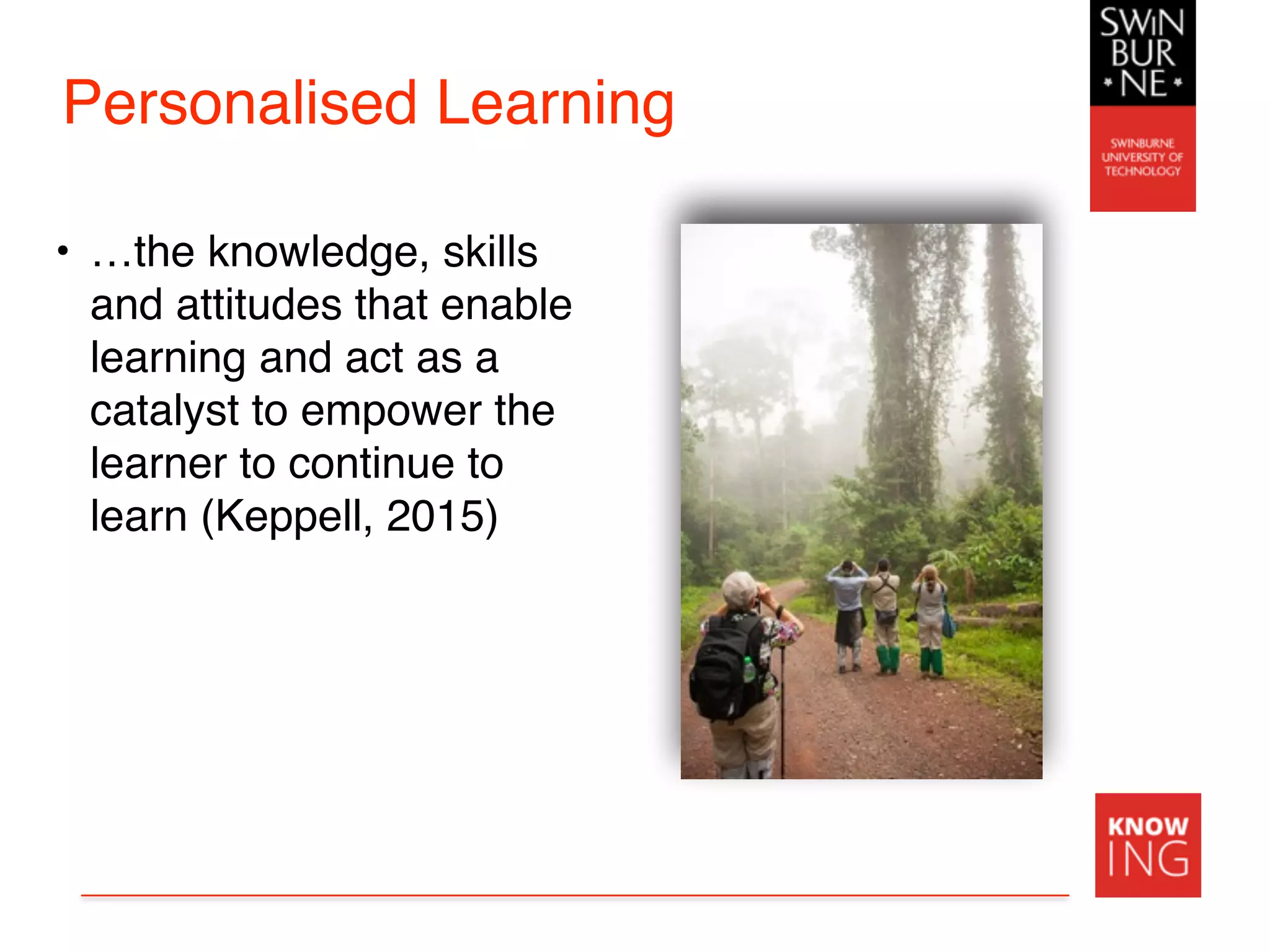
Personalised Learning
• Learning pathways
• ePortfolios
• The knowledge, skills and
attitudes that enable learning
and act as a catalyst to
empower the learner to continue
to learn (Keppell, 2015)
Peer Learning
• Students teaching and
learning from each other.
• Sharing ideas, knowledge
and experiences
• Emphasises interdependent
as opposed to independent
learning (Boud, 2001).
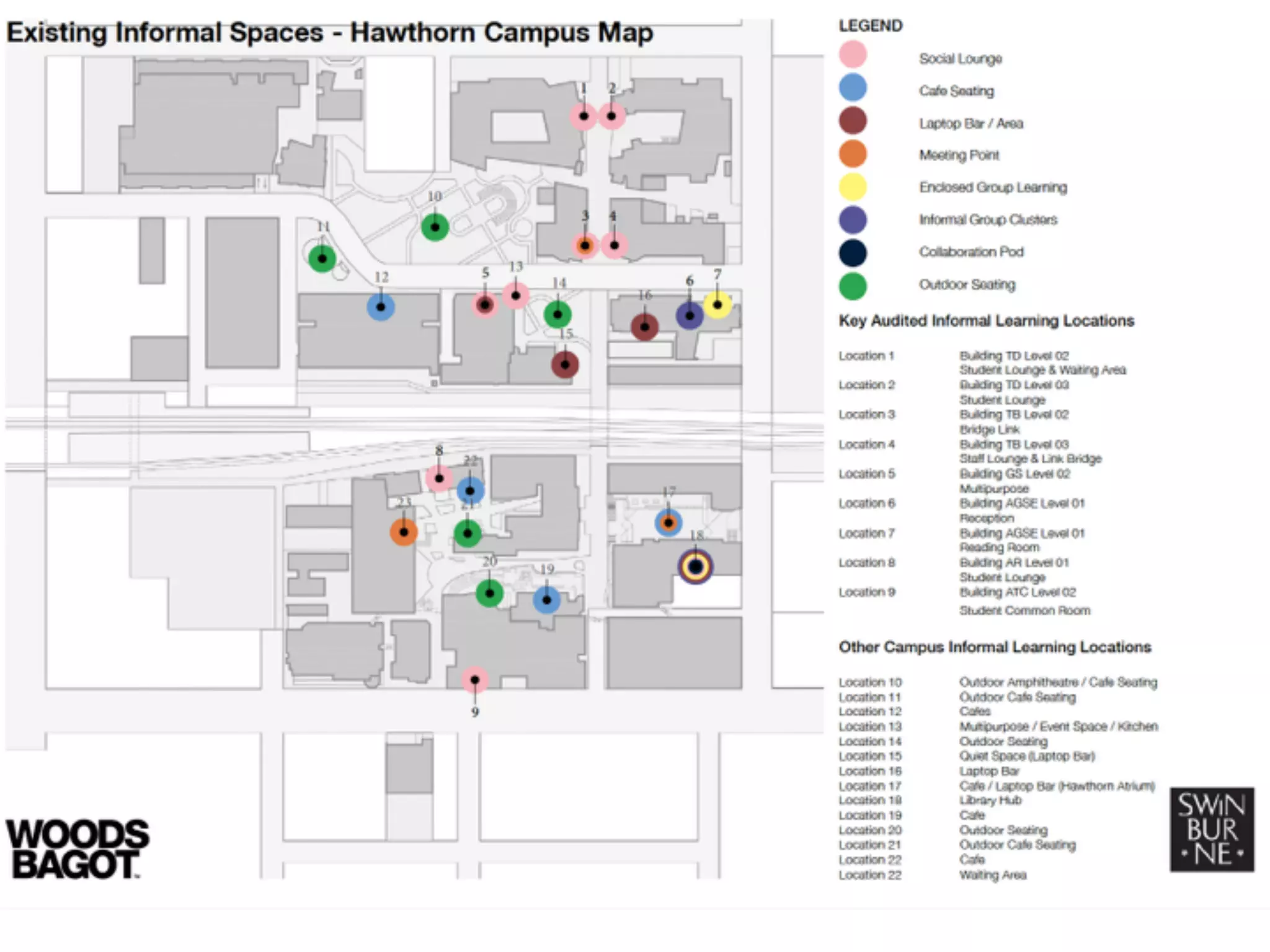
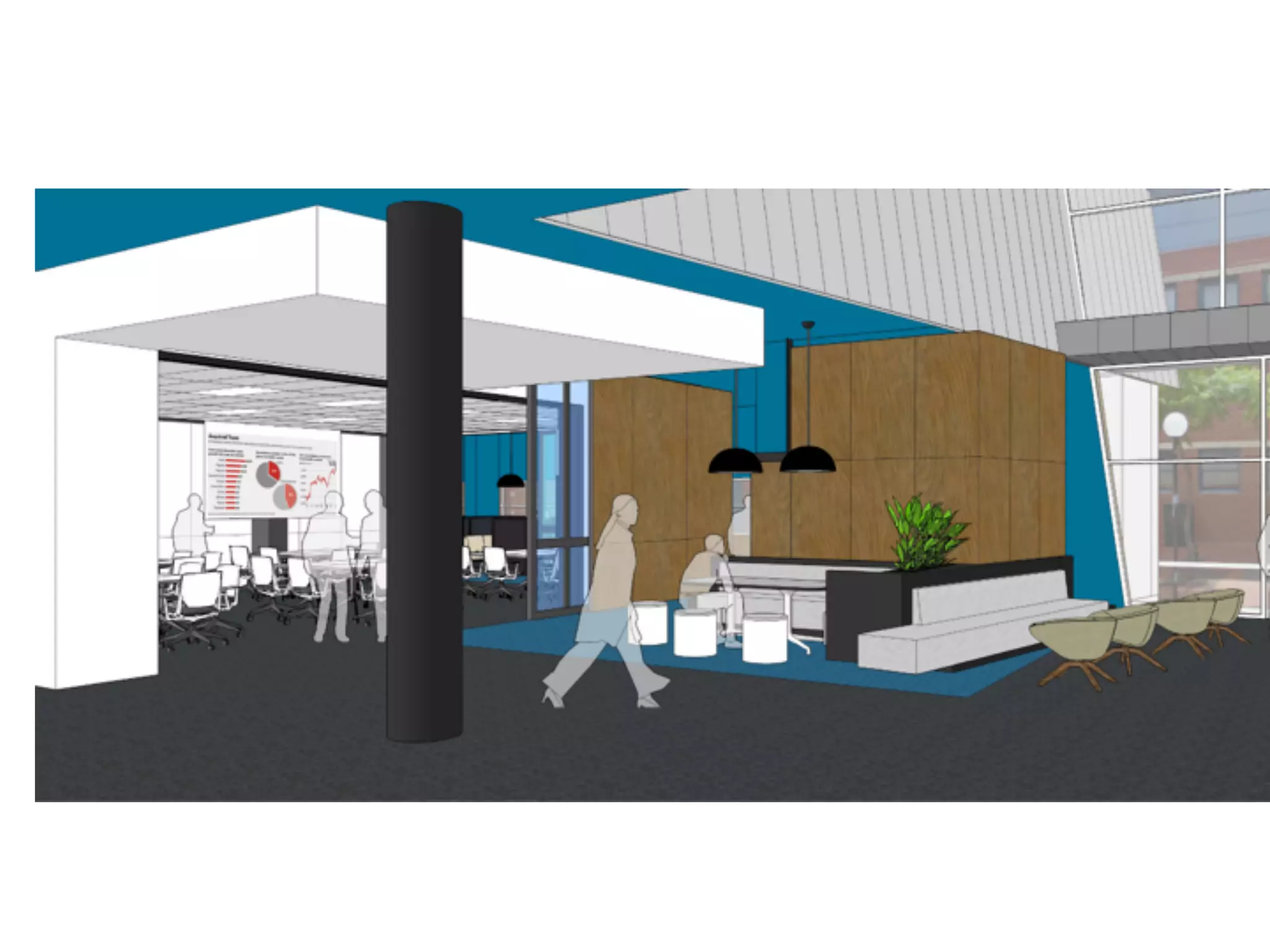
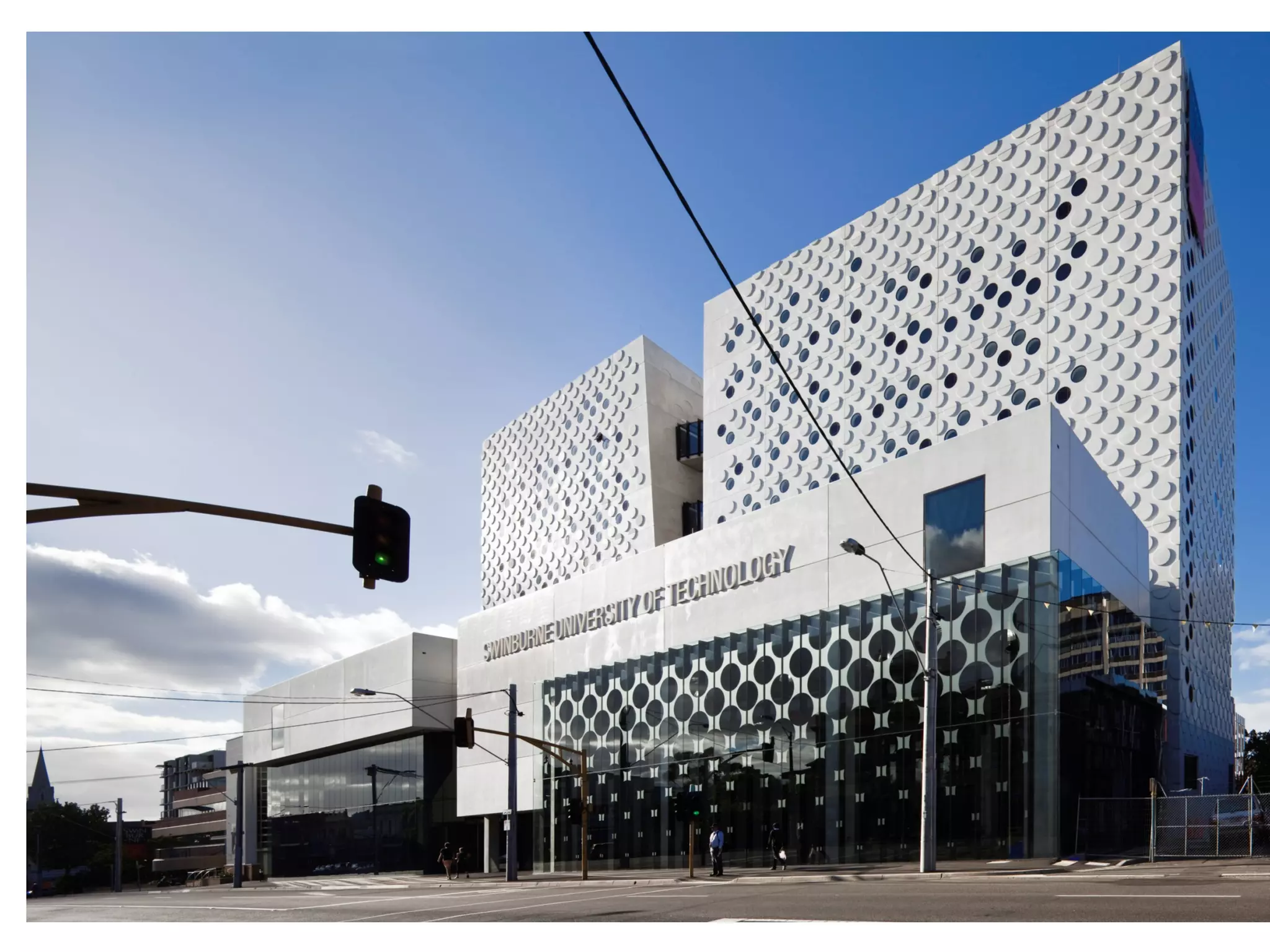
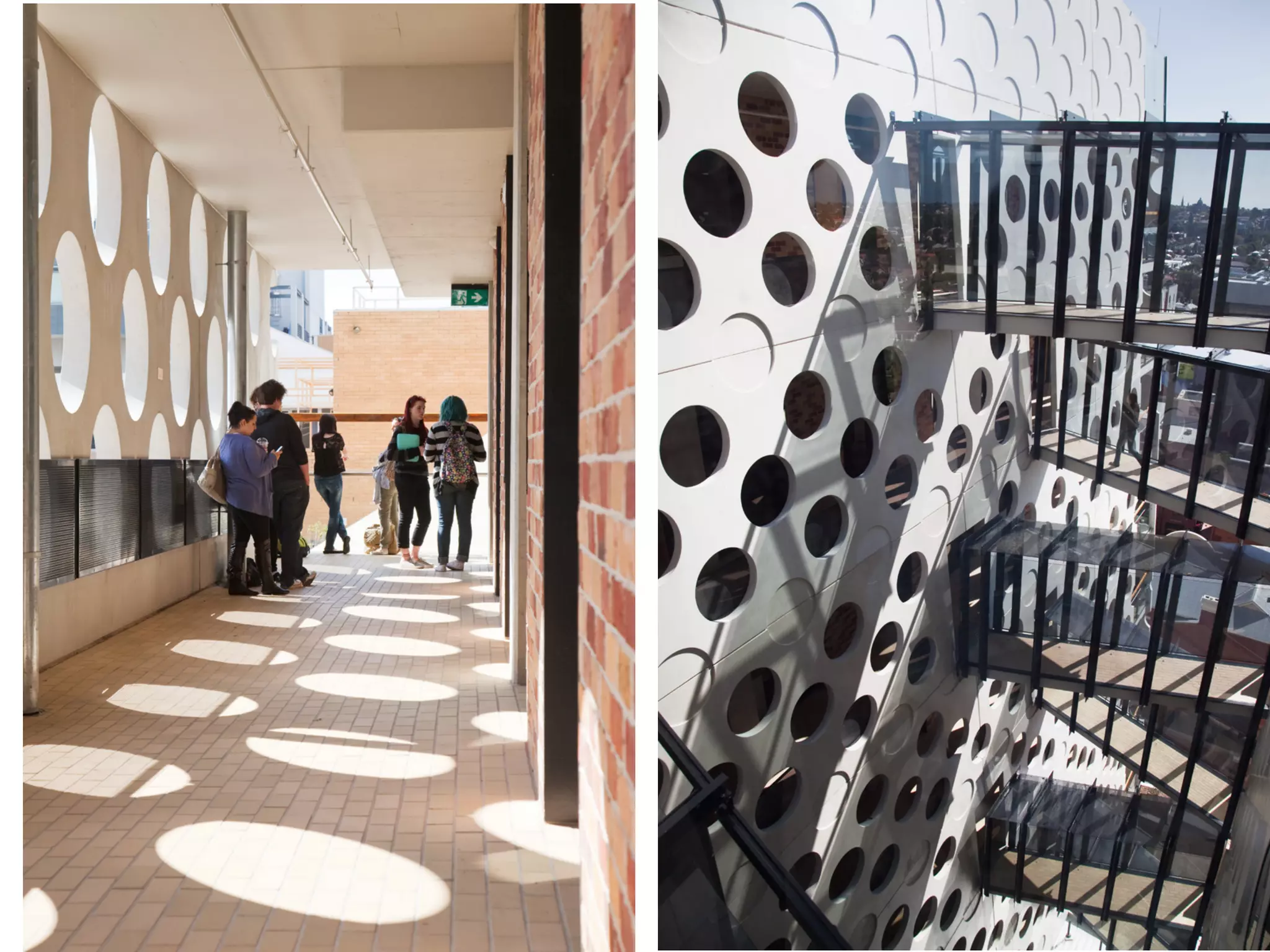
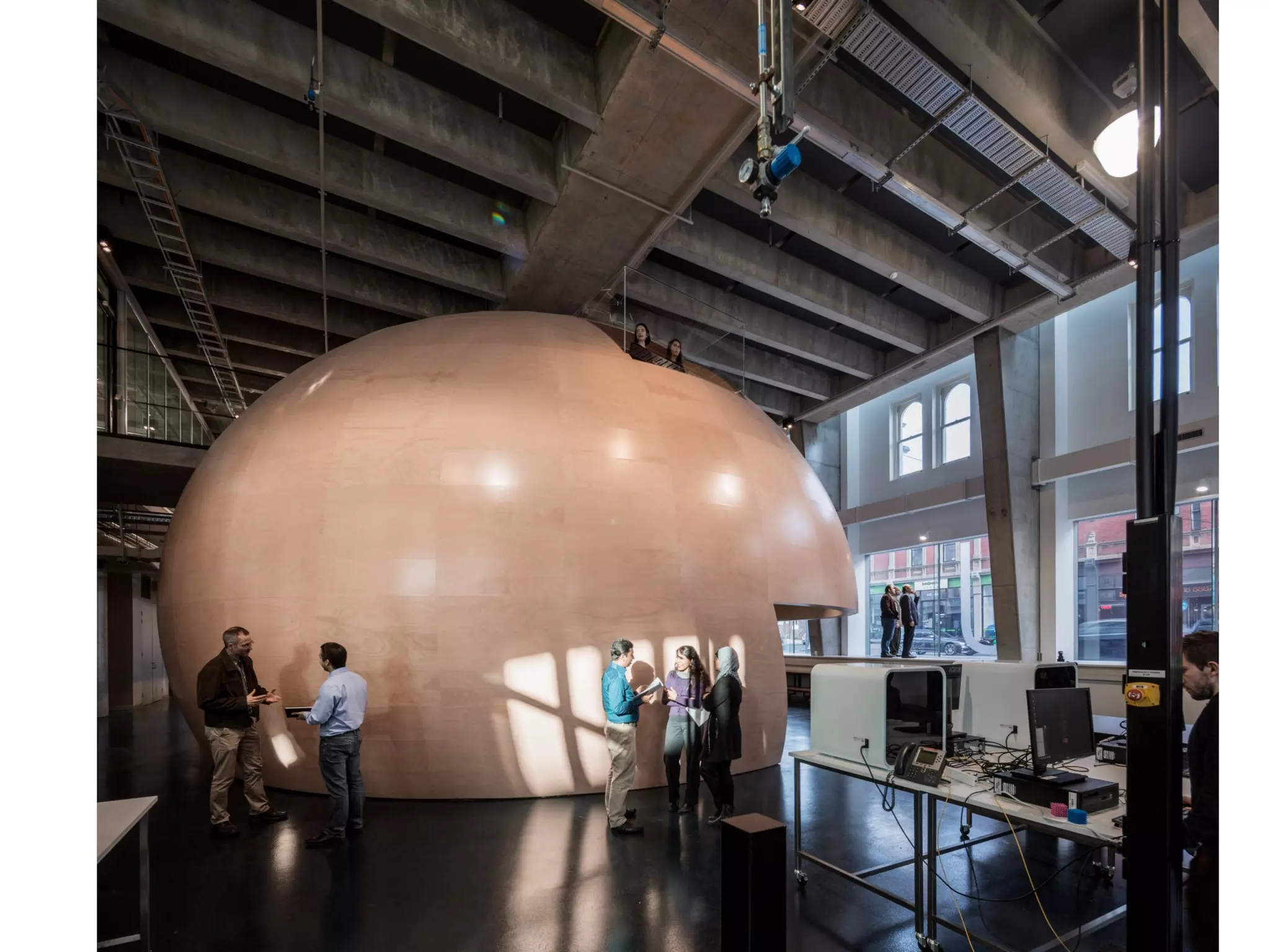
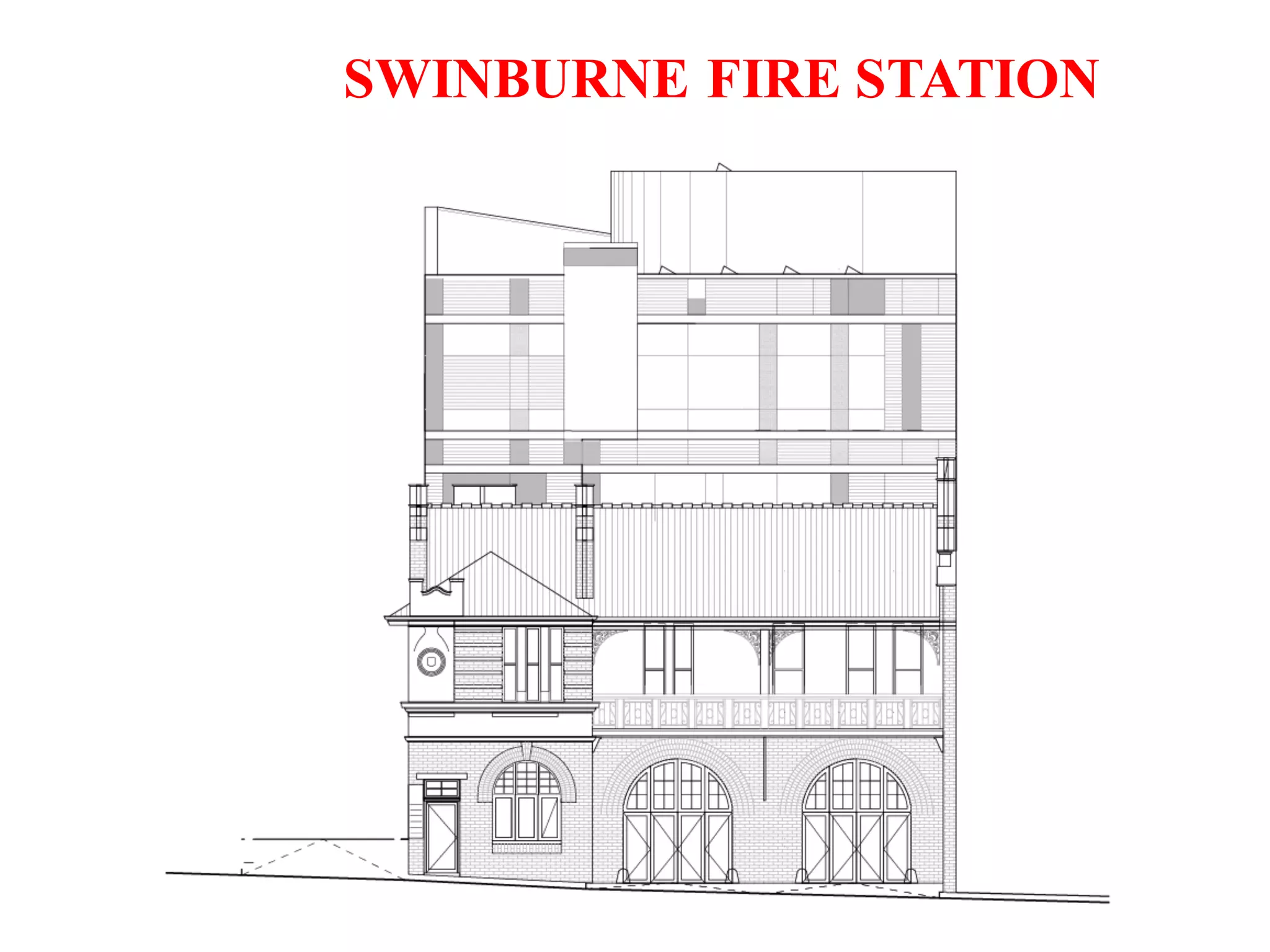
Designing Spaces
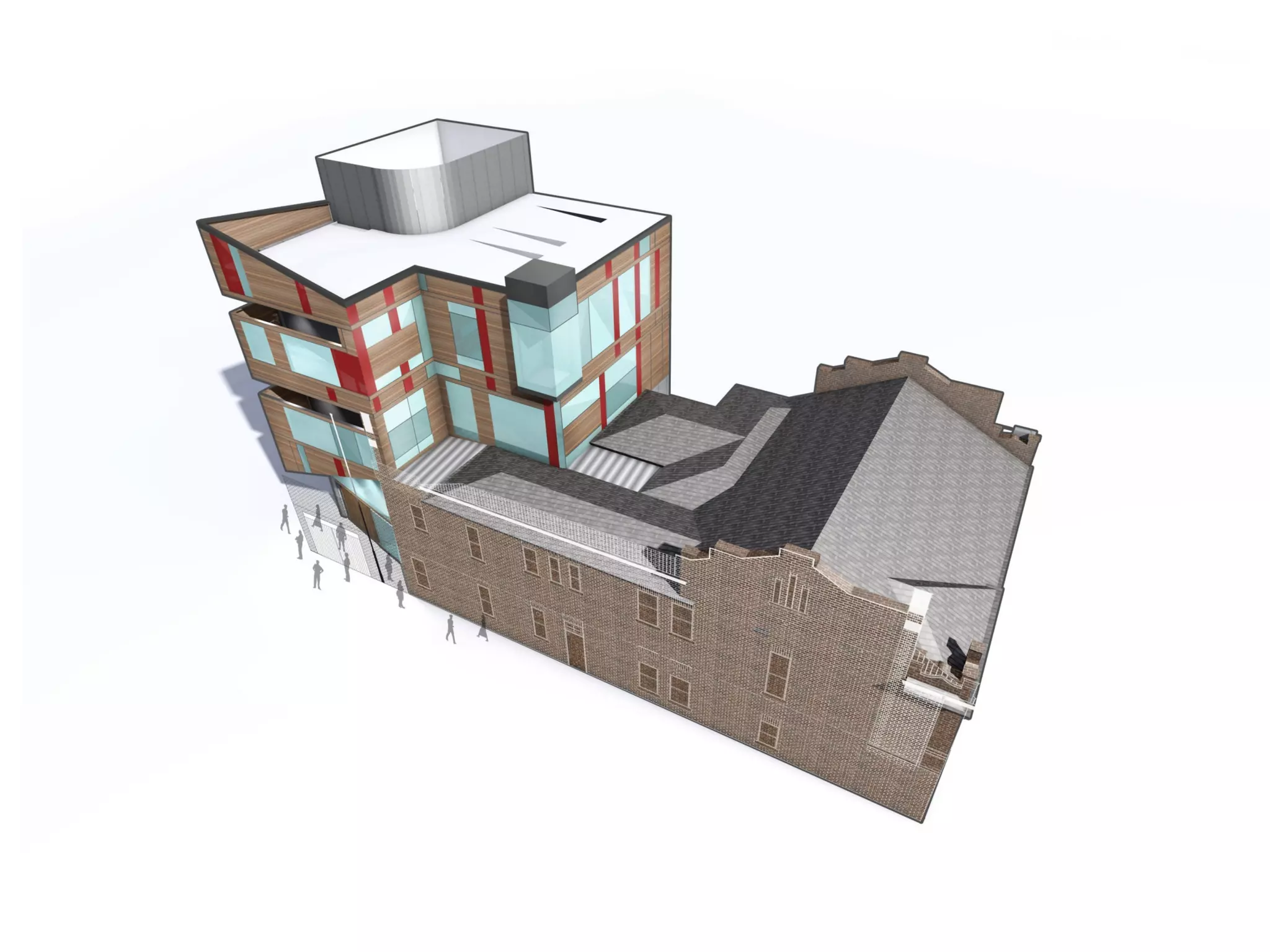
FACTORY OF THE FUTURE
SWINBURNE FIRE STATION
Professional
Development
Empowering our
Learners
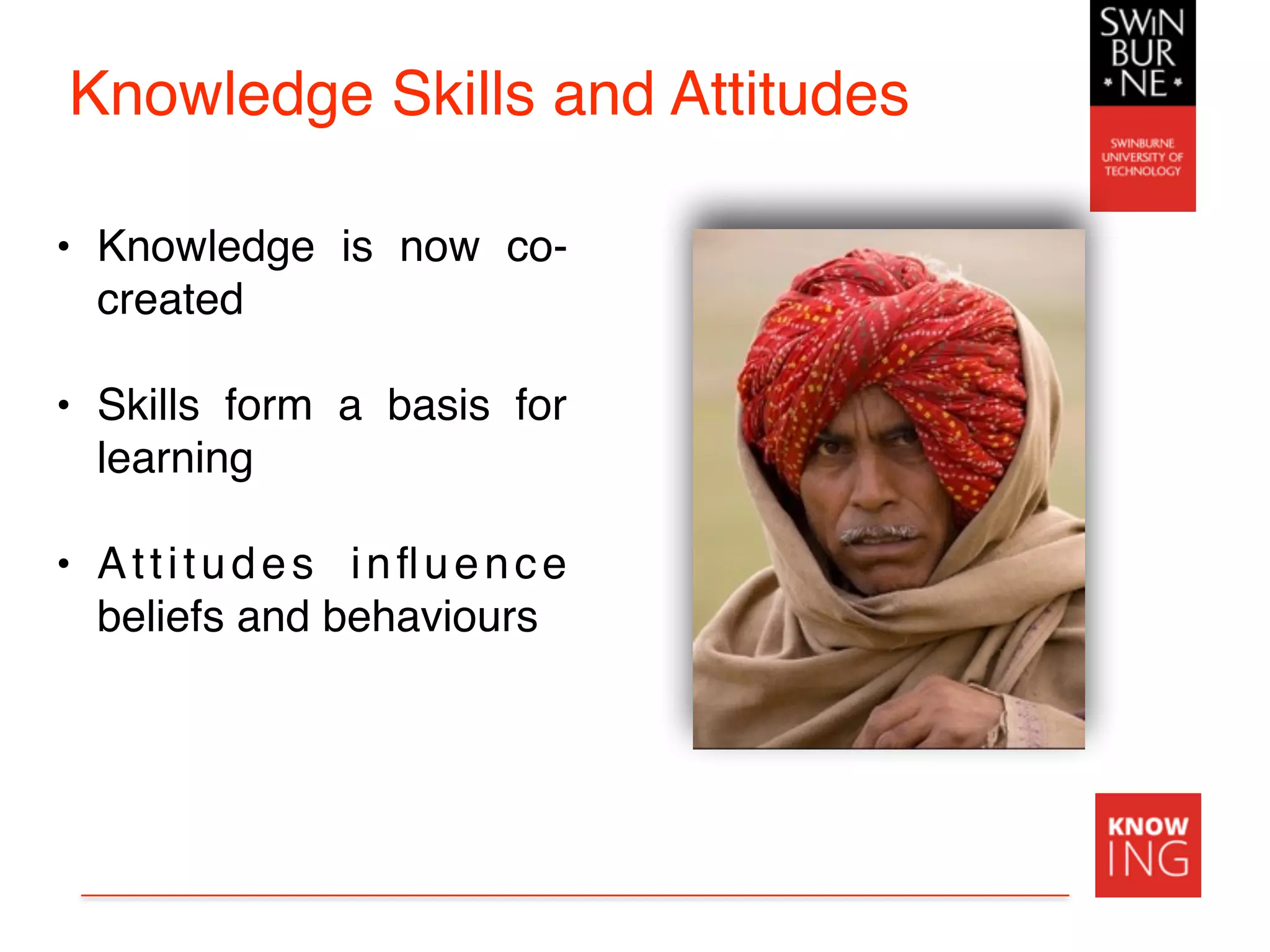
Knowledge Skills and Attitudes
• Knowledge is now co-
created
• Skills form a basis for
learning
• Attitudes influence
beliefs and behaviours
Personalised Learning Toolkit
• Digital literacies
• Seamless learning
• Self-regulated learning
• Learning-oriented
assessment
• Lifelong and life-wide learning
• Flexible learning pathways
Levels of Digital Literacies
• Digital Competency
• knowing how to use digital
tools
• Digital Fluency
• applying digital knowledge
and skills
• Digital Design
• user-generated content
• ‘learner-as-designer’
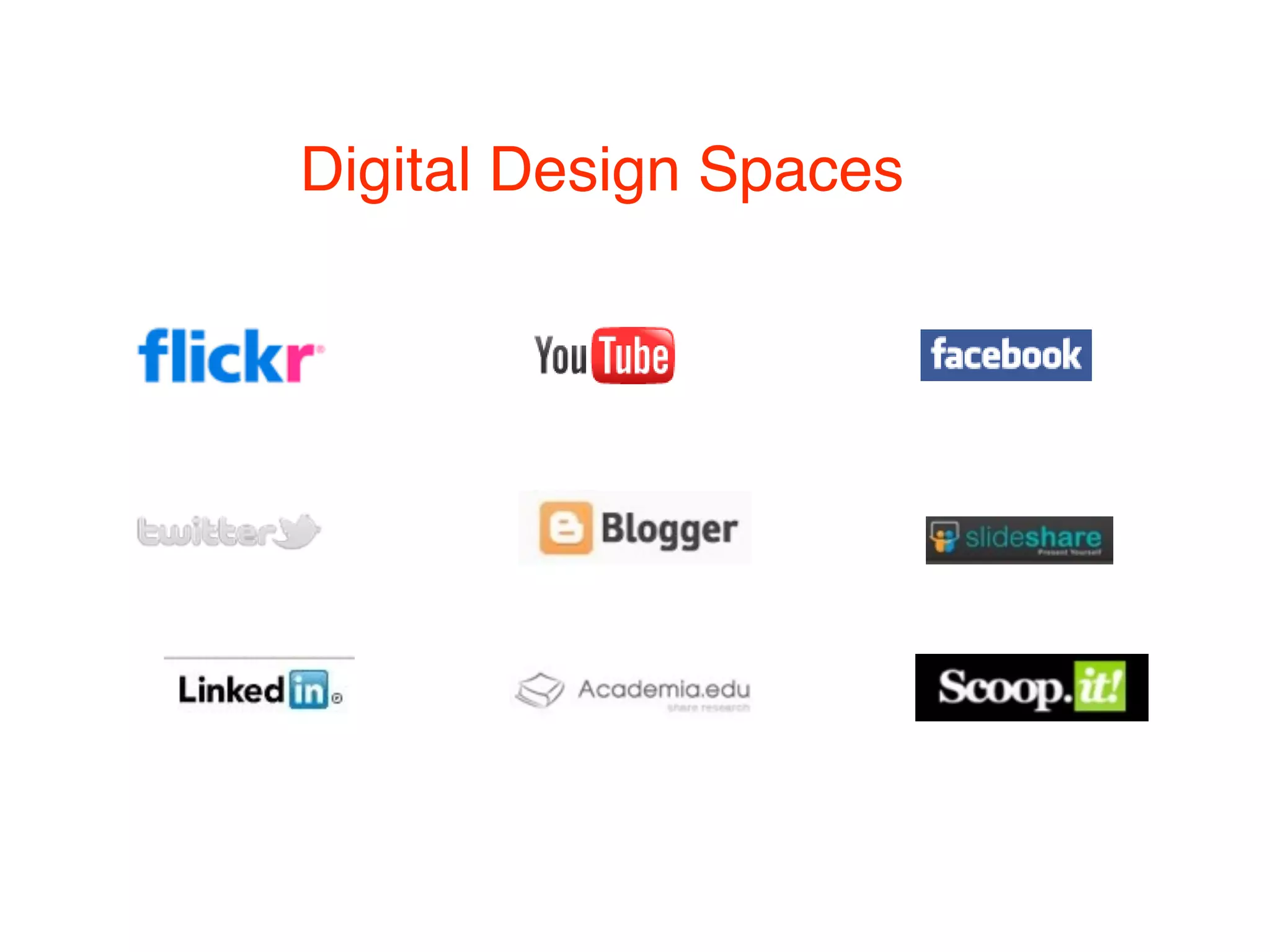
Digital Design Spaces
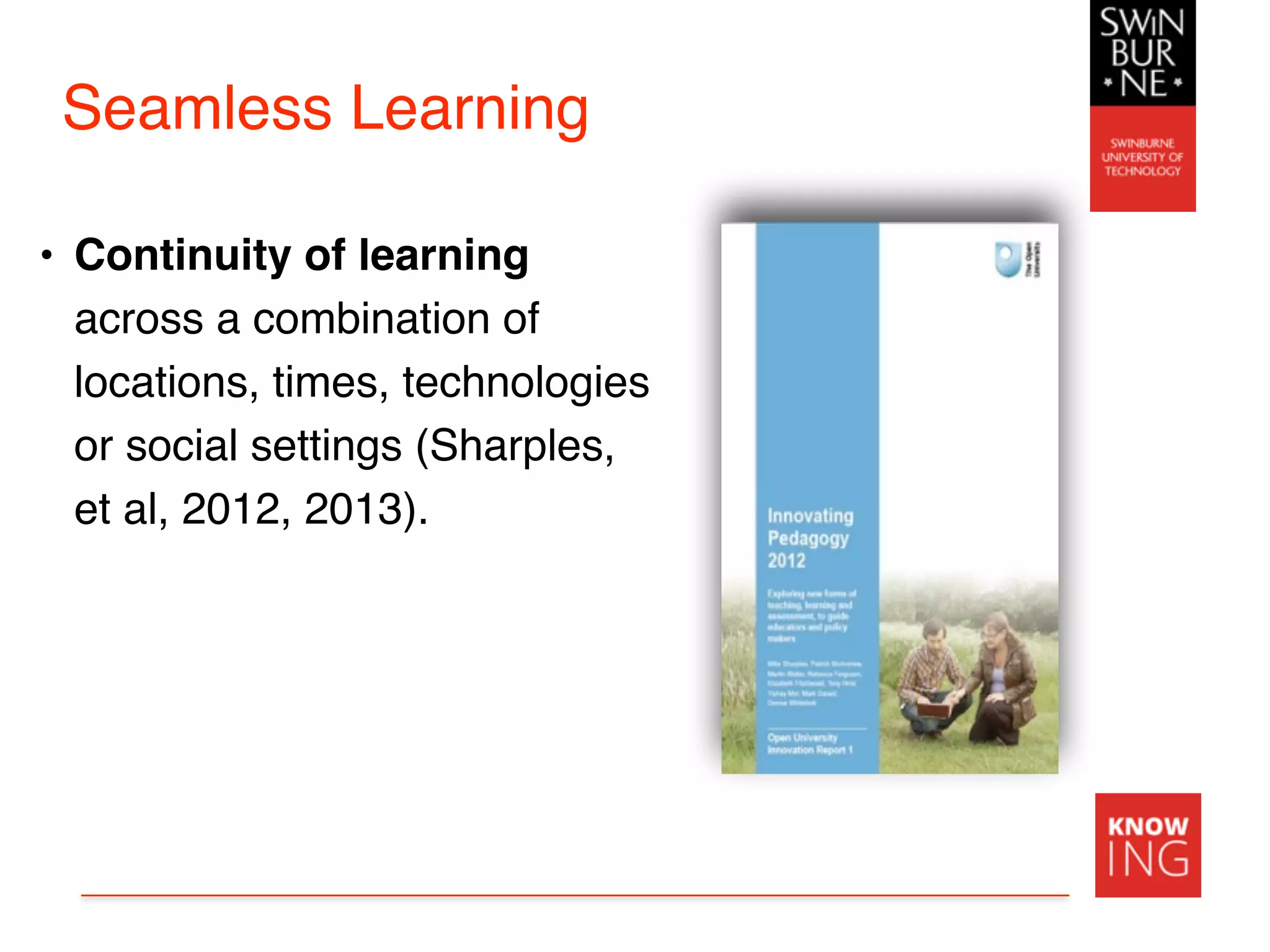
Seamless Learning
• Continuity of learning
across a combination of
locations, times, technologies
or social settings (Sharples,
et al, 2012, 2013).
Levels of Seamless Learning
• On-campus
• comfortable with formal
and informal spaces
• Virtual campus
• comfortable with blended,
online, social media
• Anywhere
• trains, cafes, teleworking
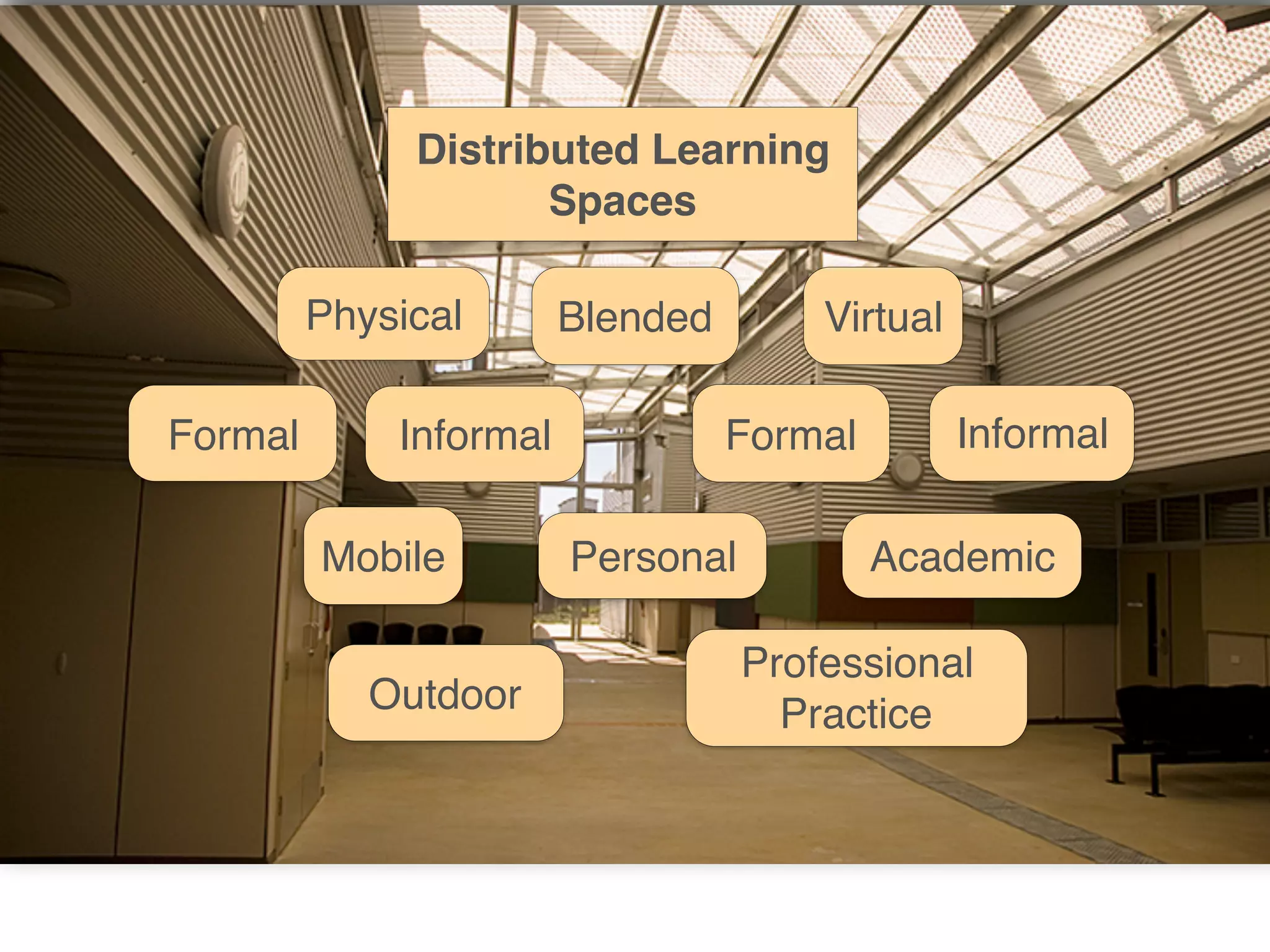
Physical Virtual
Formal Informal InformalFormal
Blended
Mobile Personal
Outdoor
Professional
Practice
Distributed Learning
Spaces
Academic
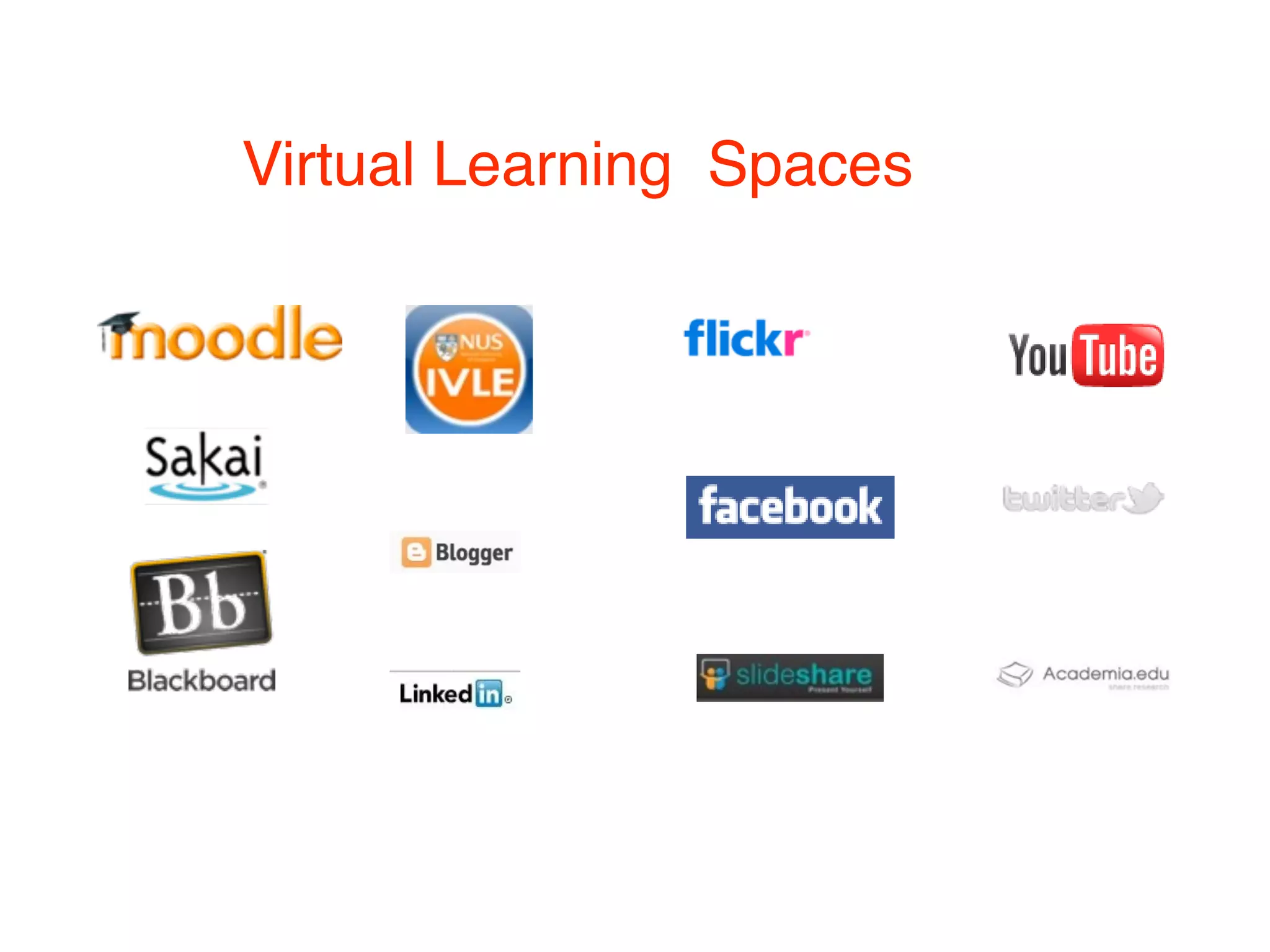
Virtual Learning Spaces
Levels of Learning-oriented
Assessment
• Authentic assessment
• learners participate in
authentic assessment
• Negotiated assessment
• learners negotiate
assessment with teachers
• Self-assessment
• learners act on ‘feedback
as feed-forward’
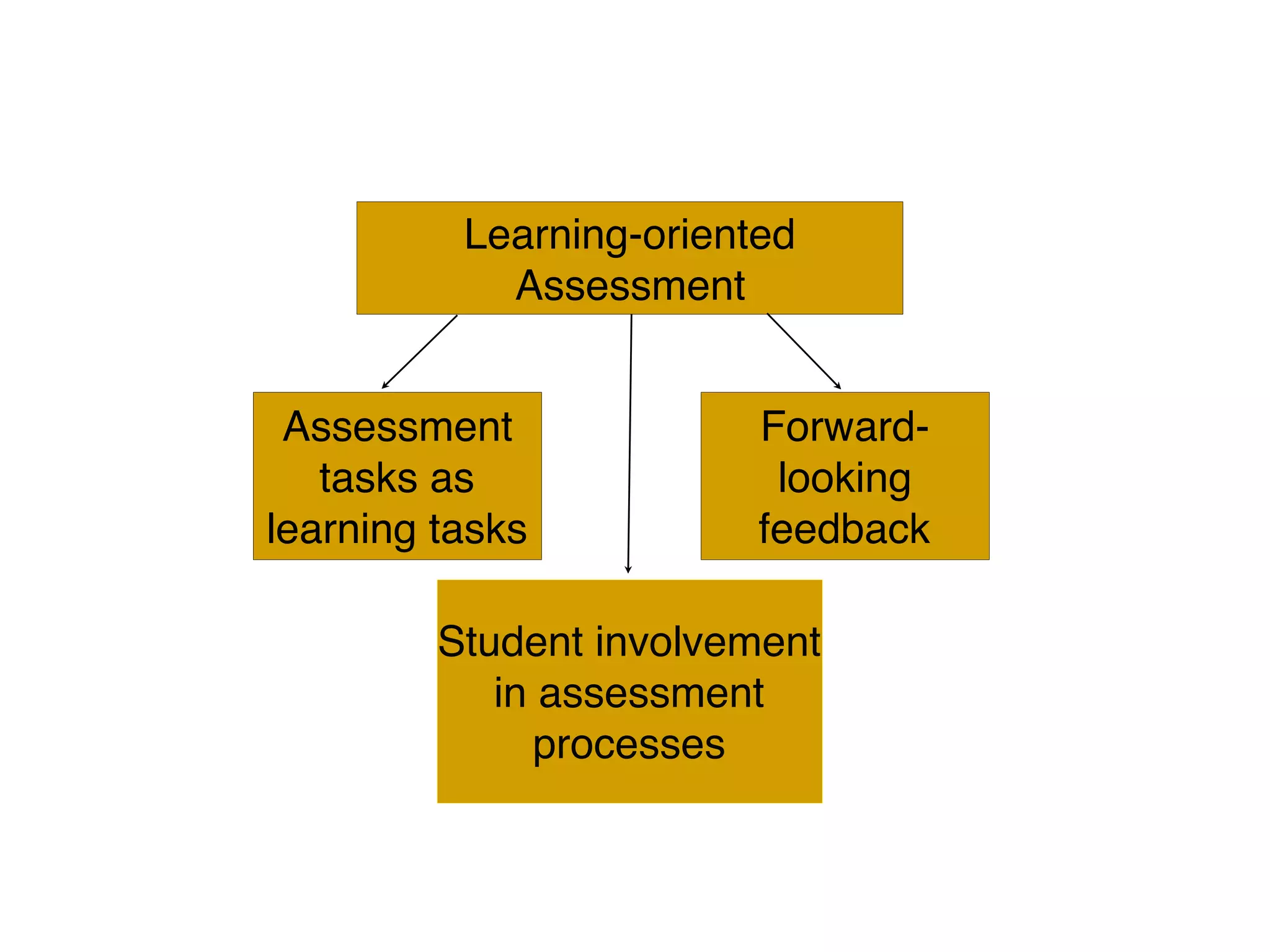
Learning-oriented
Assessment
Assessment
tasks as
learning tasks
Student involvement
in assessment
processes
Forward-
looking
feedback
Personalised Learning
• …the knowledge, skills
and attitudes that enable
learning and act as a
catalyst to empower the
learner to continue to
learn (Keppell, 2015)
Carless, D. (2014). Exploring learning-oriented assessment processes. Higher Education.
Dweck, C. (2006). Mindset: How you can fulfil your potential. Constable and Robinson, Ltd. London.
Jackson, N. J. (2010). From a curriculum that integrates work to a curriculum that integrates
life: Changing a university’s conceptions of curriculum. Higher Education Research
&Development, 29(5), 491-505. doi:10.1080/07294360.2010.502218
Keppell, M., & Riddle, M. (2013). Principles for design and evaluation of learning spaces. In R.
Luckin, S. Puntambekar, P. Goodyear, B. Grabowski, J. Underwood, & N. Winters (Eds.),
Handbook of design in educational technology (pp. 20-32). New York, NY: Routledge
Keppell, M., Au, E., Ma, A. & Chan, C. (2006). Peer learning and learning-oriented assessment in
technology-enhanced environments. Assessment and Evaluation in Higher Education, 31(4),
453-464.
Keppell, M. & Carless, D. (2006). Learning-oriented assessment: A technology-based case study.
Assessment in Education, 13(2), 153-165.
Keppell, M., Souter, K. & Riddle, M. (Eds.). (2012). Physical and virtual learning spaces in higher
education: Concepts for the modern learning environment. IGI Global, Hershey: New York. ISBN13:
9781609601140.
Keppell, M. & Riddle, M. (2012). Distributed learning places: Physical, blended and virtual learning
spaces in higher education. (pp. 1-20). In Mike Keppell, Kay Souter & Matthew Riddle (Eds.). (2011).
Physical and virtual learning spaces in higher education: Concepts for the modern learning
environment. Information Science Publishing, Hershey.
References
Keppell, M.J. (2014). Personalised learning strategies for higher education. In Kym Fraser (Ed.) The Future
of Learning and Teaching in Next Generation Learning Spaces. International Perspectives on Higher
Education Research, Volume 12, 3-21. Copyright 2014 by Emerald Group Publishing Limited.
Keppell, M.J. (2015). The learning future: Personalised learning in an open world. In Curtis J. Bonk, Mimi
Miyoung Lee, Thomas C. Reeves, and Thomas H. Reynolds. MOOCs and Open Education around the
World. Routledge/Taylor and Francis.
Rheingold, H. (2012). Net smart: How to thrive online. Cambridge, MA: MIT Press.
Sharples, M., McAndrew, P., Weller, M., Ferguson, R., FitzGerald, E., Hirst, T., & Gaved,M. (2013).
Innovating pedagogy 2013: Open University Innovation Report Milton Keynes: The Open University.
Sharples, M., McAndrew, P., Weller, M., Ferguson, R., FitzGerald, E., Hirst, T., & Whitelock, D. (2012).
Innovating pedagogy 2012: Open University Innovation Report 1. Milton Keynes: The Open University.
Siemens, G. (2006). Knowing knowledge. Creative commons. Retrieved from http://www.elearn
space.org/KnowingKnowledge_LowRes.pdf
Souter, K., Riddle, M., Sellers, W., & Keppell, M. (2011). Final report: Spaces for knowledge
generation. The Australian Learning and Teaching Council (ALTC). Retrieved from http://
documents.skgproject.com/skg-final-report.pdf
Watson, L. (2003). Lifelong learning in Australia (3/13). Canberra, Australia: Commonwealth of Australia.
Wheeler, S. (2010). Digital literacies. Retrieved from http://steve-wheeler.blogspot.com.au/2010/11/
what-digital-literacies.html?q=digital+literacies
References

2016 Personalised learning in a connected world

  • 1.
    CRICOS 00111D TOID3059 PERSONALISED LEARNING IN A CONNECTED WORLD Professor Mike Keppell Pro Vice-Chancellor, Learning Transformations Innovative Learning Spaces Summit September 2016, Prague, Czech Republic
  • 2.
    Preparing Students to Solvethe Problems of the Future
  • 3.
    Overview • Defining learningspaces • Trends and challenges • Ecosystem • Blended learning • Guiding pedagogies • Designing spaces • Professional development • Personalised learning
  • 4.
  • 5.
    Defining Learning Spaces •Physical, blended or virtual learning environments that enhance learning • Physical, blended or virtual ‘areas’ that motivate a learner to learn
  • 6.
    Defining Learning Spaces •Spaces where both teachers and learners optimise the perceived and actual affordances of the space • Spaces that promote authentic learning interactions (Keppell & Riddle, 2012, 2013).
  • 7.
  • 8.
  • 9.
  • 10.
  • 11.
  • 12.
  • 13.
    Formal on-campus teaching spaces Informal on-campus learning spaces Online learning andteaching spacesBlended Learning On-Campus Learning and Teaching at Swinburne
  • 14.
  • 15.
    Authentic Learning • …requirestudents to complete complex real-world tasks over a period of time in collaboration with others as they would in a real setting or workplace (Herrington, 2006)
  • 16.
    Authentic Assessment • Empoweringthe learner by engaging them in assessment tasks that simulate or engage the learner in real-life situations. • “Engaging and worthy problems or questions of importance, in which students must use knowledge to fashion performances effectively and creatively” (Wiggins, 1993, p. 229).
  • 17.
    Personalised Learning • Learningpathways • ePortfolios • The knowledge, skills and attitudes that enable learning and act as a catalyst to empower the learner to continue to learn (Keppell, 2015)
  • 18.
    Peer Learning • Studentsteaching and learning from each other. • Sharing ideas, knowledge and experiences • Emphasises interdependent as opposed to independent learning (Boud, 2001).
  • 19.
  • 24.
  • 27.
  • 29.
  • 32.
  • 33.
    Knowledge Skills andAttitudes • Knowledge is now co- created • Skills form a basis for learning • Attitudes influence beliefs and behaviours
  • 34.
    Personalised Learning Toolkit •Digital literacies • Seamless learning • Self-regulated learning • Learning-oriented assessment • Lifelong and life-wide learning • Flexible learning pathways
  • 35.
    Levels of DigitalLiteracies • Digital Competency • knowing how to use digital tools • Digital Fluency • applying digital knowledge and skills • Digital Design • user-generated content • ‘learner-as-designer’
  • 36.
  • 37.
    Seamless Learning • Continuityof learning across a combination of locations, times, technologies or social settings (Sharples, et al, 2012, 2013).
  • 38.
    Levels of SeamlessLearning • On-campus • comfortable with formal and informal spaces • Virtual campus • comfortable with blended, online, social media • Anywhere • trains, cafes, teleworking
  • 39.
    Physical Virtual Formal InformalInformalFormal Blended Mobile Personal Outdoor Professional Practice Distributed Learning Spaces Academic
  • 40.
  • 41.
    Levels of Learning-oriented Assessment •Authentic assessment • learners participate in authentic assessment • Negotiated assessment • learners negotiate assessment with teachers • Self-assessment • learners act on ‘feedback as feed-forward’
  • 42.
    Learning-oriented Assessment Assessment tasks as learning tasks Studentinvolvement in assessment processes Forward- looking feedback
  • 46.
    Personalised Learning • …theknowledge, skills and attitudes that enable learning and act as a catalyst to empower the learner to continue to learn (Keppell, 2015)
  • 48.
    Carless, D. (2014).Exploring learning-oriented assessment processes. Higher Education. Dweck, C. (2006). Mindset: How you can fulfil your potential. Constable and Robinson, Ltd. London. Jackson, N. J. (2010). From a curriculum that integrates work to a curriculum that integrates life: Changing a university’s conceptions of curriculum. Higher Education Research &Development, 29(5), 491-505. doi:10.1080/07294360.2010.502218 Keppell, M., & Riddle, M. (2013). Principles for design and evaluation of learning spaces. In R. Luckin, S. Puntambekar, P. Goodyear, B. Grabowski, J. Underwood, & N. Winters (Eds.), Handbook of design in educational technology (pp. 20-32). New York, NY: Routledge Keppell, M., Au, E., Ma, A. & Chan, C. (2006). Peer learning and learning-oriented assessment in technology-enhanced environments. Assessment and Evaluation in Higher Education, 31(4), 453-464. Keppell, M. & Carless, D. (2006). Learning-oriented assessment: A technology-based case study. Assessment in Education, 13(2), 153-165. Keppell, M., Souter, K. & Riddle, M. (Eds.). (2012). Physical and virtual learning spaces in higher education: Concepts for the modern learning environment. IGI Global, Hershey: New York. ISBN13: 9781609601140. Keppell, M. & Riddle, M. (2012). Distributed learning places: Physical, blended and virtual learning spaces in higher education. (pp. 1-20). In Mike Keppell, Kay Souter & Matthew Riddle (Eds.). (2011). Physical and virtual learning spaces in higher education: Concepts for the modern learning environment. Information Science Publishing, Hershey. References
  • 49.
    Keppell, M.J. (2014).Personalised learning strategies for higher education. In Kym Fraser (Ed.) The Future of Learning and Teaching in Next Generation Learning Spaces. International Perspectives on Higher Education Research, Volume 12, 3-21. Copyright 2014 by Emerald Group Publishing Limited. Keppell, M.J. (2015). The learning future: Personalised learning in an open world. In Curtis J. Bonk, Mimi Miyoung Lee, Thomas C. Reeves, and Thomas H. Reynolds. MOOCs and Open Education around the World. Routledge/Taylor and Francis. Rheingold, H. (2012). Net smart: How to thrive online. Cambridge, MA: MIT Press. Sharples, M., McAndrew, P., Weller, M., Ferguson, R., FitzGerald, E., Hirst, T., & Gaved,M. (2013). Innovating pedagogy 2013: Open University Innovation Report Milton Keynes: The Open University. Sharples, M., McAndrew, P., Weller, M., Ferguson, R., FitzGerald, E., Hirst, T., & Whitelock, D. (2012). Innovating pedagogy 2012: Open University Innovation Report 1. Milton Keynes: The Open University. Siemens, G. (2006). Knowing knowledge. Creative commons. Retrieved from http://www.elearn space.org/KnowingKnowledge_LowRes.pdf Souter, K., Riddle, M., Sellers, W., & Keppell, M. (2011). Final report: Spaces for knowledge generation. The Australian Learning and Teaching Council (ALTC). Retrieved from http:// documents.skgproject.com/skg-final-report.pdf Watson, L. (2003). Lifelong learning in Australia (3/13). Canberra, Australia: Commonwealth of Australia. Wheeler, S. (2010). Digital literacies. Retrieved from http://steve-wheeler.blogspot.com.au/2010/11/ what-digital-literacies.html?q=digital+literacies References