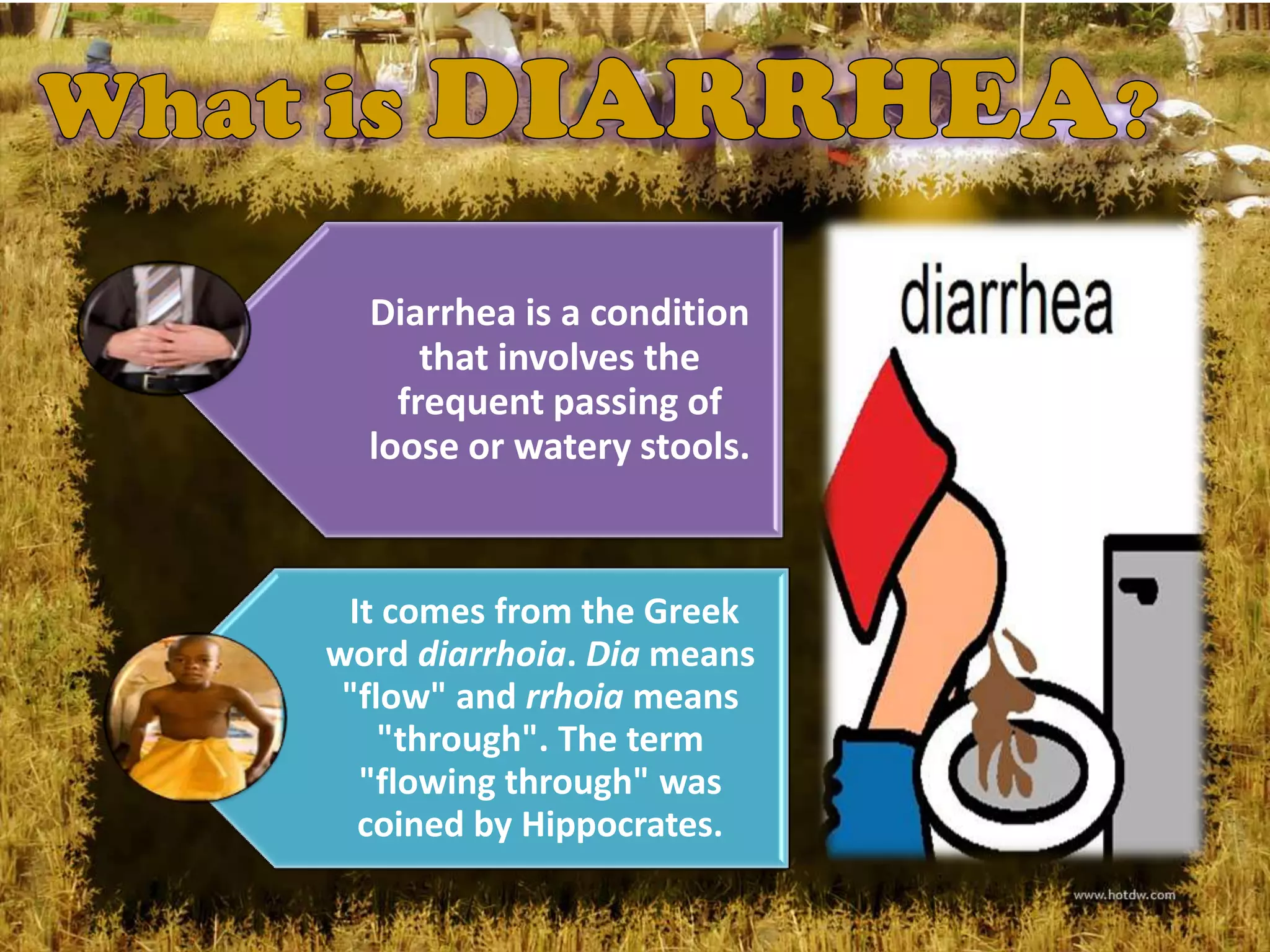
Diarrhea is a condition
      that involves the
    frequent passing of
  loose or watery stools.


 It comes from the Greek
word diarrhoia. Dia means
 "flow" and rrhoia means
    "through". The term
  "flowing through" was
  coined by Hippocrates.
- is defined as three or more unformed stools in 24
 hours passed by a traveler, commonly accompanied by
         abdominal cramps, nausea, and bloating.

- most common illness affecting travelers. An estimated
     10 million people develop it annually.
  -ESCHERICHIA COLI is the most commonly isolated
pathogen. Most cases are self-limited; treatment is not
routinely prescribed nor the pathogen identified unless
        symptoms become severe or persistent.
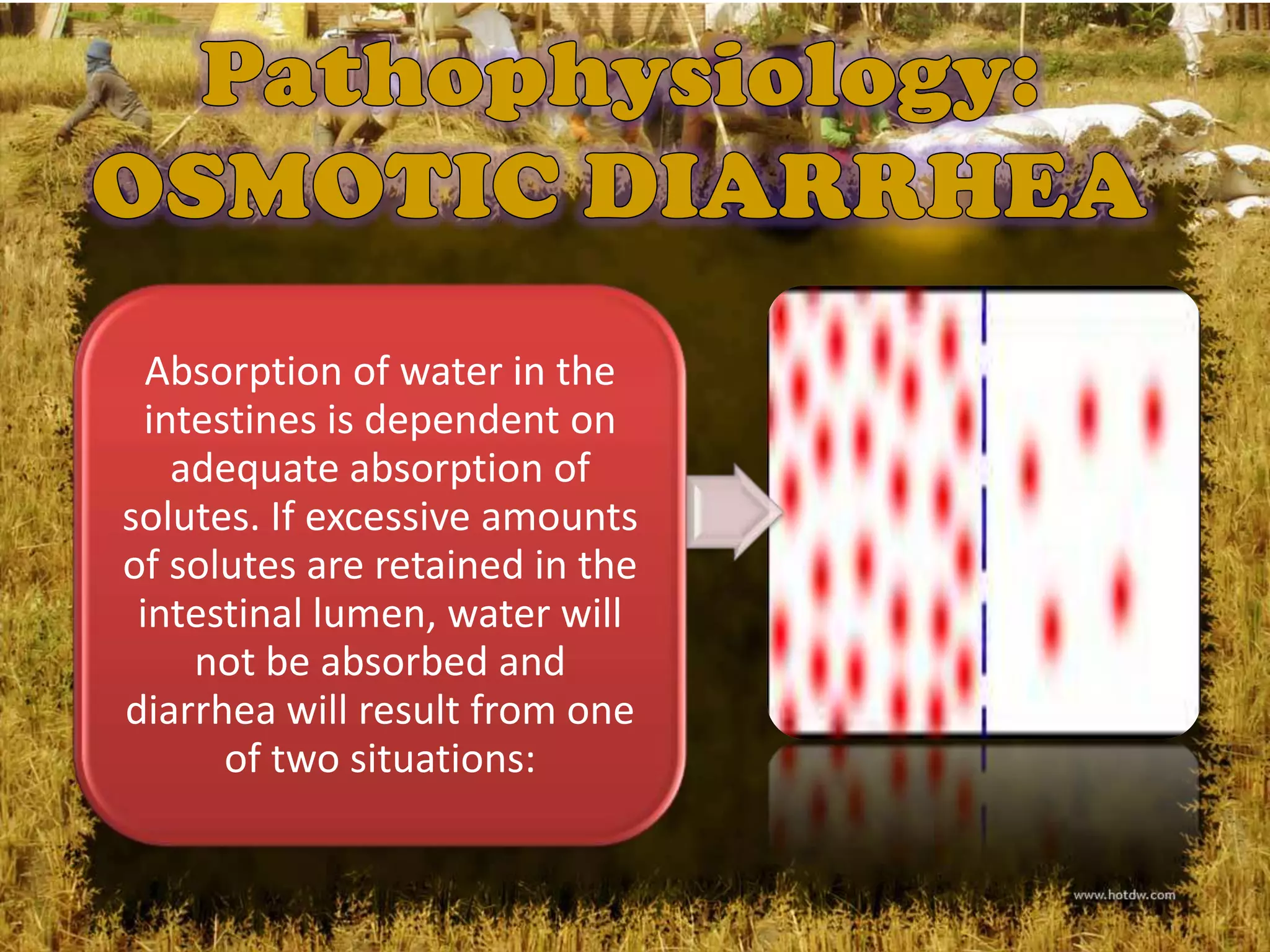
Absorption of water in the
  intestines is dependent on
    adequate absorption of
solutes. If excessive amounts
of solutes are retained in the
 intestinal lumen, water will
     not be absorbed and
diarrhea will result from one
       of two situations:
INGESTION OF A POORLY ABSORBED
 SUBSTRATE: The offending molecule is
  usually a carbohydrate or divalent ion.
  Common examples include mannitol or
  sorbitol, epson salt (MgSO4) and some
             antacids (MgOH2).

MALABSORPTION: Inability to absorb
  certain carbohydrates is the most
  common deficit in this category of
diarrhea, but it can result virtually any
        type of malabsorption.
Diarrhea occurs when secretion
of water into the intestinal
lumen exceeds absorption.
   Large volumes of water are normally
   secreted into the small intestinal lumen, but
   a large majority of this water is efficiently
   absorbed before reaching the large
   intestine.

        VIBRIO CHOLERAE, produces cholera
        toxin, which strongly activates adenylyl
        cyclase, causing a prolonged increase in
        intracellular concentration
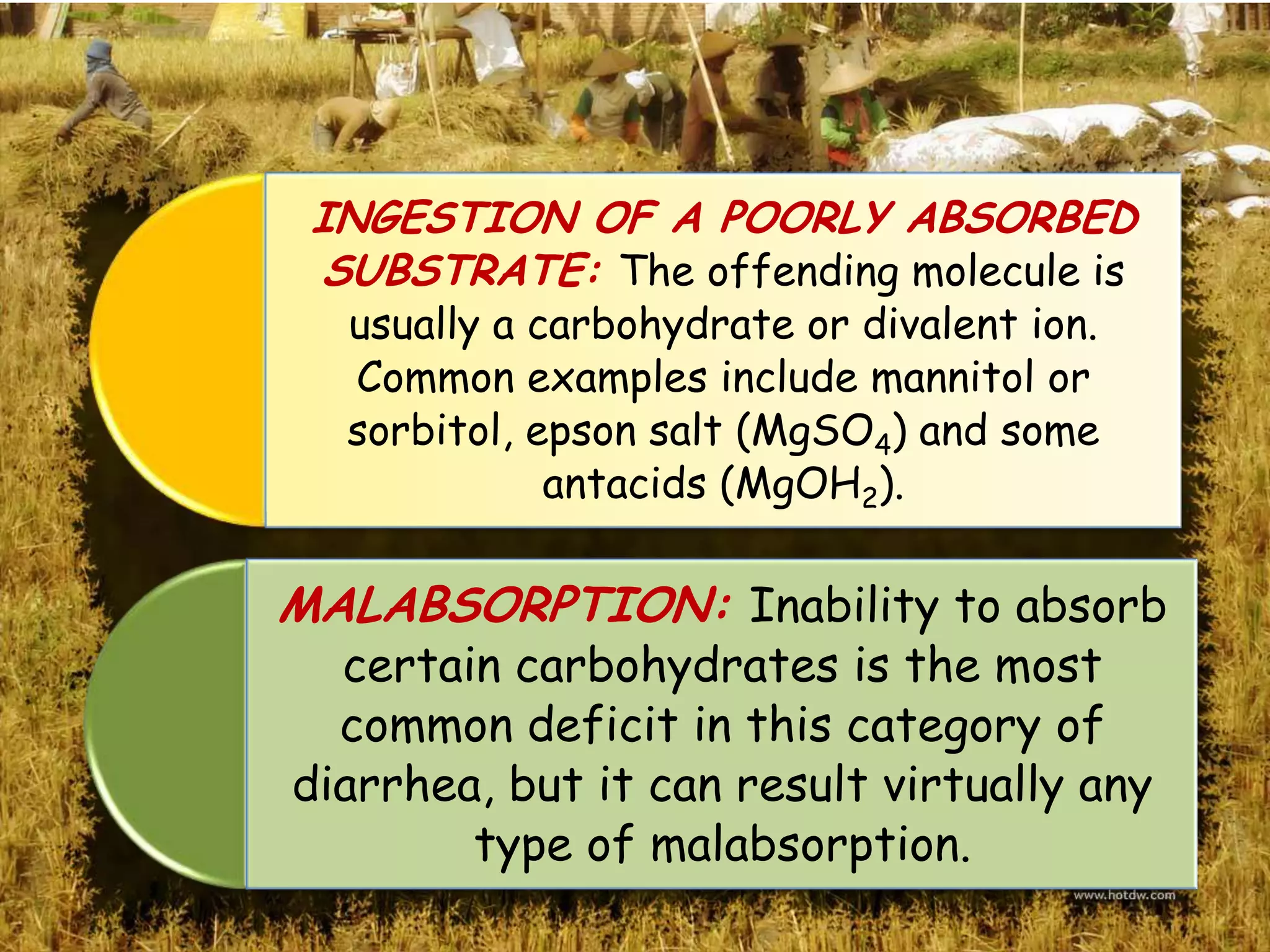
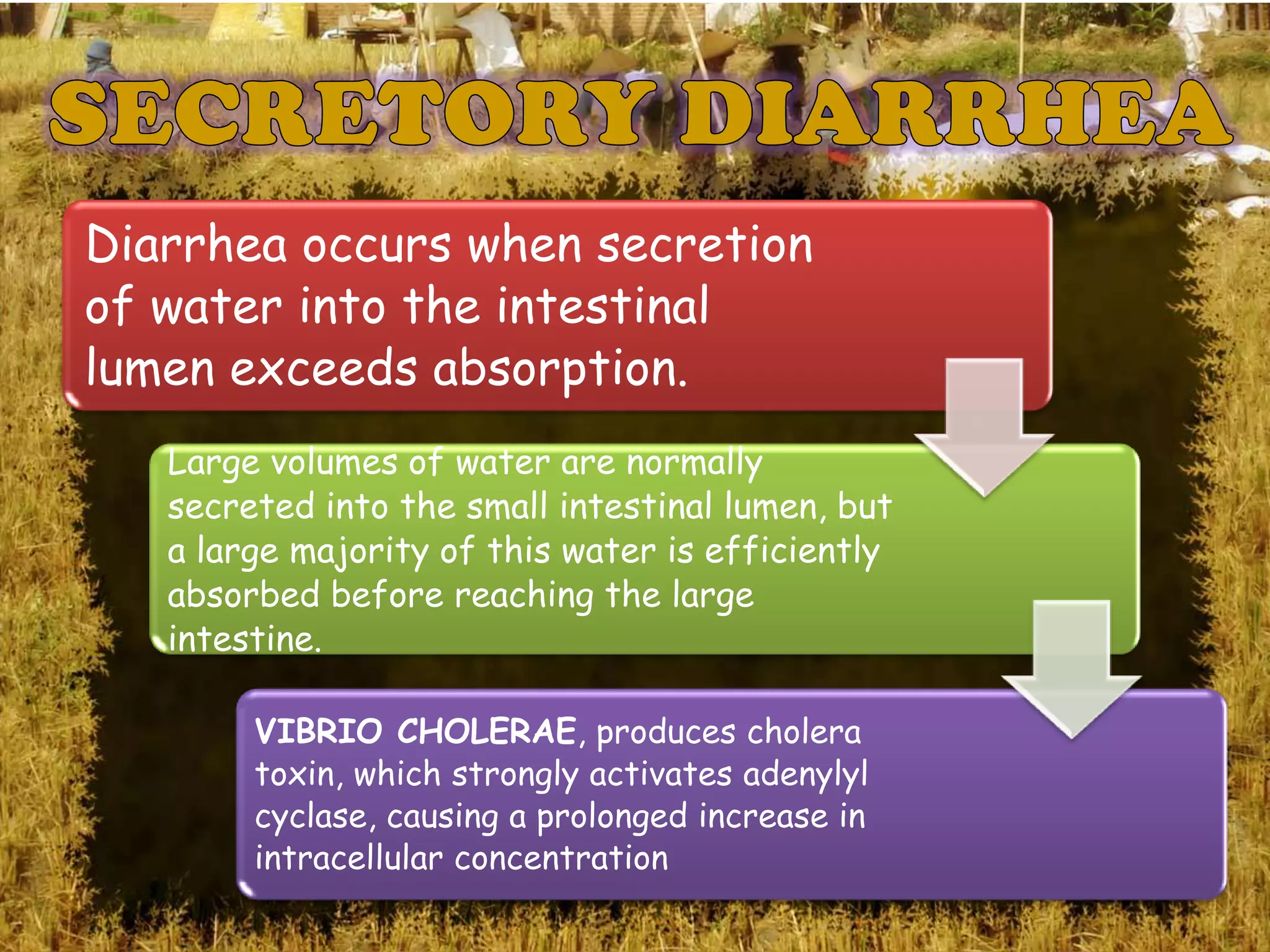
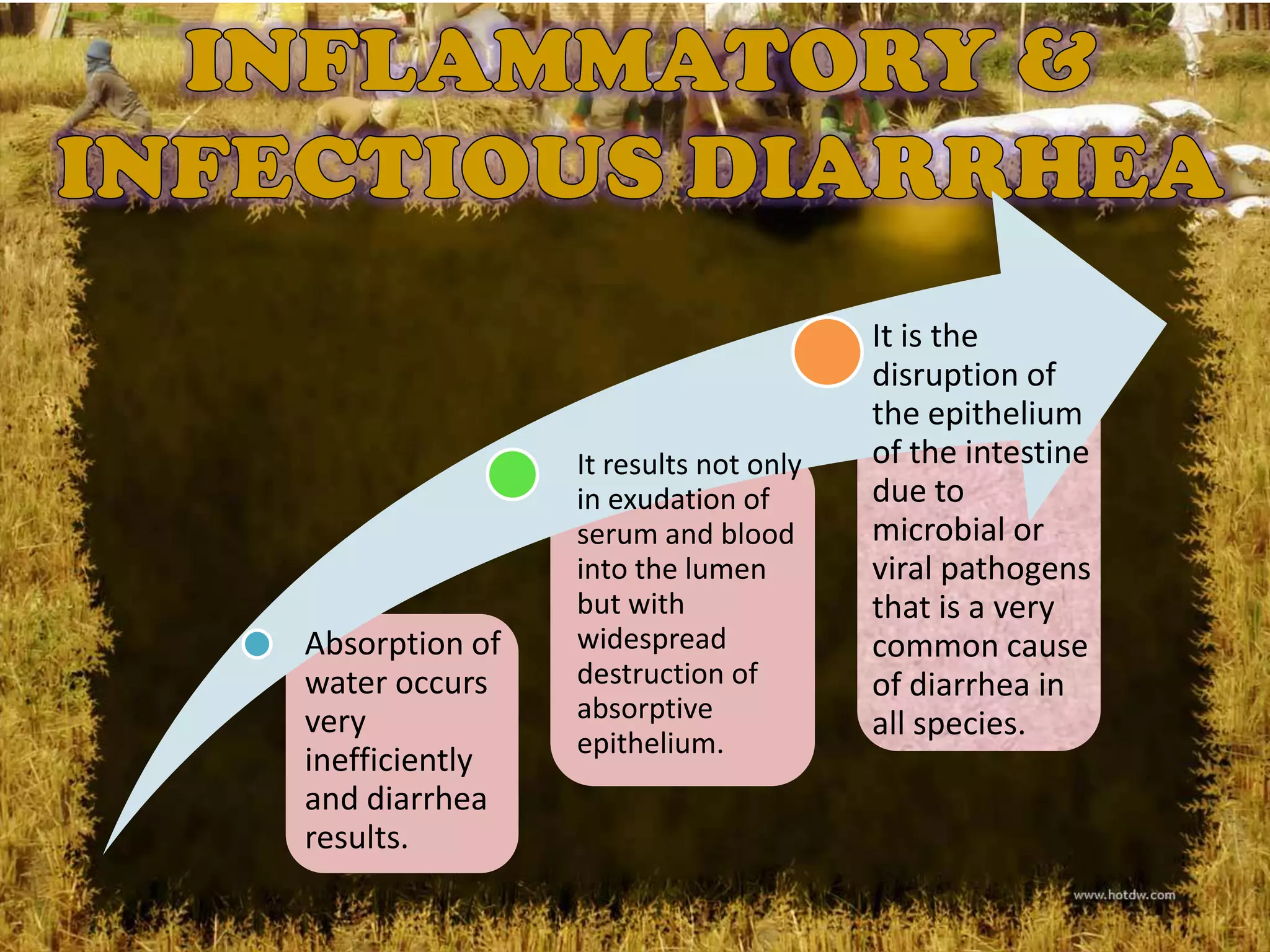
hormones secreted by certain                            certain metals, organic
            types of tumors (e.g. vasoactive   a broad range     toxins, and plant products (e.g.
  some             intestinal peptide)
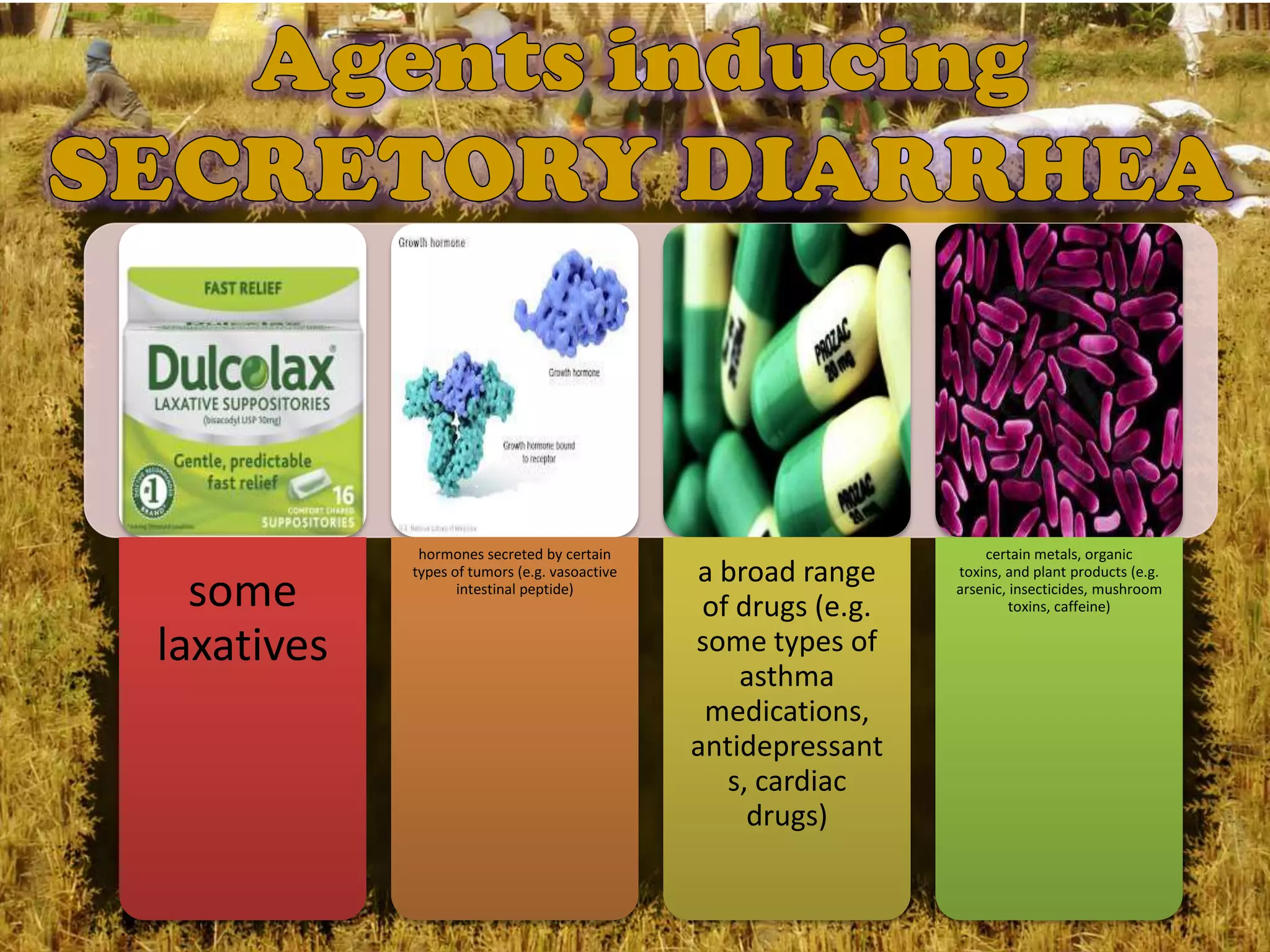
                                                of drugs (e.g.
                                                                 arsenic, insecticides, mushroom
                                                                          toxins, caffeine)


laxatives                                      some types of
                                                   asthma
                                                medications,
                                               antidepressant
                                                  s, cardiac
                                                    drugs)
It is the
                                      disruption of
                                      the epithelium
                It results not only   of the intestine
                in exudation of       due to
                serum and blood       microbial or
                into the lumen        viral pathogens
                but with              that is a very
Absorption of   widespread            common cause
water occurs    destruction of        of diarrhea in
very            absorptive
                                      all species.
                epithelium.
inefficiently
and diarrhea
results.
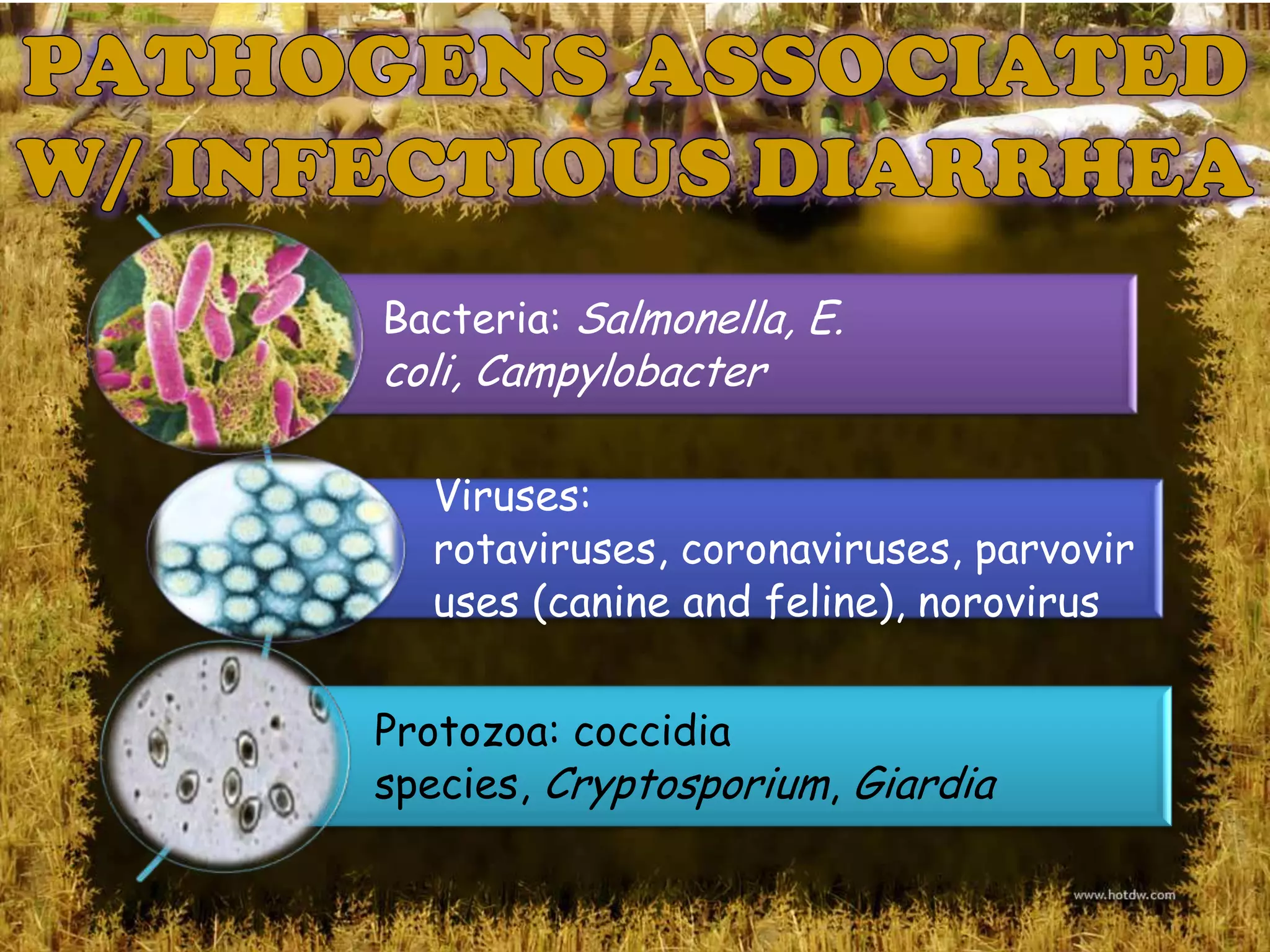
Bacteria: Salmonella, E.
coli, Campylobacter

  Viruses:
  rotaviruses, coronaviruses, parvovir
  uses (canine and feline), norovirus


Protozoa: coccidia
species, Cryptosporium, Giardia
Alterations in
 intestinal motility
 (usually increased
   propulsion) are
     observed.

 the intestinal contents
   must be adequately
exposed to the mucosal
epithelium and retained
  long enough to allow
       absorption.
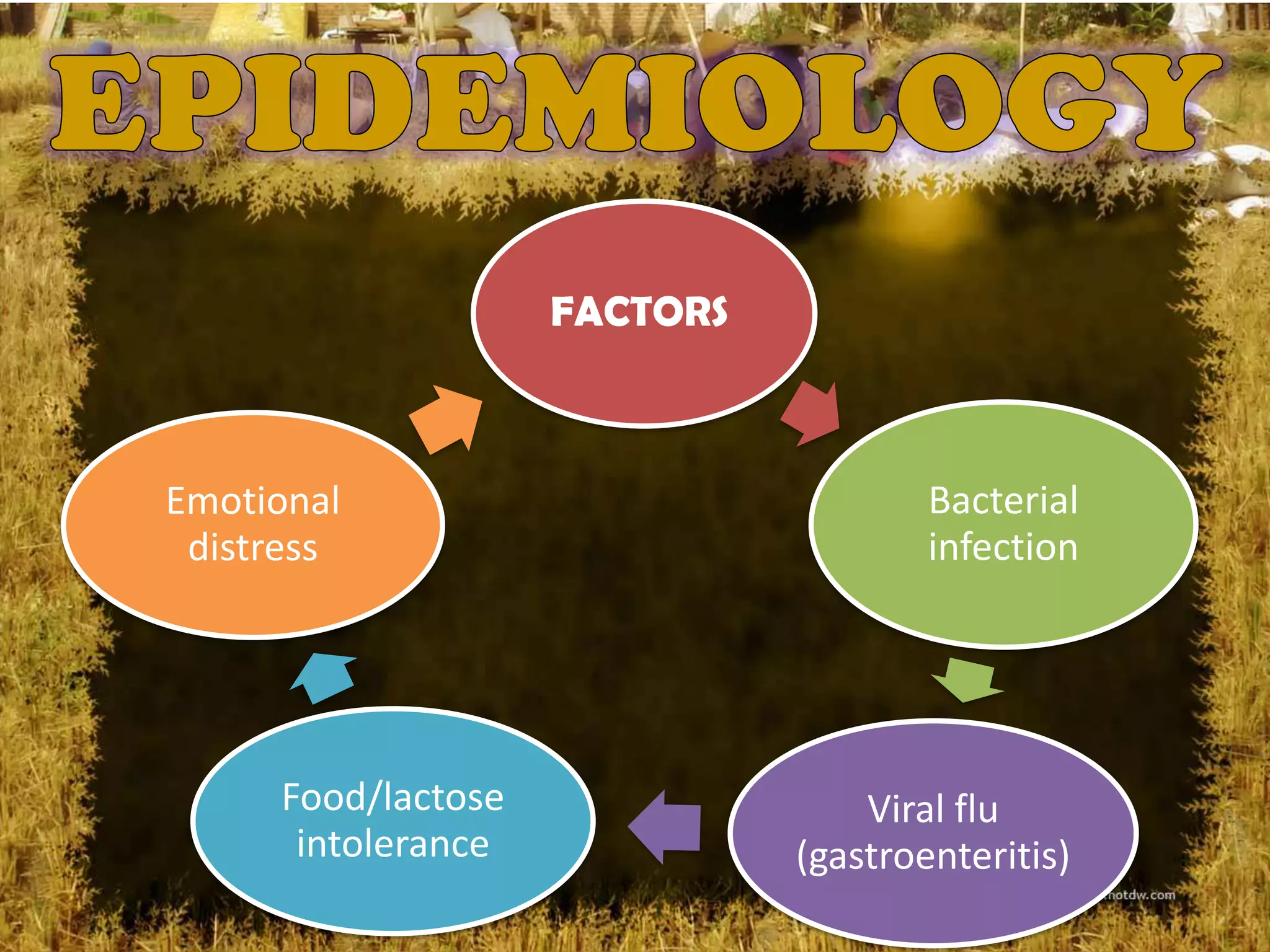
FACTORS


Emotional                             Bacterial
 distress                             infection


     Food/lactose                 Viral flu
      intolerance             (gastroenteritis)
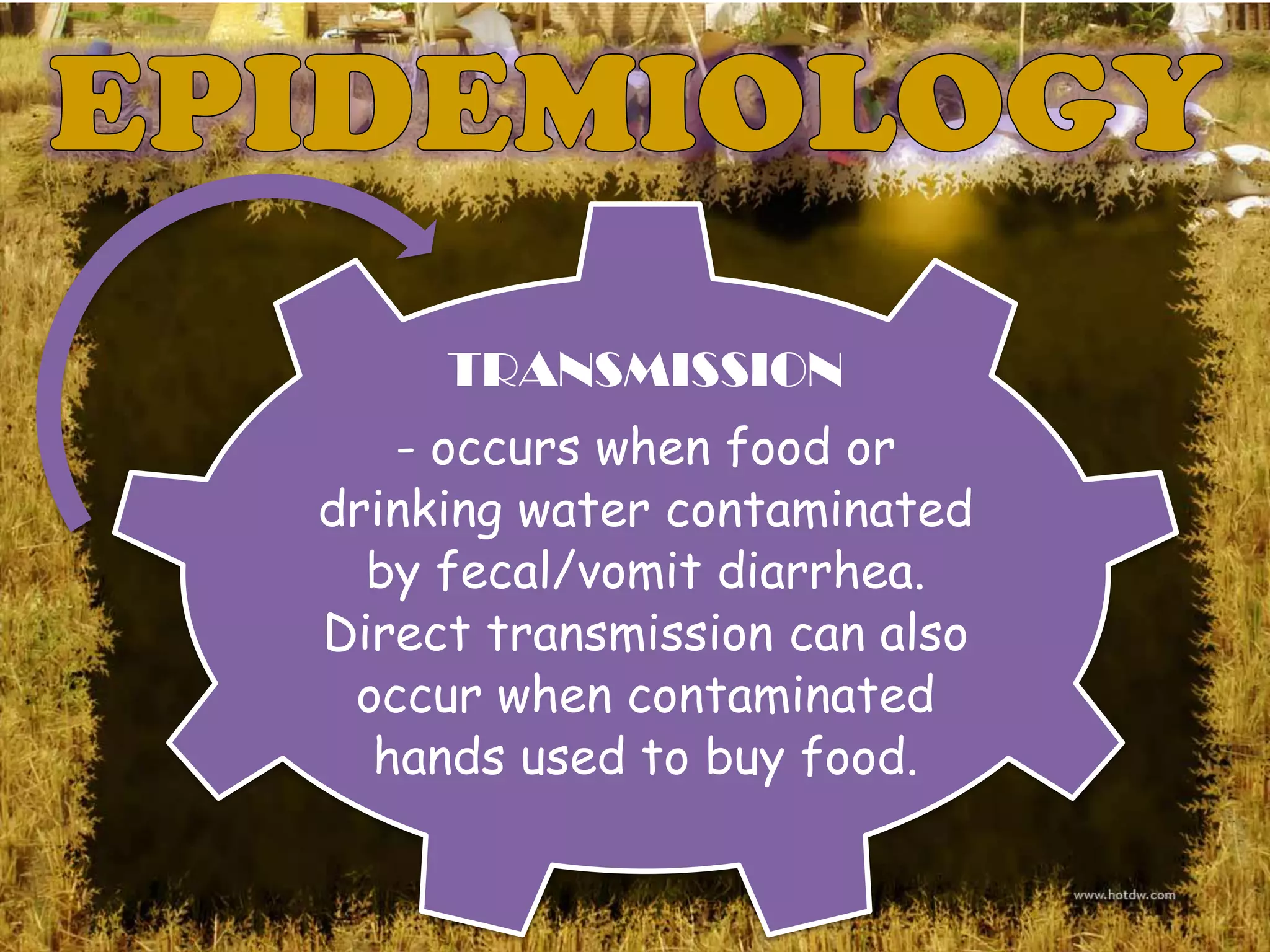
TRANSMISSION
   - occurs when food or
drinking water contaminated
  by fecal/vomit diarrhea.
Direct transmission can also
 occur when contaminated
  hands used to buy food.
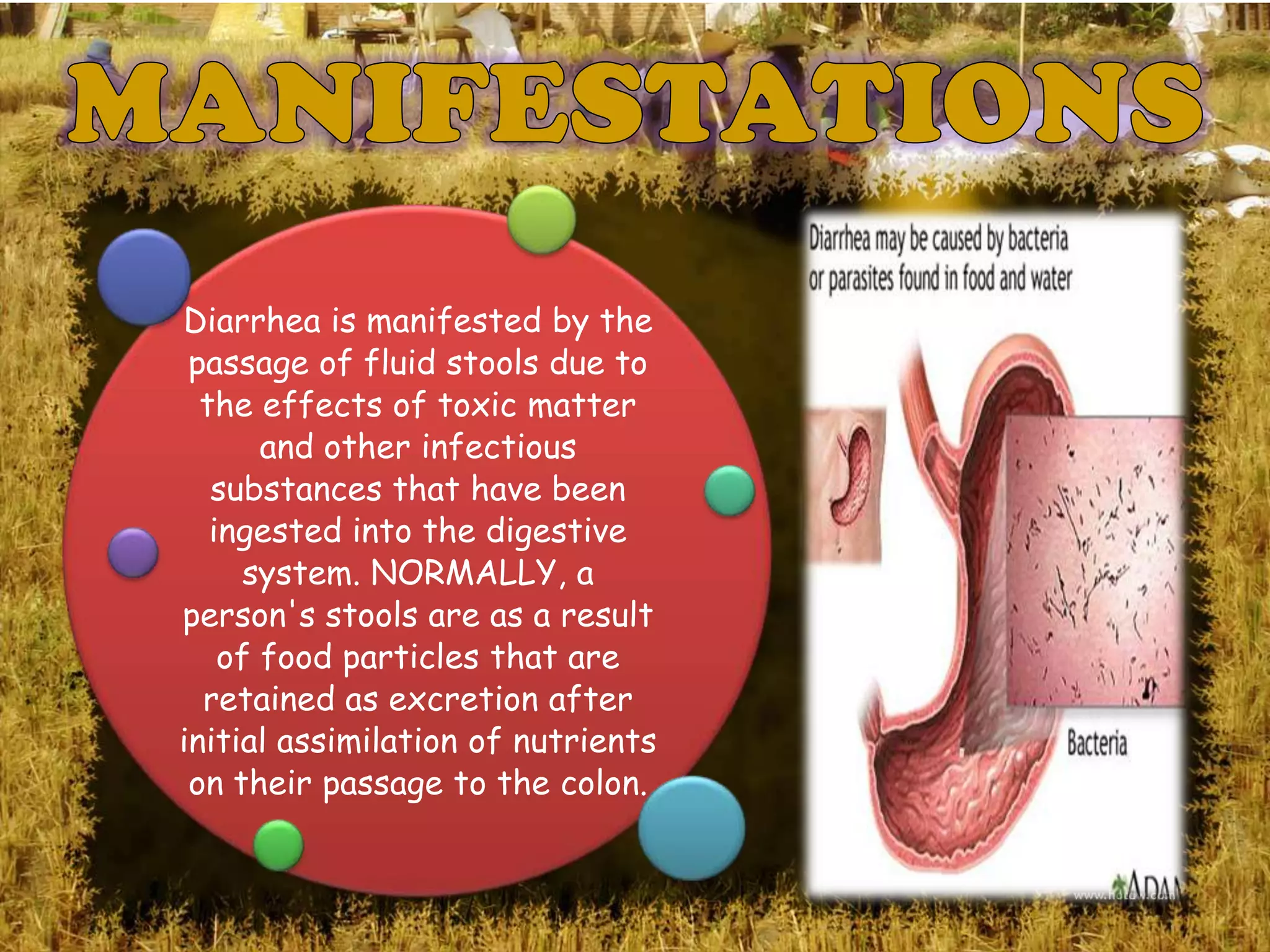
Diarrhea is manifested by the
 passage of fluid stools due to
  the effects of toxic matter
       and other infectious
   substances that have been
   ingested into the digestive
     system. NORMALLY, a
person's stools are as a result
    of food particles that are
  retained as excretion after
initial assimilation of nutrients
 on their passage to the colon.
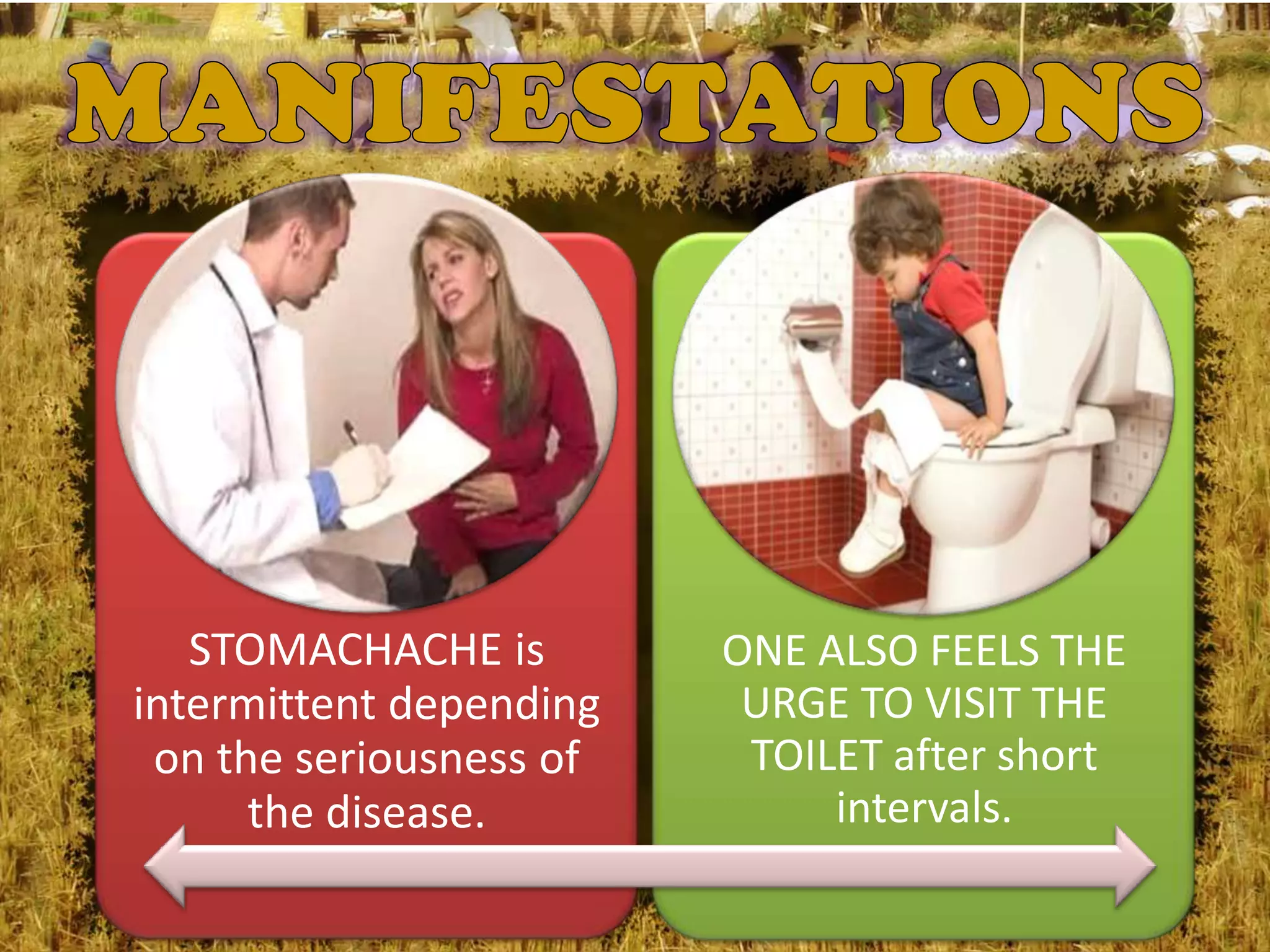
STOMACHACHE is        ONE ALSO FEELS THE
intermittent depending    URGE TO VISIT THE
 on the seriousness of    TOILET after short
      the disease.            intervals.
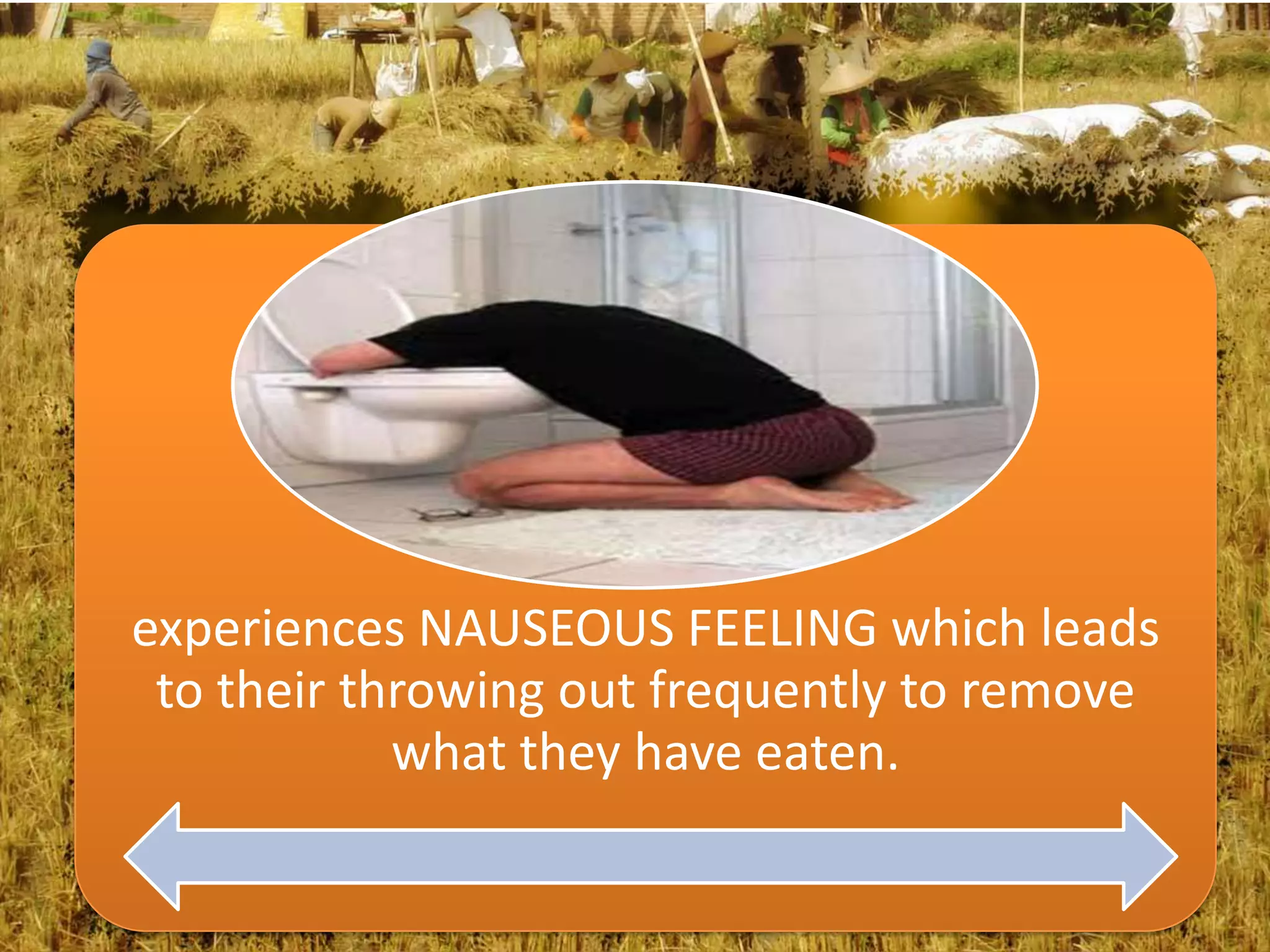
experiences NAUSEOUS FEELING which leads
 to their throwing out frequently to remove
            what they have eaten.
Some cause severe
diarrhea mostly in children,
 while some affect all age
      groups equally.
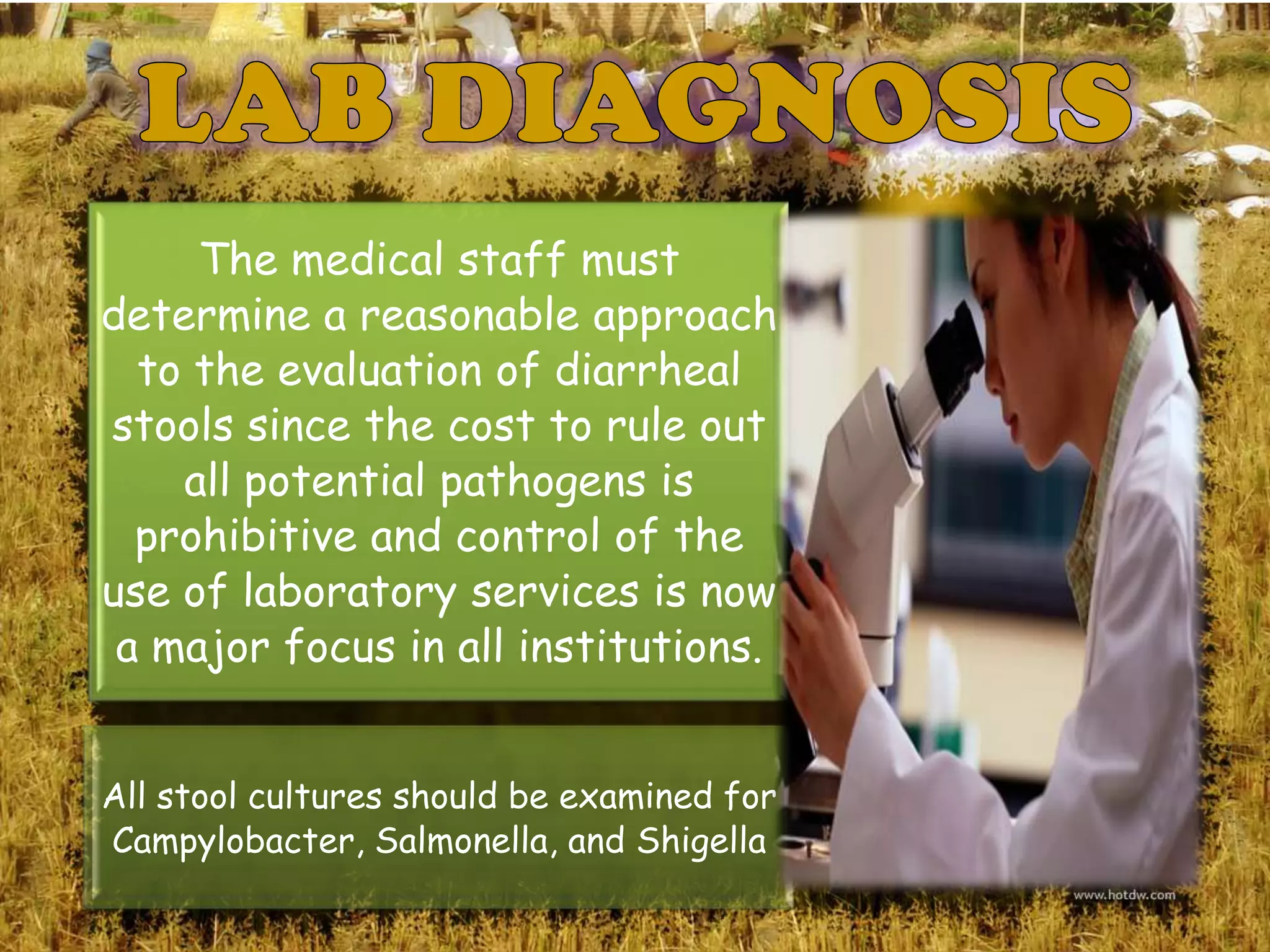
The medical staff must
determine a reasonable approach
  to the evaluation of diarrheal
stools since the cost to rule out
    all potential pathogens is
  prohibitive and control of the
use of laboratory services is now
 a major focus in all institutions.


All stool cultures should be examined for
Campylobacter, Salmonella, and Shigella
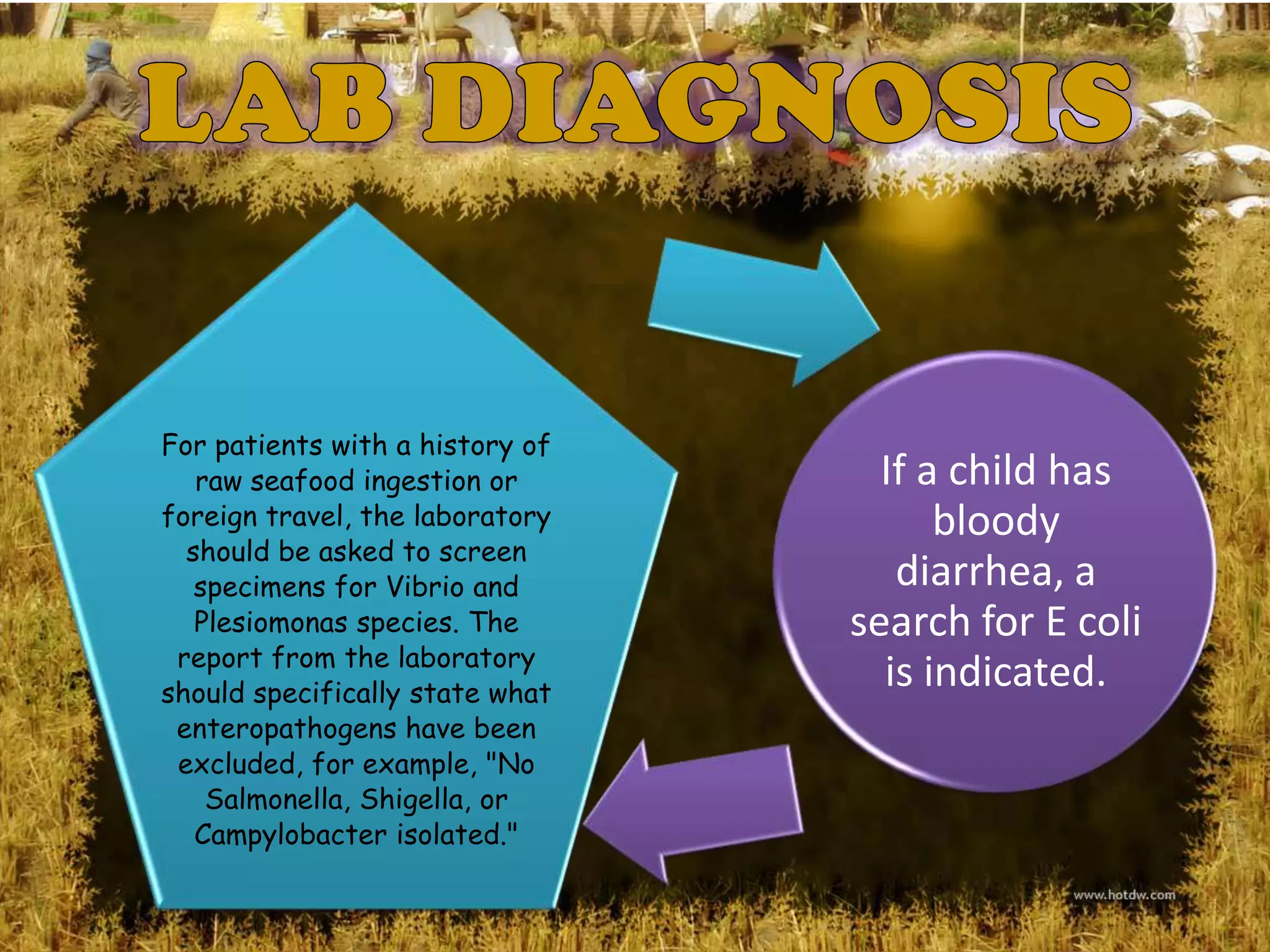
For patients with a history of
   raw seafood ingestion or        If a child has
foreign travel, the laboratory         bloody
  should be asked to screen
   specimens for Vibrio and         diarrhea, a
   Plesiomonas species. The      search for E coli
 report from the laboratory
should specifically state what
                                   is indicated.
 enteropathogens have been
 excluded, for example, "No
    Salmonella, Shigella, or
   Campylobacter isolated."
Clinicians are
 encouraged to discuss
  these issues with the
      pathologist or
  microbiologist and be
familiar with community
       microbiology
  practice, particularly
    which organisms
    require a special
     request for the
 laboratory to attempt
      identification.
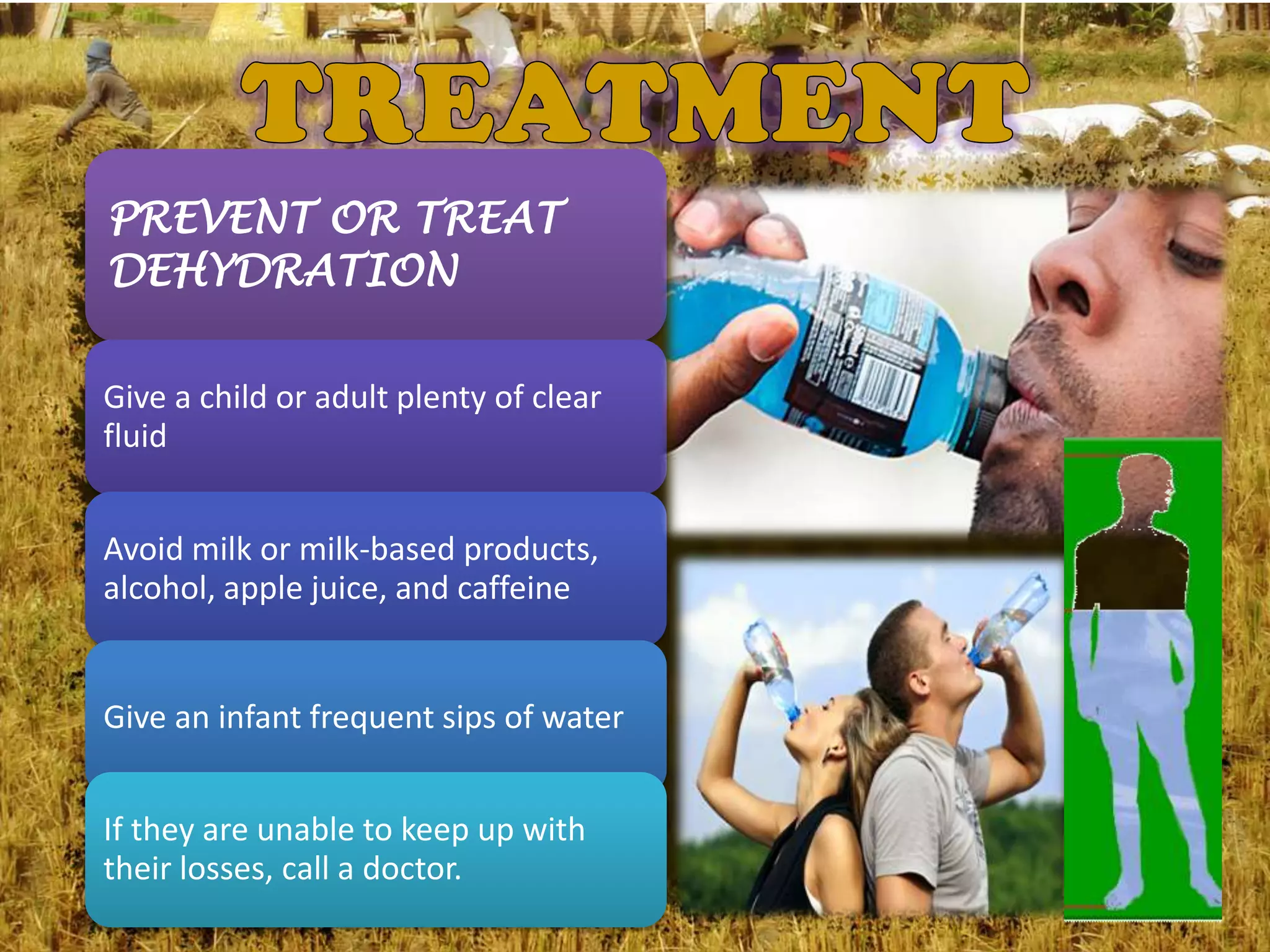
PREVENT OR TREAT
DEHYDRATION

Give a child or adult plenty of clear
fluid


Avoid milk or milk-based products,
alcohol, apple juice, and caffeine


Give an infant frequent sips of water


If they are unable to keep up with
their losses, call a doctor.
2. REST
“Always laugh when you can, it is the cheap
               medicine.”

                ― George Gordon Byron

   THANKS FOR LISTENING!!!

Diarrhea

  • 2.
    Diarrhea is acondition that involves the frequent passing of loose or watery stools. It comes from the Greek word diarrhoia. Dia means "flow" and rrhoia means "through". The term "flowing through" was coined by Hippocrates.
  • 3.
    - is definedas three or more unformed stools in 24 hours passed by a traveler, commonly accompanied by abdominal cramps, nausea, and bloating. - most common illness affecting travelers. An estimated 10 million people develop it annually. -ESCHERICHIA COLI is the most commonly isolated pathogen. Most cases are self-limited; treatment is not routinely prescribed nor the pathogen identified unless symptoms become severe or persistent.
  • 4.
    Absorption of waterin the intestines is dependent on adequate absorption of solutes. If excessive amounts of solutes are retained in the intestinal lumen, water will not be absorbed and diarrhea will result from one of two situations:
  • 5.
    INGESTION OF APOORLY ABSORBED SUBSTRATE: The offending molecule is usually a carbohydrate or divalent ion. Common examples include mannitol or sorbitol, epson salt (MgSO4) and some antacids (MgOH2). MALABSORPTION: Inability to absorb certain carbohydrates is the most common deficit in this category of diarrhea, but it can result virtually any type of malabsorption.
  • 6.
    Diarrhea occurs whensecretion of water into the intestinal lumen exceeds absorption. Large volumes of water are normally secreted into the small intestinal lumen, but a large majority of this water is efficiently absorbed before reaching the large intestine. VIBRIO CHOLERAE, produces cholera toxin, which strongly activates adenylyl cyclase, causing a prolonged increase in intracellular concentration
  • 7.
    hormones secreted bycertain certain metals, organic types of tumors (e.g. vasoactive a broad range toxins, and plant products (e.g. some intestinal peptide) of drugs (e.g. arsenic, insecticides, mushroom toxins, caffeine) laxatives some types of asthma medications, antidepressant s, cardiac drugs)
  • 8.
    It is the disruption of the epithelium It results not only of the intestine in exudation of due to serum and blood microbial or into the lumen viral pathogens but with that is a very Absorption of widespread common cause water occurs destruction of of diarrhea in very absorptive all species. epithelium. inefficiently and diarrhea results.
  • 9.
    Bacteria: Salmonella, E. coli,Campylobacter Viruses: rotaviruses, coronaviruses, parvovir uses (canine and feline), norovirus Protozoa: coccidia species, Cryptosporium, Giardia
  • 10.
    Alterations in intestinalmotility (usually increased propulsion) are observed. the intestinal contents must be adequately exposed to the mucosal epithelium and retained long enough to allow absorption.
  • 11.
    FACTORS Emotional Bacterial distress infection Food/lactose Viral flu intolerance (gastroenteritis)
  • 12.
    TRANSMISSION - occurs when food or drinking water contaminated by fecal/vomit diarrhea. Direct transmission can also occur when contaminated hands used to buy food.
  • 13.
    Diarrhea is manifestedby the passage of fluid stools due to the effects of toxic matter and other infectious substances that have been ingested into the digestive system. NORMALLY, a person's stools are as a result of food particles that are retained as excretion after initial assimilation of nutrients on their passage to the colon.
  • 14.
    STOMACHACHE is ONE ALSO FEELS THE intermittent depending URGE TO VISIT THE on the seriousness of TOILET after short the disease. intervals.
  • 15.
    experiences NAUSEOUS FEELINGwhich leads to their throwing out frequently to remove what they have eaten.
  • 16.
    Some cause severe diarrheamostly in children, while some affect all age groups equally.
  • 17.
    The medical staffmust determine a reasonable approach to the evaluation of diarrheal stools since the cost to rule out all potential pathogens is prohibitive and control of the use of laboratory services is now a major focus in all institutions. All stool cultures should be examined for Campylobacter, Salmonella, and Shigella
  • 18.
    For patients witha history of raw seafood ingestion or If a child has foreign travel, the laboratory bloody should be asked to screen specimens for Vibrio and diarrhea, a Plesiomonas species. The search for E coli report from the laboratory should specifically state what is indicated. enteropathogens have been excluded, for example, "No Salmonella, Shigella, or Campylobacter isolated."
  • 19.
    Clinicians are encouragedto discuss these issues with the pathologist or microbiologist and be familiar with community microbiology practice, particularly which organisms require a special request for the laboratory to attempt identification.
  • 20.
    PREVENT OR TREAT DEHYDRATION Givea child or adult plenty of clear fluid Avoid milk or milk-based products, alcohol, apple juice, and caffeine Give an infant frequent sips of water If they are unable to keep up with their losses, call a doctor.
  • 21.
  • 22.
    “Always laugh whenyou can, it is the cheap medicine.” ― George Gordon Byron THANKS FOR LISTENING!!!