Acute Gastroenteritis
in pediatric(Diarrhea)
Prepared By /
lamiaa400@yahoo.com
Gastroenteritis
• Gastroenteritis (gastro) is an
inflammation of the lining of the
stomach and small and large
intestines, mostly caused by viral or
bacterial infections, but also protozoa
e.g. giardia.
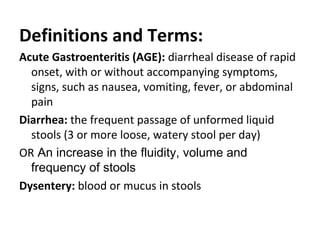
Definitions and Terms:
Acute Gastroenteritis (AGE): diarrheal disease of rapid
onset, with or without accompanying symptoms,
signs, such as nausea, vomiting, fever, or abdominal
pain
Diarrhea: the frequent passage of unformed liquid
stools (3 or more loose, watery stool per day)
OR An increase in the fluidity, volume and
frequency of stools
Dysentery: blood or mucus in stools
Types of diarrhea
 1-Acute diarrhea: in children less than 5
Short in duration (less than 2 weeks 14 days
duration).Often caused by URTI or UTI,antibiotic or
laxative therapy, subside without treatment if
dehydration not occur called( acute infectious
diarrhea(infectious gastroenteritis) caused by viral,
bacteria ,parasitic. Acute diarrhea is typically self
limiting and resolves quickly with no lasting sequelae
If :Shigella, Salmonella, Chlamydia, Symptoms of
acute inflammatory diarrhea include fever (higher
than 38.5C), lethargy, and a stool that contains pus,
blood, leukocytes and/or mucus . Rotovirus, low
grade fever, malaise, nausea and vomiting as
well as diarrhea.
Types of diarrhea
 2-Chronic diarrhea:
Diarrhea lasting longer than two weeks but
resolving within a month is known as persistent
diarrhea. Chronic diarrhea can be the result of
disease processes, medication, genetic
abnormalities, or a variety of other causes.
• It usually caused by malabsorption syndrome immune
deficiency, infammation of bowl, food allergy lactose
intolerance ,inadequate management of acute diarrhea
Types of diarrhea
 3- Intractable diarrhea of infancy : it is a
syndrome occur in infancy occur in the
first few months of life , persistent longer
than two weeks with no pathogens and is
refractory to treatment
The current concept of intractable diarrhea
of infancy is that of a heterogeneous
syndrome with high mortality
Gastroenteritis
• Rotavirus is the most common cause of severe
gastroenteritis , dehydrating diarrhea in young
children). Rotavirus is highly contagious most
common in children from 3M – 2 years
• Salmonella,compylobacter organism
bacteria(less than 1 year)(colicky pain bloody
diarrhea,fever,cerebral manifestation as
drowsiness,confusion(life threaten septicemia
persist 2-3 weeks
Etiology:
Viral
70-85% in developed countries
• Rotavirus: represent of all pediatric
AGE hospitalizations
Presentaion:
• Mild or moderate fever
• Vomiting followed by watery diarrhea
(up to 10-20 bowel movements per day)
• Diarrhea persisting for 5-7 days
Etiologies:
Bacterial
Campylobacter, Salmonella, Shigella,
E. coli, Yersinia, Clostridium difficile
Presentation:
High fevers
Shaking chills
Bloody bowel movements (dysentery)
Abdominal cramping & fecal
leukocytes
Etiologies:
Parasitic
Giardia and Cryptosporidium
<10% of cases
Presentation:
• Watery stools
• Low-grade fever
Causes &High risk groups
• Contaminated water& food
• Poor hygiene
• Nutritional deficiency
• Poor sanitation
• Increase frequency in infancy
• Immune deficient individuals
• Malnutrition
• Travel to endemic areas
• Lack of breast feeding
• Exposure to unsanitary conditions
• Poor maternal education
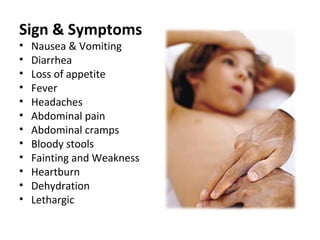
Sign & Symptoms
• Nausea & Vomiting
• Diarrhea
• Loss of appetite
• Fever
• Headaches
• Abdominal pain
• Abdominal cramps
• Bloody stools
• Fainting and Weakness
• Heartburn
• Dehydration
• Lethargic
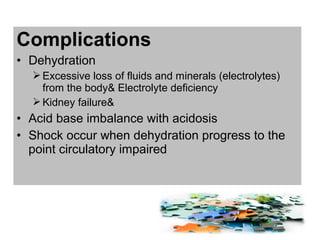
Complications
• Dehydration
Excessive loss of fluids and minerals (electrolytes)
from the body& Electrolyte deficiency
Kidney failure&
• Acid base imbalance with acidosis
• Shock occur when dehydration progress to the
point circulatory impaired
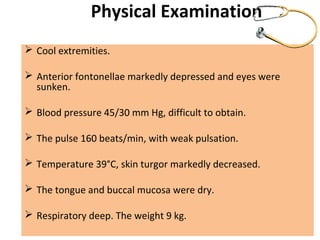
Physical Examination
 Cool extremities.
 Anterior fontonellae markedly depressed and eyes were
sunken.
 Blood pressure 45/30 mm Hg, difficult to obtain.
 The pulse 160 beats/min, with weak pulsation.
 Temperature 39°C, skin turgor markedly decreased.
 The tongue and buccal mucosa were dry.
 Respiratory deep. The weight 9 kg.
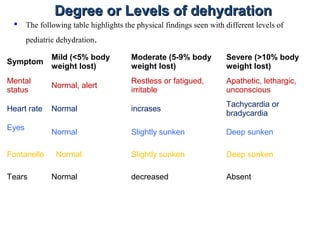
Symptom
Mild (<5% body
weight lost)
Moderate (5-9% body
weight lost)
Severe (>10% body
weight lost)
Mental
status
Normal, alert
Restless or fatigued,
irritable
Apathetic, lethargic,
unconscious
Heart rate Normal incrases
Tachycardia or
bradycardia
Eyes
Normal Slightly sunken Deep sunken
Fontanelle Normal Slightly sunken Deep sunken
Tears Normal decreased Absent
Degree or Levels of dehydrationDegree or Levels of dehydration
 The following table highlights the physical findings seen with different levels of
pediatric dehydration.
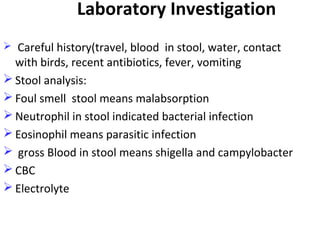
Laboratory Investigation
 Careful history(travel, blood in stool, water, contact
with birds, recent antibiotics, fever, vomiting
 Stool analysis:
 Foul smell stool means malabsorption
 Neutrophil in stool indicated bacterial infection
 Eosinophil means parasitic infection
 gross Blood in stool means shigella and campylobacter
 CBC
 Electrolyte
Treatment
Aim of treatment:
1.Assessment fluid and
electrolyte imbalance
2.Rehydration
3.Maintenance fluid therapy
4.Reintroduction adequate diet
Management
• Symptom management
• Correction of underlying causes If the
cause is found to be a medication,
lactose intolerance
• Oral rehydration, a person with diarrhea
needs to continue to eat to maintain
adequate caloric intake as well as
meeting the needs of increase fluids
Treatment
Fluid Management
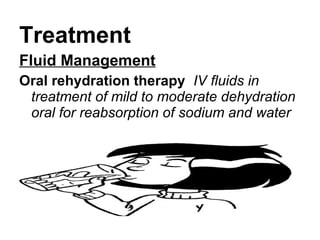
Oral rehydration therapy IV fluids in
treatment of mild to moderate dehydration
oral for reabsorption of sodium and water
ORS Composition
• Oral rehydration solutions (ORS) have
sugar, salt and water to be easily
absorbed in the gut. Used in case
vomiting and dehydration
• 5-10 ml every minute by syringe or NGT
10 ml/kg
• Composition of ORS
 Sodium Chloride
 Tri-Sodium Citrate (bicarbonate)
 Potassium Chloride
 Glucose
Treatment
-Early feeding reduces illness duration and
improves nutritional outcome.
Cereal, cooked vegetable and meats
Formula fed infants
-Restart feeding once the rehydration phase is
complete (ideally in 2-4 h).
- Fatty foods and foods high in simple sugars should
be avoided.
-Lactose-free formulas are unnecessary;
Treatment
Antidiarrheals
Antiemetics are recommended
Probiotics (e.g. Lactobacillus) alter the
composition of gut flora and assist in restoring
normal gut function
Antimicrobials
C difficile- & start metronidazole
Cholera-tetracycline
Giardia-metronidazole
Cryptosporidium-metronidazole
Nursing Management
• Goals of treatment
• Maintain adequate hydration
• Maintain appropriate nutrition
• Prevent spread infection
• Support and education
Management
NURSING MANAGEMENT FOR DIARHEA
•1-Fluid volume deficit related to excessive gastrointestinal
loss in stool and vomiting
•Administer ORT-ORS
•Monitor urine every 8 hours
•Assess V.S
Oral Rehydration Solution (ORS): given by spoon, cup,
dropper, syringe, naso-gastric tube or IV
Monitor dehydration
Monitor number of wet diapers,
Assess vomiting
Intake and output
Management
• NURSING MANAGEMENT FOR DIARHEA
• 2-Altered nutrition less than body requirments related to
diarrheal losses and inadequate intake
• Goals consume nourishment adequate to maintain
appropriate weiht for age
• Avoid BRAT
• Assess feeding tolerance
• Risk for transmitted infection related to microorganism
invading GIT
• Standard precaution(disposable of stool,laundrey
• Careful hand washing,diasposable diaper
• Decrease chance of dermatitis
Nursing Notes
Alert : avoid fruit juice ,carbonated soft
drinks ,gelatin ,chicken have ( low
electrolyte, high osmolarity,high
carbohydrate)
Avoid BRAT: banana,rice,applesauce and toast
or tea low energy ,low protein
• Fruit juice has too much sugar that can draw
water from the body into the gut, so that child
can become even more dehydrated.
Management
• NURSING MANAGEMENT FOR DIARHEA
• 3-Imapaird skin integrity related to irritation caused by
frequent loose stools
• Change diaper frequently
• Clean buttocks
• Apply ointment as zinc- oxide
• Avoid using of baby wipes containing alcohol
• Apply antifungal medication to treat infection
Prevention
Wash your hands frequently, especially
after using the toilet, changing diapers.
Before and after preparing food.
Wash diarrhea-soiled clothing in
detergent .
Never drink unpasteurized milk or
untreated water.

Acute gastroenteritis in children

  • 1.
  • 2.
    Gastroenteritis • Gastroenteritis (gastro)is an inflammation of the lining of the stomach and small and large intestines, mostly caused by viral or bacterial infections, but also protozoa e.g. giardia.
  • 3.
    Definitions and Terms: AcuteGastroenteritis (AGE): diarrheal disease of rapid onset, with or without accompanying symptoms, signs, such as nausea, vomiting, fever, or abdominal pain Diarrhea: the frequent passage of unformed liquid stools (3 or more loose, watery stool per day) OR An increase in the fluidity, volume and frequency of stools Dysentery: blood or mucus in stools
  • 4.
    Types of diarrhea 1-Acute diarrhea: in children less than 5 Short in duration (less than 2 weeks 14 days duration).Often caused by URTI or UTI,antibiotic or laxative therapy, subside without treatment if dehydration not occur called( acute infectious diarrhea(infectious gastroenteritis) caused by viral, bacteria ,parasitic. Acute diarrhea is typically self limiting and resolves quickly with no lasting sequelae If :Shigella, Salmonella, Chlamydia, Symptoms of acute inflammatory diarrhea include fever (higher than 38.5C), lethargy, and a stool that contains pus, blood, leukocytes and/or mucus . Rotovirus, low grade fever, malaise, nausea and vomiting as well as diarrhea.
  • 5.
    Types of diarrhea 2-Chronic diarrhea: Diarrhea lasting longer than two weeks but resolving within a month is known as persistent diarrhea. Chronic diarrhea can be the result of disease processes, medication, genetic abnormalities, or a variety of other causes. • It usually caused by malabsorption syndrome immune deficiency, infammation of bowl, food allergy lactose intolerance ,inadequate management of acute diarrhea
  • 6.
    Types of diarrhea 3- Intractable diarrhea of infancy : it is a syndrome occur in infancy occur in the first few months of life , persistent longer than two weeks with no pathogens and is refractory to treatment The current concept of intractable diarrhea of infancy is that of a heterogeneous syndrome with high mortality
  • 7.
    Gastroenteritis • Rotavirus isthe most common cause of severe gastroenteritis , dehydrating diarrhea in young children). Rotavirus is highly contagious most common in children from 3M – 2 years • Salmonella,compylobacter organism bacteria(less than 1 year)(colicky pain bloody diarrhea,fever,cerebral manifestation as drowsiness,confusion(life threaten septicemia persist 2-3 weeks
  • 8.
    Etiology: Viral 70-85% in developedcountries • Rotavirus: represent of all pediatric AGE hospitalizations Presentaion: • Mild or moderate fever • Vomiting followed by watery diarrhea (up to 10-20 bowel movements per day) • Diarrhea persisting for 5-7 days
  • 9.
    Etiologies: Bacterial Campylobacter, Salmonella, Shigella, E.coli, Yersinia, Clostridium difficile Presentation: High fevers Shaking chills Bloody bowel movements (dysentery) Abdominal cramping & fecal leukocytes
  • 10.
    Etiologies: Parasitic Giardia and Cryptosporidium <10%of cases Presentation: • Watery stools • Low-grade fever
  • 11.
    Causes &High riskgroups • Contaminated water& food • Poor hygiene • Nutritional deficiency • Poor sanitation • Increase frequency in infancy • Immune deficient individuals • Malnutrition • Travel to endemic areas • Lack of breast feeding • Exposure to unsanitary conditions • Poor maternal education
  • 12.
    Sign & Symptoms •Nausea & Vomiting • Diarrhea • Loss of appetite • Fever • Headaches • Abdominal pain • Abdominal cramps • Bloody stools • Fainting and Weakness • Heartburn • Dehydration • Lethargic
  • 13.
    Complications • Dehydration Excessive lossof fluids and minerals (electrolytes) from the body& Electrolyte deficiency Kidney failure& • Acid base imbalance with acidosis • Shock occur when dehydration progress to the point circulatory impaired
  • 14.
    Physical Examination  Coolextremities.  Anterior fontonellae markedly depressed and eyes were sunken.  Blood pressure 45/30 mm Hg, difficult to obtain.  The pulse 160 beats/min, with weak pulsation.  Temperature 39°C, skin turgor markedly decreased.  The tongue and buccal mucosa were dry.  Respiratory deep. The weight 9 kg.
  • 15.
    Symptom Mild (<5% body weightlost) Moderate (5-9% body weight lost) Severe (>10% body weight lost) Mental status Normal, alert Restless or fatigued, irritable Apathetic, lethargic, unconscious Heart rate Normal incrases Tachycardia or bradycardia Eyes Normal Slightly sunken Deep sunken Fontanelle Normal Slightly sunken Deep sunken Tears Normal decreased Absent Degree or Levels of dehydrationDegree or Levels of dehydration  The following table highlights the physical findings seen with different levels of pediatric dehydration.
  • 16.
    Laboratory Investigation  Carefulhistory(travel, blood in stool, water, contact with birds, recent antibiotics, fever, vomiting  Stool analysis:  Foul smell stool means malabsorption  Neutrophil in stool indicated bacterial infection  Eosinophil means parasitic infection  gross Blood in stool means shigella and campylobacter  CBC  Electrolyte
  • 17.
    Treatment Aim of treatment: 1.Assessmentfluid and electrolyte imbalance 2.Rehydration 3.Maintenance fluid therapy 4.Reintroduction adequate diet
  • 18.
    Management • Symptom management •Correction of underlying causes If the cause is found to be a medication, lactose intolerance • Oral rehydration, a person with diarrhea needs to continue to eat to maintain adequate caloric intake as well as meeting the needs of increase fluids
  • 19.
    Treatment Fluid Management Oral rehydrationtherapy IV fluids in treatment of mild to moderate dehydration oral for reabsorption of sodium and water
  • 20.
    ORS Composition • Oralrehydration solutions (ORS) have sugar, salt and water to be easily absorbed in the gut. Used in case vomiting and dehydration • 5-10 ml every minute by syringe or NGT 10 ml/kg • Composition of ORS  Sodium Chloride  Tri-Sodium Citrate (bicarbonate)  Potassium Chloride  Glucose
  • 21.
    Treatment -Early feeding reducesillness duration and improves nutritional outcome. Cereal, cooked vegetable and meats Formula fed infants -Restart feeding once the rehydration phase is complete (ideally in 2-4 h). - Fatty foods and foods high in simple sugars should be avoided. -Lactose-free formulas are unnecessary;
  • 22.
    Treatment Antidiarrheals Antiemetics are recommended Probiotics(e.g. Lactobacillus) alter the composition of gut flora and assist in restoring normal gut function Antimicrobials C difficile- & start metronidazole Cholera-tetracycline Giardia-metronidazole Cryptosporidium-metronidazole
  • 23.
    Nursing Management • Goalsof treatment • Maintain adequate hydration • Maintain appropriate nutrition • Prevent spread infection • Support and education
  • 24.
    Management NURSING MANAGEMENT FORDIARHEA •1-Fluid volume deficit related to excessive gastrointestinal loss in stool and vomiting •Administer ORT-ORS •Monitor urine every 8 hours •Assess V.S Oral Rehydration Solution (ORS): given by spoon, cup, dropper, syringe, naso-gastric tube or IV Monitor dehydration Monitor number of wet diapers, Assess vomiting Intake and output
  • 25.
    Management • NURSING MANAGEMENTFOR DIARHEA • 2-Altered nutrition less than body requirments related to diarrheal losses and inadequate intake • Goals consume nourishment adequate to maintain appropriate weiht for age • Avoid BRAT • Assess feeding tolerance • Risk for transmitted infection related to microorganism invading GIT • Standard precaution(disposable of stool,laundrey • Careful hand washing,diasposable diaper • Decrease chance of dermatitis
  • 26.
    Nursing Notes Alert :avoid fruit juice ,carbonated soft drinks ,gelatin ,chicken have ( low electrolyte, high osmolarity,high carbohydrate) Avoid BRAT: banana,rice,applesauce and toast or tea low energy ,low protein • Fruit juice has too much sugar that can draw water from the body into the gut, so that child can become even more dehydrated.
  • 27.
    Management • NURSING MANAGEMENTFOR DIARHEA • 3-Imapaird skin integrity related to irritation caused by frequent loose stools • Change diaper frequently • Clean buttocks • Apply ointment as zinc- oxide • Avoid using of baby wipes containing alcohol • Apply antifungal medication to treat infection
  • 28.
    Prevention Wash your handsfrequently, especially after using the toilet, changing diapers. Before and after preparing food. Wash diarrhea-soiled clothing in detergent . Never drink unpasteurized milk or untreated water.