Acids and Bases 
Holt: Chapter 15, Sections 2 and 3 
Fusion: Lesson 6 (starts on p 190)
Acids 
• An acid is any compound that increases the number of hydronium 
ions (H+) when dissolved in water 
• Acids typically begin with hydrogen, H. 
• Examples: H2SO4, HCl
Acids and their properties 
• Sour taste ex: citric acid (we NEVER taste in a lab) 
• Corrosive- they destroy body tissue, clothing, and many other things 
• Can be poisonous 
• Reacts with some metals to produce hydrogen gas 
• Can conduct electric current ex: battery acid 
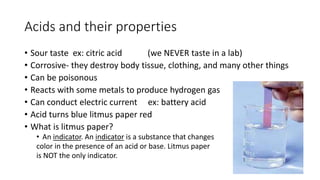
• Acid turns blue litmus paper red 
• What is litmus paper? 
• An indicator. An indicator is a substance that changes 
color in the presence of an acid or base. Litmus paper 
is NOT the only indicator.
Uses of acids 
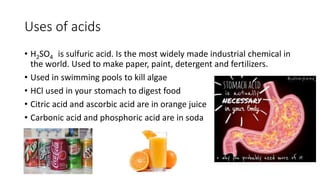
• H2SO4 is sulfuric acid. Is the most widely made industrial chemical in 
the world. Used to make paper, paint, detergent and fertilizers. 
• Used in swimming pools to kill algae 
• HCl used in your stomach to digest food 
• Citric acid and ascorbic acid are in orange juice 
• Carbonic acid and phosphoric acid are in soda
Bases 
• A base is any compound that increases the number of hydroxide ions, 
(OH- ) when dissolved in water. 
• Most bases end with OH- 
• Examples: NaOH, Ca(OH)2
Bases and their properties 
• Bitter taste 
• Slippery feel 
• Many bases are corrosive 
• Bases turns red litmus paper blue 
• Conduct electric current
Uses of bases 
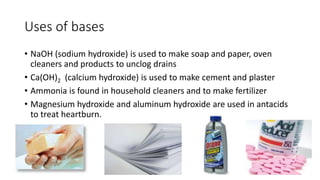
• NaOH (sodium hydroxide) is used to make soap and paper, oven 
cleaners and products to unclog drains 
• Ca(OH)2 (calcium hydroxide) is used to make cement and plaster 
• Ammonia is found in household cleaners and to make fertilizer 
• Magnesium hydroxide and aluminum hydroxide are used in antacids 
to treat heartburn.
Strengths of acids and bases 
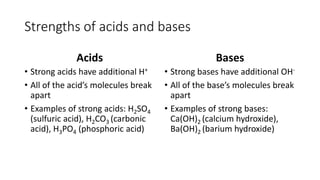
Acids 
• Strong acids have additional H+ 
• All of the acid’s molecules break 
apart 
• Examples of strong acids: H2SO4 
(sulfuric acid), H2CO3 (carbonic 
acid), H3PO4 (phosphoric acid) 
Bases 
• Strong bases have additional OH- 
• All of the base’s molecules break 
apart 
• Examples of strong bases: 
Ca(OH)2 (calcium hydroxide), 
Ba(OH)2 (barium hydroxide)
Neutralization 
• The reaction between acids and bases is a neutralization reaction. 
• React to form water (which is neutral) and a salt. 
• A salt is an ionic compound formed from the positive ion of a base 
and the negative ion of an acid. 
• Salts are a large group of compounds; not just table salt!
pH scale 
• Indicators are used to identify whether a solution contains an acid or 
a base. 
• A pH scale is used to describe how acidic or how basic a solution is. 
• pH is a measure of the hydronium ion concentration. 
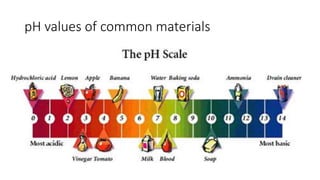
• pH of 7 is neutral; pure water 
• pH of less than 7 is acidic 
• pH of greater than 7 is basic
pH values of common materials

Acids and bases

  • 1.
    Acids and Bases Holt: Chapter 15, Sections 2 and 3 Fusion: Lesson 6 (starts on p 190)
  • 2.
    Acids • Anacid is any compound that increases the number of hydronium ions (H+) when dissolved in water • Acids typically begin with hydrogen, H. • Examples: H2SO4, HCl
  • 3.
    Acids and theirproperties • Sour taste ex: citric acid (we NEVER taste in a lab) • Corrosive- they destroy body tissue, clothing, and many other things • Can be poisonous • Reacts with some metals to produce hydrogen gas • Can conduct electric current ex: battery acid • Acid turns blue litmus paper red • What is litmus paper? • An indicator. An indicator is a substance that changes color in the presence of an acid or base. Litmus paper is NOT the only indicator.
  • 4.
    Uses of acids • H2SO4 is sulfuric acid. Is the most widely made industrial chemical in the world. Used to make paper, paint, detergent and fertilizers. • Used in swimming pools to kill algae • HCl used in your stomach to digest food • Citric acid and ascorbic acid are in orange juice • Carbonic acid and phosphoric acid are in soda
  • 5.
    Bases • Abase is any compound that increases the number of hydroxide ions, (OH- ) when dissolved in water. • Most bases end with OH- • Examples: NaOH, Ca(OH)2
  • 6.
    Bases and theirproperties • Bitter taste • Slippery feel • Many bases are corrosive • Bases turns red litmus paper blue • Conduct electric current
  • 7.
    Uses of bases • NaOH (sodium hydroxide) is used to make soap and paper, oven cleaners and products to unclog drains • Ca(OH)2 (calcium hydroxide) is used to make cement and plaster • Ammonia is found in household cleaners and to make fertilizer • Magnesium hydroxide and aluminum hydroxide are used in antacids to treat heartburn.
  • 8.
    Strengths of acidsand bases Acids • Strong acids have additional H+ • All of the acid’s molecules break apart • Examples of strong acids: H2SO4 (sulfuric acid), H2CO3 (carbonic acid), H3PO4 (phosphoric acid) Bases • Strong bases have additional OH- • All of the base’s molecules break apart • Examples of strong bases: Ca(OH)2 (calcium hydroxide), Ba(OH)2 (barium hydroxide)
  • 9.
    Neutralization • Thereaction between acids and bases is a neutralization reaction. • React to form water (which is neutral) and a salt. • A salt is an ionic compound formed from the positive ion of a base and the negative ion of an acid. • Salts are a large group of compounds; not just table salt!
  • 10.
    pH scale •Indicators are used to identify whether a solution contains an acid or a base. • A pH scale is used to describe how acidic or how basic a solution is. • pH is a measure of the hydronium ion concentration. • pH of 7 is neutral; pure water • pH of less than 7 is acidic • pH of greater than 7 is basic
  • 11.
    pH values ofcommon materials