Acid – Base Imbalance Disorders
By
Dr KHALED ALGARIRI
February 2020
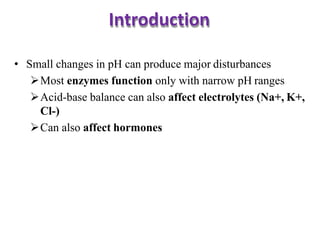
• Small changes in pH can produce major disturbances
Most enzymes function only with narrow pH ranges
Acid-base balance can also affect electrolytes (Na+, K+,
Cl-)
Can also affect hormones
Introduction
Introduction
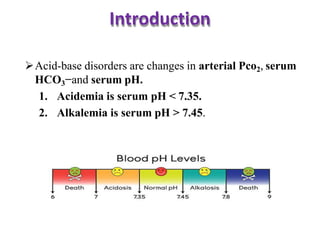
Acid-base disorders are changes in arterial Pco2, serum
HCO3−and serum pH.
1. Acidemia is serum pH < 7.35.
2. Alkalemia is serum pH > 7.45.
Adults Neonates
pH 7.35-7.45 7.30-7.40
pCO2 (kPa)
4.7-6.0 3.5-5.4
Bicarbonate
(mmol/L) 22-28 15-25
pH = 6.1 + log ([HCO3 –] / ( pCO2 (a) × 0.23))
Henderson-Hasselbalch equation
Compensation for acid-base
disorders:
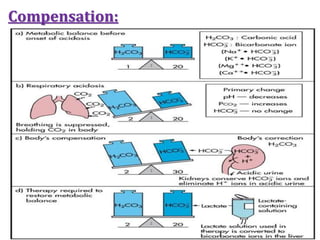
Compensation is a series of physiological responses that react to
acid- base imbalances, by returning blood pH to the normal range
(7.35 – 7.45).
the respiratory system compensates for metabolic disturbances
while metabolic mechanisms compensate for respiratory
disturbances.
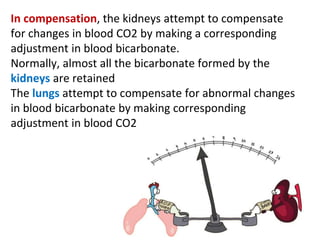
In compensation, the kidneys attempt to compensate
for changes in blood CO2 by making a corresponding
adjustment in blood bicarbonate.
Normally, almost all the bicarbonate formed by the
kidneys are retained
The lungs attempt to compensate for abnormal changes
in blood bicarbonate by making corresponding
adjustment in blood CO2
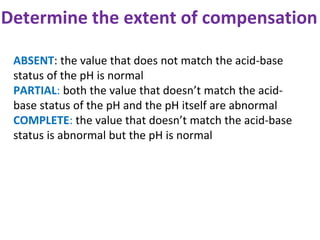
Determine the extent of compensation
ABSENT: the value that does not match the acid-base
status of the pH is normal
PARTIAL: both the value that doesn’t match the acid-
base status of the pH and the pH itself are abnormal
COMPLETE: the value that doesn’t match the acid-base
status is abnormal but the pH is normal
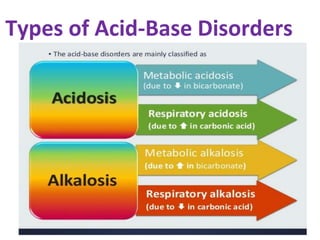
Types of Acid-Base Disorders
Respiratory acidosis
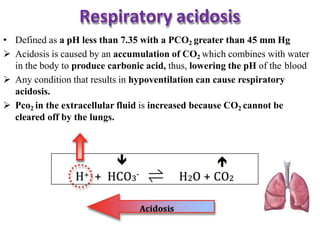
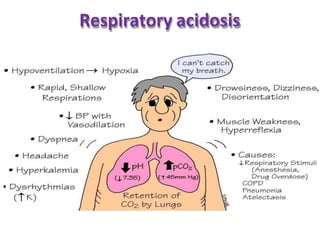
• Defined as a pH less than 7.35 with a PCO2 greater than 45 mm Hg
 Acidosis is caused by an accumulation of CO2 which combines with water
in the body to produce carbonic acid, thus, lowering the pH of the blood
 Any condition that results in hypoventilation can cause respiratory
acidosis.
 Pco2 in the extracellular fluid is increased because CO2 cannot be
cleared off by the lungs.
Respiratory acidosis
Compensation:
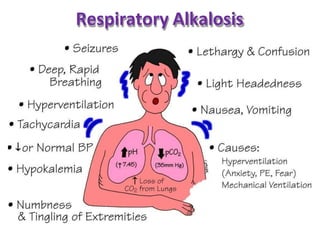
Respiratory Alkalosis
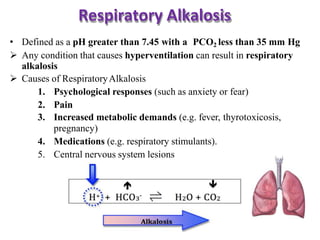
• Defined as a pH greater than 7.45 with a PCO2 less than 35 mm Hg
 Any condition that causes hyperventilation can result in respiratory
alkalosis
 Causes of RespiratoryAlkalosis
1. Psychological responses (such as anxiety or fear)
2. Pain
3. Increased metabolic demands (e.g. fever, thyrotoxicosis,
pregnancy)
4. Medications (e.g. respiratory stimulants).
5. Central nervous system lesions
Respiratory Alkalosis
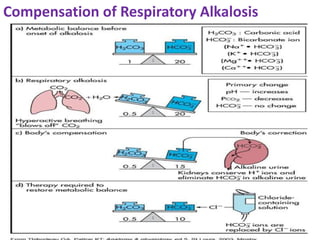
Compensation of Respiratory Alkalosis
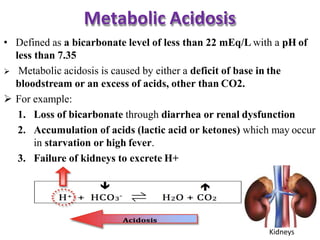
Metabolic Acidosis
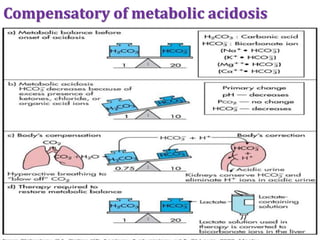
• Defined as a bicarbonate level of less than 22 mEq/L with a pH of
less than 7.35
 Metabolic acidosis is caused by either a deficit of base in the
bloodstream or an excess of acids, other than CO2.
 For example:
1. Loss of bicarbonate through diarrhea or renal dysfunction
2. Accumulation of acids (lactic acid or ketones) which may occur
in starvation or high fever.
3. Failure of kidneys to excrete H+
Kidneys
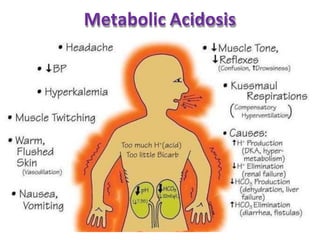
Metabolic Acidosis
Compensatory of metabolic acidosis
Metabolic alkalosis
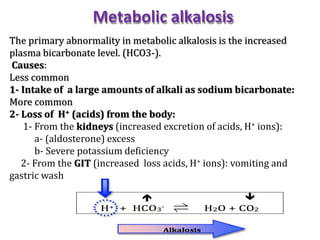
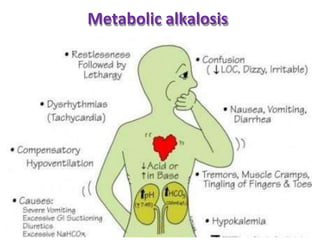
The primary abnormality in metabolic alkalosis is the increased
plasma bicarbonate level. (HCO3-).
Causes:
Less common
1- Intake of a large amounts of alkali as sodium bicarbonate:
More common
2- Loss of H+ (acids) from the body:
1- From the kidneys (increased excretion of acids, H+ ions):
a- (aldosterone) excess
b- Severe potassium deficiency
2- From the GIT (increased loss acids, H+ ions): vomiting and
gastric wash
Metabolic alkalosis
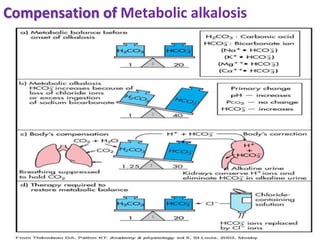
Compensation of Metabolic alkalosis
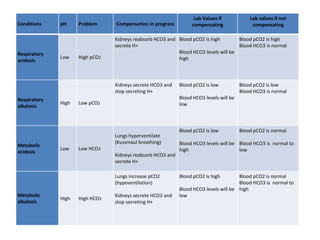
Conditions pH Problem Compensation in progress
Lab Values if
compensating
Lab values if not
compensating
Respiratory
acidosis
Low High pCO2
Kidneys reabsorb HCO3 and
secrete H+
Blood pCO2 is high
Blood HCO3 levels will be
high
Blood pCO2 is high
Blood HCO3 is normal
Respiratory
alkalosis
High Low pCO2
Kidneys secrete HCO3 and
stop secreting H+
Blood pCO2 is low
Blood HCO3 levels will be
low
Blood pCO2 is low
Blood HCO3 is normal
Metabolic
acidosis
Low Low HCO3
Lungs hyperventilate
(Kussmaul breathing)
Kidneys reabsorb HCO3 and
secrete H+
Blood pCO2 is low
Blood HCO3 levels will be
high
Blood pCO2 is normal
Blood HCO3 is normal to
low
Metabolic
alkalosis
High High HCO3
Lungs increase pCO2
(hypoventilation)
Kidneys secrete HCO3 and
stop secreting H+
Blood pCO2 is high
Blood HCO3 levels will be
low
Blood pCO2 is normal
Blood HCO3 is normal to
high
Thank you

Acid base imbalance disorder2020

  • 1.
    Acid – BaseImbalance Disorders By Dr KHALED ALGARIRI February 2020
  • 2.
    • Small changesin pH can produce major disturbances Most enzymes function only with narrow pH ranges Acid-base balance can also affect electrolytes (Na+, K+, Cl-) Can also affect hormones Introduction
  • 3.
    Introduction Acid-base disorders arechanges in arterial Pco2, serum HCO3−and serum pH. 1. Acidemia is serum pH < 7.35. 2. Alkalemia is serum pH > 7.45.
  • 4.
    Adults Neonates pH 7.35-7.457.30-7.40 pCO2 (kPa) 4.7-6.0 3.5-5.4 Bicarbonate (mmol/L) 22-28 15-25 pH = 6.1 + log ([HCO3 –] / ( pCO2 (a) × 0.23)) Henderson-Hasselbalch equation
  • 5.
    Compensation for acid-base disorders: Compensationis a series of physiological responses that react to acid- base imbalances, by returning blood pH to the normal range (7.35 – 7.45). the respiratory system compensates for metabolic disturbances while metabolic mechanisms compensate for respiratory disturbances.
  • 6.
    In compensation, thekidneys attempt to compensate for changes in blood CO2 by making a corresponding adjustment in blood bicarbonate. Normally, almost all the bicarbonate formed by the kidneys are retained The lungs attempt to compensate for abnormal changes in blood bicarbonate by making corresponding adjustment in blood CO2
  • 7.
    Determine the extentof compensation ABSENT: the value that does not match the acid-base status of the pH is normal PARTIAL: both the value that doesn’t match the acid- base status of the pH and the pH itself are abnormal COMPLETE: the value that doesn’t match the acid-base status is abnormal but the pH is normal
  • 8.
  • 9.
    Respiratory acidosis • Definedas a pH less than 7.35 with a PCO2 greater than 45 mm Hg  Acidosis is caused by an accumulation of CO2 which combines with water in the body to produce carbonic acid, thus, lowering the pH of the blood  Any condition that results in hypoventilation can cause respiratory acidosis.  Pco2 in the extracellular fluid is increased because CO2 cannot be cleared off by the lungs.
  • 10.
  • 11.
  • 12.
    Respiratory Alkalosis • Definedas a pH greater than 7.45 with a PCO2 less than 35 mm Hg  Any condition that causes hyperventilation can result in respiratory alkalosis  Causes of RespiratoryAlkalosis 1. Psychological responses (such as anxiety or fear) 2. Pain 3. Increased metabolic demands (e.g. fever, thyrotoxicosis, pregnancy) 4. Medications (e.g. respiratory stimulants). 5. Central nervous system lesions
  • 13.
  • 14.
  • 15.
    Metabolic Acidosis • Definedas a bicarbonate level of less than 22 mEq/L with a pH of less than 7.35  Metabolic acidosis is caused by either a deficit of base in the bloodstream or an excess of acids, other than CO2.  For example: 1. Loss of bicarbonate through diarrhea or renal dysfunction 2. Accumulation of acids (lactic acid or ketones) which may occur in starvation or high fever. 3. Failure of kidneys to excrete H+ Kidneys
  • 16.
  • 17.
  • 18.
    Metabolic alkalosis The primaryabnormality in metabolic alkalosis is the increased plasma bicarbonate level. (HCO3-). Causes: Less common 1- Intake of a large amounts of alkali as sodium bicarbonate: More common 2- Loss of H+ (acids) from the body: 1- From the kidneys (increased excretion of acids, H+ ions): a- (aldosterone) excess b- Severe potassium deficiency 2- From the GIT (increased loss acids, H+ ions): vomiting and gastric wash
  • 19.
  • 20.
  • 21.
    Conditions pH ProblemCompensation in progress Lab Values if compensating Lab values if not compensating Respiratory acidosis Low High pCO2 Kidneys reabsorb HCO3 and secrete H+ Blood pCO2 is high Blood HCO3 levels will be high Blood pCO2 is high Blood HCO3 is normal Respiratory alkalosis High Low pCO2 Kidneys secrete HCO3 and stop secreting H+ Blood pCO2 is low Blood HCO3 levels will be low Blood pCO2 is low Blood HCO3 is normal Metabolic acidosis Low Low HCO3 Lungs hyperventilate (Kussmaul breathing) Kidneys reabsorb HCO3 and secrete H+ Blood pCO2 is low Blood HCO3 levels will be high Blood pCO2 is normal Blood HCO3 is normal to low Metabolic alkalosis High High HCO3 Lungs increase pCO2 (hypoventilation) Kidneys secrete HCO3 and stop secreting H+ Blood pCO2 is high Blood HCO3 levels will be low Blood pCO2 is normal Blood HCO3 is normal to high
  • 22.

Editor's Notes

  • #11   Causes Impaired carbon dioxide excretion and thus blood pCO2 increases. caused by any pulmonary (lung) cause resulting in hypoventilation.  
  • #12 by kidney via ↑ HCO3- reabsorption ↑ H+ excretion
  • #13 CO2 in the lungs is washed out more rapidly than it is delivered from the tissues The resultant is lowering of Pco2 and decrease of H2CO3 in the extracellular fluid If hyperventilation lasts for some time, the kidney compensates by slowing NaHCO3 neogenesis and it may even not allow NaHCO3 to go waste in the urine.
  • #15  Compensation : by kidney by ↓ HCO3 reabsorption and ↓ H+ secretion
  • #17  I- Increased production of H+  Common Causes of increased H+ (acids) in the blood:  1- Increased endogenous acid production. - Diabetic ketoacidosis (increased ketone bodies in blood) - Lactic acidosis (increased lactic acid in blood).  2-Ingestion of acids (or substance that produces an acid) - Poisons: as salicylate (aspirin) overdose - Methanol ingestion - High protein diet.  3-decreased acid (H+) excretion by the kidney: in renal failure. II- Loss of bicarbonate: e.g. in diarrhea
  • #18  Compensatory mechanisms of metabolic acidosis 1- Exhaustion of bicarbonate buffer with shift of reactions to CO2 production. Stimulation of the respiratory centre to eliminate excess CO2 formed 2- Increase in renal acid excretion of H+  
  • #21 by lungs via inhibition of respiration which leads to ↑ PCO2